These Flowers Keep California Patio Containers Colorful Through Summer Heat
Hot containers can test even the prettiest patio flowers. In California, pots heat up fast once summer sun settles in, and roots feel that stress before gardeners notice.
The right flowers can handle those tough conditions with more grace. They keep the patio looking bright without needing constant rescue.
Good choices also make small spaces feel cheerful, especially when garden beds are limited.
The key is picking plants that can bloom well in containers and bounce back after warm afternoons.
Water still matters, of course, but strong plants make the job easier. With the right flowers, a sunny patio can stay colorful long after weaker blooms start to fade.
1. Kangaroo Paw Adds Height To Hot Patio Pots
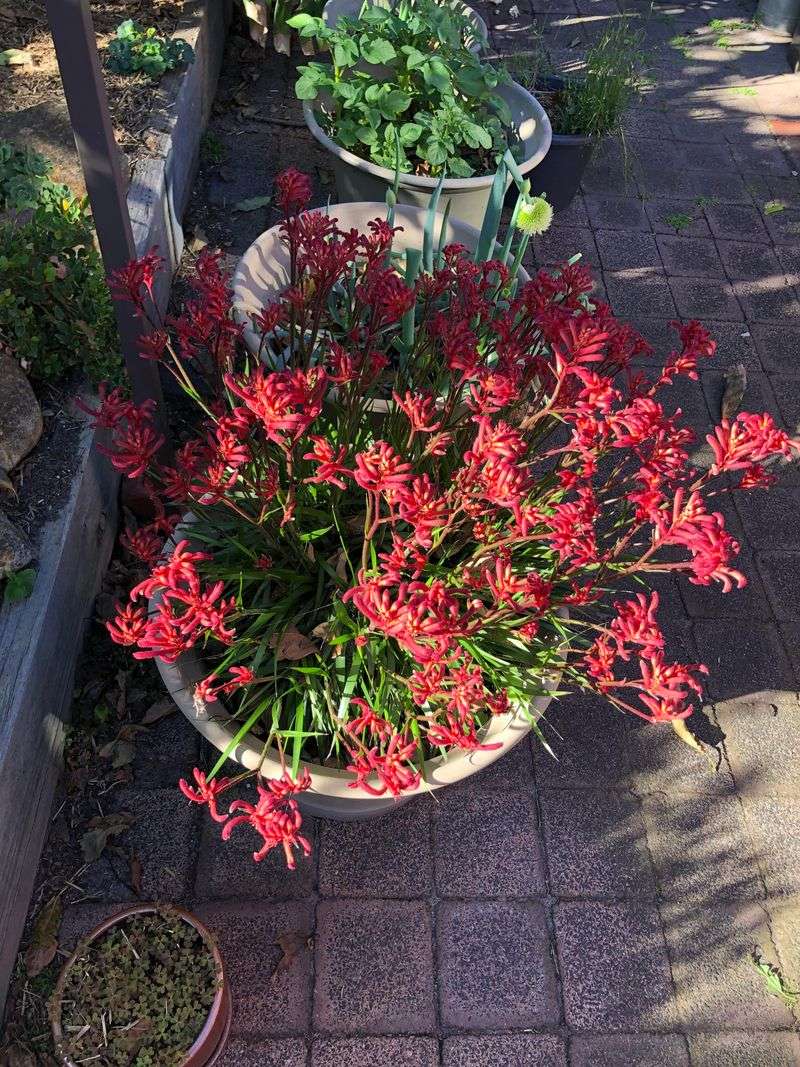
Few plants bring the kind of bold vertical drama that Kangaroo Paw delivers in a hot container. This plant was practically designed for dry heat and full sun.
Its tubular flowers reach upward on long stems and come in shades of red, orange, yellow, and deep burgundy.
In a patio pot, Kangaroo Paw creates instant height and structure. It pairs beautifully with low-growing spillers around the base, making a container look professionally designed.
The blooms last a long time and do not need deadheading to keep the plant looking tidy.
Watering needs are moderate. Let the soil dry out slightly between waterings because this plant does not like to sit in soggy roots.
A well-draining potting mix is essential for keeping it healthy through the warm months.
Hummingbirds absolutely love the tubular flowers, so placing a pot near a seating area brings unexpected wildlife visits.
The strap-like leaves stay green and upright even during heat waves, which keeps the pot looking full between bloom cycles.
For best results, use a large container with at least a 12-inch diameter. Fertilize every two to three weeks with a balanced liquid fertilizer during the growing season.
Kangaroo Paw thrives from late spring through early fall and handles reflected heat from walls and fences surprisingly well.
2. SunPatiens Keep Color Going With Steady Water
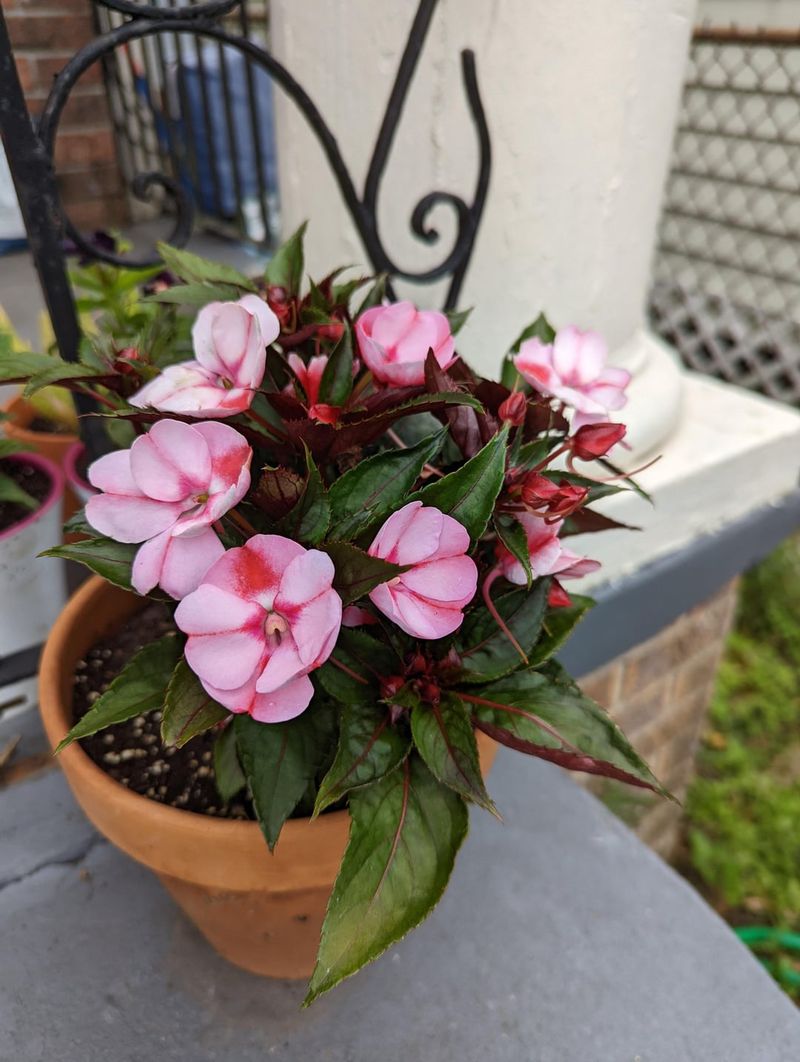
Regular impatiens wilt the moment the sun gets serious, but SunPatiens are a completely different story. Bred specifically for full sun and heat, these flowers were developed to keep blooming where ordinary impatiens fail.
The blooms are larger, the stems are sturdier, and the color stays vivid even on the hottest days.
The key to success with SunPatiens is consistent moisture. Unlike drought-tolerant plants on this list, these flowers prefer steady watering.
In a hot container, that might mean watering every day during peak summer heat. A self-watering pot or a drip system can make this much easier to manage.
Colors range from soft white and lavender to deep magenta and electric orange. They mix beautifully with other container plants and spread quickly to fill a pot with lush growth.
No deadheading is needed because spent blooms drop off on their own.
SunPatiens grow fast, so start with a single plant per 10-inch pot and give it room to spread. Fertilize regularly with a bloom-boosting fertilizer to keep the flower production strong.
Your California Garden Changes Every Week. Your Plan Should Too.
Gardening in California changes quickly throughout the season. Every Friday you’ll receive a simple weekly plan showing exactly what to plant, prune, fertilize, harvest, and protect so you never miss the right timing.
They do best in containers with good drainage holes so roots never sit in standing water.
These plants are one of the most reliable choices for a shady-to-partly-sunny patio that occasionally gets blasted with afternoon heat. They reward consistent care with non-stop color from spring through the first cool nights of fall.
3. Cuphea Blooms Hard In Sunny Containers
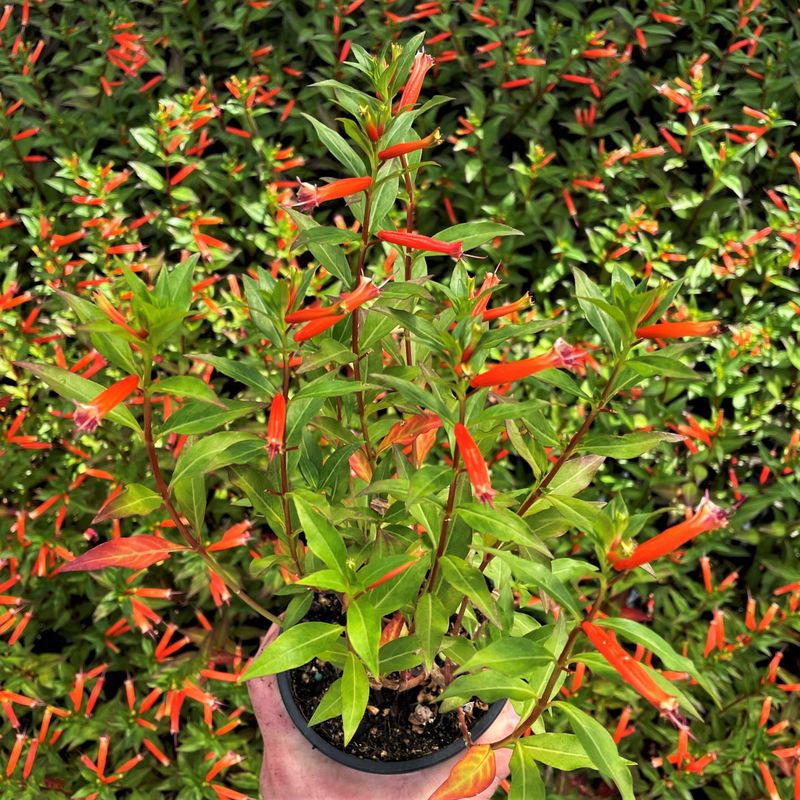
There is something almost cheerful about the way Cuphea blooms. The tiny tubular flowers cover the plant in such dense clusters that the foliage almost disappears beneath them.
Common varieties like Cigar Plant and Bat-Faced Cuphea have become patio favorites because of how hard they bloom in full sun.
Heat does not slow Cuphea down. In fact, this plant seems to bloom more aggressively as temperatures rise.
It handles dry spells better than most flowering annuals, which makes it a smart pick for gardeners who sometimes forget to water or travel during summer.
Containers with good drainage suit Cuphea perfectly. Use a standard well-draining potting mix and place the pot in a spot that gets at least six hours of direct sun.
The more sun it gets, the more flowers it produces.
Butterflies and hummingbirds visit Cuphea constantly during the summer. Placing a pot near a patio chair or dining table creates a lively, buzzing scene that makes outdoor time feel special.
The plant stays compact and rarely needs trimming, which is a big bonus for low-maintenance gardeners.
Fertilizing every three weeks with a balanced fertilizer keeps bloom production strong. Cuphea grows well in 8-inch to 12-inch containers and pairs well with trailing plants like sweet potato vine or bacopa.
It is one of the most underrated flowers for hot patio pots in California.
4. Scaevola Spills Over Hot Pot Edges
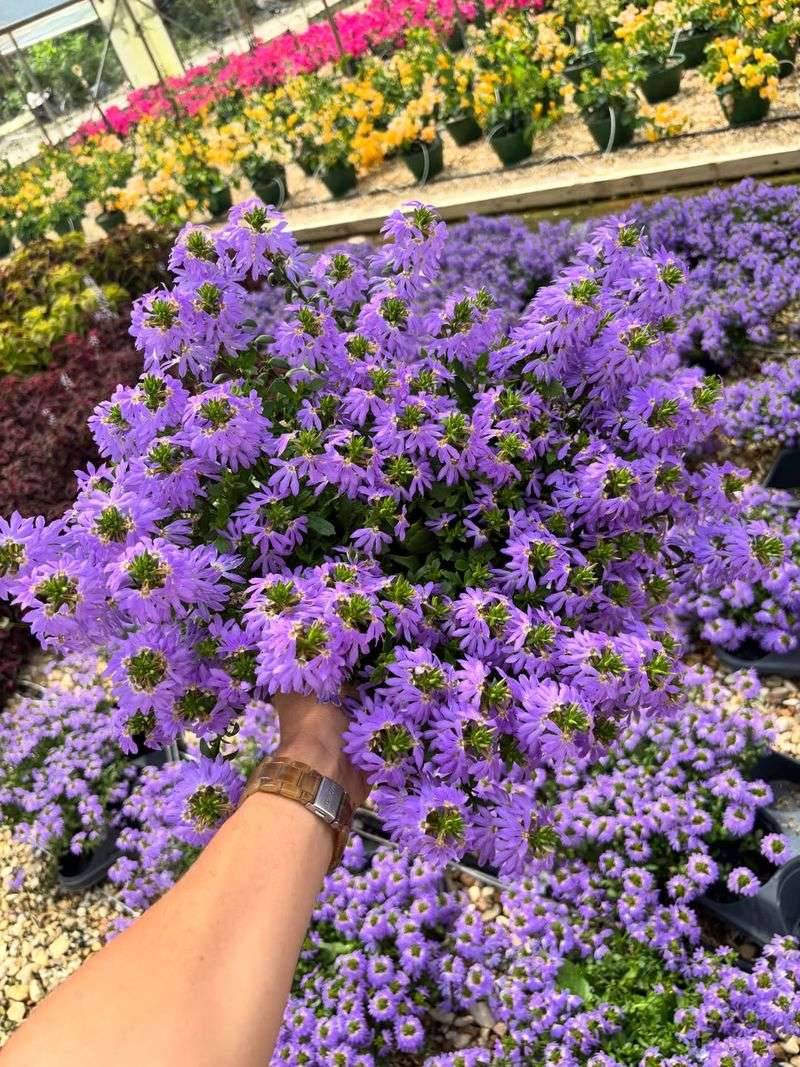
Not every container plant needs to grow straight up. Scaevola, also called Fan Flower, is a natural trailer that spills over pot edges in a graceful, full cascade of blooms.
The fan-shaped flowers are unique and eye-catching, and they keep appearing from spring all the way through fall without stopping.
This plant is also built for dry California heat. It handles the intense sun found on west-facing patios and reflected heat from walls without missing a beat.
Once established in a container, it is surprisingly drought-tolerant, though regular watering encourages the most vigorous blooming.
Colors include purple, lavender, white, and pink. The purple varieties are especially popular because the color stays rich and vivid even in extreme heat, unlike some flowers that fade or bleach out.
No deadheading is required because old flowers fall away naturally as new ones open.
Scaevola works beautifully in mixed containers where a trailing plant is needed to balance taller, upright varieties.
It also shines in hanging baskets, where the trailing stems can reach a foot or more in length by midsummer.
Use a lightweight potting mix and make sure drainage is excellent.
Fertilize every two to three weeks for the best bloom performance. Scaevola is rarely bothered by pests, which makes it a low-stress addition to any patio setup.
It is a dependable performer that earns its place in hot containers every single season.
5. Globe Amaranth Holds Color Through Heat
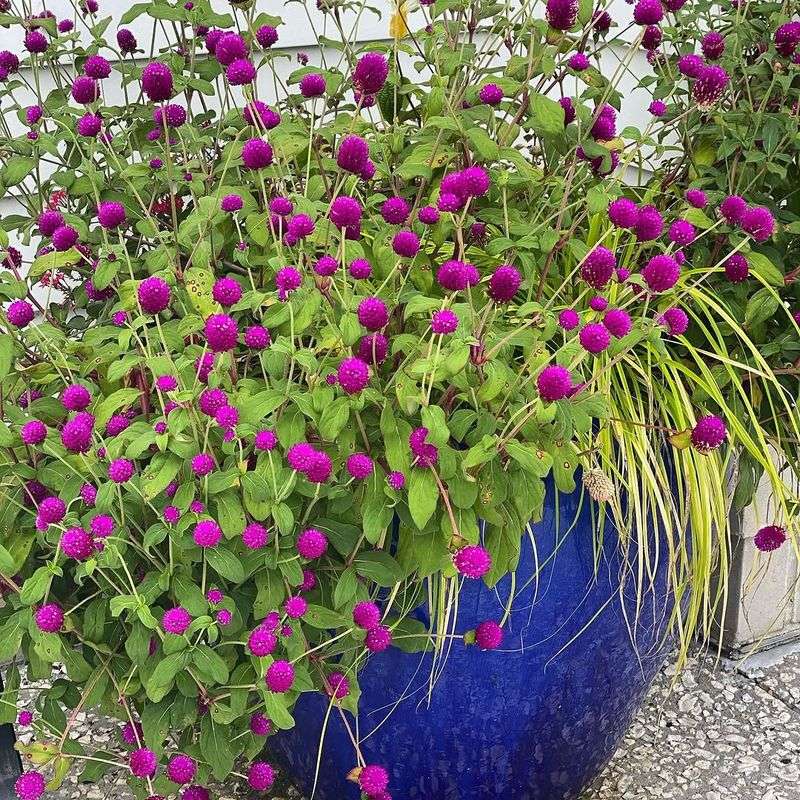
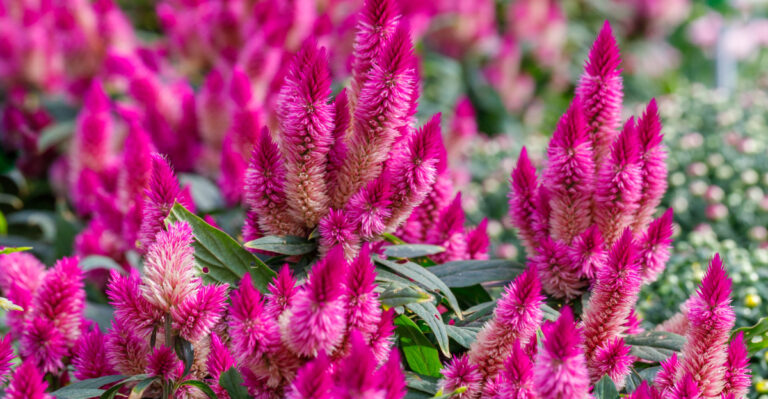
Globe Amaranth is the kind of flower that looks too good to be real. The round, clover-like blooms come in magenta, purple, orange, white, and bicolor combinations.
What makes this plant remarkable is that the blooms hold their color even as temperatures climb past 100 degrees.
Most flowers fade or go limp in extreme heat, but Globe Amaranth just keeps going. It is drought-tolerant once established and thrives in hot, dry conditions that would stress most other flowering plants.
For patios in inland valleys or desert-adjacent areas of California, it is one of the most reliable choices available.
In containers, Globe Amaranth grows upright and compact, usually reaching 12 to 18 inches tall. It works well as the centerpiece of a mixed pot or as a standalone statement plant.
The blooms also dry beautifully on the stem, which means late-season pots can look great even as the weather cools.
Watering needs are low to moderate. Let the soil dry out between waterings and avoid overwatering, which can cause root problems.
A well-draining potting mix and a pot with drainage holes are all this plant really needs to thrive.
Butterflies are drawn to Globe Amaranth throughout the season. Fertilizing once a month is enough to keep the blooms coming.
It is a simple, sturdy, and stunning choice for any sunny patio container that needs reliable color all summer long.
6. Pentas Keep Patio Pollinators Visiting
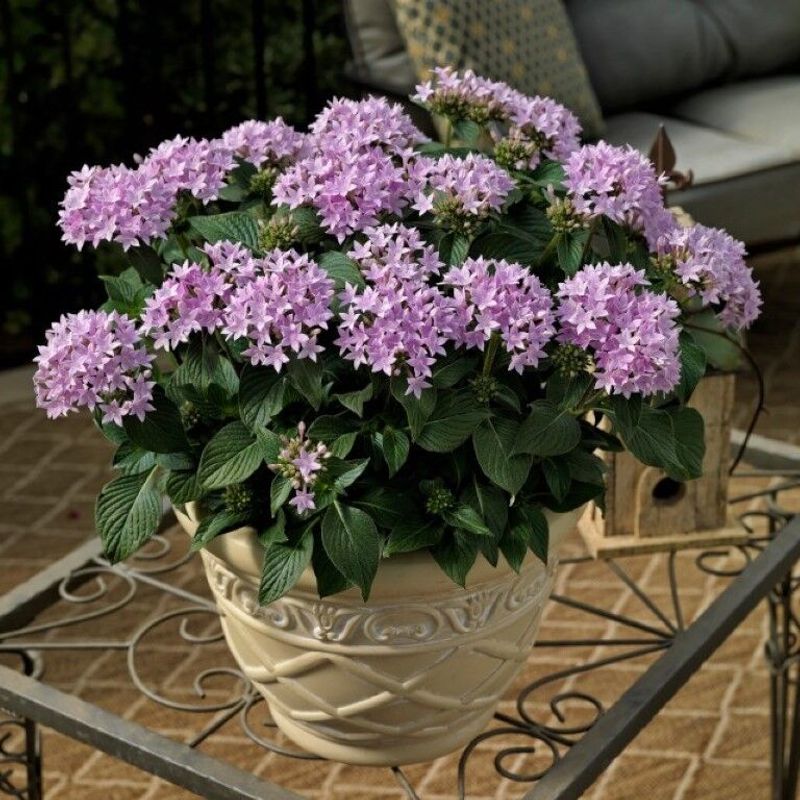
If attracting butterflies and hummingbirds is part of the plan, Pentas belongs in every patio container.
The star-shaped flower clusters bloom in red, pink, white, and lavender, and they act like a magnet for pollinators from early summer through fall. Few plants deliver this level of wildlife activity in a pot.
Pentas is a tropical plant that genuinely loves heat. The hotter the summer gets, the more it seems to thrive.
It handles full sun beautifully and keeps producing new flower clusters without needing deadheading or much fussing. That kind of low-maintenance performance is hard to beat on a busy patio.
In containers, Pentas grows upright and bushy, usually reaching 12 to 18 inches. It pairs well with trailing plants around the edges of a mixed pot or looks striking as a solo planting in a bright-colored container.
The flowers are small but produced in such large clusters that the overall effect is bold and full.
Consistent moisture is appreciated, but Pentas will handle a missed watering better than many tropical plants.
Use a quality potting mix and fertilize every two to three weeks with a bloom-boosting fertilizer.
Avoid heavy clay soils or containers without drainage holes.
For gardeners in warmer regions of California, Pentas can even overwinter indoors and come back strong the following spring.
It is a smart, cheerful, and wildlife-friendly plant that earns its spot on any sunny patio.
7. Strawflower Likes Dry, Sunny Containers
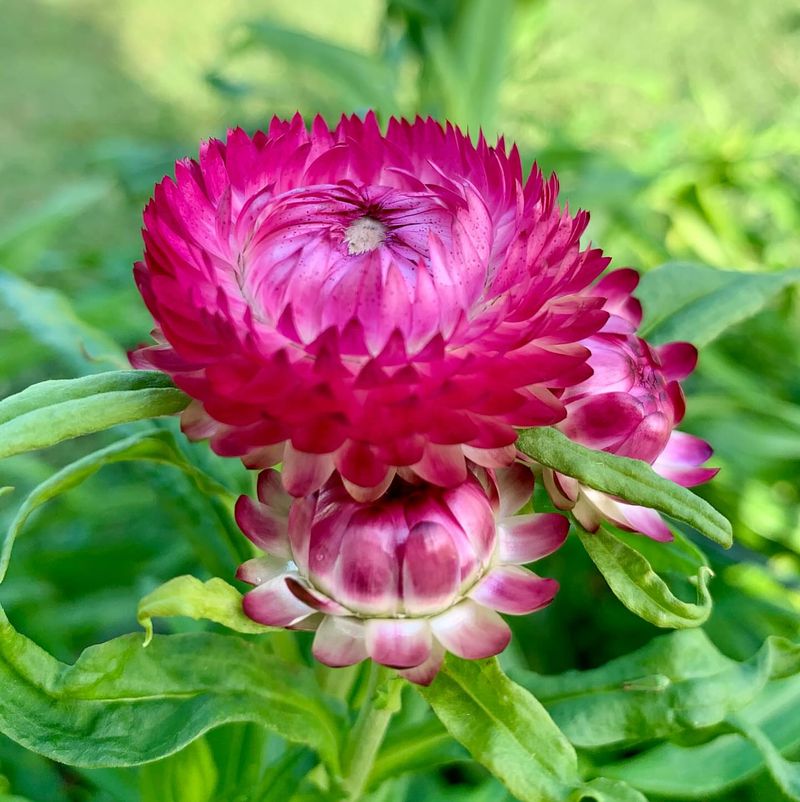
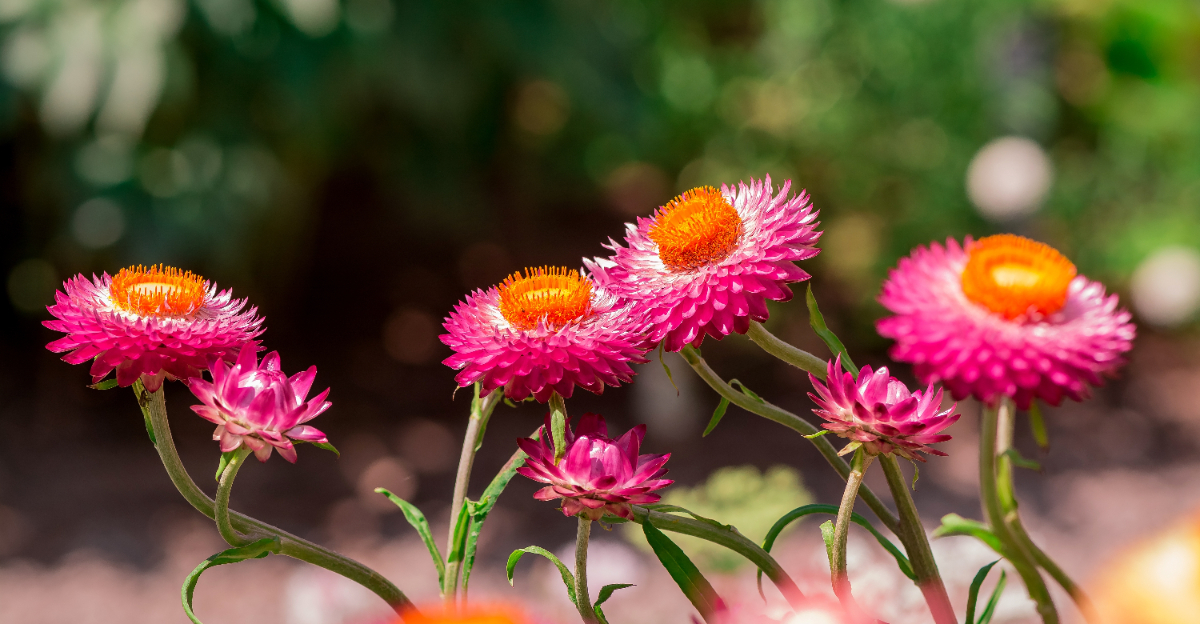
Strawflower has a papery texture that makes it look almost like a craft flower, but it is 100 percent real and incredibly tough.
The blooms come in vivid shades of yellow, orange, red, pink, and white, and they hold their color and shape even after cutting and drying. On a hot patio, this flower is practically unstoppable.
One of the biggest advantages of Strawflower in containers is its love of dry conditions. It is one of the most drought-tolerant flowering annuals available, which makes it ideal for gardeners who want color without constant watering.
In fact, overwatering is the fastest way to run into trouble with this plant.
Full sun is non-negotiable. Place Strawflower in the sunniest spot on the patio and give it a well-draining potting mix.
Sandy or gritty mixes work especially well because they dry out quickly between waterings, which is exactly what this plant prefers.
The blooms open during the day and close at night, which is a fun quirk that kids and visitors always notice.
New flowers keep appearing throughout the season without any deadheading, and the plant stays compact and tidy in most containers.
Fertilize lightly once a month. Too much fertilizer encourages leafy growth at the expense of flowers.
A small pot, six to eight inches in diameter, is enough for a single plant. Strawflower is a bold, bright, and beautifully low-maintenance choice for the hottest spots on any patio.
8. Blue Daze Trails Soft Blue From Pots
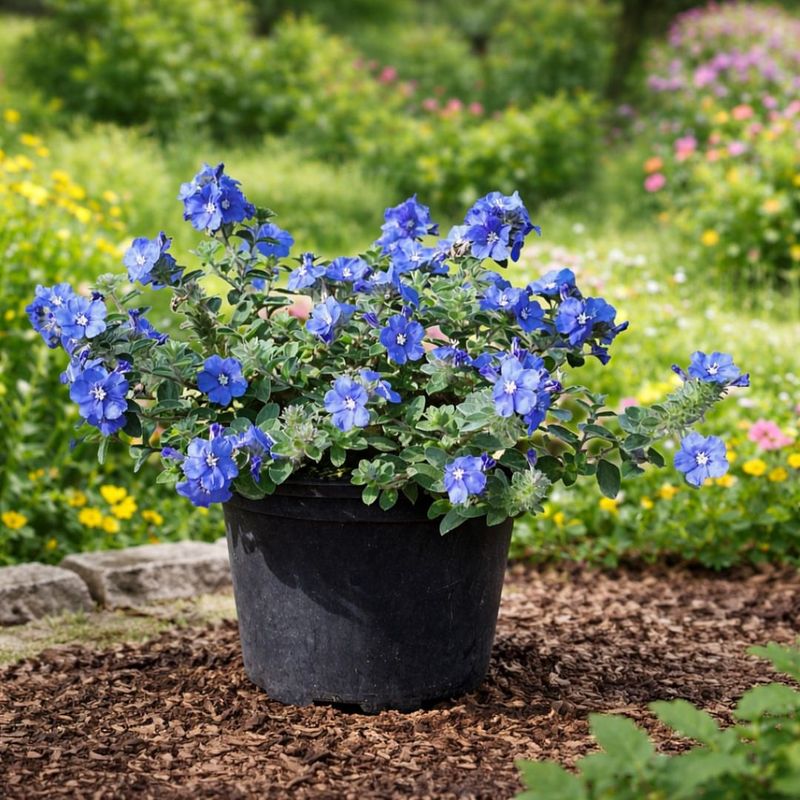
True blue flowers are rare in the gardening world, and Blue Daze delivers one of the most genuine shades of sky blue available in a flowering annual.
The small, five-petaled blooms open in the morning and close by evening, creating a fresh, soft display that softens the look of even the hottest, brightest patio.
Blue Daze is a low-growing trailer that works beautifully spilling over the edges of containers.
It stays compact, usually reaching six to ten inches tall, but spreads outward generously to fill the front of a mixed pot.
The silver-green foliage adds texture and contrast even when flowers are not open.
Heat is not a problem for this plant. It was bred for exactly the kind of intense summer sun found in this state, especially in southern and central regions.
It handles dry spells with grace and rarely shows stress during heat waves that flatten other flowering plants.
Watering should be moderate. Let the top inch of soil dry before watering again.
Use a well-draining potting mix and a container with good drainage holes. Fertilizing every two to three weeks with a balanced fertilizer keeps the blooms coming steadily through the season.
Blue Daze pairs especially well with hot-colored flowers like orange Cuphea or red Pentas, where the cool blue creates a striking contrast.
It is a calm, elegant, and surprisingly tough little plant that brings something genuinely unique to any California summer container lineup.