These Fragrant Texas Vines Make Every Fence And Pergola Smell Absolutely Amazing
What would it feel like to walk out to your Texas backyard and have the air itself stop you in your tracks? Fragrant vines do something that almost no other garden plant can match.
They fill an entire outdoor space with scent that shifts through the day, peaks in the evening, and turns a simple fence or pergola into something genuinely memorable.
The challenge in Texas is finding vines that deliver that experience without falling apart under summer heat or demanding constant attention to look presentable.
A lot of fragrant vines that perform beautifully in cooler climates stall out, fade, or simply refuse to bloom reliably once Texas temperatures lock in.
The ones worth planting here are a more specific group, selected for their ability to thrive in Texas heat while still producing the kind of fragrance that makes outdoor living feel like something worth staying outside for.
Getting this right turns a structure into an experience.
1. Crossvine (Bignonia Capreolata)
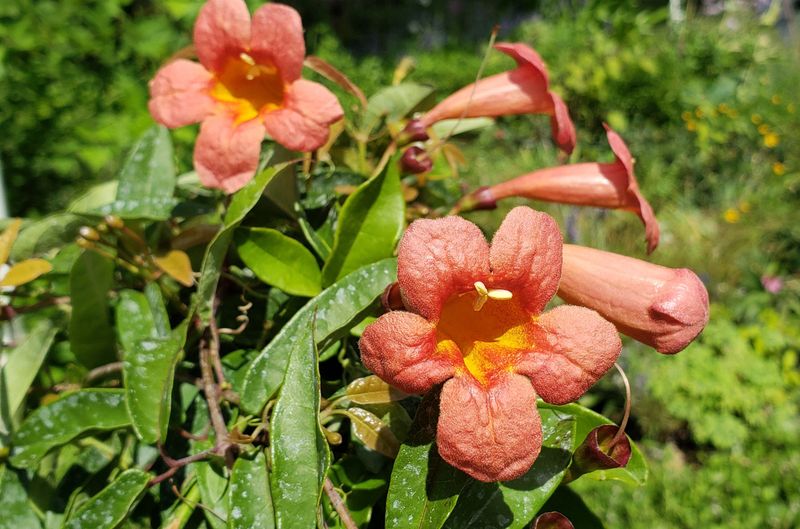
Few native Texas vines can stop you in your tracks quite like the Crossvine. Its trumpet-shaped flowers burst open in shades of deep orange and golden yellow, creating a show that is hard to ignore.
The blooms carry a sweet, mild fragrance that floats through the air on warm spring mornings and makes the whole yard feel alive.
Crossvine is a native Texas plant, which means it is already built for the state’s heat and unpredictable weather.
It clings to surfaces using small, sticky tendrils, making it an excellent climber for wooden fences, brick walls, and pergolas. Once established, it grows quickly and needs very little extra care from you.
One of the best things about this vine is that hummingbirds absolutely love it. The long, tubular flowers are perfectly shaped for hummingbirds to feed from, so planting Crossvine is like putting up a natural bird feeder.
Butterflies and bees also stop by regularly, turning your fence into a mini wildlife habitat.
Crossvine is semi-evergreen, meaning it holds onto most of its leaves through mild Texas winters. This gives your fence or pergola year-round coverage and visual interest.
Plant it in full sun to partial shade and give it a sturdy structure to climb. Water it regularly during the first growing season to help it get established, and then you can step back and enjoy the show. It is one of the most rewarding plants a Texas gardener can grow.
2. Trumpet Creeper (Campsis Radicans)
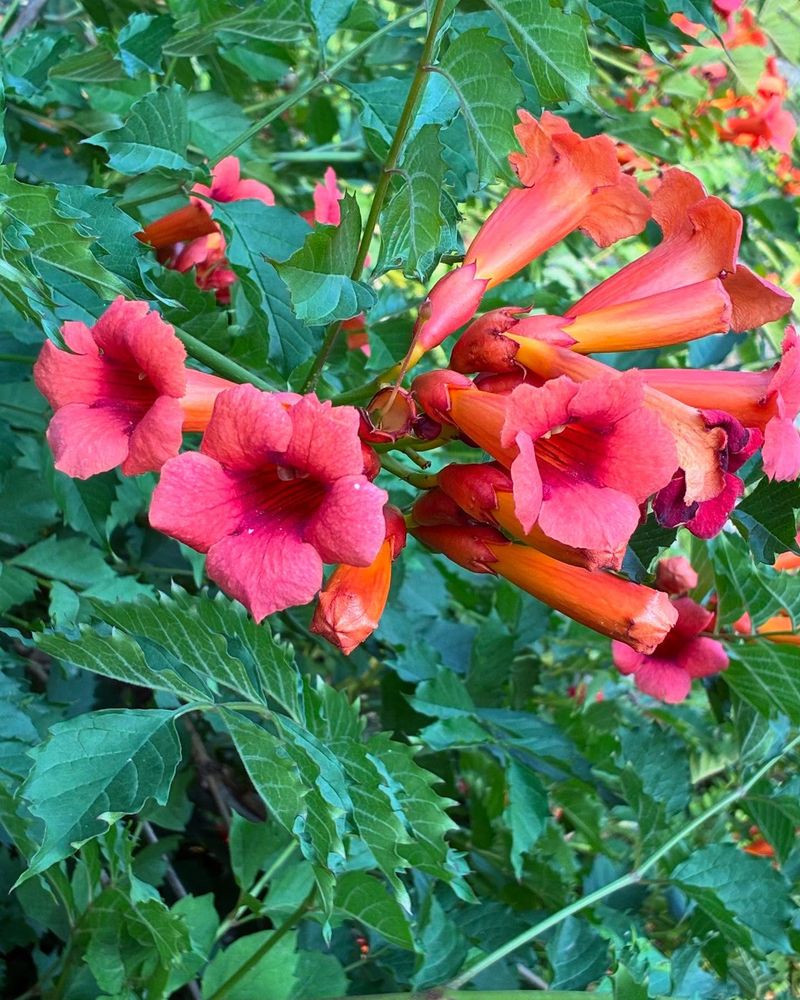
If you want a vine that grows fast and makes a bold statement, Trumpet Creeper is ready to deliver. This plant is a powerhouse in the Texas heat, thriving in conditions that would slow down most other vines.
Its bright orange-red trumpet flowers are eye-catching from a distance and carry a light, sweet scent that drifts through the yard on breezy summer days.
Trumpet Creeper can grow up to 30 feet long under the right conditions, so it is perfect for covering large fences, pergolas, and arbors quickly.
It attaches itself to surfaces using aerial rootlets, which means it can climb wood, brick, and stone without needing extra support. Just give it something tall to climb and watch it take off.
Your Texas Garden Changes Every Week. Your Plan Should Too.
Gardening in Texas changes quickly throughout the season. Every Friday you’ll receive a simple weekly plan showing exactly what to plant, prune, fertilize, harvest, and protect so you never miss the right timing.
Hummingbirds are big fans of this vine, too. The tubular flowers are a favorite food source for them, and once word gets out among the local hummingbird population, you will have regular visitors all season long.
Bees and butterflies are also drawn to the blooms, adding even more life to your garden space.
One thing to keep in mind is that Trumpet Creeper grows vigorously and can spread if left unchecked. Pruning it back once a year keeps it tidy and encourages even more flowering.
Plant it in full sun for the best blooms and in well-drained soil. This vine is drought-tolerant once established, making it a smart and low-maintenance choice for Texas gardeners who want big results with minimal effort.
3. Coral Honeysuckle (Lonicera Sempervirens)
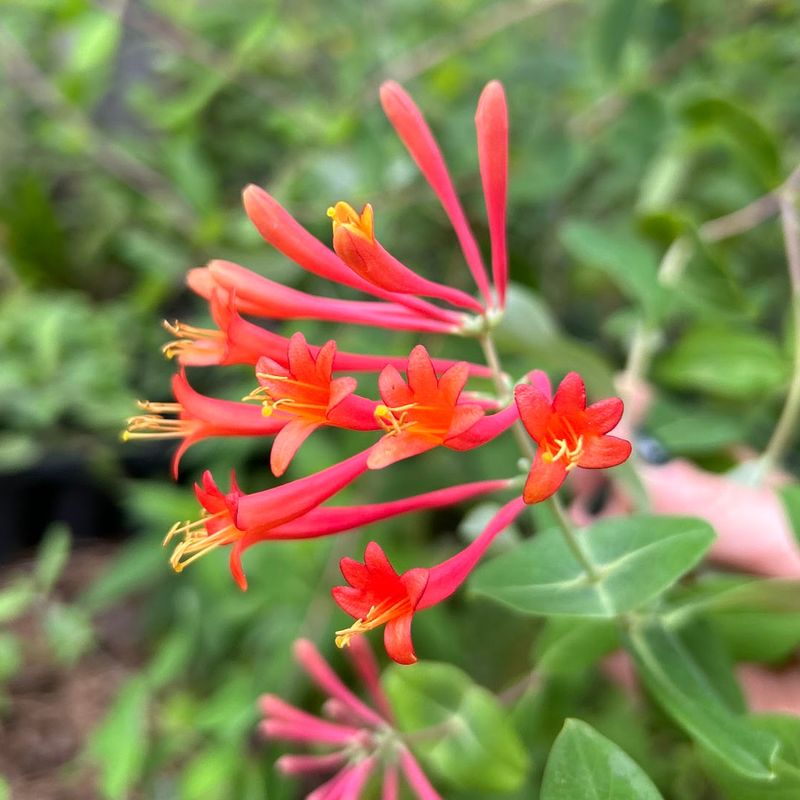
There is something nostalgic and warm about the scent of honeysuckle drifting through a backyard on a summer evening. Coral Honeysuckle brings that feeling home in a subtle, refined way.
Unlike its more aggressive cousin Japanese Honeysuckle, this native Texas vine is well-behaved, beautiful, and genuinely good for the local ecosystem.
The flowers are tubular and come in shades of bright coral-red with a soft yellow interior. They bloom from spring through fall, giving you months of color and fragrance.
The scent is gentle and slightly sweet, not overpowering, which makes it perfect for sitting areas like covered porches and pergola seating spaces where you want to relax without being overwhelmed.
Pollinators go absolutely wild for Coral Honeysuckle. Hummingbirds treat it like a favorite restaurant, returning again and again throughout the growing season.
Native bees and butterflies also visit regularly, making this vine a fantastic choice for anyone who wants to support local wildlife while beautifying their yard.
Coral Honeysuckle grows best in full sun to partial shade and does well in a wide range of Texas soils. It is drought-tolerant once established and rarely needs heavy fertilizing.
Give it a fence, trellis, or pergola post to climb, and it will reward you with season after season of stunning blooms. The plant also produces small red berries in the fall that birds love to snack on.
For a native vine that checks every box, Coral Honeysuckle is a top-tier pick for any Texas garden.
4. Star Jasmine (Trachelospermum Jasminoides)
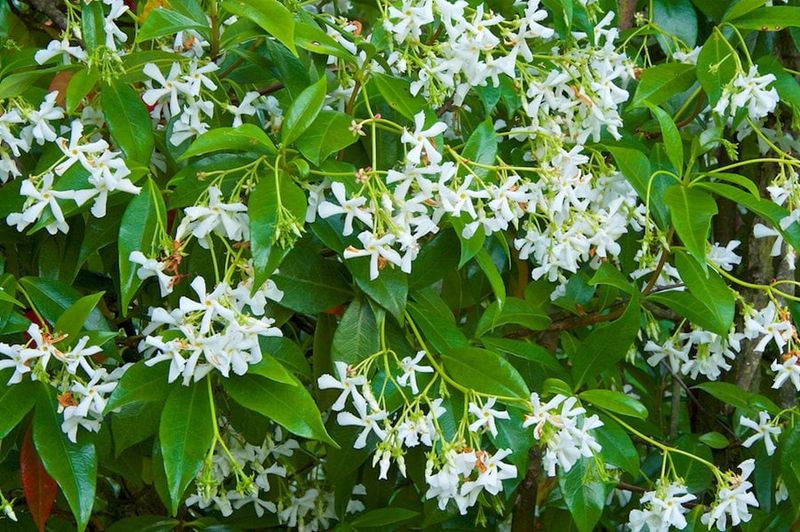
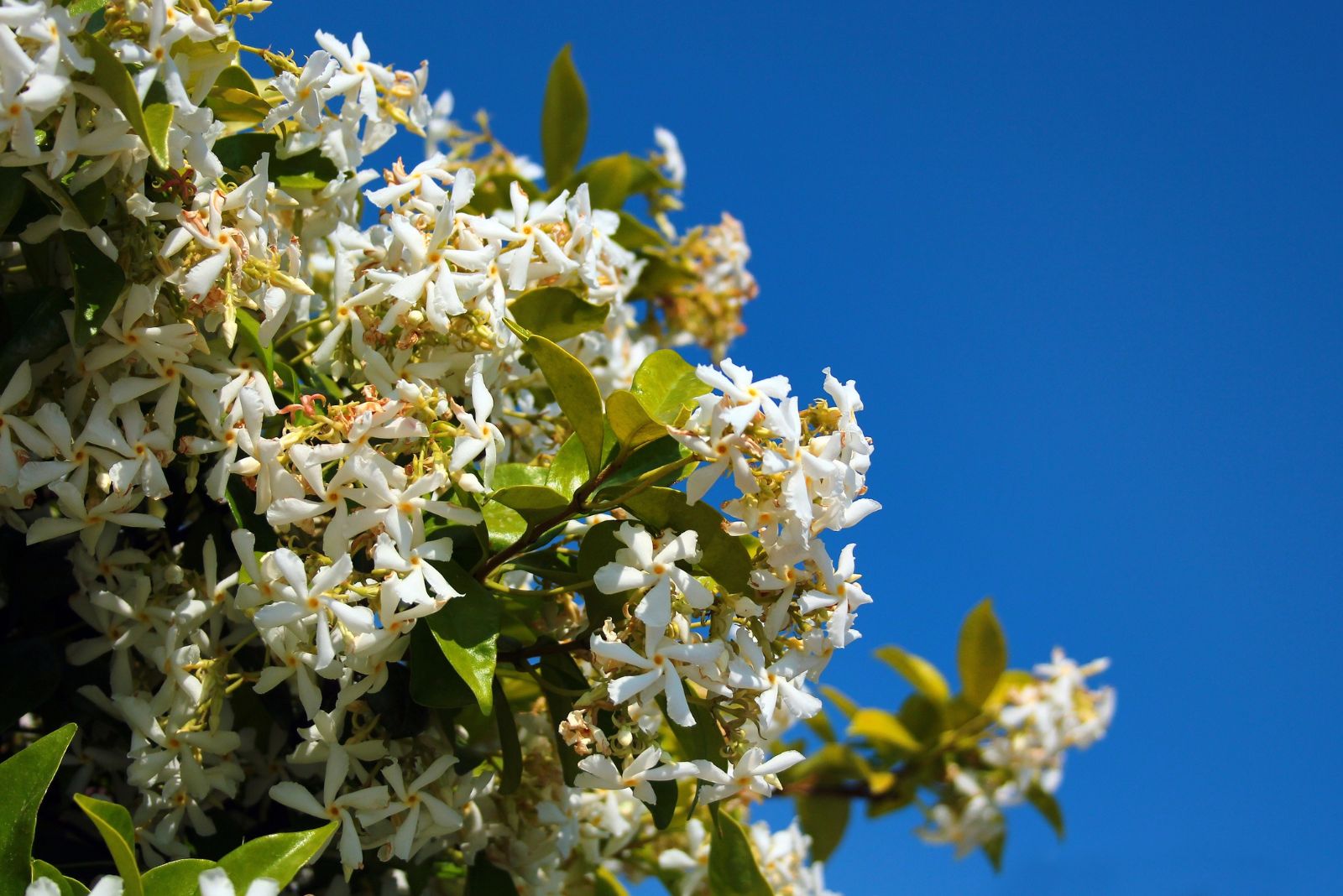
Walk past a Star Jasmine in full bloom and you will stop mid-step. The fragrance is rich, sweet, and almost intoxicating in the best possible way.
Small white star-shaped flowers cover this evergreen vine in late spring and early summer, turning fences and pergolas into something that looks and smells like a garden from a magazine spread.
Star Jasmine is one of the most popular landscape vines in Texas, and it is easy to see why. The glossy dark green leaves stay on the plant year-round, giving your fence or pergola structure beautiful, consistent coverage even when the vine is not blooming.
It is tidy, elegant, and surprisingly easy to manage compared to more aggressive vining plants.
This vine grows well in full sun to partial shade and is moderately drought-tolerant once it gets established. It does best with regular watering during the first year and benefits from a light pruning after the main bloom period to keep it looking neat.
It grows at a moderate pace, so you will not have to worry about it taking over your entire yard.
Star Jasmine works especially well on pergolas, archways, and privacy screens because its dense foliage creates a lush, green backdrop.
The fragrance is strongest in the evening, which makes it a perfect choice near outdoor seating areas where you spend time after sunset.
Plant it where people gather, and every warm evening will feel a little more magical. It is one of those vines that makes your whole yard feel like a luxury retreat.
5. Passionflower (Passiflora Incarnata)
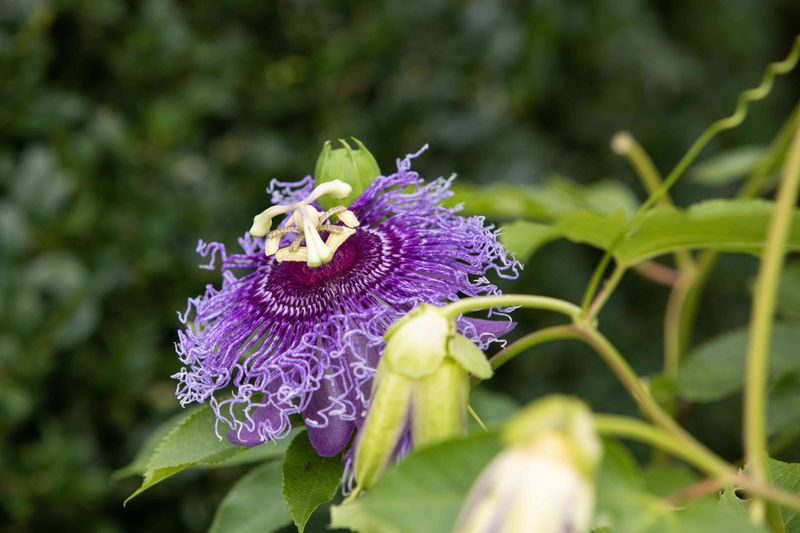
Nothing in the vine world looks quite as exotic and otherworldly as the Passionflower. Its blooms are intricate works of art, featuring layers of purple, white, and lavender petals arranged in a stunning circular pattern.
Up close, you can catch a delicate, sweet fragrance that is soft and fleeting, like a gentle whisper of perfume in the breeze.
Passionflower is a true Texas native, which means it thrives in the state’s heat and humidity without much fuss. It grows vigorously and can cover a fence or trellis in a single season.
The vines use curling tendrils to grab onto surfaces, making them natural climbers that need very little help getting started. Just point them toward something to climb and step aside.
One of the most exciting things about growing Passionflower is the butterflies it attracts. Gulf Fritillary butterflies use this plant as a host plant, meaning they lay their eggs on its leaves and the caterpillars feed on it as they grow.
Planting Passionflower in your yard is essentially creating a butterfly nursery right outside your window, which is an experience the whole family can enjoy.
After the blooms fade, the plant produces small oval fruits called maypops that are edible and have a tropical flavor. They can be eaten fresh or used to make jelly.
Passionflower grows best in full sun and well-drained soil. It dies back in winter but returns reliably each spring from its root system, making it a long-term, low-maintenance addition to your Texas garden.
6. Chocolate Vine (Akebia Quinata)
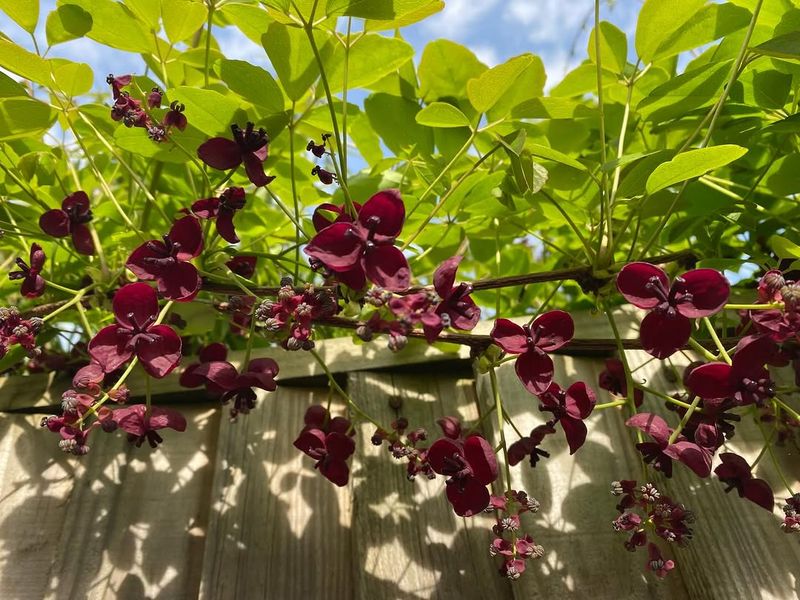
Imagine a vine that actually smells faintly of chocolate. Sounds too good to be true, right? Chocolate Vine is exactly that kind of plant, a quirky and charming climber that surprises everyone who encounters it for the first time.
The small purple-brown flowers have a subtle, sweet scent that has been described as vanilla-chocolate, and it is unlike anything else you will find growing in a Texas garden.
The blooms appear in early spring and are unusual in appearance, dangling in small clusters among the five-leaflet leaves. The foliage itself is attractive year-round, with a semi-evergreen habit that keeps your pergola or fence looking green through most of the year.
The leaves have a graceful, layered look that adds texture and visual depth to any garden structure.
Chocolate Vine is a vigorous grower and can cover a large area in just a few seasons. It does well in full sun to partial shade and adapts to a variety of soil types.
Once established, it is fairly drought-tolerant and requires minimal fertilizing. Pruning it back after flowering keeps it under control and encourages healthy new growth the following season.
This vine is a real conversation starter. Guests who catch a whiff of the blooms always want to know what they are smelling.
Plant it near a seating area or garden entrance where people are likely to pause and notice it.
The combination of unusual flowers, attractive foliage, and that surprising chocolatey fragrance makes Chocolate Vine one of the most memorable plants you can add to a Texas landscape.
7. Carolina Jessamine (Gelsemium Sempervirens)
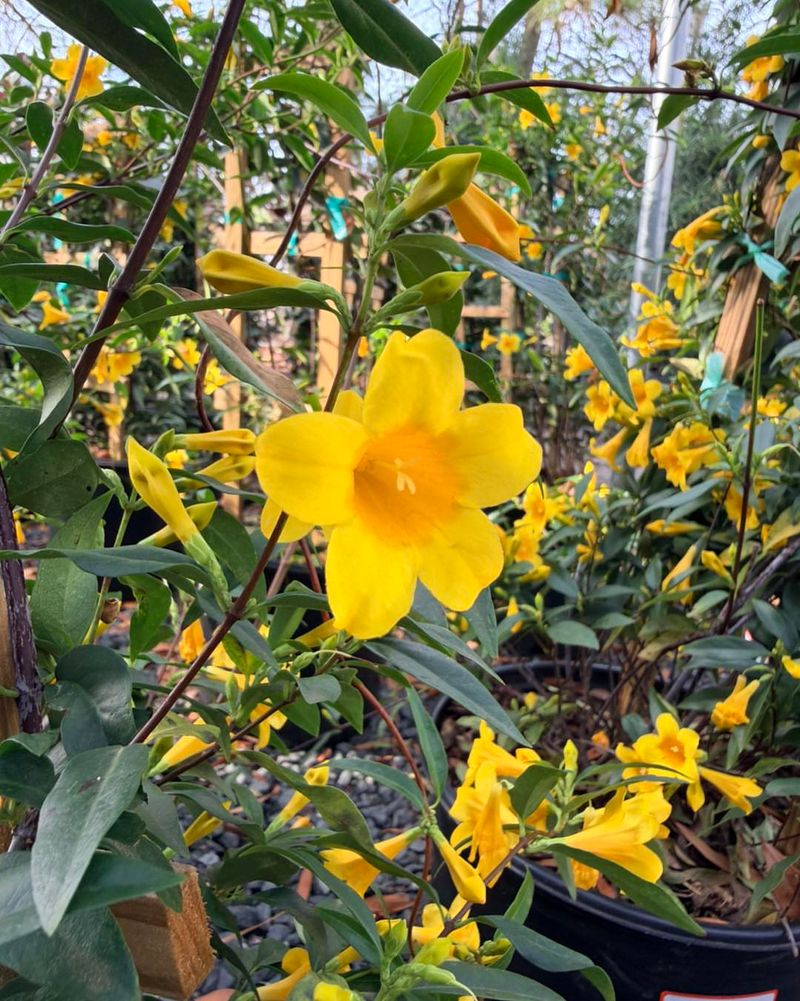
Every spring in Texas, Carolina Jessamine puts on a show that signals the season has truly arrived. Bright yellow trumpet-shaped flowers cover the vine from top to bottom, creating a wall of golden color that can be seen from down the street.
The fragrance is strong, sweet, and unmistakable, filling the surrounding air with a rich floral scent that makes the whole yard feel fresh and alive.
Carolina Jessamine is the official state flower of South Carolina, but it thrives just as happily in Texas gardens. It is an evergreen vine, so the dark green, glossy leaves provide year-round coverage on fences, pergolas, and arbors.
Even when it is not blooming, it looks polished and well-kept, which is exactly what you want from a climbing plant on a garden structure.
This vine grows best in full sun to partial shade and adapts well to a variety of Texas soils. It is drought-tolerant once established and handles both heat and mild freezes without much trouble.
Give it a solid structure to climb and occasional pruning after the spring bloom to keep it tidy and encourage denser growth in the seasons ahead.
One important note for families with young children or pets: all parts of Carolina Jessamine are toxic if ingested, so plant it in spots that are out of reach. That said, for adults and wildlife-friendly gardens, it is a fantastic choice.
Bees and butterflies visit the blooms regularly, and the heavy spring fragrance makes every morning walk through the garden feel like a special occasion worth savoring.