These Native Texas Ground Covers Never Need Replacing No Matter How Hot It Gets
Ground covers in a Texas landscape have a tendency to look great for one season and need revisiting the next, thinning out after a brutal summer, struggling back from a hard freeze, or just quietly declining to the point where replacement feels easier than revival.
Native Texas ground covers break that pattern in a way that genuinely changes how the garden functions over time.
These are plants that establish once and keep going, building root systems that go deeper each year, handling the heat and dry spells that slow or stop non-native options, and returning each season more settled and more effective than before.
Texas conditions that read as punishing to most plants are simply normal operating conditions for these natives, and that distinction shows most clearly in the years after planting when everything else has needed attention and these have not.
Finding ground covers worth planting once and trusting permanently is one of the more satisfying things a Texas gardener can accomplish.
1. Frogfruit
Walk barefoot across a healthy patch of Frogfruit and you will understand why gardeners across Texas love it. This low-growing, mat-forming perennial hugs the ground so closely that it almost looks like a living carpet.
It spreads steadily outward, filling in bare spots without any encouragement from you.
Frogfruit is one of the toughest native ground covers in the state. It handles full sun, reflected heat from sidewalks and driveways, and long stretches without rain.
Even during the driest Texas summers, it holds its shape and keeps spreading. Once established, it rarely needs watering at all.
Beyond its toughness, Frogfruit is a favorite among pollinators. Butterflies flock to its tiny white and pink flowers throughout the warm months.
It is actually a host plant for several butterfly species, including the White Peacock and Phaon Crescent. Having Frogfruit in your yard is like setting up a buffet for local butterflies.
It works beautifully between stepping stones, along pathways, or as a lawn replacement in areas where traditional grass struggles. It tolerates light foot traffic, which makes it practical as well as pretty.
Mowing it occasionally keeps it tidy, but it honestly looks great without any trimming at all.
Planting Frogfruit is easy. You can start from plugs or small pots, and it will spread on its own from there.
It grows in almost any soil type, including sandy and clay-heavy ground. Full sun is best, but it handles partial shade with no problem.
For a ground cover that practically plants and maintains itself, Frogfruit is hard to beat in any Texas landscape.
2. Horseherb (Calyptocarpus vialis)
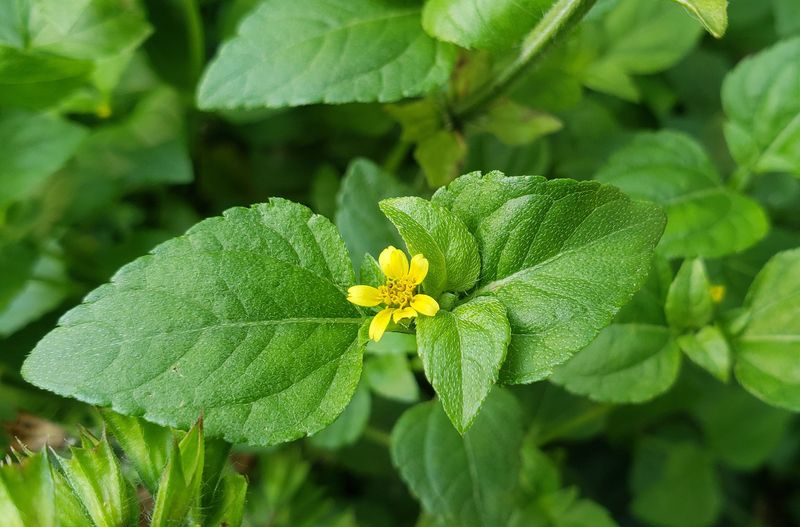
Most ground covers struggle in the shade, but Horseherb actually thrives there. Found naturally growing under trees and along fencerows across Texas, this cheerful little plant brings bright green color to spots where other plants give up.
Its small yellow flowers pop open throughout the growing season, adding a subtle charm to shady corners and sun-dappled areas alike.
Horseherb spreads by runners and reseeds itself freely, which means once you plant it, it fills in gaps all on its own. It grows in sun or partial shade and handles the reflected heat from walls, fences, and pavement surprisingly well.
Your Texas Garden Changes Every Week. Your Plan Should Too.
Gardening in Texas changes quickly throughout the season. Every Friday you’ll receive a simple weekly plan showing exactly what to plant, prune, fertilize, harvest, and protect so you never miss the right timing.
That adaptability makes it one of the most versatile native ground covers you can choose for a Texas yard.
It grows low to the ground, usually staying under six inches tall. That keeps maintenance simple.
You do not need to trim it often, and it rarely looks messy. In areas where you want a neat, natural look without constant upkeep, Horseherb delivers exactly that.
It also outcompetes many common weeds, which cuts down on your weeding time significantly.
Horseherb tolerates poor soil and does not need fertilizer. It grows well in clay, loam, and even compacted ground, which is great news for Texas gardeners dealing with tough soil conditions.
Watering it occasionally during its first season helps it get established, but after that, rainfall is usually enough.
Gardeners who want a low-maintenance, year-round ground cover under trees or along shaded borders will find Horseherb to be a reliable and rewarding choice. It is one of those plants that quietly does its job and always looks like it belongs right where it is growing.
3. Frog’s Foot
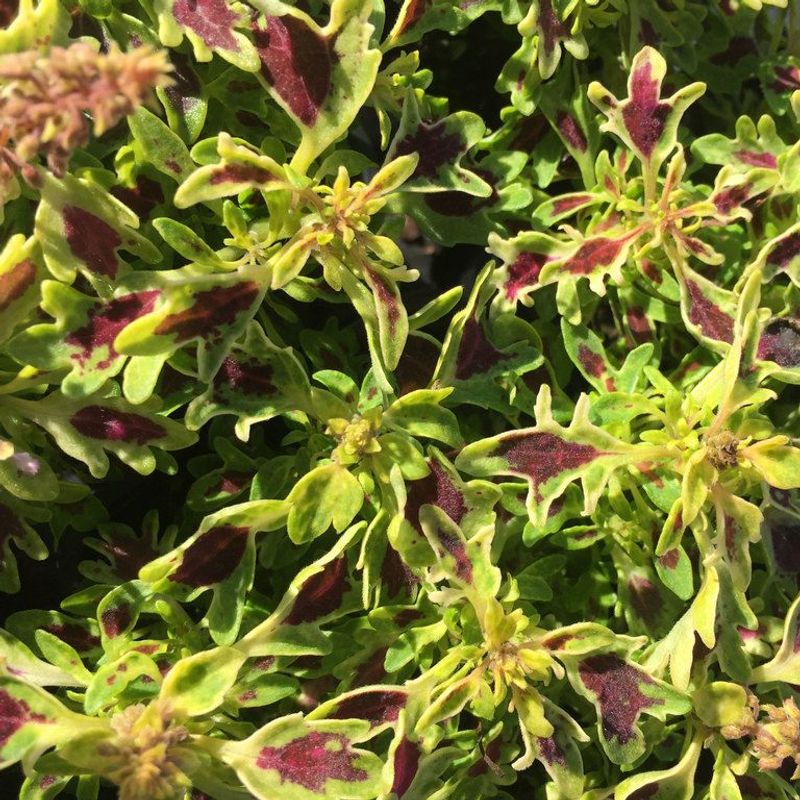
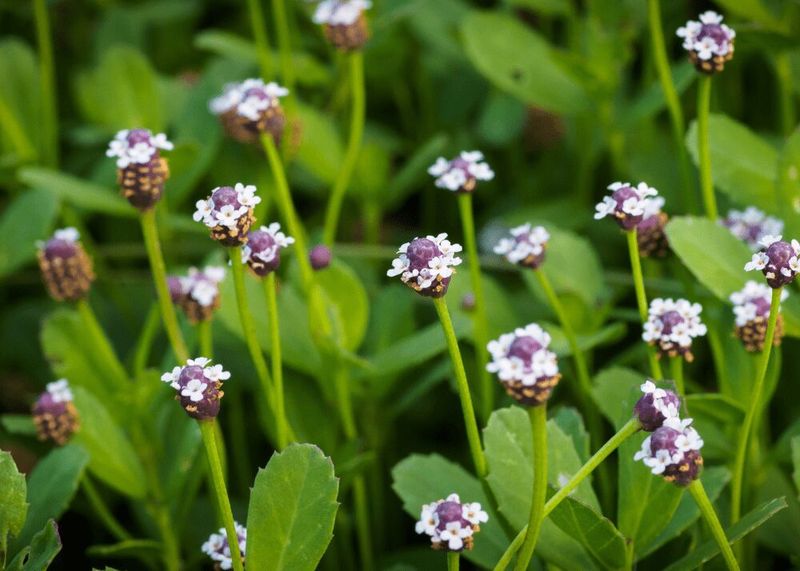
Not many ground covers can match the quiet beauty of Frog’s Foot. This dense, spreading native perennial produces small purple blooms that seem almost too pretty for such a tough plant.
It forms thick natural mats that hug the soil closely, filling in bare patches and pushing out weeds without any help from you.
Native to Texas and the southeastern United States, Frog’s Foot has adapted perfectly to the heat and humidity of Texas summers. It handles full sun without wilting and keeps its rich green color even during long dry stretches.
The purple flowers appear in waves throughout spring and summer, giving your yard consistent color across the hottest months of the year.
One of the best things about this plant is how it handles bare soil. Exposed ground in a Texas yard can become a weed magnet fast.
Frog’s Foot spreads steadily to cover those areas, creating a dense carpet that blocks weed seeds from taking hold. That means less weeding for you and a cleaner-looking yard overall.
It grows well in sandy or well-drained soil and does not need much water once it settles in. Planting it in spring gives it time to establish before the heat of summer arrives.
After that first season, it takes care of itself almost entirely. A little water during extreme dry spells keeps it looking its best, but it is remarkably forgiving.
Frog’s Foot works especially well along garden borders, in rock gardens, or anywhere you want low-growing color without a lot of upkeep.
Its compact size and spreading habit make it a natural fit for smaller spaces and tight corners where other plants struggle to fill in neatly.
4. Trailing Lantana
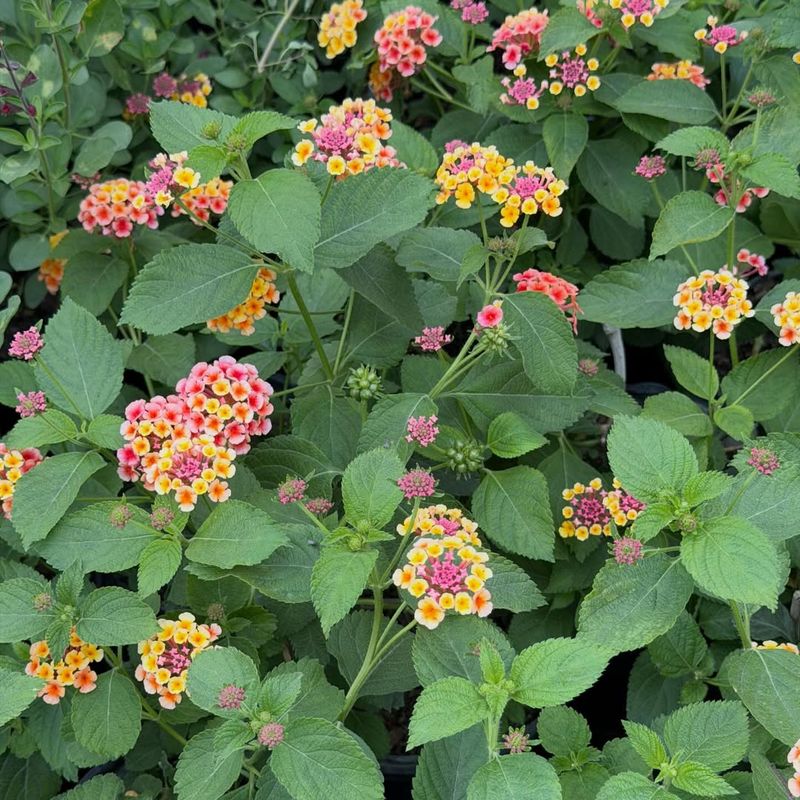
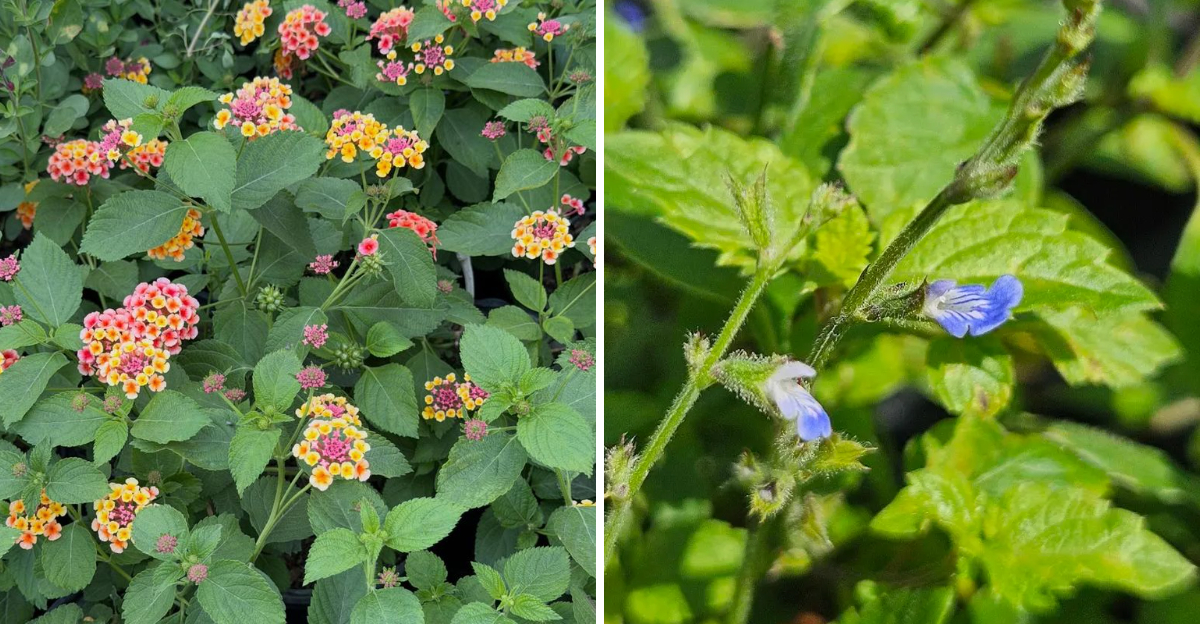
Few plants bring as much color to a hot Texas yard as Trailing Lantana. This low-growing, spreading plant produces clusters of bright yellow, orange, and red flowers that bloom almost nonstop from spring through fall.
The more sun it gets, the better it blooms, which makes it a natural star in the hottest, sunniest spots in your yard.
Trailing Lantana is a true Texas native, meaning it evolved right here in this climate. It handles drought, reflected heat, poor soil, and long stretches without rain like a champion.
You will not find yourself replacing it after a rough summer. Instead, it comes back stronger each year, spreading a little wider and blooming a little more each season.
Pollinators absolutely love this plant. Butterflies, bees, and hummingbirds visit the flowers constantly throughout the warm months.
Planting Trailing Lantana along a sunny border or at the base of a wall turns that space into a lively hub of activity. It is genuinely fun to watch the wildlife it attracts on a warm afternoon.
It grows well in rocky, sandy, or clay soil and does not need fertilizer to perform well. In fact, overly rich soil can actually reduce blooming.
Less really is more with this plant. Water it occasionally during its first growing season, and after that, rainfall handles the rest in most parts of Texas.
For slopes, sunny borders, or large open areas that need coverage without constant care, Trailing Lantana is a go-to choice.
Its trailing habit means it fills in ground quickly and keeps a tidy, colorful appearance with almost zero effort. It is one of the most rewarding native plants you can put in a Texas landscape.
5. Prairie Verbena
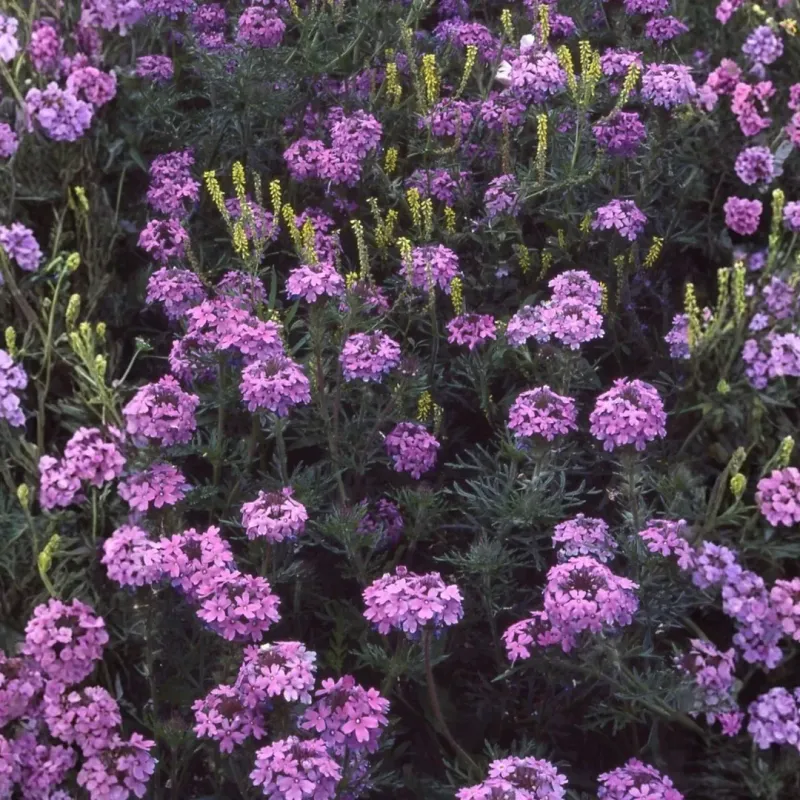
There is something almost magical about watching Prairie Verbena bloom. Clusters of vivid purple flowers rise above finely cut, feathery green foliage and last for months on end.
This mat-forming perennial spreads naturally across the ground, filling spaces with color and texture that looks like it belongs right in the Texas landscape because it does.
Prairie Verbena thrives in full sun and poor soil, which makes it ideal for the kinds of tough spots that defeat most other plants. Rocky slopes, dry hillsides, and sandy patches where nothing else will grow become vibrant with color when Prairie Verbena moves in.
It actually prefers lean soil over rich, amended garden beds, so skip the fertilizer and let it do its thing.
The blooming season is impressively long. Flowers appear in spring and continue well into fall, giving your yard months of purple color with almost no effort on your part.
Butterflies and native bees visit the blooms regularly, making this plant a valuable addition to any pollinator-friendly yard. It is a small plant that makes a big difference in the overall health of your garden ecosystem.
Spreading by both seeds and runners, Prairie Verbena fills in bare areas on its own over time. It stays low, usually under a foot tall, which keeps it from overtaking taller plants nearby.
In mixed plantings, it works beautifully as a colorful filler between larger native shrubs and perennials.
Water it a few times during its first summer to help it get rooted in. After that, it relies on natural rainfall and handles dry spells with ease.
For a native ground cover that rewards you with long-lasting color and very little upkeep, Prairie Verbena is a standout choice in any Texas yard.
6. Turk’s Cap Groundcover
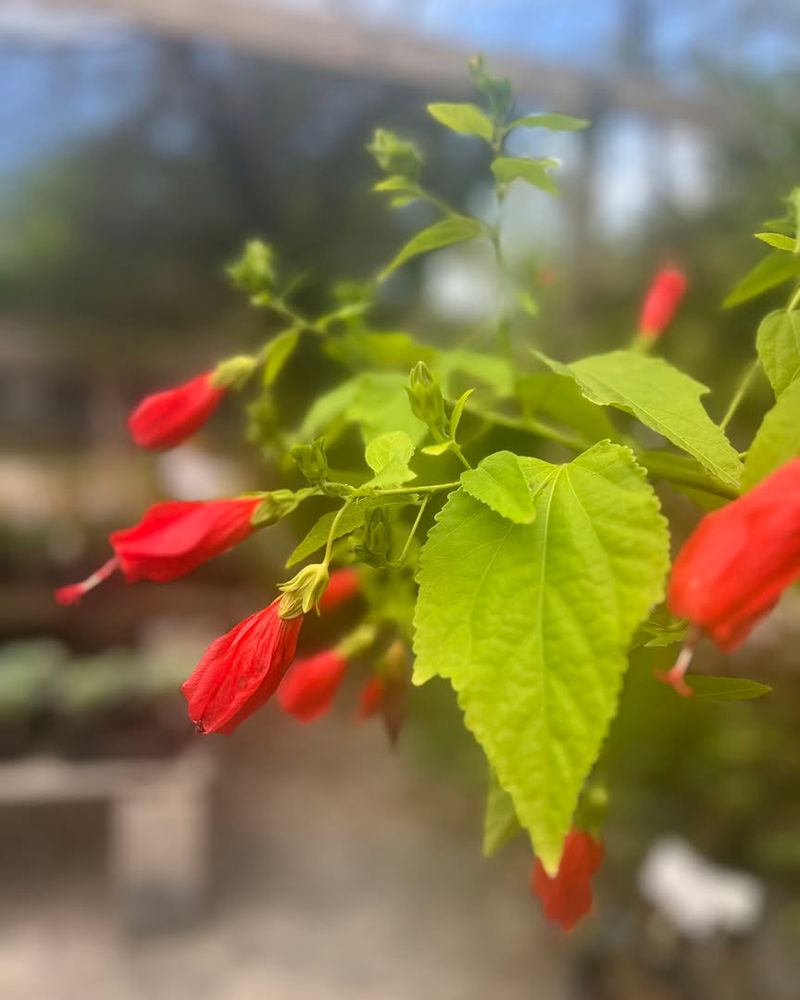
If your yard has a hot, sunny spot that seems impossible to plant, Turk’s Cap might be the answer you have been looking for.
This spreading, heat-tolerant perennial produces bright red tubular flowers that look like tiny, loosely wrapped rosebuds. They are striking, unusual, and absolutely irresistible to hummingbirds and butterflies.
Turk’s Cap is native to Texas and has been growing in this region for centuries. Indigenous communities historically used parts of the plant for food and medicine, which speaks to just how deeply rooted it is in Texas culture and ecology.
The red berries that follow the flowers are edible and taste faintly sweet, making this plant both beautiful and interesting to have around.
Low-growing forms of Turk’s Cap spread outward to form dense coverage across the ground, shading out weeds and protecting soil from erosion. It handles full sun and reflected heat from pavement and walls without any sign of stress.
In shaded areas, it also performs well, making it one of the most adaptable native ground covers available to Texas gardeners.
It grows in almost any soil type, including heavy clay and rocky ground. Once established, it needs very little water and bounces back quickly after dry spells.
Cutting it back in late winter encourages fresh, vigorous growth in spring, but even without pruning it comes back reliably each year.
For gardeners who want year-round coverage, wildlife appeal, and bold color in a tough spot, Turk’s Cap groundcover checks every single box.
Plant it once, give it a season to settle in, and it will reward you with color, coverage, and constant hummingbird visits for many years to come.
7. Creeping Blue Sage
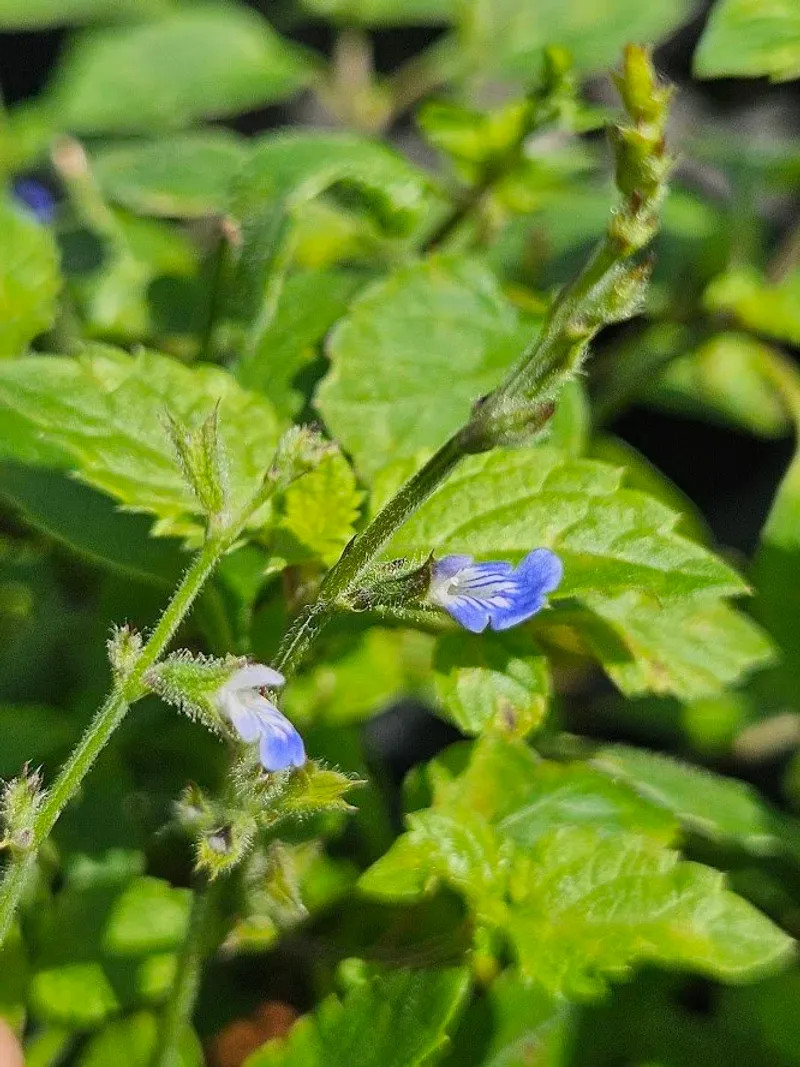
Blue is not a color you see often in Texas ground covers, which is exactly what makes Creeping Blue Sage so special. Its slender spikes of blue to violet flowers rise above low, spreading foliage and bloom from summer straight through fall.
Even when temperatures climb well past 100 degrees, those blue flower spikes keep coming, unfazed by the heat.
Salvia farinacea is native to Texas and New Mexico, and it has earned a loyal following among Texas gardeners who want beauty without the maintenance burden.
The native variety is tougher and more drought-resistant than cultivated hybrids, and it spreads more naturally to form a true ground cover over time. Once it finds a spot it likes, it fills in generously season after season.
Hummingbirds, bees, and butterflies are drawn to the blue flower spikes consistently throughout the blooming season. Having this plant in your yard means you will have a steady stream of pollinators visiting from midsummer through the first frost.
That is months of wildlife activity right outside your window, all thanks to one low-maintenance plant. It grows best in full sun and well-drained soil. Sandy or rocky ground suits it perfectly.
Avoid overwatering, especially in clay soils, since it prefers dry conditions once established. A deep watering every week or two during the hottest part of summer is usually all it needs to keep blooming strongly.
Creeping Blue Sage works beautifully along sunny borders, in rock gardens, or anywhere you want low, spreading color that comes back reliably every year.
Its combination of heat tolerance, drought resistance, and long bloom time makes it one of the most practical and visually rewarding native ground covers for any Texas landscape.