These Ohio Natives Bloom Longer Than Black-Eyed Susans
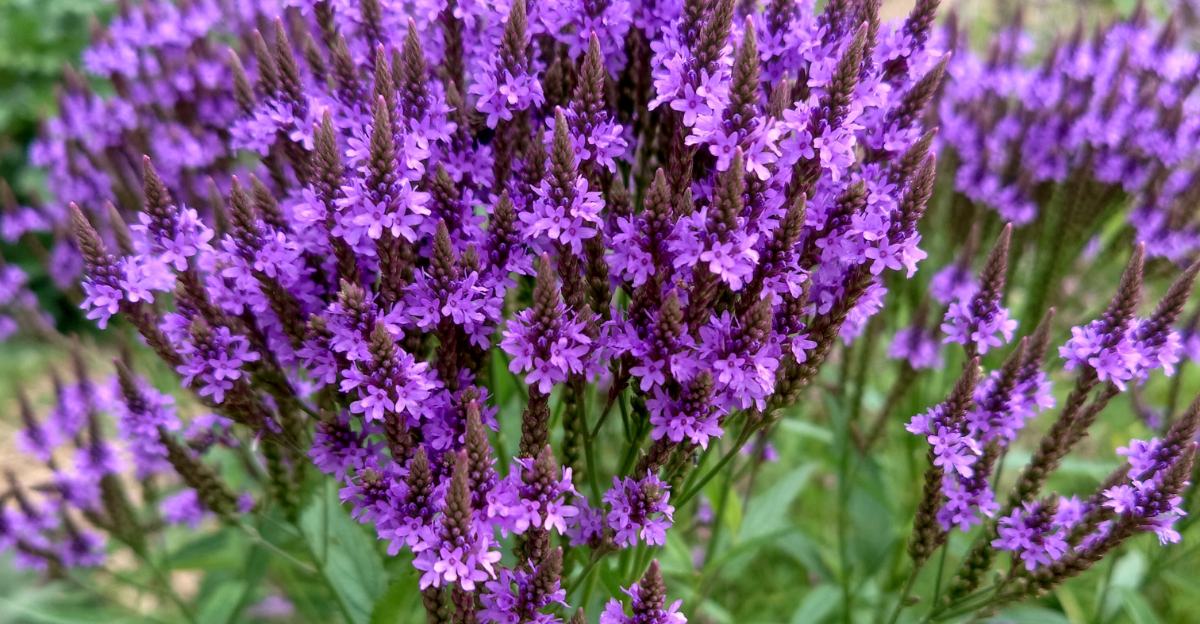
Black-eyed Susans get a lot of credit in the Ohio native plant world, and honestly, they’ve earned it. Reliable, cheerful, and tough as nails, they show up every summer without much fuss.
But if black-eyed Susans are the benchmark for dependable summer color, it is worth knowing that several Ohio natives can stretch the show even further. Some bloom earlier and keep going longer.
Some pick up right where black-eyed Susans fade and carry the color straight into fall. Most gardeners just never think to look past the plants they already know by name.
Your garden can have color from late spring all the way to frost, and it starts with giving a few overlooked natives the chance they’ve been waiting for.
1. Purple Coneflower Keeps The Color Going Into Late Summer
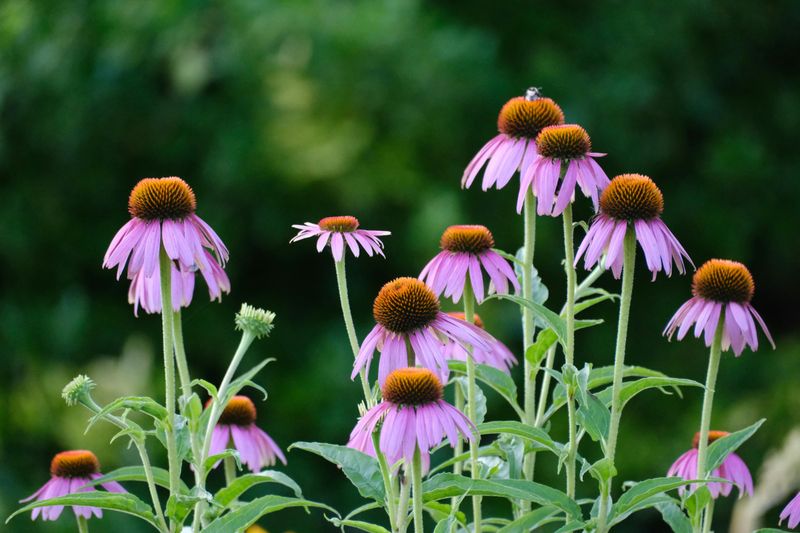
Few native perennials work as hard as purple coneflower when it comes to keeping color alive through the hottest weeks of the season. Also called Echinacea purpurea, this plant is a true workhorse in native beds across many parts of the state.
Its rosy-purple petals and bold orange-brown centers start opening in early to mid-summer. They can carry on well into late summer, especially with regular trimming early in the season.
Purple coneflower pairs beautifully with black-eyed Susans because their bloom times overlap and their colors complement each other.
The warm gold of the Susans and the soft purple of the coneflower create a classic native combination that pollinators find irresistible.
Bees, butterflies, and skippers visit both plants throughout the season.
Plant purple coneflower in full sun and well-drained soil for the best performance. It handles summer heat and dry stretches better than many perennials once established.
Toward the end of the season, consider leaving some seed heads standing rather than cutting everything back.
Goldfinches and other seed-eating birds will visit those dried heads well into fall and even winter, adding one more layer of wildlife value to your planting.
2. Wild Bergamot Blooms For Weeks In Sunny Native Beds
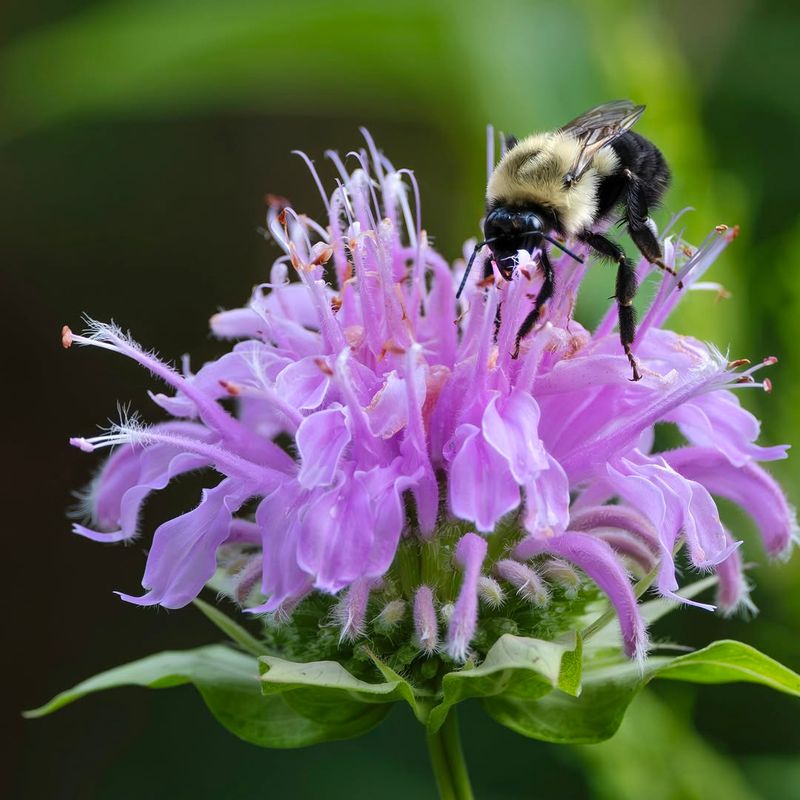
Walk past a patch of wild bergamot in full bloom on a warm July afternoon and the fragrance alone will stop you. Also called Monarda fistulosa, this native perennial fills sunny beds with soft lavender-pink blooms for several weeks during summer.
The flower heads have a shaggy, globe-like shape that pollinators find extremely attractive. On a good day, you can spot bumblebees, native bees, and hummingbirds all working the same planting.
Wild bergamot typically blooms from mid-summer onward, which means it overlaps nicely with black-eyed Susans and can help carry color as the season progresses. It thrives in full sun to part sun and does well in well-drained to average soil.
One thing to keep in mind is that monarda can be prone to powdery mildew in humid conditions, which is fairly common during summer in this state.
Good airflow around the plants makes a real difference. Avoid crowding them against walls or dense plantings, and give each clump enough breathing room.
Your Ohio Garden Changes Every Week. Your Plan Should Too.
Gardening in Ohio changes quickly throughout the season. Every Friday you’ll receive a simple weekly plan showing exactly what to plant, prune, fertilize, harvest, and protect so you never miss the right timing.
Selecting mildew-resistant selections when available is also a smart move. Even when mildew does appear late in the season, it rarely harms the plant seriously.
The blooms still show up reliably, and the pollinators keep coming back year after year.
3. Coreopsis Brings A Long Golden Bloom Season
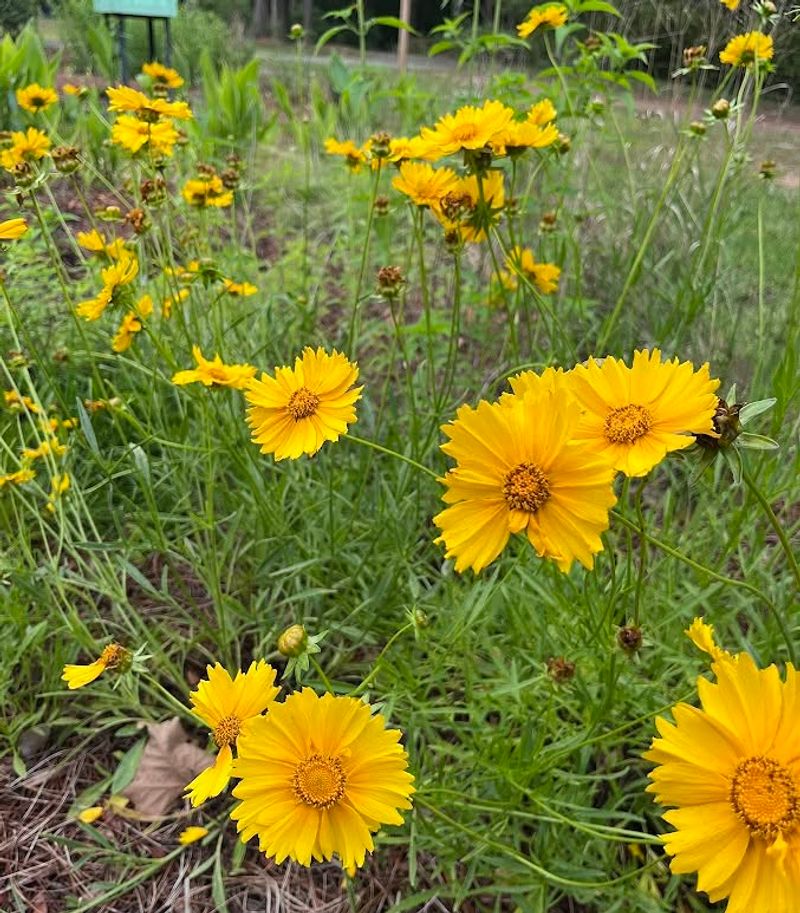
If your goal is to keep golden color flowing from early summer onward, coreopsis deserves a serious spot in your planning.
Several native and native-friendly coreopsis species perform well in local gardens, and many of them start blooming earlier than black-eyed Susans.
That makes them useful for filling the color gap before the Susans hit their stride, and some types keep going right alongside them through mid and late summer.
Lance-leaved coreopsis, also called Coreopsis lanceolata, is a native species that does especially well in sunny, well-drained spots. Its bright yellow daisy-like flowers appear in abundance and can rebloom if trimming consistently.
Threadleaf coreopsis, Coreopsis verticillata, is another popular option with fine, feathery foliage and a long bloom window. Both handle heat and dry conditions reasonably well once established.
Full sun and well-drained soil are key for most coreopsis types. They tend to struggle in heavy clay or soggy spots, so raised beds or amended soil can make a big difference if drainage is a concern.
Trimming spent flowers during the peak season encourages more blooms on many types, though some newer selections are more self-cleaning. Either way, coreopsis earns its place as one of the most reliable long-season color plants for sunny native beds.
4. Mountain Mint Keeps Pollinators Coming For Weeks
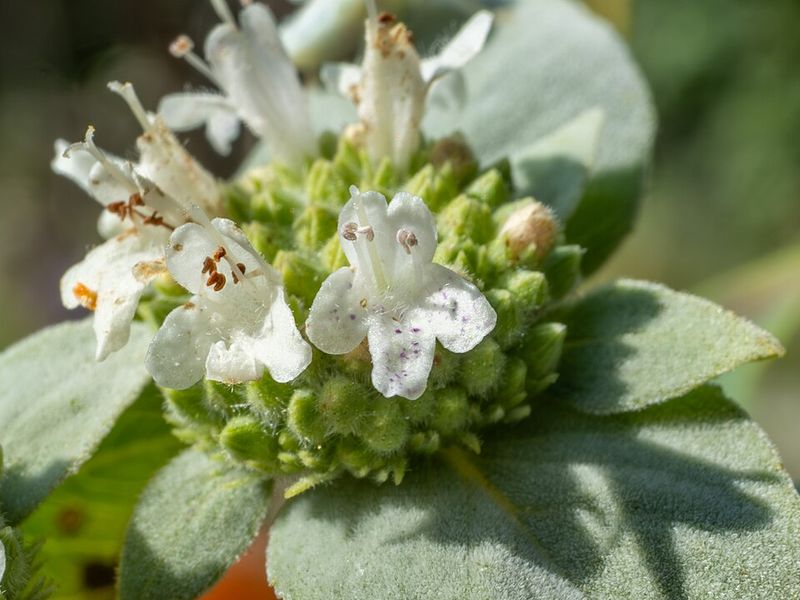
Mountain mint may not shout for attention from across the yard, but once it starts blooming, the pollinators know exactly where to go. Also called Pycnanthemum muticum, this native perennial produces clusters of tiny pale flowers.
Silvery-green bracts surround the blooms and make the whole plant look softly frosted in summer.
Its bloom window often runs from July into September, which makes it especially useful alongside black-eyed Susans and other midsummer natives.
Bees, wasps, butterflies, and other beneficial insects visit the flowers heavily, and the plant can make a sunny native bed feel alive for weeks.
Plant mountain mint in full sun to part sun with well-drained to average soil. It can spread by rhizomes, so give it room or place it where a small colony is welcome.
The foliage has a strong minty scent when brushed, and deer usually leave it alone.
5. Purple Giant Hyssop Sends Up Pollinator Spikes Into Fall
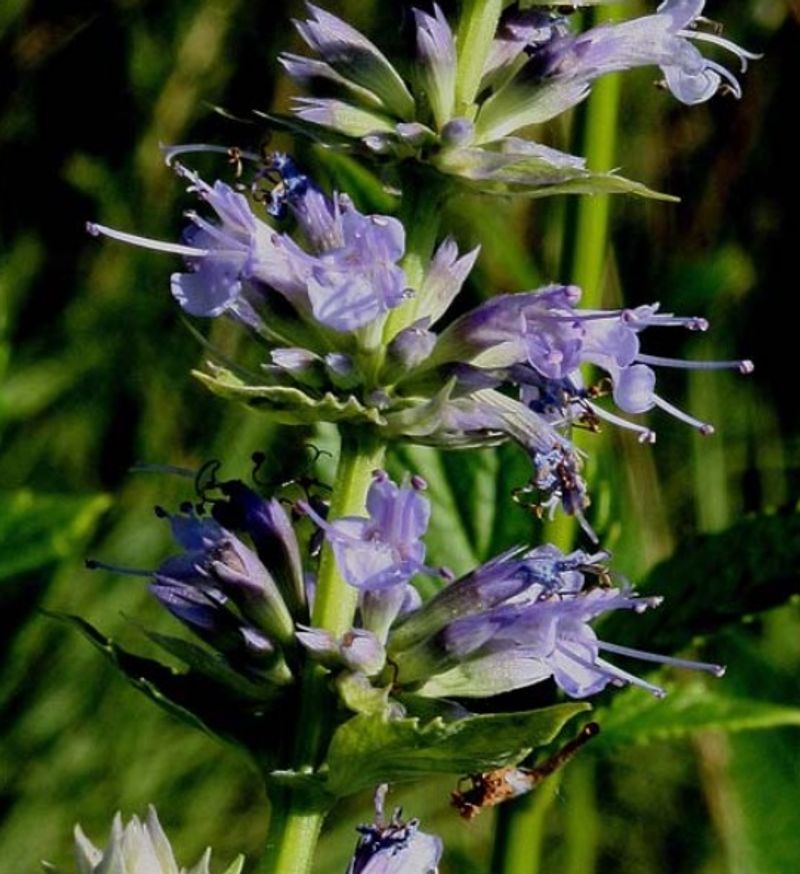
Purple giant hyssop is the kind of plant that quietly makes a border feel taller, fuller, and more alive.
Its upright flower spikes rise above lower summer bloomers, adding soft purple color and steady movement when bees and butterflies start working the flowers.
This native perennial, known botanically as Agastache scrophulariifolia, blooms through the heart of summer and often keeps going into early fall.
That timing makes it a beautiful partner for black-eyed Susans, especially when you want the bed to keep its energy after the first big summer flush starts to fade.
Give purple giant hyssop full sun to part sun and average to moist, well-drained soil. It can grow several feet tall, so place it near the middle or back of a native border where it has room to lean into its natural height.
The foliage has a noticeable herbal scent when brushed, and the whole plant fits easily with coneflowers, asters, mountain mint, and other pollinator-friendly natives.
It brings height, fragrance, and late-season life without making the planting feel overly formal.
6. Blue Vervain Keeps Blooming In Moist Sunny Spots
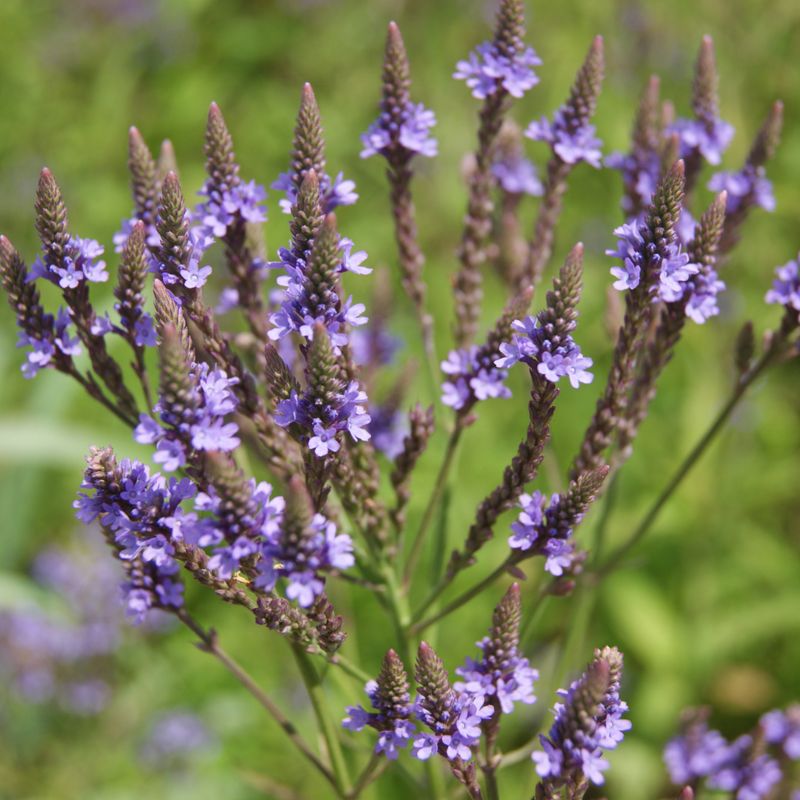
Not every garden is dry and lean, and blue vervain is proof that moist spots deserve just as much native color as the well-drained beds. Also called Verbena hastata, this native perennial sends up slender, branching spikes.
Tiny purple-blue flowers cover the spikes and bloom progressively from the bottom upward. That staggered opening means a single plant can stay in bloom for a remarkably long stretch through summer.
Blue vervain fits rain gardens, damp borders, and pollinator plantings in Ohio better than most of the other plants on this list. It thrives where moisture lingers and does not mind periodic wet feet.
Native bees and small butterflies visit the flowers regularly, and the upright form adds nice structure to plantings that might otherwise look soft or sprawling.
One thing worth knowing before you plant it is that blue vervain can self-seed enthusiastically where it is happy. In a naturalistic meadow or rain garden setting, that is often a welcome trait.
In a more formal border, you may want to trim some spent spikes before seeds fully mature to keep the spread manageable. It is not aggressive in the way invasive plants are, but it can fill in a space more quickly than expected.
Give it room, keep it in a moist spot, and it will reward you with weeks of reliable native color.
7. Great Blue Lobelia Extends Color Into Late Summer Shade
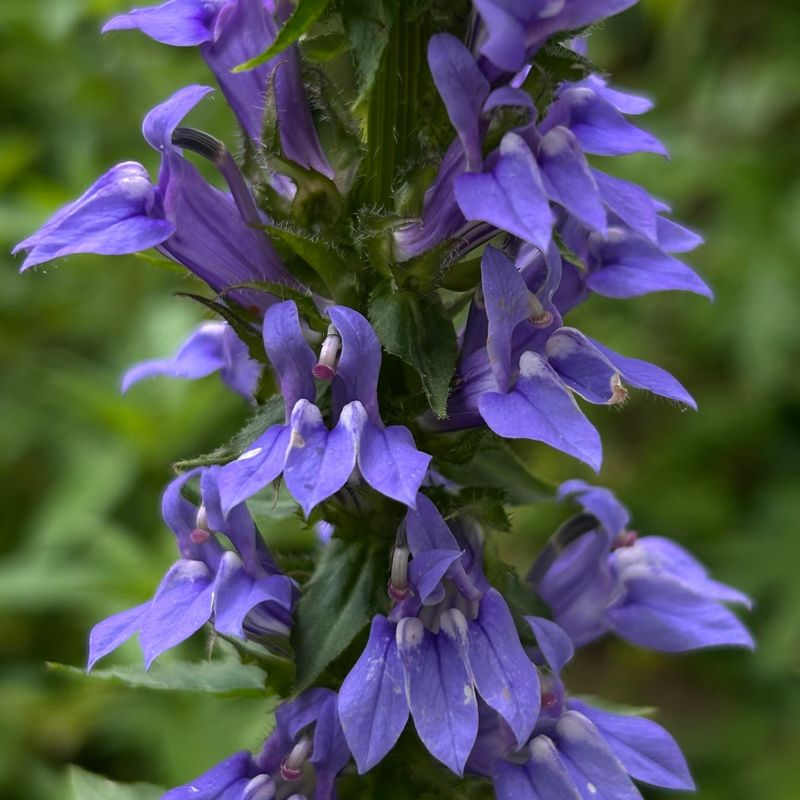
Most late-summer native plants want full sun, which makes great blue lobelia genuinely special. Also called Lobelia siphilitica, this native perennial brings rich, true blue flower spikes to moist part-shade areas.
It blooms at a time of year when blue flowers are surprisingly hard to find. It typically blooms from late summer into early fall, which means it picks up right around the time many sunny summer flowers are beginning to slow down.
The vivid blue color stands out beautifully against green foliage in shaded borders, and hummingbirds are particularly drawn to the tubular flowers. Native bees also visit regularly.
If you have a spot under open tree canopy or along a shaded stream edge or pond margin, great blue lobelia can fill it with color. It also adds wildlife value that few other native plants can match.
Moist, rich soil is essential. This is not a plant for dry shade, and it will struggle and fade quickly if the soil dries out too much.
Part shade to sun works well as long as moisture is consistent. Planting it near water features, downspout gardens, or low areas where moisture collects naturally gives it the best chance to thrive.
It can self-seed in favorable spots, gradually building a larger colony over time without becoming a nuisance in most garden settings.
8. New England Aster Carries Native Color Into Fall
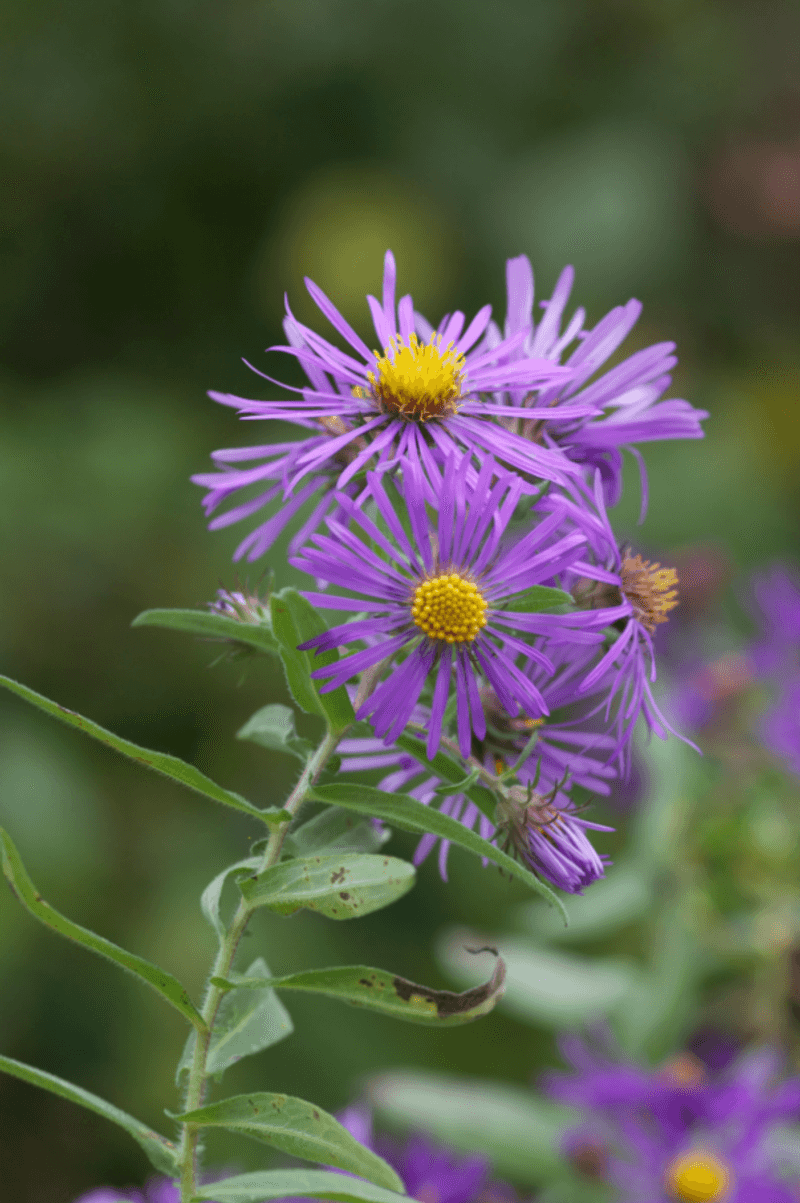
By the time October arrives, most summer flowers have already wrapped up their show. New England aster, however, is just hitting its peak.
This native perennial blooms in shades of purple, pink, and violet from late summer into fall. It is also one of the most important late-season nectar sources for pollinators in the region.
Monarch butterflies fueling up for migration, native bees stocking their nests, and bumblebee queens building reserves before winter all depend on plants like this one.
New England aster, also called Symphyotrichum novae-angliae, is a true native of this region. It grows naturally in fields, roadsides, and open areas across many parts of the state.
In garden settings, it can get quite tall, sometimes reaching four to six feet, which gives it a bold presence in the back of a border. Giving it enough room and good airflow helps prevent powdery mildew late in the season.
Full sun brings out the best bloom. Pinching the stems back by about one-third in early summer, around late May to early June, can encourage a bushier, more compact plant with more flowering stems.
This technique is supported by general horticultural guidance for tall asters, though results vary by cultivar and site. Once it blooms, there is almost nothing else in the fall native garden that rivals its color or its value to wildlife.