These Oregon Plants Keep Their Shape Without Becoming A Shearing Project
A low-maintenance Oregon yard usually starts with one decision made years before the first pruning cut.
Plant a shrub where its mature width actually fits, and its natural form can do most of the design work. Squeeze that same shrub between a sidewalk, window, and fence, and Saturday mornings start filling with hedge trimmers.
Oregon gardeners have several better-behaved choices.
Lewis mockorange arches instead of forming a box. Evergreen huckleberry stays naturally dense. Salal and Cascade Oregon grape build layered groundcover, while compact hebes can hold rounded forms in milder parts of the state.
Vine maple, western azalea, and manzanita bring larger shapes that look best with selective pruning rather than repeated shearing.
So which plants give you structure without becoming another weekend assignment?
Start with mature width, regional hardiness, light, drainage, and summer moisture. Then leave enough breathing room for the plant you actually bought.
A naturally graceful shrub should not need monthly negotiations with a power tool to stay welcome beside your Oregon home each long growing season.
1. Let Lewis Mockorange Keep Its Natural Arch
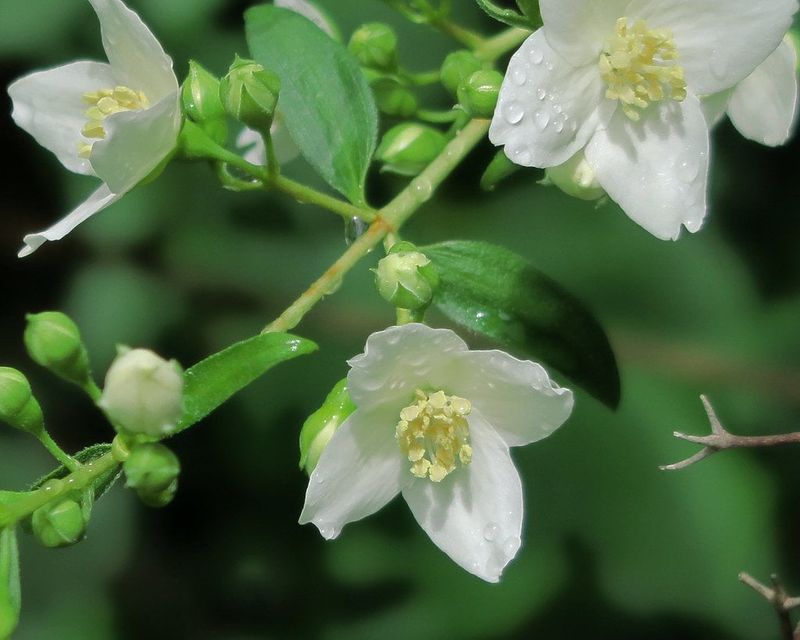
Creamy white flowers are only half the reason Lewis mockorange deserves room in an Oregon yard.
Philadelphus lewisii naturally forms a many-stemmed shrub with broadly arching branches, usually around 5 to 10 feet tall. That loose framework is the feature.
Planting it several feet from a walkway or wall lets the stems sweep outward instead of forcing the gardener to keep chopping them back.
Sun to part shade works well, and the shrub tolerates a broad range of ordinary garden soils. Fragrant white flowers appear on the graceful stems, giving the plant a strong early-summer presence without needing a formal outline.
Pruning belongs after flowering when size control or renewal becomes necessary.
Remove an older cane at the base, shorten one awkward branch, or open a crowded section selectively. Repeated shearing would flatten the arching habit and remove the very flowering wood that makes the shrub worth growing.
One source-draft detail needs correcting too: Lewis mockorange is not Oregon’s state flower. It is Idaho’s state flower.
That does not make it any less Oregon-friendly.
Give the shrub enough width from day one, and maintenance becomes occasional editing rather than weekly geometry.
The plant already knows its shape. The hedge trimmer does not need to submit a competing design proposal.
2. Give Evergreen Huckleberry Room To Fill Out
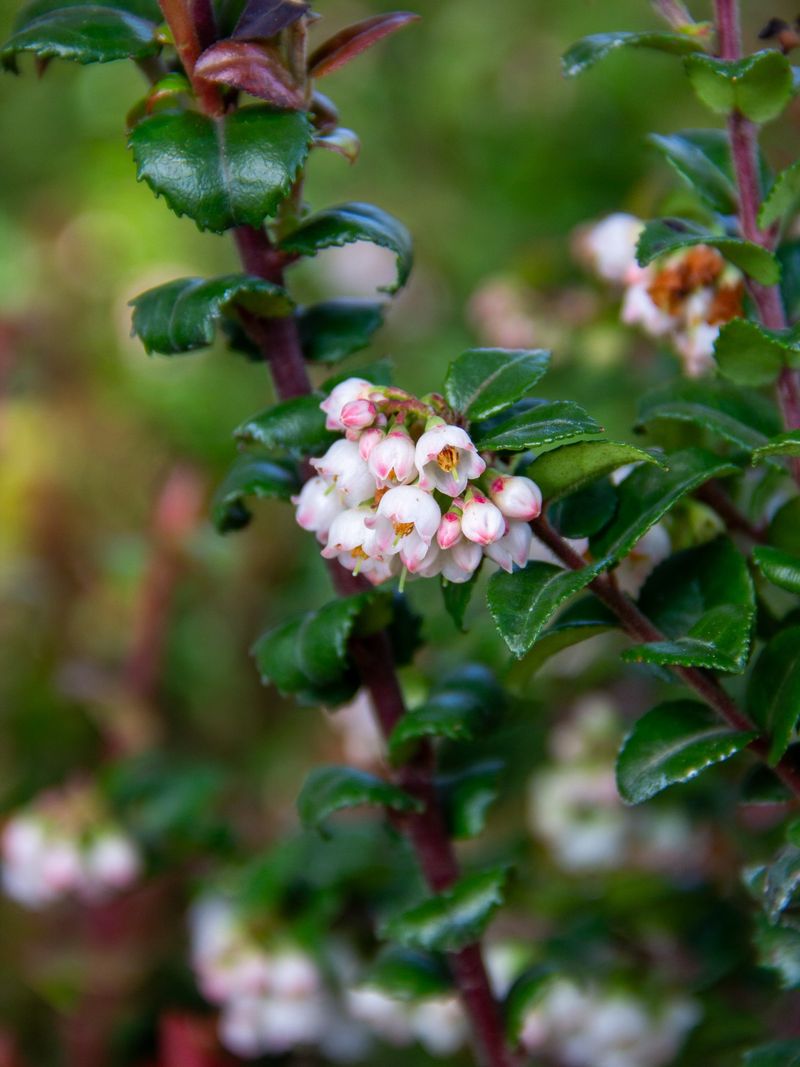
Glossy foliage can look clipped even when nobody has touched it.
Evergreen huckleberry, Vaccinium ovatum, naturally grows as a neat, erect evergreen shrub, commonly around 3 to 5 feet tall and sometimes reaching about 8 feet.
Small leathery leaves sit closely along reddish stems, creating a dense texture that works beautifully near woodland edges, patios, and shaded borders.
Sun to part shade can suit the plant, though exposure changes the way it grows.
The mature size is more important than the little nursery pot. Give it enough room for several feet of width and those occasional long shoots become easy to handle with one selective cut.
Crowd it against a path and every natural branch starts looking like a personal offense.
Your Oregon Garden Changes Every Week. Your Plan Should Too.
Gardening in Oregon changes quickly throughout the season. Every Friday you’ll receive a simple weekly plan showing exactly what to plant, prune, fertilize, harvest, and protect so you never miss the right timing.
Spring brings pale pink, urn-shaped flowers, followed by edible blue-black fruit. Evergreen foliage keeps the shrub useful after the seasonal show ends.
Avoid turning it into a square.
A wayward stem can be shortened back to a branch junction without shearing the whole surface. That preserves the layered branching and keeps leaves along the stems instead of creating a shell of clipped outer growth.
Evergreen huckleberry fits western Oregon especially well, where its Pacific coastal range makes the climate familiar territory.
It may never look laser-level across the top.
That is the advantage. It stays dense and handsome while still looking like a shrub rather than a green ottoman someone forgot on the porch.
3. Let Salal Build Its Own Low Mounds
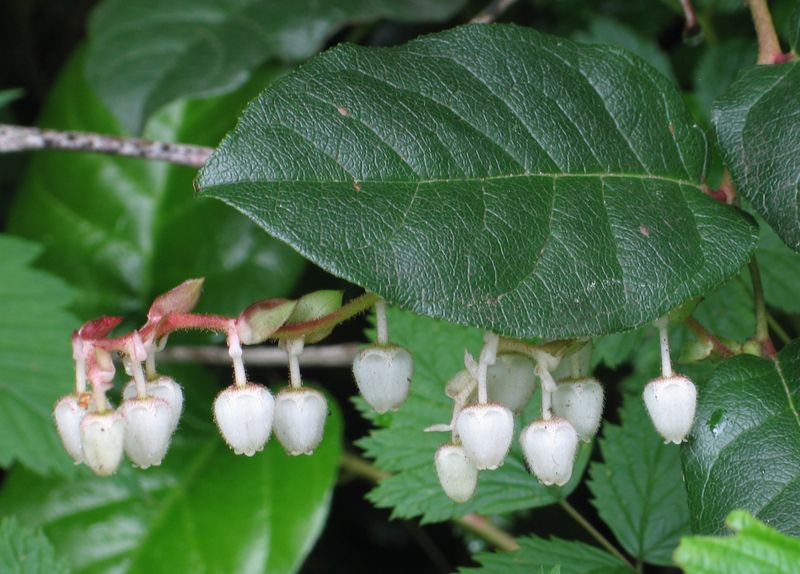
A shady bank does not need to become a hedge just because you want evergreen coverage.
Salal, Gaultheria shallon, forms dense thickets of glossy evergreen foliage and can spread into a broad understory layer. Its height changes dramatically with conditions.
In full sun and poor soil it may stay below 2 feet, while plants in shaded, richer sites can reach 4 to 10 feet.
That size difference makes placement crucial.
Use salal where spreading is welcome, such as a woodland slope, broad shaded border, or naturalized area. A narrow planting strip beside paving creates a containment job, even though the top never needs traditional hedge shearing.
White to pinkish urn-shaped flowers appear in late spring, followed by dark edible fruit that birds also use. The thick leaves stay attractive through the year and create a strong Pacific Northwest understory look.
Control belongs at the edge rather than across the top.
Cut or dig out stems that cross the boundary, then leave the remaining colony alone. That approach respects the plant’s thicket-forming habit without turning maintenance into repeated surface clipping.
Salal also prefers acidic ground and can be difficult to transplant, so good initial placement matters more than later correction.
Give it a generous footprint, and the maintenance job becomes occasional border control. Give it a three-foot prison, and salal will spend years filing botanical appeals through the edging.
4. Use Cascade Oregon Grape For Compact Structure
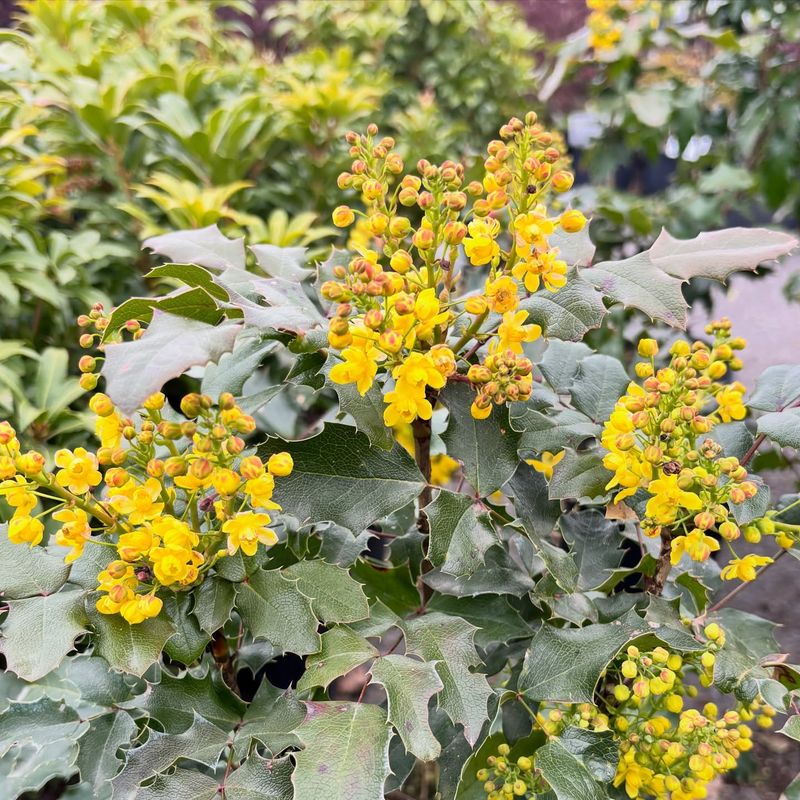
Some shady spaces need structure without another shrub reaching the windows.
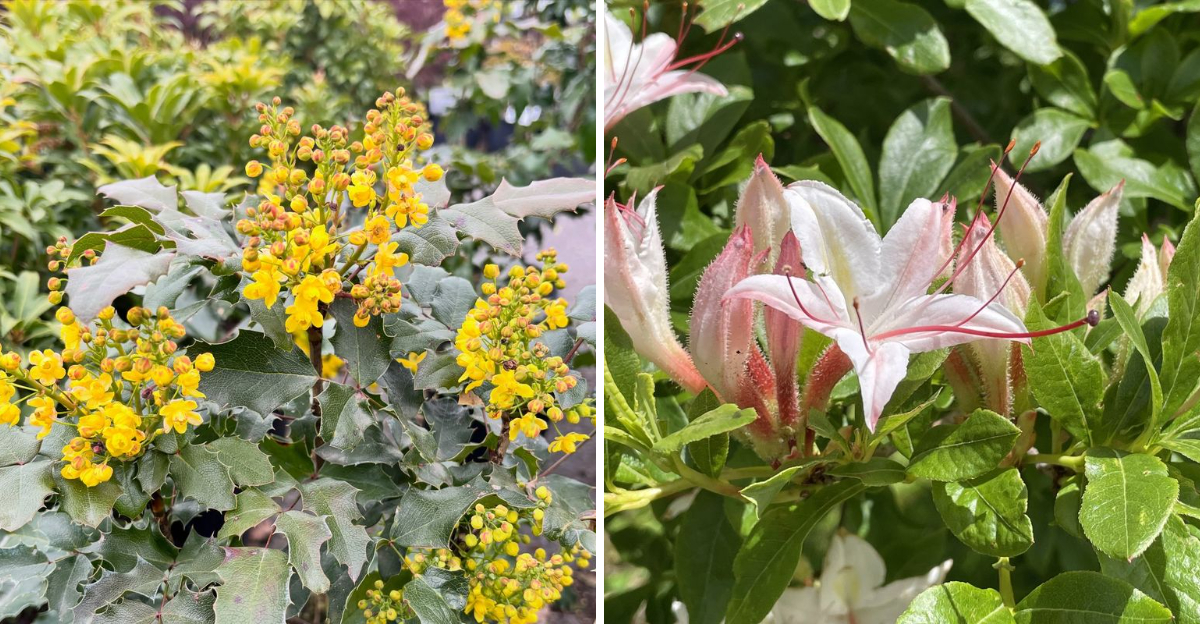
Cascade Oregon grape, Mahonia nervosa, stays low, growing slowly to around 2 feet tall while spreading by stolons. Its long compound leaves create a layered evergreen texture that looks organized without being clipped into shape.
Partial shade or shade suits it best.
Unlike a drought-loving manzanita, this plant appreciates adequate moisture. That makes it a stronger choice beneath trees or in a woodland-style bed where soil stays reasonably cool rather than on a blazing, gravelly slope.
Yellow flower clusters rise above the foliage from spring into early summer, followed by blue fruit with a waxy coating. Winter can bring purplish tones to the leaves, adding another quiet layer of seasonal interest.
The naturally low height prevents many common pruning conflicts.
It is unlikely to block a window or swallow a porch railing when the mature spread has been allowed for. Remove a damaged frondlike leaf or an unwanted spreading section as needed, then leave the overall mound alone.
Shearing would ruin the architecture.
Those long, pinnate leaves are arranged in layers, not in a dense hedge surface meant for clipping.
Plant several where a woodland floor needs continuity and let them knit gradually.
Cascade Oregon grape supplies evergreen structure, flowers, fruit, and winter color while keeping the hedge trimmer unemployed, which may be its finest ornamental feature.
5. Grow Hebe With Only Light Shaping
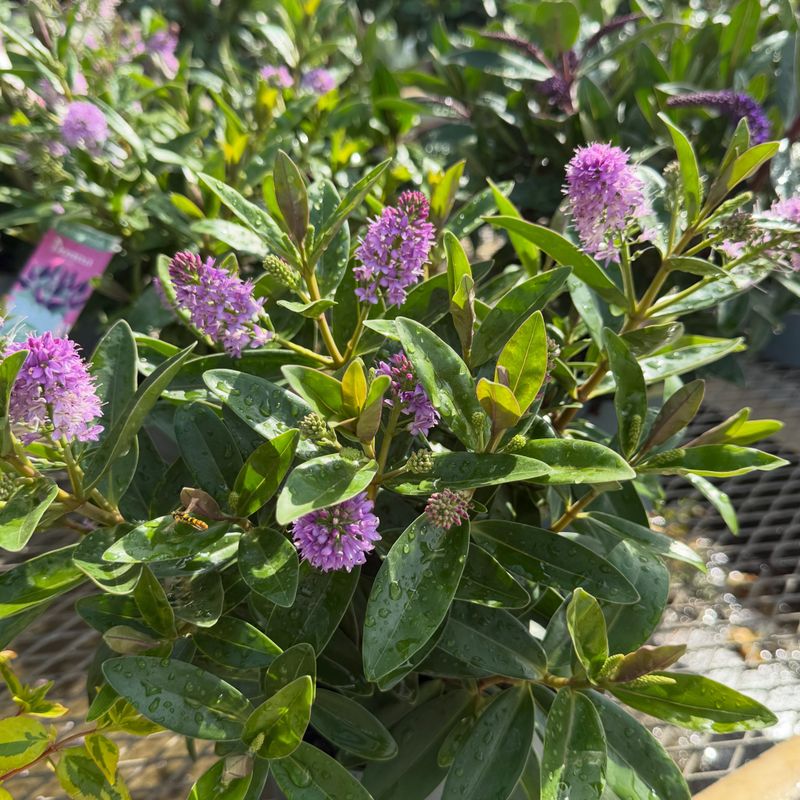
A genuinely compact cultivar can save more pruning than any technique ever will.
Hebe offers several naturally tidy forms for Oregon’s milder locations.
‘Patty’s Purple’ grows to about 3 feet tall and equally wide with dense foliage and purple-white flowers, while ‘Pagei’ stays only about 9 inches tall and can spread to roughly 5 feet. Both are evergreen and prefer good drainage.
Cold tolerance is the catch.
Many hebes are best suited to USDA Zone 8 conditions, and ‘Patty’s Purple’ is noted as especially comfortable in a seaside environment.
That makes coastal gardens and mild western Oregon sites more dependable than colder inland or eastern locations.
Choose the cultivar by final dimensions, not by the word “hebe” on the label.
A low-spreading ‘Pagei’ has a completely different job from a three-foot rounded selection. Matching that shape to the bed removes plenty of future pruning.
Good drainage matters just as much.
Wet winter soil can create more trouble than a relaxed outline ever will. Site the plant where excess water moves away readily.
Light trimming after flowering can remove spent stems or one uneven shoot.
Heavy shearing is unnecessary and can leave a compact shrub looking more manufactured than improved.
Hebe is not native to Oregon, and it is not a statewide solution.
In the right mild garden, though, a correctly chosen cultivar can hold its own shape while the pruners enjoy an unusually quiet season.
6. Let Vine Maple Keep Its Open Form
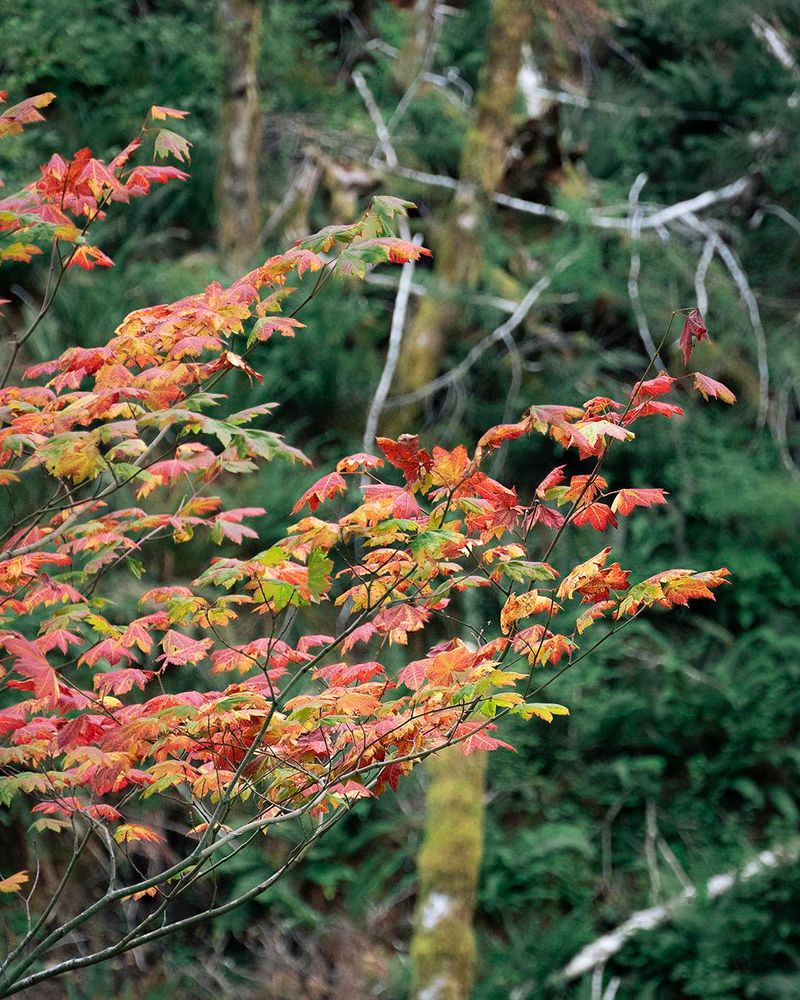
Vine maple already has a design language, and straight lines are not part of it.
Acer circinatum is an Oregon native that usually grows about 10 to 20 feet tall as a multi-stemmed large shrub or small tree.
In forest shade it can become spreading and almost vine-like, while sunnier locations encourage a bushier, denser form.
That flexibility means the site controls part of the silhouette.
A broad woodland edge gives shaded branches room to layer horizontally. A brighter opening can support a fuller upright specimen. Either way, placing it where the mature crown fits is far easier than trying to convert it into a narrow hedge later.
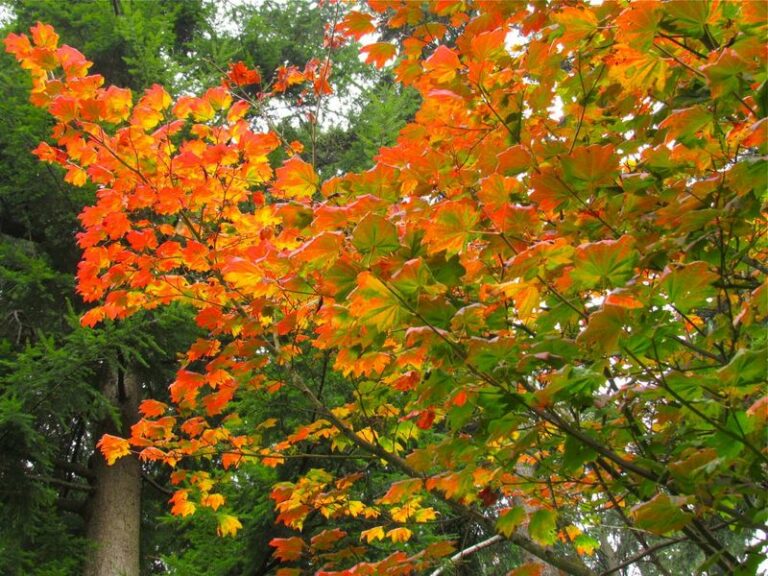
Fall color can bring red, orange, and yellow, especially with more sun. The plant prefers moist, shady situations but can tolerate brighter exposure when site conditions support it.
Prune for structure, not surface.
Remove a crossing limb, damaged wood, or one stem interfering with a walkway. Heavy pruning can erase the graceful horizontal quality that makes shaded vine maples so distinctive.
Smaller spaces still have options.
Cultivars such as ‘Little Gem’ stay much shorter, rarely exceeding about 3.5 feet, while ‘Pacific Sprite’ remains compact and slow growing.
That is the smarter way to solve a size problem.
Choose a smaller vine maple instead of buying the full-size species and spending twenty years arguing with it about the property line.
7. Give Western Azalea Room To Spread
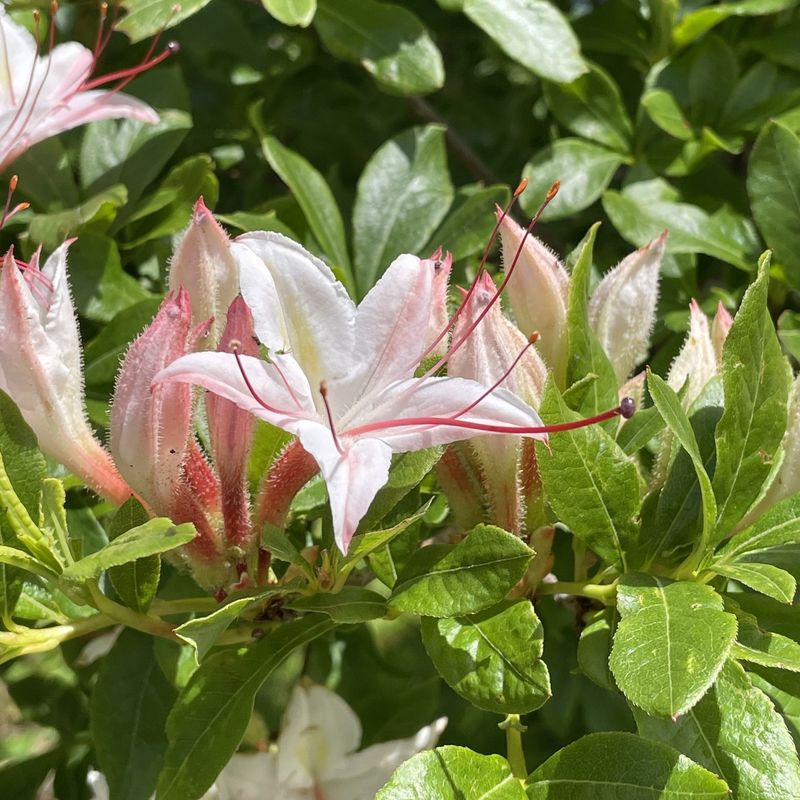
Fragrant flowers make western azalea memorable, but mature width determines how peaceful the relationship stays.
Rhododendron occidentale is a deciduous native shrub that can reach about 10 feet tall with an upright, substantial form. Its flowers open in white to salmon-pink shades, often with a yellow blotch, and carry a strong fragrance.
This is primarily a southwestern Oregon native.
Its natural range follows moist areas and streambanks from southwestern Oregon south into California. Sun to part shade can work, but a cool root zone and dependable moisture make much more sense than a hot, cramped foundation strip.
Fall brings another benefit.
Leaves may shift to yellow, scarlet, or crimson before dropping, giving the shrub a second ornamental season after the flowers finish.
Give it a broad border, woodland edge, or moist naturalistic planting where stems can expand without constantly brushing a driveway or railing.
Pruning can then stay selective.
Remove damaged wood, thin one crowded branch, or correct a structural problem after flowering. Repeated shearing would sacrifice both flower-bearing growth and the loose branching character.
The right placement is doing most of the maintenance work here.
A western azalea in a ten-foot space can mature into a beautiful specimen. The same plant crammed into a narrow slot becomes a recurring appointment with the pruners.
Fragrance is lovely. Fragrance without a yearly wrestling match is even better.
8. Let Manzanita Show Off Its Branching
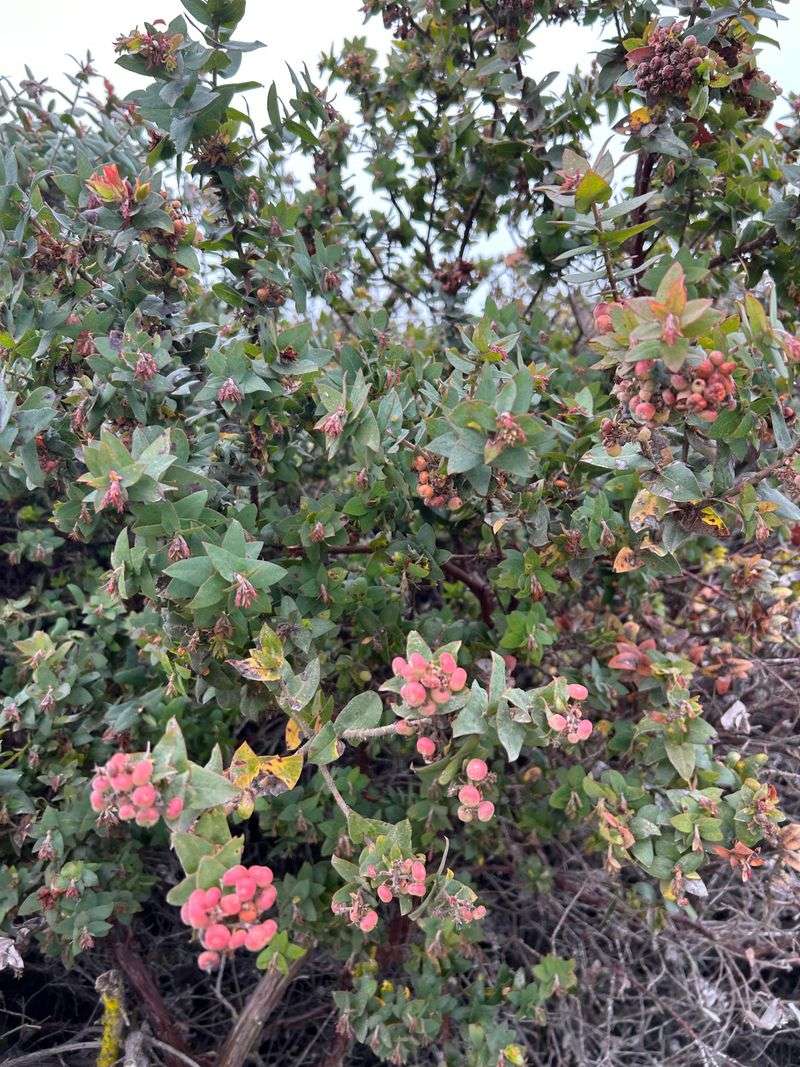
Smooth reddish bark is the reason shearing a manzanita feels almost criminal.
Hairy manzanita, Arctostaphylos columbiana, is native to Oregon’s coastal mountains and grows roughly 3 to 10 feet tall.
Its evergreen gray-green foliage sits on branching that becomes increasingly sculptural as the shrub matures, while pale pink to nearly white flowers appear in spring.
Sun to light shade can work, and acidic soil suits the species.
Give the mature shrub enough room for branches to twist and separate naturally. A narrow walkway creates a built-in pruning conflict.
Smaller sites can use kinnikinnick, Arctostaphylos uva-ursi, instead.
That species stays roughly 6 to 12 inches tall and spreads as a mat, with older stems developing attractive exfoliating bark. It performs in sun or partial shade and favors poor, sandy, acidic soils with good drainage.
Neither plant benefits from being treated like boxwood.
Remove a branch or one stem that genuinely interferes with circulation or access, then leave the rest of the framework visible. The branching is ornamental material, not excess growth waiting for a hedge trimmer.
Regional and soil fit still matter.
Hairy manzanita belongs naturally in lower coastal mountain country, while kinnikinnick has much broader cold tolerance.
Choose the right species first.
A manzanita with enough space becomes living sculpture. One wedged into the wrong bed becomes sculpture edited by chainsaw, which rather defeats the point.