These Oregon Plants Make A Front Yard Look Cooler During Summer Heat
A front yard can feel completely different once summer heat settles over Oregon. Bright pavement starts glaring, the porch feels warmer, and even a quick trip to the mailbox can feel like a tiny expedition.
Suddenly, every patch of shade deserves a standing ovation.
The right plants can soften that baked look and make the whole space feel more refreshing. Some bring a cool visual effect through their color or texture.
Others create the kind of leafy atmosphere that makes a yard seem calmer on a hot afternoon.
That does not mean turning the front garden into a jungle. A few thoughtful choices can change the mood without creating a mountain of extra work. Thank goodness, because nobody wants another summer chore.
With the right greenery in place, a front yard can look less sun-scorched and more inviting. It might even become the spot where you actually want to linger for a while.
1. Blue Oat Grass Adds Cool Silver Texture
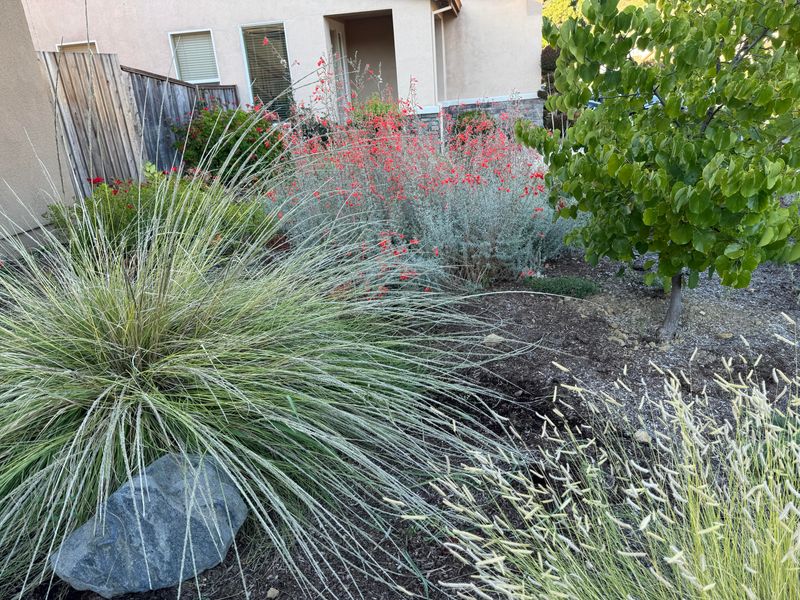
Few plants catch the eye quite like a clump of blue oat grass swaying gently in a warm summer breeze. The blades are a striking steel-blue color that almost seems to glow when sunlight hits them.
That cool, metallic look is exactly what a hot front yard needs to feel more refreshing.
Blue oat grass, known scientifically as Helictotrichon sempervirens, is a tough ornamental grass that thrives in full sun.
It stays evergreen in most parts of Oregon which means it looks good even outside of summer.
The plant forms a neat, rounded mound that rarely needs trimming or shaping.
It grows best in well-drained soil and handles drought very well once established. You do not need to water it constantly, which makes it a smart choice for dry summer months.
Plant it near the front walkway or along a low border for the best visual impact.
The silver-blue color pairs beautifully with dark mulch, river rock, or warm-toned pavers. It also works well next to plants with purple or yellow blooms.
The contrast makes everything look more intentional and polished.
In northern regions, it may go semi-dormant in cold winters, but it always returns strong in spring.
Overall, blue oat grass is one of the easiest ways to add a cool, modern texture to any front yard without much effort at all.
2. Blue Fescue Softens Hot Front Borders
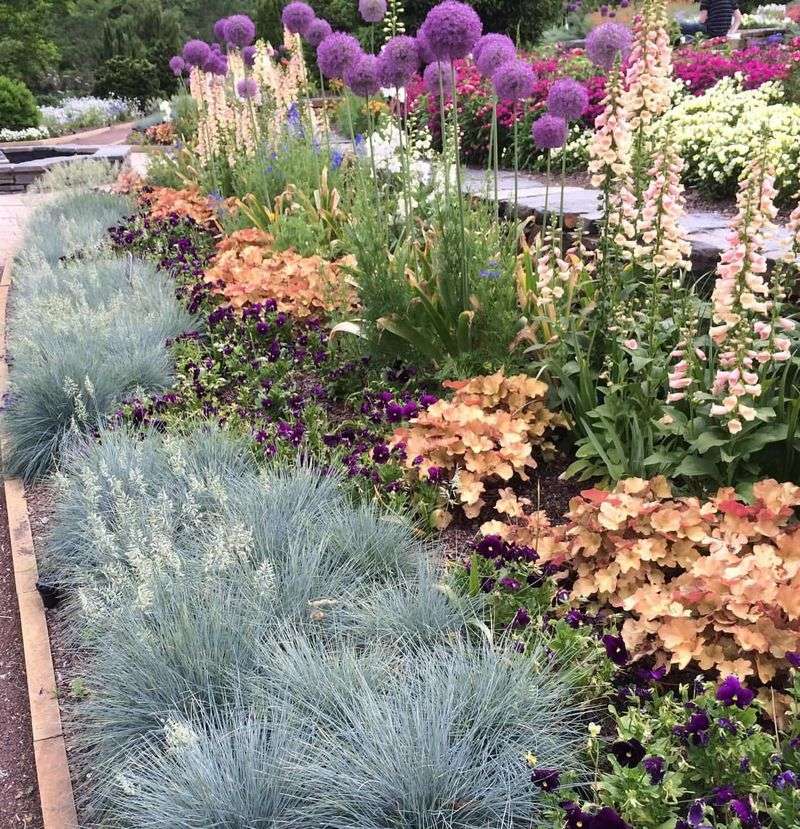
There is something almost calming about a row of blue fescue along a sun-baked front border.
The tiny, needle-like blades form perfect round puffs of silver-blue color. They look almost like little sea urchins sitting quietly in the garden.
Blue fescue, or Festuca glauca, is a compact ornamental grass that stays small, usually under twelve inches tall.
That small size makes it perfect for edging walkways, driveways, or the front of a garden bed. It never overwhelms other plants but always draws the eye.
One of the best things about blue fescue is how well it handles heat and dry soil. Once it settles in after the first season, it needs very little water.
Your Oregon Garden Changes Every Week. Your Plan Should Too.
Gardening in Oregon changes quickly throughout the season. Every Friday you’ll receive a simple weekly plan showing exactly what to plant, prune, fertilize, harvest, and protect so you never miss the right timing.
That makes it a great fit for Oregon’s long, dry summer stretches without extra irrigation effort.
The cool blue color works especially well when planted in groups of three or more. Massing several clumps together creates a flowing, soft edge that makes the whole yard feel more relaxed.
It softens hard lines like concrete edges or stone walls beautifully.
Blue fescue does appreciate some light trimming in late winter to remove old or brown blades. A quick haircut keeps the mounds looking fresh and tidy going into summer.
For a low-maintenance plant with big visual payoff, blue fescue is hard to beat anywhere.
3. Russian Sage Makes Summer Heat Look Airy
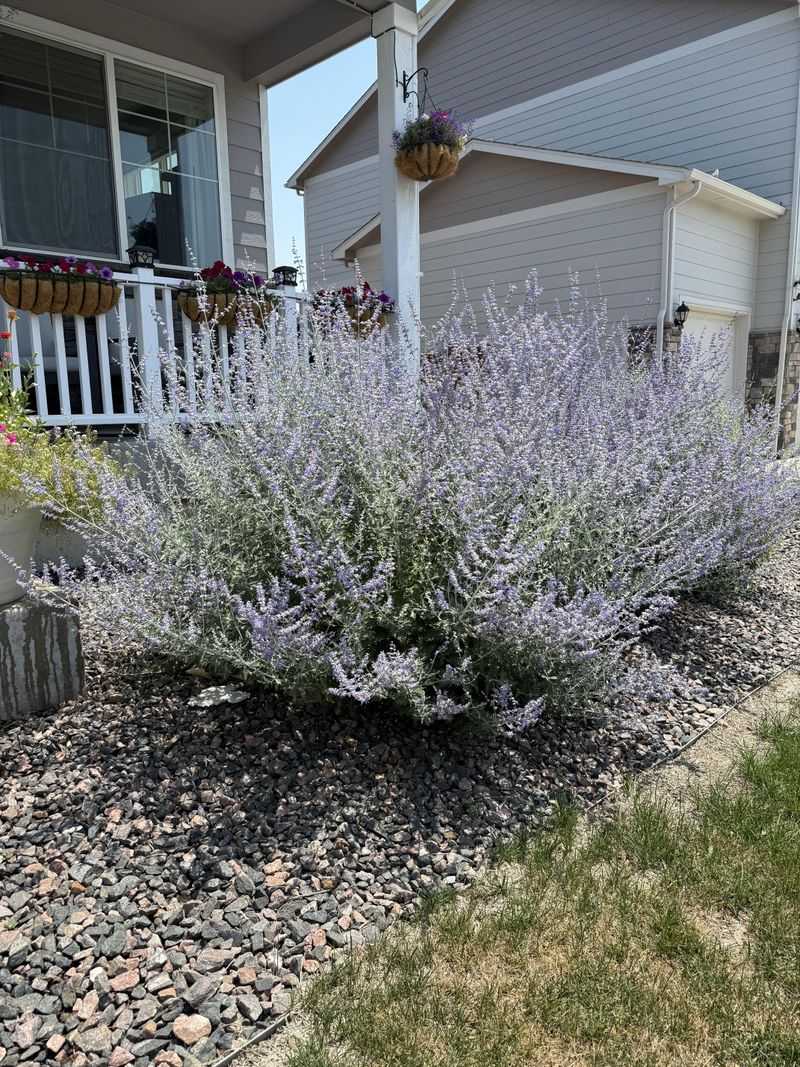
On the hottest days of summer, Russian sage does something almost magical. Its tall, wispy stems and soft purple-blue flowers create a hazy, cloud-like effect that makes the whole yard feel lighter.
It is one of those plants that looks like a cool breeze even when the air is completely still.
Russian sage, or Perovskia atriplicifolia, grows tall and airy, often reaching three to five feet in height.
The silvery-white stems are covered in tiny lavender-blue flowers that bloom from mid-summer into fall.
That long bloom time means you get months of color during the hottest part of the year.
It loves full sun and thrives in dry, well-drained soil. In fact, too much water or rich soil can actually make it flop over.
Lean, dry conditions are where this plant truly shines, which makes it perfect for Oregon’s dry summer climate.
The fragrant silver foliage also deters deer, which is a real bonus in neighborhoods near wooded areas or open fields. Pollinators, especially bees and butterflies, absolutely love the flowers.
Planting it near the front of your yard brings helpful insects right to your door.
Cut it back hard in early spring and it will come back fuller and stronger every year. Russian sage is a plant that rewards neglect.
It is bold, beautiful, and completely at home in a hot Oregon summer front yard.
4. Lavender Keeps Walkways Crisp And Fragrant
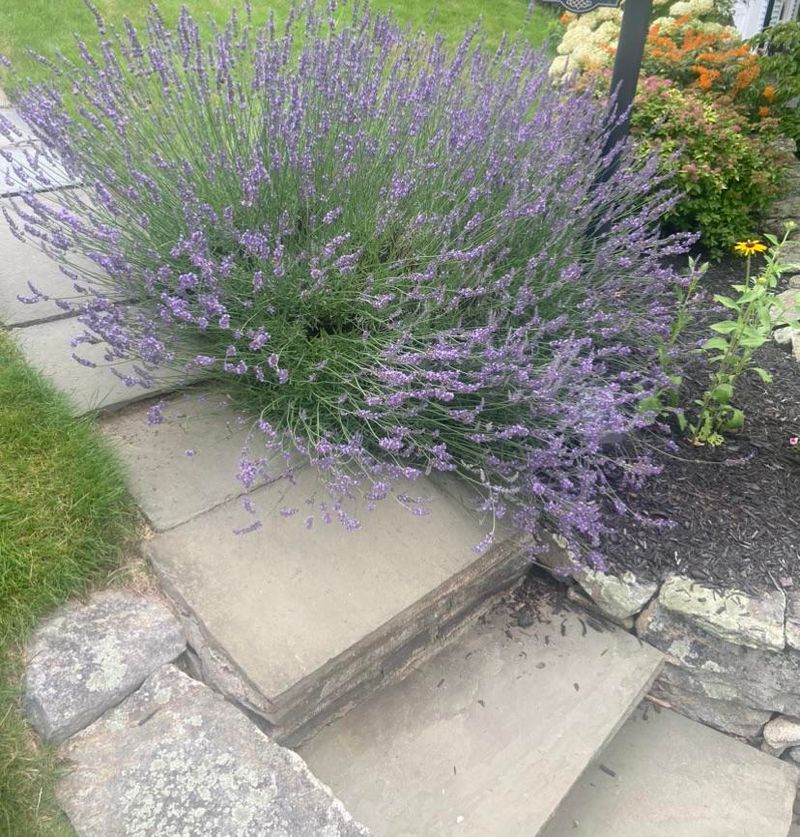
Walking past a row of lavender in full bloom on a warm summer day is one of those simple pleasures that never gets old.
The purple flower spikes rise up above the silver-green foliage like little torches, and the scent hits you before you even get close. It is one of the most sensory plants you can add to a front yard.
Lavender is perfectly suited to Mediterranean-style summers. It loves heat, tolerates drought, and actually looks better the drier the summer gets.
Most varieties grow into neat, rounded mounds that stay tidy without much pruning.
For walkway planting, try varieties like Hidcote or Munstead, which stay compact and do not flop over into the path.
Plant them about eighteen inches apart so they fill in over time without crowding. The effect of a lavender-lined path is classic, elegant, and very welcoming.
Lavender blooms typically peak in June and July, right when summer heat is building. After the first flush of blooms fades, a light trim encourages a second round of flowers in late summer.
That second bloom keeps the walkway looking fresh and colorful well into August.
Bees and butterflies visit lavender constantly throughout the bloom season. If you enjoy watching pollinators, this plant will keep you entertained for hours.
Few plants deliver this much beauty, fragrance, and wildlife value for so little work in our state’s front yards.
5. Sea Holly Brings Icy Blue Structure
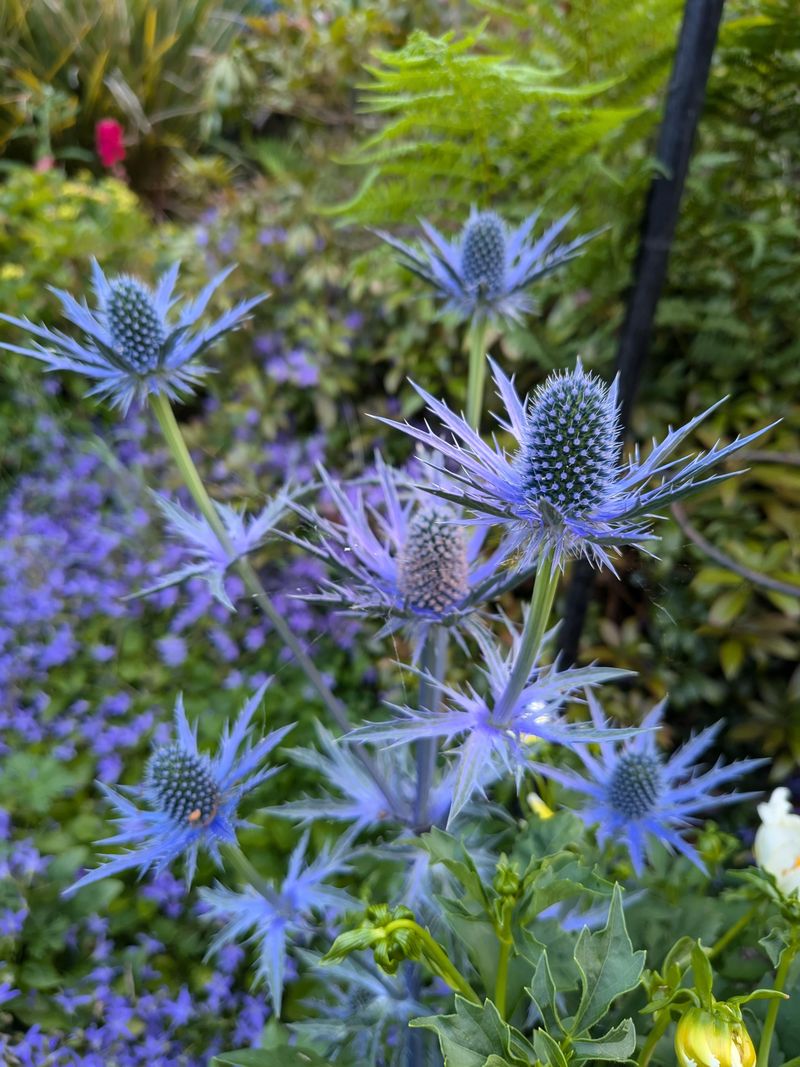
Sea holly is the kind of plant that stops people in their tracks. The flower heads are spiky, metallic, and an almost unreal shade of icy blue.
They look like something from a fantasy garden, but they grow perfectly well in the real heat of an Oregon summer.
Eryngium, the botanical name for sea holly, is a drought-tolerant perennial that loves full sun and well-drained soil. It blooms in mid to late summer, right when most other plants are struggling with heat.
That timing alone makes it incredibly valuable in a front yard planting scheme.
The structural quality of sea holly is one of its best features. Unlike soft, billowy plants, sea holly has an angular, architectural look that adds visual sharpness to a border.
It pairs beautifully with soft-textured plants like lavender or Russian sage for a nice contrast.
Once established, sea holly asks for very little. It does not need rich soil and actually performs better in lean, dry conditions.
Overwatering is about the only thing that causes problems for this tough plant.
The blooms dry beautifully on the stem as summer ends, giving the plant a long season of interest. Some gardeners leave the dried flower heads through fall for added texture.
In Oregon, sea holly is still relatively underused, which means planting it gives your front yard a truly unique and striking summer look.
6. Artemisia Cools Down Dry Garden Edges
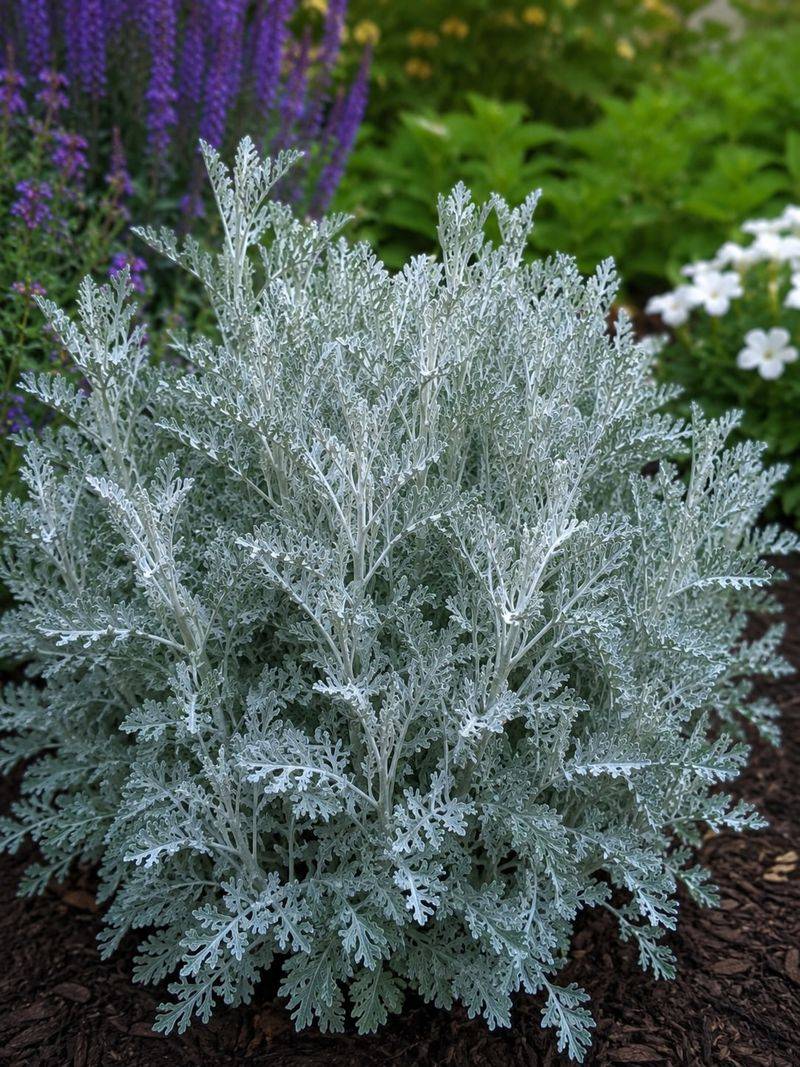
Not every great garden plant needs flowers to make a statement. Artemisia proves that point every single summer.
The foliage is a bright, almost luminous silver-white that reflects heat and light in a way that makes nearby plants pop with color.
There are several artemisia varieties that work well in Oregon, including Silver Mound and Powis Castle. Silver Mound stays low and cushion-like, perfect for edging.
Powis Castle grows larger and more shrubby, making it great for filling in dry, sunny corners near the front of a property.
Both varieties handle drought extremely well. Once established, they rarely need supplemental watering even during the driest summer months.
That resilience makes them a practical choice for homeowners who want a beautiful yard without a big water bill.
The silver foliage works as a natural color bridge in the garden. It tones down bright colors and brightens up dark ones.
Planting artemisia between bold orange or red flowers and cool blue ones creates a harmonious, balanced look.
One thing to keep in mind is that artemisia prefers excellent drainage. Heavy clay soil can cause root problems over winter.
Amending the soil with compost and grit before planting helps a lot, especially in wetter parts.
Trim it back lightly in early spring to keep the shape tidy. With minimal care, artemisia delivers season after season of that cool, silvery edge that makes front yard borders look professionally designed.
7. Sword Fern Makes Entryways Feel Lusher
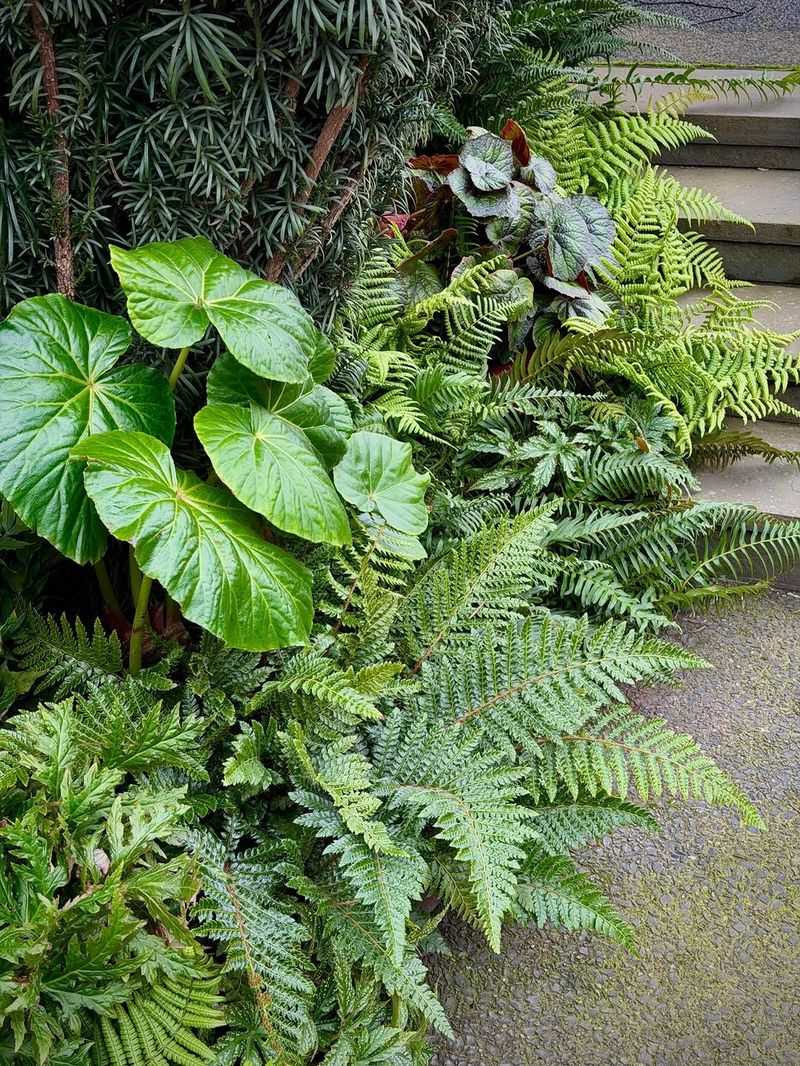
Few plants deliver that instant lush, green feeling as effectively as sword fern. The long, arching fronds fan out in every direction and create a full, dramatic presence near any entryway.
Even on the driest summer days, sword fern looks cool and deeply green.
Polystichum munitum, the western sword fern, is one of the most common native plants in Oregon. It grows naturally in forests from the coast to the Cascades.
That wide native range means it adapts well to many different front yard conditions, especially shaded or partly shaded spots.
One of the best qualities of sword fern is its toughness. It handles summer dry spells much better than most ferns.
Once established in a shaded bed with decent organic soil, it rarely needs extra watering even during hot stretches.
The fronds grow up to four feet long in ideal conditions, creating a bold, tropical-looking effect.
Near a front door or along a shaded path, a grouping of sword ferns creates a welcoming, resort-like feel. Visitors always notice them.
Old fronds can be trimmed away in late winter or early spring to make room for fresh new growth. That quick cleanup keeps the plant looking neat and vibrant all summer.
Sword fern also pairs beautifully with salal, bleeding heart, and hostas for a layered, full native shade garden at the front of your home.
8. Salal Gives Shade Beds A Deep Green Look
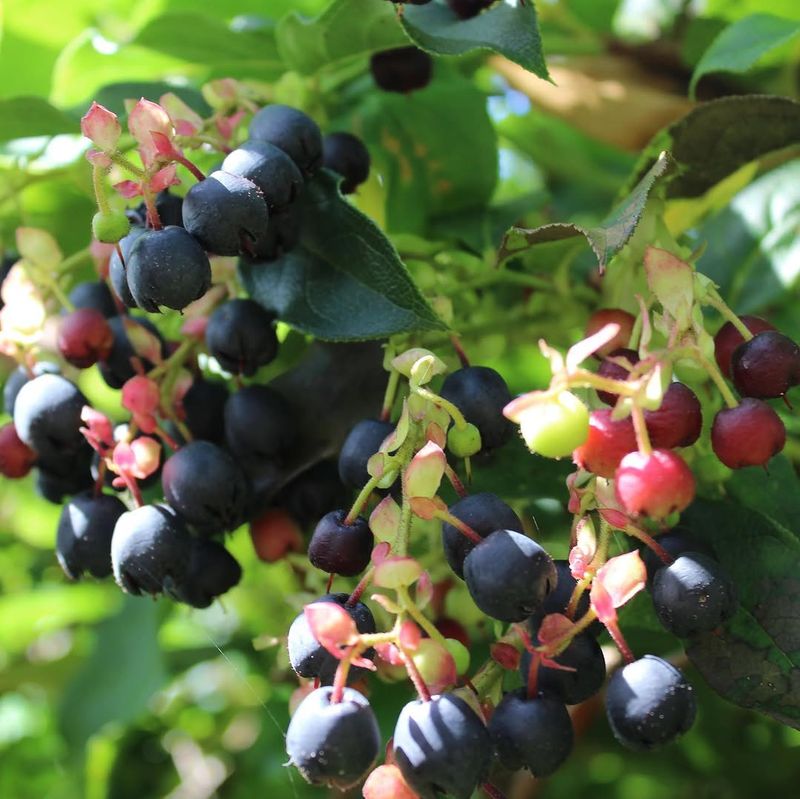
Not every front yard is full of blazing sun. Shaded yards have their own challenges in summer, and salal is one of the best native plants for solving them.
The glossy, deep green leaves create a lush, cool carpet that makes shaded beds feel like a forest floor on a hot day.
Salal, or Gaultheria shallon, is native to our state and grows naturally along the coast and in forested areas. That means it is already perfectly adapted to the local climate and soil.
It thrives in part shade to full shade with minimal care once it gets going. The plant spreads slowly by underground runners, eventually forming a dense, weed-suppressing ground cover.
That spreading habit is actually a big advantage in shaded beds where other plants struggle to fill in. Less weeding means less work for you all summer long.
Salal also produces small pinkish-white flowers in spring, followed by dark berries that birds love. So beyond looking great, it actively supports local wildlife throughout the year.
That kind of ecological value is hard to find in many ornamental plants.
It pairs well with sword fern, Oregon grape, and native bleeding heart for a full native shade garden look. The combination of different textures and shades of green creates real visual depth.
For shaded front yards in our state, salal is one of the most reliable and rewarding plants you can choose.