9 Beautiful Purple Plants To Grow In Your Oregon Flower Garden
Oregon gardens already have a lot going for them.
The rainfall, the mild temperatures, the rich soil across the Willamette Valley, and the dramatic landscapes that make even a modest backyard feel like it belongs somewhere spectacular.
But there is one color that pushes all of that further, and it shows up in more Oregon-native plants than many gardeners ever realize: purple.
From early spring meadow blooms to late fall pollinator magnets, purple-flowered plants thread through the Oregon growing season from one end to the other.
Some of them have deep roots in the region’s ecological and cultural history. Some of them are so well-suited to Oregon conditions that they practically grow themselves.
A few will genuinely surprise you with how much they do for the pollinators, birds, and soil in your yard.
Ten of the best are worth knowing about before your next planting season.
1. Common Camas
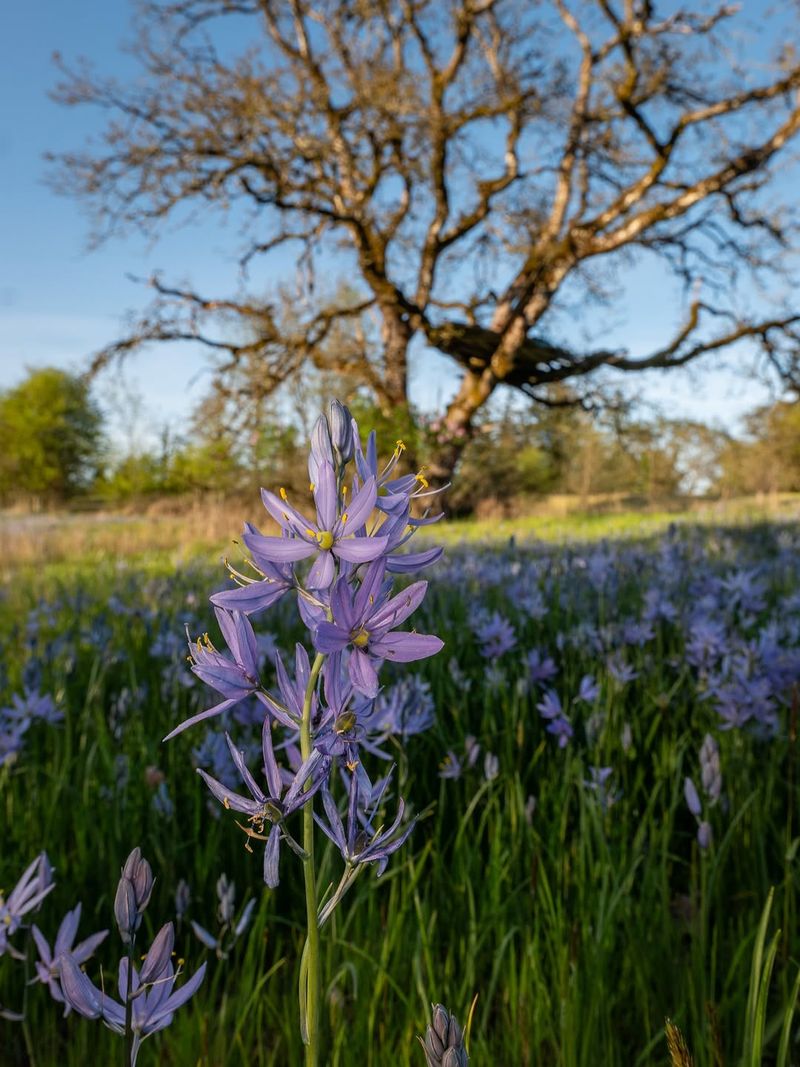
Walk through a Pacific Northwest meadow in April or May and you might think a shallow lake has appeared overnight.
That stunning blue-purple haze blanketing the ground is Common Camas, one of Oregon’s most beloved native wildflowers.
Its tall, slender spikes rise above grassy foliage and create a color show that few spring bulbs can match anywhere in the country.
Common Camas, known scientifically as Camassia quamash, grows from a bulb and thrives in moist, low-lying areas that stay wet through winter and dry out gradually in summer.
Oregon’s wet winters and mild springs make it a natural fit across much of the western part of the state, especially in the Willamette Valley. Plant bulbs in fall, about four inches deep, in a sunny to partly shaded spot with rich soil.
This plant is also deeply rooted in Oregon history. Native peoples of the Pacific Northwest relied on camas bulbs as a critical food source for thousands of years.
Today, gardeners use it to create naturalized meadow plantings that feel authentic and regionally meaningful rather than imported and generic.
Pollinators absolutely love camas. Bumblebees, native bees, and butterflies all visit the blooms eagerly throughout the spring flowering window.
Once established, camas spreads slowly and naturalizes well, which means less work for you each season and a more impressive display every year.
Just give it moisture in spring and let it go dormant in summer. The reward is a stunning purple display that returns faithfully without being asked.
2. Oregon Iris
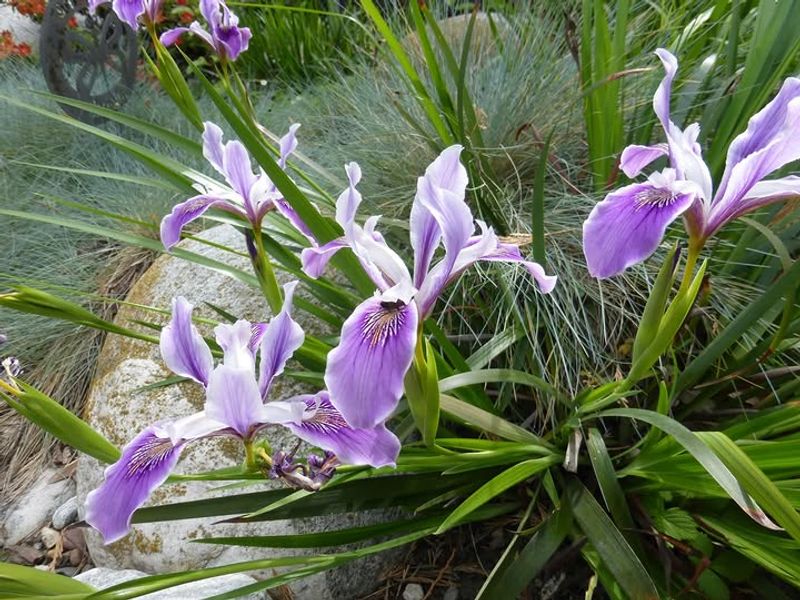
Few flowers carry the elegance of an iris, and Oregon has its very own native species to celebrate.
Oregon Iris, or Iris tenax, produces stunning blooms in shades ranging from deep violet to soft lavender, often with delicate yellow and white veining on the petals.
It is a plant that looks like it was designed by someone who genuinely loves color.
Unlike many garden irises that need constant dividing and fussing, Oregon Iris is remarkably self-sufficient once established.
It grows in well-drained soil and tolerates both sun and light shade, making it versatile across many garden styles. Western Oregon’s mild, rainy winters suit it perfectly, and it blooms reliably in April and May without much attention from the gardener.
Your Oregon Garden Changes Every Week. Your Plan Should Too.
Gardening in Oregon changes quickly throughout the season. Every Friday you’ll receive a simple weekly plan showing exactly what to plant, prune, fertilize, harvest, and protect so you never miss the right timing.
Plant Oregon Iris along pathways, at the front of borders, or tucked into rock gardens where its slender form and vivid color can shine.
It grows about one to two feet tall and forms tidy clumps that expand gradually over time. Dividing clumps every few years keeps plants vigorous and gives you more to spread around the yard.
Native bees are particularly drawn to Oregon Iris blooms. The flowers provide early-season nectar and pollen that help native bee populations get a strong start each spring.
Supporting native plants like this one is one of the easiest and most rewarding ways to make your garden part of a healthier local ecosystem, and Oregon Iris makes that contribution while looking genuinely beautiful the entire time.
3. Douglas Aster
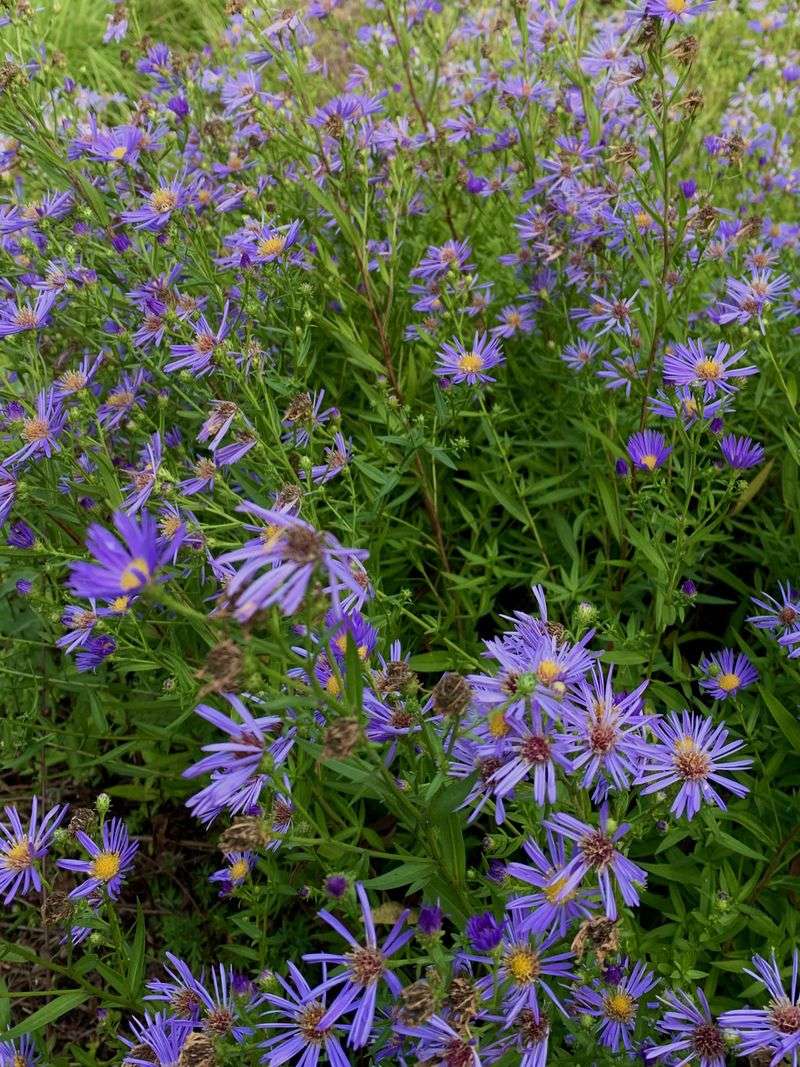
By September, most gardens start looking tired and washed out. Douglas Aster does the opposite.
Just as summer fades, this tough native wildflower bursts into a cheerful display of purple daisy-like blooms that last well into October. It is the plant that keeps your garden from giving up before the season is truly over.
Symphyotrichum subspicatum is native to the Pacific Northwest and grows naturally along roadsides, stream banks, and forest edges across Oregon.
In the garden, it thrives in full sun to light shade with average to moist soil. It handles Oregon’s rainy falls beautifully and keeps blooming even as temperatures drop noticeably into autumn territory.
This plant grows two to four feet tall and spreads generously over time, making it a great choice for filling larger border spaces or naturalizing in a wilder garden area.
Cut it back hard in late winter to keep it tidy and encourage bushy, full growth the following season. Some gardeners pinch it back once in early summer to prevent flopping later.
The pollinator value of Douglas Aster in fall is genuinely hard to overstate. Monarch butterflies on their southward migration, native bumblebees, and dozens of bee species all rely on late-blooming flowers like this one to fuel up before winter arrives.
Planting Douglas Aster is one of the most impactful things an Oregon gardener can do for local wildlife, and the purple blooms are beautiful and ecologically purposeful at the same time.
4. Showy Penstemon
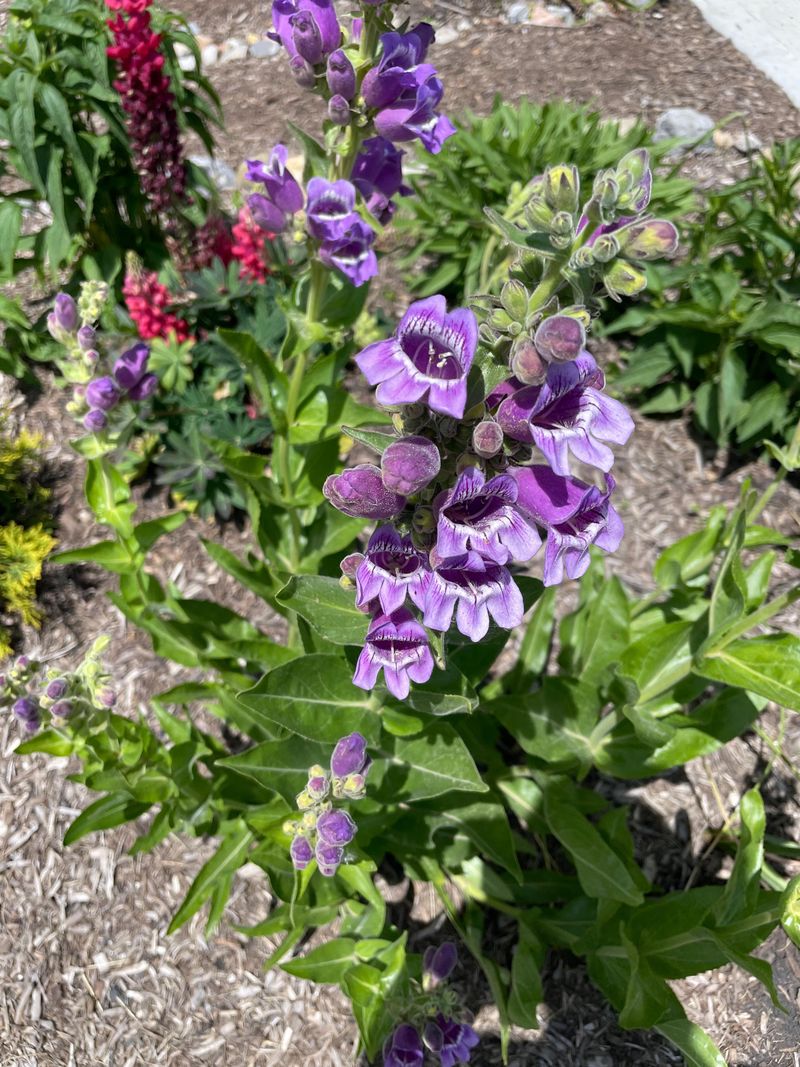
Vertical interest is one of the most underused design tools in home gardens, and Showy Penstemon delivers it beautifully.
Tall spikes of tubular purple to violet-pink flowers shoot upward from low basal foliage, creating a bold exclamation point in sunny beds and borders.
When the breeze moves through a clump of blooming Penstemon, the whole planting comes alive.
Penstemon speciosus is native to dry, open habitats in Oregon, particularly east of the Cascades. It thrives in well-drained, even rocky or sandy soil and full sun.
If the garden has a hot, dry slope or a gravel bed that other plants refuse to tackle, this is the plant for that spot. It was built for tough conditions and rewards minimal care with maximum color.
Blooming from late spring into early summer, Showy Penstemon reaches two to three feet in height and creates a striking vertical contrast when planted alongside lower-growing natives or ornamental grasses.
Heavy clay soils and overwatering are the two things most likely to cause problems, so both are worth avoiding. Once established, this plant handles drought with ease.
Hummingbirds actively seek out Penstemon blooms, and native bees work the tubular flowers with impressive efficiency.
Plant it in groups of three or more for the strongest visual impact.
Showy Penstemon also pairs brilliantly with yellow or orange native wildflowers, where the purple tones create a rich color contrast that looks intentional and sophisticated without requiring any particular design expertise.
5. Lupine
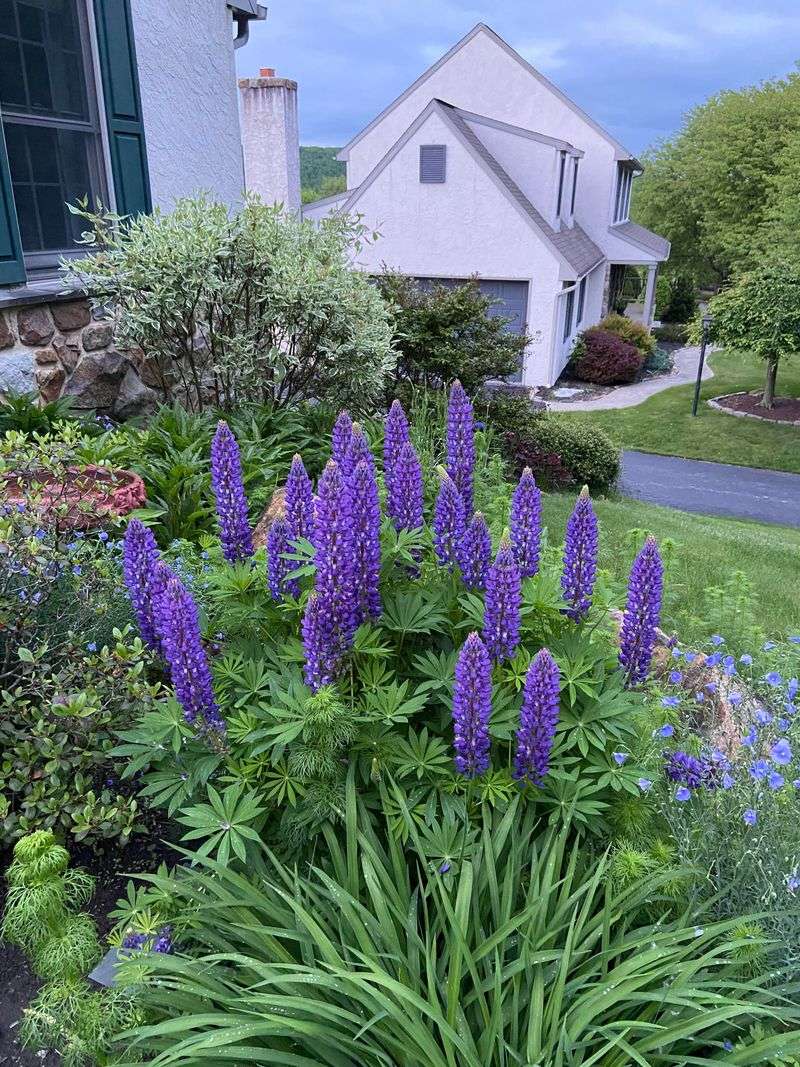
There is something almost theatrical about a field of lupine in full bloom.
The tall, densely packed spires of purple, violet, and blue flowers rise like colorful rockets above deeply lobed, palm-shaped leaves. In Oregon, lupine is a spring spectacle that belongs in every garden with room for something bold and a little bit wild.
Several lupine species are native to Oregon, including Lupinus polyphyllus, which thrives in moist meadows and streamside areas of western Oregon.
It grows three to five feet tall and blooms from late spring into early summer. Plant it in full sun with moist, slightly acidic soil and give it room to spread.
Lupine reseeds itself generously over time, which means more plants for you with almost no effort.
One ecological superpower lupine carries is its ability to fix nitrogen in the soil through root partnerships with beneficial bacteria.
This means lupine actually improves the soil around it, making it a smarter choice than many ornamental plants that take without giving anything back. It is a beautiful plant doing quiet, helpful work underground while putting on a show above it.
Bumblebees are the primary pollinators of lupine and can be seen hovering and buzzing around the spires throughout the blooming season.
The seeds that follow the blooms are also valuable wildlife food. Plant lupine at the back of borders or let it naturalize in a meadow-style planting for the most dramatic effect.
Few purple plants match its combination of height, color, and ecological generosity, and Oregon grew it long before any gardener thought to put it in a bed.
6. Blue-Eyed Grass
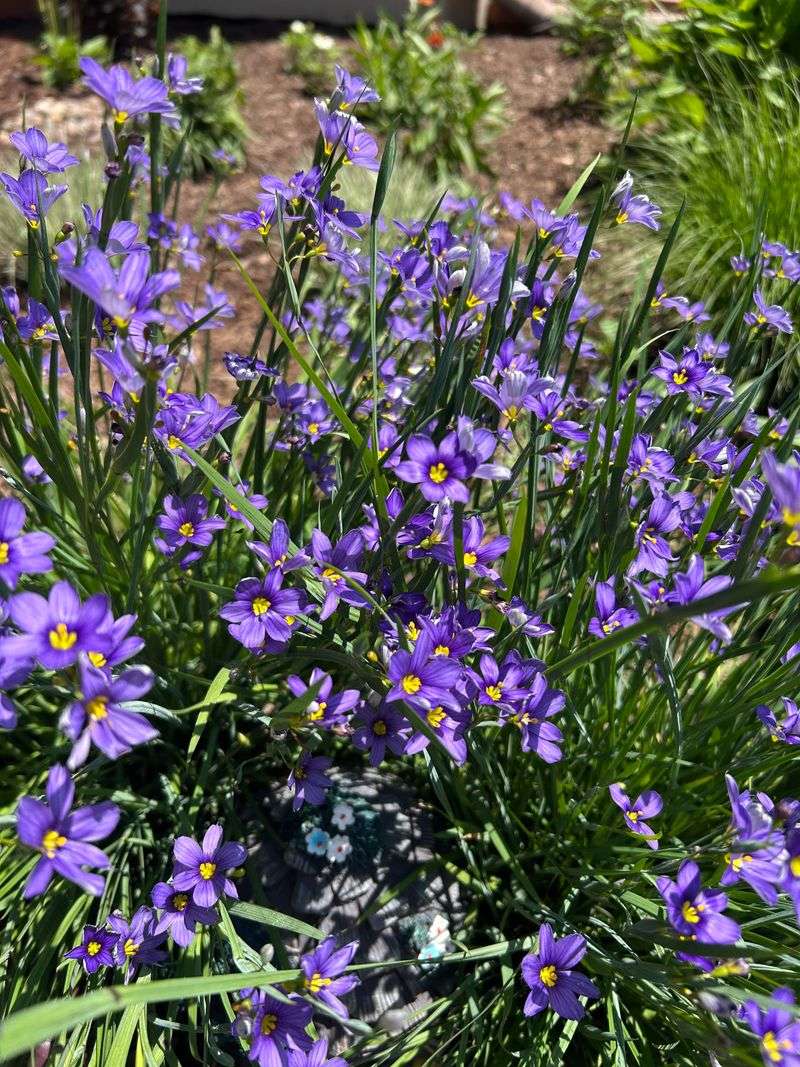
Not everything in the garden needs to shout. Sometimes the most charming plants are the ones that make you stop, crouch down, and look closely.
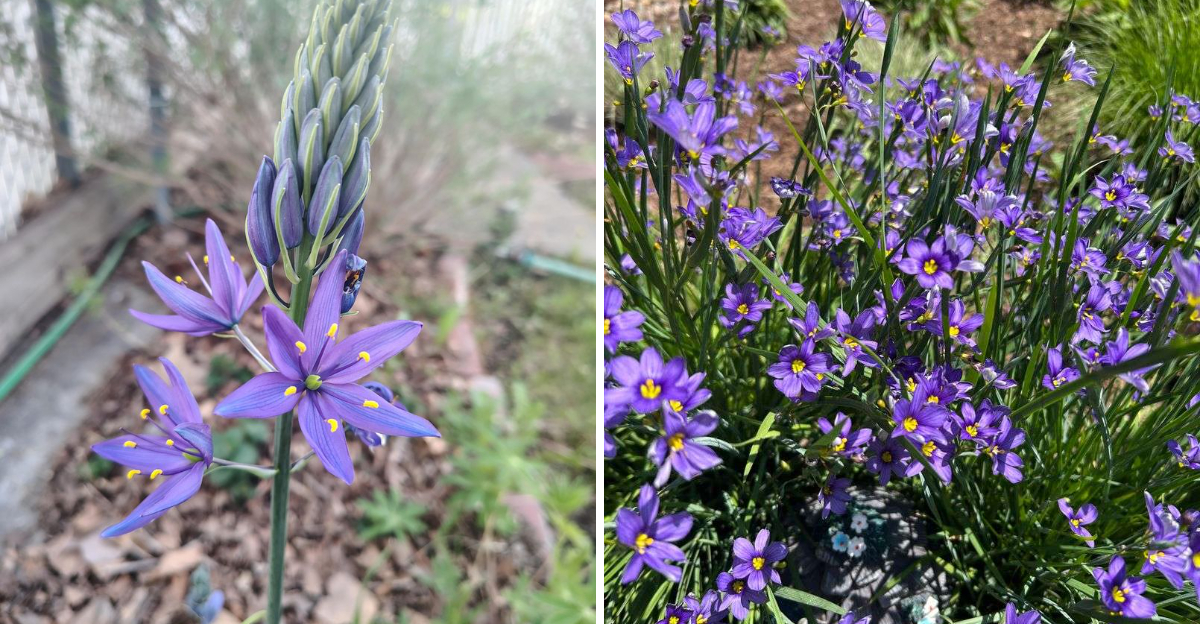
Blue-eyed Grass is exactly that kind of plant. Its tiny, six-petaled purple flowers with bright yellow centers look like little stars scattered across a sea of slender green leaves, and they are completely captivating up close.
Despite its name, Blue-eyed Grass is not a grass at all. It belongs to the iris family, and Oregon’s native species, Sisyrinchium bellum, proves that remarkable things come in small packages.
It grows just six to eighteen inches tall and produces a steady stream of blooms from spring into early summer. Full sun to light shade with well-drained to moderately moist soil gives it the best conditions to perform well.
Blue-eyed Grass works beautifully as an edging plant along pathways, borders, or the front of a mixed bed. Its fine texture contrasts nicely with broader-leaved plants, and its compact form means it never takes over or crowds its neighbors.
It also naturalizes gently in lawn-free meadow areas, popping up in cheerful clusters that feel spontaneous rather than planted.
Small native bees, including sweat bees, are the most frequent visitors to the flowers. The blooms are short-lived individually but appear in succession, so the plant keeps producing color for several weeks.
Blue-eyed Grass is also deer-resistant, which is a genuine bonus in many Oregon neighborhoods and rural properties where deer browsing is a persistent challenge for gardeners trying to grow anything worth looking at.
7. Great Camas
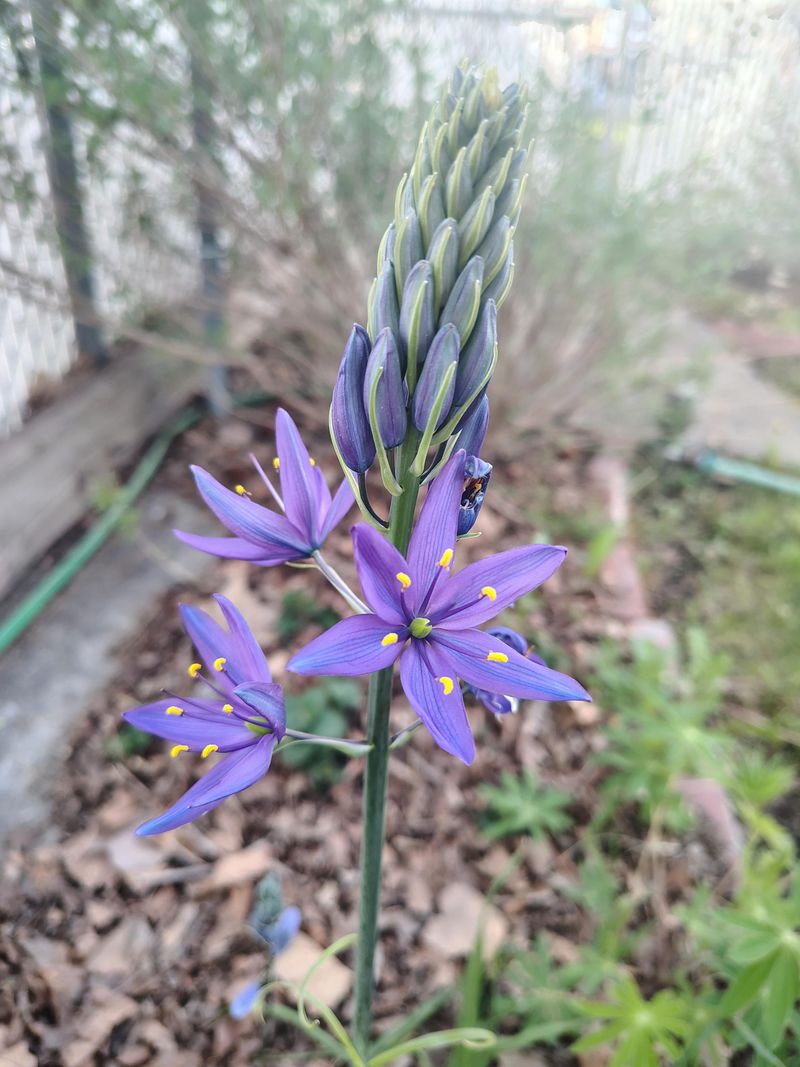
If Common Camas is the opening act, Great Camas is the headliner.
Camassia leichtlinii grows noticeably taller, with flower spikes that can reach three to four feet, and its blooms are a richer, deeper blue-purple that commands attention across an entire planting.
Standing in a meadow full of Great Camas in spring bloom is the kind of experience that makes people stop mid-sentence and just look.
Great Camas is native to moist meadows, valley floors, and open woodlands throughout western Oregon. It thrives in the same conditions as Common Camas but tends to prefer areas with slightly deeper, richer soil and consistent spring moisture.
In garden settings, it performs best in full sun to part shade with soil that stays reliably moist from winter through late spring before drying somewhat in summer.
Plant Great Camas bulbs in fall, spacing them about six inches apart and four to five inches deep. They establish slowly in the first year or two but become increasingly vigorous and floriferous over time.
A planting that looks modest in year one can become a breathtaking drift of purple by year three or four, which means patience here is genuinely rewarded rather than just recommended.
The scale and drama of Great Camas make it ideal for larger garden spaces, rain gardens, or naturalized areas near water features or low-lying spots that collect winter rain.
Pair it with native sedges, blue wild rye grass, or Oregon fern for a planting that feels authentically Pacific Northwest. Bumblebees and native bees work the blooms intensely in spring, making this plant as ecologically valuable as it is visually stunning.
8. Globe Gilia

Round, vivid, and covered in visiting insects on a warm afternoon, Globe Gilia is one of those plants that makes a garden feel genuinely alive.
Each bloom is a perfect little sphere made up of dozens of tiny tubular flowers packed together, and that globe shape is irresistible to bees, butterflies, and other pollinators looking for an easy landing pad loaded with nectar.
Gilia capitata is a native annual wildflower found in open, dry habitats throughout Oregon and much of the western United States.
It blooms in late spring and early summer, producing clusters of lavender-blue to soft purple globes on slender, branching stems that reach one to two feet tall.
The overall effect is airy and delicate, yet the color is surprisingly vivid from a distance across a garden bed.
Sow Globe Gilia seeds directly into the garden in early spring as soon as the soil can be worked. It prefers well-drained, sandy, or gravelly soil and full sun.
Like many native annuals, it actually struggles in overly rich or heavily watered beds, so resist the urge to pamper it. A little neglect genuinely helps this plant thrive and bloom more abundantly than it would under careful attention.
Globe Gilia is a standout in pollinator gardens and wildflower meadow mixes. Honey bees, native bees, syrphid flies, and small butterflies all crowd the blooms throughout the flowering season.
It reseeds readily, so once a patch is established, it tends to return on its own each year. Mix it with poppies, lupine, or Clarkia for a colorful, low-maintenance native wildflower display that practically manages itself.
9. Self Heal
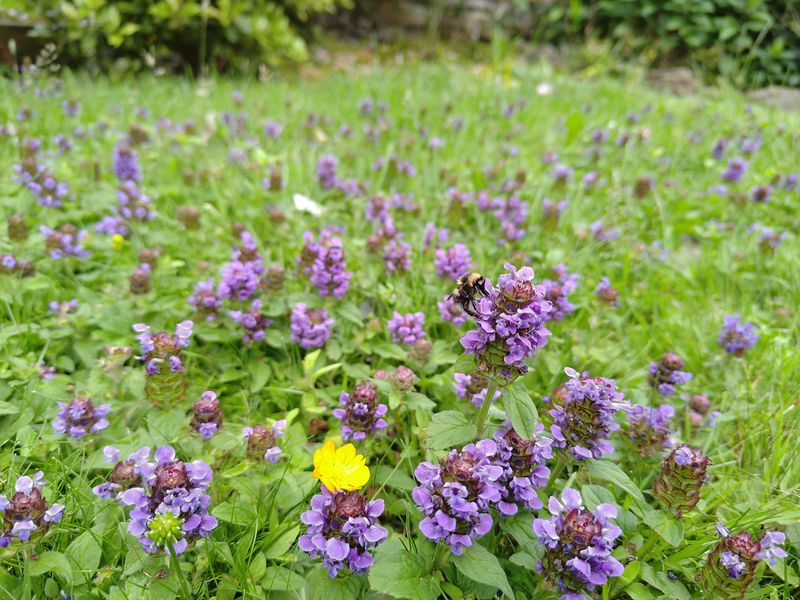
Close to the ground, tucked between stepping stones, or spreading quietly through a shady corner, Self Heal makes its presence known in the most understated and charming way.
Its short spikes of hooded purple flowers appear from late spring through summer, sitting just a few inches above oval, slightly wrinkled leaves. Humble in height, generous in color, and remarkably easy to grow.
Prunella vulgaris grows naturally in Oregon lawns, meadows, and disturbed areas. A native variety, Prunella vulgaris var. lanceolata, is considered indigenous to the Pacific Northwest and is the better choice for native plant gardens.
Both varieties grow four to twelve inches tall and spread by runners and reseeding to form dense, weed-suppressing mats that do real work in the spots where other plants have failed.
Self Heal thrives in partial shade to full sun and tolerates a wide range of soil types, including the clay-heavy Oregon soils that frustrate many other plants.
It handles foot traffic better than most flowering groundcovers, making it a practical choice for low-use pathways or lawn replacement areas where color without constant maintenance is the goal.
Mowing after bloom time keeps it tidy without setting it back.
Bumblebees are especially devoted to Self Heal blooms, visiting repeatedly throughout the long flowering season. The plant also supports small native bees and certain butterfly species.
For gardeners looking to add purple color at ground level without a lot of fuss, Self Heal is one of the most reliable and ecologically meaningful choices available in Oregon.
Tuck it in where nothing else wants to grow and it will prove everyone else wrong.