These 7 Popular Oregon Plants Can Spread Faster Than Your Yard Can Handle
Oregon’s growing climate is genuinely exceptional. Mild winters, reliable rain, long seasons. Plants love it here, and that is exactly the problem.
The same conditions that make Oregon one of the best places in the country to garden also give certain plants everything they need to spread well beyond where you put them.
Some do it underground, quietly and invisibly, until the neighbor calls. Some do it by seed, carpeting an entire bed before you notice. Some do it both ways at once, just to be thorough.
A few of the plants on this list are genuinely beautiful. Some are useful. All of them are popular, widely sold, and planted constantly across the state.
But almost none of the tags in the garden center mention what they become once Oregon’s climate gets behind them.
Got a yard you would like to keep under control? This is the list to read before your next nursery trip.
1. English Ivy Climbs And Carpets Fast
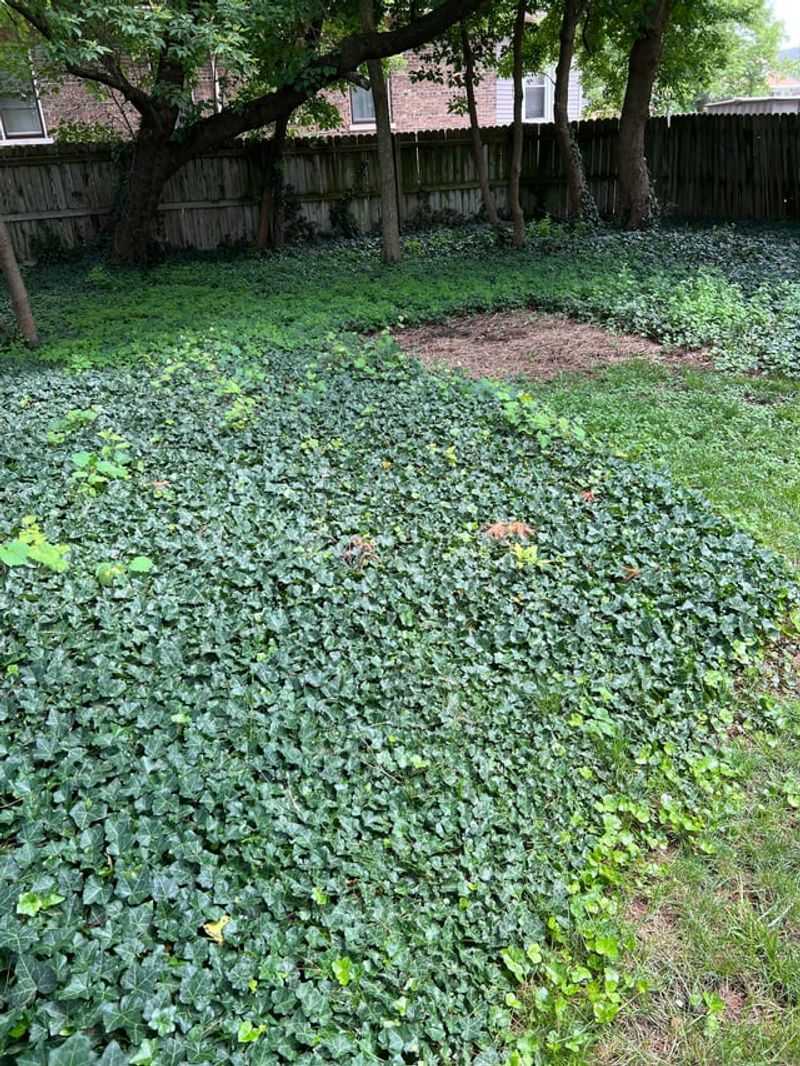
Walk through almost any older Oregon neighborhood and you will find it. A thick, glossy carpet of English ivy rolling across the ground and crawling up tree trunks with quiet determination.
It looks tidy at first, even elegant. The problem reveals itself over time, as the ivy keeps going and the trees underneath start showing the strain.
On the ground, ivy forms a dense mat that blocks sunlight and prevents other plants from establishing. Native wildflowers, ferns, and seedlings cannot compete with that kind of coverage.
Birds eat the berries and drop seeds into nearby natural areas, which is how ivy moves from a yard planting into forest spaces without anyone actively spreading it.
When ivy climbs trees, it adds weight to branches and traps moisture against the bark. Mature trees can become structurally compromised over time from the pressure and moisture buildup.
English ivy is listed as a noxious weed in many Oregon counties for exactly these reasons, and removal is actively encouraged rather than just suggested.
Removing established ivy is genuinely hard work. Roots grip the soil tightly, and small pieces left behind will resprout.
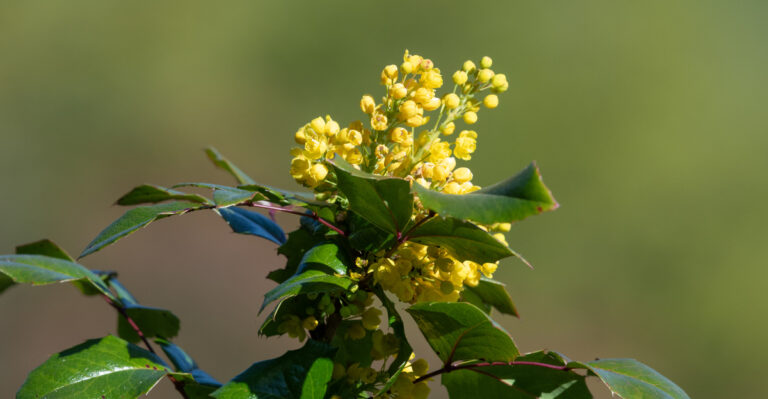
Cut it back regularly, remove it from trees immediately, and replace it gradually with native groundcovers like Oregon grape or kinnikinnick that stay manageable and actually support local wildlife.
English ivy is very good at looking like a reasonable choice right up until it becomes a full yard project. Oregon grape does the same groundcover job with better manners, better wildlife value, and zero interest in climbing your trees.
One of these options you manage once. The other manages you.
2. Himalayan Blackberry Takes Over Edges
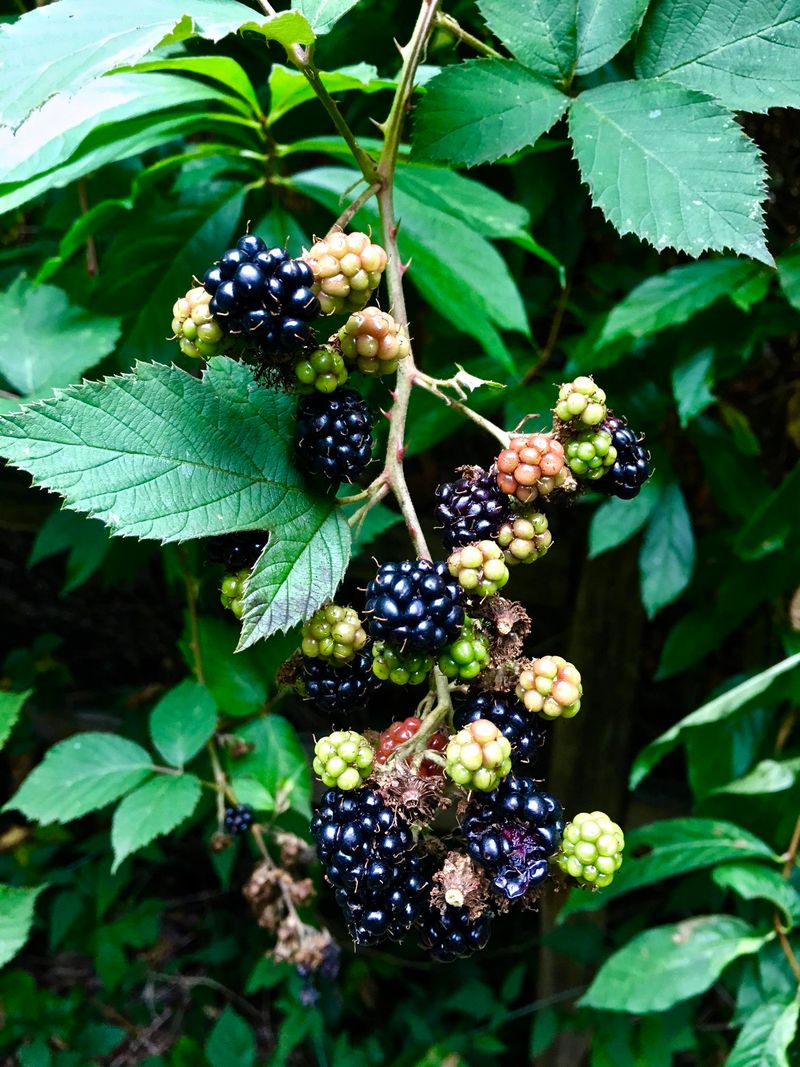
Fence lines in Oregon can disappear. One season the boundary is clear. The next, a wall of thorned canes has arrived and made itself completely at home along the entire edge.
Himalayan blackberry is behind most of those impenetrable situations you see along roadsides, drainage ditches, and property borders across the state, and it earns that reputation honestly.
A single plant can send out canes that grow up to fifteen feet in a single season. Those canes arc over, touch the ground, and root themselves right there, starting a new cluster without any help from you.
Your Oregon Garden Changes Every Week. Your Plan Should Too.
Gardening in Oregon changes quickly throughout the season. Every Friday you’ll receive a simple weekly plan showing exactly what to plant, prune, fertilize, harvest, and protect so you never miss the right timing.
The root system runs deep and wide, making hand removal genuinely difficult without the right tools. Even after cutting, new growth pushes back from the roots within weeks, refreshed and apparently unbothered.
It outcompetes native shrubs, reduces wildlife habitat, and forms thickets so dense that movement through them becomes impossible.
Despite producing edible berries, planting or encouraging its spread is not recommended anywhere in Oregon. The berries are real. The management burden is also very real.
Consistent removal during early spring before canes harden gives the best results. Cut at the base, dig out as much root as possible, and return every few weeks to address new growth.
Native trailing blackberry offers similar fruit without the aggressive takeover. Patience and persistence are genuinely the whole strategy here.
Himalayan blackberry does not ask permission before expanding. It simply expands, and then keeps going.
Starting removal in spring while canes are still soft is significantly less difficult than waiting until summer turns them woody and the thorns get serious about their work.
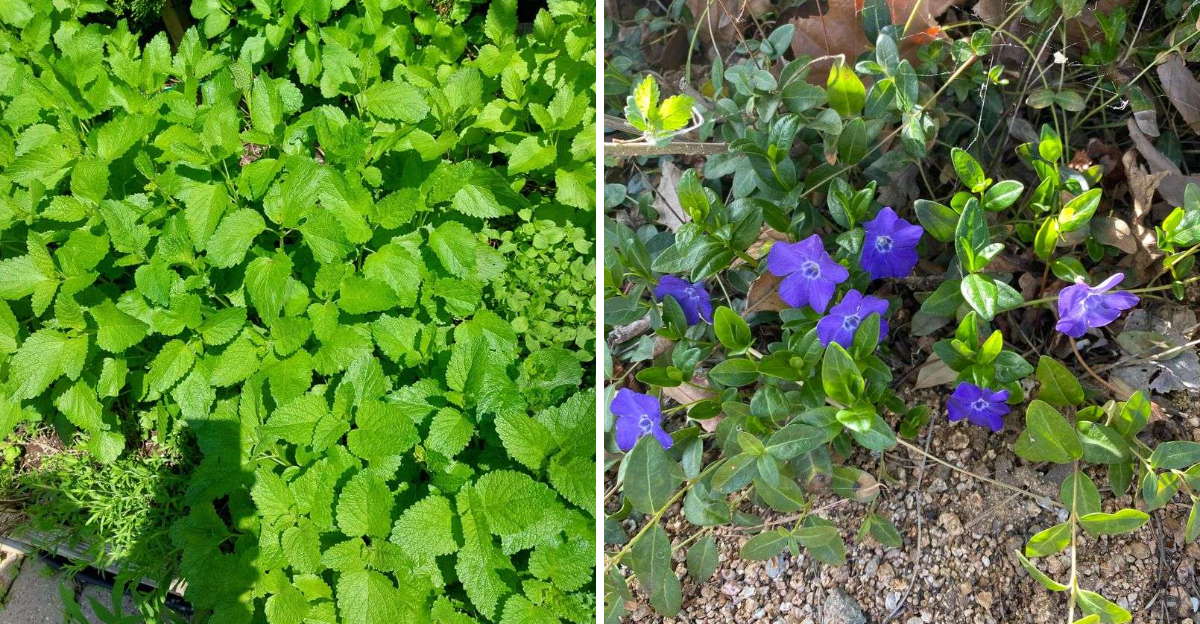
3. Mint Escapes Open Beds
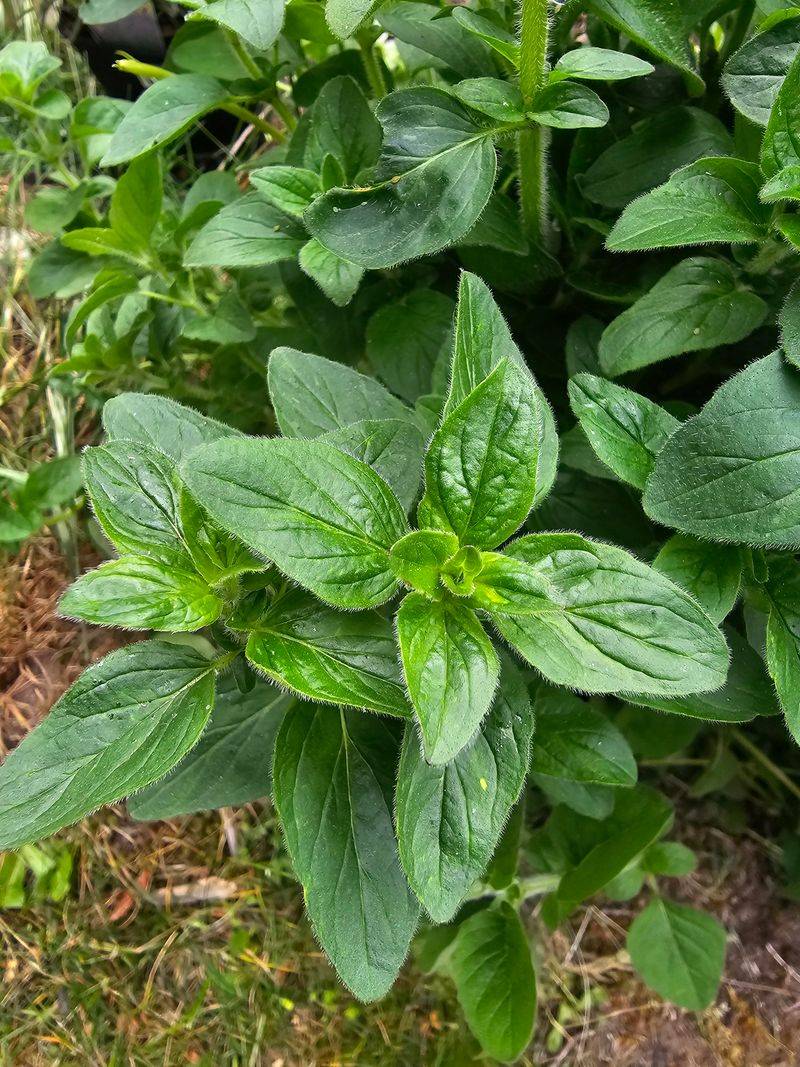
Mint smells amazing, grows easily, and earns its place in any kitchen. It sounds like the perfect herb for an Oregon garden.
The catch is that mint planted directly in the ground rarely stays where you intended.
Within a season or two, it carpets an entire bed and starts pushing into neighboring areas through underground runners called rhizomes, operating entirely on its own agenda.
Those rhizomes spread horizontally just below the soil surface, sending up new shoots several feet from the original plant.
Pulling visible stems does not resolve the issue because the roots keep running regardless. Even small fragments left in the soil sprout new plants.
Gardeners who have tried to clear mint from an open bed have a specific look on their face when the subject comes up.
The good news is that mint is very easy to contain with a simple adjustment.
Plant it in pots with no drainage holes connecting to open soil, or use the buried container method: sink a pot into the ground with the rim above the soil line to block the roots from escaping.
This gives you all the fresh mint you want without the territory negotiation.
Spearmint, peppermint, and chocolate mint all behave identically in Oregon’s climate. All varieties benefit from the same containment approach.
Growing mint in a pot on a porch or patio is the easiest solution available and genuinely the standard recommendation for a reason.
A pot of mint on the porch: fragrant, productive, completely contained, zero drama. Mint in an open bed: fragrant, productive, and occupying two neighboring beds by August.
Both options give you fresh mint. Only one of them respects your other plants’ personal space.
4. Lemon Balm Seeds Around Quickly
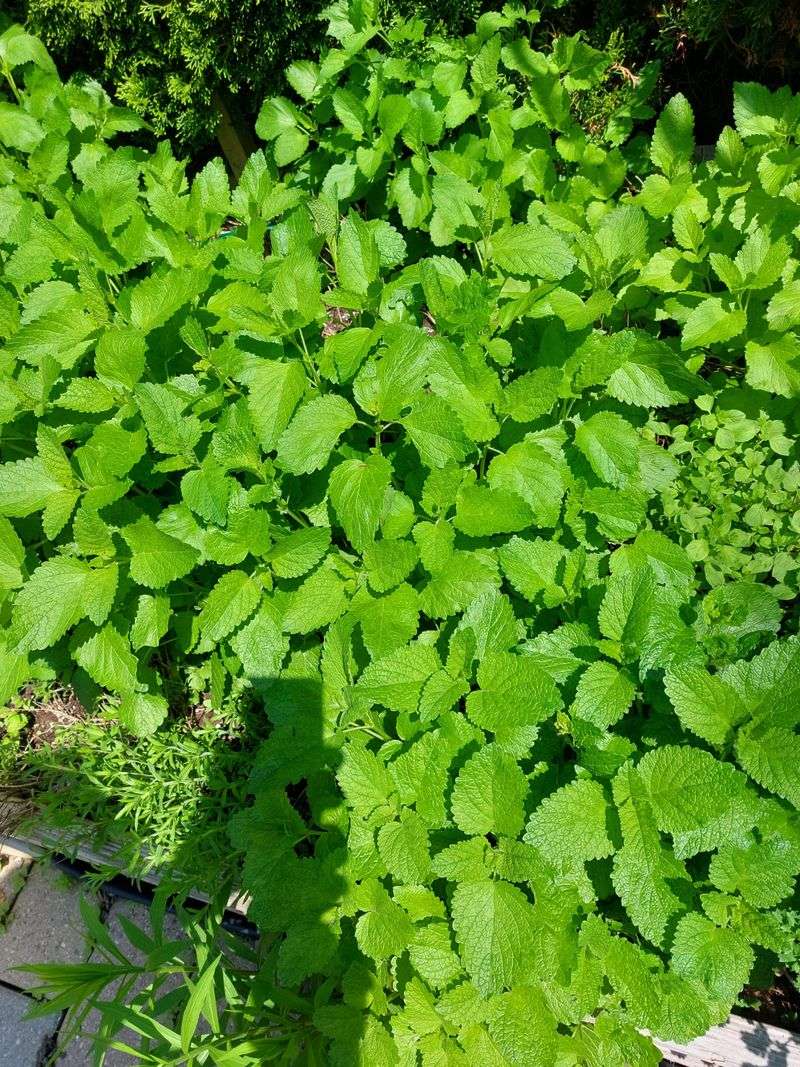
Lemon balm has a lot going for it. Fresh lemon scent, pollinator appeal, and a pleasant herbal tea on a rainy Oregon afternoon.
Many gardeners plant it expecting a tidy little clump that stays in its lane. Then the seeds start dropping, and the following spring brings lemon balm plants appearing in every corner of the garden, the lawn edge, and the cracks between pavers.
One established plant can drop hundreds of seeds in a single season. Those seeds germinate readily in Oregon’s moist spring soil, and before long the situation shifts from a lemon balm plant to a lemon balm situation.
It does not spread by underground runners like mint, but the sheer volume of seedlings it generates makes the end result feel equally aggressive.
The most effective management strategy is cutting flower stalks before seeds form. Trimming, removing spent flowers before they set seed, keeps the multiplication under control.
This requires some attention because the flowers are small and easy to miss until the seeds are already on their way to your neighbor’s yard.
Planting lemon balm in containers is another solid option, especially if you want it near the kitchen for easy harvesting.
In the ground, regular pruning and keeping it away from open soil areas where seeds can travel easily reduces the spread significantly.
Catching seedlings early means they pull out without much effort. Letting them establish means a much larger project later.
Lemon balm in a pot by the back door: delightful, contained, available whenever you need it. Lemon balm in an open bed with no trimming routine: also delightful, and apparently moving into the vegetable garden this year.
Both versions smell wonderful. Only one stays where you put it.
5. Bamboo Runs Under Fences
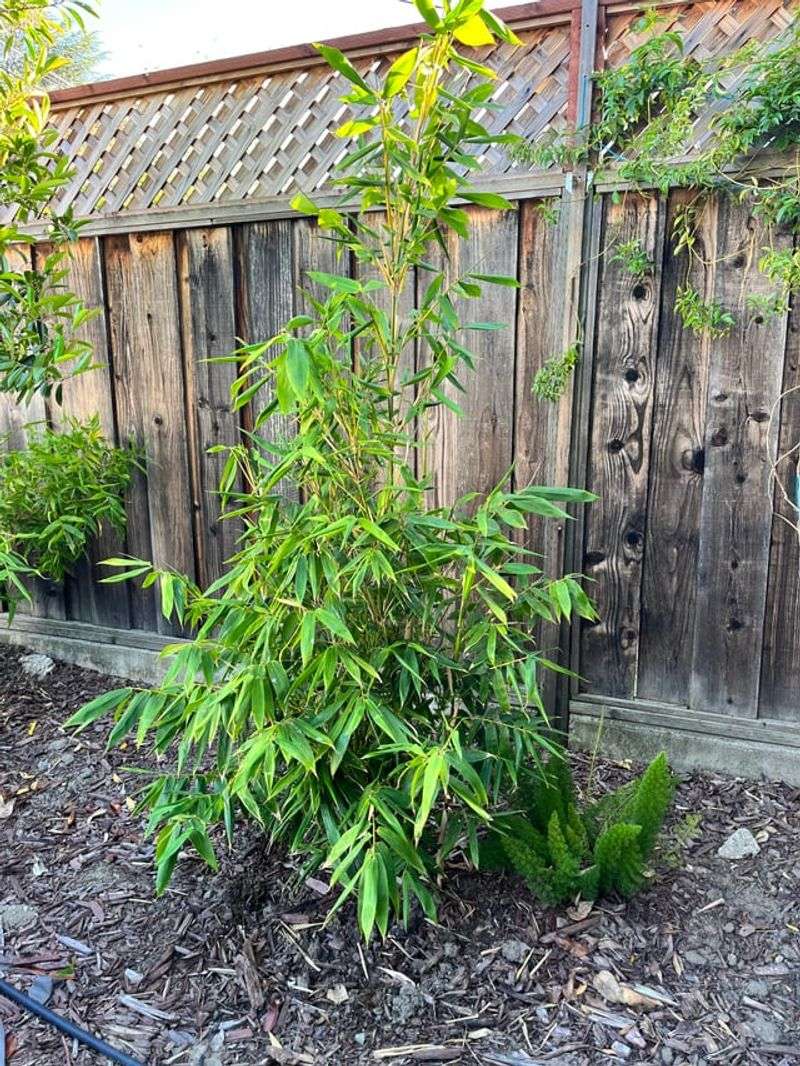
Few plants have generated as many neighbor conversations as running bamboo.
It looks striking in a yard, creates an instant privacy screen, and grows fast enough to feel satisfying. What it does not do is stay in your yard.
Running bamboo sends out underground stems called rhizomes that travel horizontally through the soil, sometimes covering fifteen feet or more in a single growing season before new shoots push up to the surface somewhere unexpected.
By the time new shoots appear on the other side of the fence, the rhizomes have already been traveling for weeks below ground. This makes running bamboo one of the most difficult plants to contain once it is established.
Removing it requires digging out every section of rhizome, and missing even a small piece results in regrowth within months. The plant is thorough about recovering from incomplete removal.
Clumping bamboo varieties are a much smarter choice for Oregon yards. They expand slowly and stay in a tight mound rather than sending out long underground runners.
They can still spread gradually, but nothing approaching the scale of running types. Same tropical look, dramatically different management situation.
If running bamboo is already established, a physical root barrier made from thick high-density polyethylene, installed at least 24 to 30 inches deep and angled outward at the top, can redirect rhizomes upward where they can be cut.
Check the barrier edges every spring without exception. Running bamboo rewards attention and punishes neglect with a whole new thicket on the other side of the fence.
Running bamboo and your neighbor’s patience have one thing in common: both have limits. The clumping variety offers the same visual effect without the underground diplomacy required.
That swap is worth making before the rhizomes make the decision for you.
6. Yellow Flag Iris Moves Through Wet Soil
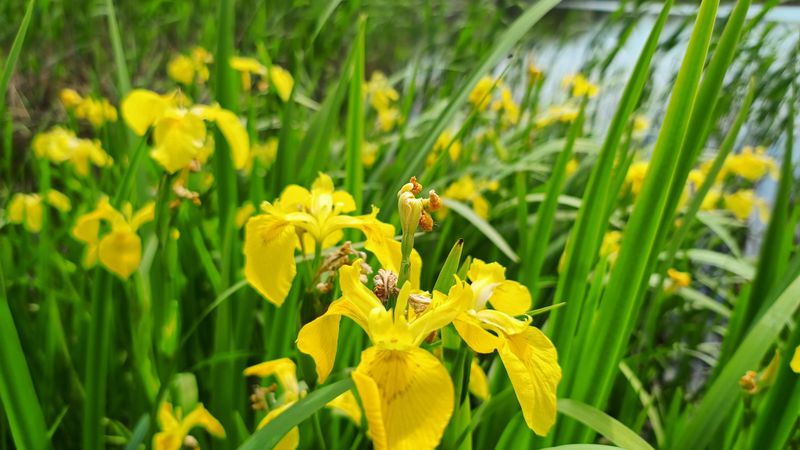
Wet corners, soggy edges, and rain garden borders can be genuinely tricky spots to plant.
Yellow flag iris handles all of them without complaint, which sounds ideal right up until you understand what it does with that adaptability.
It spreads aggressively through wet and moist soils using both underground rhizomes and buoyant floating seeds, colonizing pond edges, stream banks, and wetland areas faster than most native plants can compete.
Oregon has listed yellow flag iris as a noxious weed. It forms dense stands that crowd out native wetland plants like cattails, sedges, and native irises that local wildlife depend on.
Once established in a water feature or natural wet area, removal becomes very difficult because the rhizomes break apart easily and each piece can regrow into a new plant. Incomplete removal actively helps it spread.
The seeds are buoyant and travel easily in moving water, which is how a garden planting becomes a stream corridor problem several miles downstream.
This is not a theoretical concern in Oregon. It is an observable pattern across river systems and wetland parks throughout the state.
Oregon native blue flag iris is a beautiful alternative for wet areas. It supports pollinators and stays within a reasonable footprint.
For existing yellow flag iris patches, cutting before seed set and removing rhizomes during dry spells gives the best chance of reducing the population.
Bag all plant material for disposal rather than composting it, since fragments in compost can reestablish.
A plant that travels by water, breaks apart during removal to create new plants, and has already colonized river corridors across Oregon is not a plant that respects boundaries.
Native blue flag iris does the same job in the same conditions and stays where the conversation started.
7. Periwinkle Creeps Past Borders
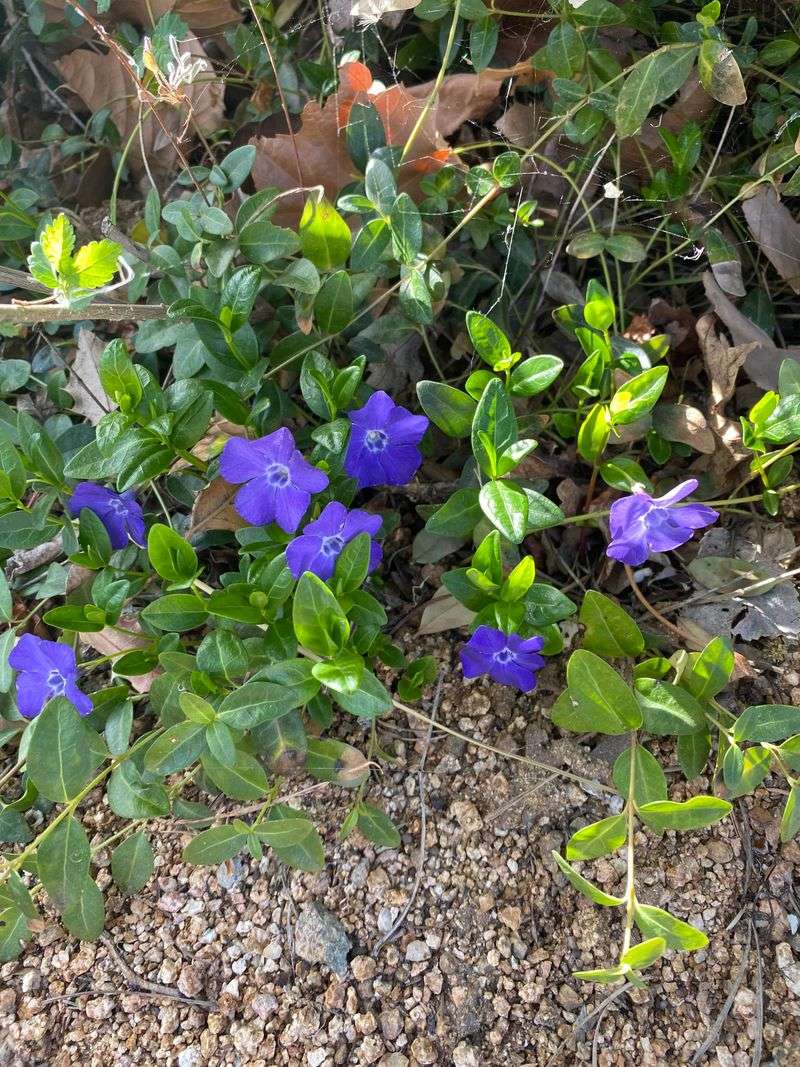
Periwinkle has been in Oregon gardens for generations.
The shiny dark leaves stay attractive through wet winters, the small purple flowers show up reliably in early spring, and it covers ground without much fuss.
For decades it has been sold and planted as a straightforward low-maintenance groundcover, and in that role it genuinely delivers. It just does not stop delivering once it reaches the edge of the bed.
Vinca minor spreads by sending out long trailing stems that root wherever they touch soil.
On a slope or woodland edge, this means a steady creep into natural areas over several years that is easy to miss until it has already covered a significant distance.
It can establish in forest understories where it outcompetes native plants like trillium, native violets, and ferns that took far longer to establish and cannot compete with the coverage speed.
Because it is evergreen and low to the ground, it is easy to underestimate how far it has traveled. The spread looks gradual until it does not.
Edging beds regularly with a sharp spade and removing any stems that root outside the intended area keeps it in check in a maintained garden setting.
For woodland edges or naturalized areas near parks or forests, replacing periwinkle with native groundcovers like wild ginger or native strawberry is the more responsible long-term approach.
Both provide similar coverage while actually supporting the local ecosystem instead of competing against it. The visual result is comparable. The ecological result is not.
Periwinkle is not a bad plant in a well-maintained, bordered bed far from natural areas. It is a persistent problem in every other situation.
Wild ginger and native strawberry give you the same groundcover result with the added benefit of not generating a future removal project. Low maintenance that actually stays low maintenance is the better deal.