These Pruning Mistakes Are Keeping Your Georgia Hydrangeas From Blooming
Few things are more disappointing than waiting for flowers that never show up. You water, feed, and care for the plant, yet it still looks nothing like you expected.
That is usually when the guessing begins.
Many people assume the weather is to blame or think the plant simply needs more time. The real answer is often much closer than anyone realizes, and one small habit can affect blooming long before spring arrives.
It is easy to repeat the same routine every year without knowing it is holding the plant back.
A few common pruning mistakes can make all the difference. That is why so many hydrangeas in Georgia stay healthy and full of leaves but produce far fewer blooms than their owners expect.
1. Pruning At The Wrong Time Removes Flower Buds
Timing is everything with hydrangeas, and cutting at the wrong moment can cost you an entire season of blooms. Most gardeners assume fall is a safe time to prune.
For many hydrangea varieties, that assumption is exactly what causes the problem.
Bigleaf and oakleaf hydrangeas set their flower buds in late summer and fall. Those buds sit quietly on the stems through winter and bloom the following spring or early summer.
Pruning in fall or early spring removes those buds before they ever get a chance to open.
Right after flowering ends is generally the safest window for pruning these varieties. That window tends to fall in mid to late summer in most Southern gardens.
Cutting during that period gives the shrub enough time to set new buds before cold weather arrives.
Smooth hydrangeas and panicle hydrangeas follow a different schedule. Both bloom on new growth produced in the current season, so late winter or early spring pruning works well for them.
Knowing your variety matters more than following a generic pruning calendar.
A simple rule worth remembering: if you are not sure when your hydrangea blooms or how it sets buds, hold off on pruning for one full season.
2. Different Hydrangeas Need Different Pruning Methods
Not every hydrangea plays by the same rules. Treating all of them the same way is one of the fastest routes to a bloomless summer.
Bigleaf hydrangeas, sometimes called mopheads or lacecaps, bloom on old wood. That means the flower buds formed last season are already on the stems before winter arrives.
Hard pruning in fall or spring wipes those buds out completely.
Panicle hydrangeas are much more forgiving. They bloom on new wood produced each spring, so cutting them back hard in late winter encourages stronger, more vigorous flowering.
The same approach applied to a bigleaf variety would set it back significantly.
Oakleaf hydrangeas also bloom on old wood and prefer very minimal pruning. Heavy cutting tends to reduce blooming noticeably in these varieties.
Smooth hydrangeas, like the popular Annabelle, bloom on new wood and can handle more aggressive pruning in late winter. Some gardeners cut them down to about 12 to 18 inches each year.
That approach encourages bigger flower heads and a tidier plant habit.
Your Georgia Garden Changes Every Week. Your Plan Should Too.
Gardening in Georgia changes quickly throughout the season. Every Friday you’ll receive a simple weekly plan showing exactly what to plant, prune, fertilize, harvest, and protect so you never miss the right timing.
Before picking up the pruners, take a moment to identify exactly which type of hydrangea you have. Check the tag if you still have it, or look up the variety name online.
3. Older Stems Often Carry Next Year’s Blooms
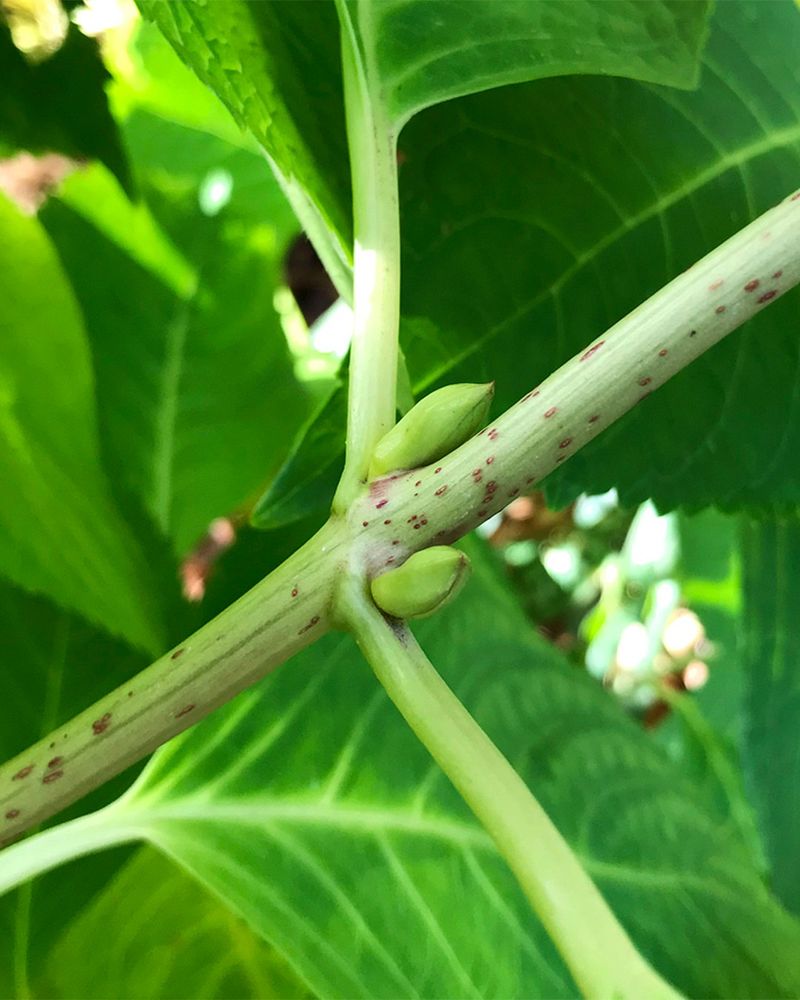
Woody old canes might not look impressive, but on certain hydrangea varieties, they are holding next season’s flower buds.
Removing them at the wrong time can wipe out next season’s flowers before they ever form.
On bigleaf and oakleaf hydrangeas, the buds for next year’s blooms develop along the upper portions of stems that grew during the current season. By fall, those buds are already sitting in place, waiting through winter.
Cut those stems down and the buds go with them.
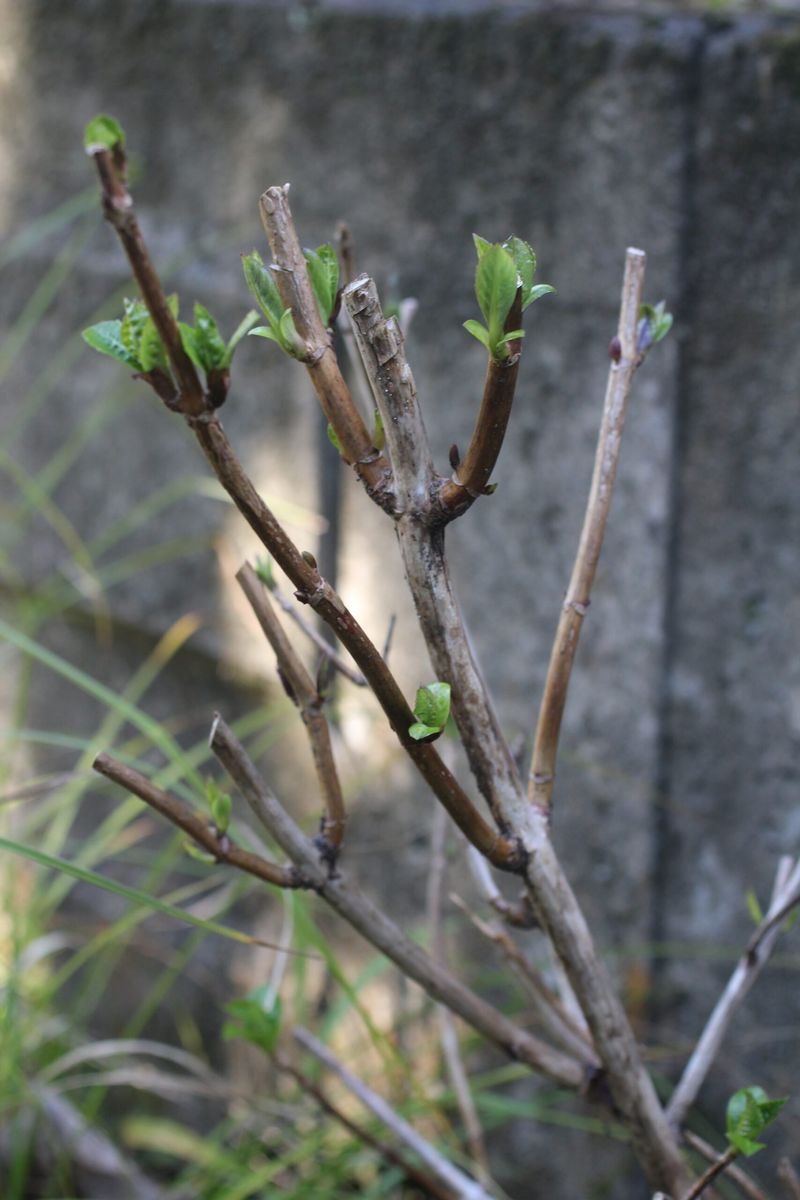
A good approach is to leave the majority of stems intact through winter. In early spring, look for signs of green growth emerging from the buds.
Stems that show no new growth after other stems have leafed out are likely candidates for removal.
Scratch the bark lightly with a fingernail if you are unsure. Green tissue underneath usually means the stem is still alive and potentially capable of blooming.
Brown or dry tissue throughout suggests the stem has not survived the winter and can be safely removed.
Keeping three to five healthy old canes per plant is a reasonable target for most mature bigleaf varieties. Those older canes are often the most productive bloomers on the entire shrub.
4. Removing Too Much Growth Weakens Future Blooming
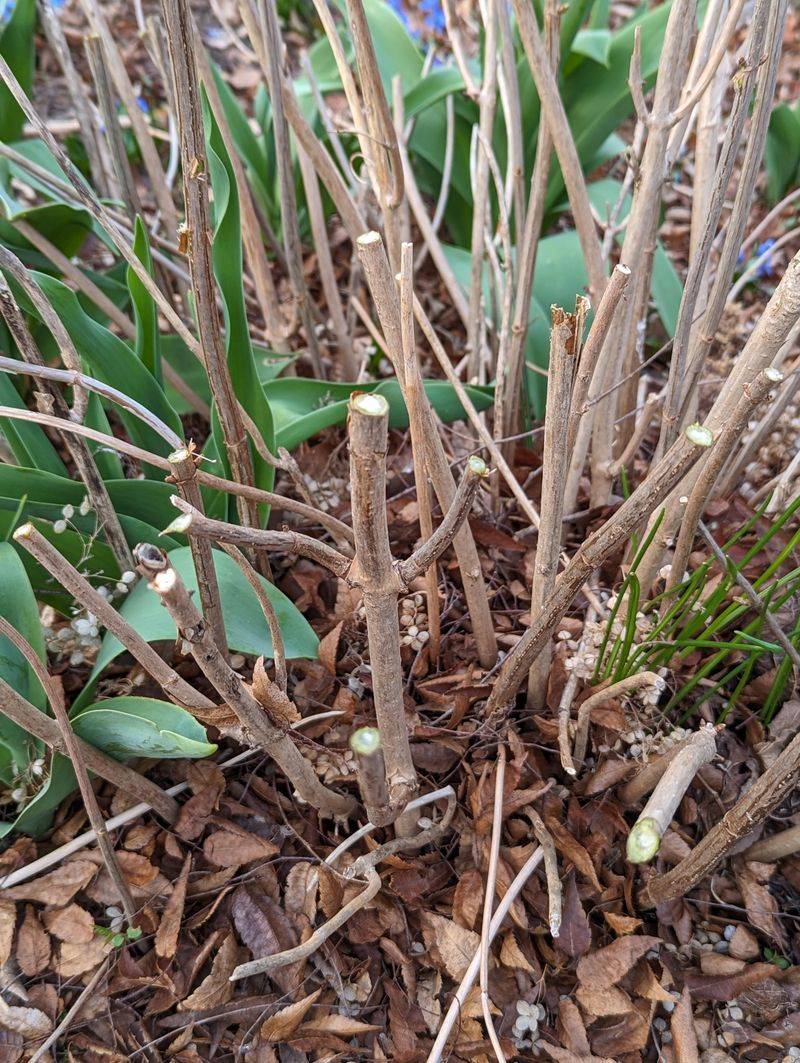
Cutting back more than a third of a hydrangea at one time puts serious stress on the plant. A stressed shrub tends to focus its energy on recovering rather than producing flowers.
Over-pruning is surprisingly common. Some gardeners cut hydrangeas back hard because the shrubs look overgrown or out of place near a walkway or fence.
The result is often a flush of leafy green growth with few or no blooms for an entire season, sometimes longer depending on the variety and the timing.
Hydrangeas need a certain amount of foliage to produce the energy required for flowering. Leaves capture sunlight and convert it into sugars the plant uses to develop buds.
Stripping away too much foliage at once disrupts that process significantly.
Gradual renewal pruning is a smarter approach for overgrown shrubs. Remove the oldest, thickest canes at the base over a period of two to three years instead of cutting everything back at once.
That method encourages fresh new growth without shocking the plant.
Size control is a reasonable goal, but it is worth choosing the right variety for the available space before planting. A hydrangea variety that naturally stays compact will need far less aggressive pruning than one that spreads aggressively.
5. Shearing Changes The Shrub’s Natural Shape
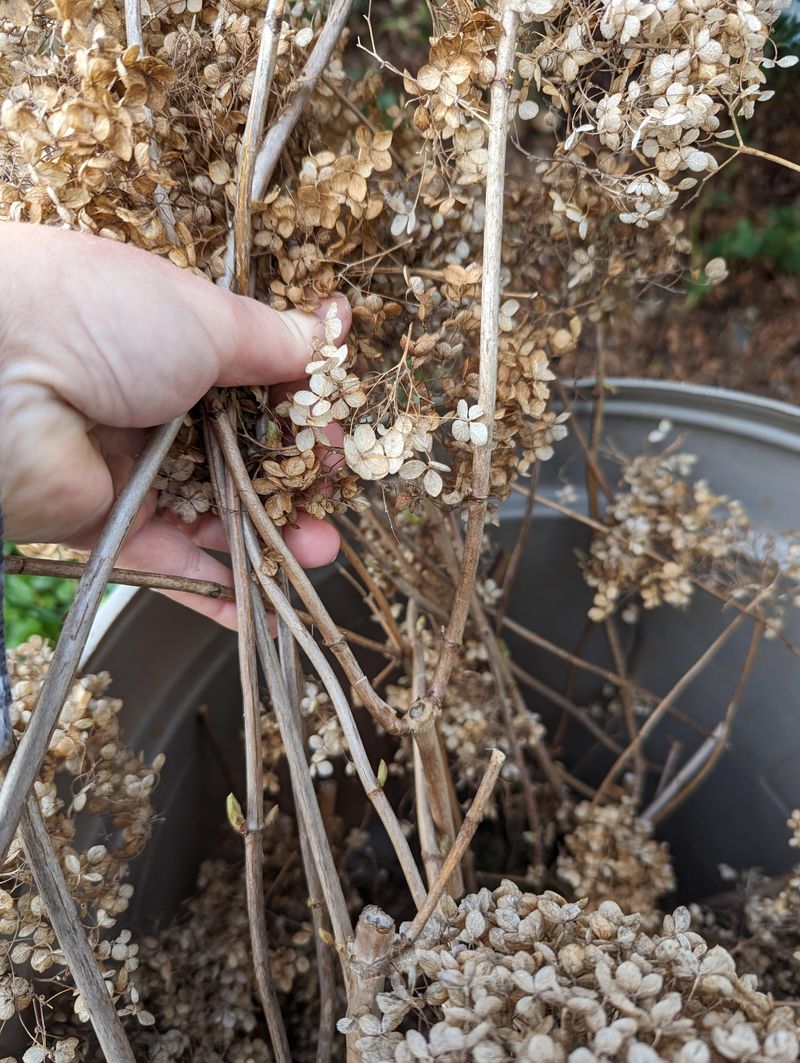
Shearing a hydrangea like a boxwood hedge might look tidy at first glance, but it creates real problems for flowering. Flat, uniform cuts remove buds indiscriminately and reshape the shrub in ways that work against its natural growth habit.
Hydrangeas grow with an arching, layered structure. Shearing flattens that structure and encourages dense, twiggy outer growth that can shade interior stems.
Over time, the center of the shrub may become crowded and less productive.
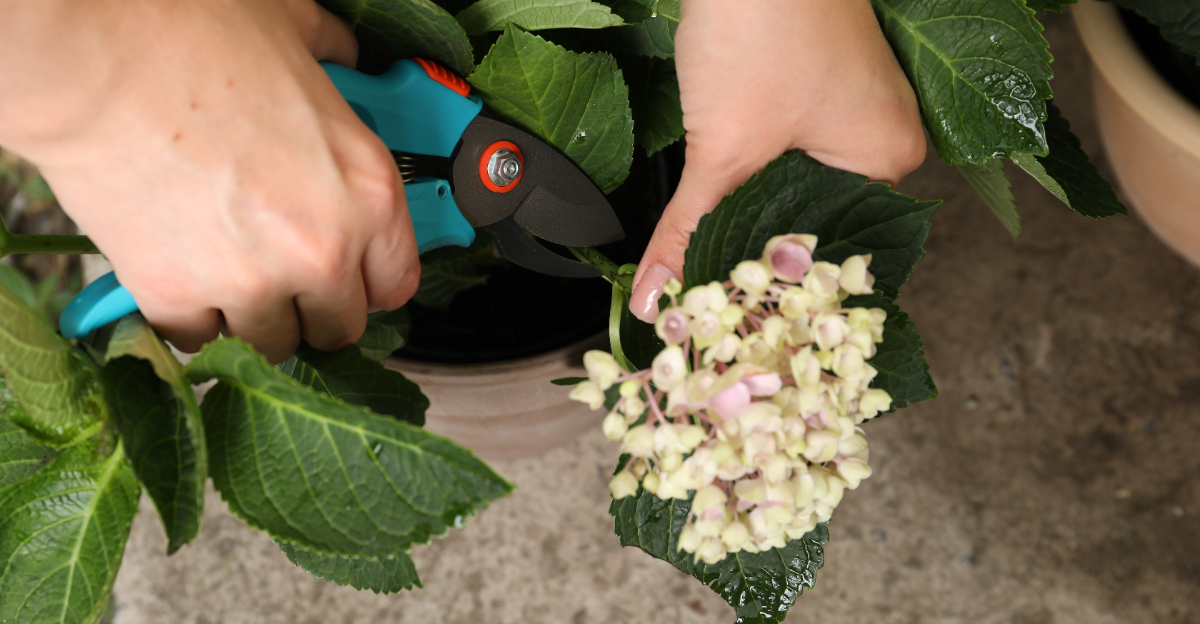
Selective hand pruning is a much better fit for hydrangeas. Using bypass pruners to remove individual stems at the base or just above a healthy bud gives you control without disrupting the plant’s natural form.
It takes a little more time but produces far better results.
Shearing also tends to encourage a flush of weak, leafy shoots right at the cut points. Those shoots look like growth but rarely develop into productive flowering stems.
The plant ends up looking bushy without actually blooming more.
If a hydrangea has gotten too wide or too tall for its spot, selective thinning over a couple of seasons is more effective than shearing it back hard. Remove the stems causing the problem rather than trimming the entire surface.
That approach preserves the blooming potential on the stems that remain and keeps the shrub looking like a hydrangea rather than a trimmed hedge.
6. Knowing Which Stems To Remove Makes A Big Difference
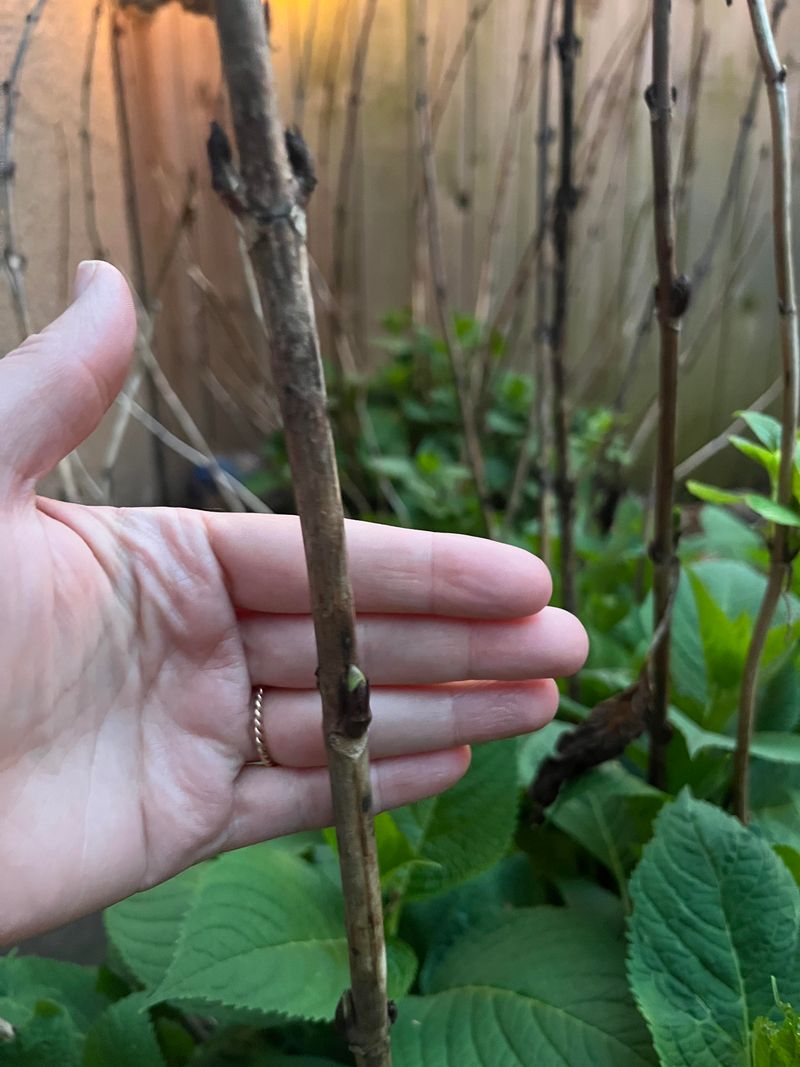
Walk up to your hydrangea and look closely before cutting anything. Not all stems are equal, and removing the wrong ones is a common reason blooms fail to appear.
Old canes on bigleaf and oakleaf varieties are typically thicker and have rougher, more textured bark. These older stems often carry the buds responsible for next season’s flowers.
Removing too many of them at once can set the plant back noticeably.
New stems that grew during the current season are thinner, smoother, and often greener in color. On old-wood bloomers, these stems will carry buds the following year.
On new-wood bloomers like smooth and panicle hydrangeas, these are the stems that produce flowers in the current season.
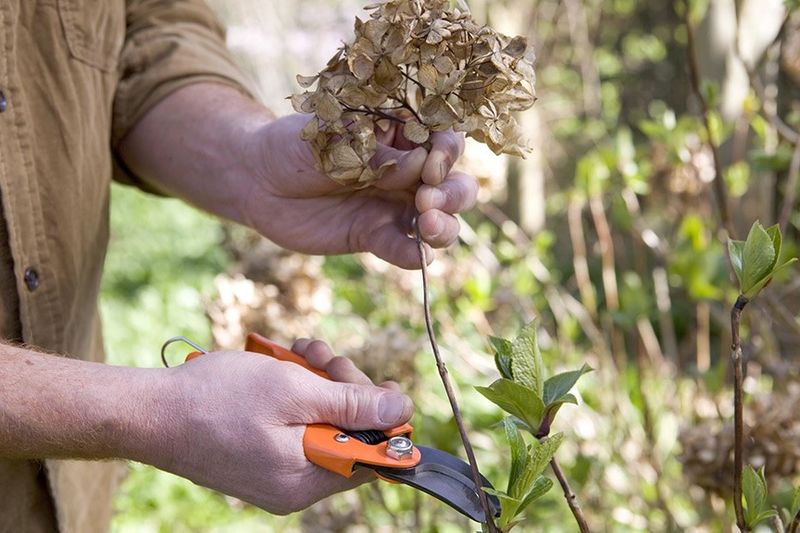
Damaged or dried-out stems are worth removing regardless of the variety. They take up space, can harbor pests, and do not contribute to blooming.
Spotting them is usually straightforward since they will be brittle, hollow, or completely dry with no signs of bud activity.
Crossed stems that rub against each other are also worth removing. Constant friction can damage bark and create entry points for disease.
Choosing the weaker of the two crossed stems and removing it at the base improves airflow and reduces that risk.
7. Sharp Pruners Prevent Ragged Cuts
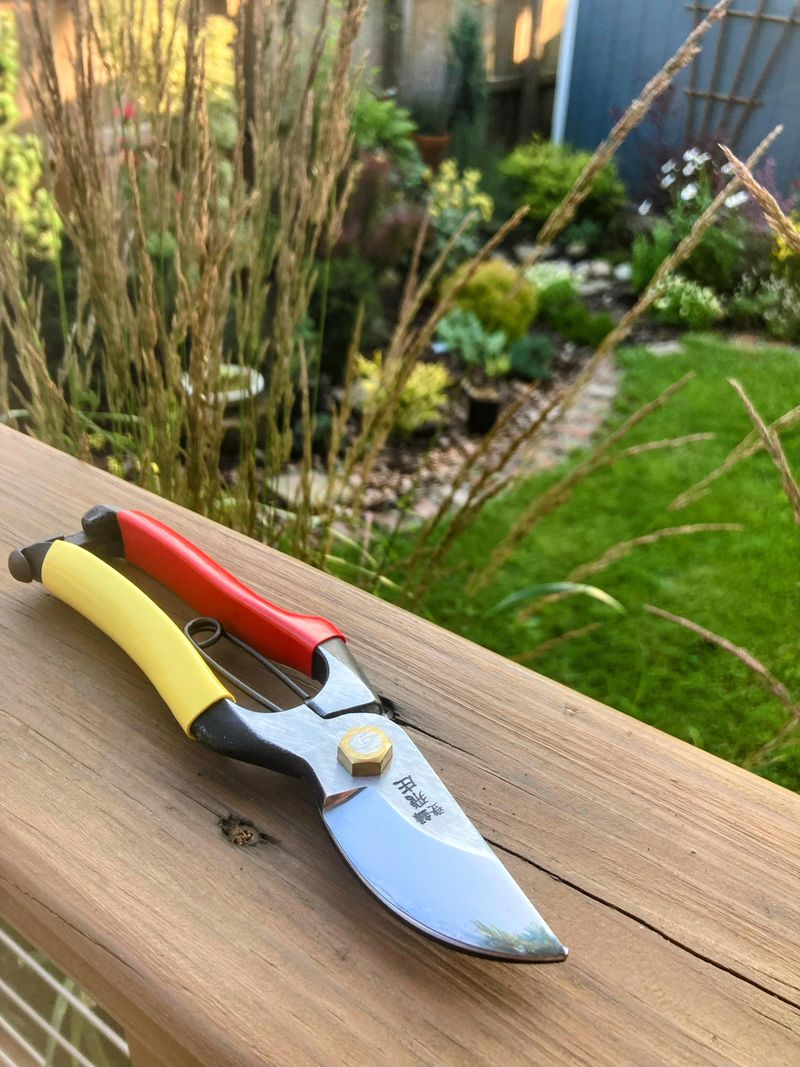
Dull blades crush stem tissue instead of cutting through it cleanly. That kind of damage slows healing and can leave the plant more vulnerable to disease and stress at the cut site.
Sharp bypass pruners make a noticeable difference. A clean cut heals faster and leaves less exposed tissue for pathogens to enter.
It also causes less mechanical stress on the stem, which matters more on thicker old canes.
Bypass pruners work with a scissor-like action that slices through stems smoothly. Anvil-style pruners press down onto a flat plate, which tends to crush the stem.
For hydrangeas, bypass pruners are the better tool for most pruning tasks.
Sharpening pruner blades a couple of times per season is a reasonable habit for anyone who prunes regularly. A simple whetstone or a dedicated pruner sharpener does the job well enough for home use.
Clean cuts on healthy stems are worth the small effort of keeping tools sharp.
Cleaning pruning blades between plants is also a good habit, especially if you are trimming shrubs that may have signs of disease.
It reduces the chance of spreading fungal issues or bacterial problems from one shrub to another. In Georgia, where warm and humid conditions can encourage plant diseases, that small step adds up over a season.