This Backyard Feature Draws More Snakes To Texas Homes Than Anything Else
Most Texas homeowners who deal with snakes regularly assume the problem is their location. Back up against a greenbelt, near a creek, adjacent to open land, somewhere snakes are going to show up no matter what.
And sometimes that’s true. But for a surprising number of people, the real reason snakes keep appearing in the yard has nothing to do with geography.
It’s something in their own backyard that most people would never think to connect to a snake problem.
One specific backyard feature draws more snakes to Texas homes than almost anything else. It’s not unusual. It’s not exotic.
It’s the kind of thing that exists in countless Texas backyards without ever raising concern because it doesn’t look like something that would attract wildlife.
But from a snake’s perspective, this feature signals exactly the conditions they’re always looking for, shelter, prey, and temperature regulation, in one reliable location. Once you know what it is, the connection becomes obvious.
Bird Feeders Can Indirectly Attract Snakes
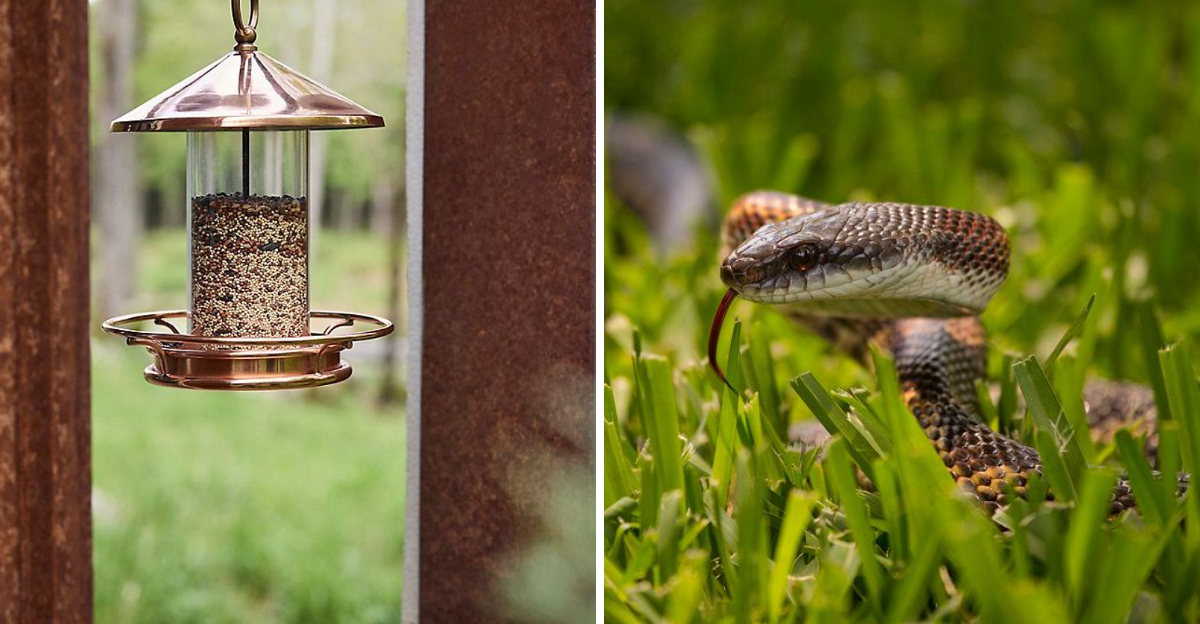
Most people put up a bird feeder to enjoy colorful songbirds, not to invite reptiles into the yard. But here is something that surprises a lot of Texas homeowners: bird feeders can quietly set off a chain of events that ends with a snake showing up near your back door.
The connection is not direct. Snakes are not interested in birdseed at all. What they are interested in is the activity that builds up around a feeder over time. When seeds fall to the ground, and they always do, they pile up beneath the feeder.
That scattered seed sits there and starts drawing in small rodents like mice and rats, especially after dark when most people are not paying attention.
Once rodents find a reliable food source, they keep coming back. They may even start nesting nearby.
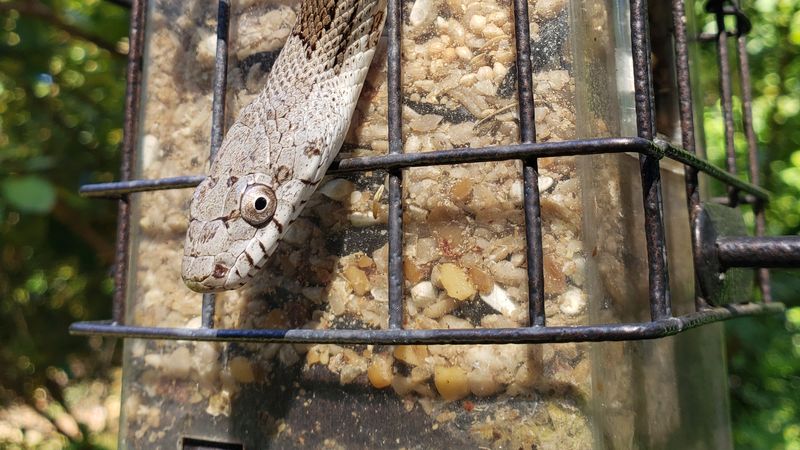
Snakes notice this kind of steady activity quickly. Many common Texas snakes, including rat snakes and copperheads, are skilled hunters that follow rodent trails right into residential yards.
So the feeder itself is not the problem. The problem is the ecosystem it accidentally creates.
A feeder with spilled seed on the ground is basically an open invitation to a whole food chain. Birds come first, then rodents, and then predators that eat rodents. Snakes are just following their instincts.
Knowing this connection is actually good news. It means you have real options for reducing snake visits without giving up your bird-watching hobby entirely.
Small changes in how you manage the feeder can make a noticeable difference in what shows up in your yard.
Rodents Are The Real Attraction
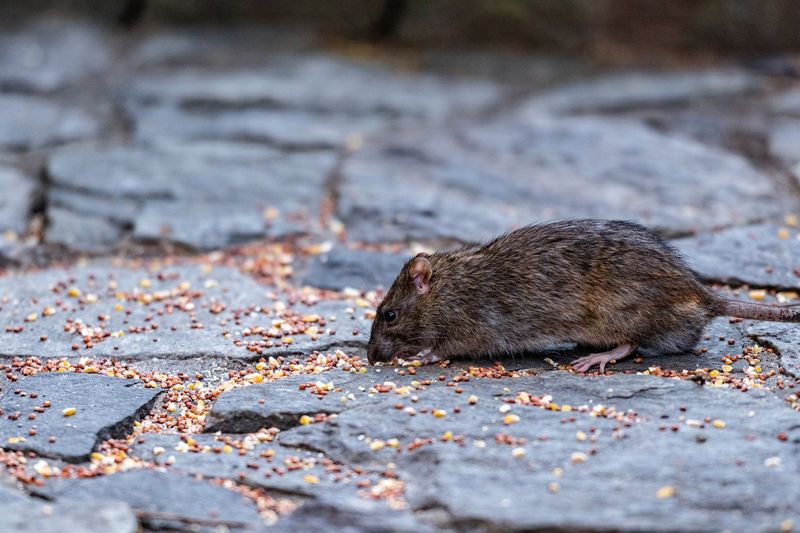
Forget the feeder for a second. The real reason snakes enter Texas backyards is much simpler: food.
Snakes are hunters, and when prey is easy to find, they will return to that spot again and again. Rodents are at the top of the menu for many snake species found across Texas.
Mice and rats are everywhere in Texas neighborhoods. They are adaptable, fast-breeding, and constantly searching for food.
Your Texas Garden Changes Every Week. Your Plan Should Too.
Gardening in Texas changes quickly throughout the season. Every Friday you’ll receive a simple weekly plan showing exactly what to plant, prune, fertilize, harvest, and protect so you never miss the right timing.
A bird feeder that drops seed on the ground gives them exactly what they need. Once a few rodents discover the spot, others follow.
Before long, a small feeder area can become a regular hangout for a surprising number of mice or rats.
Rat snakes are one of the most common large snakes in Texas, and they earned their name for a reason. They are incredibly good at tracking down rodents.
They follow scent trails, squeeze through small gaps, and are perfectly comfortable moving through suburban areas. A yard with active rodent traffic is a yard that rat snakes will visit regularly.
Copperheads also eat rodents, especially younger snakes that target smaller prey. Even some water moccasins will venture away from water sources if rodents are plentiful nearby.
The point is that several snake species are wired to go wherever the rodents are. Controlling rodent activity in your yard is honestly the most effective step you can take. Fewer rodents means fewer reasons for snakes to stop by.
Trapping, securing trash, and removing food sources are all practical ways to reduce the rodent population and, in turn, reduce snake visits to your property.
Ground-Feeding Birds Add Another Food Source
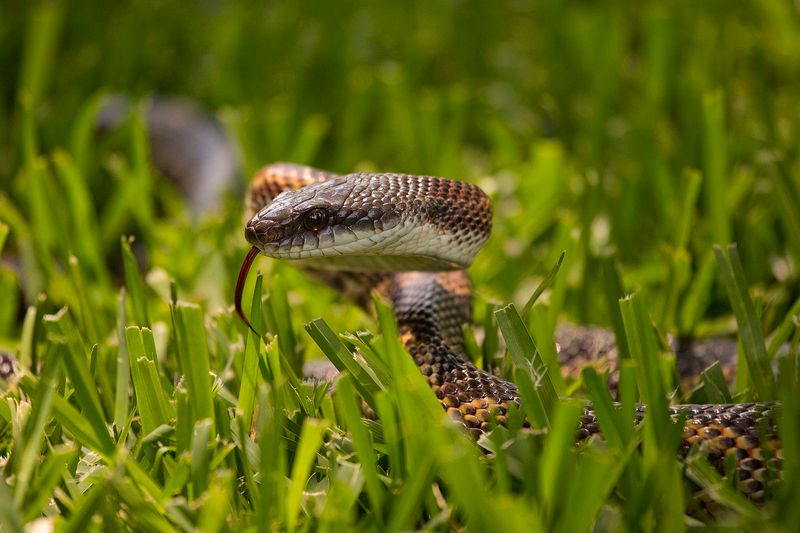
Some snakes are not just after rodents. A handful of Texas snake species are also known to go after small birds, bird eggs, and nestlings.
When a bird feeder draws in ground-feeding birds like doves, sparrows, and juncos, it can add yet another food source that makes your yard attractive to certain snakes.
Ground-feeding birds spend a lot of time low to the ground, pecking at scattered seed. That puts them in a vulnerable position.
Rat snakes in particular are well known for raiding bird nests. They can climb fences, trees, and even the poles that hold up feeders.
If there are nesting birds nearby, a rat snake may be drawn in by the combination of eggs and young birds, not just rodents.
Concentrating lots of wildlife activity in one corner of your yard can create what some wildlife experts call a hotspot. Food is available in multiple forms, cover is nearby, and prey animals are regularly present.
For a snake, this kind of setup is basically perfect hunting territory. Mourning doves are especially common ground feeders in Texas yards. They are calm, slow-moving birds that spend long stretches of time on the ground.
That behavior makes them easier targets for a patient snake hiding in nearby grass or shrubs.
You do not need to stop feeding ground birds entirely. But being aware of where feeding activity is concentrated helps you make smarter choices about feeder placement.
Keeping the feeding zone more open and visible reduces the advantage snakes have when approaching from dense cover. Simple adjustments can shift the balance back in your favor without chasing away the birds you enjoy watching.
Keep Fallen Seed Off The Ground
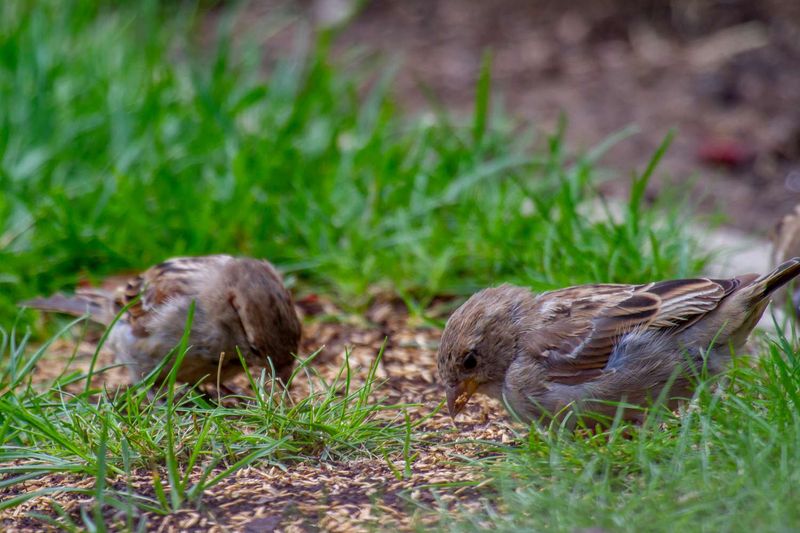
One of the easiest habits you can build to reduce snake activity near your feeder is also one of the most overlooked: clean up fallen seed regularly. Spilled seed is the starting point of the whole chain.
Without it, rodents have less reason to gather, and without rodents, snakes have less reason to visit.
Sweeping or raking beneath your feeder every few days can make a real difference. It does not take long, and it removes the food source before rodents have a chance to establish a routine around it.
Mice are creatures of habit. Once they find a reliable food spot, they keep returning. Disrupting that routine early is much easier than trying to deal with an established rodent problem later.
Seed-catching trays are another smart option. These attach directly beneath the feeder and catch falling seed before it hits the ground.
Birds can eat from the tray, and you end up with far less mess on the soil below. Less mess means fewer rodents, and fewer rodents means fewer snakes showing up to hunt.
Choosing the right type of seed also helps. Many birds toss aside hulls and shells while eating, which adds to the debris on the ground.
Hulled sunflower seeds or no-mess blends create less waste overall. Birds eat more of what falls, and you have less to clean up.
Keeping the area beneath your feeder tidy is not a complicated task. A few minutes of regular maintenance can shift your yard from a snake hotspot to a much less inviting environment.
Small, consistent efforts add up over time and make your outdoor space safer and more enjoyable for everyone.
Move Feeders Away From Dense Cover
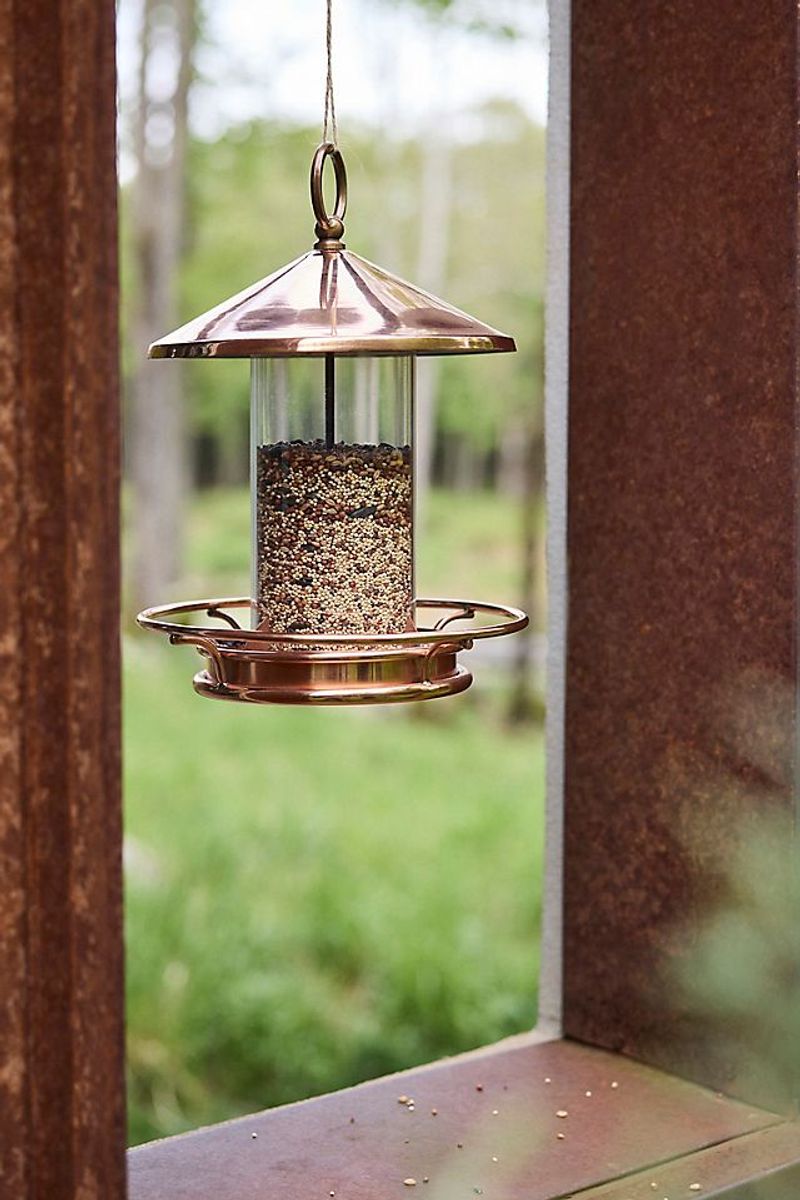
Where you place your bird feeder matters just as much as how you maintain it. Snakes are ambush hunters.
They rely on cover to approach prey without being spotted. If your feeder is sitting right next to a brush pile, a thick hedge, or a patch of tall grass, you are basically giving snakes a perfect hiding spot within striking distance of their next meal.
Moving your feeder into a more open area of the yard can make a noticeable difference. When a snake has to cross open ground to reach a food source, it becomes more exposed.
That exposure makes the snake less confident about approaching, and it also makes the snake more visible to you. Spotting a snake before it gets close to your home is always a better situation than a surprise encounter near the back steps.
Think about the path between your feeder and any natural cover in your yard. Tall ornamental grasses, dense shrubs planted close together, stacked firewood, and overgrown garden beds all provide excellent hiding places for snakes.
The closer these features are to your feeder, the more comfortable a snake will feel moving between cover and the feeding area.
Trimming back shrubs, mowing regularly, and keeping the area around the feeder clear and open reduces the number of concealed approach routes available. You do not need a perfectly bare yard.
Just creating a buffer of open space around the feeder is enough to change the dynamic significantly.
Pairing good feeder placement with regular cleaning creates a much less welcoming environment for snakes, while still keeping the space enjoyable for the birds and the people watching them from inside the house.
You Do Not Necessarily Have To Remove The Feeder
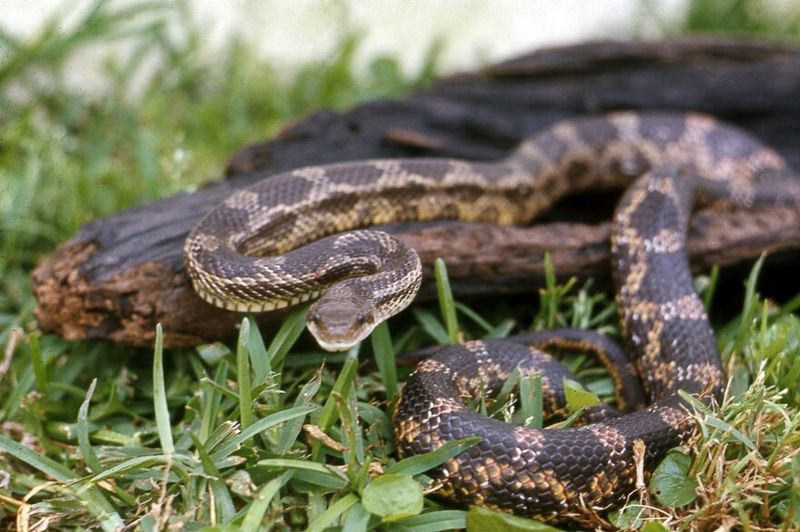
Here is a piece of good news for bird lovers who are worried about snakes: you probably do not need to take down your feeder. Many people assume that the feeder itself is the problem, but that is not quite right.
The feeder is just the starting point of a larger issue involving food, rodents, and cover. Address those things, and the feeder can stay.
Storing your birdseed in a sealed, rodent-proof container is a smart first step. Bags of seed left in a garage or shed can attract mice all on their own, separate from the feeder.
Metal containers with tight-fitting lids work well and keep rodents from getting into your supply between refills.
Cleaning up spills promptly, using seed-catching trays, and choosing low-waste seed blends all reduce the amount of food reaching the ground. Less ground food means less rodent activity.
Fewer rodents means snakes have less motivation to patrol your yard. The logic is straightforward once you understand the chain of events.
Reducing nearby hiding places is arguably the most important step of all. Snakes need cover to feel safe.
Remove brush piles, trim overgrown areas, and keep the zone around your feeder open. A snake that cannot hide comfortably near your feeder is a snake that will likely move on to a better location elsewhere.
Blaming the feeder entirely misses the bigger picture. With a few practical habits in place, most Texas homeowners can keep their feeders up and still make their yards far less inviting to unwanted reptile visitors.
Enjoy the birds. Just be smart about how you manage everything around them.