This Black Frass On Your Pennsylvania Patio Means A Massive Pest Is Feeding
Pennsylvania patio tomatoes can look peaceful until the floor starts leaving clues.
One morning, the pavers look clean. The next, dark little pellets sit beneath a pot like someone scattered peppercorns under the leaves. At first glance, they could pass for dirt, tree debris, or something a mouse left behind.
Then you look up.
A tomato stem looks bare. A branch that had leaves yesterday now looks stripped. One section of the plant seems oddly open, like something worked through dinner after everyone went inside.
That black frass is not random mess.
It is a calling card from a large leaf-chewing caterpillar that may still be hiding on the plant above it, blending into the stems with suspicious talent.
So what does black frass on your Pennsylvania patio really mean?
Start by reading the floor, then follow the evidence upward.
The droppings, chewed leaves, fresh pellets, and hidden green body all point to active feeding, and catching the clue early can save a tomato plant from losing far more foliage overnight.
Black Pellets Are Frass
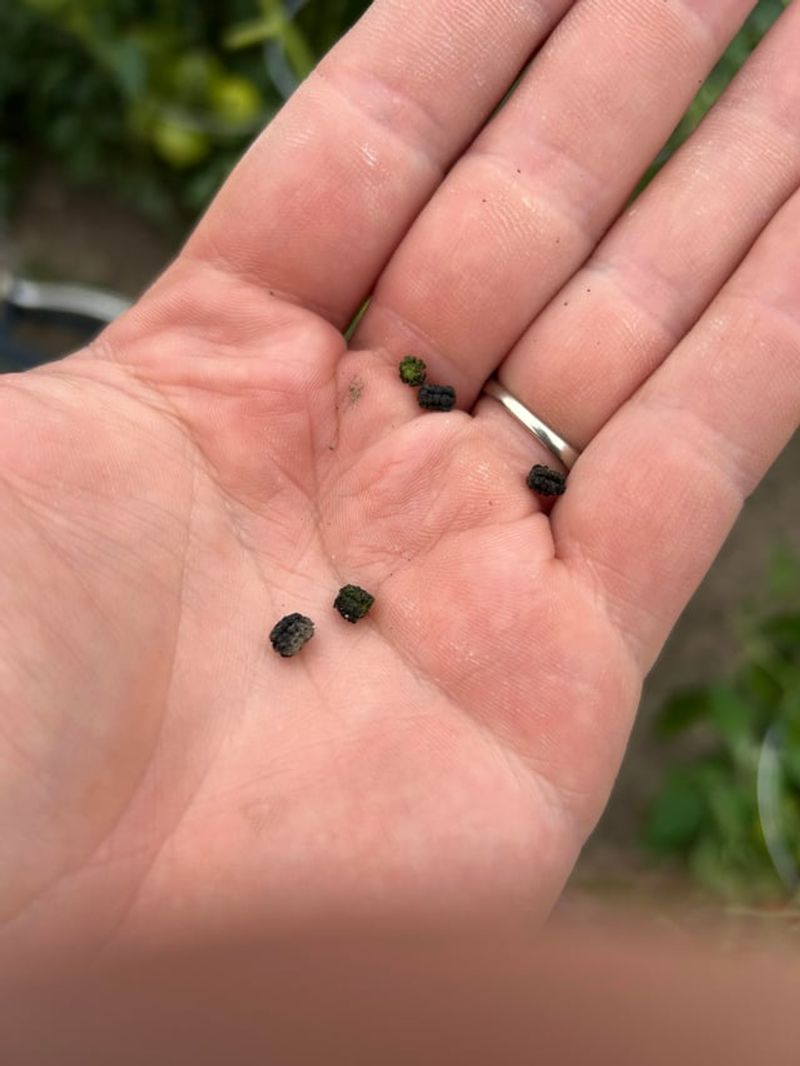
Those dark pellets on the patio are not ordinary dirt. They are frass, which is the garden word for insect droppings. In this case, the size and shape matter.
Large caterpillars leave large pellets, and the ones beneath tomato plants often look dark green to black, ridged, and chunky enough to catch your eye against stone, decking, or concrete.
That is the first clue.
Small pests leave tiny specks. A big feeder leaves bigger evidence.
The pellets may look almost like miniature ribbed beads or peppercorns, and a fresh pile can appear shockingly fast because a hungry caterpillar processes a lot of tomato foliage in a short time.
Look closely at the surface.
Fresh frass often looks dark and slightly moist. Older pellets dry out, fade a bit, and crumble more easily.
A fresh scatter beneath a tomato pot means feeding likely happened recently, and the culprit may still be sitting above your head like a green little criminal with excellent camouflage.
The patio floor is your first witness.
Do not sweep it away before checking the plant. Use the pellet location as a map. The droppings usually fall from the section where the caterpillar has been feeding, which means the evidence points almost straight upward.
That is not patio mess.
That is the frass file, and it just opened a case.
Hornworms Are The Likely Pest
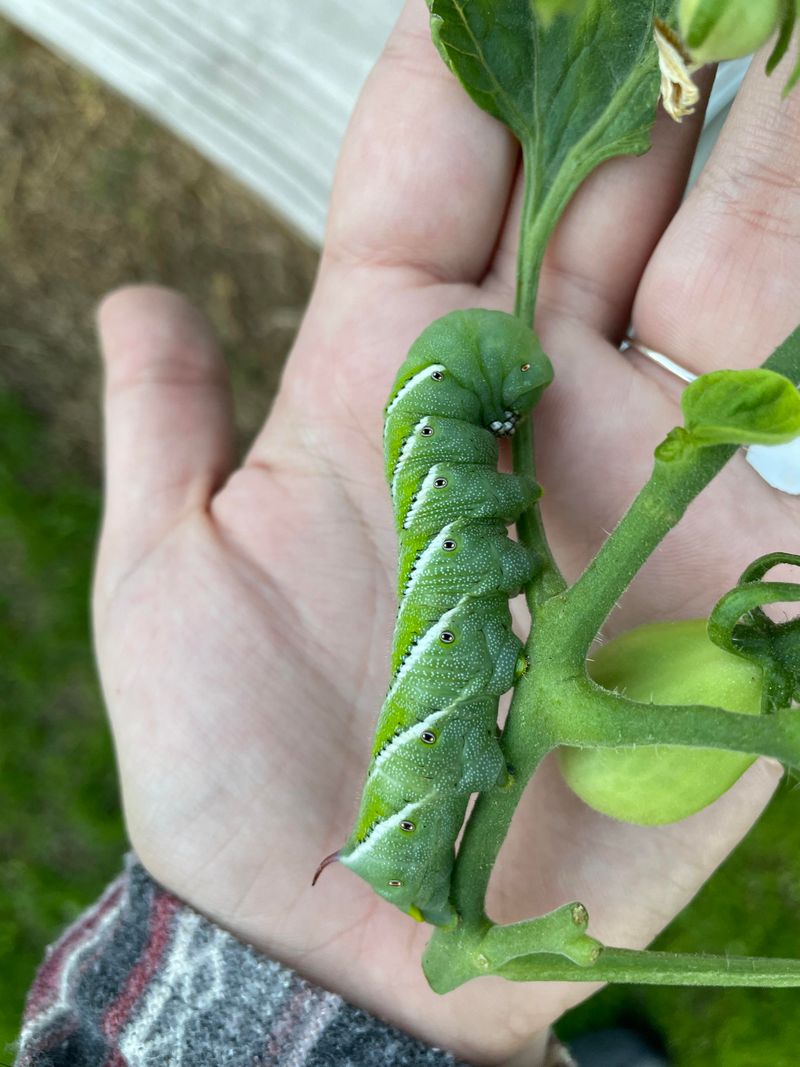
A large green caterpillar is usually the main suspect.
Tomato hornworms and tobacco hornworms both show up in Pennsylvania gardens, and both can leave the kind of black frass that makes patio gardeners stop mid-coffee.
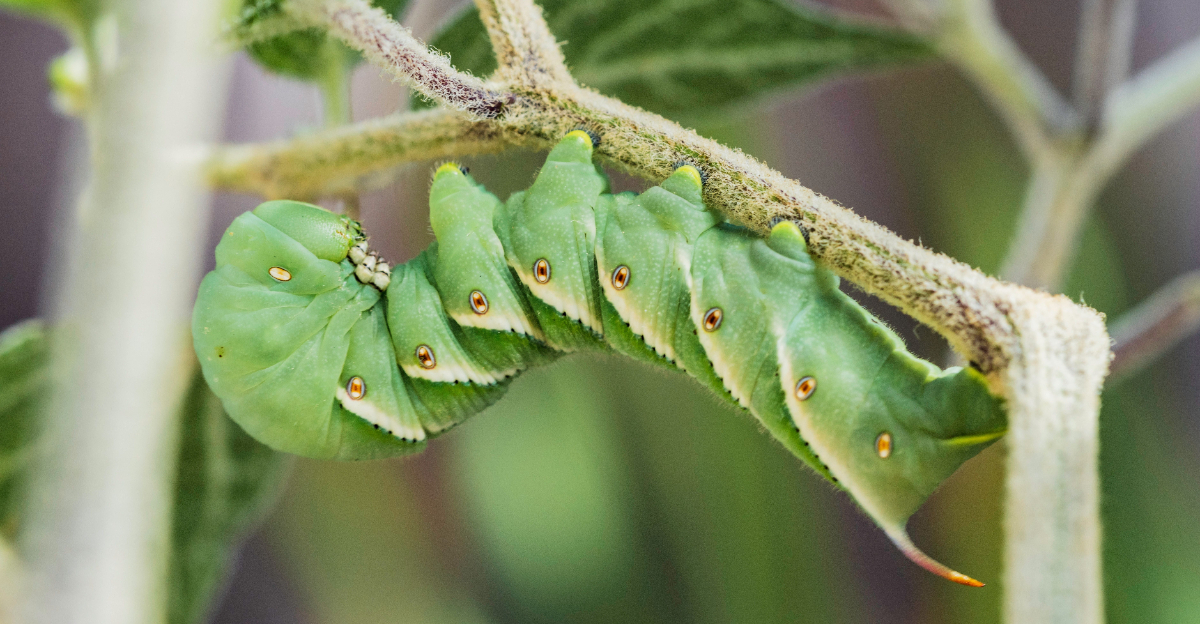
These caterpillars can grow several inches long, thick-bodied, and surprisingly hard to spot for something so large.
They feed with serious commitment.
Tomato leaves, tender stems, and even fruit can all show damage when a hornworm settles in. A small caterpillar may nibble quietly at first.
A nearly full-grown one can strip a noticeable section of plant before you realize anything has joined the garden party.
Your Pennsylvania Garden Changes Every Week. Your Plan Should Too.
Gardening in Pennsylvania changes quickly throughout the season. Every Friday you’ll receive a simple weekly plan showing exactly what to plant, prune, fertilize, harvest, and protect so you never miss the right timing.
The two common hornworms look slightly different.
One has V-shaped markings and a dark rear horn. The other has diagonal markings and a reddish horn. For a gardener trying to protect tomatoes, the exact species matters less than the feeding pattern.
Both create similar damage, and both can be removed the same way.
These caterpillars are the larval stage of large sphinx moths.
The moths lay eggs on tomato-family plants, then the young caterpillars begin feeding after they hatch. By the time you see frass on the patio, the feeder has usually been active for days and has gained enough size to make the evidence obvious.
Hornworms are not subtle diners.
They are more like tiny green goats with a leaf budget and no manners.
Look Above The Droppings
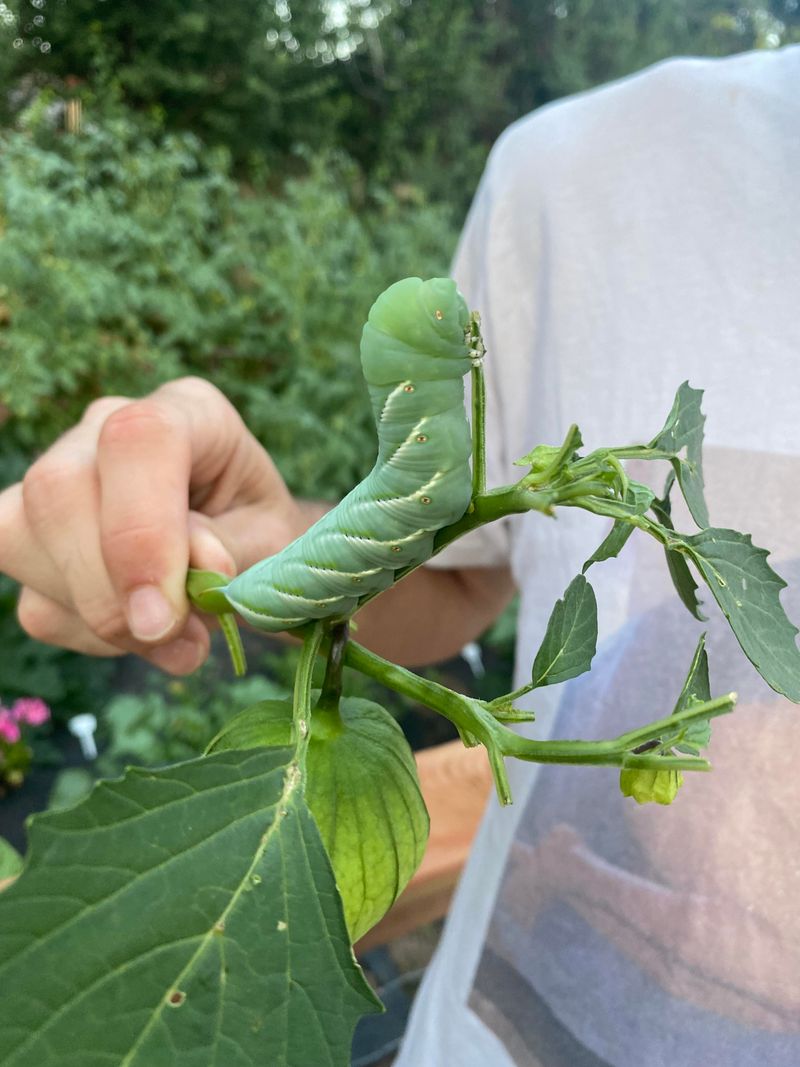
The droppings give you a direction.
Stand over the frass pile and look straight up into the tomato plant. Caterpillars do not usually leave their feeding area for long, and gravity makes the patio clue surprisingly accurate.
Start with the branch directly above the pellets.
Move slowly. Hornworms often rest along stems, under leaves, or tucked against the main stalk where their green color blends with the plant. Your eyes may pass right over one several times before the shape suddenly appears.
Search from low to high.
Lift leaves gently and check the undersides. Look along stems, especially where foliage suddenly stops. The caterpillar may be stretched lengthwise against a branch, making its body look like part of the plant structure.
A flashlight can help.
Shining light from the side creates shadows that reveal the rounded body against flat leaves and stems. Morning or evening checks can also make the search easier because strong midday light creates confusing shadows in the foliage.
Use the frass pile like a target marker.
A scatter under one side of a container usually means the caterpillar is nearby, not across the yard. Slow, careful searching beats frantic leaf shaking.
The moment you spot it can feel ridiculous.
A huge caterpillar was there the whole time, pretending to be a stem with a snack schedule.
The patio told you where to look. Trust the crumbs, even when they are not crumbs.
Chewed Tomato Leaves Confirm It
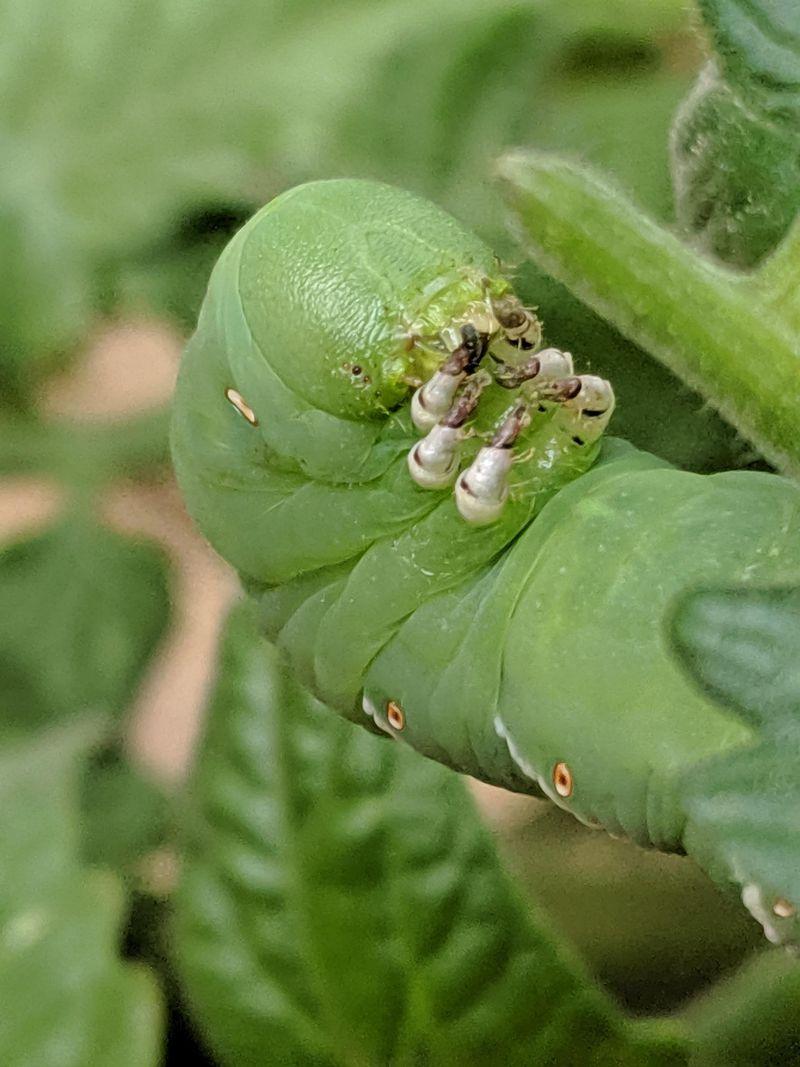
Missing leaves close the case fast.
Hornworms do not leave delicate little lacework. They remove large pieces of foliage, sometimes an entire leaf or most of a stem. A branch that looked full yesterday can look strangely bare by morning.
That stripped look is the key.
Smaller pests often create holes, ragged edges, stippling, or scattered chewing marks. Hornworms create bold damage. Whole leaflets vanish. Midribs may remain like little green bones on the stem. Tender shoot tips may disappear entirely.
Look near the fresh frass first.
The most recent feeding site usually sits above or near the droppings. Freshly chewed areas may look pale, moist, or brighter green at the wound. Older feeding damage dries and darkens along the edges.
Fruit can show signs too.
Green tomatoes may have shallow chewing scars, gouges, or missing patches where a caterpillar sampled more than foliage.
The plant may still recover, but heavy feeding can reduce the leaf cover that supports fruit growth and protects tomatoes from sun.
The combination matters.
Black pellets below, stripped stems above, and a hidden green caterpillar nearby create a very strong diagnosis. You do not need to overcomplicate the mystery once all three clues show up together.
A hornworm is basically leaving a receipt after every meal.
The tomato plant is the restaurant. The patio is the floor. The frass is the unpaid bill.
Green Larvae Blend In
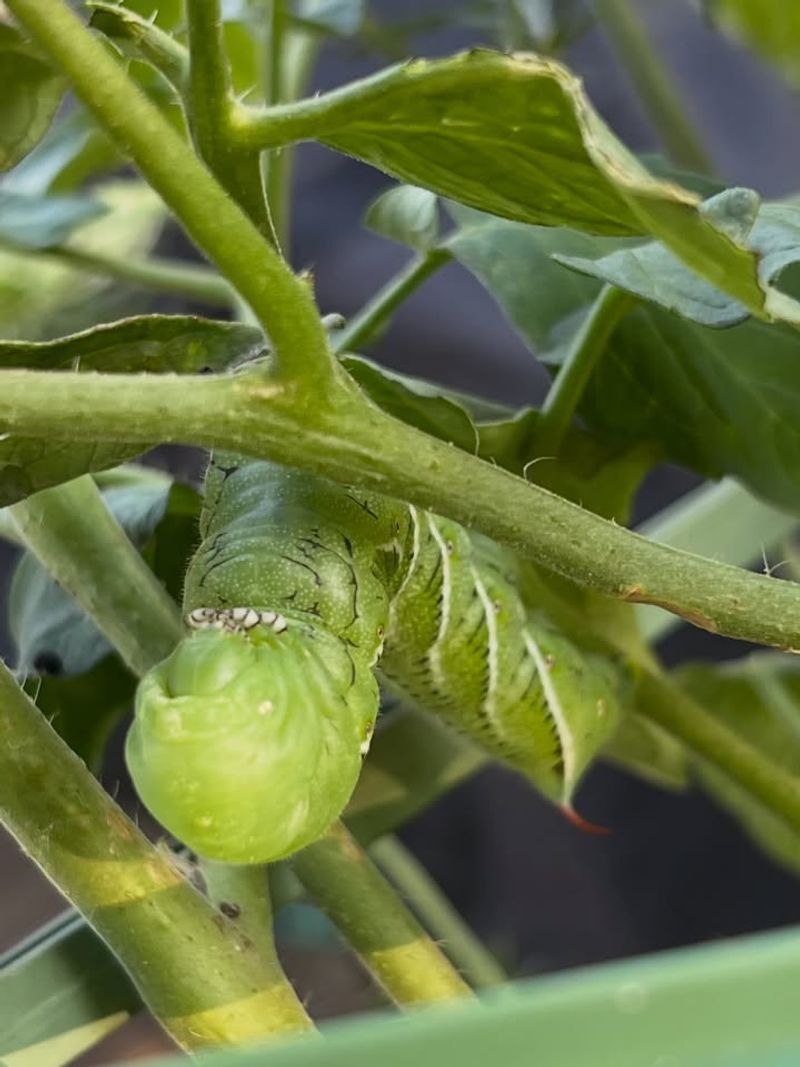
The caterpillar is large, but camouflage gives it an unfair advantage.
Hornworms match tomato foliage beautifully. Their green bodies echo the stems and leaves, while their pale side markings can resemble leaf veins, broken light, or plant shadows.
That is why gardeners miss them.
You can stare at the right branch and still not see the caterpillar at first. It may press flat along a stem, tuck beneath a leaf, or align its body with a branch so the outline disappears into the plant.
Do not scan too quickly.
Look for shape instead of color. A hornworm has a thick, smooth body that curves slightly and looks too plump to be a stem. The rear horn is another clue, though it may point away from you depending on how the caterpillar is positioned.
Touch can help when sight fails.
Gently move leaves aside and feel along sturdy stems with gloved fingers. A hornworm’s body feels firm and unmistakably different from a plant stem once your hand finds it.
Side lighting helps break the illusion.
A flashlight, cloudy morning, or low-angle evening light can reveal the caterpillar’s body shadow. Bright overhead sun can actually make the plant harder to read because every leaf casts its own distracting pattern.
Finding one often feels like a magic trick in reverse.
Nothing was there, then suddenly the entire caterpillar appears. Very rude. Very effective.
That camouflage is impressive, but the frass already gave away the hiding place.
Fresh Pellets Mean Fresh Feeding
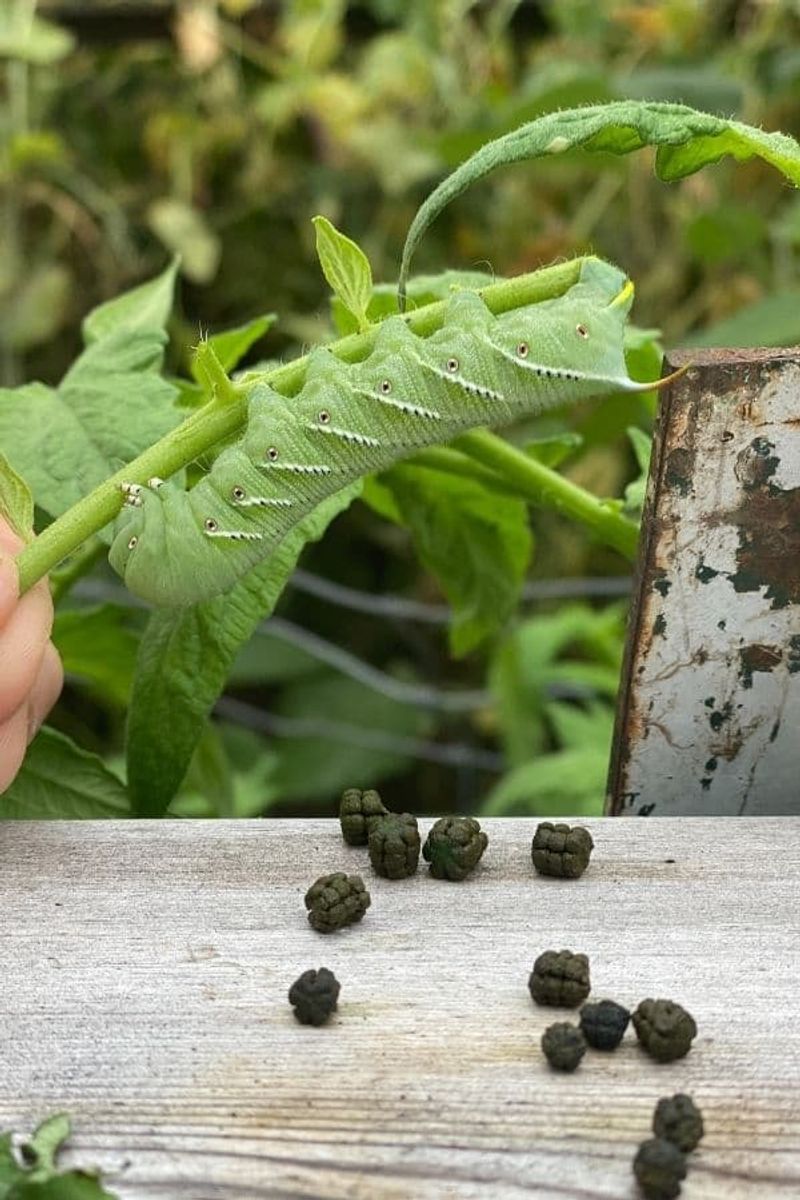
Fresh frass means the pest is probably still active.
That makes timing important. A new pile beneath your patio tomato is not just evidence of past damage. It may mean a caterpillar fed during the night or early morning and is still resting somewhere above the droppings.
Fresh pellets look dark and defined.
They may appear almost black-green, slightly moist, and neatly ridged. Older pellets fade, dry, and crumble more easily. A fresh pile on clean patio stone gives you one of the best chances to find the feeder before it removes more foliage.
Check twice a day during peak season.
Morning is useful because hornworms often feed heavily overnight. Early evening is useful because you can catch new activity before another night of chewing begins.
A quick look at the floor beneath each tomato pot can save you from losing a surprising amount of foliage.
Do not ignore a small scatter.
One large caterpillar may be enough to cause noticeable damage. Several piles under the same plant may point to more than one feeder, which means a careful full-plant search is worth the time.
Mark the spot before moving the container or sweeping.
A small stone, plant tag, or mental note helps you line up the search area. Once the patio is cleaned, that easy map disappears.
Fresh frass is the garden’s version of warm footprints.
The suspect is close, and the tomato plant would appreciate a prompt investigation.