This Native Michigan Sedge Forms A Dense Mat Where Mulch Keeps Washing Away
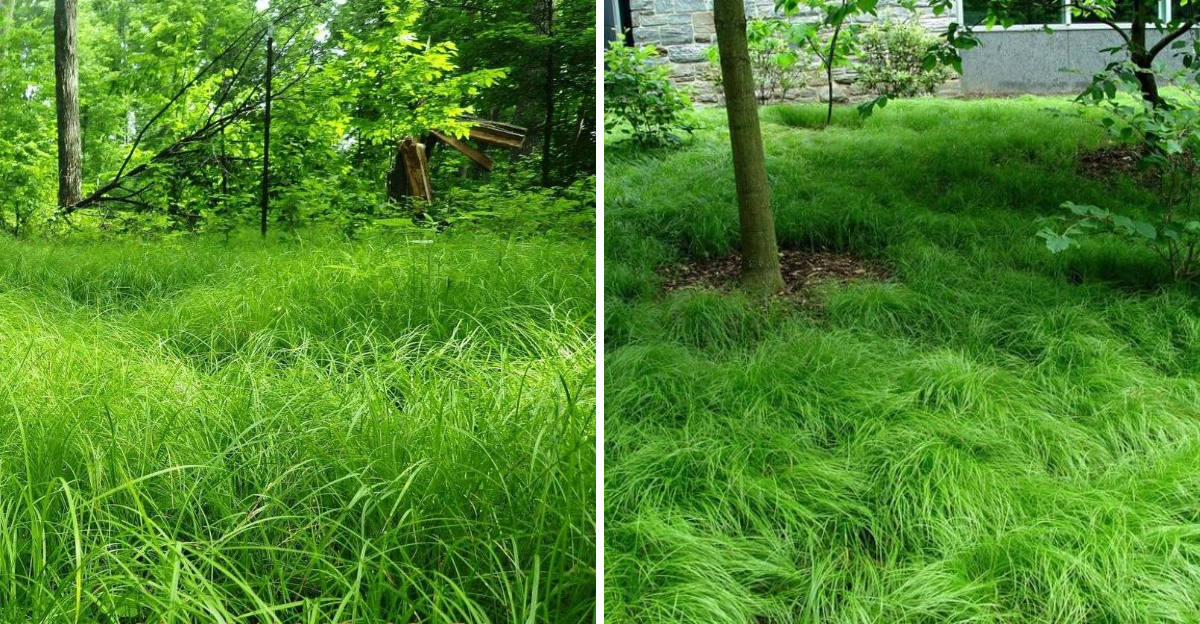
Pennsylvania sedge offers a practical, low maintenance solution for Michigan yards where mulch constantly washes away during heavy rain.
This native groundcover forms a dense, low growing mat that naturally holds soil in place far better than loose mulch ever could.
Its fibrous root system spreads steadily, filling in bare patches while suppressing weeds without much ongoing effort. Unlike traditional lawn grass, Pennsylvania sedge thrives in partial shade, making it ideal for tricky spots beneath trees.
Once established, it requires minimal watering and almost no mowing, cutting down significantly on yard maintenance. This sedge also tolerates Michigan’s clay heavy soil better than many ornamental groundcover options.
Areas prone to erosion often see noticeable improvement within a single growing season after planting. Switching to this native alternative can finally solve that frustrating mulch washout problem for good.
1. Pennsylvania Sedge
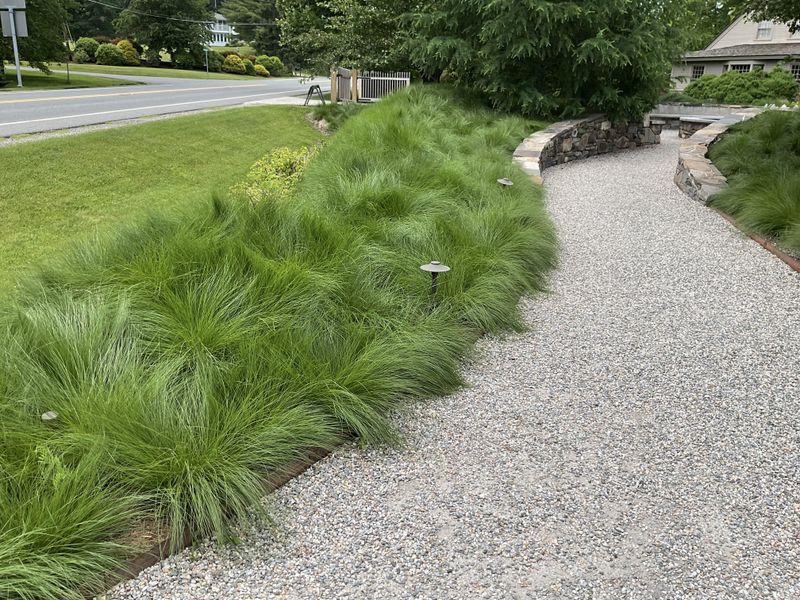
Walk through almost any Michigan woodland and you might spot a low, grass-like plant forming soft patches beneath the trees.
That plant is Pennsylvania sedge, known botanically as Carex pensylvanica, and it is one of the most useful native groundcovers available to Michigan gardeners today.
Its narrow, arching green leaves create a fine, almost feathery texture that looks polished without requiring much effort at all.
At maturity, Pennsylvania sedge reaches roughly 6 to 12 inches in height, staying low enough to feel tidy without constant trimming. In spring, slender seed stems rise above the foliage, adding a subtle, delicate detail before settling back down.
The plant occurs naturally across Michigan in woodland edges, upland prairies, and dry forest floors, which tells you a lot about how adaptable it truly is.
One important thing to understand right away is that Pennsylvania sedge is not a turf grass. It belongs to the sedge family and behaves quite differently from the lawn grass you might be used to maintaining.
Its real power shows up when many plants grow together, forming a connected living carpet across a slope or shaded bed.
A single plant looks attractive on its own, but a mass planting transforms a bare, mulch-losing problem area into something that actually works with the landscape.
Gardeners across Michigan have discovered that this native plant handles conditions where traditional lawn grass simply gives up, making it a genuinely practical and rewarding choice.
2. Short Rhizomes Help The Plants Knit Together Over Time
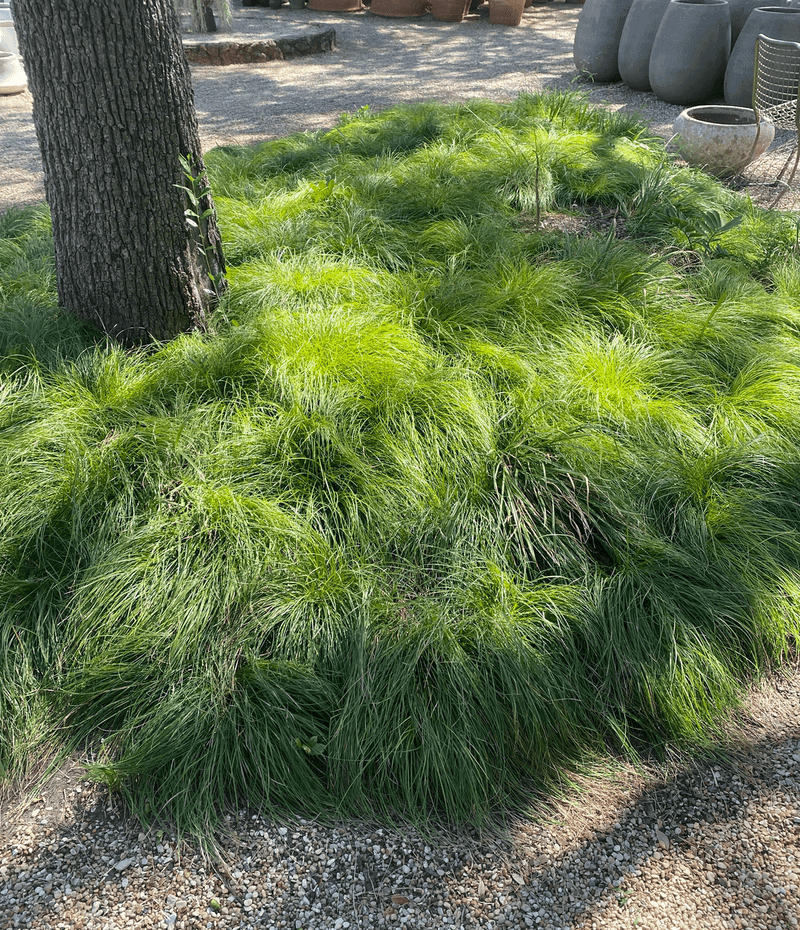
One of the most satisfying things about Pennsylvania sedge is watching it slowly stitch itself into a solid mat.
Underground, each plant sends out short rhizomes, which are basically horizontal stems that travel just beneath the soil surface and produce new shoots a short distance from the parent plant.
Over several growing seasons, neighboring plants meet in the middle and create a continuous, connected carpet of roots and foliage.
Patience really matters here. Pennsylvania sedge spreads gradually rather than aggressively, so a newly planted slope will not transform overnight.
Small plugs planted in spring or fall will spend their first season settling roots before they begin pushing outward.
Gardeners who expect fast coverage from a single plant will feel frustrated, but those who plant generously from the start will see progress much sooner than they might expect.
Your Michigan Garden Changes Every Week. Your Plan Should Too.
Gardening in Michigan changes quickly throughout the season. Every Friday you’ll receive a simple weekly plan showing exactly what to plant, prune, fertilize, harvest, and protect so you never miss the right timing.
A practical trick that many experienced Michigan gardeners use is dividing established clumps once the planting has settled in for a year or two.
You can carefully dig up a mature clump, pull it apart into smaller sections, and replant those divisions into any gaps that remain in the coverage.
This stretches your plant budget while speeding up the process naturally. The rhizome network also means that once the mat forms, it becomes genuinely self-supporting, with roots interlocking beneath the surface to hold both the plants and the soil in place.
That underground teamwork is exactly what makes Pennsylvania sedge so much more reliable than any bag of loose mulch on a rainy Michigan afternoon.
3. Shaded Slopes Are Where This Plant Truly Shines
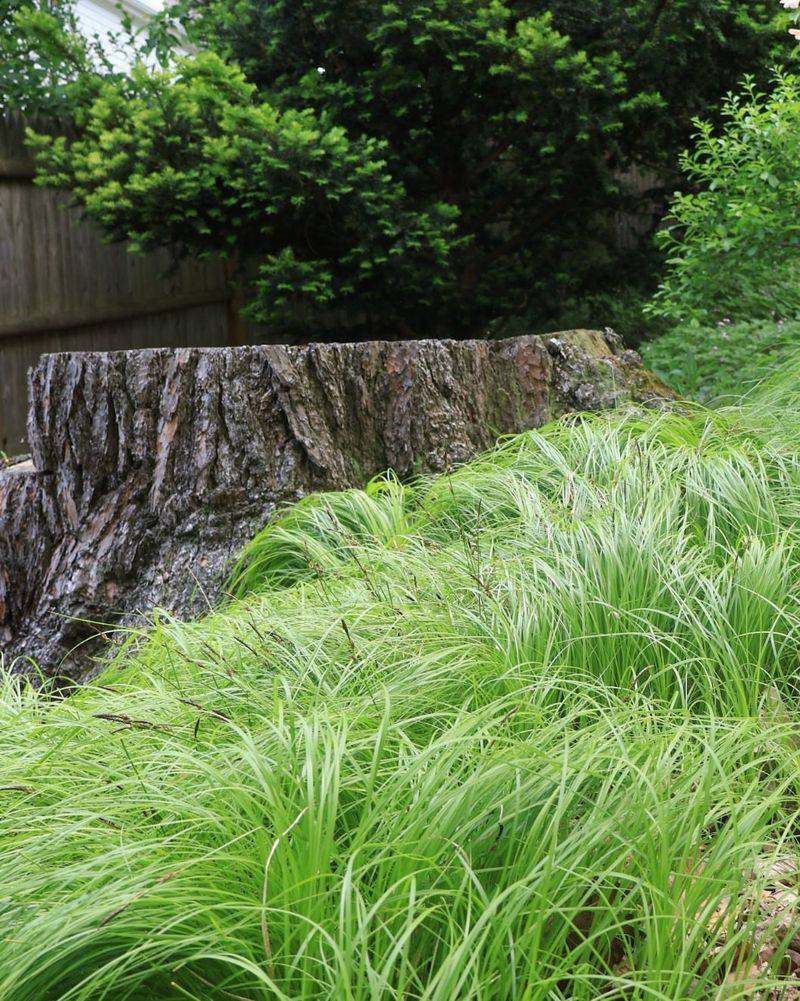
Anyone who has tried growing lawn grass beneath a big oak or maple knows the struggle. The turf thins out, bare patches appear, and no amount of reseeding seems to fix it.
Pennsylvania sedge steps in where ordinary grass gives up, thriving in the partial shade and full shade conditions found beneath deciduous trees, along woodland borders, and on slopes that receive only a few hours of direct sun each day.
Slopes are especially tricky because rain tends to move fast across them, carrying loose bark mulch or shredded wood right to the bottom of the hill.
Pennsylvania sedge handles this situation much better because its roots hold the soil while its low foliage slows water movement across the surface.
Once established, it tolerates dry to moderately moist soil conditions, which matches the reality of many Michigan woodland slopes where tree roots compete for moisture.
That said, not every location is a good fit. Intense, open sun bakes the foliage and stresses the plant, especially during Michigan’s hot July and August afternoons.
Spots with severe reflected heat from pavement or walls can also cause problems.
Constantly saturated ground, like a low area that never drains after a storm, is another situation where Pennsylvania sedge struggles and a different native species would serve better.
Observing your site through a full season before planting helps you match the right plant to the right place, and Pennsylvania sedge rewards that thoughtful approach with years of reliable, low-maintenance coverage on those challenging shaded slopes.
4. Living Roots Grip Soil Far Better Than Mulch Ever Could
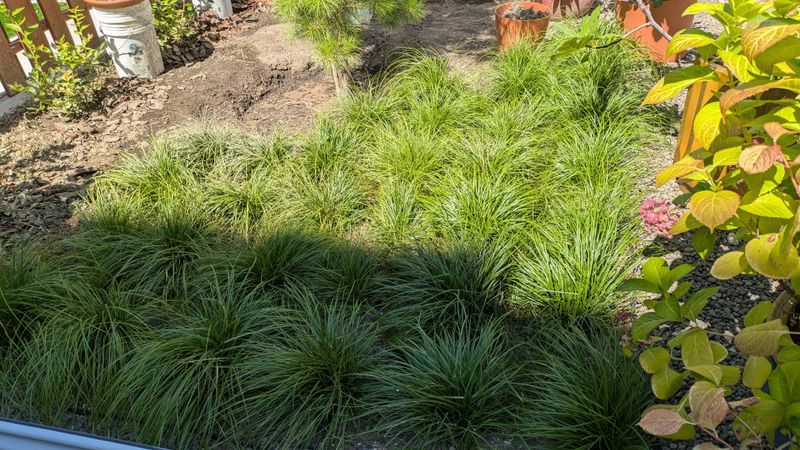
Loose mulch looks great right after you spread it, but the first heavy rainstorm often tells a different story. Bark chips float, shredded wood slides, and everything collects in a soggy pile at the bottom of the slope.
A living groundcover like Pennsylvania sedge behaves completely differently because its roots actually occupy the upper layer of soil, creating a physical network that holds particles in place even when water moves across the surface.
The way this works is pretty straightforward. Roots grip the soil from below, the dense foliage intercepts falling raindrops before they can splash and dislodge soil particles, and the low stems slow water that moves horizontally across the slope.
Together, these three actions reduce erosion risk significantly compared to bare soil or loose organic mulch.
After Pennsylvania sedge establishes fully, typically after two or three growing seasons, the mat becomes genuinely stable under normal rainfall conditions.
It is worth being clear about what Pennsylvania sedge cannot do, though. A collapsing bank with serious structural problems needs professional engineering, not a groundcover plant.
Areas that receive concentrated runoff from a roof downspout, a driveway, or a drainage pipe carry far too much water volume and velocity for any groundcover to manage safely on its own.
Correcting those concentrated flow problems first, then planting Pennsylvania sedge across the stabilized slope, gives the plant a realistic chance to do its job well.
Treating it as a complement to good site management rather than a cure-all keeps expectations grounded and results genuinely positive.
5. Closely Spaced Plugs Make Coverage Happen Much Faster
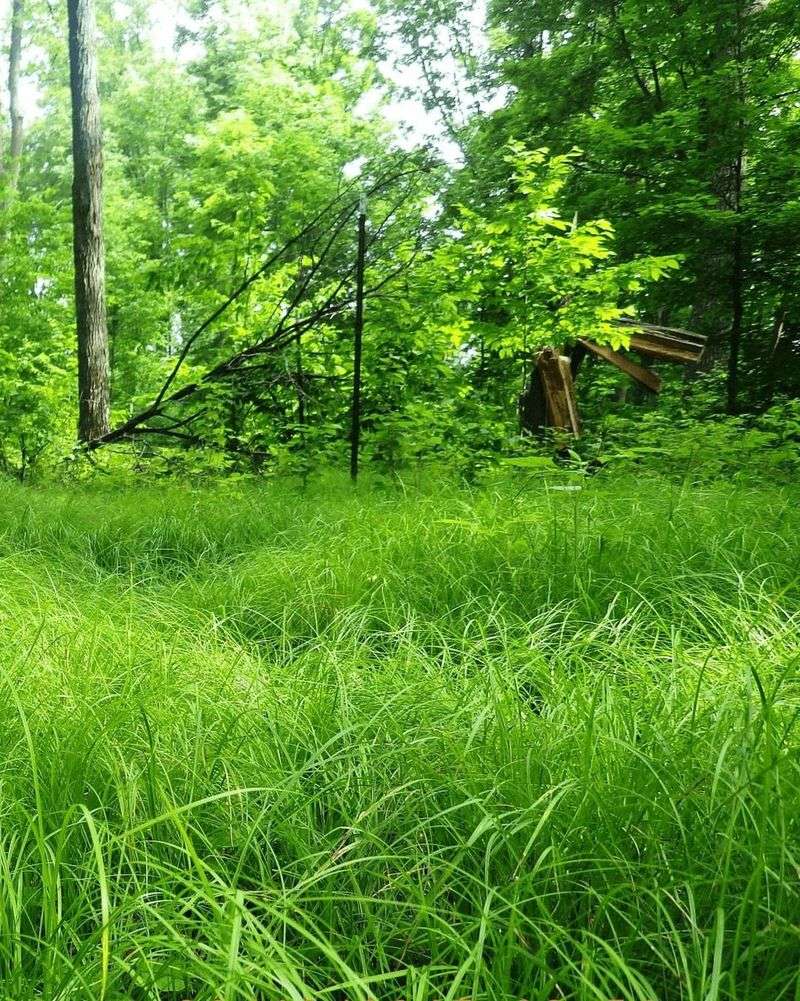
Starting Pennsylvania sedge from seed sounds appealing in theory, but in practice it can be slow, unpredictable, and frustrating on a slope where bare soil is already washing away.
Nursery plugs are the smarter starting point for most Michigan gardeners because each plug arrives as a living plant with an established root system ready to grow from day one.
You can see exactly what you are working with, space the plants intentionally, and get coverage moving in the right direction from the first season.
Spacing matters more than many gardeners initially realize. Planting in staggered rows, similar to a brick pattern, distributes plants evenly across the slope and avoids creating straight channels where water could accelerate downhill between rows.
Most nursery suppliers provide spacing recommendations based on how quickly you want coverage and how much budget you have available.
Following that guidance closely, or spacing even a bit tighter if faster coverage is a priority, makes a meaningful difference in how quickly the mat fills in.
Closer spacing costs more upfront but saves time and frustration over the following seasons.
A slope planted at six-inch spacing will close gaps faster than one planted at twelve inches, and fewer weeds will find open soil to colonize in the meantime.
Many experienced Michigan native plant gardeners recommend starting with the tightest spacing your budget allows, then using divisions from established plants to fill in any remaining gaps after the first or second season.
That combination of nursery plugs and strategic division gives you both speed and economy, which is a genuinely satisfying approach to a challenging site.
6. Temporary Protection Keeps Soil Safe While Roots Establish
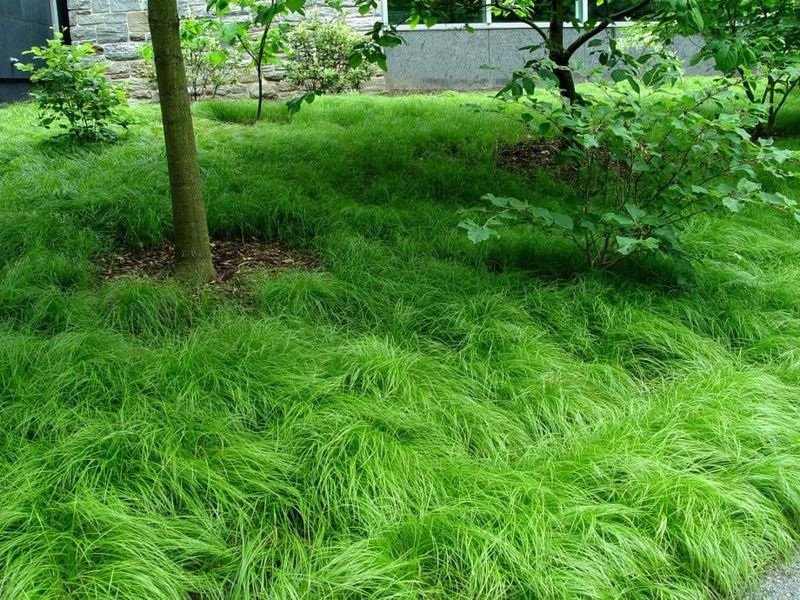
Planting Pennsylvania sedge is only the first step. The weeks and months right after planting are actually the most vulnerable period for a new slope planting because the roots have not yet spread enough to grip the soil on their own.
Timing your planting during spring or early fall takes advantage of cooler temperatures and more reliable soil moisture, which dramatically reduces stress on young plants and helps roots develop faster than they would during summer heat.
Between young plants, a thin layer of shredded leaves, clean straw, or a biodegradable erosion control blanket provides temporary soil protection while the sedge fills in. The key word there is thin.
Too thick a layer buries the plant crowns, blocks emerging shoots, and can actually cause more harm than good.
The goal is to cover exposed soil between plants just enough to slow water and hold moisture without smothering the vegetation you just worked hard to establish.
Biodegradable erosion blankets made from natural fibers like coir or straw work especially well on steeper sections because they stay in place better than loose material during a heavy rain event.
Secure the edges and any seams carefully so that runoff cannot sneak beneath the fabric and create channels underneath.
Check newly planted areas after the first few rainstorms and address any spots where water concentrated or pooled around planting holes.
Those early inspections catch small problems before they grow into larger ones, and a little attention during establishment saves a lot of replanting effort down the road.
7. Simple Seasonal Care Builds A Denser, Healthier Mat
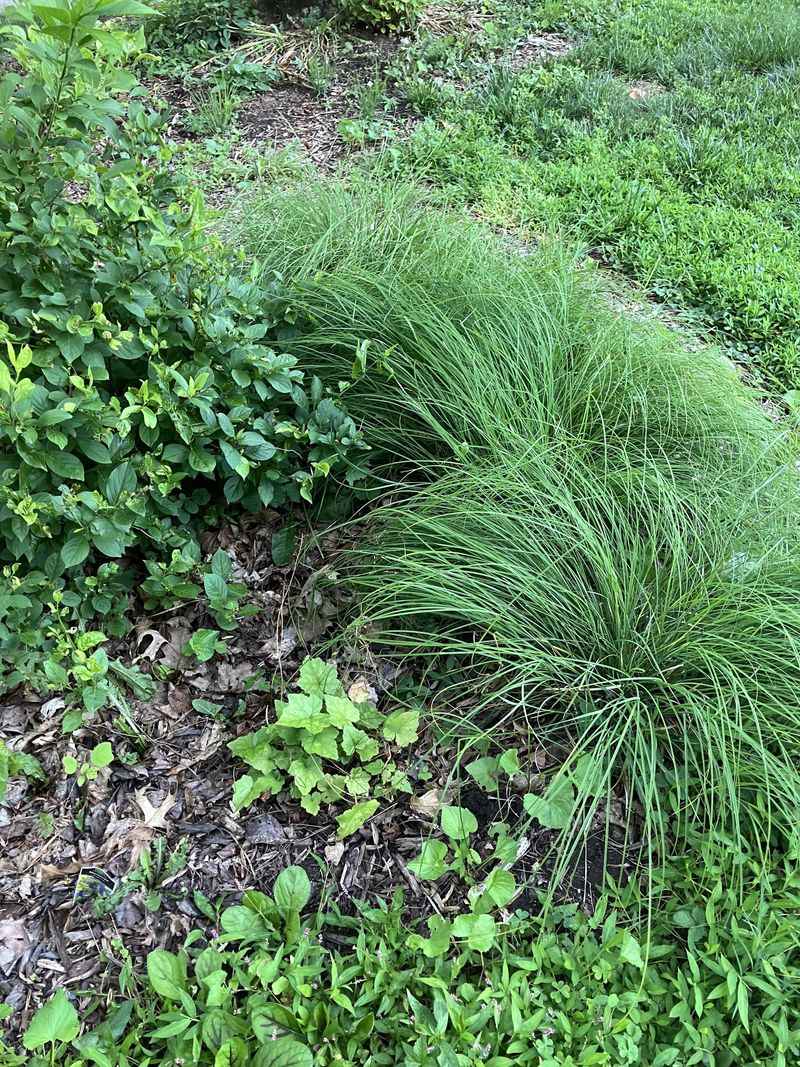
Pennsylvania sedge has a well-earned reputation for being low maintenance, but low maintenance does not mean zero maintenance, especially during the first couple of growing seasons.
Consistent moisture at the root zone during establishment is one of the most important things you can provide.
Young plants that dry out completely before their roots spread widely may weaken and leave gaps in your coverage, so checking soil moisture regularly during dry spells in the first season pays off significantly.
Weeding is the other big task during establishment. Aggressive weeds like garlic mustard, creeping Charlie, or grassy invaders can outcompete young sedge plants if you let them get a foothold.
Pulling weeds by hand rather than using chemical controls keeps the process safe for the sedge and the surrounding soil life. Replace any plants that fail before large gaps develop, because open soil invites weed pressure and erosion simultaneously.
Fertilizing established Pennsylvania sedge is generally unnecessary and can actually backfire. Too much nitrogen encourages weak, floppy growth and makes the planting more attractive to competing weeds.
The most useful seasonal task is removing tired, worn foliage in late winter or very early spring, just before fresh new growth becomes active. You can rake it lightly or cut it back with hand shears, clearing away the old material so new leaves emerge cleanly.
One thing to avoid completely is mowing Pennsylvania sedge on a regular lawn schedule. It is not turf grass, and weekly mowing will prevent it from developing the dense, flowing mat that makes it so valuable in the first place.
8. Match A Different Native Sedge To Wetter Or Tougher Spots
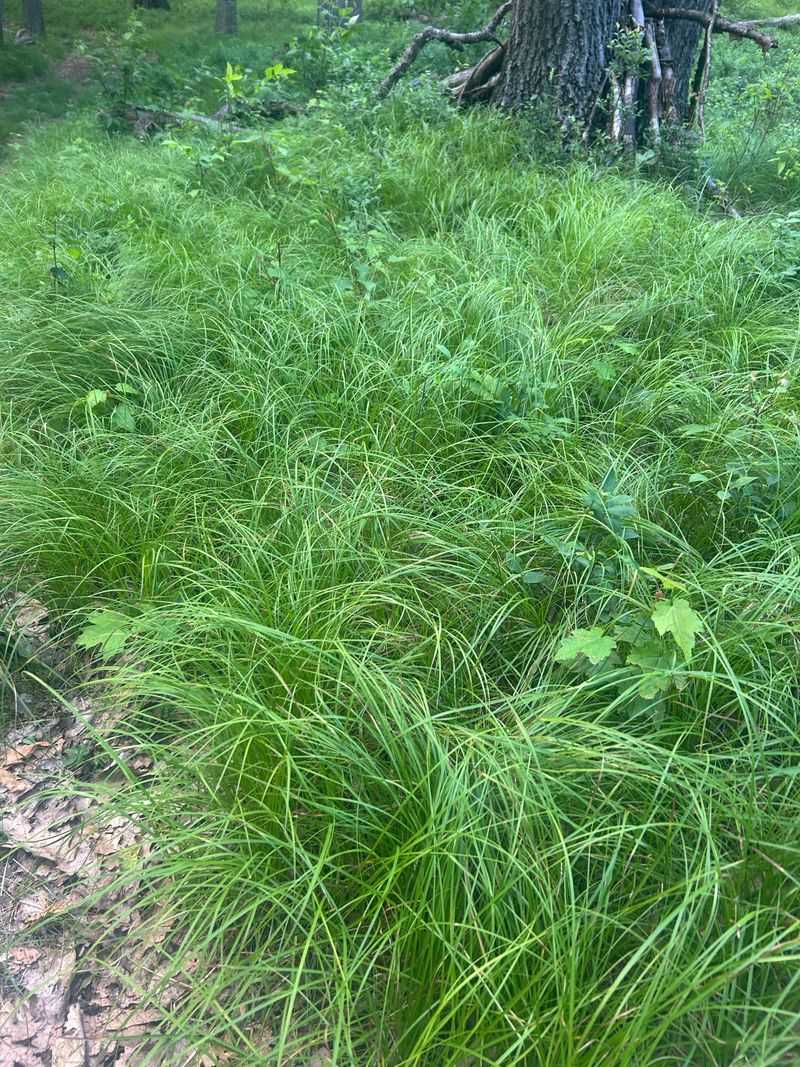
Knowing where Pennsylvania sedge works best also means understanding where it does not belong.
Active drainage channels that carry moving water after every rain are a poor match, because concentrated flow is simply too powerful for any groundcover to resist.
Frequently flooded depressions that stay saturated for days or weeks at a time, wet shorelines, and areas that receive heavy foot traffic on a regular basis are all situations where Pennsylvania sedge will struggle and eventually fail to thrive.
Wet locations across Michigan have their own excellent native sedge options. Tussock sedge, Carex stricta, handles consistently moist to wet soil and standing water far better than Pennsylvania sedge ever could.
Other Michigan native sedges are adapted to specific combinations of water level, sunlight, and soil type, and matching the right species to the exact conditions of your site makes all the difference between a planting that thrives and one that requires constant replacement.
Before planting anything on a problem slope or wet area, spend time observing the site through several rainstorms of different intensities.
Notice where water enters the area, how fast it moves, where it exits, and whether any spots stay wet long after the rain stops.
If concentrated runoff from a roof, driveway, or neighboring property flows through your planting area, redirect or slow that flow using a rain garden, swale, or other structural solution before expecting any groundcover to hold.
Pennsylvania sedge is genuinely tough and rewarding in the right conditions, and giving it a properly prepared site sets both the plant and the gardener up for real, lasting success.