This Common Georgia Lawn Flower Is Tougher To Remove Than It Looks
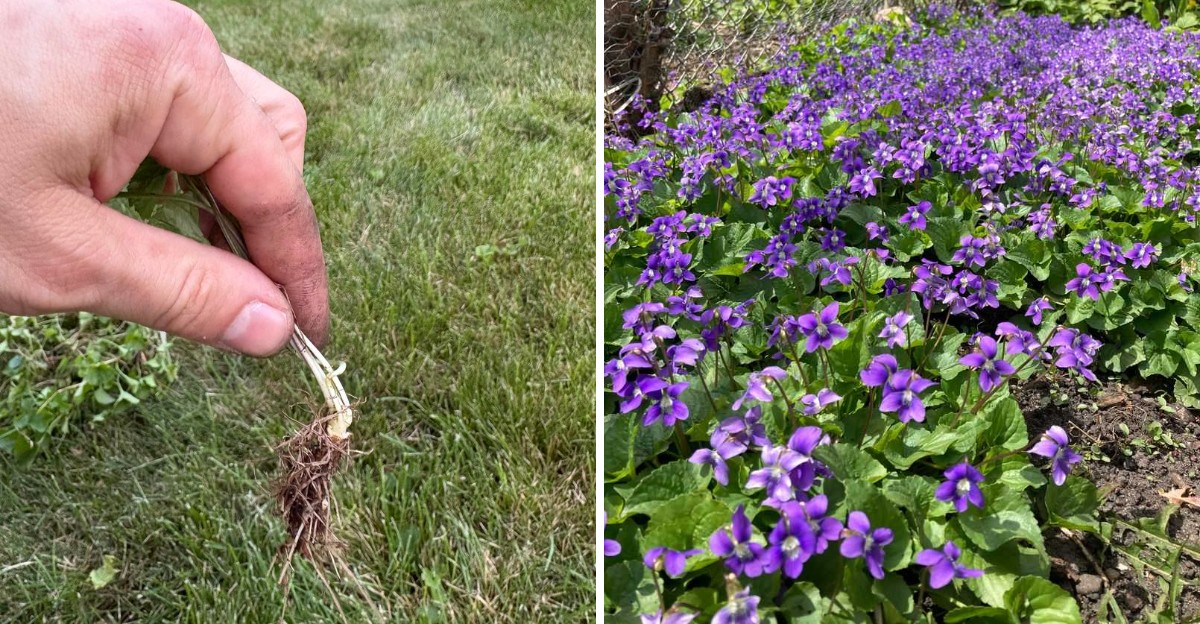
Wild violets can look charming when their purple flowers pop up in a Georgia lawn. The frustration usually starts when a small patch refuses to stay small.
What makes this plant stubborn is happening below the flowers you notice first.
Wild violet grows from thick underground structures that help it return after simple surface removal. That resilience can turn occasional plants into a lasting lawn problem.
Pulling at the leaves alone may therefore leave more behind than you expect.
Before tackling a patch, make sure wild violet is actually the plant spreading through your grass. Then choose a method that matches how established it has become.
Its flowers may look delicate, but the plant is built to persist, which explains why quick fixes often leave homeowners dealing with it again.
1. Those Pretty Purple Flowers Can Be Surprisingly Persistent
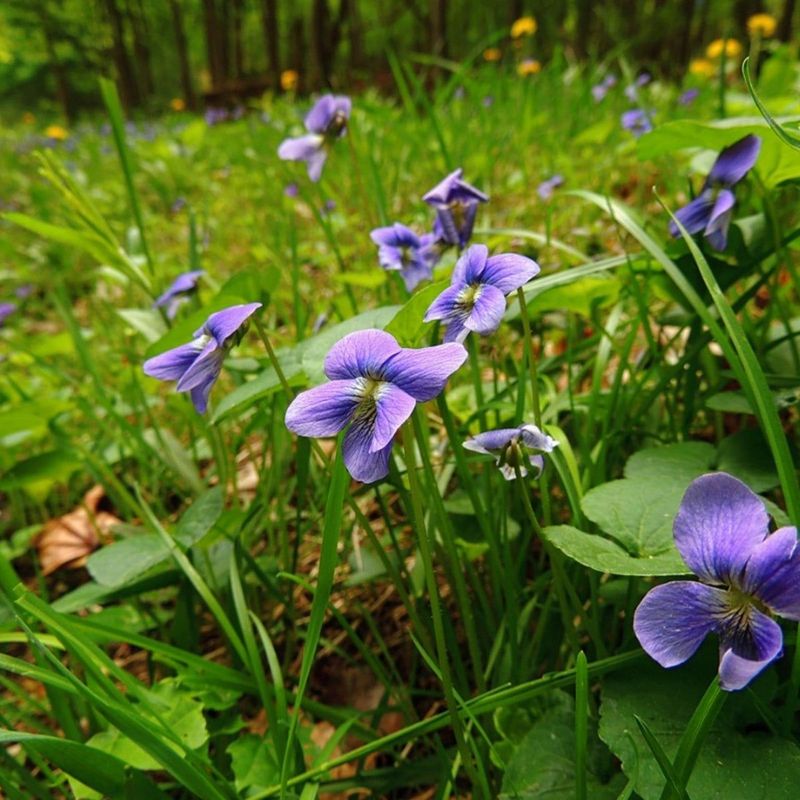
Charm is exactly what makes wild violets so easy to ignore.
Small purple blooms appear in early spring, and most homeowners think of them as a bonus rather than a problem.
By the time the flowers fade, the plant has already settled in. Heart-shaped leaves stay green and low, holding ground long after the color is gone.
Violets are perennials, so they return year after year from the same root system. That single detail separates them from annual weeds that finish their cycle and leave.
Across Georgia, shaded front yards under oaks and pines tend to show the heaviest patches. Cool, moist soil suits violets well, and those conditions are common here from March through May.
What surprises people most is the pace. A few scattered plants one year can turn into a solid mat within two or three seasons if nothing changes.
Mowing does not slow them down much either. Leaves grow low enough to duck under the blades, which lets the plant keep feeding its roots.
Native violets do offer some value, feeding early pollinators and serving as host plants for certain fritillary butterflies. Plenty of gardeners keep them on purpose in beds or woodland borders.
Trouble starts when they move into turf you want thick and even. At that point, patience matters more than any single product.
2. Wild Violets Grow From Thick Underground Rhizomes
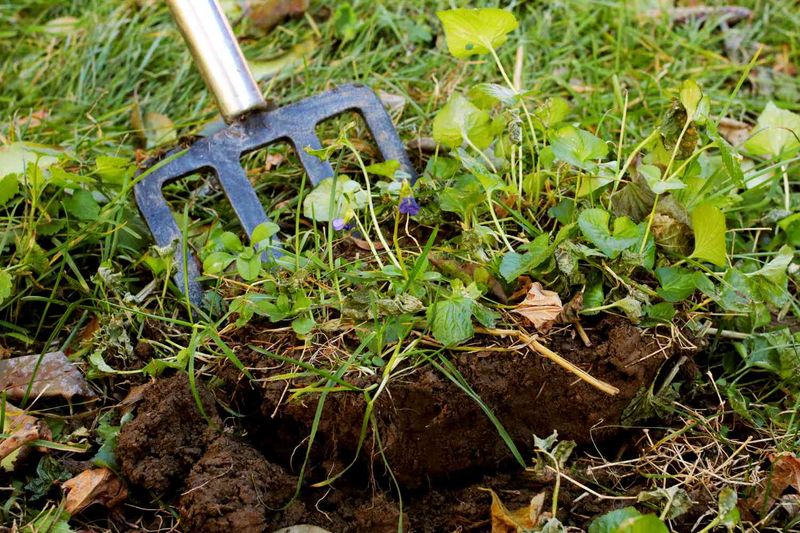
The real plant lives underground. Wild violets grow from short, fleshy rhizomes that store water and energy just below the surface.
Those rhizomes act like a backup supply.
Remove the leaves, and the stored energy pushes out fresh growth within weeks.
Digging one up tells the story quickly. You will find a knobby white stem with roots branching off in several directions, often tangled around grass roots.
Rhizomes also spread sideways. Each new section can produce its own crown of leaves, which is why patches widen outward instead of staying in one spot.
Breaking a rhizome into pieces can make things worse, since fragments left in the soil are capable of sprouting. Rototilling a violet patch usually backfires for that exact reason.
Homeowners in north Georgia often deal with clay-heavy soil, which makes clean removal harder. Rhizomes tend to snap when you pull against compacted ground.
Your Georgia Garden Changes Every Week. Your Plan Should Too.
Gardening in Georgia changes quickly throughout the season. Every Friday you’ll receive a simple weekly plan showing exactly what to plant, prune, fertilize, harvest, and protect so you never miss the right timing.
Watering the area a day before digging softens things considerably. Moist soil releases the roots instead of shearing them off.
A narrow spade or hand fork works better than a trowel here. Slide it under the patch and lift, rather than pulling from the top.
Sifting the loose soil afterward helps you catch leftover pieces. It feels tedious, though it cuts down on regrowth more than any shortcut.
3. Seeds Help New Plants Appear Beyond The Original Patch
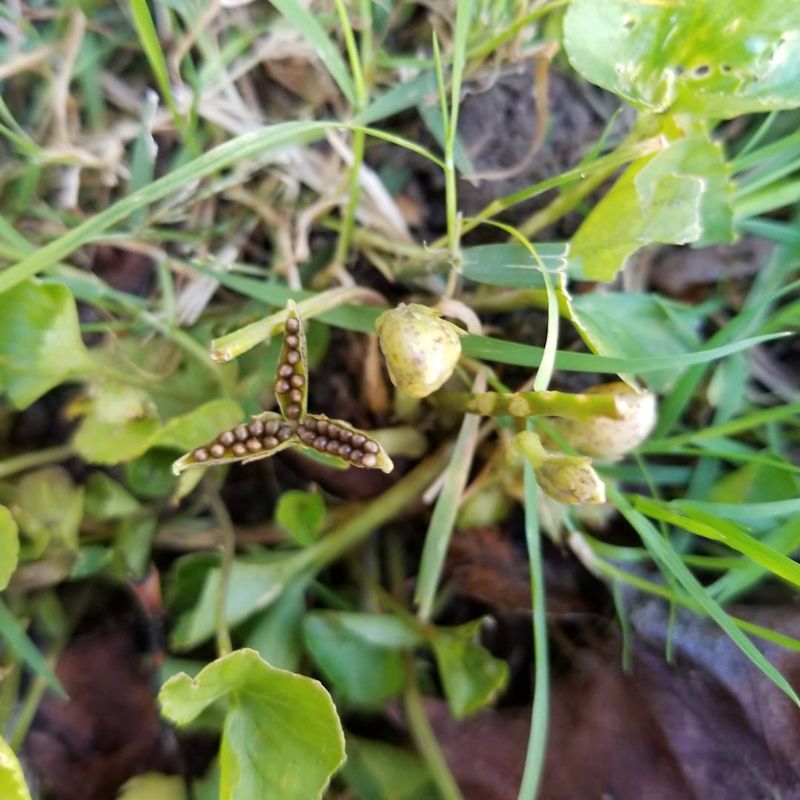
Seeds are the sneaky part. Wild violets produce them in small capsules, and when those capsules dry, they can fling seeds a short distance away from the parent plant.
That explains the random single violets showing up ten feet from the main patch.
Nothing crawled there underground; a seed simply landed and took hold.
Violets also make a second type of flower that stays closed and never opens. These self-pollinating blooms sit low, sometimes near the soil, and quietly produce more seed.
Because of that hidden set, seed production continues even after the showy purple flowers finish for the season. You lose the visual cue that anything is happening.
Ants add another layer by carrying seeds off to their nests. Dropped along the way, those seeds start new plants in spots you never touched.
Rain runoff moves them too, especially on sloped Georgia yards where water channels along driveways and walkways. Downhill areas often show the newest seedlings.
Removing flower stems before capsules mature can reduce new starts. It will not stop the closed flowers, but every bit helps.
Seedlings are far easier to handle than established plants. A young violet pulls out cleanly with barely any resistance, roots and all.
Walking your yard once a week in spring is enough to catch most of them early.
4. Shady Lawn Areas Often Give Them An Advantage
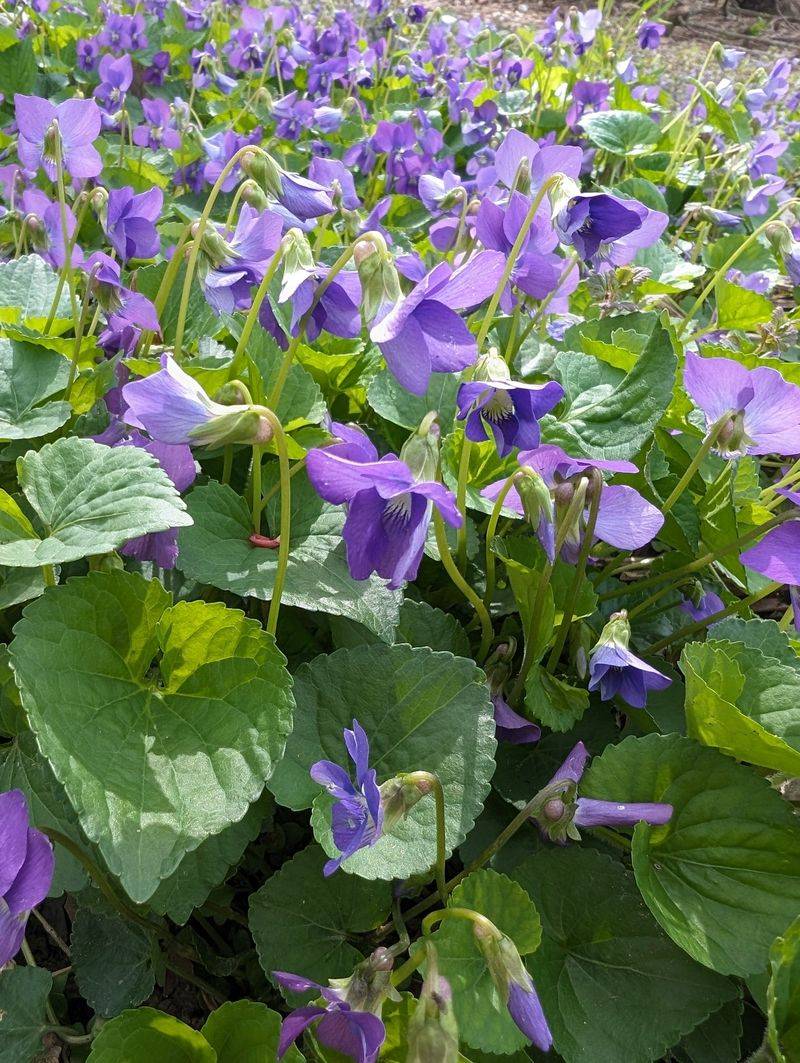
Shade tilts the whole contest. Most turfgrasses need real sunlight to stay dense, while violets handle low light without much complaint.
Under mature hardwoods, grass thins first. Violets fill the gaps, and the patch keeps expanding as the tree canopy grows.
Moisture plays a role too.
Shaded ground stays damp longer after rain, which suits violets and stresses sun-loving lawns.
Bermudagrass, common across much of the state, struggles noticeably in shade. Zoysia handles it a little better, though neither thrives under heavy tree cover.
Tall fescue is the more shade-tolerant option in north Georgia and often holds up better in filtered light. Even fescue has limits when the canopy is thick.
Pruning lower tree limbs can bring in more light without harming the tree. A certified arborist can advise on what is safe to remove.
Sometimes the smarter move is accepting the shade. Mulch beds, shade-tolerant groundcovers, or a woodland border reduce the grass you are trying to defend.
Fighting for turf in deep shade tends to be a repeating chore. Violets simply have the home field advantage there.
Test your expectations against the light your yard actually gets. Four hours of direct sun is a rough minimum for most warm-season grasses to stay competitive.
5. Dense Leaves Can Compete With Thinner Turf
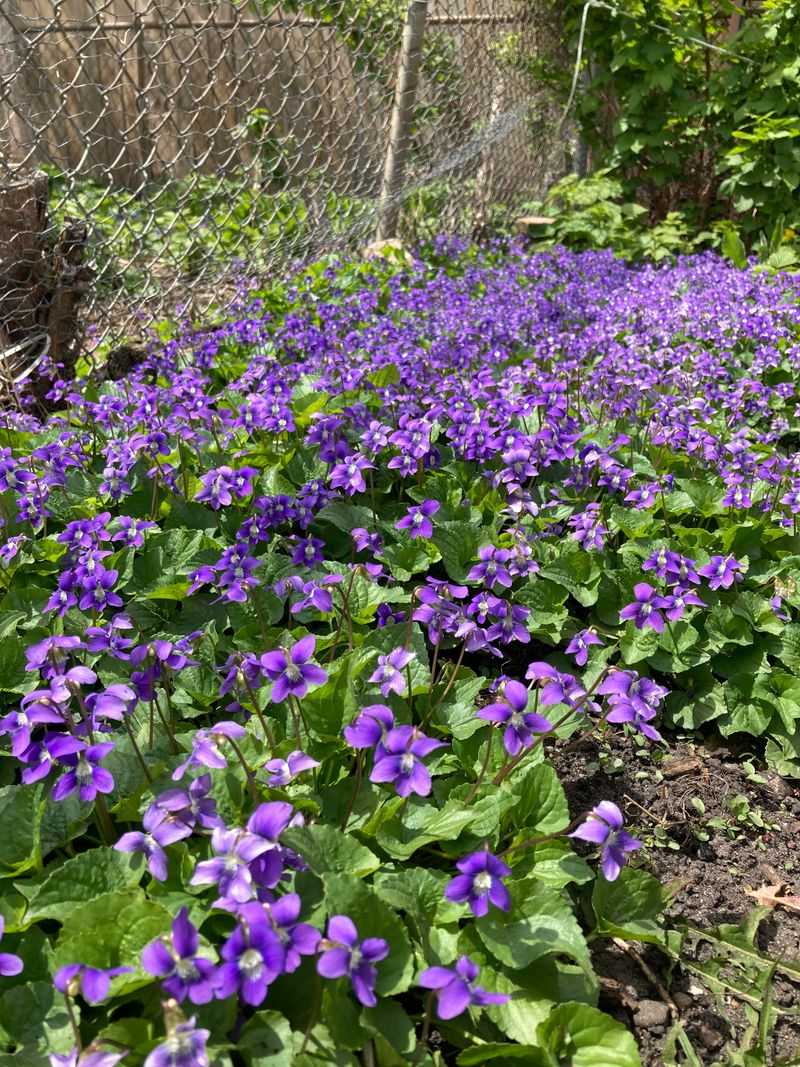
Look closely at an established patch and you will notice something: almost no grass underneath. Violet leaves overlap into a low canopy that blocks light from reaching the soil.
Those broad, heart-shaped leaves are efficient collectors. Layered together, they leave little room for grass seedlings to get started.
Grass roots also compete for the same water and nutrients. In a shaded spot, the violets usually win that exchange.
Thin turf makes the problem circular. Bare soil invites more violets, and more violets keep the turf thin.
Overseeding into a violet mat rarely works well. Seed needs contact with soil, and the leaf layer prevents it.
Clearing the patch first gives new grass a real chance. Rake out debris, loosen the surface, then seed at the right time for your grass type.
In Georgia, fescue overseeding generally works best in fall, while warm-season grasses fill in during late spring and summer. Timing matters as much as effort.
Foot traffic and mowing height affect the balance too.
Cutting grass too short weakens it and opens the door wider.
Raising your mower a notch helps turf shade the soil instead. Small adjustments compound over a season or two.
Results vary with soil quality, watering habits, and how much shade the area gets.
6. Pulling The Tops May Leave Underground Growth Behind
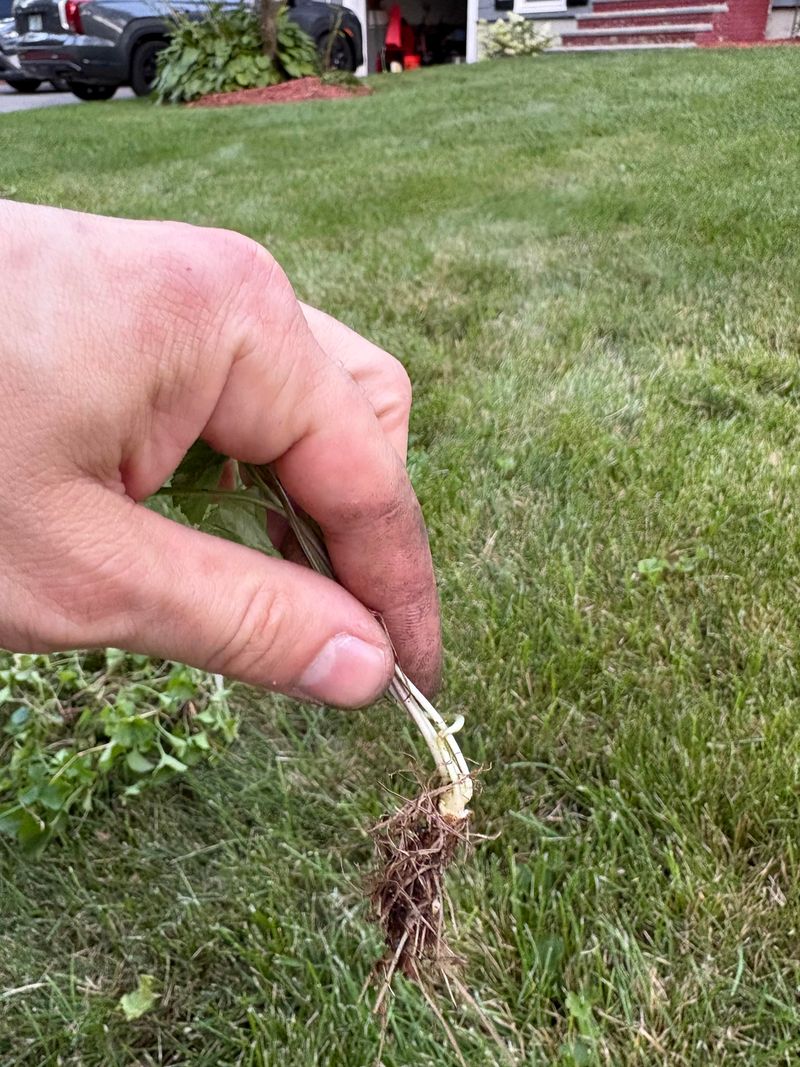
Hand pulling feels productive right up until the violets come back. Leaves detach easily from the crown, which leaves the rhizome untouched below.
Two or three weeks later, fresh growth appears in the same spot. Nothing was actually removed except the visible part.
Repeated pulling can weaken a plant over time by draining stored energy. That approach takes consistency across an entire growing season.
Digging works better when done carefully. Aim to lift the soil around and beneath the crown rather than tugging from above.
Some homeowners use a broadleaf herbicide labeled for violets, often containing triclopyr. Violets are known for being tough on herbicides, and more than one application is usually needed.
Always read the product label first.
Certain products can harm centipedegrass or St. Augustinegrass, both used in parts of the state.
Fall applications tend to perform better than spring ones, since the plant moves resources downward. Cooler weather also reduces stress on nearby turf.
Georgia homeowners can contact their county Extension office for guidance on what is appropriate for their grass type. Local advice beats guesswork every time.
Smothering with cardboard and mulch is an option for beds, though it takes months. Expect partial results either way and plan for follow-up.
7. Improving The Lawn Can Help Limit Future Spread
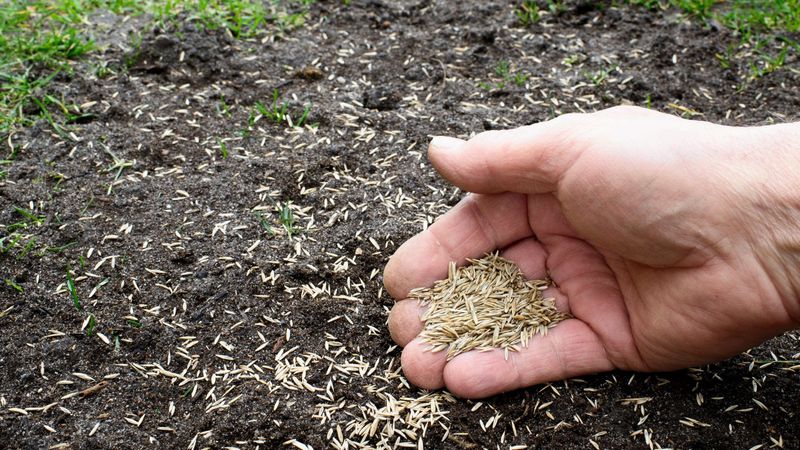
Thick turf is the best long-term defense.
Violets take advantage of gaps, so closing those gaps slows their spread more reliably than repeated removal.
Start with a soil test. Extension offices across the state offer them cheaply, and results tell you what your lawn actually needs.
Proper fertility helps grass fill in. Guessing at fertilizer often wastes money and can feed weeds instead.
Compacted clay is a common issue in Georgia yards, especially in newer subdivisions where topsoil was stripped. Core aeration loosens things and helps roots go deeper.
Watering habits matter too. Deep, less frequent watering builds stronger grass than short daily sprinkles.
Mow at the recommended height for your grass type and keep the blade sharp. Ragged cuts stress turf and slow recovery.
Where shade makes dense grass unrealistic, switching to mulch or a groundcover saves years of frustration. Not every square foot needs to be lawn.
Expect this to be an ongoing project rather than a one-time fix. Violets are persistent, and setbacks happen after wet springs or storm damage.
Keep an eye on edges and borders where new plants tend to appear first. Catching them early costs a few minutes instead of a full weekend.
Outcomes still depend on soil, light, weather, and how consistent your care is.