Georgia Gardeners Are Replacing Plain Mulch With These Groundcovers
Plain brown mulch does its job, but it never really wows anyone.
Across Georgia, more gardeners are swapping it out for low-growing plants that spread on their own, look great year-round, and actually work with the land instead of just sitting on top of it.
Living groundcovers reduce weeds, hold soil in place, and bring real color and texture to spots that used to look forgotten.
The appeal goes beyond aesthetics.
A well-chosen groundcover handles erosion on slopes that plain mulch cannot hold, fills shaded corners that grass refuses to grow in, and suppresses weeds through sheer density rather than chemical intervention.
Georgia’s climate is particularly well-suited to living groundcovers because the long growing season gives plants time to spread and fill in before winter arrives.
What works in a Georgia yard is specific, though. Heat, humidity, heavy clay soils in some regions, and the occasional hard freeze in northern parts of the state all factor into which groundcovers thrive and which ones disappoint.
The plants below have proven themselves in Georgia conditions specifically, not just in general gardening guides.
1. Liriope Handles Tough Shaded Edges
Some plants just refuse to give up.
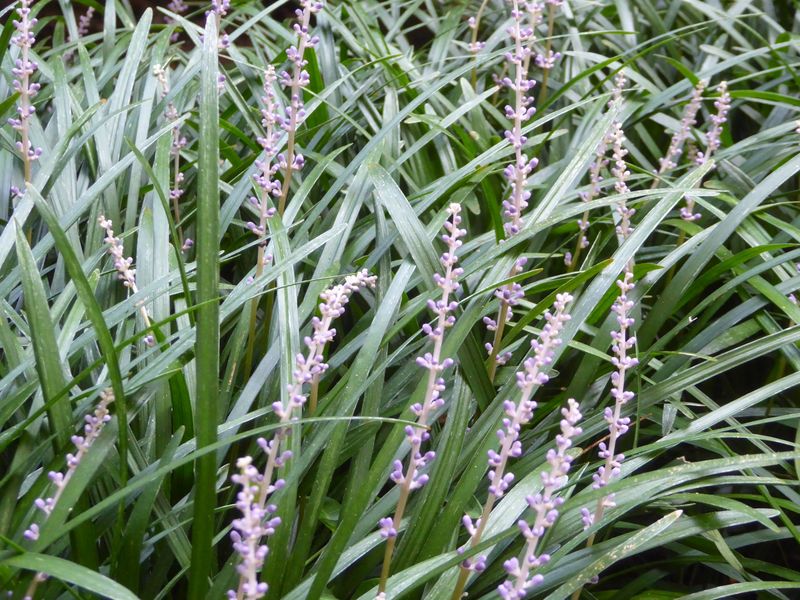
Liriope muscari, also called lilyturf, is one of those plants. It thrives in the kind of shaded, root-filled edges where other groundcovers simply fade out.
Along fences, under oak trees, and beside foundations, liriope holds its ground without complaint.
University of Georgia Extension recommends liriope as one of the most dependable groundcovers for the state because it tolerates both drought and shade.
Once established, it forms thick, grassy clumps that choke out most weeds on their own. You can plant it in full shade, part shade, or even spots that get a few hours of afternoon sun.
The strap-like leaves stay green through most of Georgia’s winters, giving you color even in January.
In late summer, purple or white flower spikes shoot up above the foliage, which is a nice bonus you do not always expect from a tough utility plant. Variegated varieties add a lighter, striped look if you want something more decorative.
Spacing plants about twelve inches apart gives them room to fill in within one to two growing seasons.
Mow or trim liriope back hard in late winter, right before new growth starts, to keep it looking neat and fresh.
This plant is about as low maintenance as it gets, making it a favorite for busy Georgia gardeners who want results without constant fuss.
2. Mondo Grass Creates Soft Borders
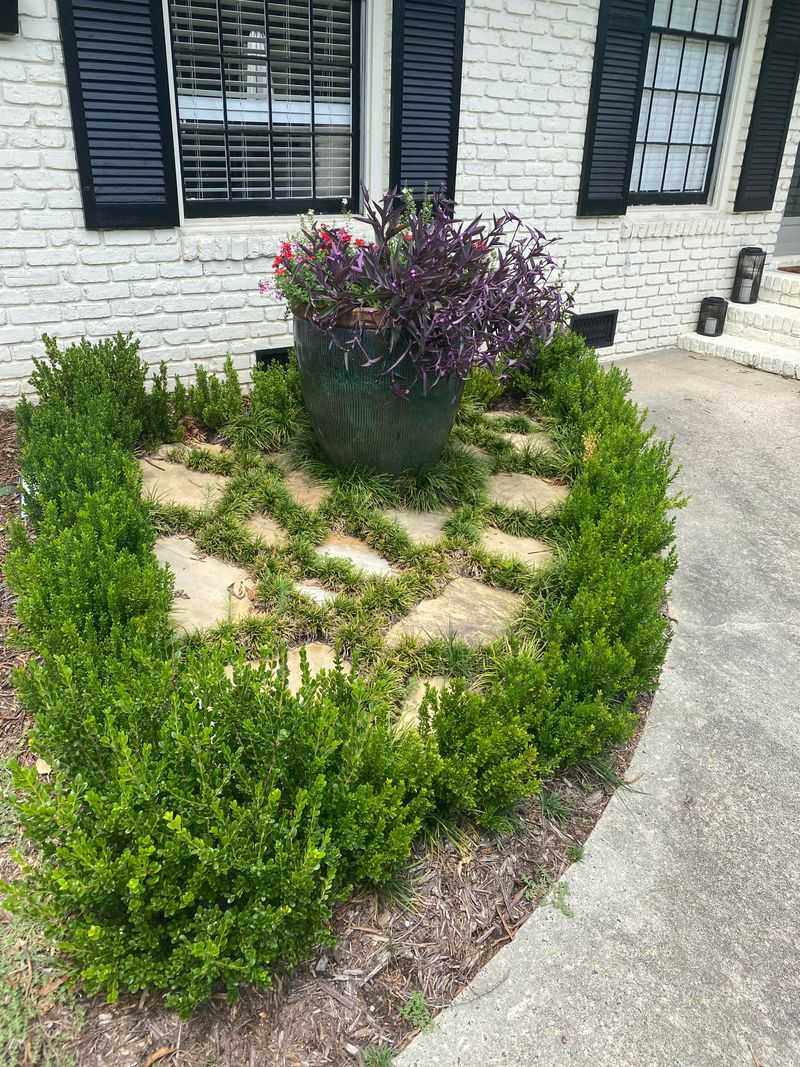
Walk barefoot near a mondo grass border and you will immediately understand the appeal.
The texture is soft, almost cushiony, and it stays that way all year. Mondo grass, particularly the dwarf variety Ophiopogon japonicus, grows slowly but creates some of the most polished-looking borders in any Georgia garden.
Unlike liriope, which can get a little bold and bushy, mondo grass stays low and refined.
Dwarf mondo maxes out around three to four inches tall, making it perfect along stone paths, brick edging, and stepping stone gaps where you want definition without bulk.
Your Georgia Garden Changes Every Week. Your Plan Should Too.
Gardening in Georgia changes quickly throughout the season. Every Friday you’ll receive a simple weekly plan showing exactly what to plant, prune, fertilize, harvest, and protect so you never miss the right timing.
It handles foot traffic better than most groundcovers, which is a real advantage near walkways.
Part shade is where mondo grass truly shines, though it can handle full shade with decent results.
It prefers moist, well-drained soil and will struggle in spots that stay soggy. Georgia’s clay-heavy soils may need some amendment before planting to help roots settle in comfortably.
Black mondo grass is a showstopper variety worth mentioning.
Its dark, almost purple-black blades create a dramatic contrast against lighter stones or pale mulch, and it looks striking next to chartreuse-colored plants.
Growth is slow, so patience is part of the deal, but the payoff is a groundcover that rarely needs attention once it fills in.
Plant mondo grass about six inches apart for dwarf types and water consistently during the first season.
After that, it is remarkably self-sufficient and gives your borders a clean, manicured look without the weekly upkeep.
3. Creeping Phlox Covers Sunny Slopes
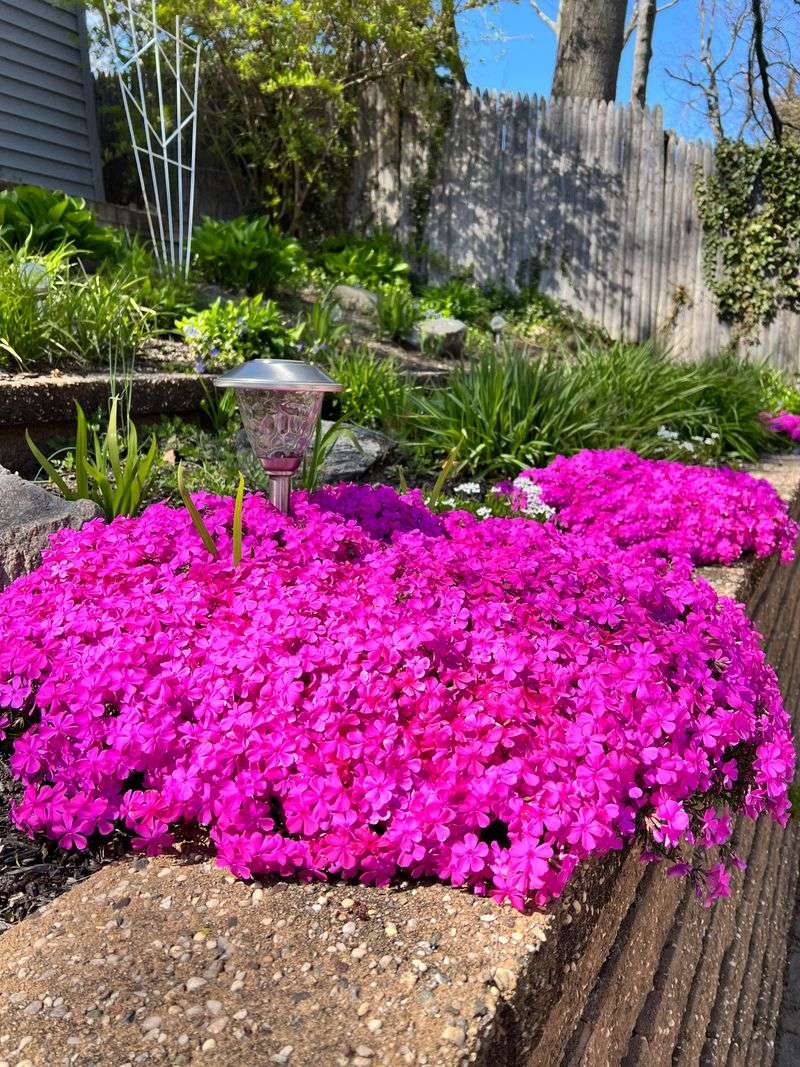
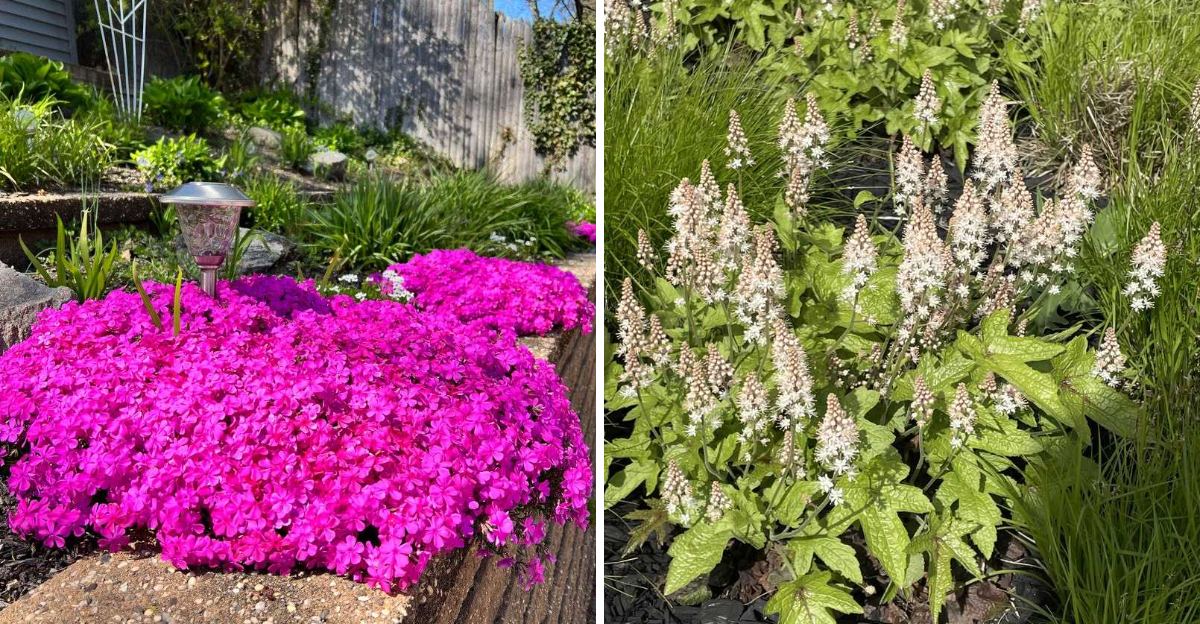
A hillside completely blanketed in pink, purple, and white flowers every spring is creeping phlox doing exactly what it was built to do.
Phlox subulata is one of the best choices for sunny, sloped areas in Georgia where erosion is a real problem and mowing is a genuine headache.
Slopes lose soil fast during Georgia’s heavy spring rains.
Creeping phlox sends out low, spreading stems that root as they go, forming a dense mat that grips the soil and slows runoff significantly. Once it covers a slope, you barely think about erosion again.
Drainage is non-negotiable with this plant.
Creeping phlox absolutely needs well-drained soil and will rot in spots that stay wet. Sandy or amended loamy soil suits it best.
Full sun, at least six hours a day, is equally important for strong flowering and dense growth. Georgia’s warm, sunny springs are practically tailor-made for it.
After the bloom fades, the needle-like evergreen foliage stays tidy and green through summer and fall.
A light trim right after flowering encourages denser growth the following year.
Creeping phlox is drought-tolerant once established, which is a significant advantage during Georgia’s drier summer stretches.
It earns its keep on slopes where plain mulch would just wash away after the first heavy rain.
4. Green And Gold Brightens Shade
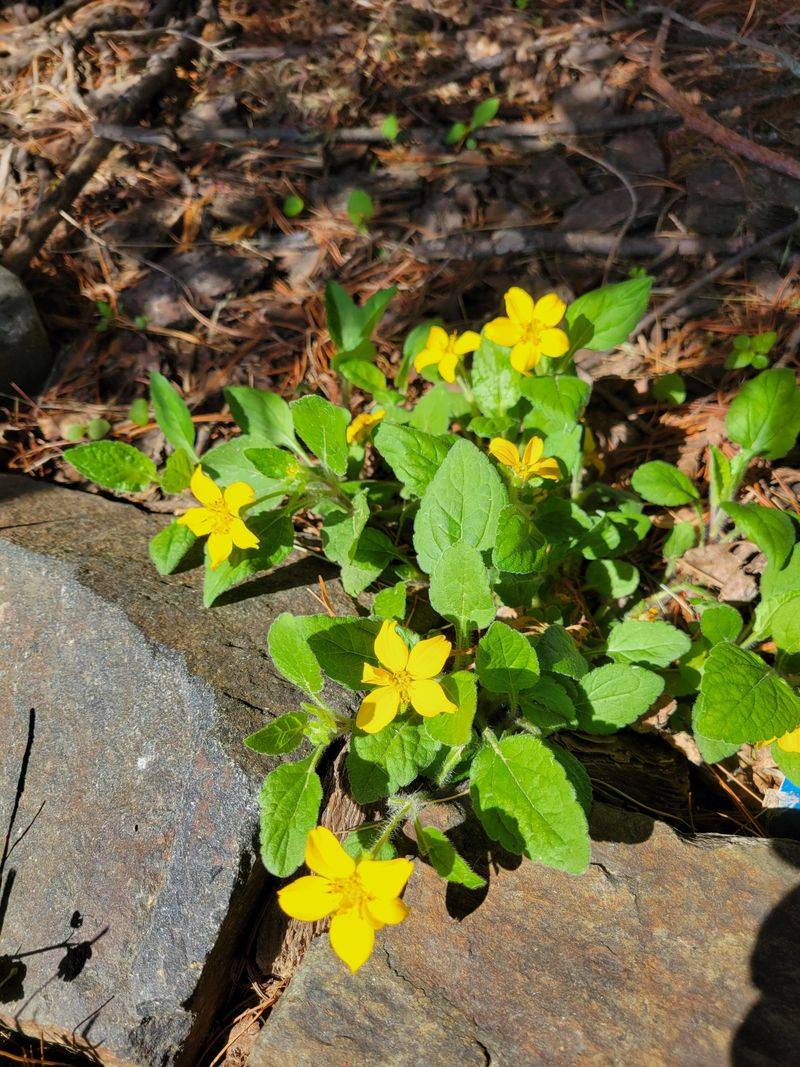
Not many native plants can pull off cheerful yellow flowers in the shade, but green and gold does it without breaking a sweat.
Chrysogonum virginianum is a Southeast native that Georgia gardeners are finally giving the spotlight it deserves. It forms low, spreading mats with bright yellow daisy-like flowers that bloom heavily in spring and then off and on through fall.
Part shade is the sweet spot for this plant.
Too much sun and the leaves scorch. Too much deep shade and the flowering slows down. The dappled light under a tall pine or at the edge of a tree canopy is just right.
It handles Georgia’s heat and humidity better than many introduced groundcovers because it evolved here.
Green and gold spreads by runners and seeds, filling in steadily without becoming invasive.
It works beautifully in woodland garden beds, along shaded walkways, and under large shrubs where plain mulch tends to blow away or break down too fast.
The foliage is semi-evergreen in Georgia, holding color through mild winters and re-emerging quickly after cold snaps.
Supporting native plants like this one also benefits local pollinators, since bees visit the flowers actively during bloom periods.
It is one of those rare plants that looks good and does good at the same time.
5. Ajuga Fills Small Bare Spots
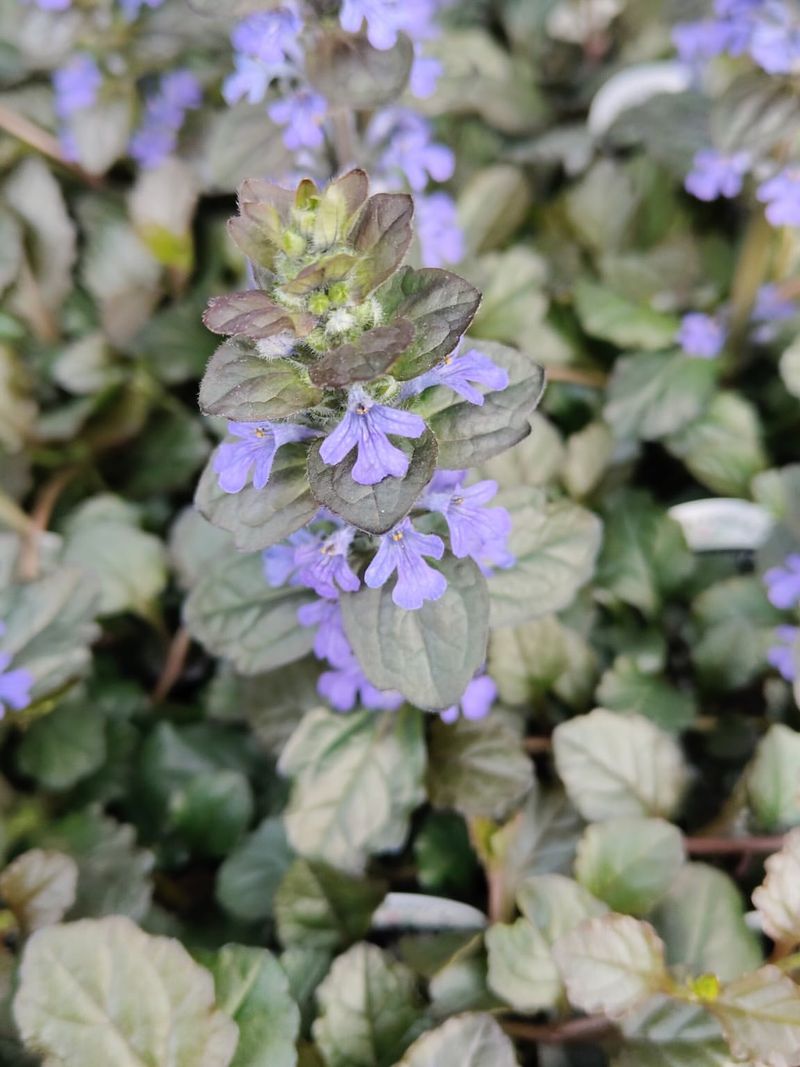
Bare spots in a garden have a way of filling themselves with weeds if you let them sit too long.
Ajuga reptans, commonly called bugleweed, has a better plan. It spreads fast, stays low, and covers small problem areas before weeds even get a chance to move in.
Gardeners who have tried it once tend to keep planting it everywhere.
Ajuga grows best in part shade to full shade, though it tolerates some morning sun without much fuss.
Its rosette-shaped leaves come in several colors, from deep bronze-purple to green and even variegated cream and pink. In spring, short spikes of bright blue flowers rise above the foliage and attract bees and other pollinators.
It is genuinely pretty for something so tough.
Spread control is worth thinking about before you plant.
Ajuga travels by stolons, which are above-ground runners, and can move into lawn areas if planted right at the turf edge. A simple edging strip or a natural barrier like a path or raised bed wall keeps it contained where you want it.
In a defined bed, that spreading habit is an asset, not a problem.
Plant ajuga about six to twelve inches apart for quicker coverage. It prefers moist, well-drained soil and struggles in spots that stay bone dry for long periods.
Once established, ajuga is low-maintenance and rarely needs fertilizing, which makes it one of the most genuinely effortless groundcovers available to Georgia gardeners.
6. Asiatic Jasmine Covers Larger Beds
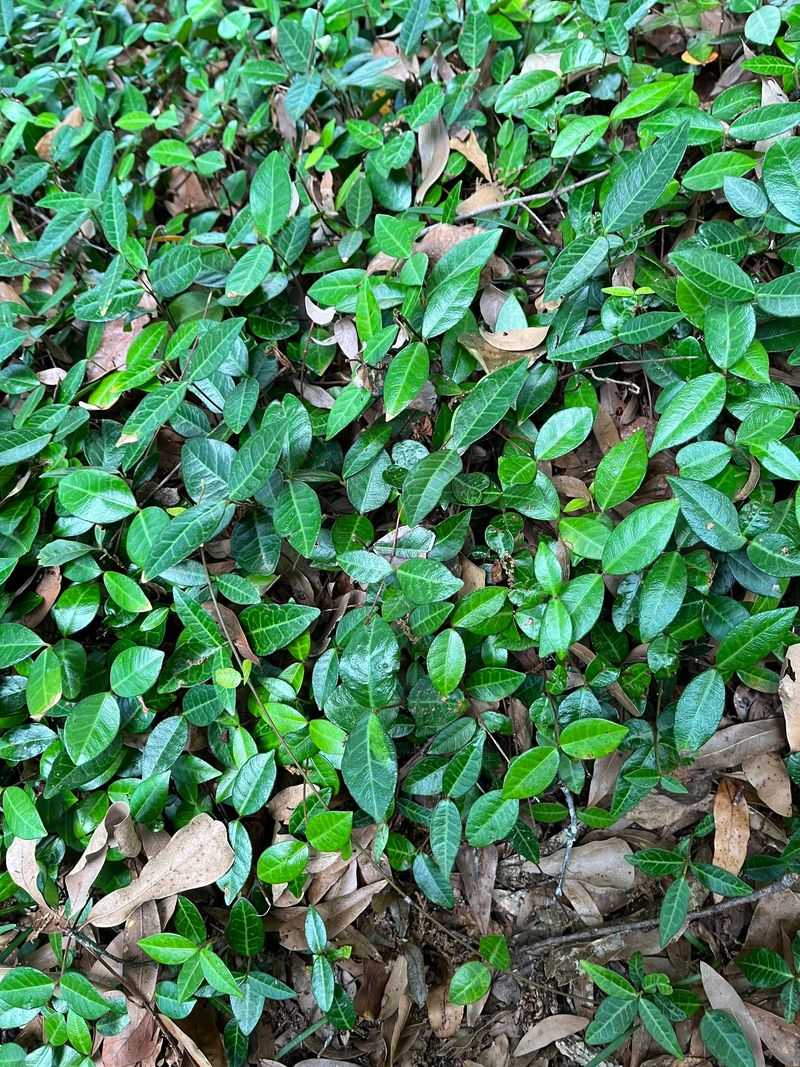
When the bed is big and the budget for upkeep is small, Asiatic jasmine is the plant that makes the most sense.
Trachelospermum asiaticum is a tough, woody, evergreen groundcover that covers large areas with a dense, weed-suppressing mat that holds up through Georgia summers, droughts, and mild freezes without much help from you.
This is not a delicate plant.
Asiatic jasmine handles full sun to full shade, though it grows most vigorously in part shade with decent moisture. It roots along its stems as it spreads, locking soil in place and reducing erosion on gentle slopes.
Once it fills in a bed, weeds have almost no chance of breaking through that dense canopy of small, glossy leaves.
University of Georgia Extension notes that Asiatic jasmine is one of the most widely adapted groundcovers for Georgia landscapes, performing well across the state from the mountains to the coast.
It is not a fast starter, so the first year might feel a little slow. By the second and third year, it takes off and covers ground quickly.
Space plants about twelve to eighteen inches apart depending on how fast you want coverage. Mow or shear Asiatic jasmine once a year in late winter to keep it from getting too mounded or woody.
It responds well to a hard trim and comes back looking cleaner and fuller each season.
7. Foamflower Softens Woodland Plantings
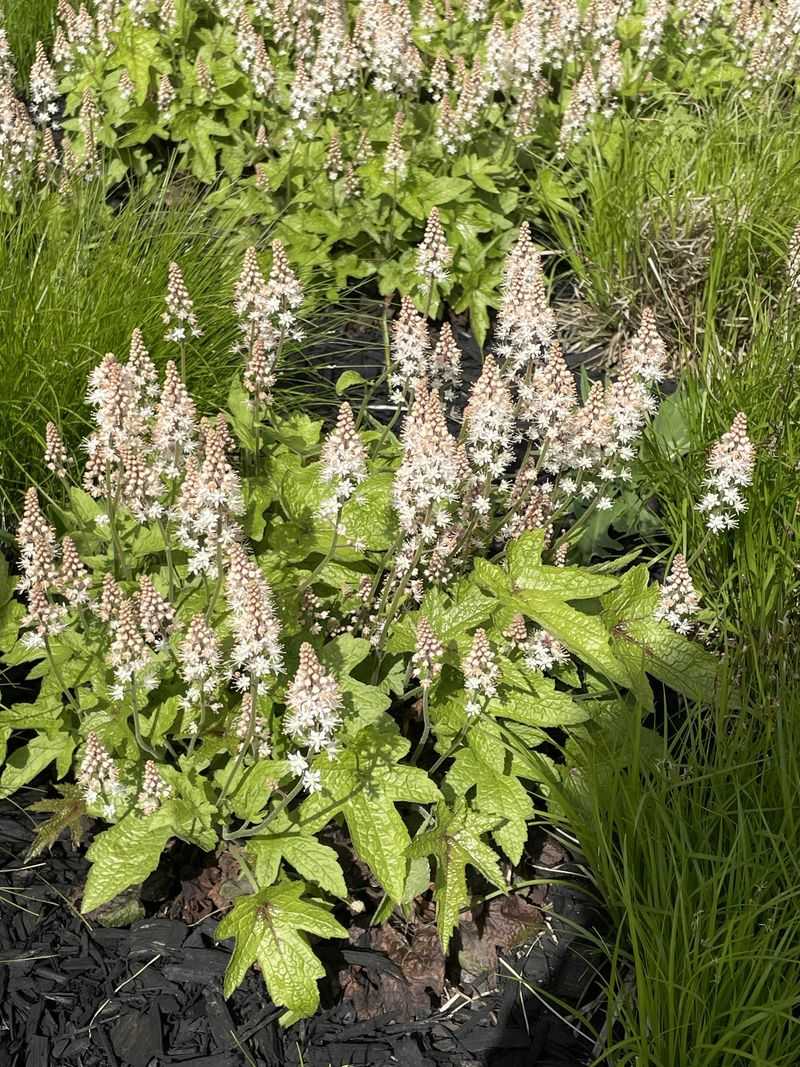
There is something almost magical about a woodland garden bed in spring when foamflower is in bloom.
Tiarella cordifolia sends up airy, frothy white flower spikes that float just above its heart-shaped leaves like tiny clouds. It is one of those plants that makes a shaded corner feel intentional and beautiful rather than just neglected.
Foamflower is native to the eastern United States and feels right at home in Georgia’s woodland gardens.
It thrives in moist, organically rich soil under a canopy of trees where foot traffic is low and the light stays soft and dappled.
Dry, compacted soil is not its friend, so amending planting areas with compost before installing foamflower makes a real difference in long-term performance.
The foliage is semi-evergreen and often develops attractive reddish-bronze markings along the leaf veins as temperatures cool in fall.
Some cultivars have deeply cut, almost maple-like leaves that add extra texture to the garden floor.
Foamflower spreads by stolons, forming gradually widening colonies that stay polite and manageable compared to more aggressive groundcovers.
Plant foamflower about twelve inches apart in groups for the best visual effect. It pairs beautifully with ferns, hostas, and native wild ginger in shaded beds.
Foamflower is also a pollinator favorite, drawing in small native bees during its spring bloom period, which adds another layer of life to a quiet woodland planting.
8. Wild Ginger Carpets Difficult Dry Shade
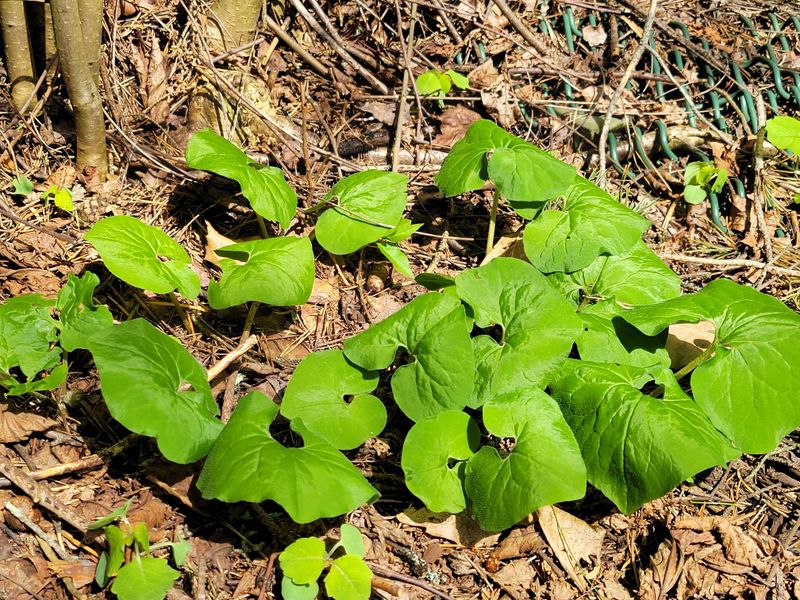
Dry shade under large trees is one of the hardest gardening problems in a Georgia yard, and wild ginger is one of the few groundcovers that actually solves it.
Asarum canadense, the native wild ginger, forms a dense carpet of large, heart-shaped leaves that stays low to the ground and spreads slowly but steadily through underground rhizomes.
The leaves are bold enough to make a visual statement even in the darkest spots under mature oaks and maples where almost nothing else will grow.
Wild ginger is native to the eastern United States, which means Georgia’s climate suits it naturally.
It handles the root competition and dry soil conditions that develop under established trees far better than introduced groundcovers that prefer amended, consistently moist beds.
The plant does not need much encouragement once it is settled in.
It is one of the few groundcovers that actually improves with neglect, spreading more confidently in lean, undisturbed soil than in heavily cultivated beds.
The foliage disappears in winter but re-emerges reliably in spring, covering the ground thickly by early summer.
Small, hidden flowers appear at soil level in spring, tucked beneath the leaves where most people never notice them. That modesty is part of wild ginger’s character.
It does not show off. It just quietly covers the ground and handles the conditions that defeat everything else.
Space plants about eight to twelve inches apart and mulch lightly around transplants during the first season.
After establishment, wild ginger largely takes care of itself, expanding slowly into the kind of seamless, weed-suppressing carpet that makes even the most difficult shaded corner look intentional.