This Fall-Blooming Pennsylvania Vine Makes Every Fence And Pergola Smell Amazing
Most Pennsylvania vines earn their place through visual coverage alone. They fill in fence lines, shade pergolas, and create the kind of layered, established look that bare structures never quite achieve on their own.
But there is one fall-blooming native Pennsylvania vine that adds something to a fence or pergola that most vines simply cannot offer. It fills the air around it with fragrance.
On a cool fall evening, the scent this vine releases as it blooms drifts through the yard in a way that makes people stop and take notice. It climbs with natural elegance.
It also blooms generously at the precise moment when most other vines have finished their season, and does all of this while requiring almost no intervention once established.
Here’s the fall-blooming Pennsylvania vine worth planting on every fence and pergola in the state.
The Pennsylvania’s Native Fall-Blooming Vine
Walk along almost any creek in Pennsylvania in September, and you might spot a tangle of white blooms spilling over the shrubs.
That wild beauty is virgin’s bower, known to scientists as Clematis virginiana. It has been growing here long before any of our towns were built.
The vine is found all over Pennsylvania and Maryland. It loves streambanks, thickets, and the sunny edges of woods.
In the wild, it climbs over bushes and small trees, creating soft white curtains in late summer. Because it is native, local insects and birds already know how to use it.
Here is where things get interesting. Virgin’s bower looks almost exactly like sweet autumn clematis, a vine from Japan and China. Garden centers have sold that Asian plant for years.
Sadly, it escapes into forests and smothers native plants. Choosing virgin’s bower lets you enjoy the same look while helping your local ecosystem.
So how do you tell them apart? Check the leaves first. Virgin’s bower usually has leaves with jagged, toothy edges.
Sweet autumn clematis has smooth, rounded leaf edges. That simple clue can save you from buying the wrong plant.
Fun fact: the name virgin’s bower is very old. A bower is a shady, leafy shelter, and the vine creates just that when it grows over an arbor. People in colonial times often used it to shade porches and garden seats.
When you shop, ask for Clematis virginiana by name. Native plant nurseries across Pennsylvania often carry it.
Buying from them also means you get plants grown from local seed, which are well suited to our climate.
Masses Of Sweet-Scented White Flowers
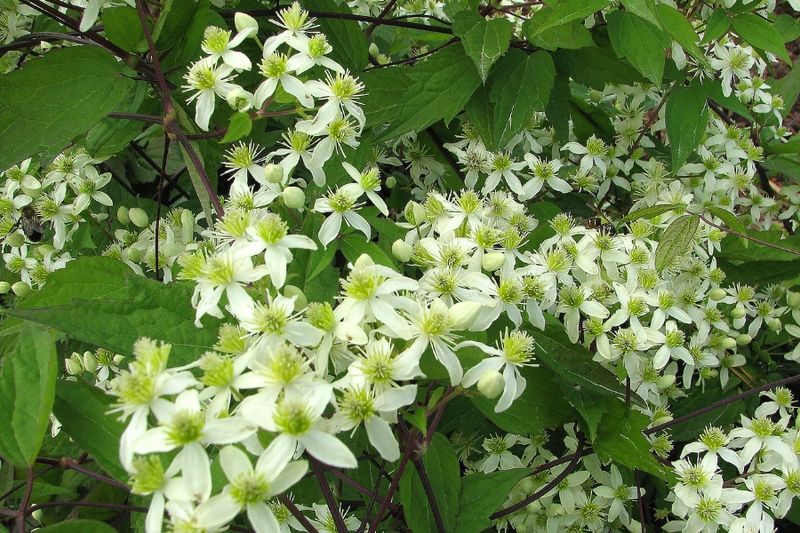
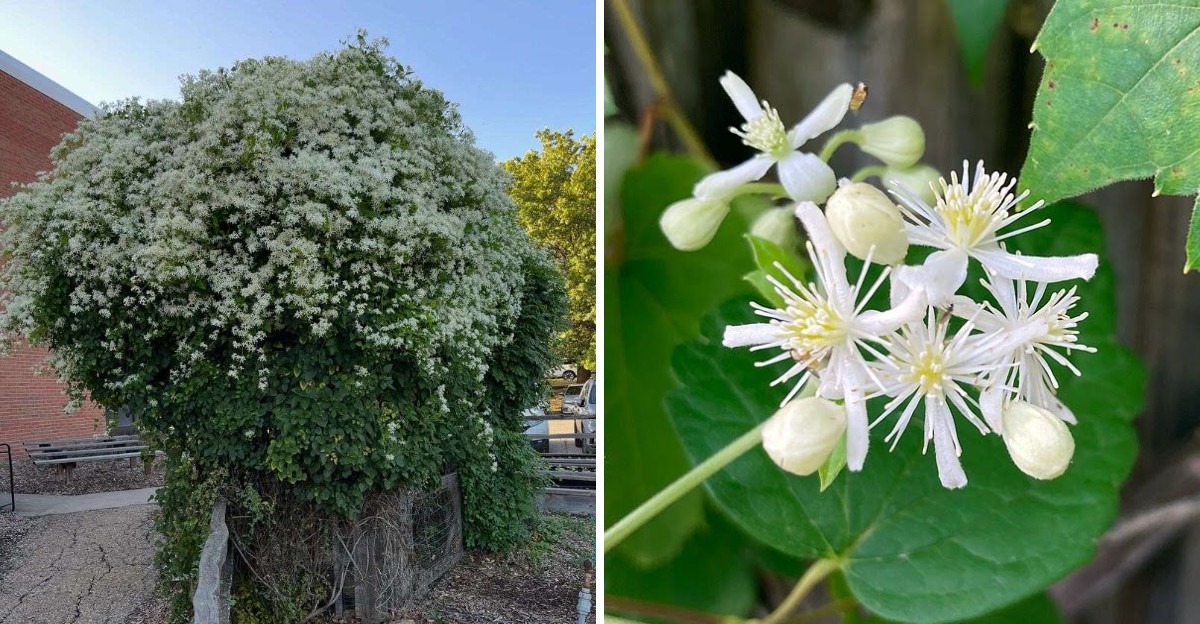
Snowfall in August? That is what a blooming virgin’s bower can look like from across the yard.
The vine gets so covered in flowers that you can barely see the leaves underneath. It is one of the prettiest surprises of the late season.
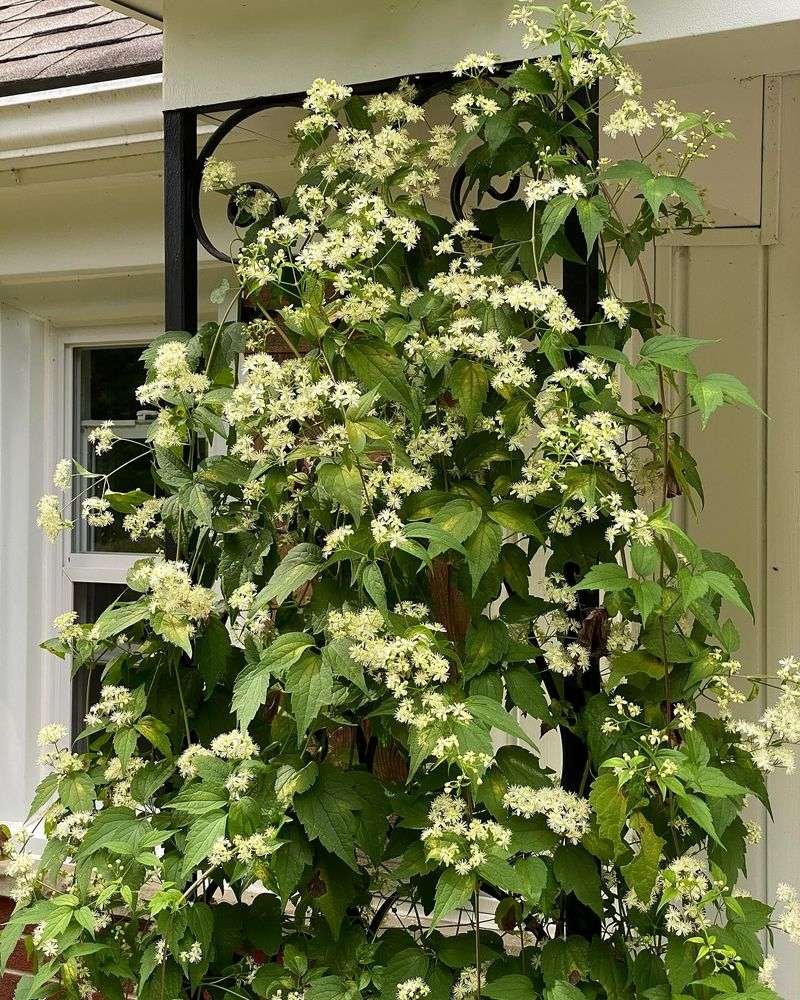
Each flower is small, only about one inch across. They are pure white with four petal-like parts and a fuzzy center of long stamens. On their own, they look delicate.
Your Pennsylvania Garden Changes Every Week. Your Plan Should Too.
Gardening in Pennsylvania changes quickly throughout the season. Every Friday you’ll receive a simple weekly plan showing exactly what to plant, prune, fertilize, harvest, and protect so you never miss the right timing.
Together, they form huge frothy clusters that glow in the evening light. Blooming starts in late summer and keeps going into fall. That timing is a big deal. Most garden flowers are winding down by then, so this vine fills a gap.
Your fence or pergola becomes the star of the yard just when things usually look plain. Now let’s talk about the smell. The flowers have a sweet, soft scent that drifts on warm afternoons. It is lighter than the heavy perfume of sweet autumn clematis.
Some people actually prefer that gentler smell because it never feels overpowering on a patio.
That milder fragrance is also a handy ID trick. If a white clematis smells very strong, it may be the invasive Asian type. A softer, fresh scent points toward our native plant. Pair that clue with the toothy leaves, and you will know for sure.
Want to enjoy the scent the most? Plant the vine near a spot where you sit. A porch railing, a bench arbor, or a pergola over a picnic table works great. You will catch that sweet whiff every time a breeze rolls through.
Made For Fences, Arbors, And Pergolas
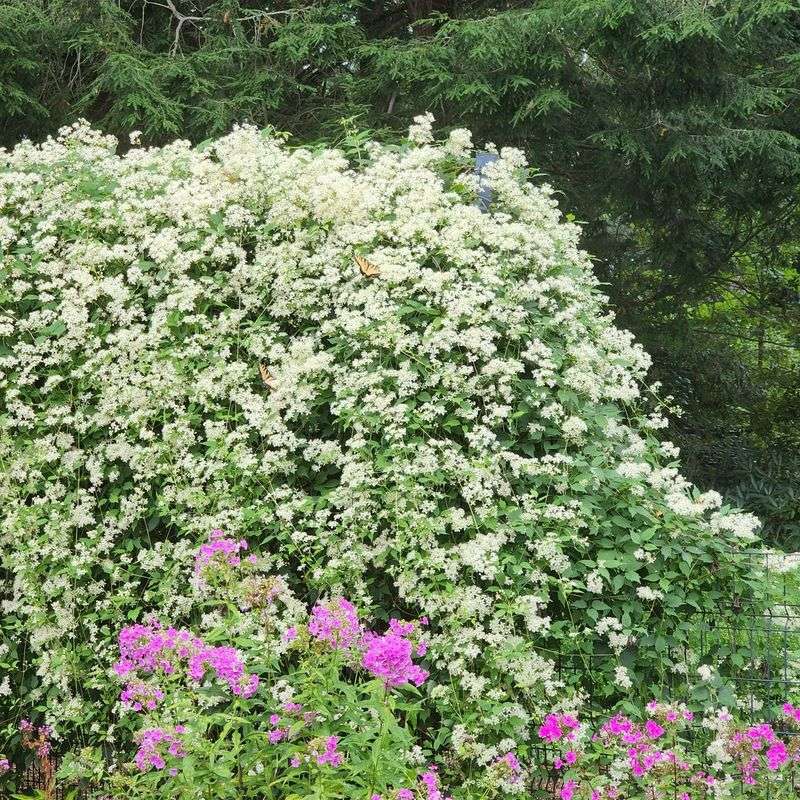
Got an ugly chain-link fence you wish would disappear? Virgin’s bower might be your new best friend. Few native vines cover a structure as quickly as this one does.
The speed is honestly impressive. It can grow up to 20 feet in a single year. Plant it in spring, and by late summer you could have a fence dressed in green leaves and white flowers. That makes it a great choice for new homeowners who want quick results.
How does it climb? Unlike grapes or peas, it has no tendrils. Instead, its leaf stems twist and wrap around anything thin they touch.
Think of them like tiny arms giving the support a hug. Because of this, it climbs best on narrow things like wire, lattice, or string.
That detail matters when you plan. A thick wooden post is too wide for the leaf stems to grab. Add some garden wire, netting, or a trellis panel to give the vine something to hold.
Once it gets started, it will do the rest on its own. No support at all? That is okay too. The vine will simply sprawl across the ground and form a thick groundcover.
People sometimes use it this way on slopes to help hold soil in place. Here are some smart spots to try:
Fences along property lines for privacy. Arbors over garden gates for a welcoming entrance.
Pergolas above patios for summer shade. Mailbox posts wrapped in wire for a fun pop of blooms. Pick one, and watch it take off.
Food And Shelter For Pollinators And Birds
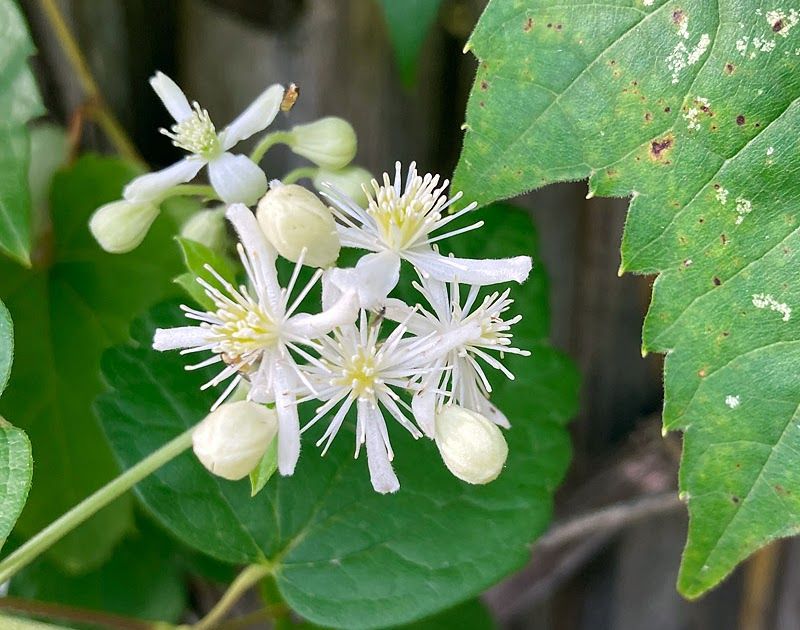
A goldfinch tugging at fluffy seed heads is one of the sweetest sights of fall. Those birds are collecting soft fibers from virgin’s bower.
They use the downy fluff to line their cozy nests. Your vine can become a busy wildlife hotel.
It all starts with the flowers. Bees buzz from bloom to bloom, gathering pollen and nectar. Butterflies stop by for a sip on sunny days. Even hummingbirds visit, fueling up before their long trip south.
Late-season flowers are extra important for these creatures. Food gets harder to find as fall arrives. A big vine full of blossoms acts like a roadside diner for hungry pollinators.
Native bees especially benefit, since they evolved alongside this plant. Once the flowers fade, the show is not over. The vine forms feathery seed heads with long silky tails. They look silvery and wispy, almost like tiny puffs of smoke.
Many gardeners think they are nearly as pretty as the blooms. Those seeds also feed birds. Migrating birds passing through Pennsylvania snack on them. Birds that stay all winter find them useful too.
The thick tangle of stems gives small birds a safe place to hide from hawks and cold wind. Want to help wildlife even more? Skip the urge to tidy up in fall. Leave the seed heads on the vine through winter.
Avoid spraying pesticides nearby, since they can harm the very bees you want to attract. Adding a birdbath close by makes the spot even more inviting for feathered visitors.
Easy Growing Conditions
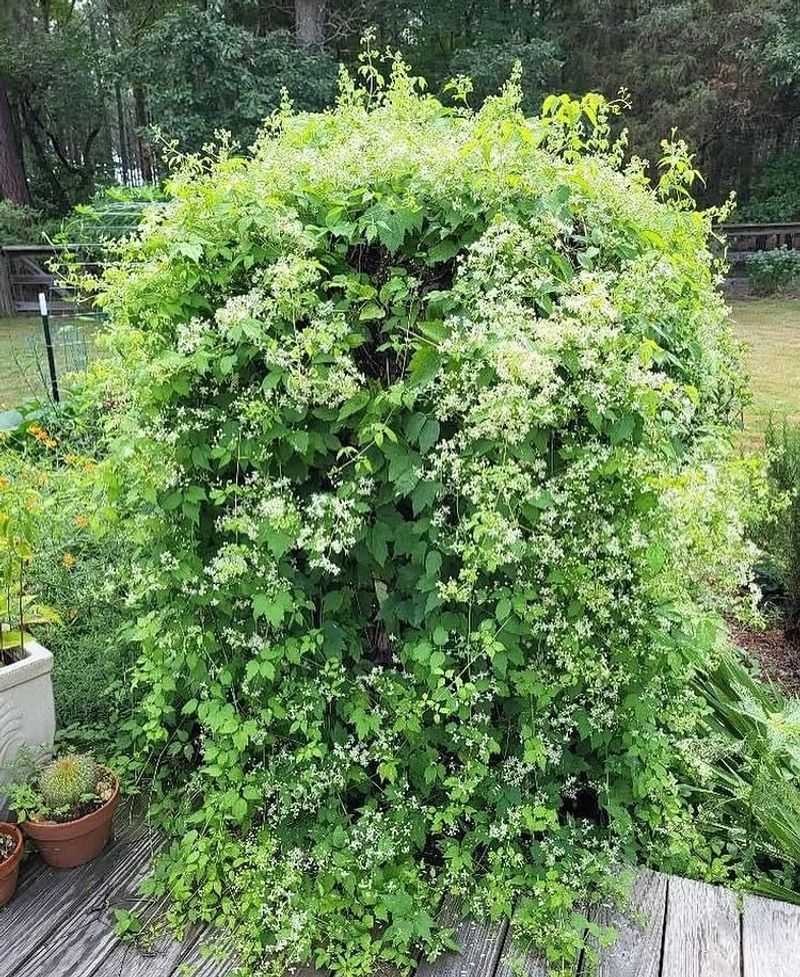
Good news for busy gardeners: virgin’s bower is not picky. If you have struggled with fussy plants before, you may find this one refreshingly easy. It grew wild long before anyone planted it on purpose.
Light needs are flexible. The vine does well anywhere from part shade to full sun. That means a spot with morning sun and afternoon shade works fine.
So does a bright fence line that gets sunshine all day. You will likely see the most flowers with more sun.
Soil is where you should pay a little attention. In nature, this plant lives near creeks, so it likes moist ground.
Rich soil with some compost mixed in makes it very happy. A layer of mulch around the base helps keep the roots cool and damp.
Worried about dry spells? Once the vine is settled in, it can handle seasonal drought. The first year is the key time.
Water it regularly while the roots grow deep. After that, it usually only needs a drink during long, hot stretches without rain.
Winter is no problem either. Virgin’s bower is fully cold hardy across all of Pennsylvania. From the snowy hills near Erie to the milder areas around Philadelphia, it comes back strong every spring.
You do not need to wrap it, cover it, or bring anything indoors.
A quick planting tip: spring or early fall is the best time to plant. Dig a hole twice as wide as the pot. Set the plant in, fill with soil, and water deeply.
Then let nature take over.
Simple Care And What To Watch For
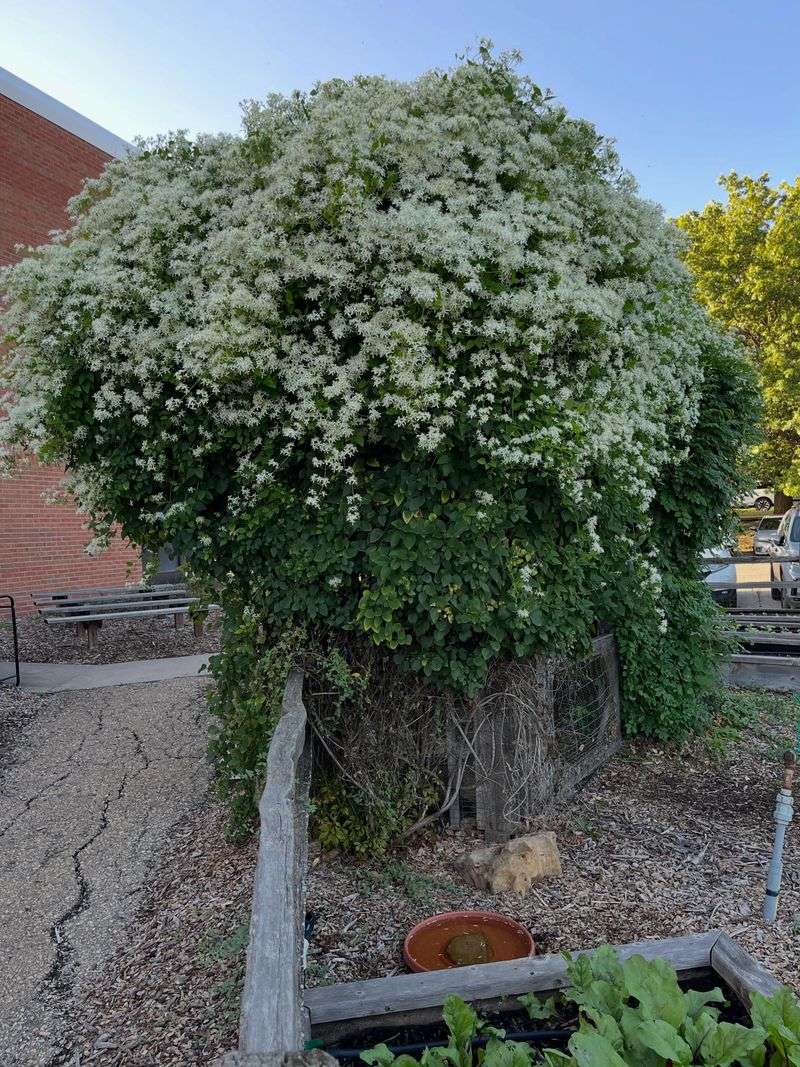
Pruning a clematis sounds scary to a lot of people. With virgin’s bower, it is actually one of the easiest jobs in the garden. You can grab your pruners with confidence.
The secret is how it blooms. Flowers form on new growth from the current season. That means cutting it back will not cost you any blossoms.
In late winter or early spring, before new leaves appear, trim the stems down to strong buds about a foot above the ground.
Why bother? A hard trim keeps the vine neat and full. It also stops old tangled stems from piling up year after year. Fresh growth will shoot up quickly and still cover your fence by late summer.
Now for a few honest warnings. Virgin’s bower can spread more than you expect. It drops lots of seeds that sprout nearby.
It also sends up suckers, which are new shoots from the roots. Pull extra seedlings when they are small, and they are easy to manage.
Placement matters for safety too. The leaves are poisonous to people if eaten, and they can upset pets as well.
Some folks also get itchy skin from handling the sap. Wearing gloves while pruning is a smart habit.
So think about where curious kids play or where your dog likes to chew. A fence at the back of the yard is often better than one next to a sandbox.
Teach children to admire the flowers with their eyes and nose, not their mouths. With that simple planning, you can enjoy this lovely vine worry-free.