Desert Ironwood for Low-Desert Arizona Yards: A Slow-Growing Sonoran Native Worth Considering This Fall
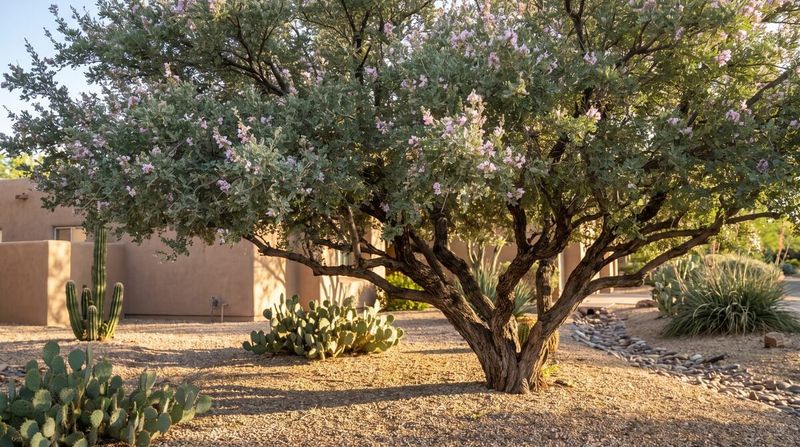
Plenty of Arizona yard trees promise quick shade, but desert ironwood works on a much longer clock. It is a Sonoran Desert native that handles heat well and can give back to local wildlife over time.
Fall is a good moment to think about planting one, if your yard has the room. Here is how to tell whether this slow, spiny, rewarding tree fits your space.
Late fall can be a useful planting window
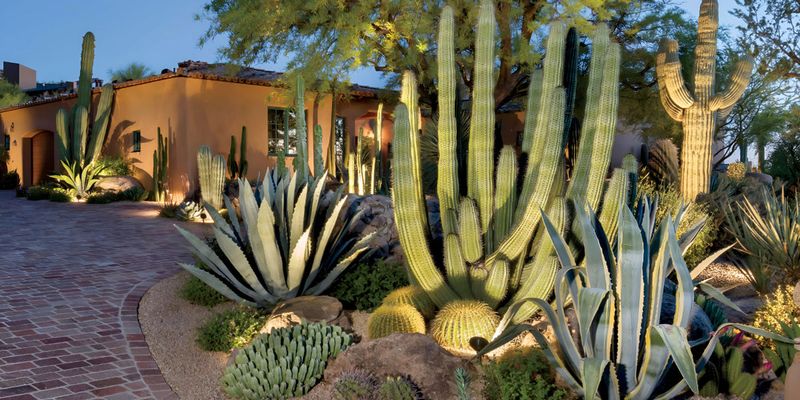
Ask a desert nursery when to plant, and many will point you to the cooler months. Cooperative Extension guidance from the University of Arizona generally calls late fall the ideal time for desert planting, because air temperatures cool while the soil is still warm.
That combination lets roots settle in without the stress of summer heat.
Think of it as a general window, not a promise. Your exact date, your site, and your local microclimate all matter.
Frost-sensitive plants are an exception to the late-fall rule, and colder pockets of the low desert, such as some low spots in Tucson-area neighborhoods, deserve extra caution.
Desert ironwood is one native tree you might consider for this season. It is not the right pick for every yard, and nothing about the calendar changes that.
The sections below help you decide whether your space, patience, and watering routine suit it before you buy.
Ironwood fits some Sonoran Desert landscapes
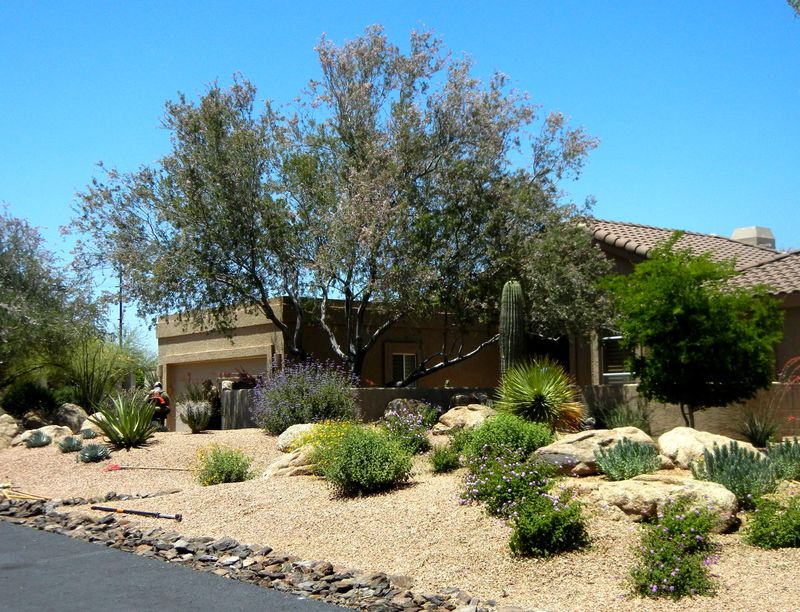
Few trees are as tied to this region as desert ironwood. According to the University of Arizona Desert Legume Program, it is native to the Sonoran Desert and tolerates drought once established.
It also handles extreme summer heat, which is a big deal when pavement in Phoenix pushes past 110 degrees.
That adaptation makes it a reasonable candidate for some low-desert yards, especially ones that resemble its natural setting. Well-drained soil and warm winters tend to suit it better than low, cold, or soggy spots.
Native does not mean universal, though. Its natural range is limited by winter cold in some places, so higher or colder parts of Arizona may not work.
If you live outside the low desert, check local conditions before you commit. And plenty of other desert-adapted trees do well in these yards too, so treat ironwood as one option to weigh, not a winner.
Its ecological value goes beyond shade
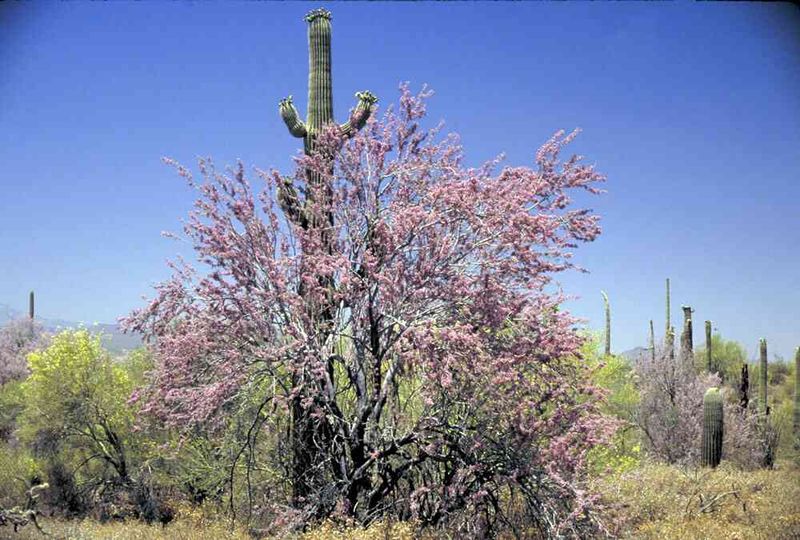
Shade is only part of the story. The Arizona-Sonora Desert Museum describes ironwood as a tree whose flowers attract bees, whose seeds feed wildlife, and whose canopy can shelter other plants and animals.
In wild desert stands, it often acts as a nurse plant for young seedlings.
In a home yard, think of these as tendencies, not guarantees. One tree will not promise any particular bird or animal, and your results depend on your neighborhood and what grows nearby.
Flowering varies too. Ironwood blooms in spring, but the show differs from year to year, so do not plan your yard around a reliable burst of flowers.
What you can count on is a native plant that fits into the local food web better than many imported trees. Skip any claim that it repels scorpions or other pests, because nothing backs that up.
Your Arizona Garden Changes Every Week. Your Plan Should Too.
Gardening in Arizona changes quickly throughout the season. Every Friday you’ll receive a simple weekly plan showing exactly what to plant, prune, fertilize, harvest, and protect so you never miss the right timing.
Slow growth makes it a long-term shade choice
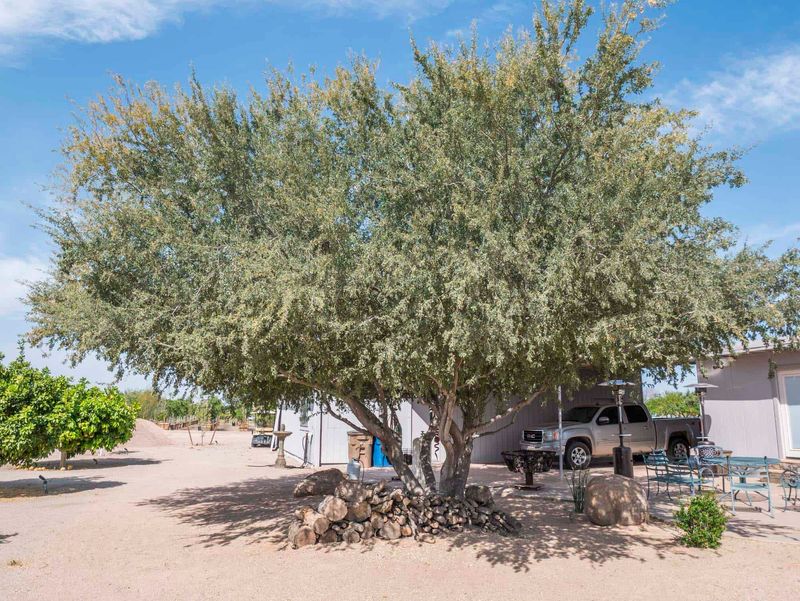
Patience is the price of admission. The University of Arizona Campus Arboretum describes ironwood as very slow growing, with mature size estimates of roughly 20 to 40 feet tall and wide.
Another plant profile lists up to 30 feet.
Those numbers are estimates. Soil, water, and local climate all change how big a given tree gets and how fast it gets there.
If you plant a five-gallon tree this fall, do not expect a shady seating area next summer. Shade will come, but over many years.
For a quick fix, you may need a shade sail, a ramada, or a faster-growing tree alongside it.
The upside of slow growth is a sturdy, dense tree that does not need constant cutting back. Treat it as an investment for the next generation of your yard, not this year’s cooling plan.
A new ironwood needs water while it establishes
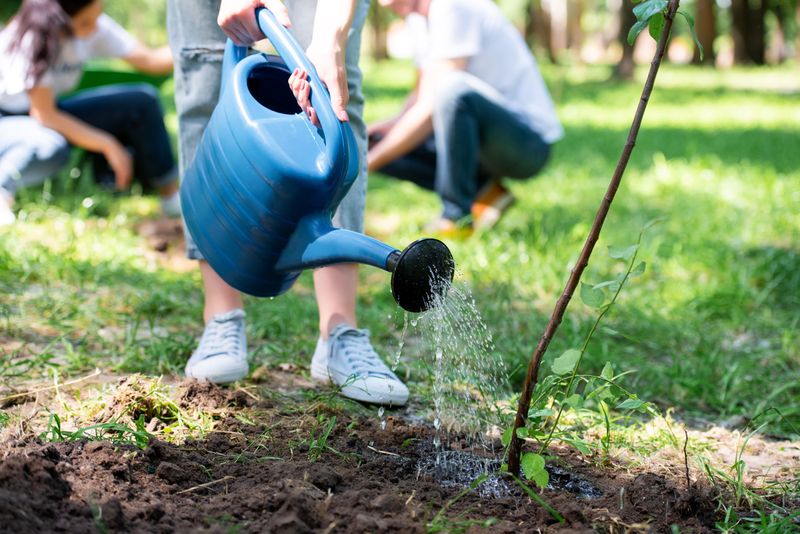
Drought tolerance belongs to established trees. Guidance from the Desert Legume Program says established ironwoods can survive on rainfall within their natural range, though growth is much slower that way.
A newly planted tree is a different case.
Plan on irrigation for the first few years. Establishment can take around three years, and the right amount depends on weather and soil.
A sandy lot dries faster than a clay-heavy one, and a hot, windy week asks more of the tree than a cool, cloudy one.
Skip any fixed schedule you find online. Instead, check the soil a few inches down and adjust.
Water deeply near the root zone rather than splashing the surface.
Even after establishment, an unusually dry year may call for a supplemental soak. Low-water is a better description than no-water.
Choose a safe site and keep planting simple
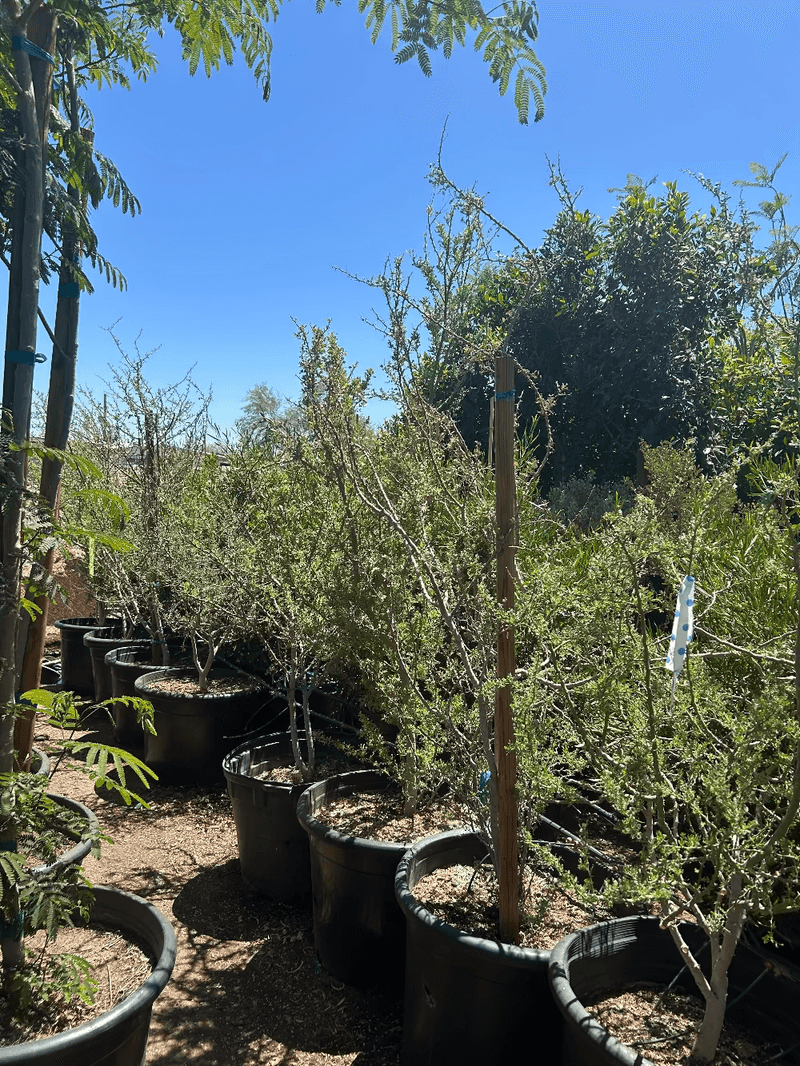
Site choice matters more than any planting trick. Ironwood branches are spiny, so the Desert Legume Program advises keeping it away from high-traffic areas.
That means skipping spots beside walkways, play areas, and patio seating.
Allow room for the full spread, and keep the tree clear of walls, roofs, and overhead utility lines. Also check drainage, since compacted or clay-heavy soil can hold water around the roots.
Planting is straightforward. Following Extension planting guidelines for container trees, set the tree no deeper than its root ball and backfill with the native soil you dug out.
Extra amendments and fertilizer at planting are not needed for a desert-adapted native.
Buy nursery-grown stock and do not dig up wild ironwoods. The tree appears on Arizona’s protected native plant lists, so check the current Arizona native plant rules before moving or removing any existing tree.
Choose ironwood if you can wait and give it room
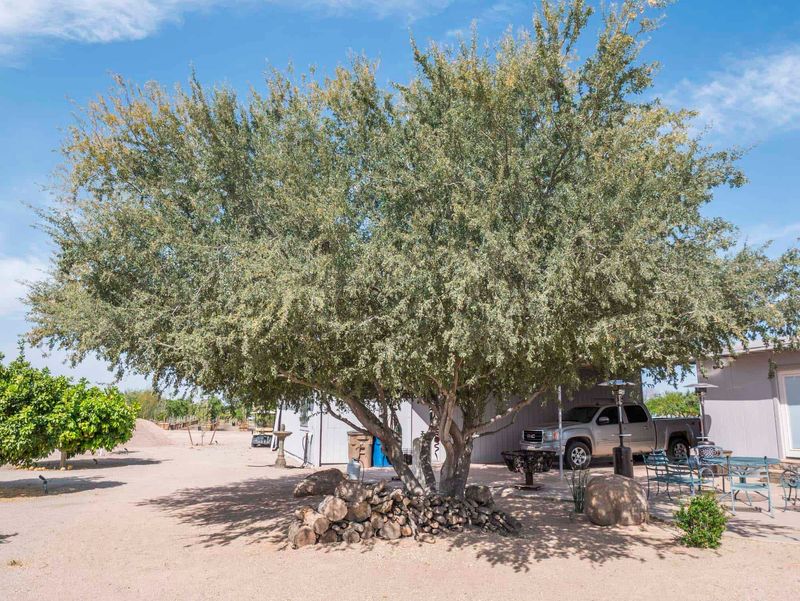
Ironwood may suit you if you have space for its eventual spread, can water it while it establishes, and value a slow native tree. If you want shade by next summer, or your lot is small and busy with foot traffic, another choice will serve you better.
Neither answer is wrong. It comes down to your space and your timeline.
Some trees reward the person who plants them, and some reward whoever sits beneath them decades later. Ironwood leans toward the second.