This Invasive Moth Is Spreading To More Pennsylvania Boxwoods Than Ever
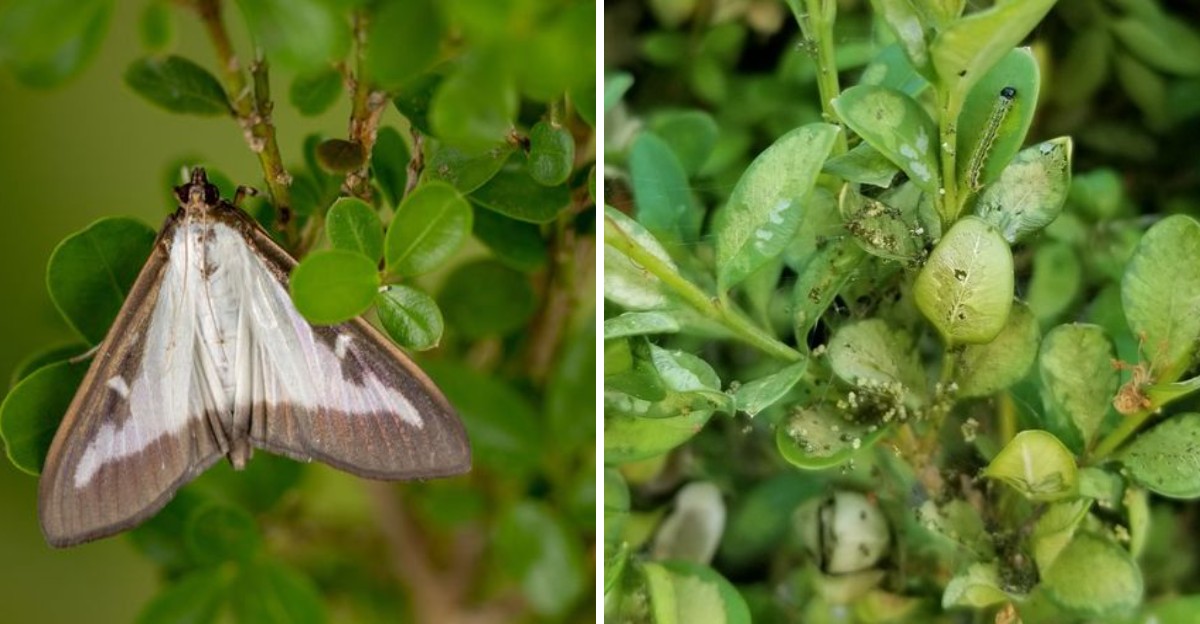
In parts of Europe, centuries-old boxwood hedges lining historic gardens have been stripped bare in just a few seasons.
The culprit was a small moth that arrived from East Asia and spread with alarming speed. Now it’s showing up in Pennsylvania.
Boxwoods are some of the most popular shrubs in the state. They frame front walks, edge formal gardens, and add neat, evergreen structure to yards.
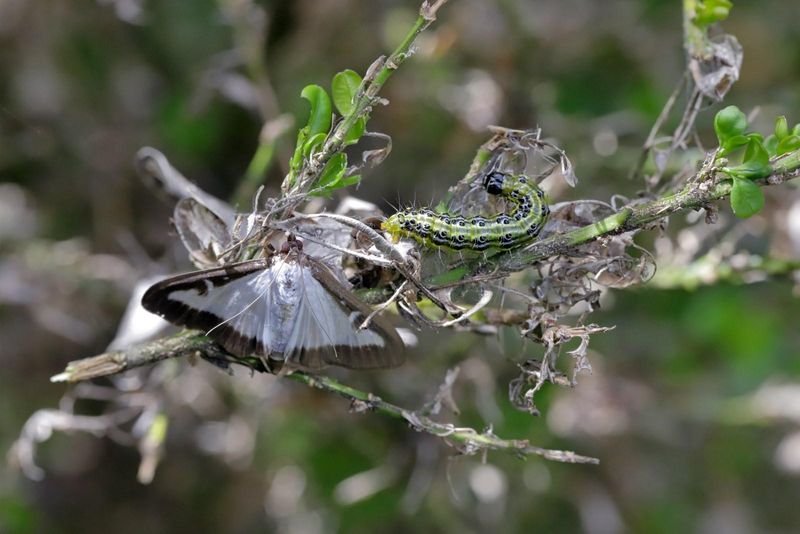
This invasive pest lays its eggs on the leaves, and the green-and-black caterpillars that hatch can chew a shrub down to bare branches.
Many homeowners don’t notice the damage until a once-lush hedge suddenly looks thin and brown. Knowing the early signs can help you protect your boxwoods before it’s too late.
A New Threat To Pennsylvania Boxwoods
Quiet cemeteries are usually peaceful places. In 2024, two of them in Erie County became the scene of an unwelcome discovery.
Inspectors found the box tree moth there, the first time it had been confirmed in Pennsylvania.
So where did this pest come from? The box tree moth is native to eastern Asia, including countries like China, Japan, and Korea.
In its home range, natural enemies help keep its numbers in check. Over here, those helpers are missing, so the moth has a much easier time.
Pennsylvania is not alone in this fight. The moth is also known to live in Ontario, Canada, as well as Michigan, Ohio, New York, Massachusetts, and Delaware.
It first reached North America around 2018, when it was found near Toronto. Since then, it has slowly crept across the Great Lakes region and beyond.
Why should you care if you live far from Erie? Boxwoods are planted almost everywhere in the state. They grow in backyards, schoolyards, historic estates, and church grounds.
A pest that targets only boxwoods can still cause a huge amount of damage when those shrubs are so common.
Here is a fun bit of history. Boxwoods have been grown in American gardens since colonial times. Some of the oldest plantings on the East Coast are more than two hundred years old. Losing them would mean losing a living link to the past.
The best first step is simple awareness. Take a few minutes to check whether you have boxwoods in your yard.
Many people do and never think about it. Knowing what you have makes it far easier to protect it when trouble shows up.
It’s Now Spreading To New Areas
July 28, 2025, was a big day for plant inspectors in Pennsylvania, and not in a good way. On that date, the box tree moth was confirmed in Franklin County. That is clear across the state from Erie, down in the south-central region near Maryland.
Officials acted fast. The USDA’s Animal and Plant Health Inspection Service, often called APHIS, worked with the Pennsylvania Department of Agriculture.
Together, they added Franklin County to the list of box tree moth quarantined areas. Erie County was already on that list.
What does a quarantine actually mean? In plain terms, it puts rules on moving certain plants out of the area.
Your Pennsylvania Garden Changes Every Week. Your Plan Should Too.
Gardening in Pennsylvania changes quickly throughout the season. Every Friday you’ll receive a simple weekly plan showing exactly what to plant, prune, fertilize, harvest, and protect so you never miss the right timing.
Boxwoods, along with a few related plants, cannot simply be shipped or carried away without meeting special requirements. The goal is to keep the moth from hitching a ride to new places.
For nurseries and garden centers, these rules can mean extra inspections and paperwork. For regular homeowners, the message is simpler.
Do not dig up boxwoods or haul clippings from a quarantined county to share with friends somewhere else.
A jump of that distance tells experts something important. The moth likely did not fly all that way on its own. It probably traveled with people, most likely on plants. That is why everyday choices matter so much.
Want to stay in the loop? Check the Pennsylvania Department of Agriculture website from time to time. It posts updates when new counties are added.
If you live in or near Franklin or Erie County, keep an extra close eye on your shrubs this season. Being alert now can keep your neighborhood off the next list.
Why It’s So Destructive
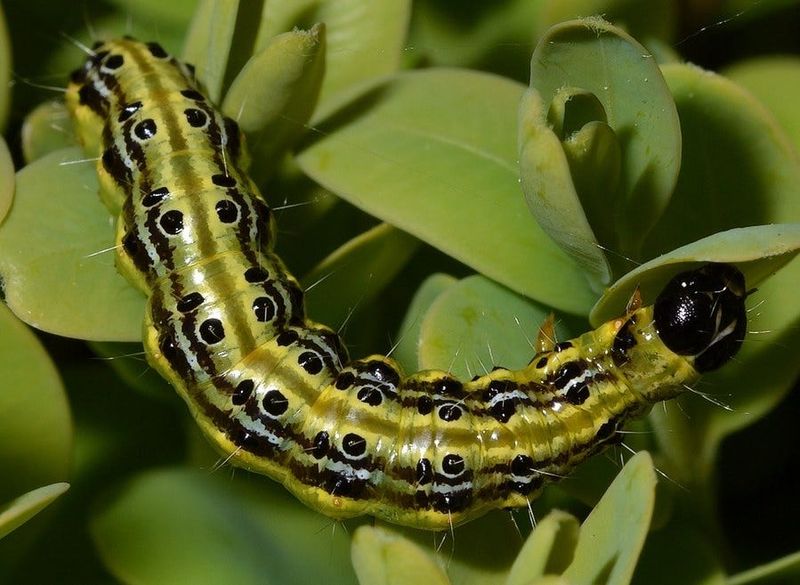
Hungry does not even begin to describe these caterpillars. Once they settle on a boxwood, they chew and chew until the leaves are gone. A heavy infestation can leave a full, green shrub completely bare.
Losing leaves is bad enough. But the caterpillars do not stop there. When the foliage runs out, they start feeding on the bark.
If they chew all the way around a stem, it is called girdling. Girdling cuts off the flow of water and nutrients, and the plant can be lost for good.
So why can’t nature handle the problem? Back in eastern Asia, birds, wasps, and other creatures feed on the moth.
In Pennsylvania, almost nothing has learned to hunt it yet. Without those natural checks, populations can explode to very high numbers.
In fact, the only real limit is food. The moths keep multiplying until they run low on boxwoods. That is a scary thought for anyone with a long hedge or a garden full of these shrubs.
Did you know? Boxwood leaves contain bitter chemicals that make them unappealing to most pests.
The box tree moth caterpillar can store some of those chemicals in its own body. That may make it taste bad to birds, which helps explain why few predators bother it.
The moth can also produce more than one generation each year. That means several waves of hungry caterpillars in a single season. A shrub that survives the spring may get hit again in summer.
Healthy plants bounce back better. Water your boxwoods during dry spells and avoid heavy pruning stress. A strong shrub has a better shot at recovering if pests show up.
How It Spreads
Think of the box tree moth as a stowaway. It rarely travels far by itself. Instead, it rides along on plants that people buy, sell, and move.
Experts say the main way it reaches new regions is through infested boxwood nursery stock. Eggs, tiny caterpillars, or cocoons can hide deep inside a potted shrub.
The plant gets shipped, sold, and planted in a new yard. Then the moth wakes up in a brand new home.
After that first arrival, natural spread takes over. Adult moths can fly to nearby shrubs and lay eggs. Little by little, the infestation grows outward into the surrounding neighborhood.
The good news? You have real power here. Your shopping habits can help break the chain. Buy boxwoods from reputable nurseries and garden centers that follow state inspection rules.
Ask staff whether their plants have been checked for box tree moth. Be careful with clippings, too.
Many people love using boxwood branches for holiday wreaths and decorations. If you live in a quarantined area, keep those trimmings at home. Do not give them away or drive them to another county.
Plant swaps and online sales deserve extra caution. A free shrub from a neighbor sounds nice. Yet you often have no idea where it came from or whether it was inspected.
When you bring a new boxwood home, consider keeping it apart from your other shrubs for a few weeks.
Check it often for signs of trouble. That small step can stop a hidden pest before it spreads through your whole garden.
How To Spot It
Ready to play detective? Spotting the box tree moth early is one of the best things you can do. Luckily, the clues are pretty easy to see once you know them.
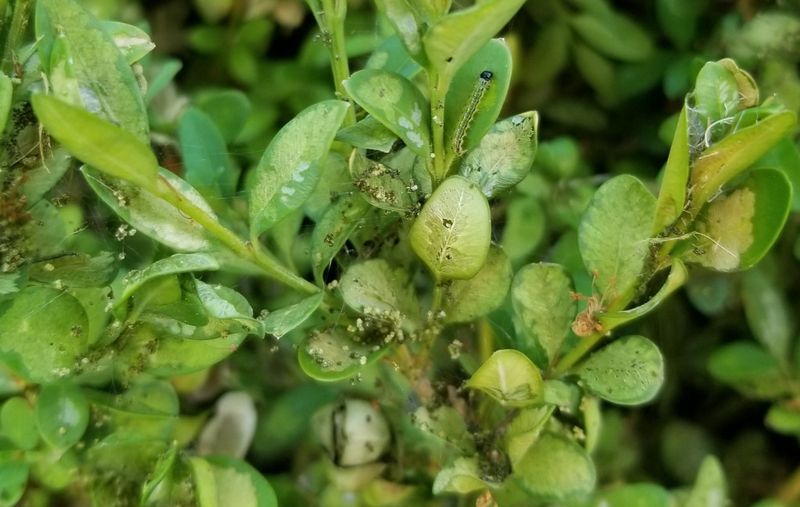
Start with the leaves. Look for chewed edges, holes, or leaves that are missing entirely. Sometimes only a thin, see-through layer of leaf is left behind. Damage often begins on the inside of the shrub, so gently part the branches and peek in.
Next, watch for webbing. The caterpillars spin a large amount of silky webbing as they feed. You may also notice small green or black droppings stuck in the webs. If your boxwood looks like it is wrapped in cobwebs, take a closer look.
The caterpillars themselves are fairly easy to recognize. They are usually green with black and white stripes and black spots. Young ones are small, but older caterpillars can grow to about an inch and a half long.
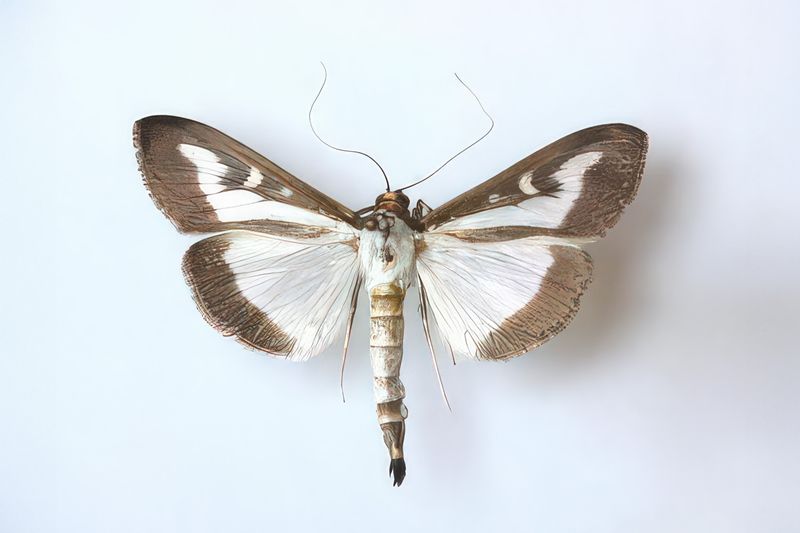
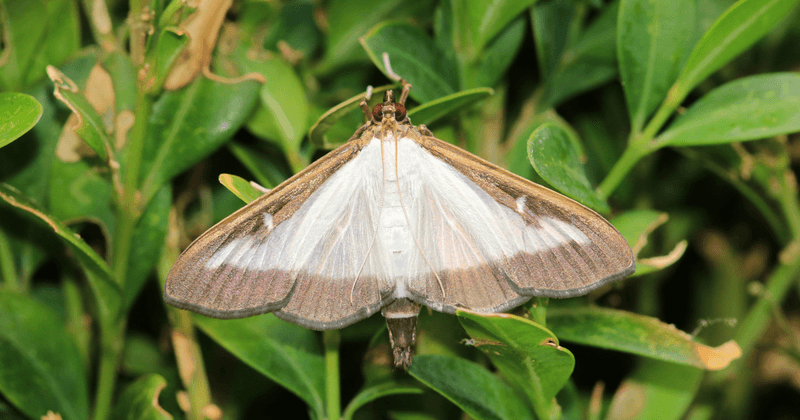
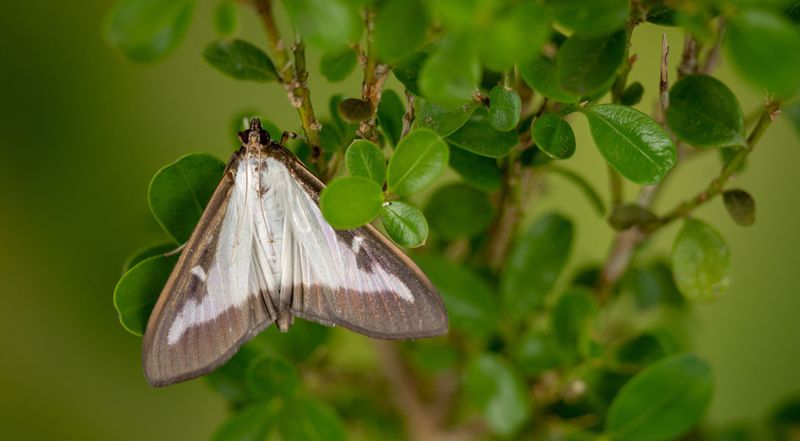
Adult moths are actually quite pretty. Most have white wings with a thick brown border. Some have mostly brown wings with a small white spot. They tend to rest on the undersides of leaves during the day and fly at night.
Here is a handy tip. Moths are drawn to porch lights in summer. If you see a white moth with brown edges near your door, snap a photo.
Phones make great tools for this job. Take clear pictures of any damage, caterpillars, or moths you find. Those photos will help experts confirm what is happening in your yard.
What Pennsylvania Homeowners Should Do
Ten days. That is roughly how fast box tree moth caterpillars can strip a boxwood. Waiting until the end of summer to check your shrubs could mean finding nothing but bare twigs.
So make inspection a habit. Walk around your boxwoods every week or two during the growing season.
Look inside the branches, not just on the surface. Pay special attention to any plants you bought recently, since new arrivals are the most likely to carry hidden pests.
Spotted something suspicious? Do not panic, and do not try to move the plant. Take clear photos of the damage, caterpillars, or moths.
Then report it to the Pennsylvania Department of Agriculture. The department has an online reporting form, and staff can help confirm what you found.
Why report instead of just handling it yourself? Early detection is key. Every report helps officials track where the moth is and stop it before it causes major damage, plant loss, and wider spread.
Your single phone photo could protect an entire community. If the moth is confirmed, experts can suggest control options.
These may include picking off caterpillars by hand or using treatments made for this kind of caterpillar. Bag and trash infested clippings rather than composting them.
You can also talk with neighbors. Share what you learned and encourage them to check their shrubs, too. A whole street watching together is much stronger than one yard alone.
Finally, think about variety. Mixing other shrubs into your landscape means one pest cannot wipe out your whole garden. A little planning today keeps your yard green for years to come.