This Is The August Tomato Trick Pennsylvania Homeowners Wish They Knew Sooner
August can make a Pennsylvania tomato patch feel like a weather gamble.
One afternoon, the fruit looks perfect. By dinner, the forecast shows a hard rain after several dry days, and every nearly red tomato suddenly feels vulnerable.
The smartest move may happen before the first drop falls.
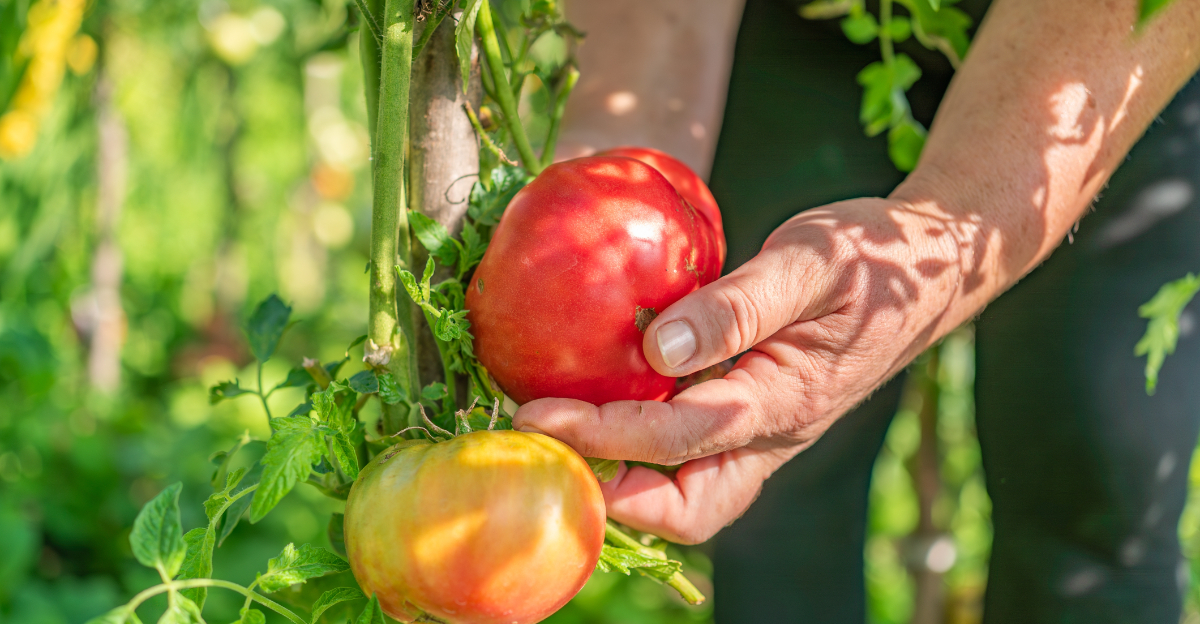
Penn State Extension recommends harvest at the breaker to pink stage as one way to reduce fruit crack risk.
The breaker stage starts with the first visible color at the blossom end, not with a tomato that is already one-third pink. Once that first blush appears, the fruit can finish its color change away from the plant.
So what is the trick homeowners wish they had used sooner?
Pick the right tomatoes before hard rain, then let them finish indoors at a moderate temperature.
That small harvest shift can protect fruit from cracks, hot weather, pests, and one soggy August surprise.
The trick is not an early harvest of every green tomato.
That first blush marks fruit ready for an indoor finish.
Pick Tomatoes At The Breaker Stage
That first streak of pink matters more than a fully red shoulder.
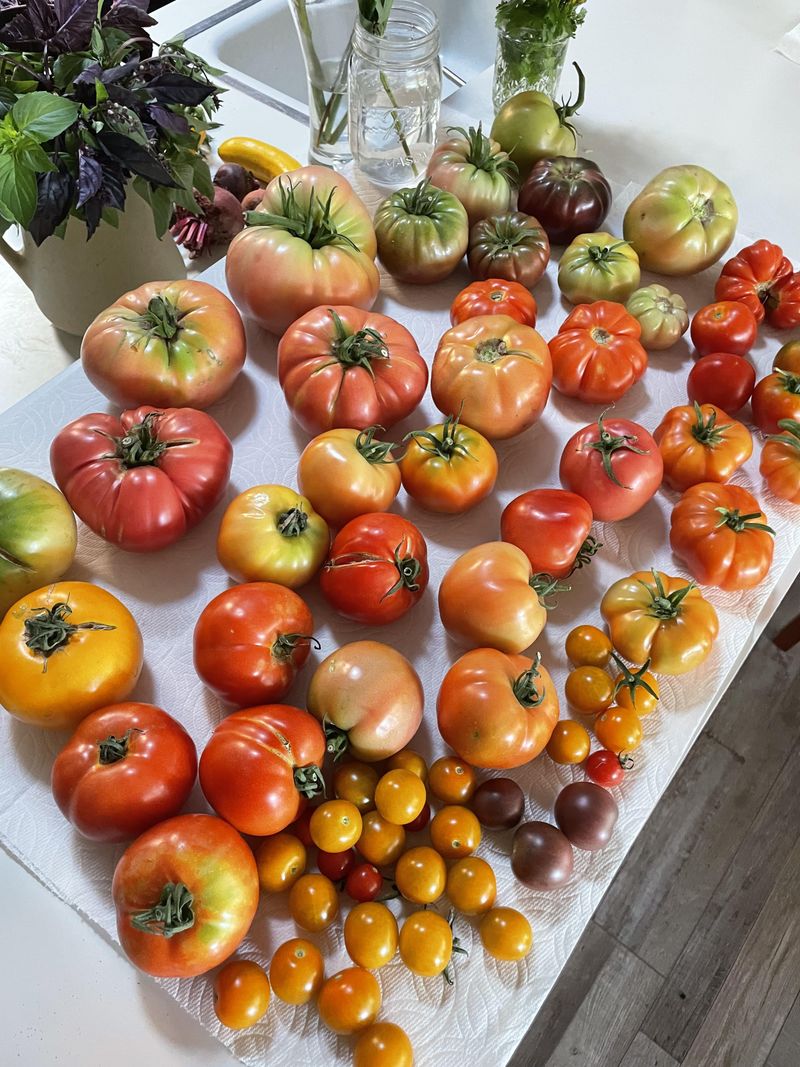
Penn State separates the breaker stage from the next color class. At breaker, visible color has just appeared at the blossom end.
The 10 to 30 percent color range belongs to the turning stage, so the common “breaker means one-third pink” shortcut is too late.
Use that distinction on your August walk.
Cup the fruit gently and look underneath. A red variety may show a faint pink, tan, or yellow break from solid green.
Yellow and orange cultivars will show their own mature color instead. The change can be small enough to miss from above.
Once that first color appears, Penn State considers the tomato vine ripe and suitable to finish off the plant. That makes breaker-stage harvest useful before weather turns rough.
Penn State also lists earlier harvest, from breaker through pink, as one tactic that can reduce fruit crack risk.
Leave truly immature fruit alone.
A hard, dark-green tomato with no maturity clues has not reached the same point. Mature-green fruit may finish indoors under proper conditions, but breaker fruit gives a homeowner a much clearer signal.
Train your eye on the blossom end every day.
August tomatoes do not need to become scarlet ornaments on the vine before they earn a place in the kitchen. One small blush can be the green light for an early trip indoors.
Watch The Blossom End For First Color
The bottom of the fruit can reveal the harvest window before the rest of the tomato joins the show.
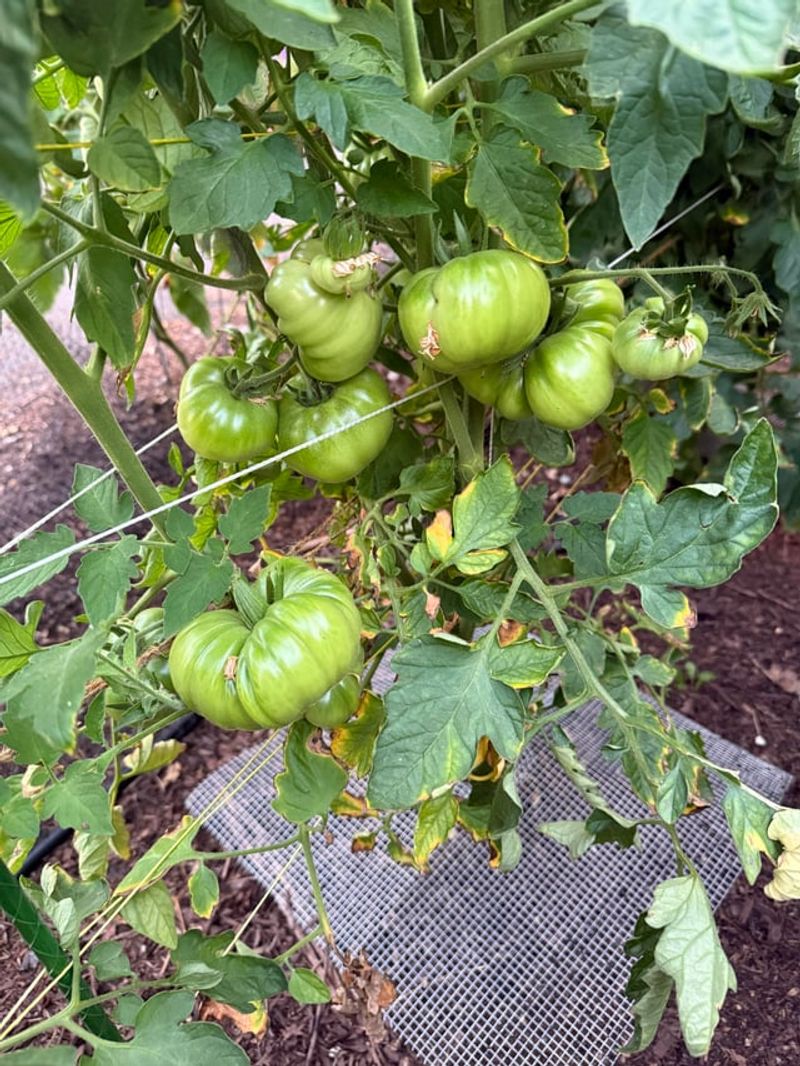
Penn State places the first visible breaker color at the blossom end. That is the rounded end opposite the stem, and it deserves a quick check on every late-summer garden pass.
Turn each nearly full-size tomato just enough to see beneath it.
Do not twist hard or pull at a fruit that still resists. You only need a clear view of the skin. A slight break from uniform green tells you far more than size alone.
Your Pennsylvania Garden Changes Every Week. Your Plan Should Too.
Gardening in Pennsylvania changes quickly throughout the season. Every Friday you’ll receive a simple weekly plan showing exactly what to plant, prune, fertilize, harvest, and protect so you never miss the right timing.
The next stage matters too. Penn State defines the turning stage as about 10 to 30 percent of the skin with pink, pinkish-red, or red color. By that point, the decision to harvest before a wet spell becomes even easier.
Keep cultivar color in mind.
Not every tomato finishes red. Yellow, orange, purple, striped, and green-when-ripe varieties need their own visual cues, so the seed packet or cultivar description can prevent a bad guess.
Give the blossom end the first inspection rather than judge the fruit from the path.
That habit takes seconds and can catch the ideal pre-storm harvest point before a tomato becomes soft on the plant.
The August trick is mostly an eyesight trick.
Once you know where the first color tends to appear, the plant offers a much earlier warning than the fully colored fruit at eye level.
Harvest Before Heavy Rain Arrives
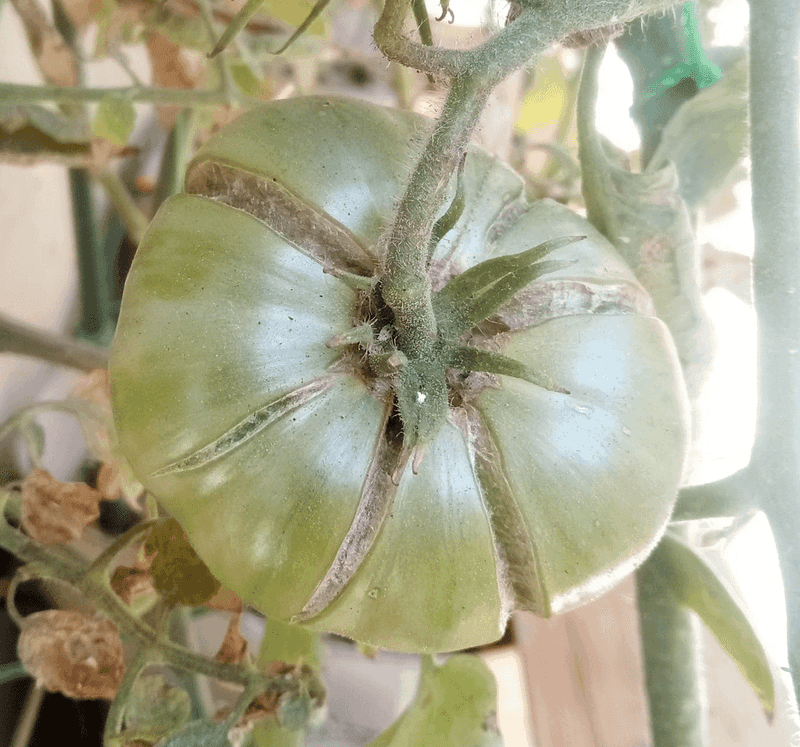
A hard rain after a dry stretch can turn a nearly perfect tomato into a split one fast.
Penn State links tomato cracks with water changes, especially dry conditions followed by heavy rain. Fruit can expand faster than the skin can accommodate the change, and ripe fruit can become especially vulnerable under hot, sunny conditions.
That makes the forecast useful at harvest time.
Check breaker, pink, and nearly ripe fruit before a strong rain event. Bring sound fruit indoors once color has started. Penn State specifically notes that harvest from breaker through pink can help reduce crack risk.
Leave smaller green fruit on the plant.
The goal is not to strip every cluster because clouds appear on the weather app. Focus on fruit that has already reached a stage capable of a reliable finish indoors.
Use a shallow basket rather than pile soft tomatoes into a deep bucket.
A heavy stack can bruise fruit that is already close to table quality. Set each tomato down gently and keep cracked or damaged fruit apart from sound fruit once you reach the kitchen.
This is where the trick earns its reputation.
You do not need to beat every summer storm. You simply move the fruit most likely to suffer from one sudden moisture swing.
Pennsylvania August weather can still surprise the garden.
A breaker-stage harvest gives you a way to move part of the crop out of that gamble before the rain starts.
Let Breaker Fruit Finish Indoors
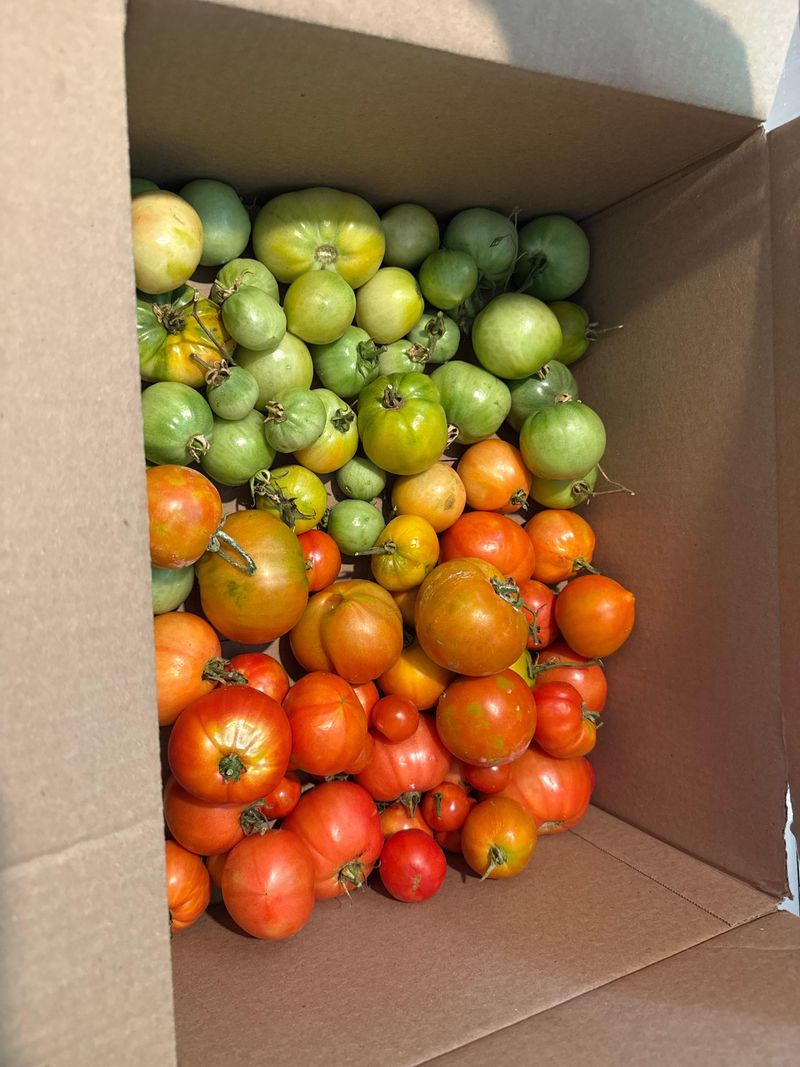
The kitchen does not need sunshine to finish a breaker-stage tomato.
Penn State notes that sunlight is not a required part of fruit maturation after the breaker stage. The fruit can continue its color change after harvest, which makes a counter, shelf, or other moderate indoor spot useful on stormy August days.
Temperature deserves more attention than the window.
Penn State lists roughly 63 to 70 degrees Fahrenheit as an optimum range for mature-green tomato maturation and warns that high temperatures can interfere with normal color development.
Another Penn State harvest resource also notes that very hot weather above 85 degrees can slow normal color formation.
Give your harvested fruit a calm place indoors.
Set tomatoes in a single layer with enough space to prevent pressure from nearby fruit. Check them each day and move fully colored tomatoes to the front of the kitchen queue. A single layer also makes each piece easier to inspect.
Do not pile them into a sealed, damp container.
A dry surface and gentle care reduce the chance that one small blemish turns into a bigger quality problem. Room temperature also keeps the process easy to monitor.
Keep stems clear of nearby fruit.
A shallow tray or clean counter gives you a simple setup with no special equipment.
The vine did the hard part before harvest.
Once that first breaker color appears, your job becomes much easier: protect the fruit, keep the temperature moderate, and let the tomato complete the final color change away from August rain.
Keep Ripening Fruit Out Of Harsh Sun
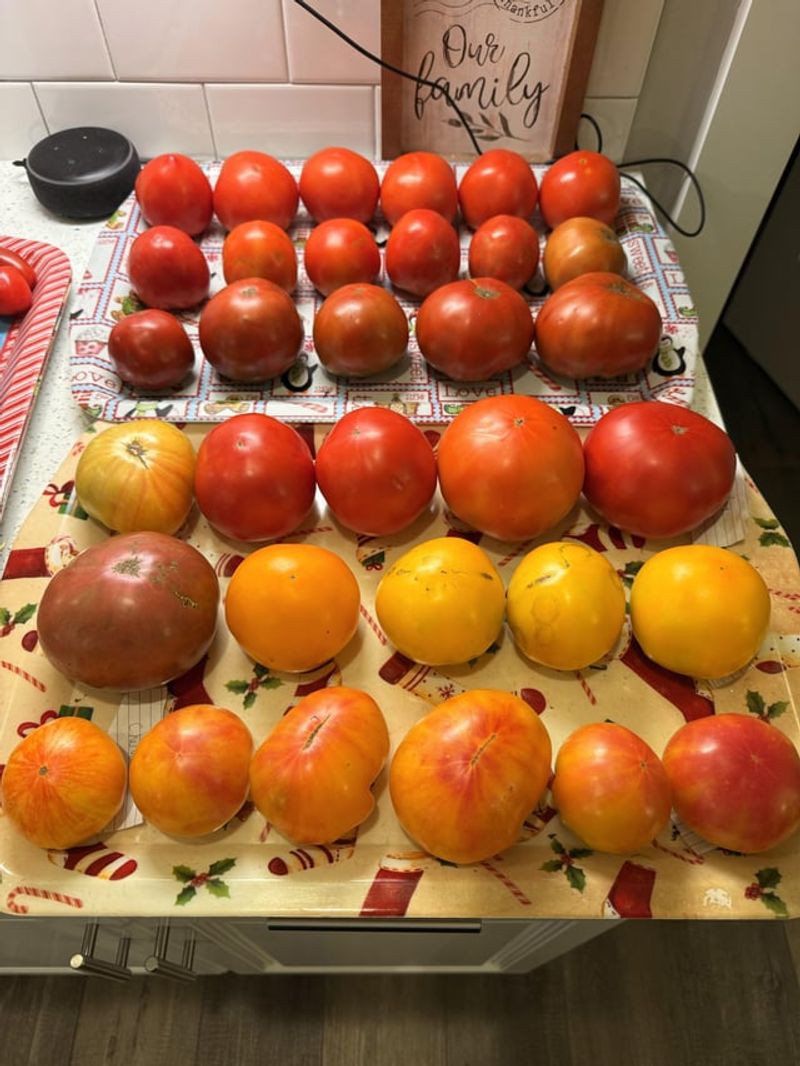
A sunny windowsill looks helpful, but tomatoes do not need a front-row seat to afternoon glare.
Penn State states that sunlight is not necessary for fruit maturation after breaker stage. Heat matters more, and temperatures above the ideal range can interfere with normal color development.
That makes a hot August window a poor default.
Glass can create a much warmer pocket than the room around it, especially on a south or western side of the house.
Tomato color can stall under very hot conditions, with temperatures above about 85 degrees able to disrupt normal pigment development.
Move the tray a few feet back.
Choose a counter, table, pantry shelf, or spare room with moderate temperatures and no direct blast of afternoon sun. Check the fruit daily rather than chase the brightest spot in the house.
Let the tomato color tell you when it is ready.
A breaker-stage fruit may need several days before it reaches the color and softness you prefer. Cooler room temperatures can slow that pace, while excessive heat can create a poor finish.
Keep one layer rather than a tower.
That setup makes each tomato easy to inspect and keeps pressure off tender shoulders.
Your windowsill can keep the houseplants.
The August tomato trick works because the fruit has already begun its own maturation process. It needs suitable temperature and time, not a sunbath behind hot glass.
Check Plants Daily During August
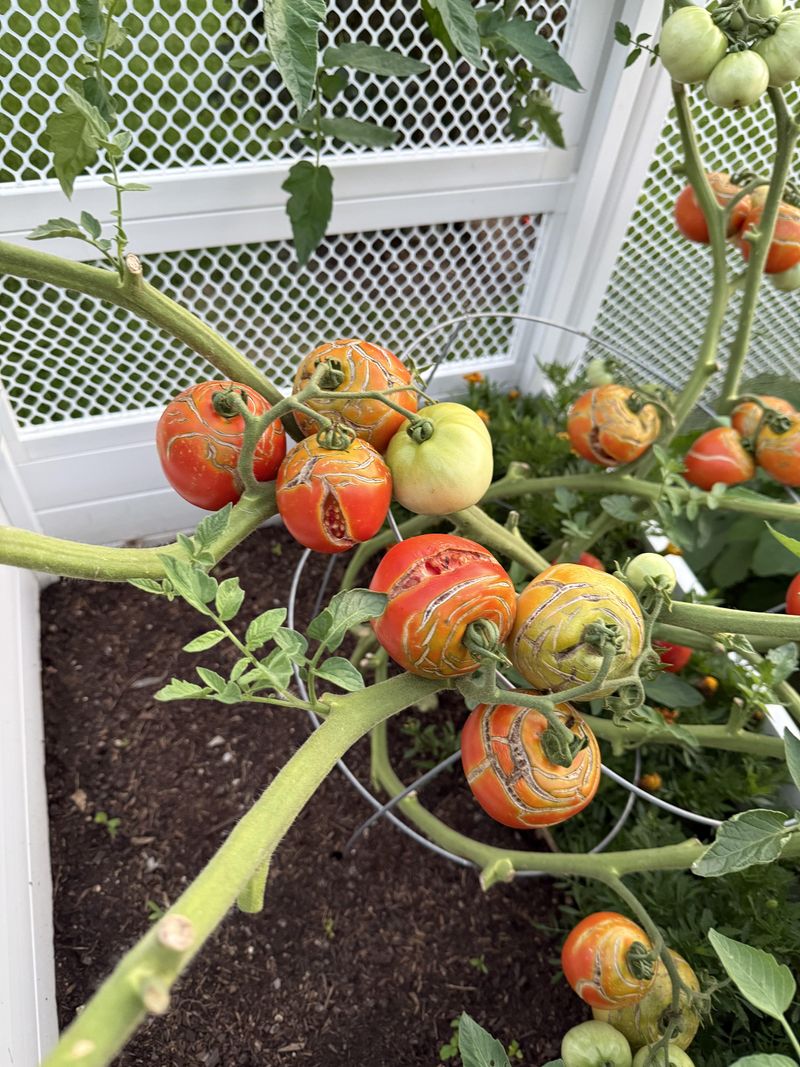
August makes a five-minute tomato check surprisingly valuable.
Fruit can move from the first blush to a much deeper color over a short stretch of warm weather. Penn State’s harvest stages give you a simple visual system, from breaker through pink, light red, and red.
Walk the patch once a day at peak harvest.
Start with the clusters that looked close yesterday. Check the blossom end, then scan the shoulders for fresh cracks or soft damage. Pick sound fruit once it reaches the stage that fits your weather plan.
Use the forecast as a second clue.
A dry week with no storm threat gives you room to leave fruit longer. A strong rain after dry soil gives breaker and later fruit a reason for an earlier trip to the kitchen because abrupt moisture changes can raise crack risk.
Keep the routine short.
You do not need a spreadsheet, colored tags, or a tomato command center on the refrigerator. A small basket near the door and one daily pass can catch the fruit before a crack, animal bite, or overripe patch takes the choice away.
Look at leaves and stems while you are there too.
A quick crop check can reveal pest or disease symptoms early, though fruit color remains the focus of this particular trick.
August rewards the gardener who notices small changes.
Yesterday’s green tomato can become today’s breaker-stage harvest, and that tiny color shift may be all the warning you need before the next wet forecast reaches Pennsylvania.