This Is The Tiny Pest Destroying Boxwoods In Pennsylvania Yards This Season
Pennsylvania boxwood owners are dealing with something this season that a lot of them haven’t encountered before, and the damage it causes can escalate from barely noticeable to genuinely alarming in a surprisingly short amount of time.
Hedges and foundation plantings that have looked healthy and dependable for years are showing up with chewed foliage, webbing, and dieback that doesn’t match the usual suspects most gardeners know how to identify and treat.
A relatively new invasive pest has been making its way through Pennsylvania landscapes, and boxwoods are its primary target. It arrived quietly, established itself faster than anyone anticipated, and is now showing up in more yards and neighborhoods with each passing season.
The frustrating part is that the early signs are subtle enough to dismiss as general stress or minor cosmetic damage, which gives the infestation extra time to dig in before anyone takes action.
Knowing exactly what to look for right now is the most valuable thing Pennsylvania boxwood growers can have heading into this season.
The Tiny Pest Turning Healthy Boxwoods Brown
Something sneaky is happening inside boxwood shrubs across Pennsylvania, and most homeowners have no idea until the damage is already done.
The Box Tree Moth, known scientifically as Cydalima perspectalis, is a small but aggressive invasive pest that has been steadily spreading through the northeastern United States.
Its caterpillars are the real troublemakers, feeding heavily on boxwood foliage and leaving behind a trail of destruction that can shock even experienced gardeners.
Originally from East Asia, the Box Tree Moth was first detected in North America around 2018 near Toronto, Canada. Since then, it has spread into several U.S. states, including parts of Pennsylvania, where boxwoods are incredibly popular in home landscapes.
Gardeners are suddenly noticing severe browning and thinning in shrubs that looked perfectly healthy just weeks before.
What makes this pest especially tricky is how fast an infestation can grow. A single female moth can lay dozens of eggs at one time, and the caterpillars hatch quickly and start feeding almost immediately.
Within just a few weeks, a moderate infestation can turn into a full-blown crisis. Because the damage often starts deep inside the shrub where it is hard to see, many Pennsylvania homeowners do not realize there is a problem until the outer branches are already turning brown.
Staying alert and checking your boxwoods regularly is the only reliable way to catch this pest before the damage becomes overwhelming.
Why Box Tree Moths Are So Destructive
Few garden pests can do as much damage as quickly as the Box Tree Moth caterpillar. From the moment these tiny larvae hatch, they are on a mission to eat.
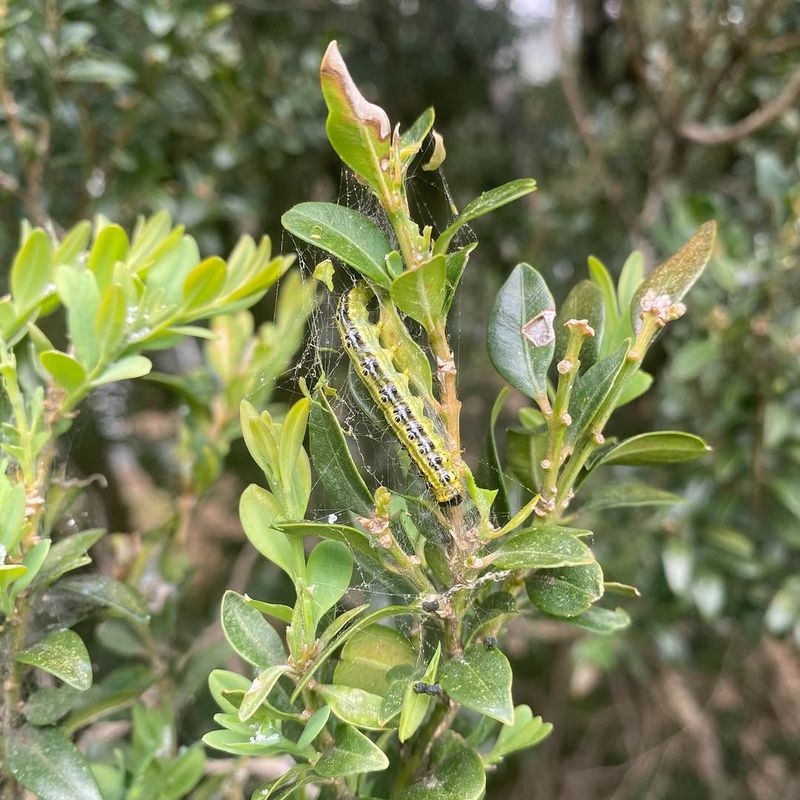
They chew through boxwood leaves aggressively, often targeting both the surface tissue and the inner structure of the leaf, leaving behind what gardeners call skeletonized foliage.
When leaves are stripped down to just their veins, they can no longer absorb sunlight or produce energy for the plant.
Repeated attacks over a single growing season are what make this pest truly devastating. Boxwoods are tough shrubs, and a healthy one can sometimes recover from mild feeding damage.
Your Pennsylvania Garden Changes Every Week. Your Plan Should Too.
Gardening in Pennsylvania changes quickly throughout the season. Every Friday you’ll receive a simple weekly plan showing exactly what to plant, prune, fertilize, harvest, and protect so you never miss the right timing.
But when caterpillars return in wave after wave, the shrub has no time to bounce back. Each generation of larvae weakens the plant a little more, stripping away its ability to grow new leaves and sustain itself through the season.
Severe infestations can completely defoliate a boxwood, leaving nothing but bare brown stems behind. In Pennsylvania yards where boxwoods are used as foundation plantings, hedges, or topiaries, this level of damage can be heartbreaking and expensive to address.
What took years to grow can look devastated in just a matter of weeks. The Box Tree Moth does not limit itself to one shrub either.
Once caterpillars finish one plant, they move on to neighboring boxwoods, spreading the damage across entire hedgerows.
Understanding just how aggressive this feeding behavior is should motivate every Pennsylvania gardener to take this pest seriously from the very start of the growing season.
The Warning Signs Hiding Inside Your Shrubs
Most people walk past their boxwoods every day without ever looking inside them. That is exactly where the Box Tree Moth prefers to hide.
The earliest warning signs of an infestation are tucked deep within the shrub, far from plain sight. Knowing what to look for and where to look can help Pennsylvania gardeners catch this pest before it spreads out of control.
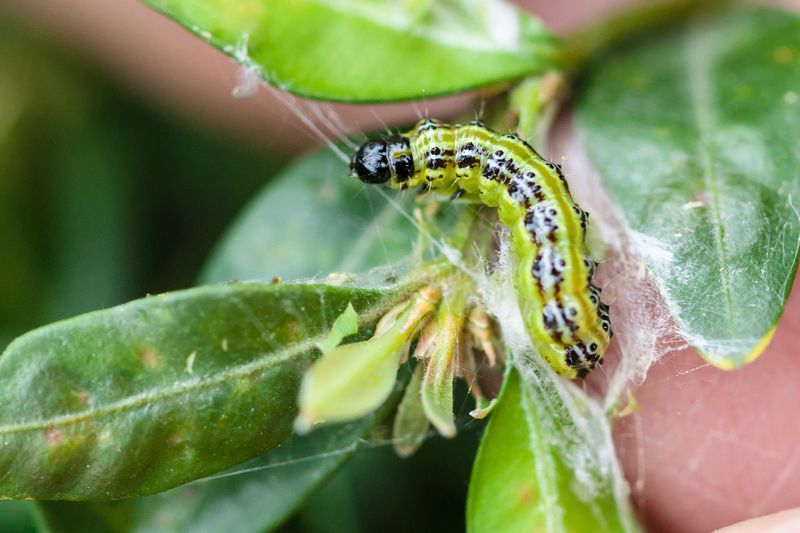
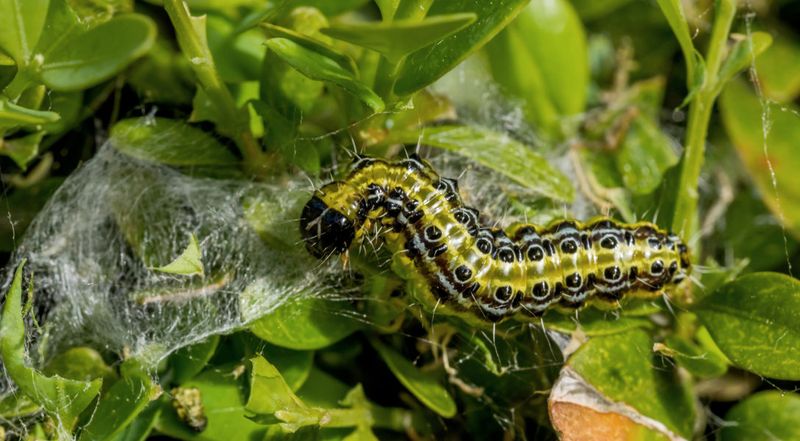
Webbing is one of the first clues. Box Tree Moth caterpillars spin silky threads as they feed, creating a fine web-like material that coats the inner branches and leaves.
If you part the outer foliage and spot this webbing, take a closer look right away. Chewed or skeletonized leaves are another red flag.
Leaves that look lacy or papery, with only the veins remaining, are a strong sign that caterpillars have been feeding there recently.
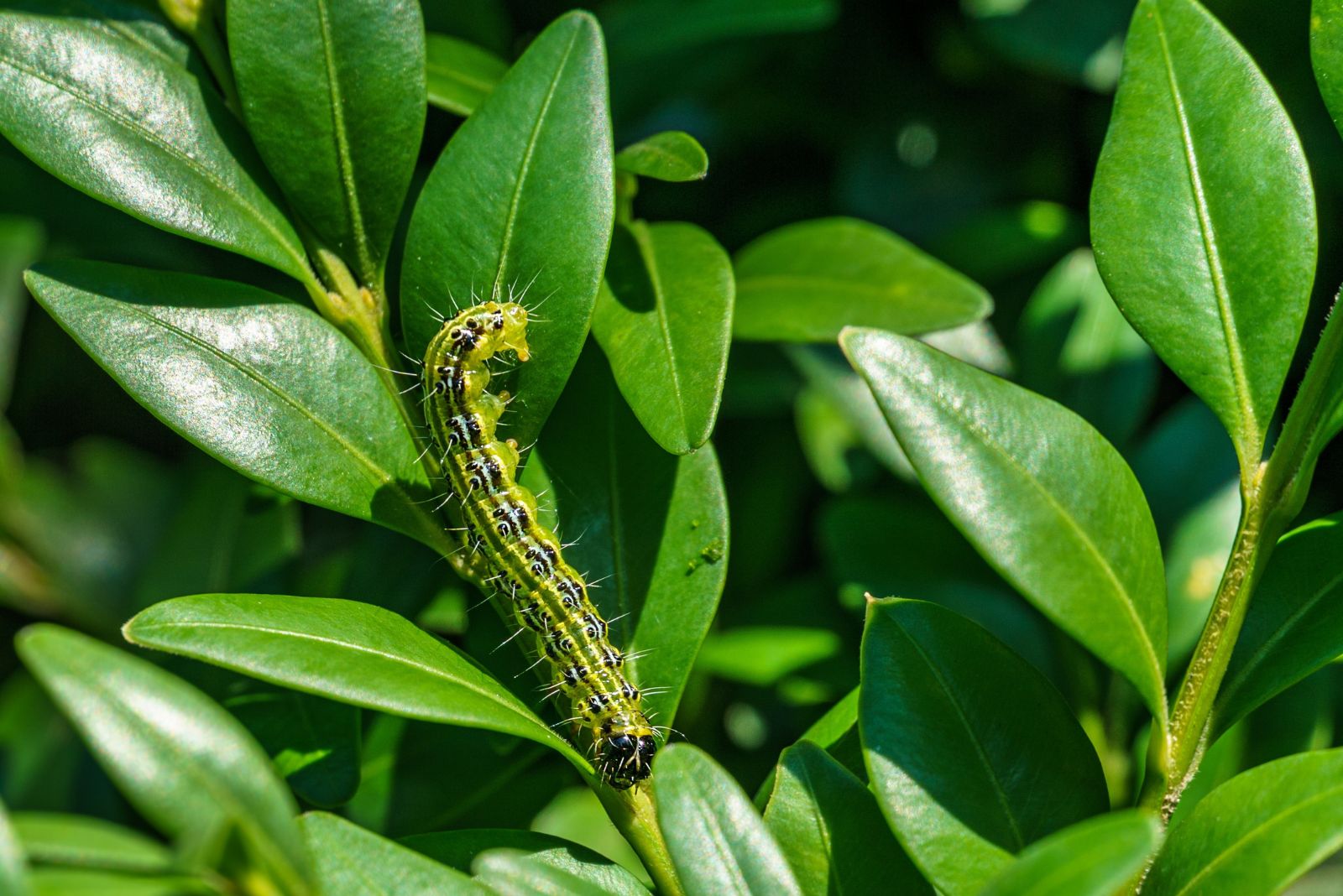
The caterpillars themselves are also identifiable if you look carefully. They are pale green with black stripes running along their bodies and small black dots scattered across their sides.
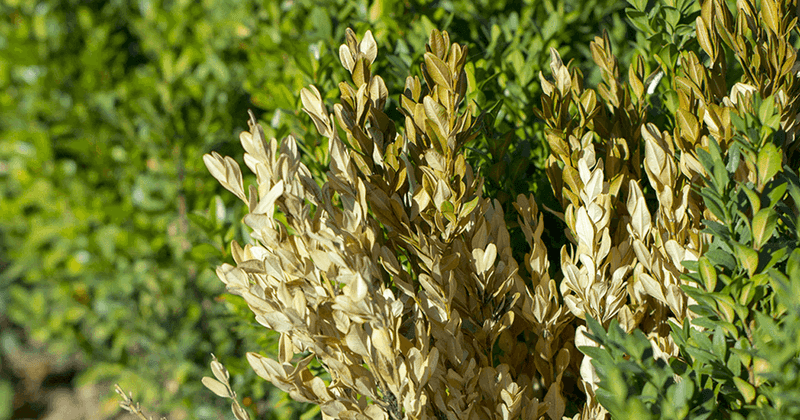
They blend in surprisingly well with boxwood foliage, so slow and careful inspection matters. As the infestation grows, you will start to notice browning branches and thinning foliage on the outer parts of the shrub.
By the time the outside looks bad, the inside is usually already heavily damaged. Pennsylvania gardeners should make a habit of parting their boxwood branches at least once a week during spring and summer, using gloved hands to gently separate the growth and peer inside for any of these telltale signs.
Why Pennsylvania Yards Are Vulnerable Right Now
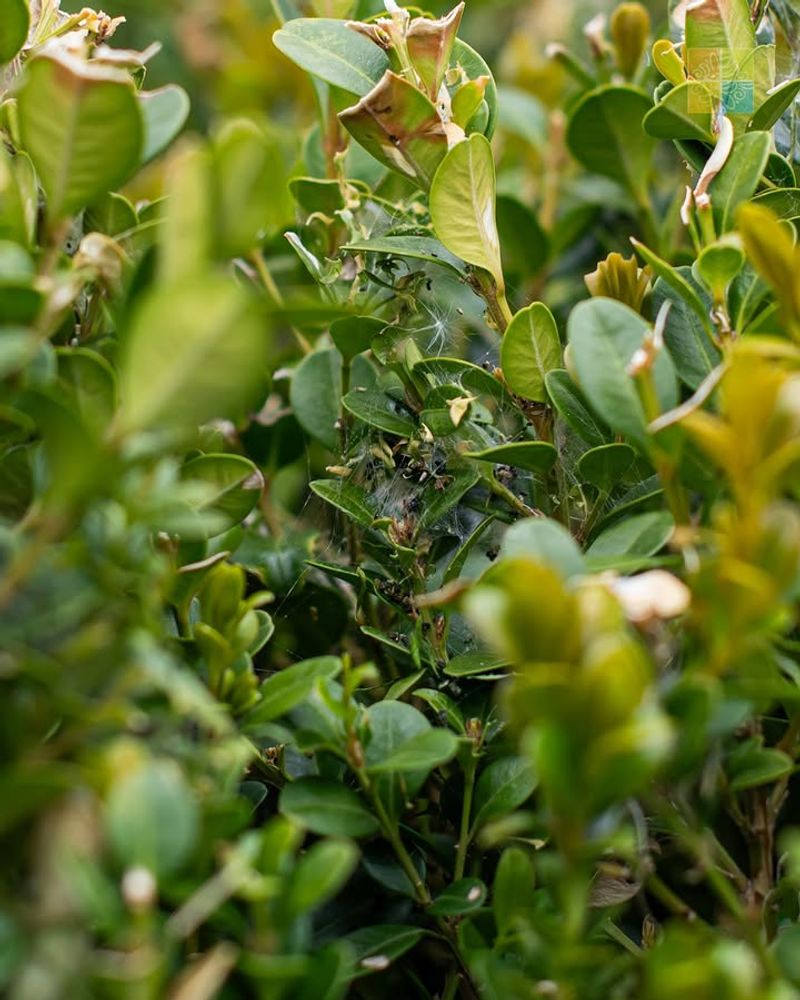
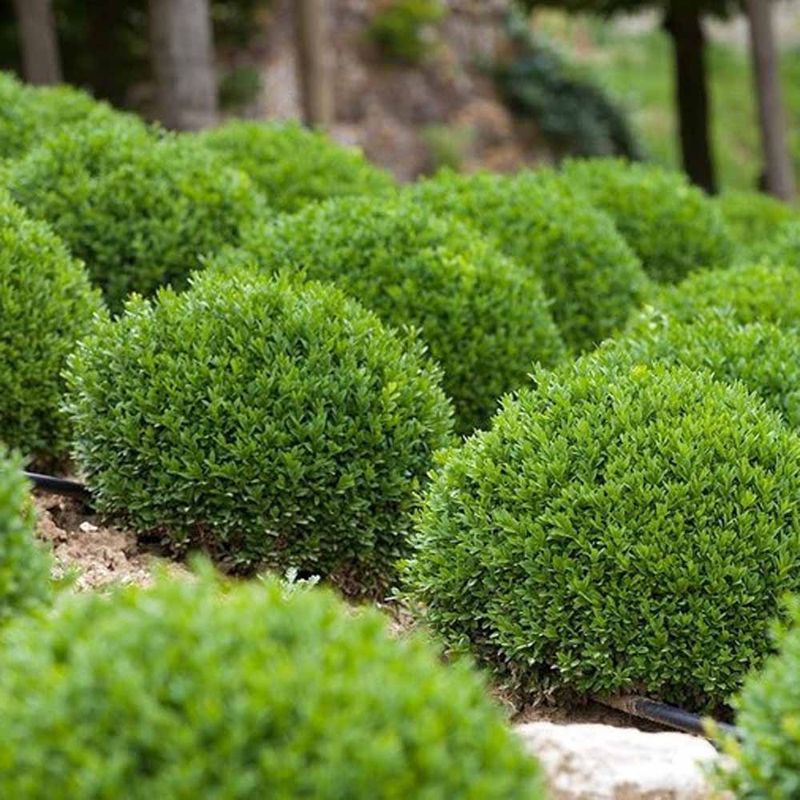
Pennsylvania is home to millions of boxwood shrubs. Walk through almost any neighborhood in the state and you will spot them lining driveways, framing front doors, and filling garden beds.
They are one of the most popular landscaping plants in the region, prized for their year-round greenery, neat shape, and low-maintenance reputation. Unfortunately, that widespread popularity is exactly what makes Pennsylvania so vulnerable to the Box Tree Moth right now.
Spring temperatures across Pennsylvania create ideal conditions for pest activity to ramp up fast. As the weather warms, Box Tree Moth eggs hatch and caterpillars begin feeding with serious energy.
The timing lines up perfectly with the shrubs putting out new growth, which is the most tender and attractive foliage for hungry larvae. Warmer-than-average springs can speed up the pest’s life cycle even further, meaning more generations can develop within a single growing season.
Dense, tightly pruned boxwoods are especially attractive to this moth. The thick inner growth creates a sheltered, humid environment that caterpillars love.
It also makes it harder for predators and gardeners to spot them early. Many Pennsylvania homeowners prune their boxwoods into tight balls or formal hedges, which actually creates more hiding space for pests to thrive undisturbed.
The combination of an enormous number of host plants, favorable spring weather, and dense shrub structure makes Pennsylvania yards a prime target this season.
Gardeners across the state should be on high alert, especially those in areas where the Box Tree Moth has already been confirmed in nearby counties or neighboring communities.
What Gardeners Should Do If They Spot It
Spotting the Box Tree Moth early is a huge advantage, but knowing what to do next matters just as much. The first and most important step is to inspect your shrubs thoroughly and regularly.
Do not just glance at the outside of the plant. Get in close, part the branches, and look deep inside for webbing, chewed leaves, or the caterpillars themselves.
Catching an infestation in its early stages gives you far more options for managing it effectively.
If you find heavily infested sections of growth, pruning them out can help slow the spread. Use clean, sharp pruning shears to remove the affected branches and place all of the clippings directly into sealed plastic bags.
Do not leave infested plant material on the ground near your shrubs or toss it into an open compost pile. The caterpillars can survive and continue spreading if debris is not properly disposed of. Bag it up and put it in the trash right away.
Before reaching for any treatment products, make absolutely sure you have correctly identified the pest. Box Tree Moth caterpillars have specific features that set them apart from other common caterpillars found in Pennsylvania gardens.
Misidentifying the pest can lead to using the wrong treatment, which wastes time and money while the actual infestation continues to grow. If you are unsure, contact your local Pennsylvania cooperative extension office for help with identification.
Once confirmed, there are targeted biological and chemical treatment options available that are effective against Box Tree Moth caterpillars when applied at the right time in the pest’s life cycle.
How To Protect Boxwoods Through The Rest Of The Season
Protecting your boxwoods for the rest of the season starts with one simple habit: keep watching. Early monitoring is the single most powerful tool Pennsylvania gardeners have against the Box Tree Moth.
Set a regular schedule to inspect your shrubs every week, especially during the warmer months when caterpillar activity is at its peak. Catching a new infestation before it takes hold is far easier than trying to manage one that has already spread across your entire hedge.
Keeping your shrubs healthy and well-spaced also plays a big role in prevention. Boxwoods that are properly fertilized, watered, and pruned to allow good airflow are more resilient and harder for pests to overwhelm.
Avoid over-pruning into extremely tight shapes that create dense interior spaces where caterpillars can hide and feed undetected. Giving your plants a little breathing room goes a long way toward making them less appealing to pests.
Watch closely for repeat infestations as the season continues, since the Box Tree Moth can produce multiple generations in a single year in Pennsylvania’s climate. A shrub that looks recovered in June can be under attack again by August if monitoring stops.
Finally, if your boxwoods have suffered serious damage season after season and are struggling to recover, it may be worth considering alternative shrubs that are not targeted by this pest. Native hollies, inkberry, or Japanese holly can offer similar visual appeal without the vulnerability.
Switching to pest-resistant plants in heavily affected areas of your Pennsylvania yard is a practical and forward-thinking solution that many gardeners are already exploring this season.