This Is What Florida Palms Need in November Instead of Having Their Brown Fronds Cut Off
A palm can pull nutrients back out of its own yellowing leaves and reuse them in new growth. That half-faded frond hanging low is often still delivering supplies to the rest of the tree.
What I find interesting is how often those leaves get chopped anyway. Drive through any Florida neighborhood in fall and you’ll spot palms trimmed down to a few stiff spikes, like a feather duster after a rough week.
The way I see it, most of us mean well. Brown leaves look messy, and a tidy yard feels like a cared-for yard.
Yet University of Florida researchers have spent years showing that the tidy look can come with a hidden price.
You might be surprised by how little work a happy palm needs this month. So what should those pruning saws be doing instead, and what does your tree quietly want from you?
1. Those Yellowing Palm Fronds Are Busier Than They Look
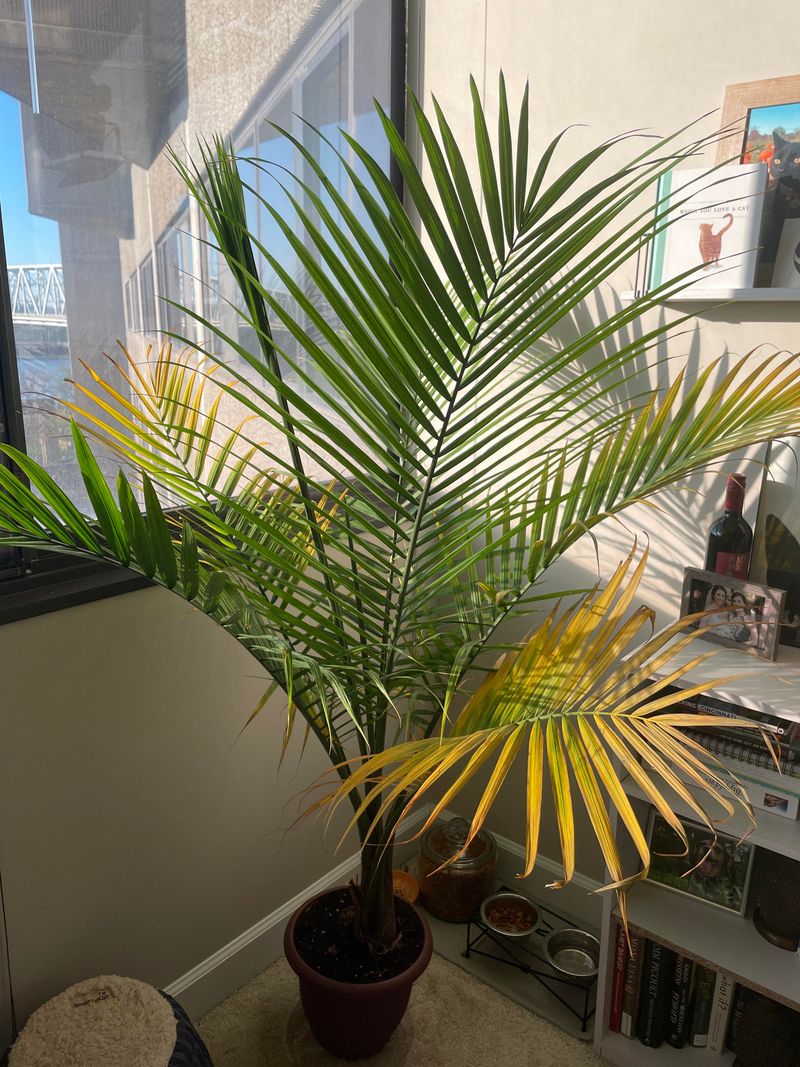
Older palm leaves work like a savings account. As a frond ages, the tree moves mobile nutrients out of it and sends them up to the newest leaves near the bud.
Potassium is the big one. Many Florida soils are sandy and low in this nutrient, so palms lean hard on the reserves stored in their older fronds.
Magnesium travels the same route, which is why lower leaves often turn yellow first.
When you cut a yellow or partly brown frond, you take away that stored supply. The palm then pulls the nutrients from the next-oldest leaf instead.
That leaf yellows sooner, gets cut too, and the cycle keeps going.
UF/IFAS specialists point out that heavy removal of these older leaves can speed up potassium deficiency. Over time, a deficient palm may show a shrinking crown, a narrow pencil-point trunk, and weak new leaves.
I find this fascinating because the very leaves people see as clutter are doing quiet, useful work. A frond with even a strip of green is still making energy and feeding the tree.
Here’s a simple rule to remember. If any green is left, the frond is still on duty.
Let it finish its job, and your palm will thank you with a fuller, healthier head of leaves next year.
2. Wait Until Fronds Turn Fully Brown and Crispy Before Cutting
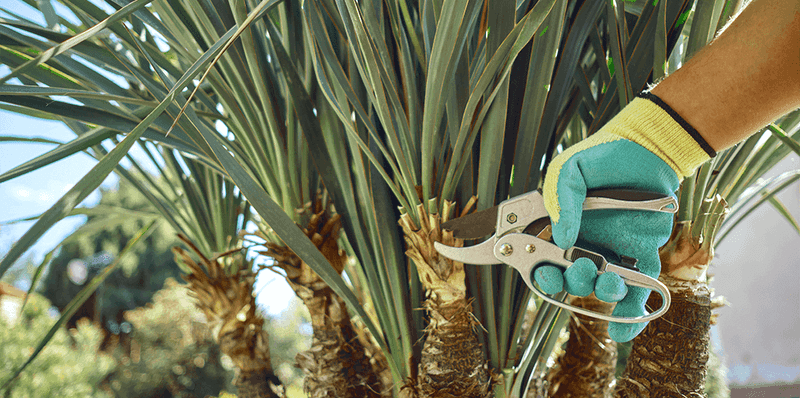
Patience is the best pruning tool you own. The safest frond to remove is one that is brown from tip to base, dry, and easy to snap.
At that stage, the palm has already reclaimed what it can. Taking the frond off now costs the tree nothing, and your yard looks neater.
Broken leaves and fronds with clear disease spots can go too. Flower and fruit stalks are fair game as well, especially on palms that drop messy fruit near patios or pools.
When you cut, aim close to the trunk but avoid gouging it. Leaving a small stub is better than slicing into living tissue, since wounds give fungi and pests an easy way in.
Clean tools matter more than many people expect. Ganoderma butt rot and fusarium wilt can spread on dirty blades, so wipe saws with a disinfectant between palms.
Chain saws are hard to sanitize, which is why many arborists prefer hand saws for palm work.
Skip the climbing spikes if you hire help. Spikes punch holes into palm trunks, and those holes do not heal like they would on an oak.
One or two clean cuts in November is plenty. Your palm does not need a full makeover, just a light, thoughtful touch.
3. Skip That Hurricane Cut on Your Sabal Palm
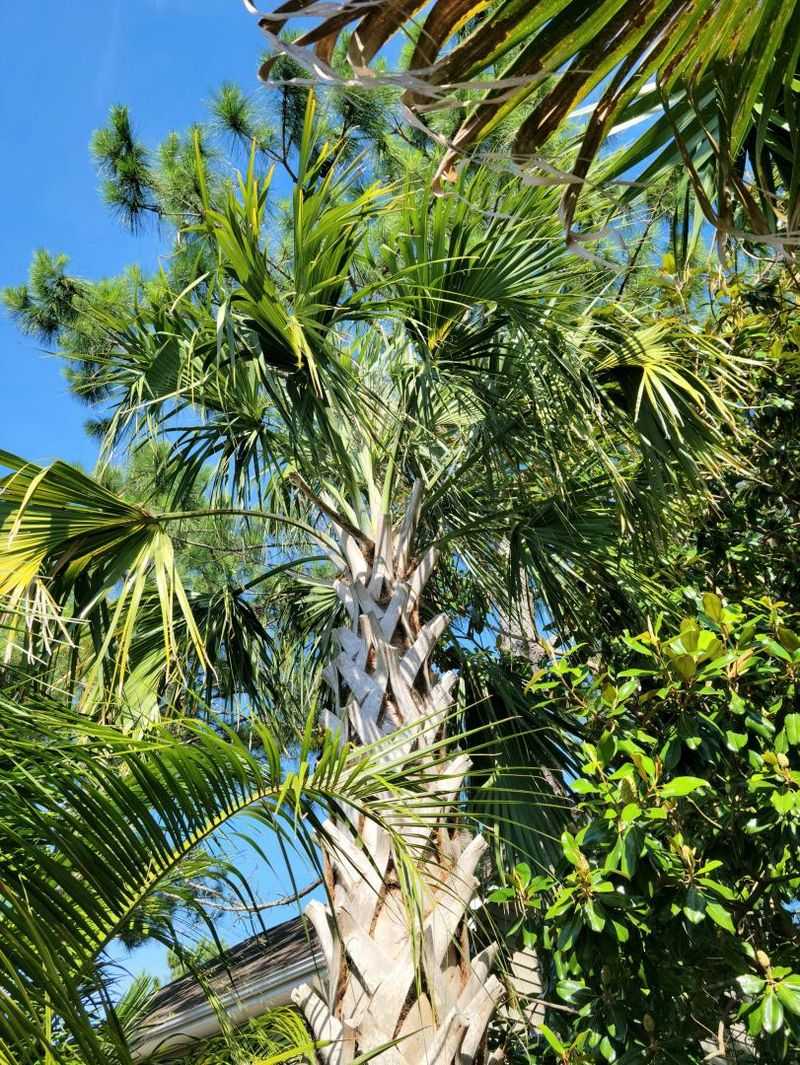
Plenty of folks swear the hurricane cut keeps palms safe in storms. Research tells a different story.
This style strips a palm down to a few upright fronds in a ten-to-two clock shape or tighter. UF/IFAS studies after major hurricanes found that over-pruned palms did not hold up better.
In many cases, they fared worse.
A full crown helps protect the single growing bud at the top. That bud is the only point a palm can grow from, and if it gets badly damaged, the whole tree can decline.
Leaves around it act like a cushion against wind and cold.
Fewer leaves also means less food. Every green frond you remove cuts the palm’s ability to make energy, which slows growth and weakens the trunk over time.
Over-pruned palms often develop that narrow pencil-point trunk where the stem thins out. Once that happens, the narrowed section stays thin for life.
It becomes a permanent weak spot.
I can see why the look caught on, since it seems clean and deliberate. But a palm with a round, full head of green leaves is the stronger tree.
If you want storm safety, remove only loose, dead fronds and coconuts or heavy fruit clusters that could fly in high winds.
4. Palm Fertilizer Is the Real Fix for Yellow Leaves
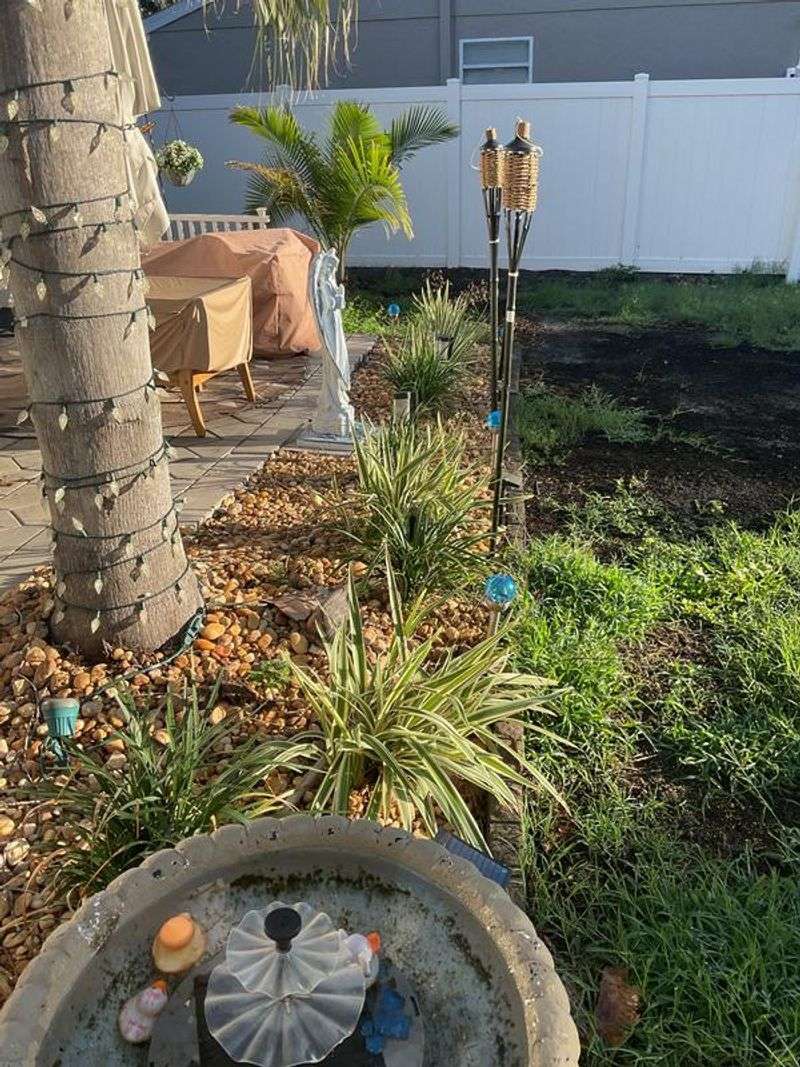
Feed the roots, and you fix many of the problems people try to trim away. Yellow or speckled lower fronds often point to a nutrient shortage, not old age.
UF/IFAS recommends a palm fertilizer with an analysis like 8-2-12-4Mg. Look for a bag where all the nitrogen, potassium, and magnesium come in controlled-release form.
It should also include micronutrients such as manganese, iron, and boron.
Spread it evenly under the canopy, not piled against the trunk. Palm roots reach far out, so a wide scatter reaches more of them.
Light watering afterward helps move it into the soil.
November feeding is fine across much of the state, especially in South Florida where palms keep growing. In North Florida, many gardeners follow their regular schedule, often spaced about three months apart during the growing season.
Check local rules too. Several counties and cities have fertilizer ordinances, though most restrictions focus on the summer rainy season rather than fall.
Avoid high-nitrogen lawn fertilizer near palms. Too much nitrogen without enough potassium can actually make potassium deficiency worse.
You won’t see old spotted fronds turn green again. The payoff shows in the new leaves that emerge over the next several months, fuller and healthier than before.
5. Cooler Weather Means Your Palm Wants Less Water
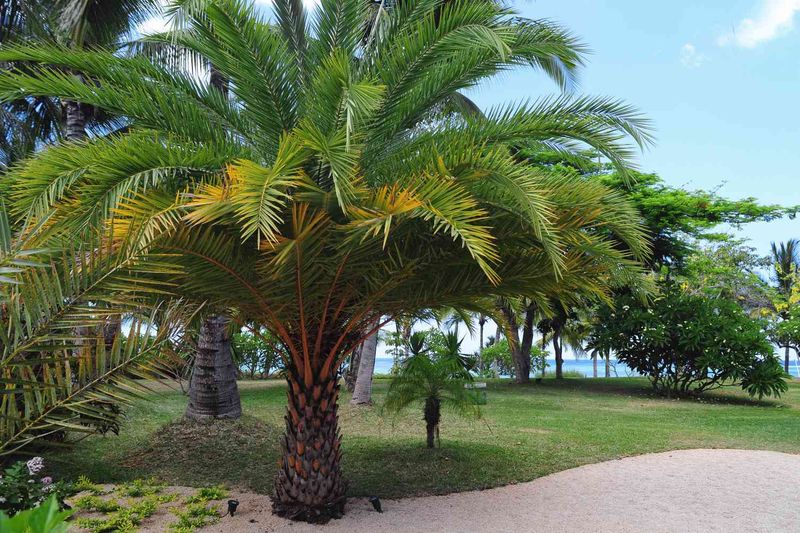
November marks the start of Florida’s dry season, and palms slow down with the cooler days. Their thirst drops right along with the temperature.
Established palms in the ground rarely need much extra water this time of year. Rain and cooler air usually cover a good share of their needs.
Too much irrigation can leave roots sitting in soggy soil, which invites rot.
A simple test helps. Push a trowel or long screwdriver into the soil a few inches down.
If it feels moist, wait. If it feels dry, water slowly and deeply rather than giving a quick sprinkle.
Newly planted palms are another story. They still need regular water for several months while their roots spread, so keep an eye on them even in fall.
Sprinkler systems are the sneaky culprit here. Many people set their timers in July and forget them, so palms get summer amounts in late autumn.
Adjust the schedule, and follow any local watering day limits set by your water management district.
Don’t let the base of the trunk stay wet either. Keep sprinkler heads aimed away from the trunk to reduce fungal trouble.
A palm that dries out a little between waterings tends to be a sturdier palm.
6. A Mulch Ring Around the Palm Trunk Helps More Than You Think
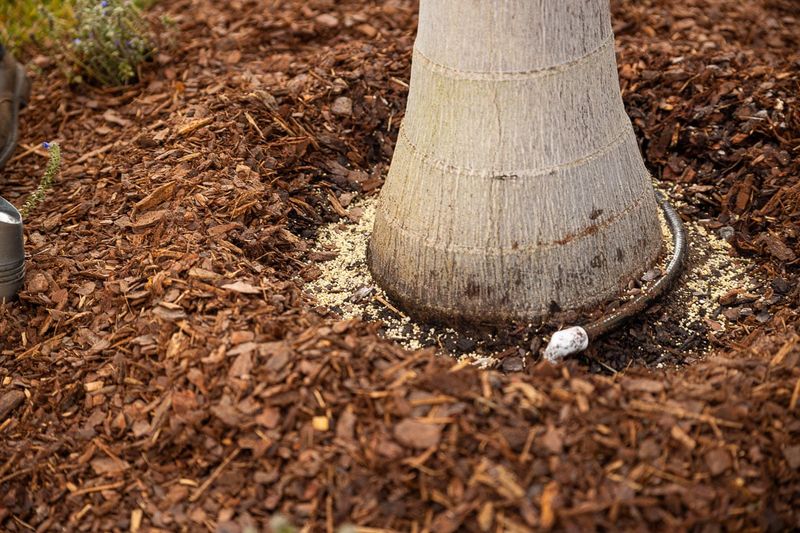
Grass and palms are not great roommates. Turf competes for water and nutrients, and lawn equipment loves to chew on palm trunks.
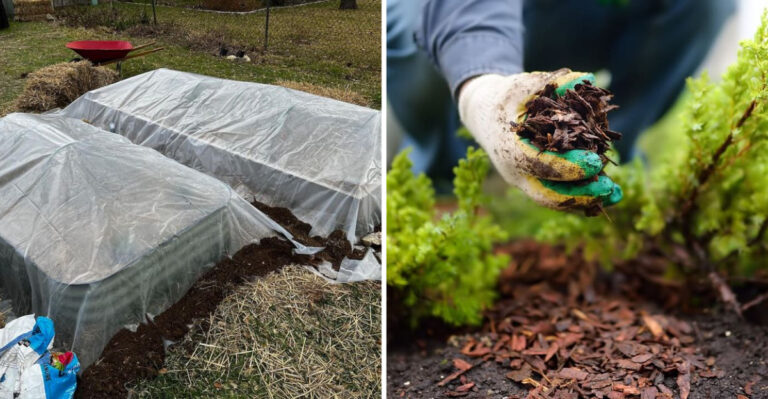
A wide mulch ring solves both problems at once. Spread two to three inches of mulch in a circle under the palm, ideally reaching several feet out.
Keep it pulled back a few inches from the trunk so moisture doesn’t sit against the bark.
Weed trimmer damage is more serious on palms than many people realize. Palm trunks can’t heal wounds the way most trees do.
Every nick stays, and those scars can let in fungi.
Mulch also keeps soil temperatures steadier. That’s helpful when a chilly front swings through in late fall and the roots get a bit of insulation.
Choose a mulch that won’t steal from the landscape. Pine bark, pine straw, or eucalyptus mulch work well.
UF/IFAS suggests avoiding cypress mulch, since harvesting it can affect wetland forests.
Fertilizer sinks in nicely through a mulch layer too. Just spread your palm fertilizer on top of the mulch and water it in.
I never get tired of how much this small step improves a palm. It’s cheap, quick, and keeps your tree happier all winter long.
7. Cold Snaps Can Sneak Up on Tender Palms
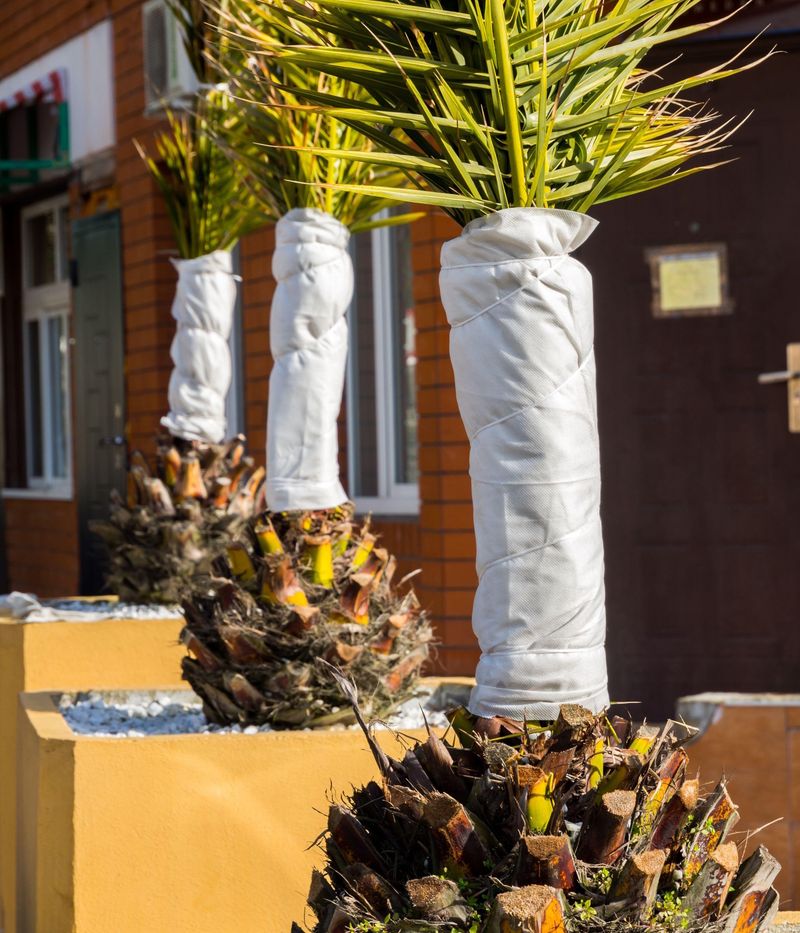
Florida winters are mild, but a few nights each year can surprise you. North and Central Florida see occasional frosts, and even South Florida gets a cool dip now and then.
Hardiness varies a lot by species. Sabal palms, our state tree, and needle palms handle cold well.
Royal palms, coconut palms, and foxtail palms are much more sensitive and can show damage when temperatures drop near freezing.
This is one more reason to leave the crown full. Older fronds help shield the bud, and cold-damaged leaves can still protect the center through the rest of winter.
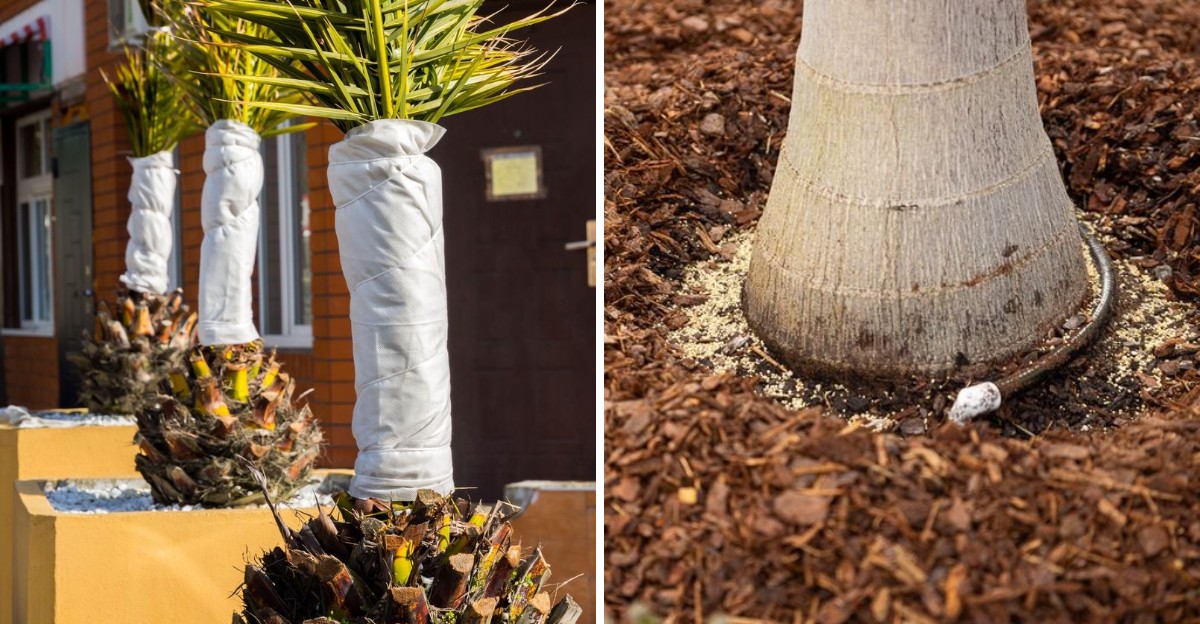
If a cold night is forecast, water the soil a day ahead, since moist ground holds heat better than dry ground. Cover small palms with frost cloth reaching to the ground.
Remove it once the sun warms things up.
Potted palms have it easiest. Roll them into a garage or under a covered porch until the chill passes.
After a freeze, resist trimming right away. Browned leaves may look rough, yet the tree might still be pushing out new growth.
UF/IFAS advises waiting until warm weather returns and new fronds appear before removing damaged ones.
Healthy, well-fed palms bounce back from cold far better than stressed ones.
8. Brown Palm Fronds Can Still Earn Their Keep
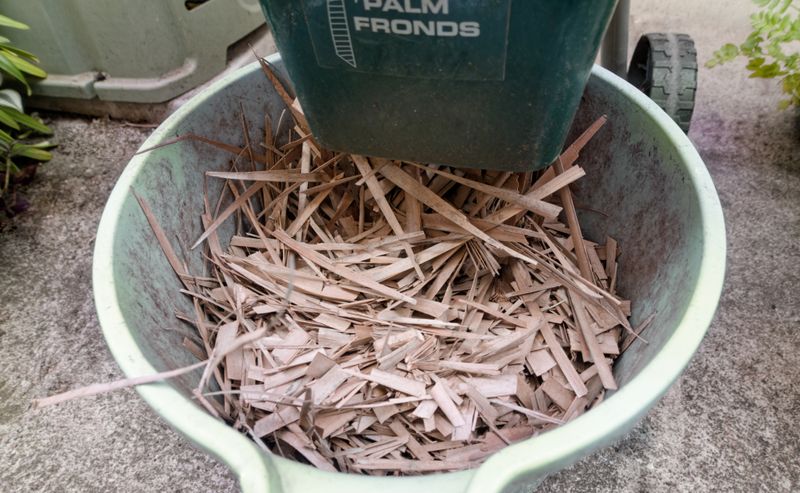
Once a frond is truly spent, it still has value. You just have to think of it as a resource rather than trash.
Dry palm fronds are tough and fibrous, so they break down slowly. Cutting them into smaller pieces helps a lot.
Mixed into a compost pile with grass clippings and kitchen scraps, they add bulk and airflow.
Chipped fronds can also serve as a rough mulch around shrubs or along garden paths. Some gardeners even tuck whole fronds under hedges where nobody sees them, letting nature handle the rest.
One caution applies here. If a palm had Ganoderma, lethal bronzing, or another disease, skip composting those leaves.
Bag them for yard waste pickup instead, so you don’t spread trouble to other palms.
Wildlife appreciates leftover fronds too. Small brush piles in a back corner can give lizards and insects a hiding spot, which helps birds find food.
Here’s my favorite takeaway for November. Your palm needs fertilizer, sensible watering, a mulch ring, and a little cold awareness far more than it needs a trim.
Let the green fronds stay, remove only the crispy brown ones, and put those to work. Your tree and your garden both come out ahead.