The Shade Tree Root System That Can Crack Your Florida Driveway Faster Than You Think
Your driveway looks solid right now. One popular Florida shade tree could put a crack straight through it within a few years.
Homeowners plant this tree for the same reason every time, fast growth and a canopy that throws shade almost immediately. What most people never check is what’s happening underground while that canopy fills in above.
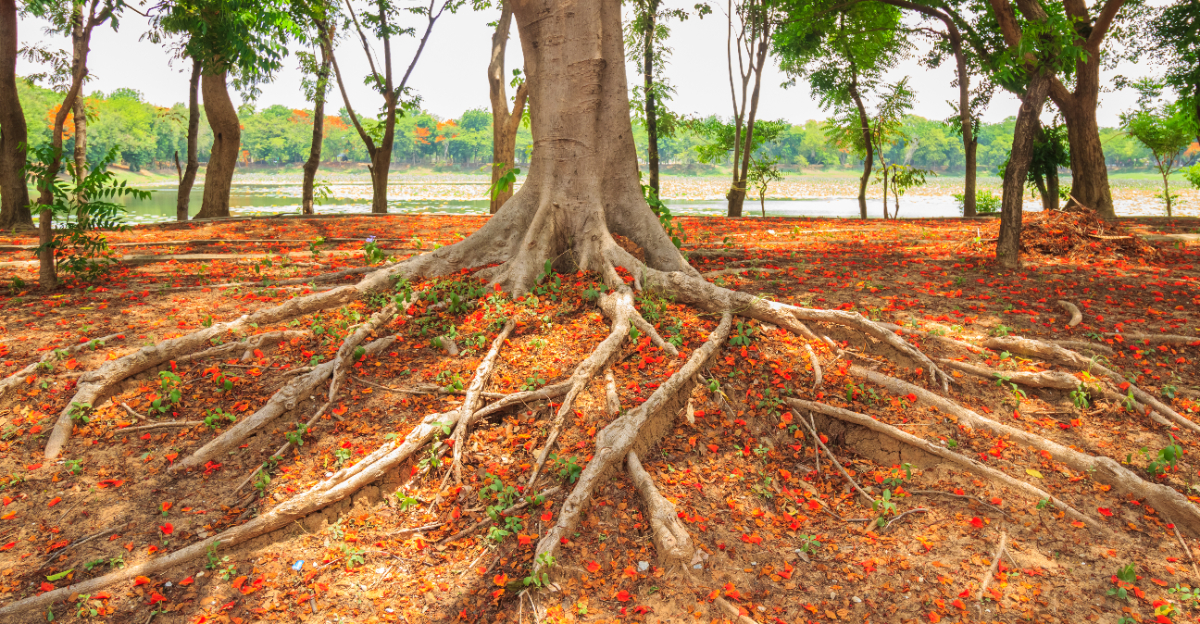
Roots spread aggressively near the surface, hunting for water and oxygen in Florida’s dense, often compacted soil. Concrete doesn’t stand a chance against that kind of pressure over time.
Driveways, sidewalks, even foundation edges planted too close start showing damage years before most homeowners expect any trouble at all. Distance from your home decides everything with this tree.
Get the placement right, and you get the shade without the repair bill. Get it wrong, and your driveway becomes the tree’s next target.
1. Royal Poinciana Roots Stay Closer To The Surface
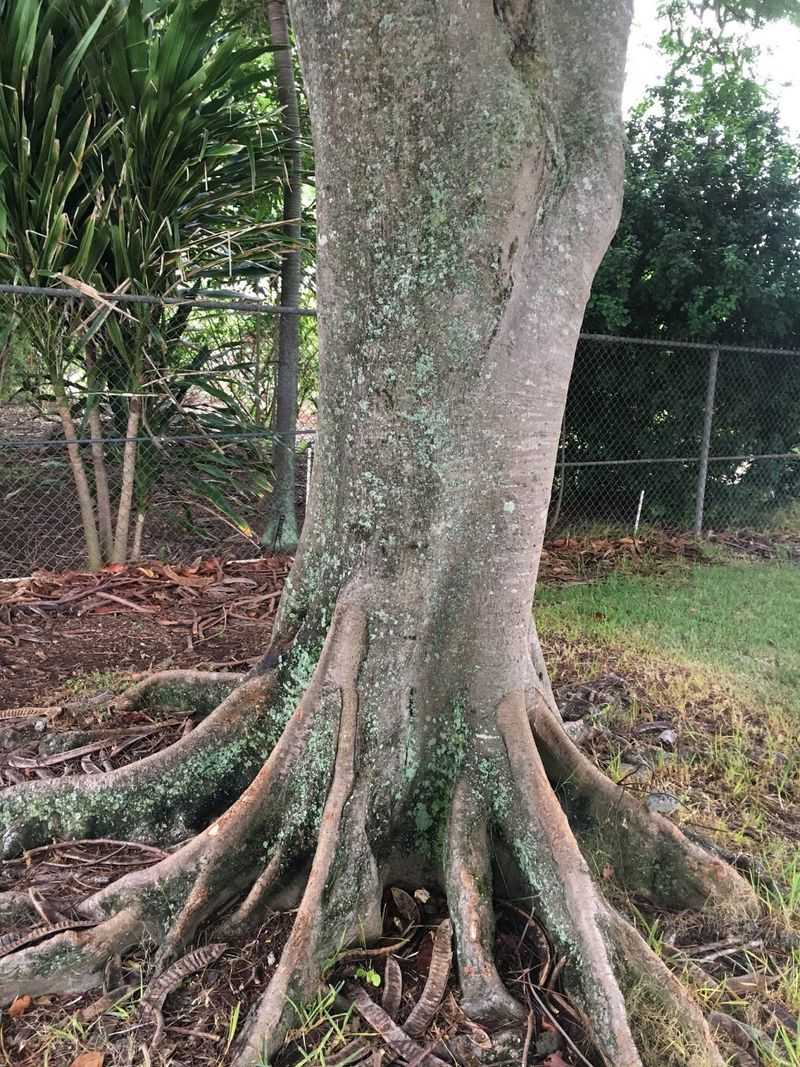
Lift a corner of the soil near a mature royal poinciana and you may be surprised by what you find. Large roots spreading outward close to the surface, sometimes visible above ground, are a normal part of how this tree develops.
According to UF/IFAS resources, royal poinciana tends to produce lateral roots that expand near the upper soil layers rather than driving straight down.
Roots do not have to punch directly through solid concrete to cause pavement problems. As they grow wider over the years, they can press against the underside or edges of a slab.
That slow, steady expansion can lift sections, create cracks, or shift pavement out of alignment.
None of this means the tree is behaving badly. Roots follow available oxygen, moisture, and loose soil.
Near the surface is simply where those conditions are often best. The real issue appears when a homeowner plants a large tree in a spot that does not have enough room for normal root development.
Pavement sits right at the boundary where roots want to grow. A young tree planted near a Florida driveway edge may look harmless for several years.
Over time, as the root system expands to support a growing canopy, the distance between roots and pavement shrinks. Choosing a planting site with that future growth in mind is far more practical than dealing with displaced concrete later.
2. Fast Growth Can Bring Root Conflicts Sooner
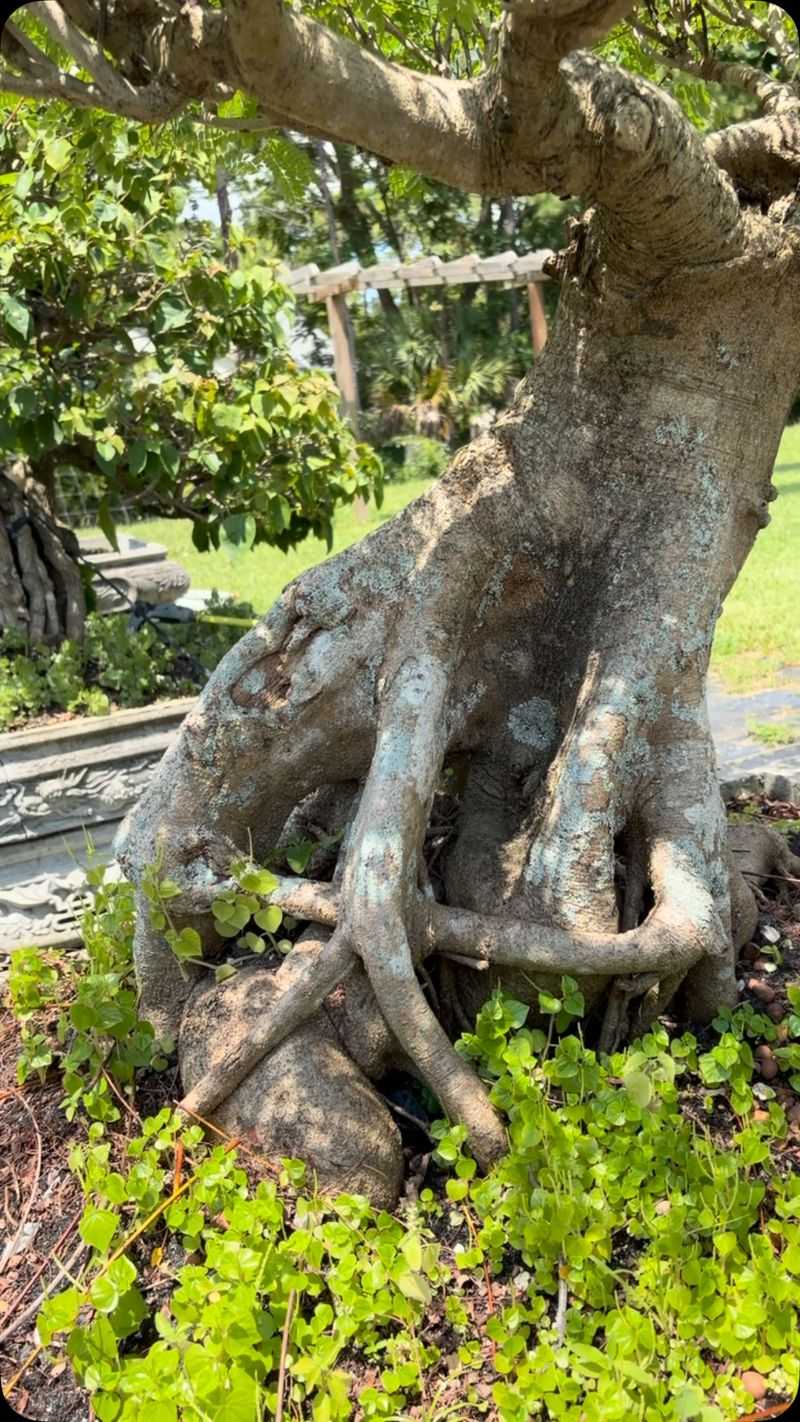
A newly planted royal poinciana can look perfectly reasonable next to a driveway. The trunk is slim, the canopy is modest, and the surrounding pavement seems to have plenty of clearance.
That picture can change faster than most homeowners expect.
UF/IFAS describes royal poinciana as a relatively fast-growing tree. A rapidly expanding canopy needs a root system that keeps pace.
More canopy means more leaves, more weight, and more water demand. All of that requires a larger, more extensive root system working below the surface.
Faster growth does not guarantee pavement damage. No one can offer a five-year or ten-year countdown with any accuracy.
How quickly root conflicts develop depends on several factors working together. These include planting distance, soil type, moisture, available root space, tree vigor, and driveway construction.
Your Florida Garden Changes Every Week. Your Plan Should Too.
Gardening in Florida changes quickly throughout the season. Every Friday you’ll receive a simple weekly plan showing exactly what to plant, prune, fertilize, harvest, and protect so you never miss the right timing.
A tree planted in rich, well-irrigated soil with plenty of open ground may expand more vigorously than one in a drier, more restricted spot. Pavement built over compacted fill may behave differently than one poured over prepared base material.
All of these variables interact. The practical takeaway is simple: fast growth means less time before a poorly placed tree outgrows the space around it.
Picking the right location from the start saves considerable trouble down the road.
3. Ten Feet From Pavement May Still Feel Surprisingly Close
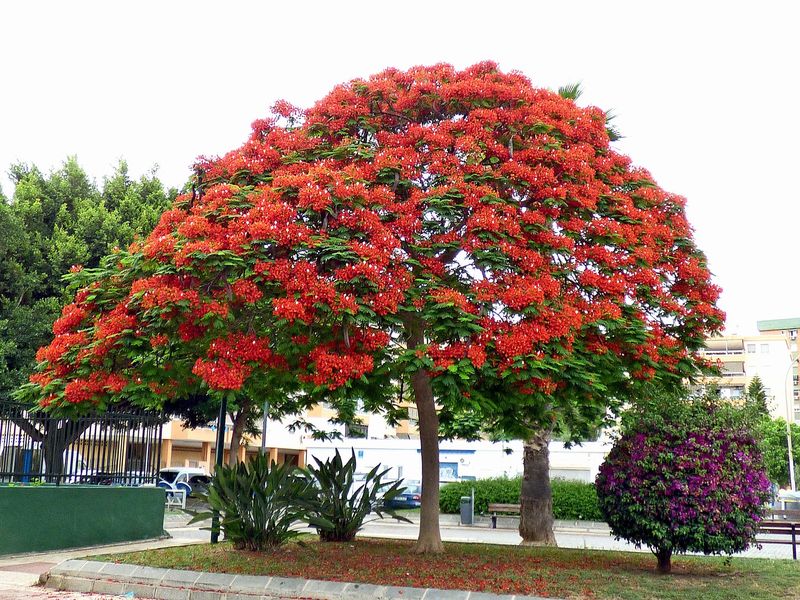
A small Florida nursery tree fits neatly in a pot and barely takes up space in the back of a truck. Standing next to a driveway, it can look like it has plenty of room.
That impression fades as the tree matures.
UF/IFAS Gardening Solutions recommends planting royal poinciana at least 10 feet from pavement, structures, and utility lines. That guidance reflects how large the tree eventually becomes, not how it looks on the day it goes in the ground.
A 10-foot gap sounds generous when the trunk is two inches wide. It feels much tighter once the tree develops its full spread.
Royal poinciana can reach a mature canopy spread of 40 to 60 feet, according to UF/IFAS. Roots extend well beyond the drip line in many cases.
A tree planted 10 feet from the driveway edge may have roots reaching that pavement within a reasonable number of growing seasons, depending on site conditions.
Treating the recommended distance as risk reduction is more accurate than treating it as a guarantee. Soil type, available root zone, irrigation, and nearby structures all influence how the root system develops.
Following the spacing guidance reduces the likelihood of conflict. Exceeding that minimum distance whenever the property allows adds an extra layer of protection.
Buying a small tree and imagining the large specimen it will become is the most useful mental exercise a homeowner can do before planting.
4. Narrow Planting Strips Create The Biggest Problems
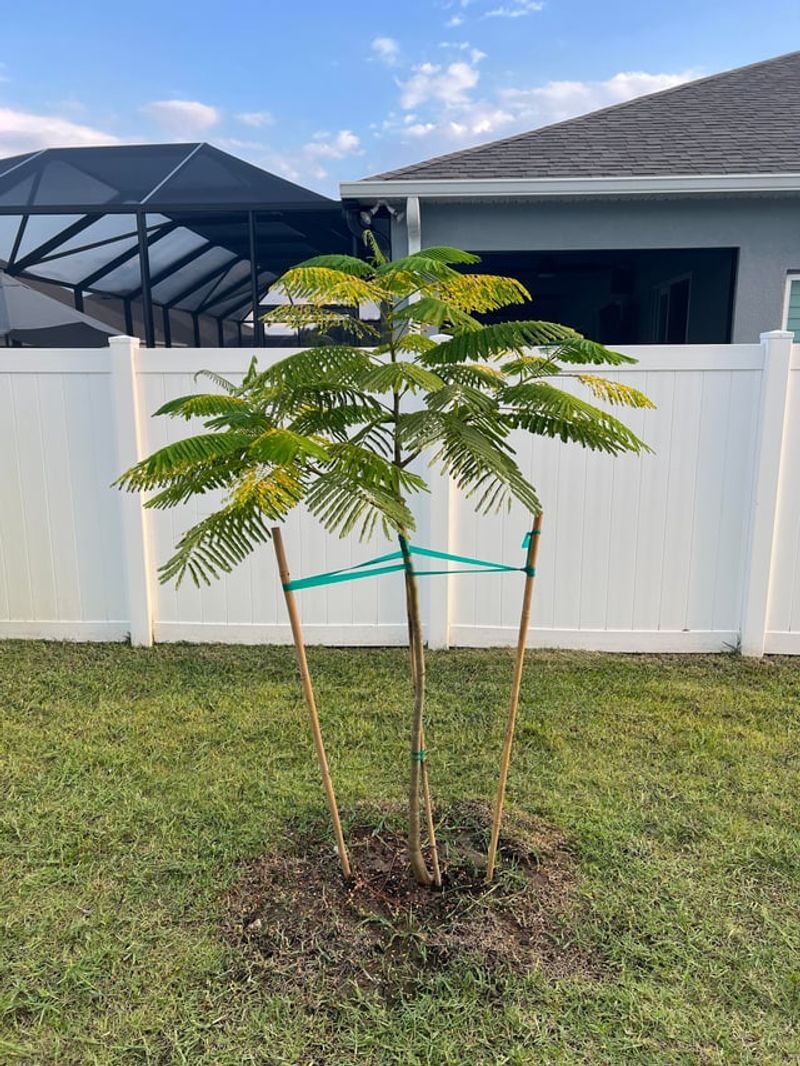
Picture a strip of soil roughly three feet wide, sandwiched between a driveway on one side and a sidewalk on the other. A homeowner plants a young tree there for shade, and it looks fine for a few years.
Over time, that confined space becomes the source of a significant headache.
Large shade trees need substantial soil volume to sustain decades of root growth. UF/IFAS urban forestry guidance consistently emphasizes adequate rooting space as a key factor in long-term tree health and reduced infrastructure conflict.
A narrow planting strip simply cannot provide what a mature royal poinciana needs.
Roots expand through usable soil. When hard surfaces border that soil on multiple sides, the roots have limited directions to grow.
They may push laterally beneath the pavement edges or expand upward where soil is loosest. Neither outcome is good for the surrounding hardscape.
A tree surrounded by a curb, a driveway, a wall, and a street faces a rooting space mismatch from the beginning. The tree will still grow because that is what trees do.
But the expanding root system and the surrounding hard surfaces will eventually compete for the same space. Choose a planting site with open soil in multiple directions instead of a confined strip.
This reduces the risk of pavement conflict and supports healthier tree growth.
5. Compacted Soil Can Push More Roots Toward The Surface
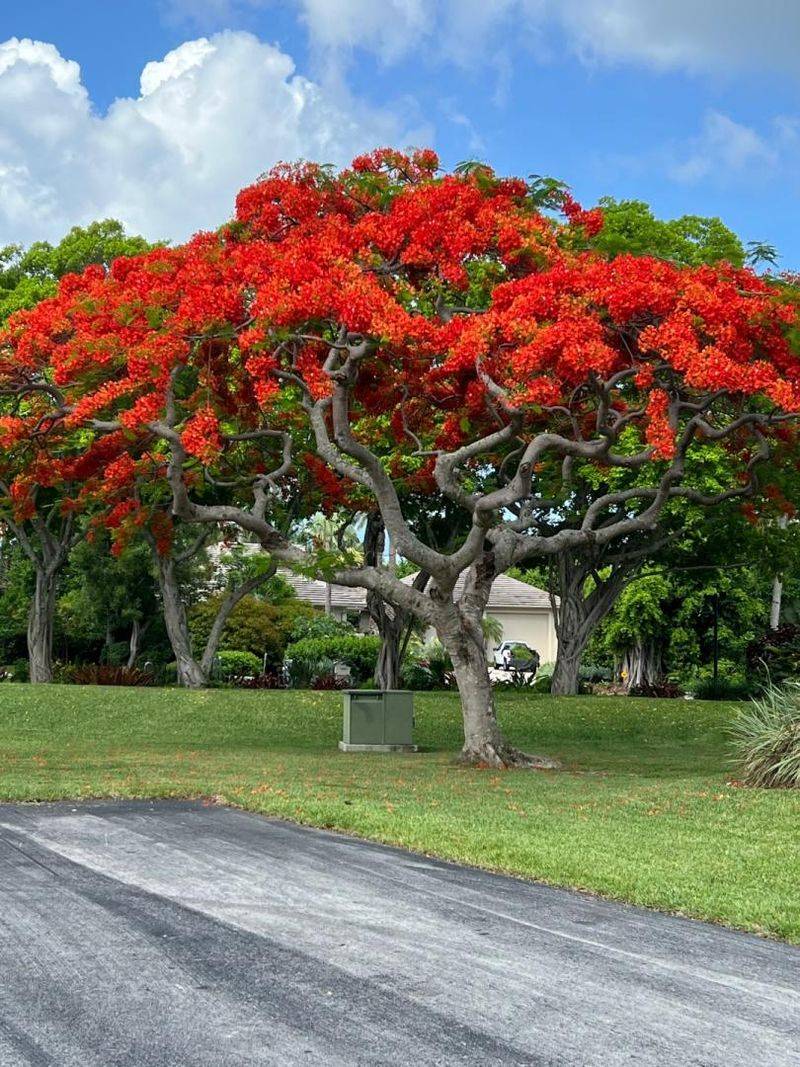
Two royal poincianas planted on two different properties can behave quite differently over time. Same species, same general climate, but the soil beneath each one tells a separate story.
Soil conditions play a meaningful role in how deep and wide a root system develops.
Compacted soil limits the pore space that roots need for oxygen and water movement. When the ground around a driveway or home has been heavily compacted during construction, roots often find the upper soil layers more hospitable.
Loose, aerated soil near the surface becomes the path of least resistance.
UF/IFAS urban tree research notes that construction compaction around homesites can significantly affect root architecture. Fill soil brought in during grading may compact unevenly.
Driveway edges, where equipment and foot traffic are common, tend to be among the most compressed areas on a property.
Compaction is not the only factor that influences root depth. Species characteristics, soil structure, moisture patterns, and oxygen availability all contribute.
A site with naturally shallow soil over hardpan or rock will also encourage surface rooting regardless of compaction. Drainage limitations that keep lower soil layers waterlogged push roots upward as well.
Improving soil quality before planting, and avoiding heavy traffic over the root zone after planting, gives roots better options for downward growth.
A tree with deeper, better-distributed roots generally causes fewer problems at pavement edges than one forced entirely to the surface.
6. The Canopy Is Just As Oversized As The Root System
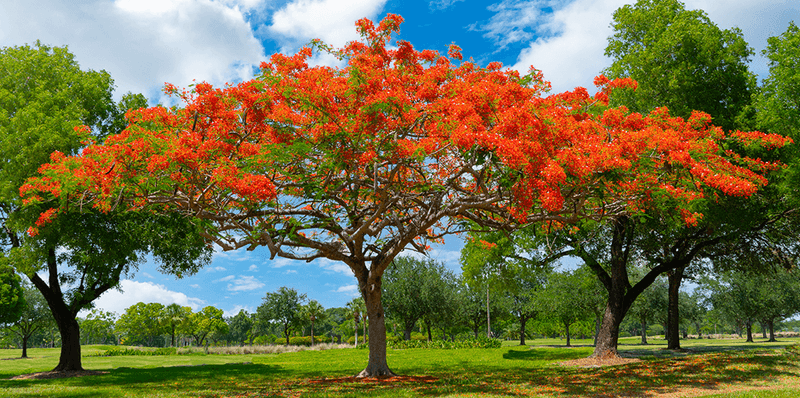
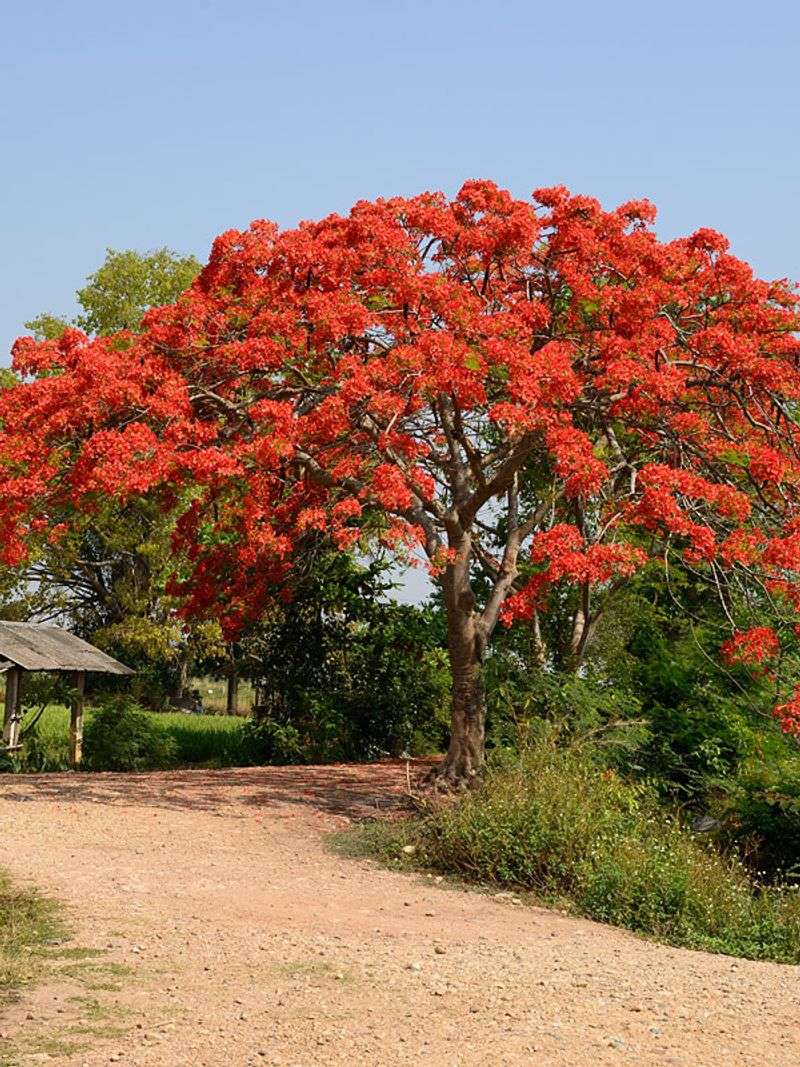
Standing under a mature royal poinciana in full bloom is genuinely impressive. The canopy spreads wide, creating dense shade and a ceiling of vivid color.
That visual drama also signals just how much space this tree claims above the ground, and below it.
UF/IFAS reports that royal poinciana typically reaches 30 to 40 feet in height with a canopy spread that can equal or exceed its height. Some specimens spread even wider under ideal conditions.
A tree that broad does not belong in a small yard or a tight planting strip next to a driveway.
The canopy creates conflicts beyond just root pressure. Overhanging branches can scrape rooflines and gutters.
Fallen flowers and seed pods accumulate on driveways and vehicles. Wide limbs may extend over neighboring property.
Parked cars beneath the canopy collect debris year-round.
Root trouble near the driveway is often one visible sign of a larger pattern. The entire planting site may have been too small from the beginning.
A tree pushing against pavement underground is frequently the same tree whose branches are brushing a roofline overhead. Both problems trace back to the same original decision: placing a very large tree in a space designed for something much smaller.
Matching tree size to available space above and below ground is the clearest way to avoid these compounding issues before they develop.
7. Cutting Big Roots Can Create A More Serious Problem
Discovering a thick root pressing against or beneath a driveway slab can prompt a quick fix mindset. The root looks like the problem, so removing the root seems like the solution.
That logic is understandable, but it overlooks something important about how mature trees are built.
Large structural roots anchor a tree in the ground and transport water and nutrients throughout the root system. Removing a major root does not simply eliminate a pavement conflict.
It can affect the tree’s ability to stay upright and may compromise its overall health.
UF/IFAS and the International Society of Arboriculture both caution that cutting large roots on mature trees carries real risk. A tree that loses significant anchoring roots may become less stable, particularly during high winds.
Florida’s hurricane season makes that concern especially relevant.
Root cutting is not a safe DIY project when large structural roots are involved. Trenching, severing, grinding, or chemically treating major roots without professional assessment can lead to outcomes worse than the original pavement problem.
A certified arborist can determine which roots are structural and what removing them would mean for the tree. They can also assess alternatives such as flexible pavement or root barriers.
Reaching that point is a signal that the planting site decision made years earlier did not account for the tree’s mature size. Professional guidance is the right next step.
8. The Right Planting Spot Prevents The Expensive Mistake
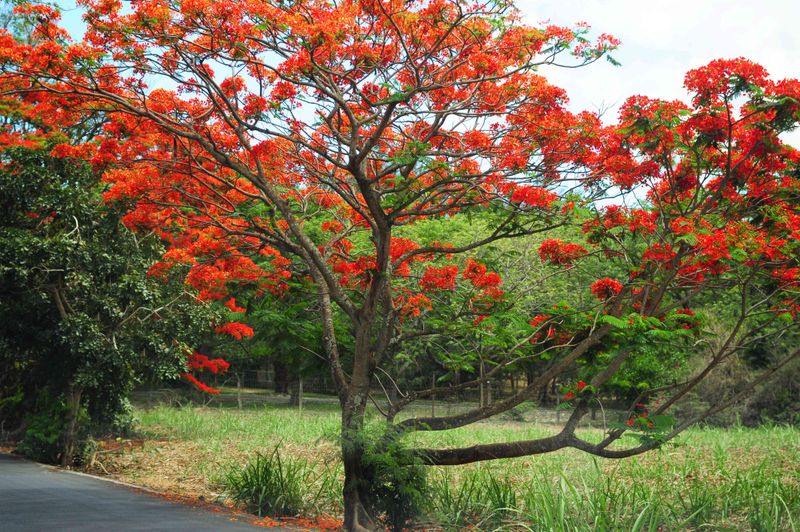
Royal poinciana is not a problem tree. Planted in the right location, it delivers spectacular seasonal color, generous shade, and a canopy that makes a property genuinely memorable.
The challenge has never been the tree itself. The challenge is placing a large, fast-growing shade tree where its mature size simply does not fit.
Bringing together everything covered in this article, a few key factors shape whether a royal poinciana and a driveway peacefully coexist. Mature tree size, available rooting space, distance from pavement, soil conditions, and long-term planning all interact.
Shortchanging any one of them increases the likelihood of conflict down the road.
Choosing the right planting site before installation is far more practical than repairing or replacing pavement around a mature tree later. Driveway repairs, root grinding, arborist consultations, and potential tree removal all carry real costs.
None of them are necessary if the tree goes in the right place from the beginning.
UF/IFAS Gardening Solutions and EDIS resources consistently emphasize site selection as the foundation of successful urban tree planting. Check mature size, rooting space, and distance from structures before buying a tree.
Doing so can save money, protect infrastructure, and support healthier growth.
Royal poinciana’s brilliant flowers can make it one of the most striking trees in any Florida landscape. That payoff is fully available, but only on a property that has enough open space for the remarkable tree it eventually becomes.