This Is What Texas Bougainvillea Needs Before The Heat Gets Brutal
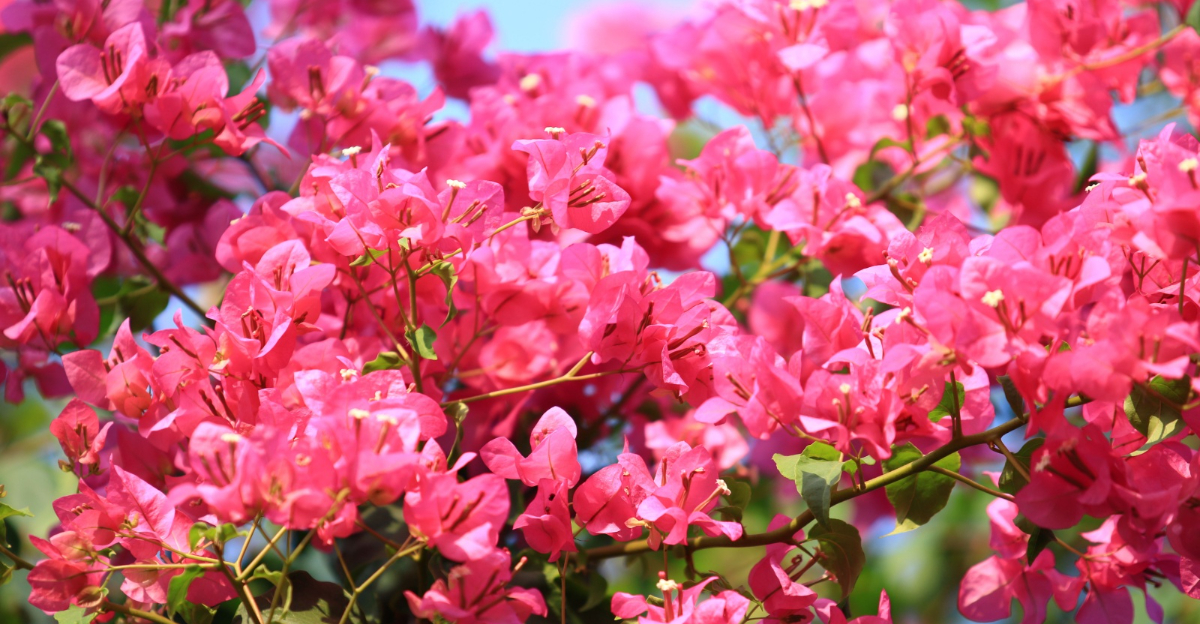
Bougainvillea in Texas is basically that one friend who thrives under pressure but still has a few specific requests. Give it what it wants and it will put on a color show that stops people in their tracks.
Ignore those needs heading into summer and things can get a little rough, fast. The weeks just before peak heat arrives are genuinely some of the most valuable time you have with this plant.
Temperatures climb quickly, afternoon sun gets aggressive, and the soil can dry out before you even realize it happened. A lot of gardeners assume more water and more fertilizer is the answer, but bougainvillea actually has other ideas.
Strong drainage, smart watering, a little light feeding, and some thoughtful pruning right now can set this plant up for an absolutely spectacular summer performance.
1. Full Sun Helps Bougainvillea Bloom Better
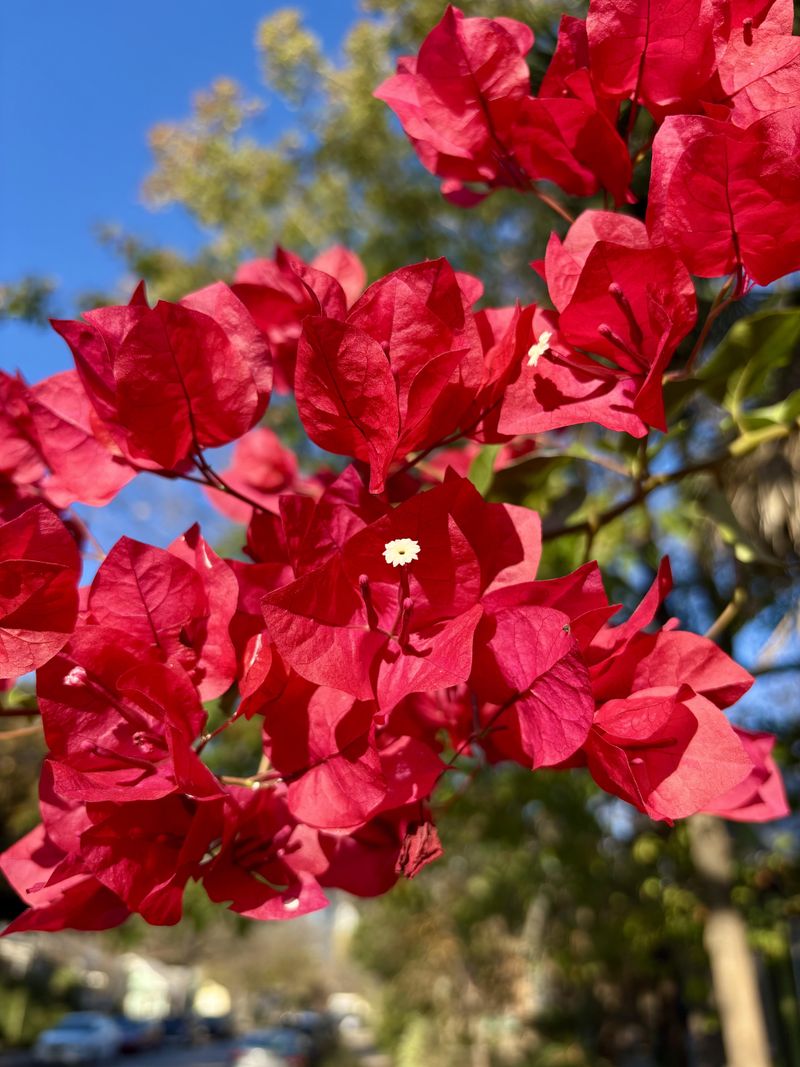
Sun-baked patios across Texas are some of the best places to grow bougainvillea, and that is not a coincidence. This plant thrives when it receives at least six to eight hours of direct sunlight each day.
Before heat peaks, placing or training your bougainvillea where it catches strong morning and afternoon light can set the stage for months of bold color.
Bougainvillea produces its colorful bracts, which are actually modified leaves rather than true flowers, most reliably when it gets plenty of light. Shaded plants tend to push out more green foliage and fewer of those eye-catching bracts that make the plant so popular.
Even partial shade for a few hours each day can noticeably reduce flowering over time.
In Texas, south-facing and west-facing walls and fences often give bougainvillea the intense light it prefers. Reflected heat from brick or stucco surfaces can actually benefit the plant during spring, mimicking the warm, bright conditions it loves.
If your bougainvillea has been sitting in a spot that gets afternoon shade, moving it before summer arrives can make a noticeable difference. Strong light is one of the most reliable ways to encourage heavy blooming throughout the warm season.
2. Good Drainage Protects The Roots
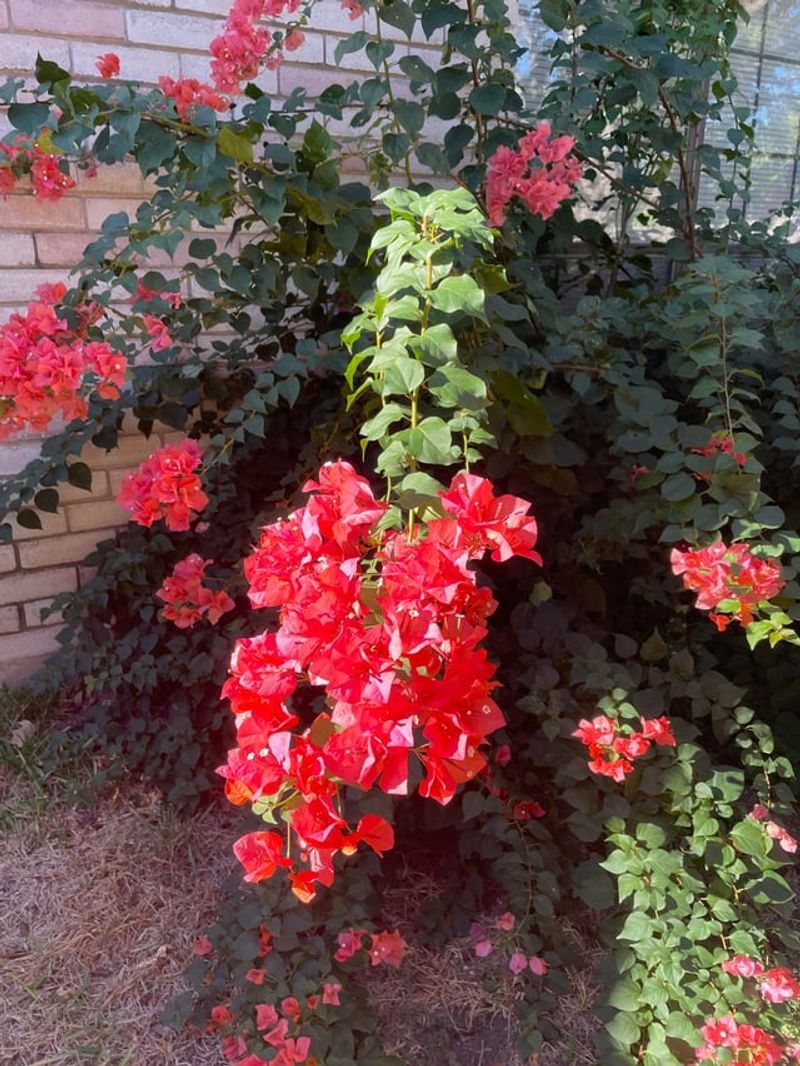
Soggy roots are one of the fastest ways to weaken a bougainvillea, and gardeners who grow this plant in heavy clay soil or poorly draining containers often notice the plant struggling even before summer fully arrives.
Bougainvillea naturally grows in conditions where water moves through the soil quickly and roots have access to both moisture and air.
Good drainage is not optional for this plant.
In garden beds, working coarse sand or small gravel into heavy clay soil can improve drainage noticeably. Raised beds are another solid option for gardeners dealing with tight, slow-draining native soil.
The goal is to create conditions where water drains through within an hour or two of a heavy rain rather than sitting around the root zone for extended periods.
Container-grown plants need drainage holes that are actually clear and functional.
Pots without proper drainage or with holes that have become blocked by roots or debris can hold water in the lower portion of the container even when the surface soil feels dry.
Your Texas Garden Changes Every Week. Your Plan Should Too.
Gardening in Texas changes quickly throughout the season. Every Friday you’ll receive a simple weekly plan showing exactly what to plant, prune, fertilize, harvest, and protect so you never miss the right timing.
Before Texas heat builds, checking that drainage is working well in every pot and bed where bougainvillea grows can prevent root stress later.
Healthy, well-drained roots support stronger growth and more consistent blooming through the entire warm season.
3. Deep Watering Works Better Than Frequent Sprinkles
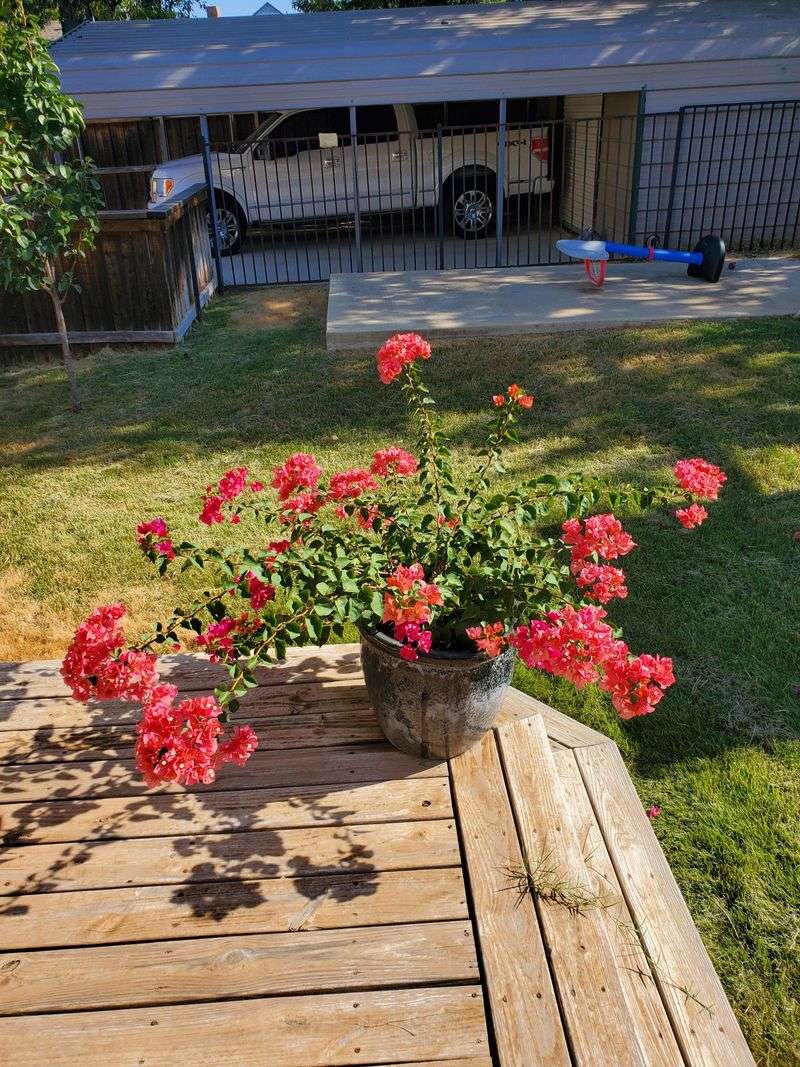
Watering bougainvillea a little bit every day might feel like good plant care, but shallow and frequent watering can actually encourage weak, surface-level root growth. Deep, thorough watering followed by a period of drying out works much better for this plant.
When water soaks down several inches into the soil, roots follow it downward and build a stronger, more drought-tolerant system over time.
Before temperatures really climb, establishing a deeper watering routine gives bougainvillea roots time to settle into a healthy pattern. A good deep soak means water reaches the lower portion of the root zone, not just the top inch or two of soil.
Checking soil moisture a few inches down before watering again helps avoid both underwatering and overwatering.
In Texas, late spring can bring warm, dry stretches that pull moisture from the soil quickly. Container plants dry out even faster than in-ground plants, especially when pots are sitting in direct afternoon sun.
Watering deeply but less often encourages roots to reach further into the growing medium.
Letting the soil dry somewhat between waterings also mimics the natural cycle bougainvillea experiences in its native habitat, which tends to support better blooming.
Paying attention to how quickly your specific containers and beds dry out helps you build a schedule that fits your Texas garden.
4. Too Much Water Can Reduce Blooming
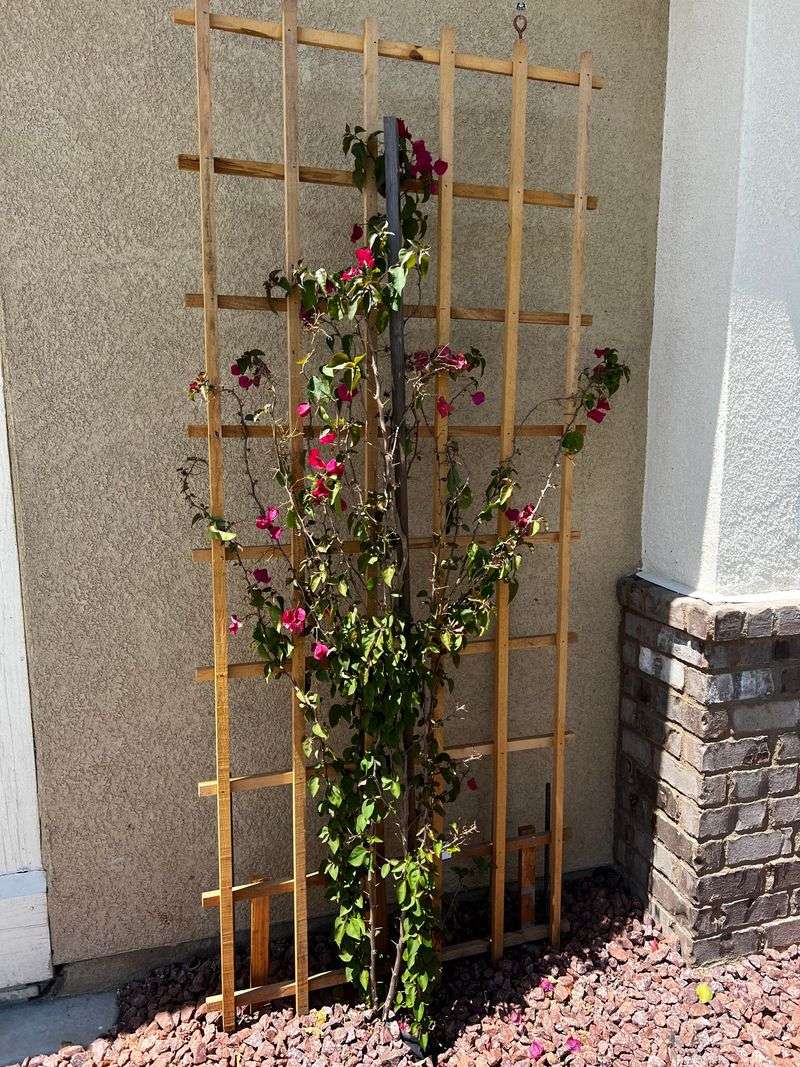
One of the more surprising things about bougainvillea is that overwatering can push the plant toward lush, leafy green growth while reducing the colorful bracts that most gardeners are actually after.
Consistently moist soil signals the plant that resources are plentiful, which can shift its energy toward vegetative growth rather than flowering.
This is a pattern that gardeners sometimes notice without realizing watering habits are the cause.
Bougainvillea responds to mild stress, particularly from slightly dry conditions between waterings, by directing energy into producing bracts.
This does not mean letting the plant wilt severely, but it does mean resisting the urge to water on a fixed schedule regardless of actual soil conditions.
Checking the soil before reaching for the hose is a simple habit that can lead to noticeably better flowering.
As Texas heats up, it can feel instinctive to water more often, but bougainvillea often does better with slightly less frequent watering than other flowering plants in the garden.
If you notice your plant putting out lots of green leaves but very few colorful bracts, cutting back on watering slightly is worth trying before making other changes.
Balancing moisture carefully, especially during the weeks leading into peak Texas heat, can help keep the plant focused on producing the bold color that makes it so rewarding to grow.
5. Regular Feeding Supports Active Growth
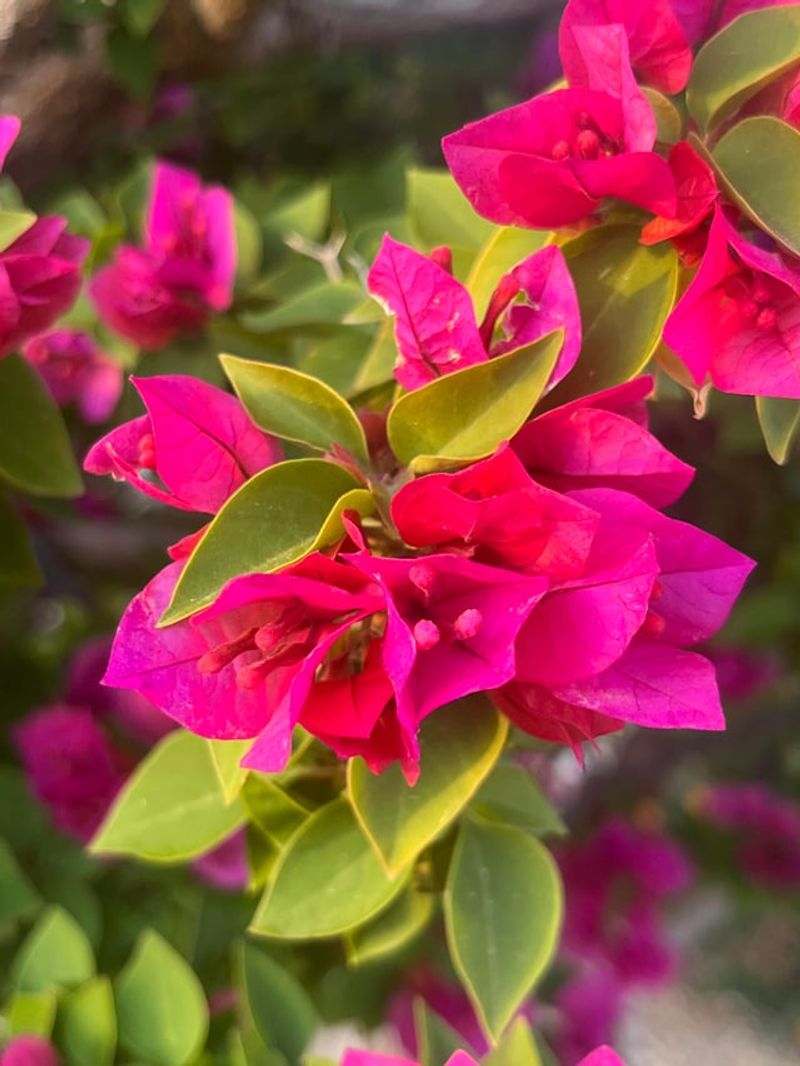
Feeding bougainvillea before Texas heat peaks helps the plant build strength for the demanding months ahead. As temperatures warm and the plant enters a period of active growth, its nutrient needs increase.
A balanced fertilizer or one formulated for flowering plants can support healthy stems, strong roots, and consistent bract production through late spring and into summer.
Slow-release granular fertilizers are a popular choice for bougainvillea grown in garden beds because they deliver nutrients gradually over several weeks without the risk of a sudden surge that could push too much leafy growth.
Liquid fertilizers can also work well, especially for container plants where nutrients can wash out more quickly with regular watering.
Applying fertilizer according to label directions rather than guessing on amounts is a straightforward way to avoid overfeeding.
Bougainvillea grown in containers may benefit from more frequent light feeding than in-ground plants because watering flushes nutrients out of the potting mix over time.
Before the hottest part of the summer arrives, giving the plant a solid nutritional foundation through consistent, moderate feeding can support better growth and color.
Skipping fertilizer entirely during active growth periods can leave the plant without the resources it needs to perform well. Regular, balanced feeding paired with good sun and drainage tends to produce the strongest results.
6. Too Much Fertilizer Can Mean More Leaves
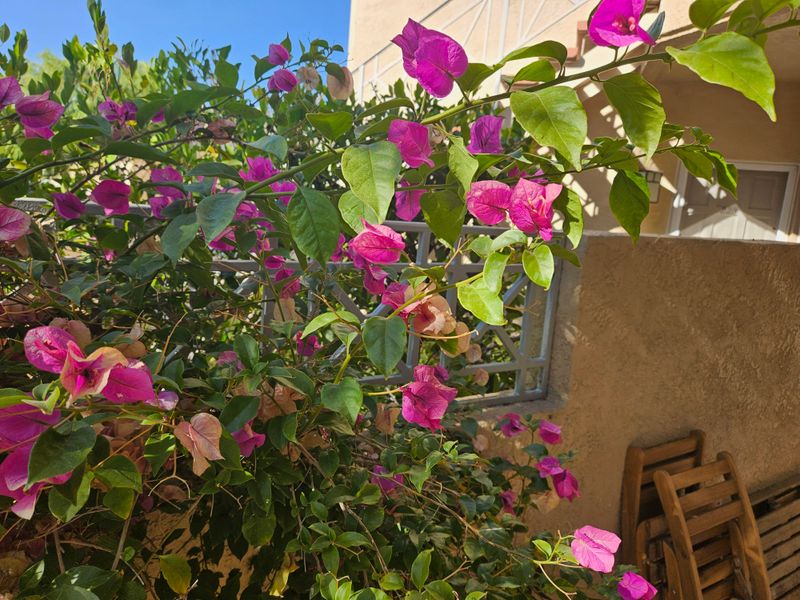
Pouring on extra fertilizer in hopes of getting more blooms from bougainvillea can backfire in a way that frustrates many gardeners. High-nitrogen fertilizers in particular tend to push fast, leafy green growth at the expense of the colorful bracts.
Before Texas summer sets in, it helps to understand that bougainvillea does not necessarily bloom more because it receives more fertilizer.
Nitrogen is the nutrient most responsible for green, vegetative growth in plants. When bougainvillea gets too much of it, the plant often responds by producing large, healthy-looking leaves while putting very little energy into flowering.
Switching to a fertilizer with a lower nitrogen ratio and a higher phosphorus ratio, or simply using a balanced product in moderate amounts, tends to support better bract production over time.
Gardeners who have recently repotted their bougainvillea into fresh potting mix may not need to fertilize as frequently because most commercial potting mixes already contain some starter nutrients.
Applying heavy doses of fertilizer on top of a nutrient-rich mix can tip the balance toward excess.
Watching the plant for signs of too much green growth relative to color is a useful way to gauge whether feeding amounts need adjusting. Moderation is genuinely more effective than excess when it comes to feeding bougainvillea in gardens and containers.
7. Light Pruning Helps Keep Plants Blooming
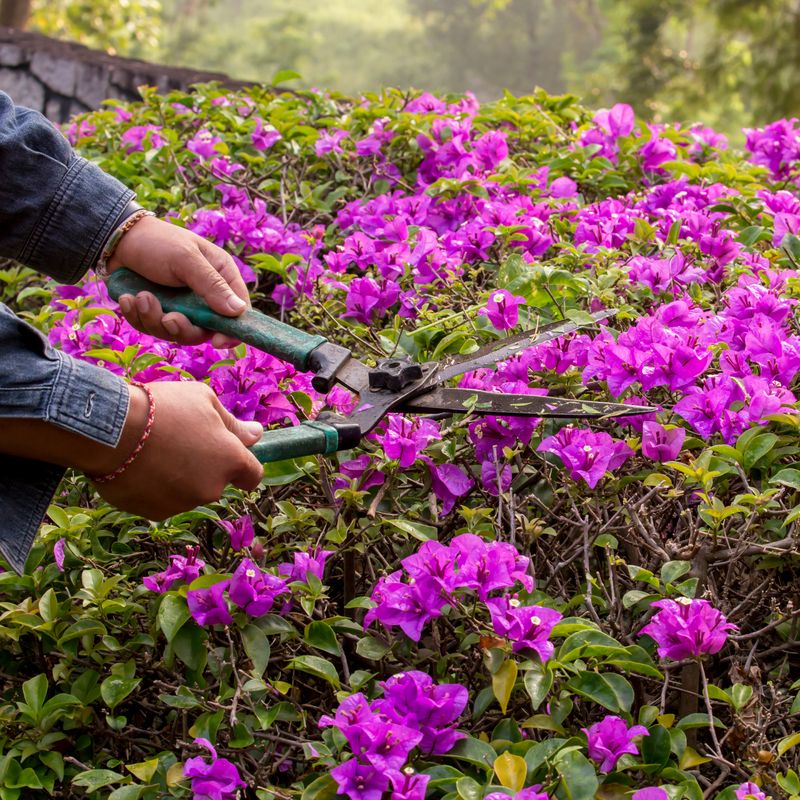
Fast-growing vines covered in thorns and bright bracts are a familiar sight in Texas landscapes, and keeping that growth in check with light pruning before summer arrives can actually encourage more blooming rather than less.
Bougainvillea tends to produce its colorful bracts on newer growth, so removing older, spent stems gives the plant a chance to push fresh growth that will carry more color through the season.
Light pruning means removing a portion of older or overly long stems rather than cutting the plant back severely. Heavy pruning during active growth periods can stress the plant and delay blooming for weeks.
A selective approach, trimming back stems that have already finished their flush of color or that are growing in unwanted directions, tends to give the best results without setting the plant back.
In Texas, late spring is a reasonable time for light shaping before the most intense heat arrives. Pruning during cooler morning hours helps reduce stress on both the plant and the gardener.
Clean, sharp pruning tools make cleaner cuts that heal more quickly and reduce the chance of introducing problems through torn or ragged stems. Wearing thick gloves is also a practical tip because bougainvillea thorns are sharp and can catch skin easily.
Keeping up with light, regular pruning through the season tends to produce a more compact, colorful plant than letting it grow unchecked.
8. Container Plants Need Extra Attention In Texas
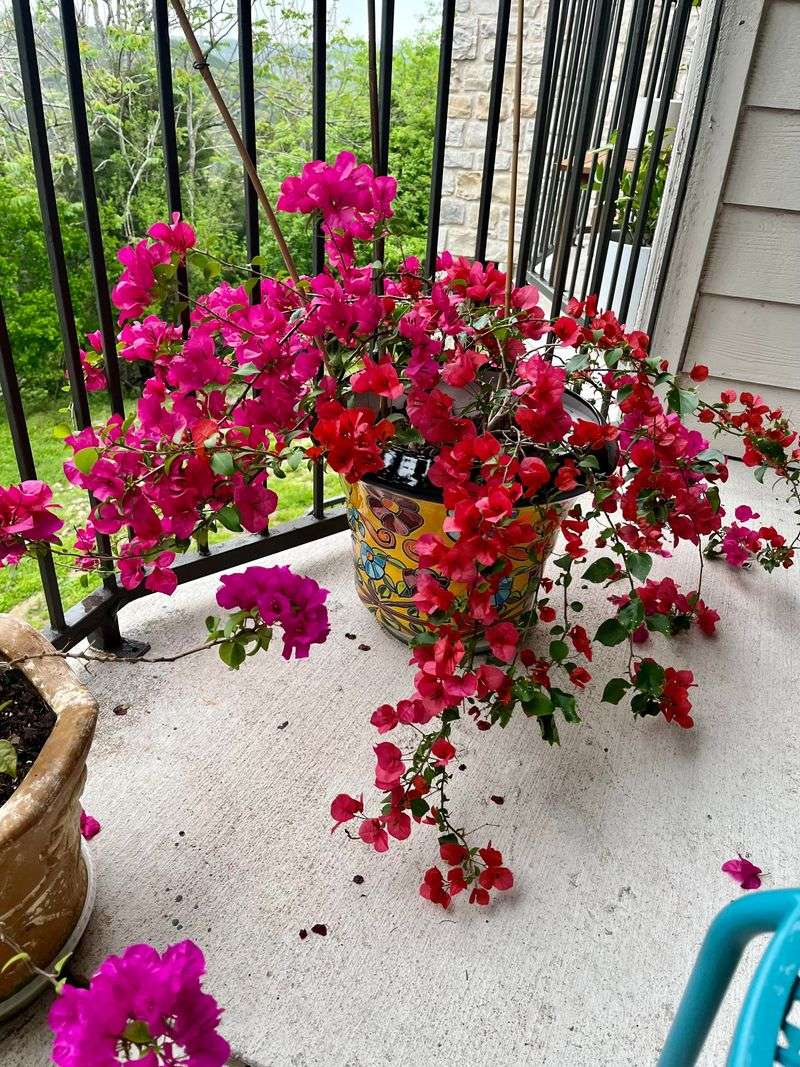
Growing bougainvillea in containers on a Texas porch or patio has real appeal because pots can be moved and arranged to show off the color wherever it works best.
But container plants face some challenges that in-ground plants do not, and those challenges become more noticeable as temperatures climb.
Pots heat up faster than garden beds, and the soil in a container can dry out surprisingly quickly during warm, windy afternoons.
Dark-colored pots absorb more heat than light-colored ones, which can warm the root zone significantly on hot days.
Choosing lighter-colored containers or placing pots in spots where they get some afternoon relief from direct sun on the container walls can help moderate root temperatures.
Terra cotta pots, while attractive, tend to dry out faster than glazed ceramic or plastic containers, so they may need more frequent monitoring during warm weather.
Drainage matters even more in containers than in garden beds because water has nowhere to go if the drainage holes are blocked or inadequate.
Checking drainage holes regularly and using a well-draining potting mix rather than dense garden soil helps keep roots healthy.
Container-grown bougainvillea in Texas may also need more frequent light feeding because nutrients wash out with regular watering.
Staying attentive to moisture, drainage, and feeding in containers before peak summer heat sets in gives these plants the foundation they need to keep producing color all season long.