This Is Why Your Iowa Porch Is The First Place Wasps Choose To Start Nesting
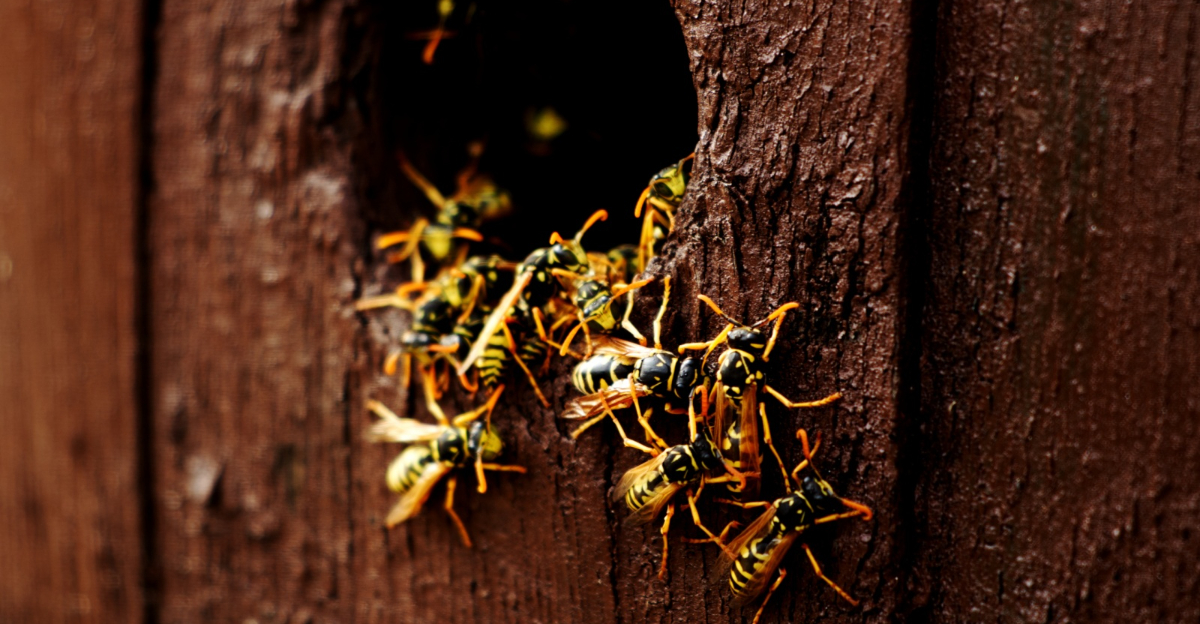
That nest wasn’t there last week. That’s the part that gets people: how fast it happens, how bold it feels, like something moved into your house while you were looking the other way.
Wasps are not random. They are picky, methodical, and frustratingly good at finding exactly the spot you’ll wish they hadn’t.
A sheltered eave, a crack where wood meets siding, a porch ceiling no one’s touched since October: to you it’s background noise, to a scouting queen it’s a shortlist of one.
Iowa porches check every box: shade, structure, proximity to food, low foot traffic in the spots that count. The nest is the symptom. The porch itself is the invitation.
Every Iowa summer it goes unaddressed, the problem compounds. Figure out what you’re offering and you’re already halfway to not offering it anymore.
Your Porch Gives Wasps Everything They Need To Thrive
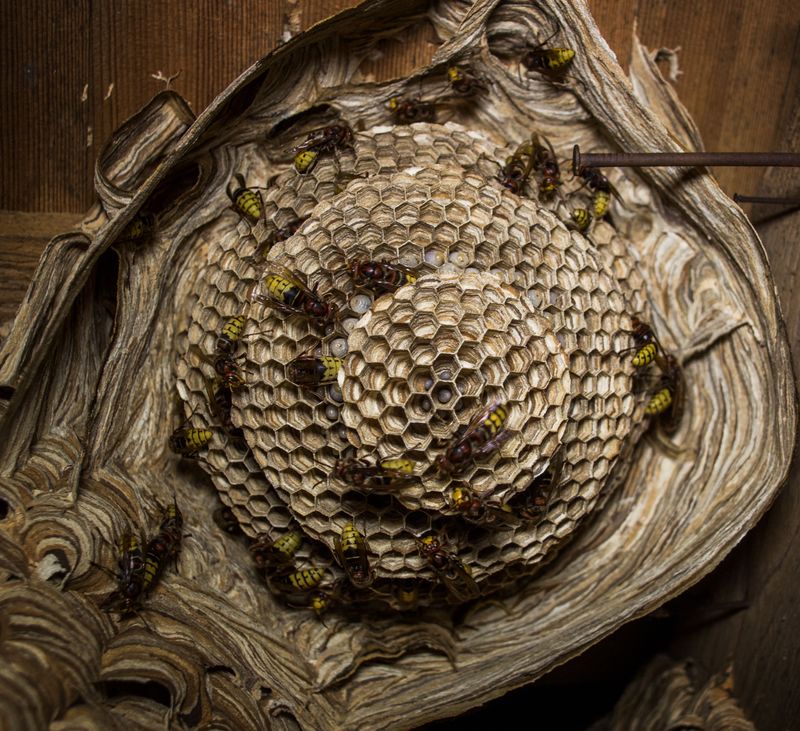
Your porch is not just a relaxing spot for you. It is a complete survival package for a nesting wasp colony.
Shelter, warmth, structural anchor points, and proximity to food all come bundled together in one convenient location.
Wasps are remarkably efficient scouts. A queen emerging in early spring scans for spots that check every box fast, and a covered porch checks nearly all of them in seconds.
Iowa porches tend to have wooden beams, ceiling boards, and decorative trim that give wasps perfect anchor points for nest construction.
The papery nests they build are made from chewed wood fiber, and your porch often provides that raw material nearby.
What makes a porch especially appealing is its human-made consistency. Temperatures stay moderate under a roof, airflow is reduced, and the structure itself rarely shifts or collapses.
Your Iowa porch is the first place wasps choose to start nesting because it removes nearly every survival obstacle in one shot. Wasps are not being bold, they are being smart.
The best way to protect your porch is to understand that every feature you love about it is a feature wasps love too.
Shaded Shelter Drives Wasps Toward Covered Porches In The Heat
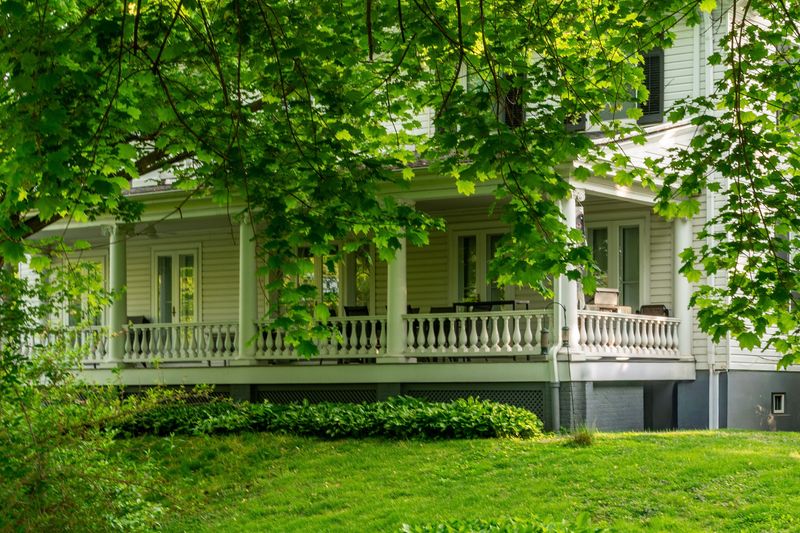
Summer heat in Iowa is no joke. Temperatures push into the 90s, and Wasps are sensitive to high temperatures.
Shade is not a luxury for a wasp colony. It is a necessity. Overheating can slow larval development and stress the adults working to grow the nest.
A covered porch creates a naturally cooler microclimate that shields the colony from the worst of the afternoon sun. That consistent shade is one of the strongest signals that tells a scouting wasp this spot is worth claiming.
Think about how your porch faces the sun throughout the day. South-facing and west-facing porches tend to attract more wasp activity because the shade they cast during peak heat hours is especially deep and reliable.
Ceiling materials matter too. A solid porch ceiling traps less radiant heat than an open-beam structure, making it a more stable thermal environment for a growing nest.
Your Iowa Garden Changes Every Week. Your Plan Should Too.
Gardening in Iowa changes quickly throughout the season. Every Friday you’ll receive a simple weekly plan showing exactly what to plant, prune, fertilize, harvest, and protect so you never miss the right timing.
Shaded shelter is one of the core reasons your Iowa porch is the first place wasps choose to start nesting each season.
Trimming back nearby trees or adding reflective materials overhead can reduce the shade appeal just enough to make wasps look elsewhere. Small changes in light exposure can shift the whole dynamic.
Rain And Wind Protection Makes Your Eaves A Prime Nesting Target
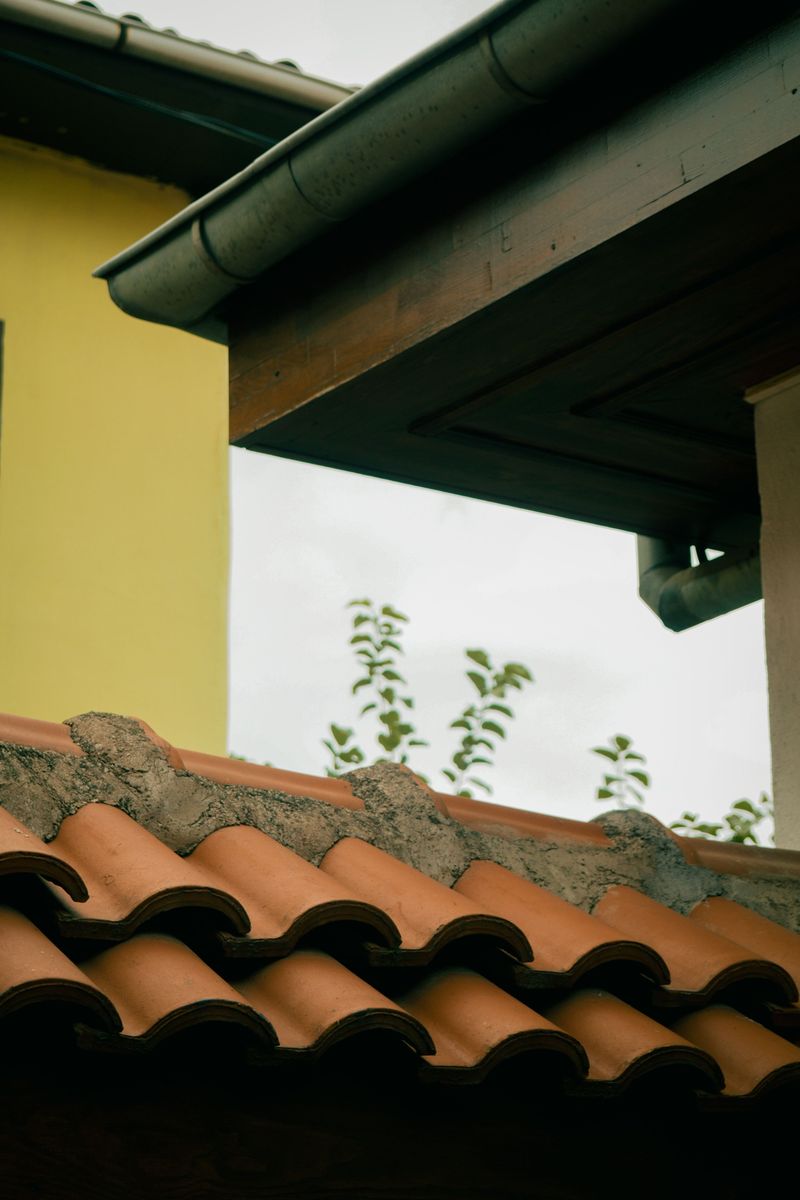
A wasp nest is made of chewed wood pulp and saliva, basically paper. Rain destroys it fast if the nest is exposed to the elements.
Your eaves solve that problem completely. The overhang keeps rain from hitting the nest directly, and the structure blocks wind that would otherwise tear the fragile colony apart.
Iowa spring storms can be intense, with heavy rain and gusty winds rolling through in a matter of minutes. Wasps that nest in open areas lose entire colonies to a single bad storm.
Wasps that nest under your eaves are far more likely to return to the same spot the following spring.
The corner where your eave meets the exterior wall is especially prized. That spot offers protection from two directions at once, making it one of the most sheltered micro-locations on your entire property.
Soffits, the panels covering the underside of your roof overhang, are another top target. Any crack or gap in a soffit panel becomes a doorway into a protected, enclosed space that keeps a nest completely hidden from wind and rain.
Protecting your eaves with caulk, foam sealant, or hardware mesh before spring arrives can block access before a queen even begins scouting. A sealed eave sends a clear message that this spot is taken, by you.
Food And Water Near Your Porch Are Strong Attractors For Nesting Wasps
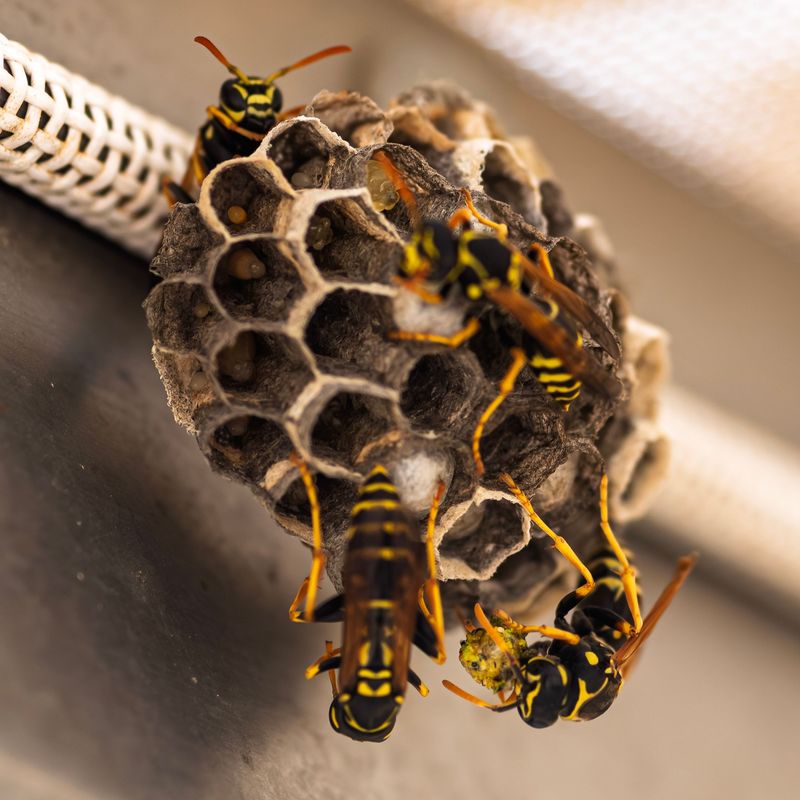
Wasps eat protein and sugar. Your porch, and the yard around it, probably offers both in abundance without you even realizing it.
Grills with grease residue, open trash cans, fallen fruit from nearby trees, and sweet drinks left outside all send powerful chemical signals that food is close. Wasps pick up on these signals from a surprising distance.
Protein sources matter especially in early summer when the colony is growing fast and larvae need to be fed. Caterpillars, spiders, and other insects near your porch become a convenient protein pantry for foraging workers.
Standing water in plant saucers, clogged gutters, or pet bowls provides the moisture wasps need to regulate nest humidity.
A water source within a short flight of a sheltered nesting spot is a major bonus that bumps your porch up the priority list. Sweet-smelling flowers planted near the porch add another layer of attraction.
Nectar feeds adult wasps and draws them in regularly, which increases the chance that a scout will notice your eaves during a foraging pass.
Reducing food and water signals is one of the most effective ways to make your porch less appealing.
Cover the grill, empty standing water, and move trash cans away from the structure to quietly lower your porch’s ranking as a prime nesting site.
Growing Colonies Push Wasps To Claim More Space Fast
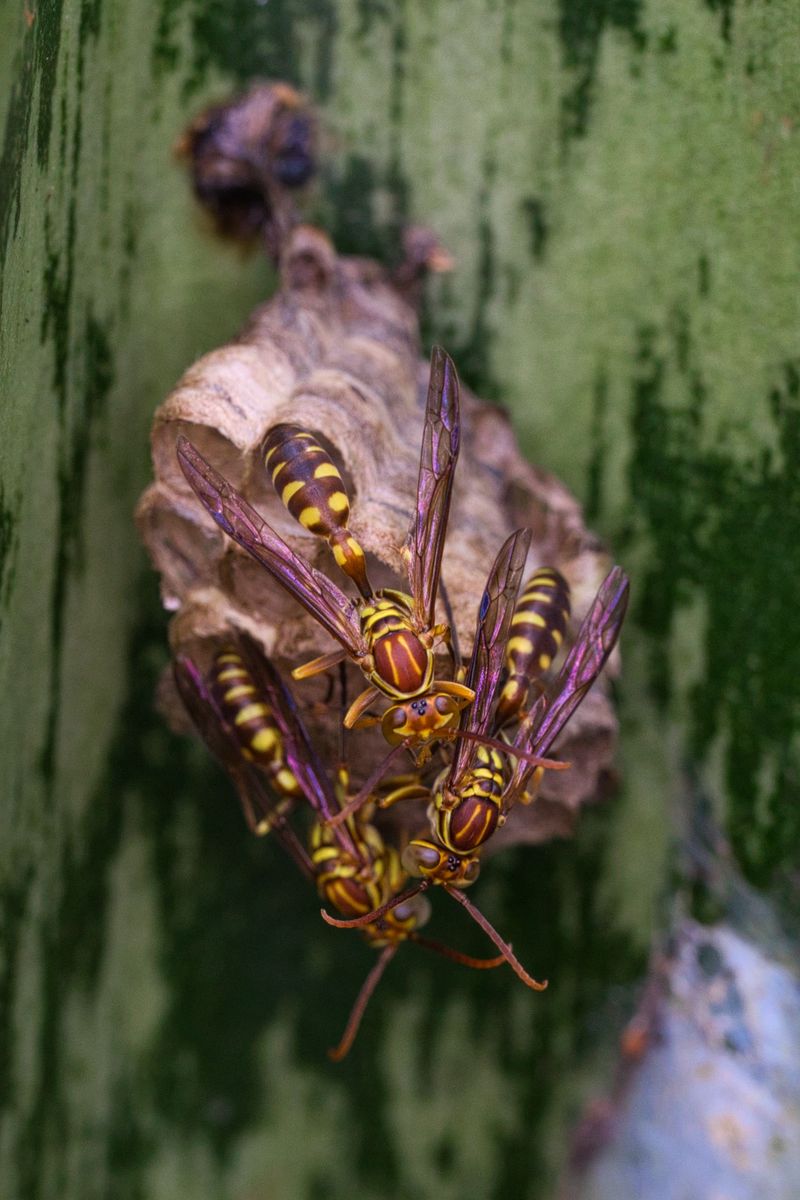
A wasp colony does not stay small. What starts as a single queen and a handful of cells in April can become a colony of thousands by August.
As the population grows rapidly, the nest expands, and the wasps need more space around it too. Foraging territory widens, and secondary nesting sites get established nearby to support the growing demand.
Your porch often becomes that secondary site. If a primary nest is already established somewhere on your property, in some species a secondary group may scout your covered porch as an additional nesting site.
The speed of this expansion catches homeowners off guard every single year. A nest that looks small and manageable in June can be alarmingly large by mid-July, with foragers covering a much wider area around your home.
Colony growth also increases defensive behavior. Wasps protecting a large, established nest are far more reactive than those guarding a young one.
Foot traffic on your porch starts to feel threatening to them, which raises the tension level fast. Catching nests early, when they are still small and the colony is thin, is the most practical approach.
Checking your porch ceiling, beams, and eaves every two weeks from April through June gives you the best chance of staying ahead of the growth curve.
Hidden Gaps In Your Porch Offer The Undisturbed Space Wasps Want
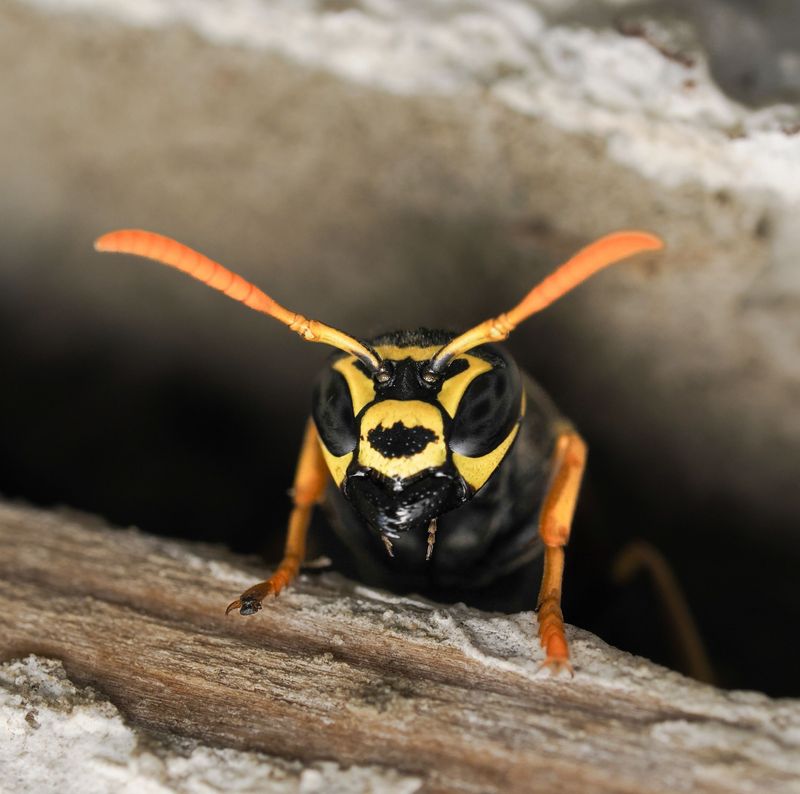
Wasps are not always building in plain sight. Some of the most established nests are tucked inside walls, under floorboards, or behind decorative trim where no one looks for months.
Your porch is full of these hidden opportunities. Gaps between siding panels, spaces behind shutters, loose boards near the floor, and openings around light fixtures all create access points to enclosed, undisturbed cavities.
Once inside, a colony can grow completely hidden from view. The only clues are a faint buzzing sound, wasps entering and exiting a small hole, or a papery texture visible when you peek into a dark corner.
Older Iowa homes are especially vulnerable. Wood shrinks and expands with temperature changes over many seasons, creating new gaps every year.
What was sealed last fall may have opened up again by the time spring arrives. Even newer construction is not immune.
Gaps around electrical conduit, plumbing penetrations, and HVAC vents give wasps access to wall cavities that stay warm, dry, and completely sheltered from weather and predators.
A thorough inspection of your porch structure each spring, looking for any opening larger than a quarter inch, can reveal entry points before a queen claims them.
Caulk, expanding foam, and metal mesh are your best tools for closing the door on hidden nesting spots.
Nothing Has Driven Them Away And That Is All The Invitation They Need
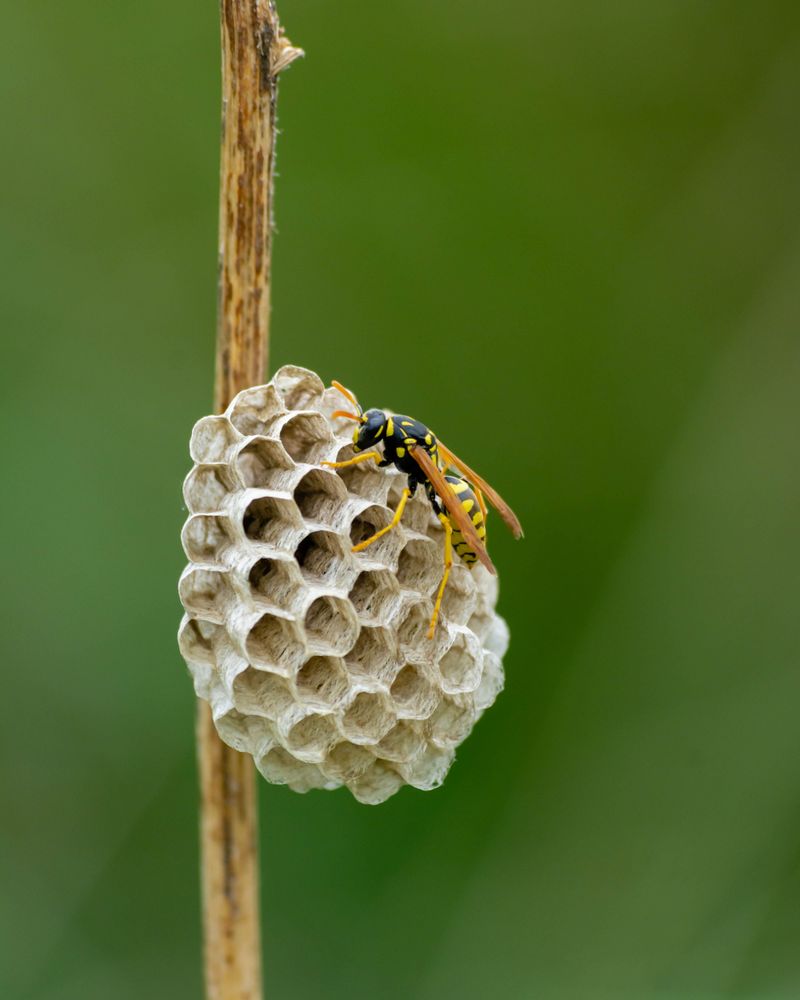
Here is a truth that stings a little: wasps often choose your porch simply because nothing stopped them. No deterrent, no early intervention, and no change to the environment that made them reconsider.
Wasps are creatures of habit guided by efficiency. If a location worked before, or looks like it will work, they move in without hesitation.
An undisturbed porch with no repellents, no traps, and no human interference is an open invitation.
Scent memory plays a role too. Wasps leave behind chemical markers that signal a good nesting location to future scouts.
If a nest was removed without treating the surface, next season’s queen may follow those invisible signals straight back to the same spot.
Fake wasp nests, the paper lantern style deterrents, can work as a passive prevention tool. Wasps are territorial and tend to avoid areas where another colony appears to be established already.
Peppermint oil applied to porch beams, eaves, and ceiling corners is another low-effort deterrent that some homeowners report success with. Wasps strongly dislike the scent and tend to scout elsewhere when they encounter it.
Your Iowa porch is the first place wasps choose to start nesting when nothing pushes back. A little seasonal attention, sealing gaps, removing attractants, and adding deterrents, is all it takes to change the outcome this year.