This Native Michigan Shrub Looks Unremarkable Until August And Then Stops Everyone In Their Tracks
For most of the growing season this shrub does nothing to draw attention to itself.
It sits in the background while showier plants take credit for everything happening in the border, blending into the green landscape with no particular distinguishing features worth mentioning.
Then August arrives. What happens to this native Michigan shrub during the month when most of the garden starts looking exhausted is the kind of transformation that makes visitors stop mid-conversation and ask what it is.
The display it produces comes at exactly the moment the garden needs it most, and the gardeners who planted it knowing what was coming feel a particular satisfaction watching everyone else discover it for the first time.
1. Buttonbush Looks Quiet Before The Flower Show
Walk past a buttonbush in June and you might not give it a second thought. It sits there looking green, leafy, and completely ordinary, blending in with everything else growing near the water.
For most of the season, it does not shout for attention, and that quiet presence is actually one of the reasons many gardeners overlook it entirely.
Buttonbush naturally grows in wet spots, along river edges, marsh borders, and the soggy corners of yards where most ornamental shrubs simply refuse to cooperate.
During spring and early summer, the foliage fills in nicely with glossy, deep green leaves that are attractive but not exactly show-stopping. It looks like a solid, dependable shrub doing its job without any drama.
That low-key appearance is actually a feature, not a flaw. It holds the wet areas of a landscape together visually while other plants take center stage.
Gardeners who plant it for the first time often forget it is even there until late summer rolls around and suddenly the whole shrub erupts into something completely unexpected.
The transformation from background plant to garden star happens fast, and the contrast makes it even more impressive.
Patience pays off with buttonbush, and once you see what it does in August, you will never overlook it again during those quiet early months.
2. The Flowers Look Like White Pincushions
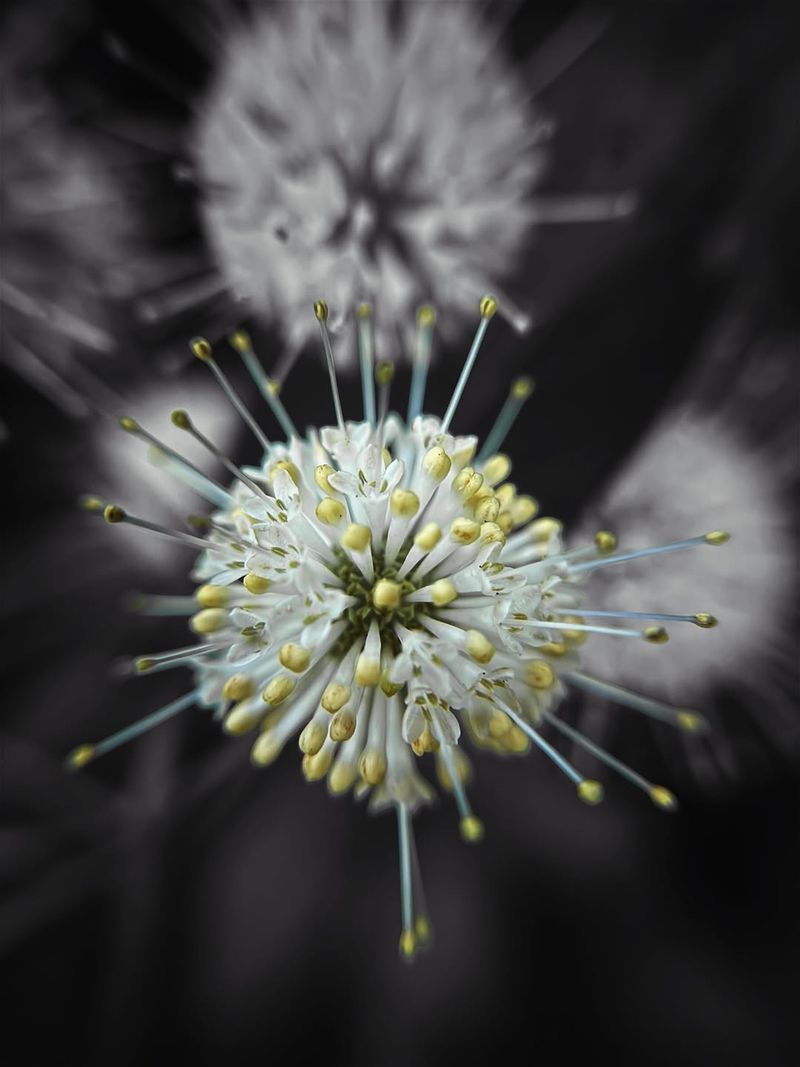
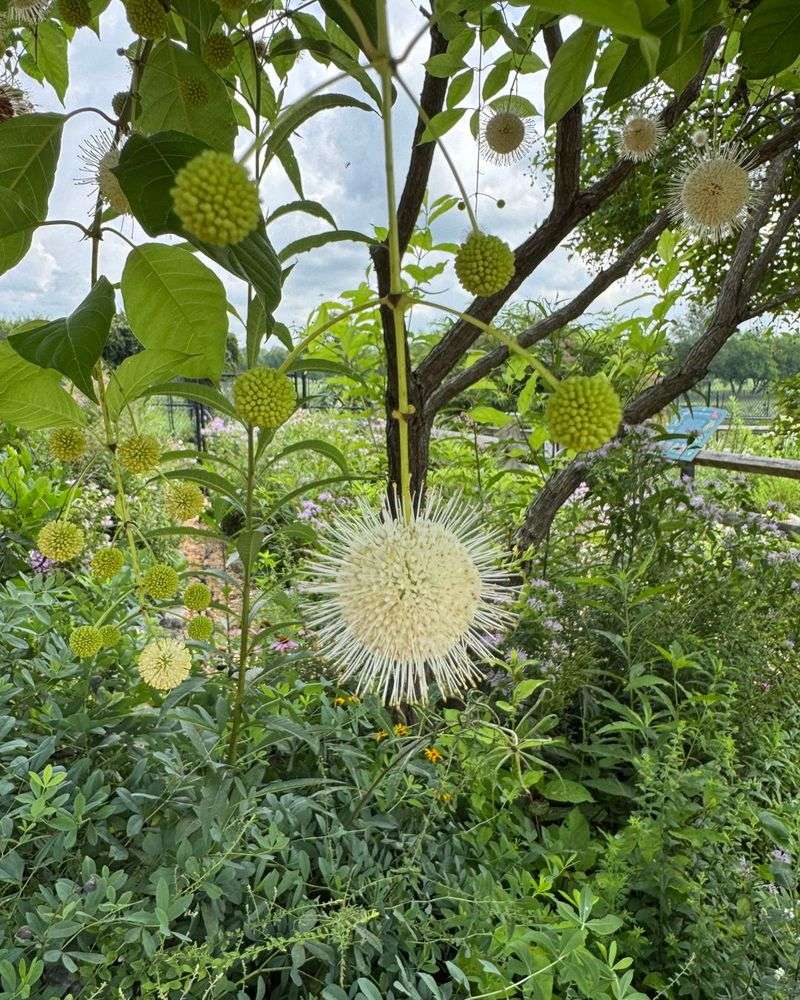
Picture a perfectly round white ball covered in tiny flowers, each one tipped with a slender thread poking outward in every direction.
That is exactly what a buttonbush flower looks like up close, and it is unlike almost anything else blooming in a Michigan yard at the same time.
The round clusters measure roughly two inches across, giving the shrub a look that feels almost otherworldly compared to typical flat-topped or cone-shaped shrub flowers.
The scientific name, Cephalanthus occidentalis, actually hints at this shape. The Greek root refers to a head of flowers, which perfectly describes those globe-like clusters.
Each round ball is made up of many tiny individual flowers packed tightly together, and when they open, the stamens extend outward, creating that signature spiky, pincushion effect that stops people mid-stride.
Seeing them in person for the first time tends to prompt the same reaction from almost everyone: curiosity followed quickly by genuine delight. People want to know what plant it is, where to get one, and why they have never seen it before.
Your Michigan Garden Changes Every Week. Your Plan Should Too.
Gardening in Michigan changes quickly throughout the season. Every Friday you’ll receive a simple weekly plan showing exactly what to plant, prune, fertilize, harvest, and protect so you never miss the right timing.
The flowers have a light, sweet fragrance that adds another layer of appeal during those warm August days. Up close or from a distance, the white globes stand out against the dark green foliage in a way that feels almost too perfect to be natural.
It is the kind of flower that earns a photo every single time someone walks by with a phone in hand.
3. Late July Can Lead Into August Interest
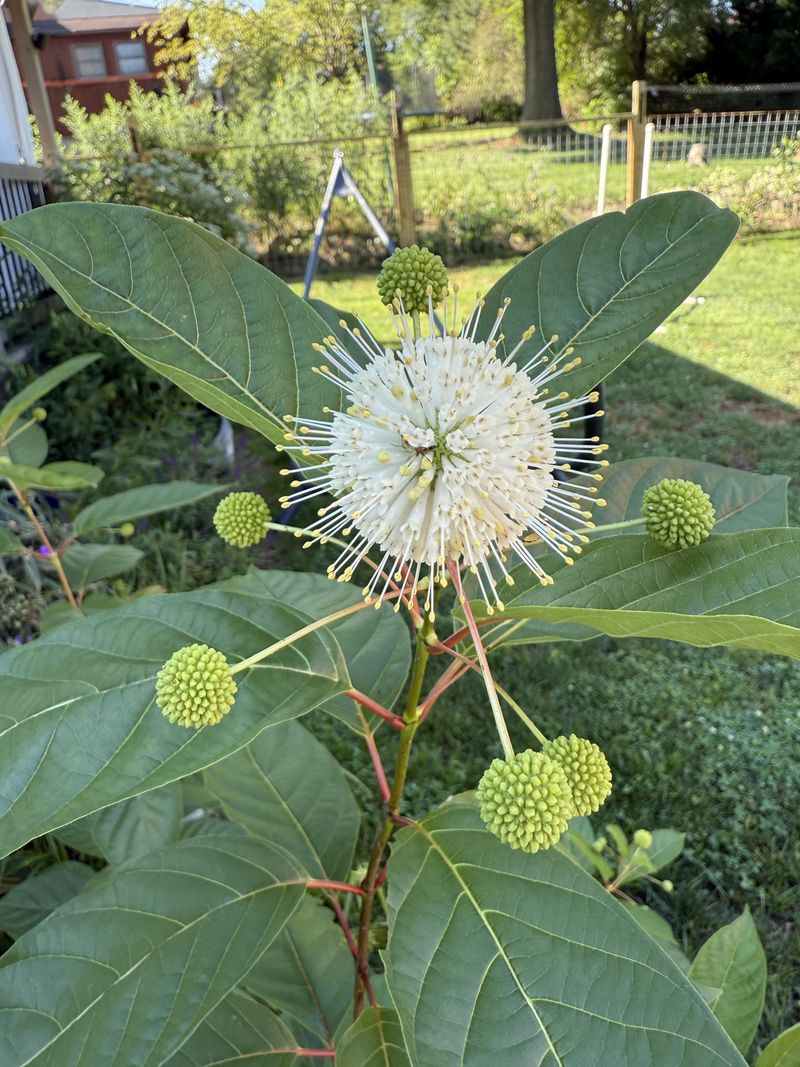
Timing is everything in a Michigan garden, and buttonbush plays its best card right when most other shrubs have already finished their show.
Michigan State University researchers observed buttonbush blooming in the latter half of July, which means the flowers often stretch their presence well into August depending on the weather, the specific site, and how established the plant is.
Cooler summers or shadier spots can push the bloom window slightly later, while a warm and sunny location might bring those white globes out a bit earlier in the month.
Either way, the plant tends to hold its flowers for several weeks, giving gardeners a long window of visual interest during a time when many landscapes start looking tired and worn out from the heat.
For Michigan gardeners who want late-season color and texture without relying on annuals or high-maintenance plantings, buttonbush fills that gap naturally.
The bloom period overlaps with goldenrod, ironweed, and other late-summer natives, creating a layered native garden that hums with activity well past the peak of summer.
Planting buttonbush alongside other late bloomers builds a sequence of interest that carries a yard from midsummer all the way to fall.
The August angle is real, and for gardeners who feel their landscape loses momentum after July, this shrub offers a reliable and low-effort solution that rewards patience with a genuinely impressive payoff.
4. Wet Spots Bring Out Its Best Use
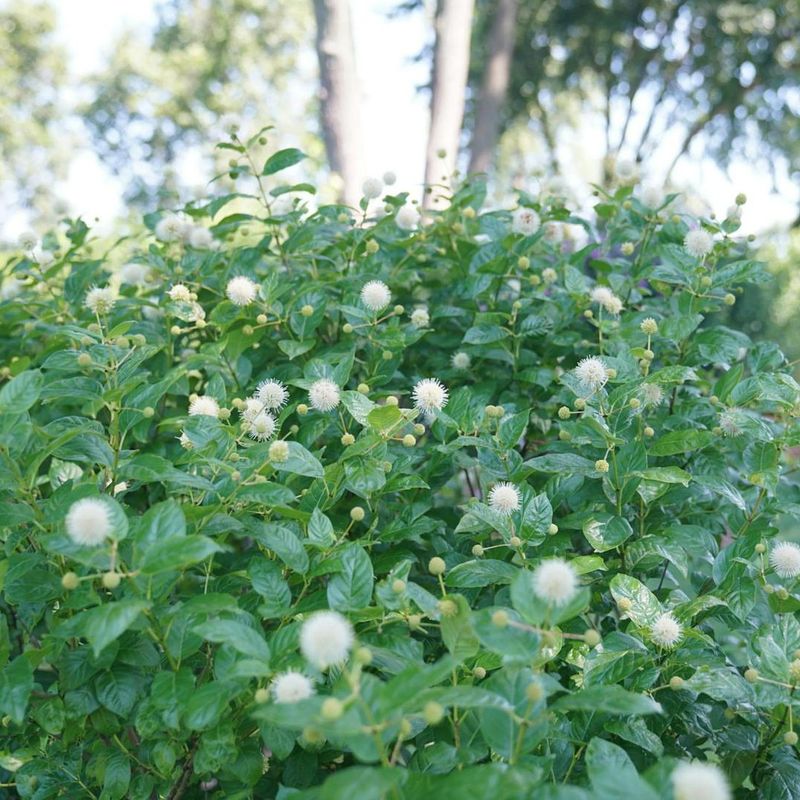
Every yard has a problem spot, and for many Michigan homeowners, that problem is standing water, soggy soil, or a low corner that never quite dries out.
Most ornamental shrubs struggle in those conditions, rotting at the roots or simply refusing to thrive no matter how much care goes into them.
Buttonbush was literally built for exactly those situations.
In the wild, it grows along river margins, around marsh edges, near pond shores, in wet thickets, and throughout hardwood swamps. It can handle prolonged flooding and soaking wet ground that would finish off most landscape plants.
That natural toughness makes it one of the most practical native shrubs available to Michigan gardeners dealing with drainage challenges that feel impossible to solve.
Planting buttonbush in a rain garden, along a swale, beside a pond, or in a low-lying area gives it the conditions it genuinely loves rather than just tolerates.
When a plant grows in its preferred environment, the results show up in stronger growth, fuller foliage, and a more generous flower display.
Wet sites that once felt like liabilities suddenly become assets with buttonbush anchoring them. It also helps stabilize soil along water edges, reducing erosion in spots that tend to wash out during heavy rains.
For any Michigan gardener wrestling with a persistently damp corner of the yard, buttonbush is not just a good option, it is probably the best native option available for that specific challenge.
5. It Works In Full Sun To Partial Sun
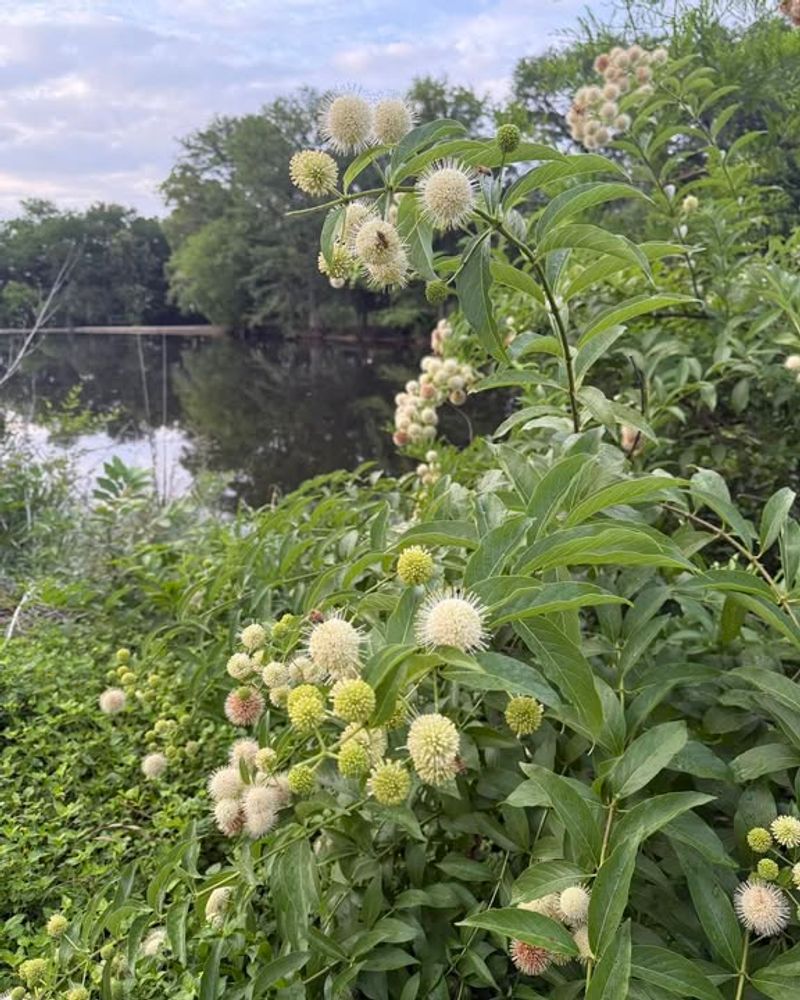
Choosing the right spot for any shrub takes a little thought, and with buttonbush, light is one of the key pieces of the puzzle.
Michigan State University lists buttonbush as suitable for full sun to partial sun, which gives gardeners some flexibility when deciding where to place it.
That range makes it easier to work into different yard layouts without having to sacrifice its blooming potential.
Full sun generally produces the strongest flowering and the most robust growth, especially when paired with the moist or wet soil the plant naturally prefers.
Partial sun can still support a healthy plant, but gardeners in shadier spots may notice slightly fewer flowers or a more relaxed growth habit.
Matching the right light level with the right soil moisture is the real key to getting the best performance out of this shrub.
A common mistake with buttonbush is planting it in a dry sunny spot simply because it looks like it should handle those conditions.
Without consistent moisture, the plant will survive but rarely thrive, and the late summer flower show may disappoint.
Placing it where sunlight and wet or consistently moist soil overlap creates the ideal growing environment. A sunny rain garden, a bright pond edge, or a well-lit low spot in the yard can all work beautifully.
When the site conditions align with what the plant actually needs, buttonbush responds with fuller growth and a more generous bloom display that makes the late summer garden feel genuinely alive and vibrant.
6. Mature Shrubs Make The Bigger Statement
Young buttonbush plants are modest. They put energy into establishing roots during the first couple of seasons, and the flower display reflects that quiet growth phase.
But give this shrub time and space, and the transformation is genuinely impressive.
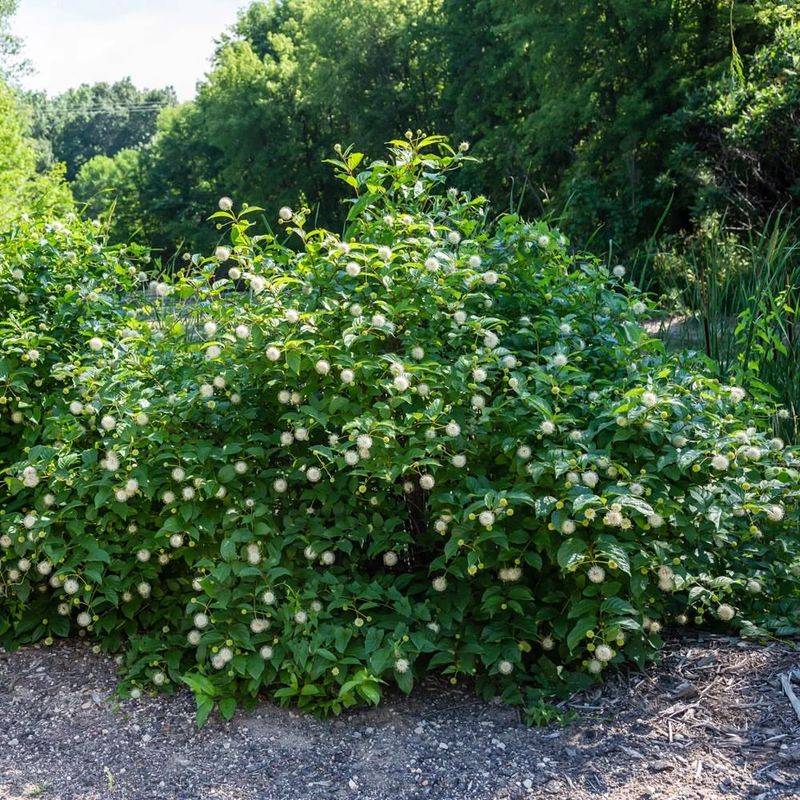
Michigan State University noted that field-grown plants reached around four feet, but in favorable conditions buttonbush can climb anywhere from six to fifteen feet at full maturity.
A fifteen-foot buttonbush covered in dozens of white globe-shaped flower clusters is not a background plant anymore. It becomes a focal point, a conversation starter, and a landmark in the landscape.
The sheer volume of flowers on a mature, well-sited shrub during peak bloom creates a visual impact that rivals many more commonly planted ornamental shrubs that require far more maintenance and attention.
Patience is the main ingredient here. Gardeners who plant buttonbush and expect an instant showpiece may feel underwhelmed in the early years.
The smarter approach is to plant it young, give it the wet conditions it wants, and let the seasons do their work. Each year the shrub fills out a little more, blooms a little more freely, and makes a stronger statement in the landscape.
By the time it reaches full size, it has earned its place in a way that many faster-growing ornamentals never quite manage. The payoff for waiting is a shrub that grows more beautiful and more ecologically valuable with every passing year.
7. Pollinators Help Create The Drama
Stand near a buttonbush in full bloom for just a few minutes and something clicks. The flowers are not just sitting there looking pretty.
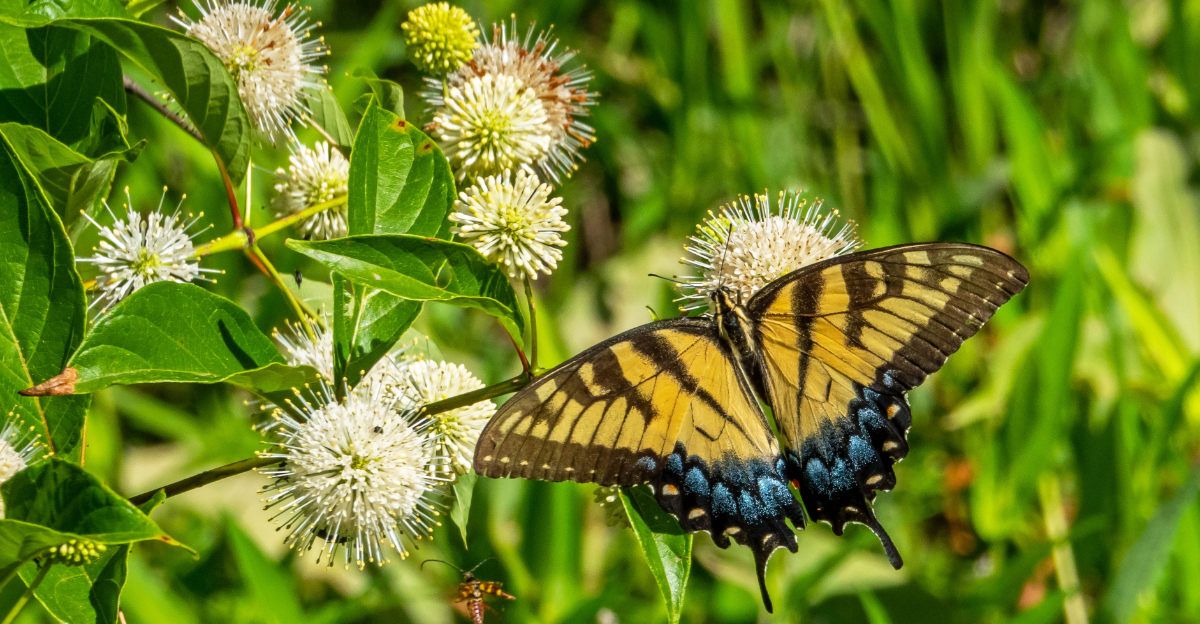
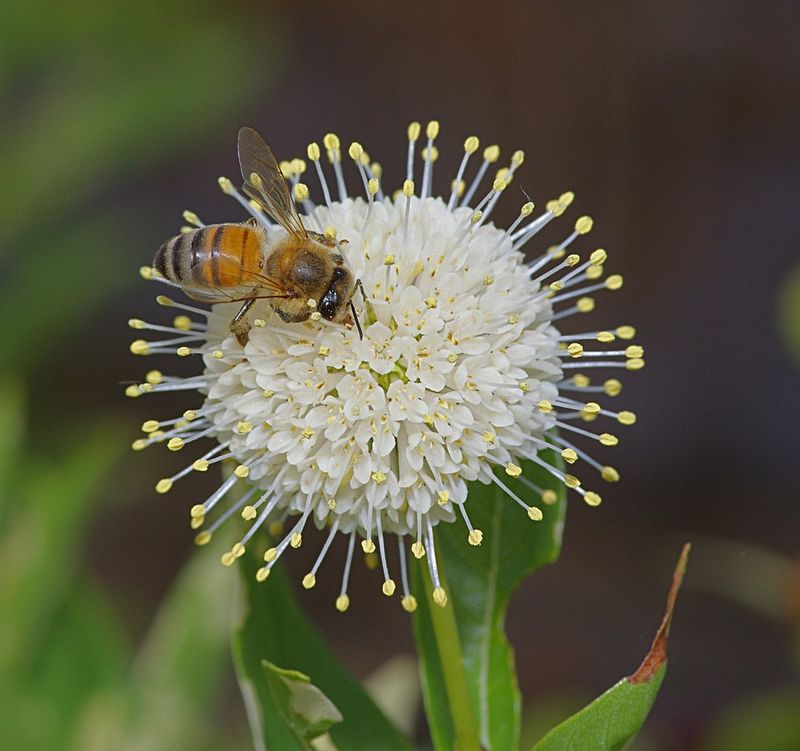
They are busy. Bees of all kinds move across the white globe clusters with an energy that makes the entire shrub feel like it is vibrating with life.
That constant movement is a big part of why buttonbush stops people in their tracks during late summer.
Sweat bees, digger bees, and bumblebees are especially drawn to the flowers, along with butterflies, skippers, and other pollinating insects that rely on late-season nectar sources.
The round flower clusters offer an accessible landing pad loaded with nectar and pollen, making them highly attractive to a wide range of native pollinators at a time when many other nectar sources have already faded for the season.
Watching a mature buttonbush during peak bloom is genuinely entertaining.
The combination of the unusual white flowers and the buzzing, hovering, landing, and departing of dozens of insects creates a scene that feels more like a nature documentary than a backyard garden moment.
Kids love it. Gardeners love it. Even people who claim they do not care much about plants tend to stop and stare when they see it in action.
Adding buttonbush to a Michigan yard is not just a landscaping decision, it is an invitation to bring a whole community of native pollinators into the garden at the moment when the summer garden needs them most.
8. It Belongs Where Ordinary Shrubs Fail
Some plants earn their place in a garden by being beautiful. Others earn it by being useful.
Buttonbush manages to do both, and it does so in the exact spots where most other shrubs quietly give up.
Wet corners, pond edges, rain gardens, and soggy low areas that drain slowly after every storm are places where buttonbush does not just survive, it genuinely thrives and rewards the gardener generously.
For most of the season it holds things together without demanding any attention. No special fertilizers, no extra watering, no complicated pruning schedules.
It grows, fills out, and does its ecological work quietly in the background while other plants take the spotlight. Then August arrives and the whole dynamic shifts in the most satisfying way possible.
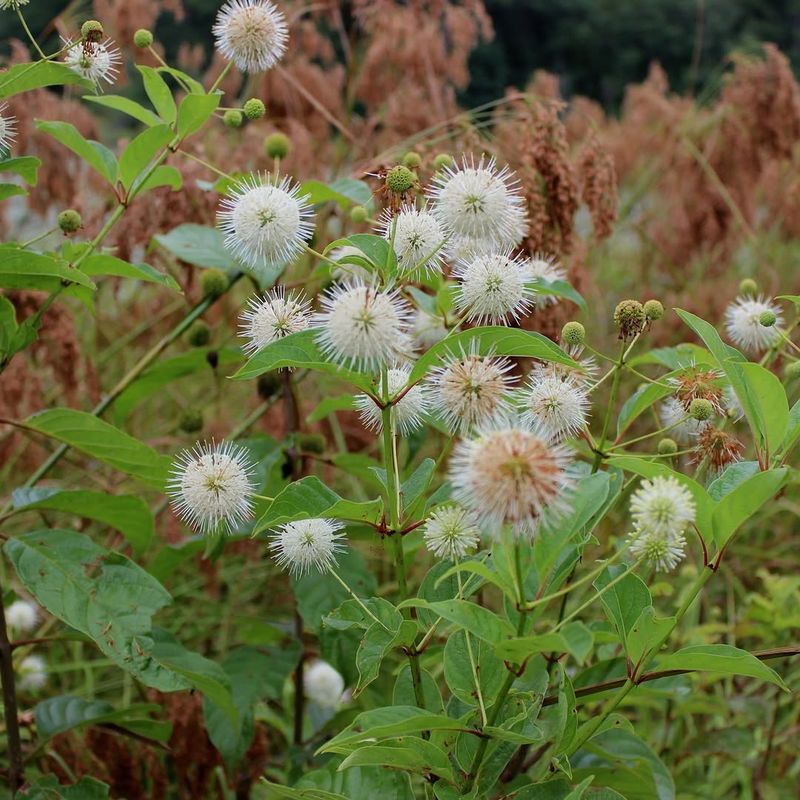
Those round white flowers, the buzzing pollinators, the glossy foliage, and the unusual texture of the bloom clusters combine into something that feels special and earned.
Buttonbush is not a plant for every spot in the yard, but in the right location it becomes one of the most distinctive and valuable native shrubs a Michigan gardener can choose.
It carries wildlife value through the season, provides late-summer visual impact that few ornamentals can match, and fills a genuine ecological niche in wet Michigan landscapes.
For anyone willing to match the right plant to the right place, buttonbush proves that the most rewarding garden choices are sometimes the ones that spend most of the year looking quietly, patiently, and perfectly unremarkable.