The Only Flower You Need On Your Texas Patio To Keep Wasps Less Welcome All Summer Long
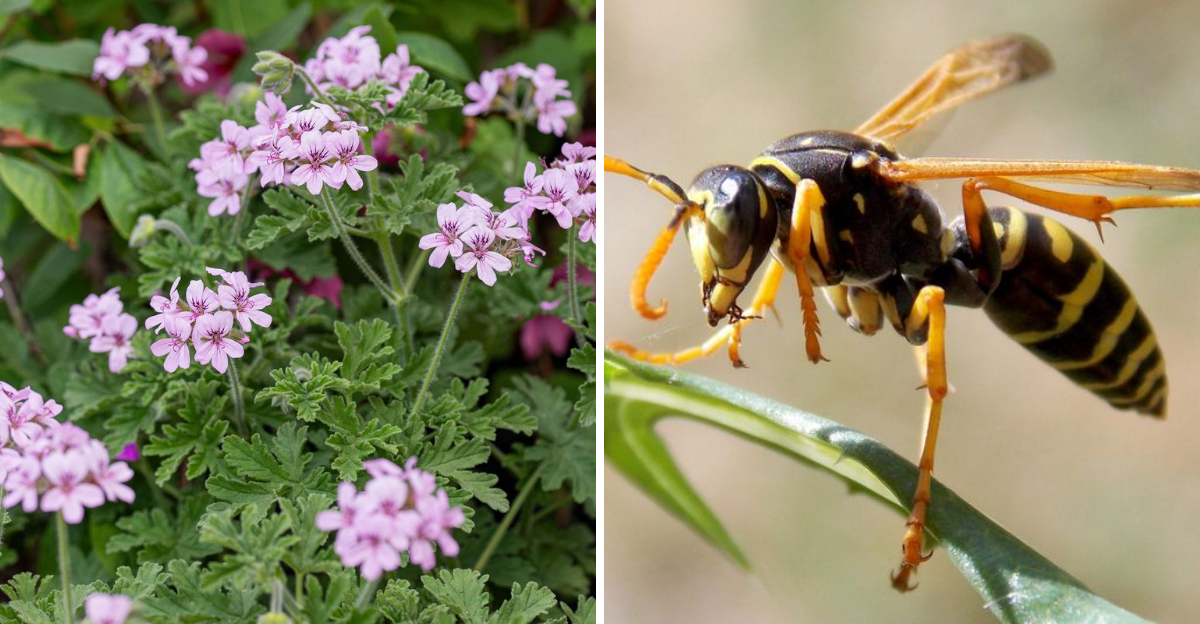
Wasps on a Texas patio have a way of taking over the whole space. One minute you’re enjoying a meal outside, the next you’re watching a wasp investigate everything on the table with zero regard for personal boundaries.
Most people respond with sprays or traps, which help temporarily but never really solve the problem for the whole season. But there’s a flower that changes the dynamic entirely.
One particular patio flower produces natural compounds that wasps consistently avoid, making your outdoor space significantly less appealing to them without any spraying, trapping, or chasing involved. It works passively, around the clock, through the entire Texas summer.
And beyond keeping wasps at bay, it happens to be one of the most beautiful and low maintenance patio flowers you can grow in this climate. Full sun, heat tolerant, and reliable from spring all the way through fall.
Meet Scented Geranium
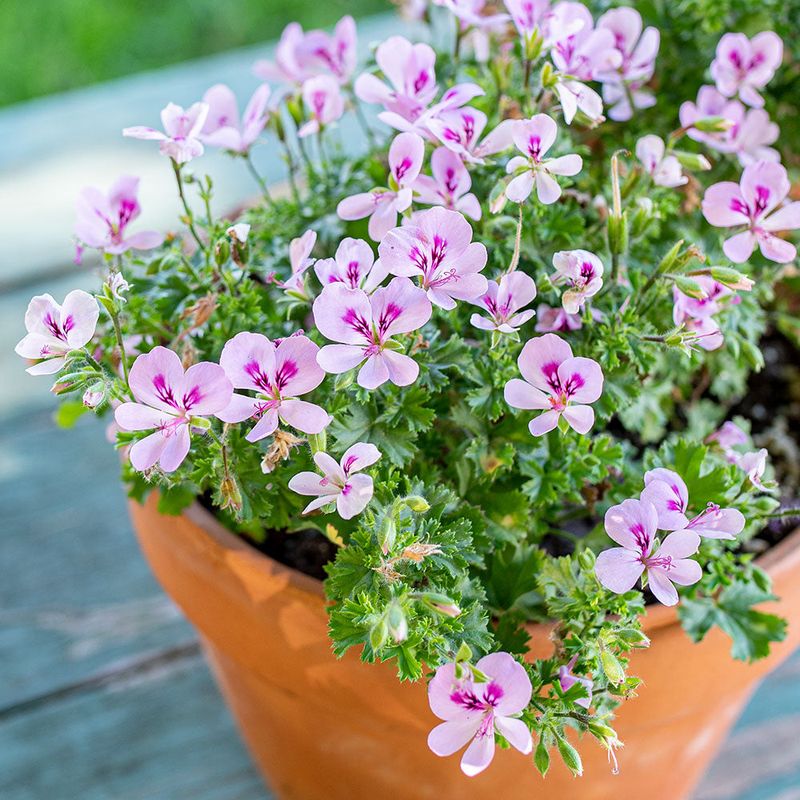
Walk into almost any Texas nursery in spring, and you might spot a leafy, soft-textured plant that smells faintly of roses, citrus, or mint depending on the variety. That plant is the scented geranium, known by its botanical name Pelargonium spp.
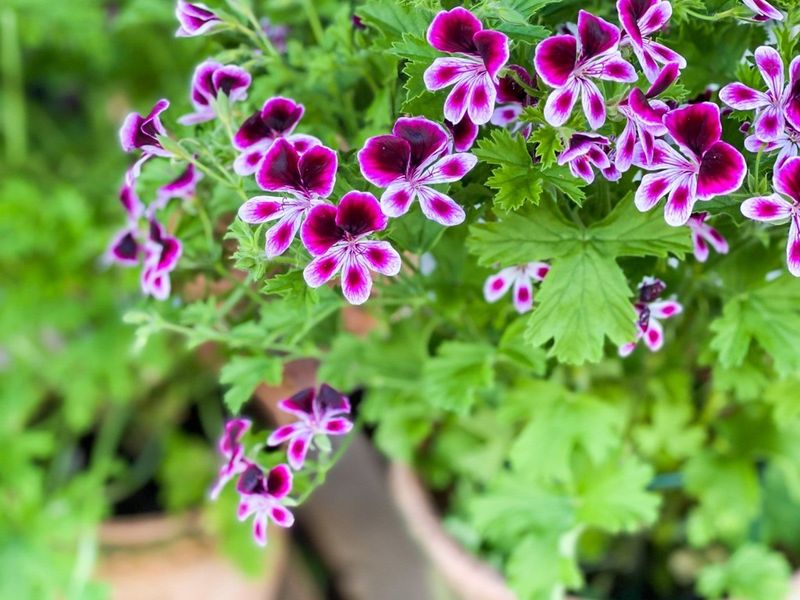
Unlike the bold, bright geraniums you see in hanging baskets, scented geraniums are grown mostly for their fragrant leaves rather than their flowers. The blooms are small and pretty but modest. The real star of the show is the foliage.
When you brush against the leaves or give them a gentle squeeze, they release a strong, pleasant scent that fills the air around your patio.
Gardeners have loved scented geraniums for centuries, and they were especially popular in Victorian-era parlors where people would rub the leaves just to enjoy the fragrance.
Scented geraniums come in dozens of varieties. Rose-scented types are among the most popular, but you can also find lemon, peppermint, coconut, and even chocolate-scented options.
Most grow well in containers, which makes them ideal for Texas patios where you want flexibility to move plants around.
They are not tropical plants, but they do love warm weather and sunshine, which means Texas summers suit them well for most of the season. These plants stay relatively compact, usually reaching one to two feet tall in a pot.
Their soft, lobed leaves have a slightly fuzzy texture that adds visual interest even when the plant is not in bloom. For anyone wanting a fragrant, functional, and attractive patio plant, scented geranium is a smart starting point.
Why Wasps Visit Patios
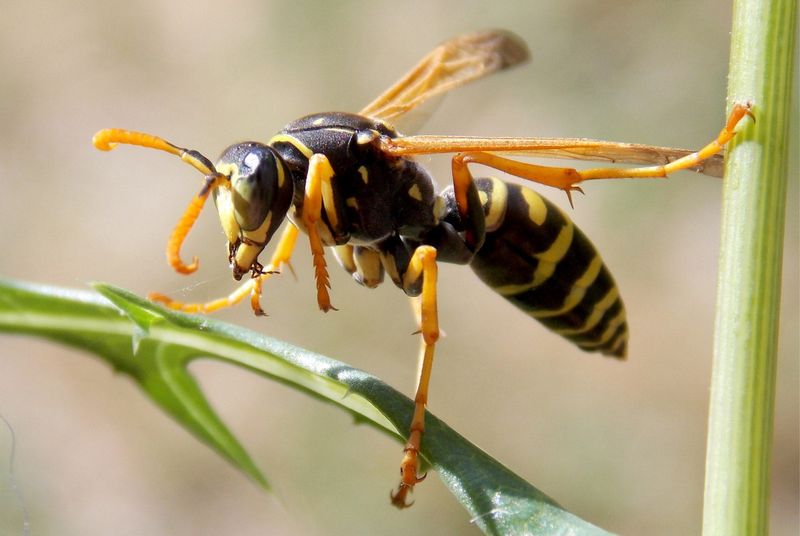
Before you can make your patio less attractive to wasps, it helps to understand what draws them there in the first place. Wasps are not just randomly flying around looking for trouble.
They are searching for food, water, and shelter, and a busy Texas patio often offers all three without you even realizing it.
Sweet drinks are one of the biggest attractants. An open soda can, a glass of lemonade, or even a sticky juice spill on a table can bring wasps in fast.
They are also drawn to protein-rich foods like grilled meat, pet food left outside, and even crumbs from sandwiches or chips. If you have an outdoor trash can nearby without a tight lid, that is basically a buffet invitation for wasps.
Your Texas Garden Changes Every Week. Your Plan Should Too.
Gardening in Texas changes quickly throughout the season. Every Friday you’ll receive a simple weekly plan showing exactly what to plant, prune, fertilize, harvest, and protect so you never miss the right timing.
Ripe or fallen fruit is another major draw. If you have a fruit tree near your patio, dropped fruit that sits on the ground will attract wasps quickly, especially in the heat of a Texas afternoon when the sugars become more concentrated and fragrant.
Water sources matter too. A birdbath, a leaky hose connection, or even a puddle near a pot saucer can give wasps the hydration they need.
Beyond food and water, wasps also scout for sheltered nesting spots. Porch ceilings, the undersides of furniture, spaces behind shutters, gaps in railings, and hollow areas around eaves are all popular nesting locations.
Once a colony gets established, the problem grows quickly. Knowing these attractants helps you take smarter steps to reduce wasp activity before it becomes a bigger issue.
How Scented Geranium May Help
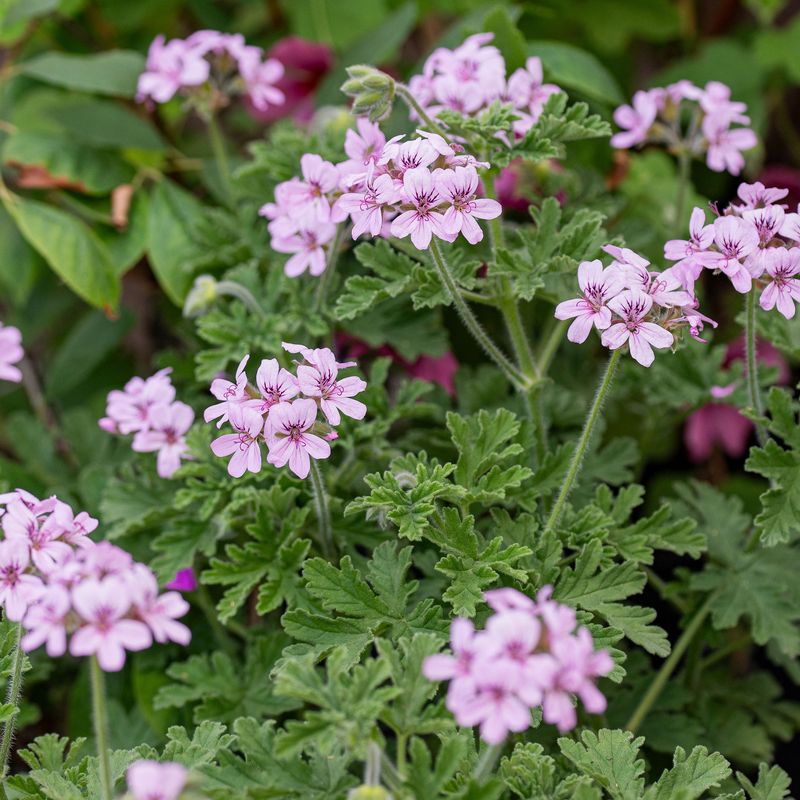
Here is where things get interesting, and also where it pays to be honest. Scented geranium is not a scientifically proven wasp repellent.
You will not find studies that say placing one pot on your patio will keep all wasps away for the entire summer. That kind of promise would be misleading, and you deserve straight information.
What scented geranium does offer is a strong-smelling foliage that many insects find unpleasant or confusing. The oils in the leaves, especially in rose-scented and citronella-scented varieties, have compounds that some insects prefer to avoid.
Wasps rely heavily on scent to navigate their environment, find food, and communicate. A patio filled with competing fragrances may make it harder for them to zero in on the food smells they are seeking.
Think of it less like a force field and more like background noise that makes your patio a little less readable to wasps. When combined with good cleanup habits, the effect can be more noticeable.
A clean patio with fewer food and drink attractants, plus the added layer of fragrant foliage, creates an environment that is simply less inviting overall.
Some gardeners also report that certain wasp species seem to avoid heavily scented areas, though personal experience varies. The citronella geranium variety, sometimes called the mosquito plant, is particularly known for its strong scent.
Placing a few pots of scented geranium around your seating area will not guarantee a wasp-free summer, but it is a low-effort, pleasant-smelling addition that works best as part of a broader strategy rather than a solo solution.
Where To Place It
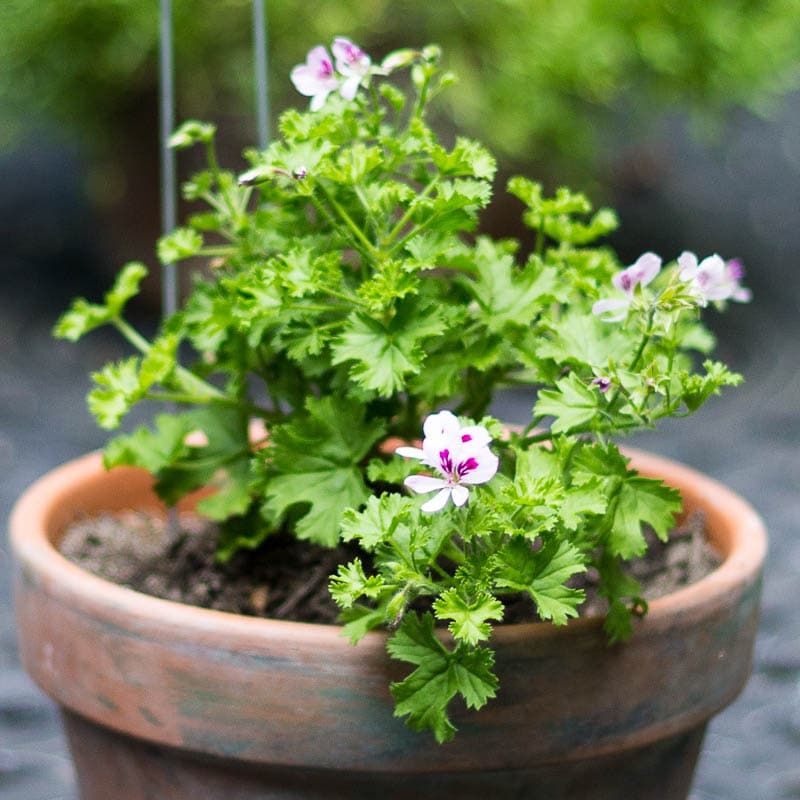
Placement matters more than most people expect with scented geranium. The plant does not constantly release its scent into the air the way a candle or diffuser would.
Most of the fragrance comes out when the leaves are touched, brushed, or slightly disturbed. That means where you put the pot directly affects how useful it is on your patio.
Good spots include near the edges of your outdoor dining table, along patio steps, beside doorways, or at the corners of your seating area.
These are places where people naturally pass by or sit close, and that light contact with the leaves helps release the scent regularly throughout the day.
Placing a pot near the entrance to your patio also means the fragrance greets guests and creates a pleasant first impression.
Avoid putting the pots in spots where guests will constantly brush hard against them or knock them over. Too much rough contact can bruise the leaves and actually reduce the plant’s overall health over time.
You want light, incidental contact rather than heavy foot traffic bumping the pot repeatedly.
Windowsills, low plant stands near chairs, and built-in ledges along porch railings are all excellent placement options. If you have a small table between two chairs, a single pot of scented geranium placed there works beautifully.
You can also cluster two or three pots together near an outdoor dining area for a stronger combined fragrance effect.
Moving the pots is easy since they are in containers, so feel free to experiment with different spots until you find what works best for your specific patio layout and summer routine.
How To Grow It In Texas
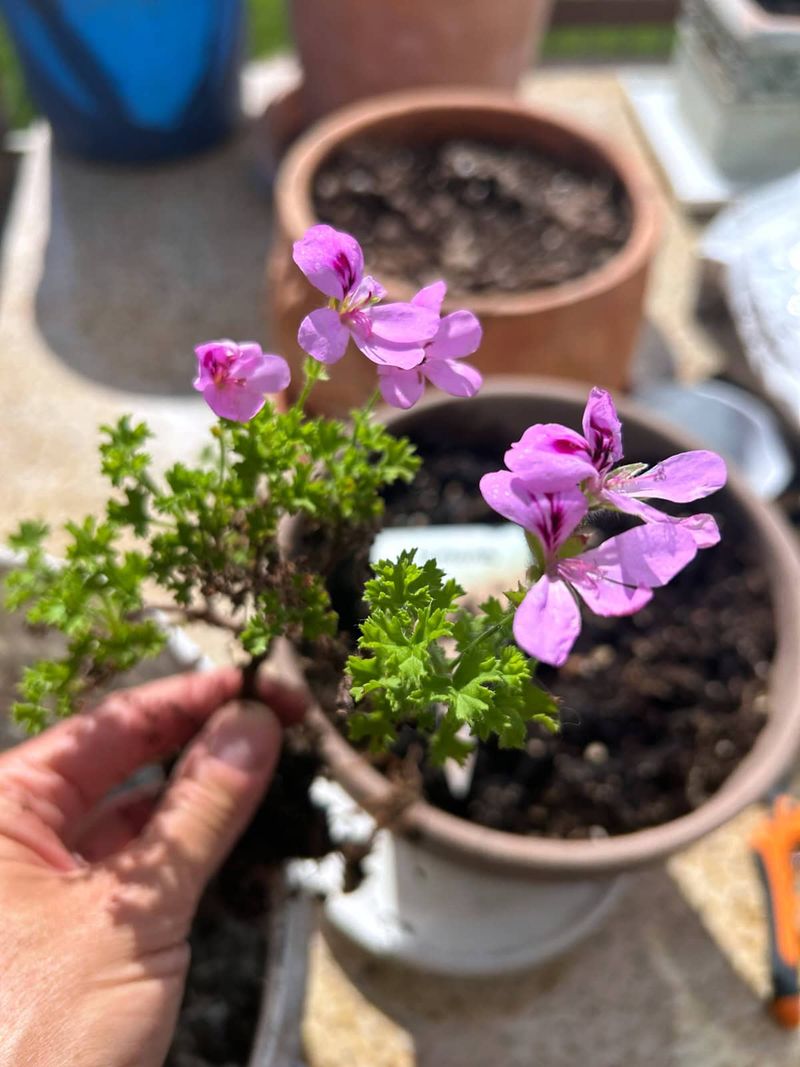
Good news for Texas gardeners: scented geraniums actually enjoy the same kind of hot, sunny weather that Texas delivers in abundance.
These plants thrive in bright sun to part sun, making them well suited for south-facing or west-facing patios that get full afternoon exposure.
Give them at least six hours of sunlight daily and they will reward you with lush, fragrant foliage all season long.
The most important thing to get right is the soil and drainage. Scented geraniums absolutely do not like sitting in soggy soil.
Always use a fast-draining potting mix, and make sure your container has drainage holes at the bottom. A pot without drainage will lead to root rot, which is one of the fastest ways to lose this plant.
Terracotta pots are a popular choice because they allow moisture to evaporate through the sides, keeping roots from staying too wet.
Watering is simple once you get the hang of it. Stick your finger about an inch into the soil, and if the top feels dry, it is time to water.
If it still feels damp, wait another day or two. In the intense Texas heat of July and August, you may need to water more frequently, sometimes every day for smaller pots in direct sun.
Feed your plant with a balanced liquid fertilizer once a month during the growing season to keep it looking its best. Trim back any leggy stems to encourage bushier growth and more leaf production.
Protect the plant from hard freezes in winter by bringing it indoors or into a sheltered garage when temperatures drop below freezing.
Pair It With Wasp Prevention
Scented geranium works best when it is part of a team effort. No single plant will solve a wasp problem on its own, but when you combine it with a few smart habits, your patio becomes a much less appealing destination for these insects all summer long.
Start with food and drink management. Always cover your beverages when you are not actively drinking them.
Wasps can find an open soda can or juice glass within minutes on a warm Texas afternoon. Use cups with lids and keep food covered until you are ready to eat.
Wipe up any spills right away, especially sweet ones, because even a small sticky spot on a table can draw wasps in quickly.
Trash management is equally important. Use a trash can with a tight-fitting lid, and empty it regularly so food odors do not build up.
If you grill on your patio, clean the grill grates after every use and dispose of grease properly. Avoid leaving pet food bowls outside for extended periods, especially during peak wasp activity in the afternoon hours.
Check your patio structure regularly for early nest-building signs. Look under eaves, behind shutters, beneath furniture, and inside any hollow spaces near your porch ceiling.
Catching a small nest early, before a colony grows large, makes it much easier to address safely. Fallen fruit from nearby trees should be picked up promptly.
When all these steps come together alongside your scented geranium pots, you create a patio environment that is cleaner, less fragrant to wasps, and far more enjoyable for you and your guests throughout the Texas summer season.