This Stinger-Tailed Creature In Idaho’s High Desert Lives Farther North Than Any Other Scorpion
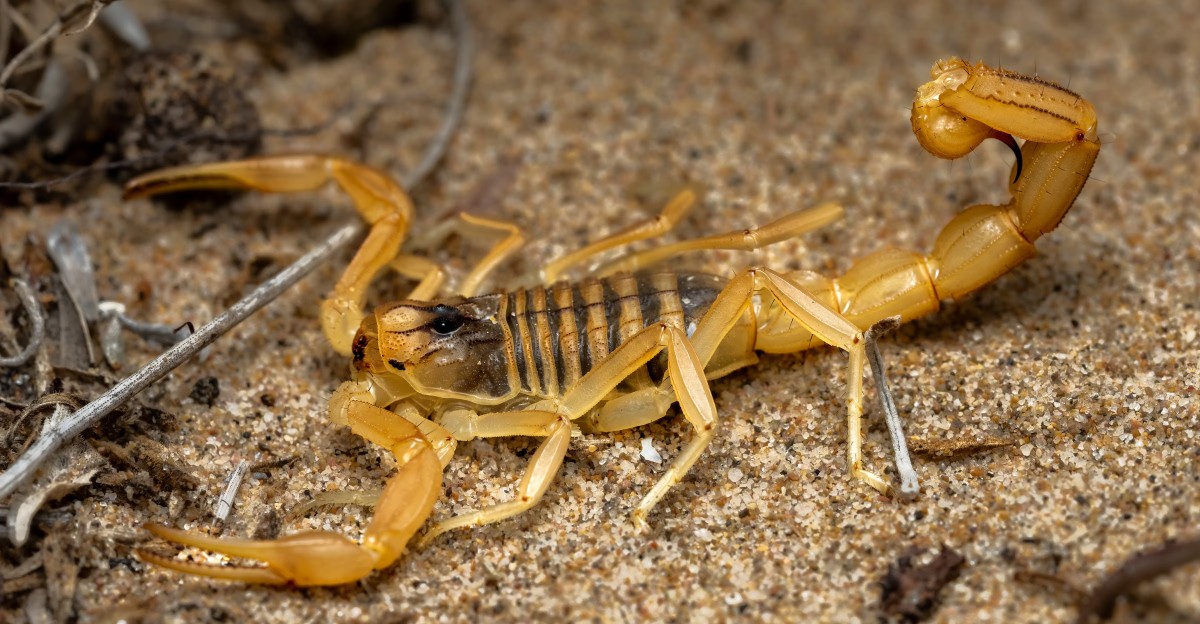
A small arachnid with a curled tail spends its winters tucked underground in the sagebrush, and it ranges all the way into Canada. That still makes me grin every time I say it out loud.
Its family is famous for blazing deserts, cactus country, and sun-baked sand. Yet one tough member shrugged off the heat requirement and pushed north past the 49th parallel, into places where snow piles up each winter.
I’ll admit it, I learned about this neighbor after flipping a flat rock near my rhubarb patch. Out it scuttled, pale tan and about two inches long, tail raised like a tiny question mark.
If you garden anywhere in southern Idaho’s high desert, you may share your beds with one too. So what is it, how does it handle the cold, and should you worry? Fair warning, the answers are stranger than you might expect.
That Curled Tail Under Your Sagebrush Belongs To A Record Holder
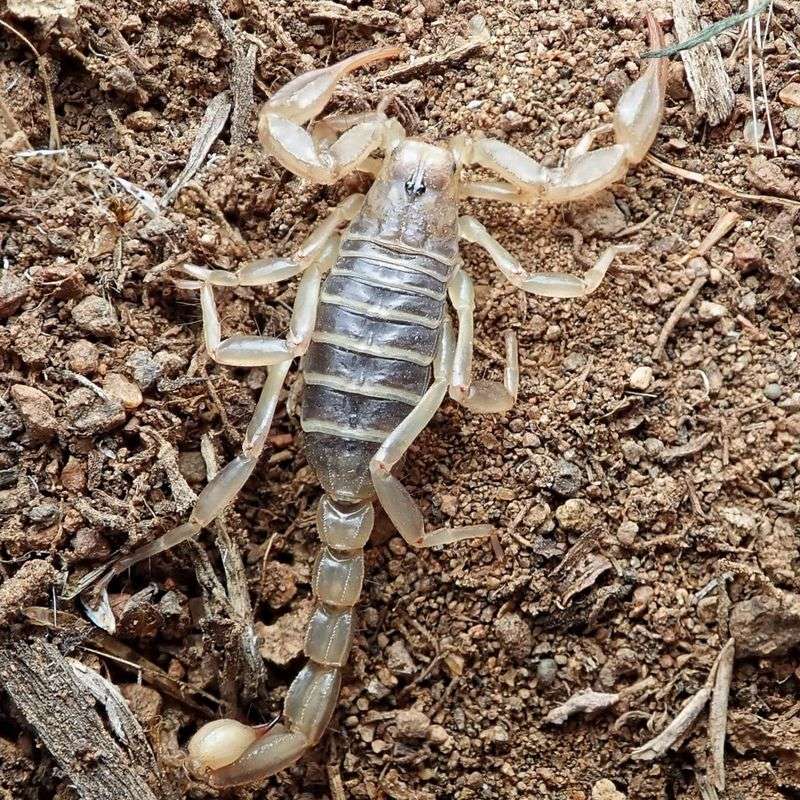
Scorpions in snow country sound like a tall tale, but this one is real. The animal hiding under your rocks is the northern scorpion, known to scientists as Paruroctonus boreus.
The word boreus points to the north, and the name fits. Its range runs from the Great Basin through Idaho, Nevada, Utah, Oregon, Washington, Wyoming, and Montana, then crosses into southern Alberta and southern British Columbia.
Those Canadian populations reach roughly 50 degrees north latitude. That makes it the most northern scorpion in North America.
In the Gem State, you’ll find it mostly across the southern half, especially the Snake River Plain. Sagebrush flats, lava rock, dry canyons, and rocky slopes are its favorite addresses.
Not going to lie, the first time I read that range map, I checked it twice. A creature we connect with Arizona heat is quietly living through Canadian winters.
Still, the record comes with a small asterisk. A few European scorpions live in pockets at similar or slightly higher latitudes, but those populations, such as the one in southeast England, were introduced by people. Either way, our sagebrush scorpion has earned serious bragging rights for toughness.
Northern Scorpions Ride Out Snowy Winters Deep In Their Burrows
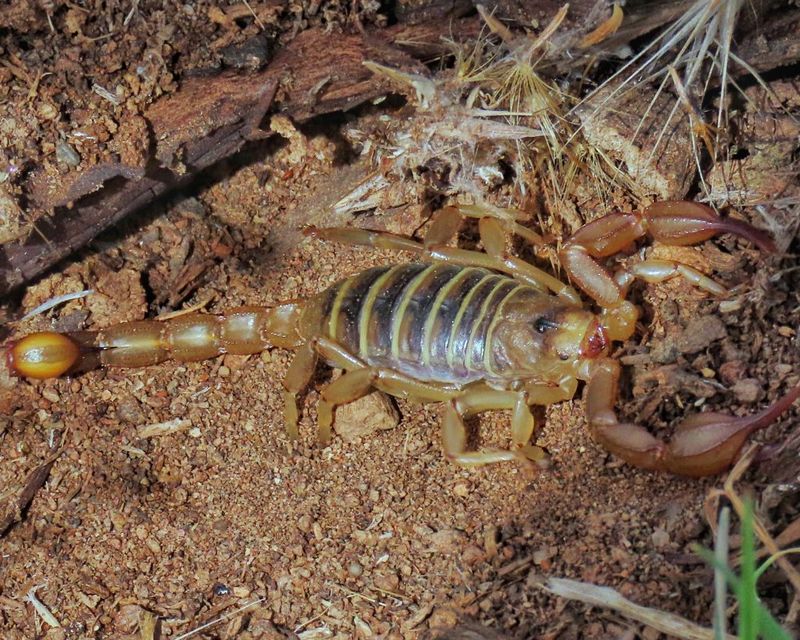
Winter on the Snake River Plain can drop well below zero. So how does a desert arachnid make it to spring?
The trick is simple and smart. Northern scorpions dig or claim burrows under rocks and in loose soil, then settle in below the frost line where temperatures stay steadier.
Once the weather cools in fall, they slow way down. Their metabolism drops so low that they can go months with little or no food, living off stored energy until warmth returns.
Scorpions in general are famous for this kind of thrift. Some species can survive close to a year without a meal, which is wild when you think about how often my teenager raids the fridge.
Activity usually picks back up in late spring. From roughly May through September, they come out on warm nights to hunt, then retreat again as fall chills the ground.
For gardeners, this rhythm matters. If you’re moving rocks or digging new beds in early spring, you may uncover a sleepy scorpion that barely moves.
Give it a gentle nudge with a trowel toward a quiet corner, then carry on. A cold scorpion is a slow scorpion, and it wants nothing to do with you.
A Two-Inch Tan Scorpion With Slim Pincers Is Easy To Spot Once You Know
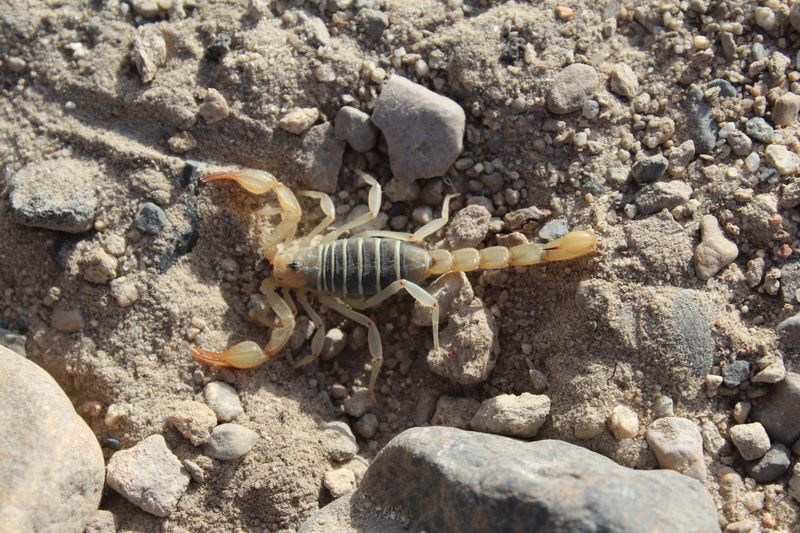
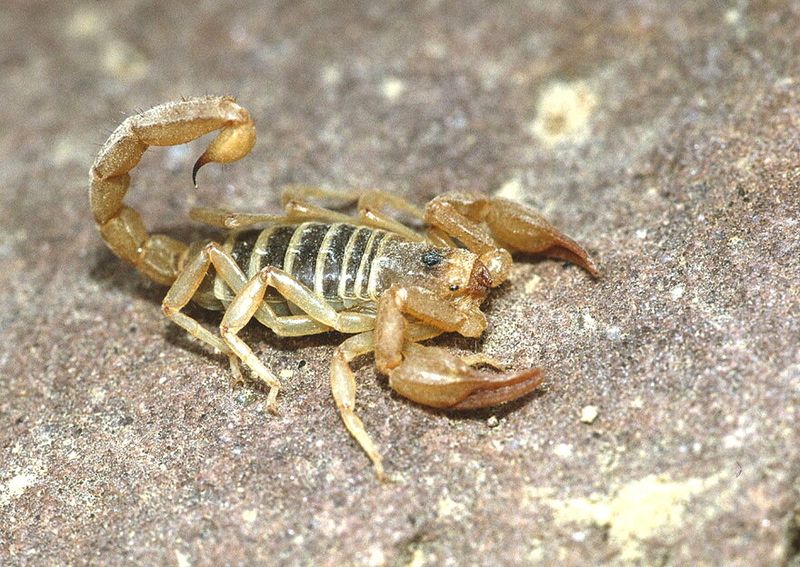
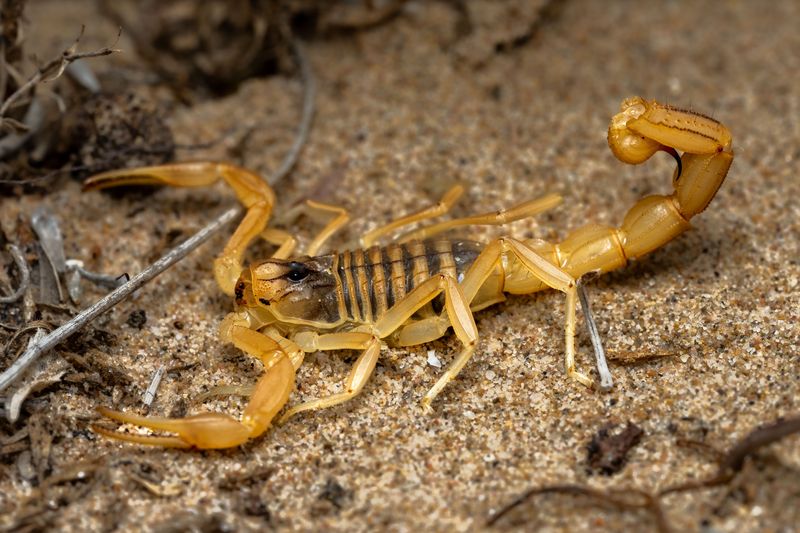
Here’s my favorite way to describe it to friends: picture a lobster’s smaller, drier cousin who moved to the desert. Fully grown, the northern scorpion measures about 1.5 to 2.25 inches long.
Its body ranges from straw yellow to light tan or soft brown. The tail and pincers often look a little paler, and the back can show darker shading.
The pincers, called pedipalps, are fairly slender. The tail ends in a bulb with a small curved stinger, and it often rests curled over the back or off to one side.
Now for the mix-ups. Tiny pseudoscorpions also live in gardens, but they’re only a few millimeters long and lack any tail at all.
Sun spiders, sometimes called camel spiders, show up in the same habitat too. They’re fast, hairy, and tailless, with big jaws in front instead of pincers.
A quick checklist helps. Look for pincers, a long segmented tail, and a stinger at the tip, and you’ve got your scorpion.
I keep a phone photo of one taped inside my shed door. Visiting kids love comparing the creatures they find to that picture, and it turns a startle into a science lesson.
Grab A Blacklight And Watch Desert Scorpions Glow Blue-Green At Night
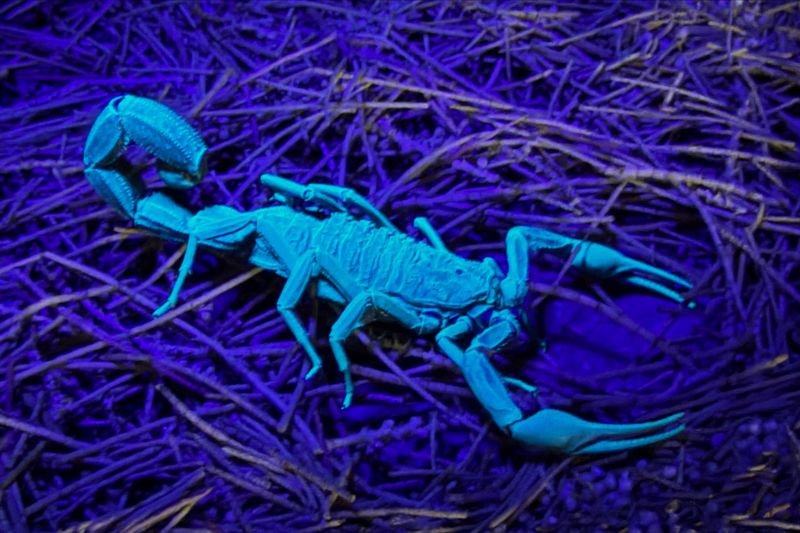
Few backyard adventures beat this one. Sweep an ultraviolet flashlight across your rock garden on a warm summer night, and a scorpion will light up like a neon sign.
Their outer shell, called the cuticle, holds natural compounds that fluoresce under UV light. The glow comes out a vivid blue-green that stands out against dark soil.
Scientists still debate why scorpions glow. One idea suggests it helps them sense light levels and decide when to stay hidden, but no explanation has been fully proven yet.
Researchers use the glow to count scorpions in the field. Ordinary gardeners can use it to figure out where these hunters hang out around the yard.
A few tips make the outing better. Pick a calm night above about 70 degrees, wait until full dark, and use a flashlight labeled around 365 to 395 nanometers.
Wear closed-toe shoes and long pants. Look, admire, and snap photos, but skip picking them up with bare hands.
My nephew calls these walks scorpion safaris. Honestly, I’m a sucker for them too, because nothing else in the garden turns a quiet evening into a glowing treasure hunt quite like this.
That Little Stinger Packs A Bee-Sized Punch, Not A Hospital Trip
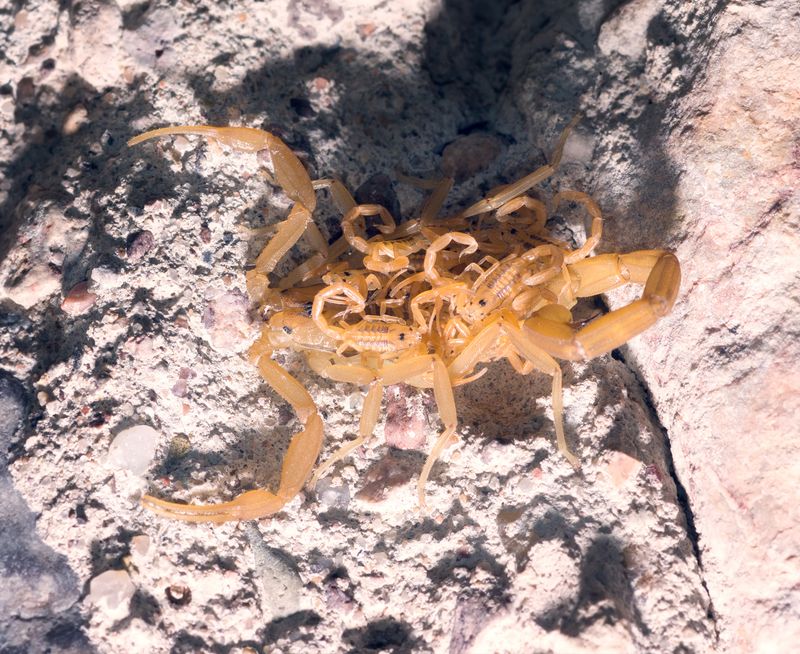
Let’s clear up the scary part first. A northern scorpion sting hurts, but for most healthy people it feels a lot like a bee or wasp sting.
Expect sharp local pain, some redness, mild swelling, and maybe a bit of tingling or numbness. Symptoms often fade within a few hours.
The scorpion with a truly serious reputation in the United States is the Arizona bark scorpion. It lives in the desert Southwest, not in our sagebrush country.
For a typical sting, wash the spot with soap and water. A cool compress and an over-the-counter pain reliever usually help, and elevating the area can ease swelling.
Watch closely, though. Seek medical care right away for trouble breathing, swelling of the face or throat, hives spreading across the body, or a sting on a small child or someone with a known insect allergy.
Your regional poison control center is another great resource. In the U.S., you can reach it at 1-800-222-1222 for free, fast advice.
I’ll say this much: I’ve gardened for years and only been stung once, by grabbing a board barehanded. Scorpions sting to defend themselves, so most stings happen when we surprise them.
Rock Borders And Firewood Stacks Make Cozy Scorpion Hideouts
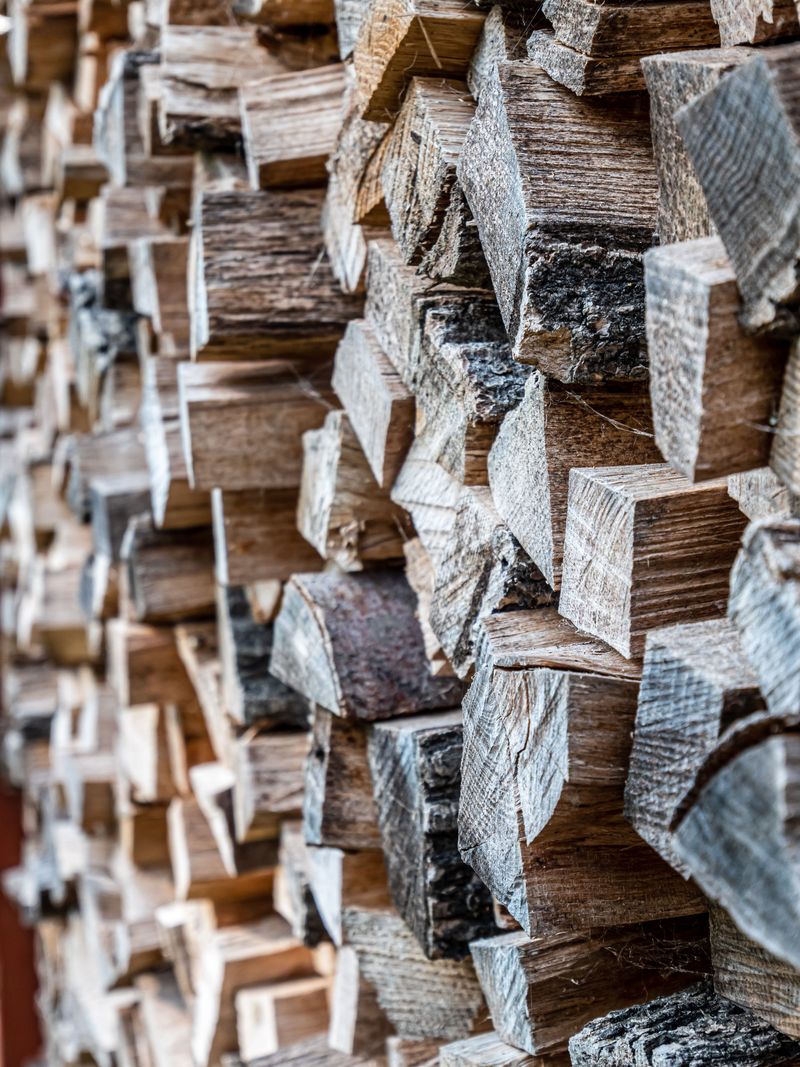
Guilty as charged, my yard is basically a scorpion bed and breakfast. Flat paving stones, a stacked woodpile, and a decorative lava rock border all check every box on their wish list.
During the day, northern scorpions want three things. They look for shade, a bit of moisture, and a snug spot where nothing disturbs them.
Common garden hideouts include landscape timbers, overturned pots, boards lying on soil, rock walls, and thick mulch. Old tarps and piles of yard debris rank high on the list too.
Food matters just as much as shelter. Crickets, beetles, moths, and other insects gather around lights and moist areas, and the scorpions follow the buffet.
This explains why sightings jump near patios, porch lights, and irrigated beds in summer. Watered gardens in dry country attract bugs from all around.
You don’t need to strip your landscape bare. Just know where the hiding spots are, so you can work around them with care.
When I move a stone in my herb bed now, I lift it toward me. That way, anything underneath scoots away from my hands instead of toward them, and nobody gets a nasty surprise.
Gloves, Shaken Boots, And Sealed Cracks Keep Scorpion Run-Ins Rare
A few easy habits do most of the work. I picked these up after my one ouch moment, and run-ins have been rare ever since.
Start with leather or thick gardening gloves whenever you lift rocks, boards, or firewood. Shake out boots, shoes, and gloves left outside overnight before slipping them on.
Move woodpiles at least 20 feet from the house and raise them off the ground if you can. Keep mulch, rocks, and debris trimmed back from the foundation in a narrow clear strip.
Indoors, seal cracks around windows, doors, pipes, and the foundation with caulk. Tight door sweeps help a lot, since scorpions can squeeze through surprisingly thin gaps.
Fixing leaky outdoor faucets reduces damp spots. Switching porch bulbs to yellow or warm LED lights draws fewer insects, which means less food for hungry hunters.
Broad pesticide sprays often aren’t the best first move. They can harm helpful insects and pollinators, and scorpions tend to tolerate many common products.
If one wanders inside, place a jar over it and slide stiff paper underneath. Then release it out by the sagebrush, far from your back door, where it can go back to hunting crickets.
Those Sagebrush Scorpions Earn Their Spot In Your Garden Food Web
Did you know northern scorpion moms give birth to live young? The tiny white babies climb onto her back and ride there until their first molt, usually a week or two.
That devotion is just one reason I’ve grown fond of them. They also earn their keep by eating crickets, beetles, moths, spiders, and other small arthropods that wander through our beds.
They feed others in turn. Burrowing owls, grasshopper mice, lizards, and bats snack on scorpions, so they link insects to bigger desert wildlife.
Scorpions are one more piece of the sagebrush ecosystem. In a state where sagebrush lands face pressure from fire, invasive cheatgrass, and development, that’s worth noticing.
So here’s my takeaway. Keep the area near your doors tidy, wear gloves, and let the wilder corners of your Idaho yard stay a little rocky and natural.
Plant native shrubs like big sagebrush, rabbitbrush, and bitterbrush toward the back of the lot. You’ll support pollinators, birds, and the quiet hunters underneath.
Next warm night, take a blacklight for a stroll. You might meet the toughest little arachnid in North America, glowing right there in your own backyard.