This Tiny Pest Is Damaging Pennsylvania Rose Bushes Right Now
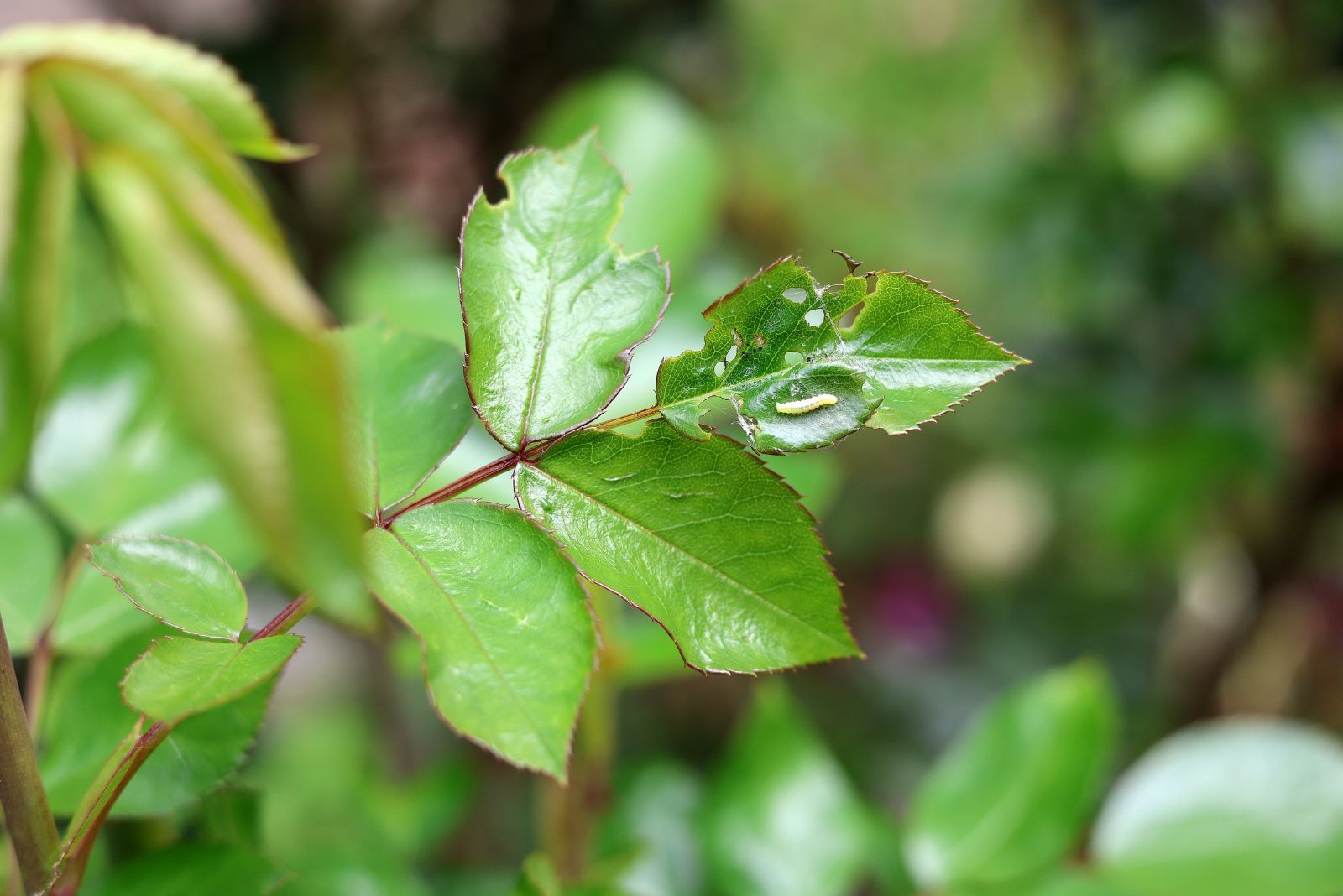
Pennsylvania rose bushes can look great one moment and suddenly seem full of strange damage the next. Leaves start showing pale patches, thin areas, or ragged holes, and the plant quickly loses that fresh spring look.
What makes this especially frustrating is how easy the pest is to miss. It often feeds out of sight and can leave a noticeable mess before most gardeners realize there is a problem.
That is why this issue catches so many people off guard. Instead of healthy foliage and strong new growth, rose bushes start looking worn down right when they should be shining.
The good news is that the damage has a pretty clear pattern once you know what to watch for. Spotting the problem early can help Pennsylvania gardeners protect their roses and keep them looking much better through the rest of spring.
1. What Rose Sawfly Larvae Actually Are
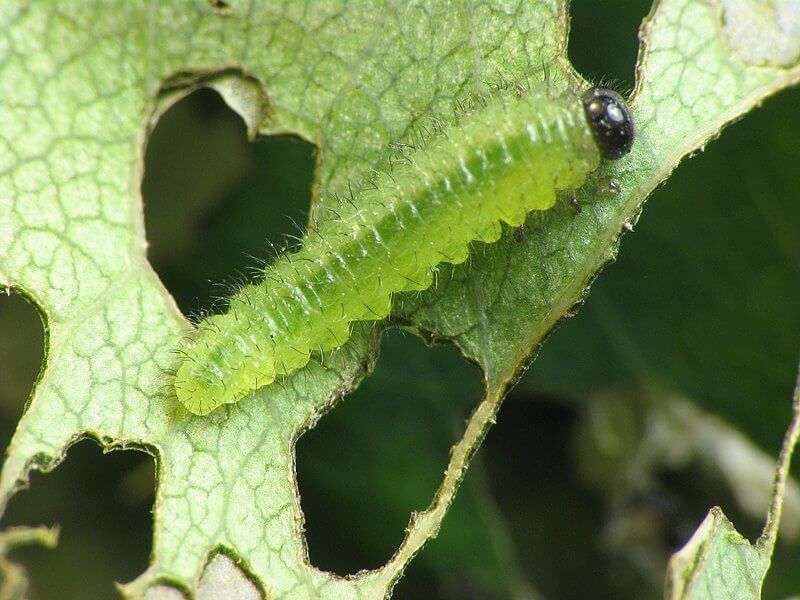
Most people have never heard of a rose sawfly, but these tiny insects are causing real problems for Pennsylvania gardeners right now. Rose sawfly larvae, sometimes called rose slugs, are the young stage of a small flying insect called a sawfly.
They are not caterpillars, even though many people think they are at first glance. That mix-up leads to a lot of wasted time and wrong treatments.
A sawfly is actually more closely related to wasps and bees than to moths or butterflies. The adult sawfly lays eggs directly into rose leaf tissue, and the larvae hatch out ready to feed.
They are pale green to yellowish-green, soft-bodied, and have a shiny, slug-like look. They can be surprisingly hard to spot because they blend right in with the leaf color.
Unlike true caterpillars, rose sawfly larvae do not respond to treatments made for moths or butterflies. That is one big reason why correctly identifying them matters so much.
In Pennsylvania, these larvae show up mostly in spring, when roses are putting out fresh new growth. They tend to stay on the undersides of leaves, which is another reason gardeners often miss them until the damage gets bad.
Adult sawflies do not sting and are mostly harmless on their own. The larvae are the real concern.
A small infestation can grow quickly if nothing is done early. Understanding exactly what you are dealing with is always the first step toward protecting your rose bushes and keeping your Pennsylvania garden looking its best through the growing season.
2. Why They Show Up on Pennsylvania Roses In Spring
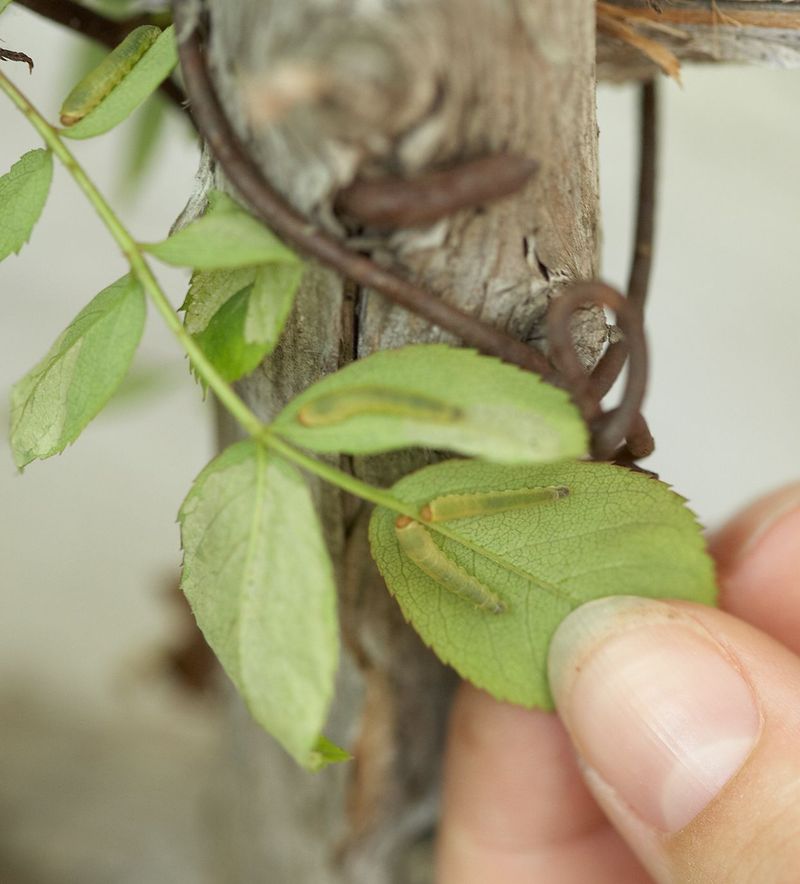
Spring in Pennsylvania brings warming temperatures, longer days, and fresh new rose growth. It also brings rose sawfly larvae, and the timing is not a coincidence.
These pests are perfectly timed to take advantage of the soft, tender new leaves that roses push out in early spring. That young growth is easy to chew through and packed with nutrients, making it exactly what the larvae are looking for.
Female sawflies become active as soon as temperatures start to climb and roses begin to bud out. They use a saw-like part on their body, which is actually how they got their name, to slice into rose leaf tissue and deposit their eggs.
Your Pennsylvania Garden Changes Every Week. Your Plan Should Too.
Gardening in Pennsylvania changes quickly throughout the season. Every Friday you’ll receive a simple weekly plan showing exactly what to plant, prune, fertilize, harvest, and protect so you never miss the right timing.
The eggs hatch within a couple of weeks, and the larvae get straight to work feeding. By the time most Pennsylvania gardeners notice something is wrong, the larvae have already been feeding for days.
Spring conditions in Pennsylvania, with mild temperatures and frequent moisture, create a near-perfect environment for sawfly development. The larvae prefer cooler weather, which is why spring is their most active season.
As summer heat arrives, populations naturally start to slow down. But by then, the damage to your rose bushes can already be significant if the infestation went unchecked.
There can also be a second, smaller wave of larvae later in summer, but the spring flush is almost always the worst. Staying alert during those first warm weeks of the season is the smartest thing a Pennsylvania rose gardener can do.
Catching the problem early, when the larvae are small and populations are low, makes managing them much more straightforward.
3. The Damage They Cause
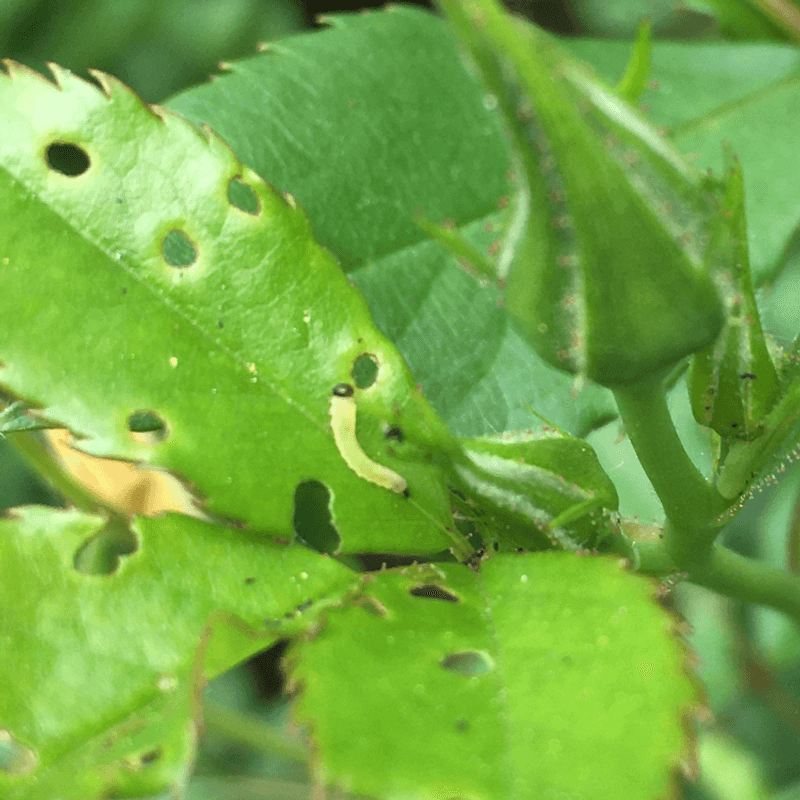
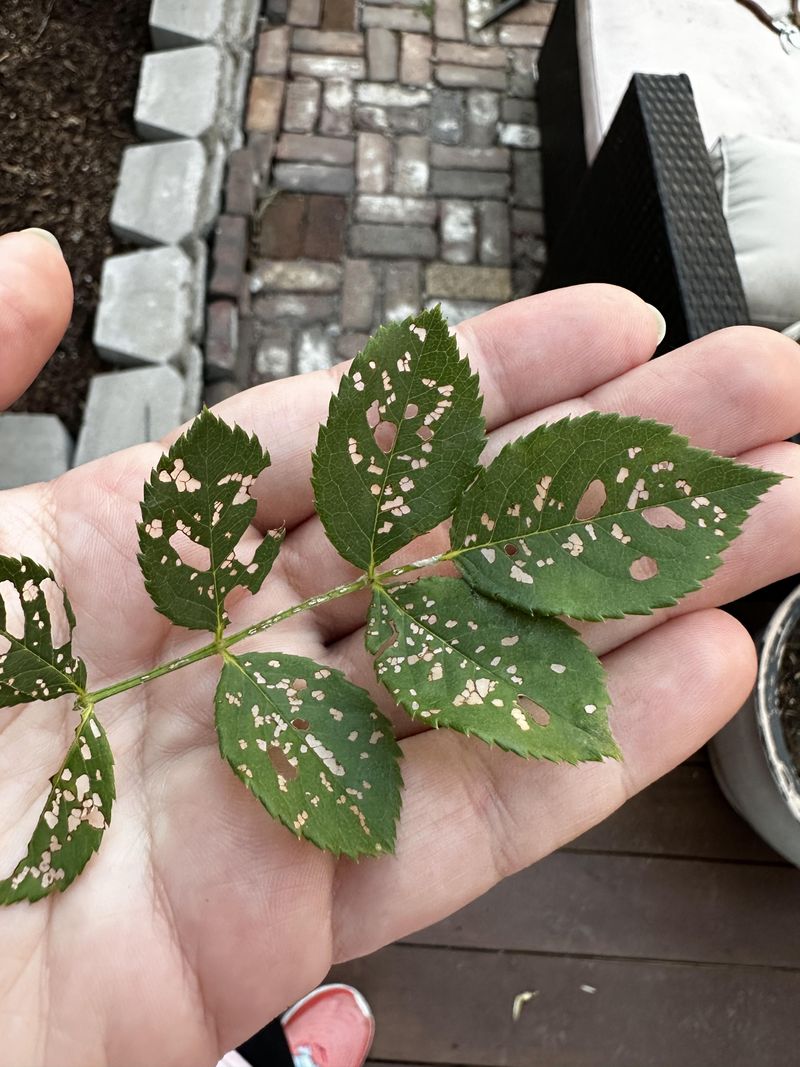
Walk up to a rose bush that has been hit by rose sawfly larvae and the damage is pretty hard to miss. The leaves develop a see-through, lacy look, almost like someone took a tiny scraper to the surface.
That effect is called skeletonization, and it happens because the larvae eat away the soft tissue of the leaf while leaving the veins behind. At first, the damaged spots look pale or silvery, then they turn brown as the leaf tissue dries out.
Younger larvae tend to feed from the underside of the leaf, scraping away one layer at a time. As they grow larger, they chew all the way through, leaving ragged holes and torn edges.
Heavily damaged leaves may curl, dry out completely, and drop from the plant early. When a lot of leaves fall before their time, the rose bush loses the energy it needs to grow strong and produce flowers.
In Pennsylvania gardens, a bad infestation can strip a rose bush of most of its leaves within just a couple of weeks.
That kind of stress weakens the plant significantly and makes it more vulnerable to other problems down the road, like fungal diseases or additional pest pressure. The damage is not just cosmetic. It genuinely sets the plant back.
Roses that lose a lot of leaves early in the season often produce fewer blooms and grow more slowly all summer long.
Protecting the leaves, especially that first flush of tender spring growth, is key to keeping your Pennsylvania rose bushes healthy and full of color from early summer right through fall.
4. How To Identify Them Correctly
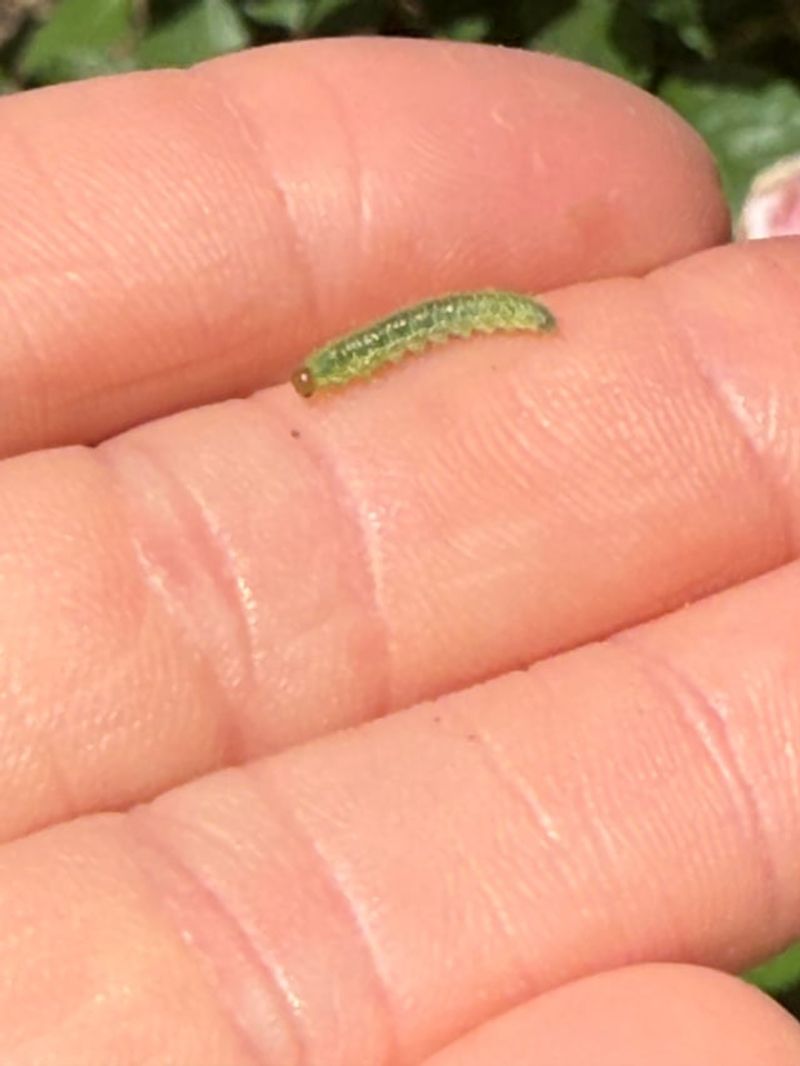
Getting the identification right is honestly half the battle. Rose sawfly larvae are small, usually less than half an inch long, and pale green to yellowish-green in color.
They have a soft, slightly shiny body that looks a bit like a tiny slug. If you flip over a damaged rose leaf and spot something like that clinging to the underside, you are very likely looking at rose sawfly larvae.
Their feeding damage has a very specific look that sets it apart from other common rose pests.
Aphids, for example, tend to cluster on buds, stems, and new shoot tips, and they cause curling or distorted growth rather than the lacy, skeletonized pattern that sawfly larvae leave behind.
Japanese beetle damage looks similar in some ways, but beetles feed from the top of the leaf and are much larger and easier to see.
One helpful trick is to check your rose bushes in the morning or on cloudy days, when the larvae are most active and easier to spot. Bright afternoon sun sometimes sends them to shelter.
Look closely at the undersides of leaves, especially on plants that already show some pale or transparent patches. The larvae often sit right next to the damage they are causing.
In Pennsylvania, it helps to know what other pests are common in your area so you can rule them out. Rose rosette disease, caused by a mite, creates distorted red growth that looks very different from sawfly damage.
Keeping a close eye on your plants through the spring season and learning what normal rose leaves look like makes spotting problems much faster and more reliable.
5. The Biggest Mistake Gardeners Make
Here is something that surprises a lot of Pennsylvania rose gardeners: treating sawfly larvae with caterpillar products simply does not work.
Many people see small green larvae chewing on their rose leaves and immediately reach for a product containing Bacillus thuringiensis, or Bt.
Bt is a popular, effective, and safe treatment for caterpillars. The problem is that it has zero effect on sawfly larvae because they are not in the same insect group at all.
Using the wrong product means the larvae keep feeding while the gardener thinks the problem is handled. Days pass, more leaves get damaged, and the infestation grows.
By the time someone realizes the treatment is not working, the rose bush may already look pretty rough. That delay can set back a plant that was just starting to hit its stride for the season.
Misidentification is the root of this mistake almost every time. Because sawfly larvae look similar to caterpillars at a quick glance, and because most people are more familiar with caterpillars, the wrong assumption gets made.
Taking an extra minute to look closely at the larvae and check what kind of damage they are causing can save a lot of frustration later on.
Another common error is waiting too long to act. Some gardeners notice a few damaged leaves and decide to wait and see if things get better on their own.
In some cases that works out, but with rose sawfly larvae in Pennsylvania, populations can build up fast during the cool spring weeks. Acting early, even with something as simple as hand-picking, almost always gives better results than waiting for the damage to get worse before stepping in.
6. How To Stop Them Before Roses Suffer

Good news: rose sawfly larvae are very manageable when you catch them early. The single most effective thing you can do in a Pennsylvania garden is inspect your rose bushes regularly throughout spring.
Walk through your garden a few times each week and flip over leaves to check the undersides. Early detection means smaller populations, and smaller populations are much easier to handle before real damage adds up.
Hand-picking is one of the simplest and most satisfying methods. Drop the larvae into a container of soapy water and that takes care of them right away.
For smaller rose bushes or light infestations, this approach alone can keep the problem under control without using any products at all. It takes only a few minutes and is completely safe for the plant, for you, and for the beneficial insects in your garden.
When populations are larger, insecticidal soap or neem oil can be very effective. Both products work on contact and break down quickly, so they have a low impact on the surrounding environment.
Make sure to spray the undersides of leaves thoroughly, since that is where the larvae spend most of their time. Always follow the label directions and reapply after rain since these products wash off easily.
Spinosad is another option that is labeled for sawfly larvae and works well when infestations are heavy. It is derived from naturally occurring soil bacteria and is considered a lower-risk product.
Protecting that first flush of spring growth in Pennsylvania is the main goal. Healthy new leaves mean a stronger plant, more blooms, and a rose bush that can handle whatever the rest of the growing season brings its way.