This Tiny Pest Is Damaging Texas Rose Bushes Right Now
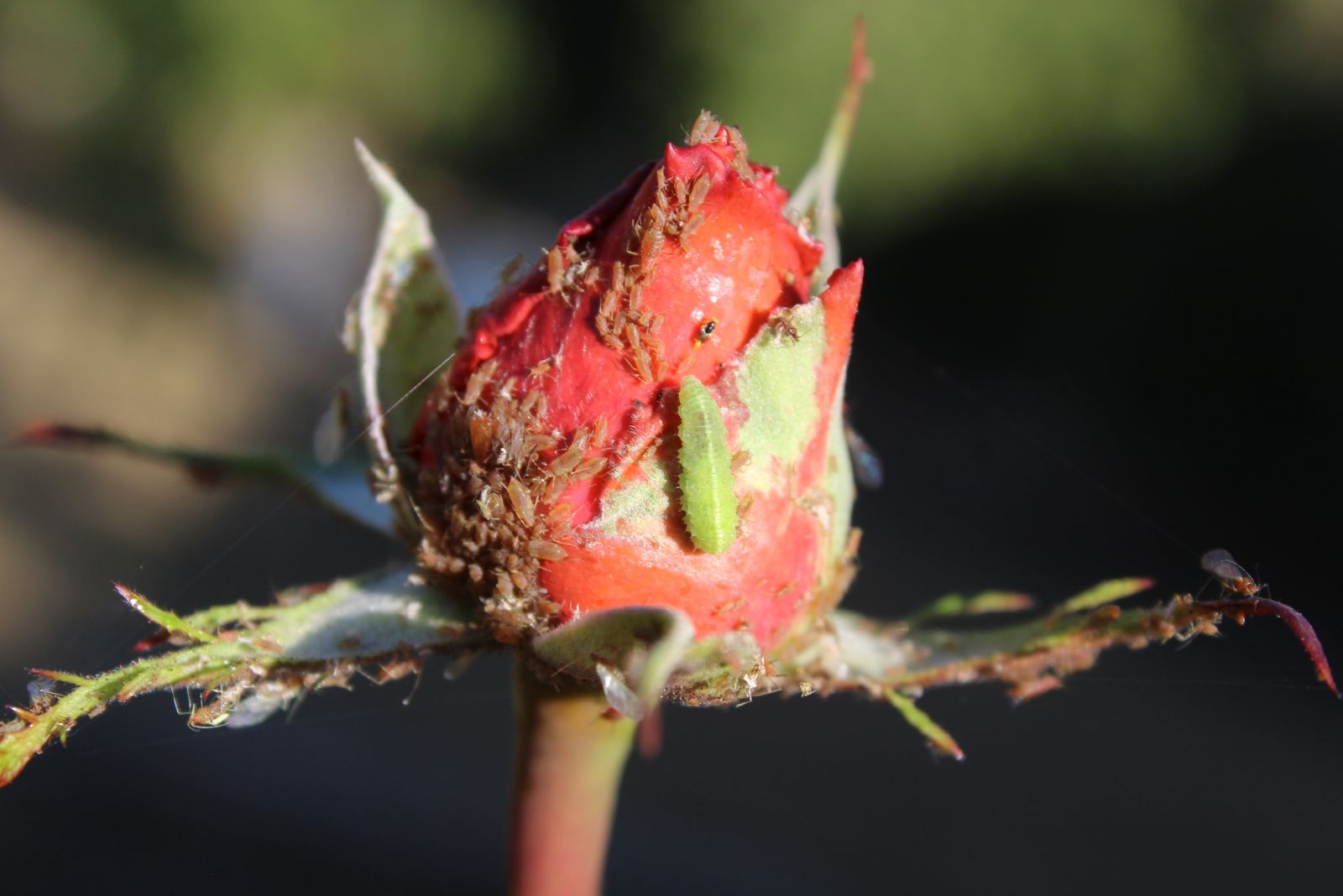
Texas rose bushes can go from lush and promising to oddly battered in what feels like no time. One day the leaves look fresh and healthy, and the next they seem thin, scraped, or full of strange damage that does not quite match the usual chewing pests gardeners expect to see.
That is part of what makes this problem so sneaky. The culprit often blends in well, shows up during active rose growth, and starts feeding before most people realize anything is wrong.
Rose sawfly larvae, often called roseslugs, are small larvae that feed on rose leaves and can leave behind skeletonized or “windowpane” damage, where the leaf tissue is eaten away but part of the surface remains.
For Texas gardeners, that kind of damage can be especially frustrating in spring, when roses should be putting on their best show. Instead of full, clean foliage, you get ragged leaves and bushes that suddenly look stressed.
The good news is that once you know what is causing the trouble, the pattern becomes easier to spot and much easier to deal with before your roses take a bigger hit.
1. What Rose Sawfly Larvae Are
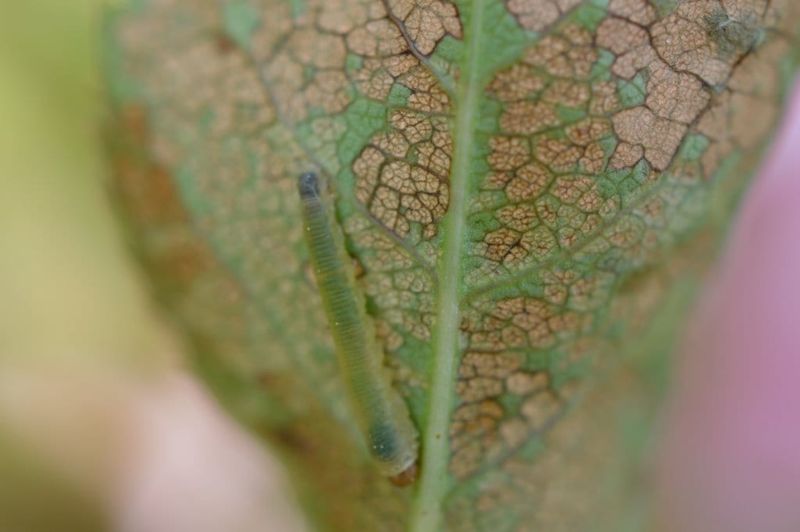
Most gardeners spot them and immediately think caterpillar. But rose sawfly larvae are actually the young of a small, wasp-like insect called a sawfly.
They have nothing to do with butterflies or moths, which is exactly what makes treating them so confusing.
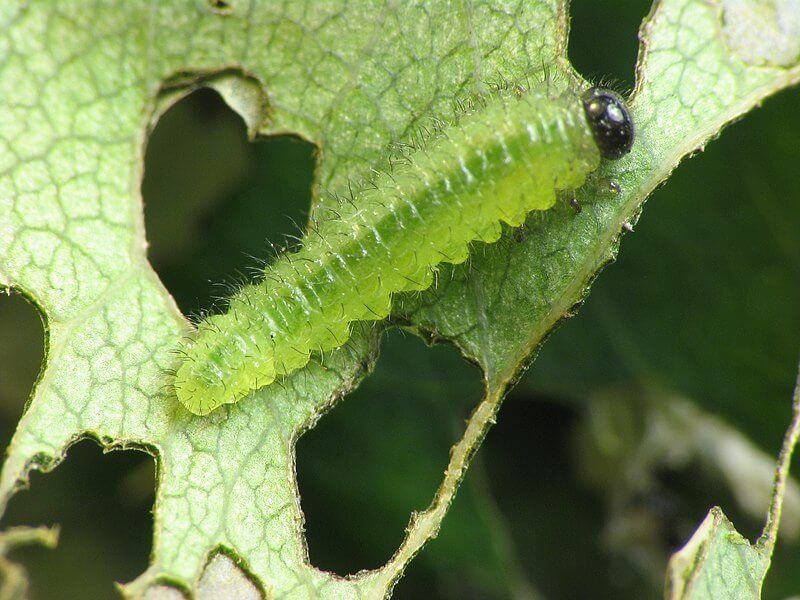
People often call them “rose slugs” because of the way they look. They are soft, greenish, and kind of slimy in appearance, similar to a garden slug but much smaller.
Some species even have a semi-transparent body that makes them hard to notice at first glance.
Sawflies belong to the insect order Hymenoptera, the same group that includes bees and wasps. The adult sawfly lays eggs directly into rose leaf tissue using a saw-like organ, which is actually how the insect got its name.
Once the eggs hatch, the larvae start feeding almost immediately. In Texas, these larvae tend to appear in spring when roses push out fresh, tender new growth.
That soft new foliage is exactly what they are looking for. They are not random visitors. They show up with purpose and get to work fast.
Understanding what you are actually dealing with is the first step to protecting your plants. Many gardeners waste time and money treating the wrong pest simply because they misidentified it from the start.
Rose sawfly larvae are their own creature entirely, and they respond to different treatments than caterpillars or other common garden pests do.
2. Why They Show Up In Texas Gardens
Spring in Texas is a beautiful time for gardens, but it is also prime time for rose sawfly larvae to move in. These tiny pests love mild temperatures, and Texas springs give them exactly that.
When the weather is warm but not scorching, sawfly activity peaks and populations can build up fast.
The real draw for them is fresh rose foliage. When roses push out that soft, bright green new growth in early spring, sawfly larvae treat it like an all-you-can-eat buffet.
Your Texas Garden Changes Every Week. Your Plan Should Too.
Gardening in Texas changes quickly throughout the season. Every Friday you’ll receive a simple weekly plan showing exactly what to plant, prune, fertilize, harvest, and protect so you never miss the right timing.
Tender leaves are easier to feed on than tough, mature foliage, so newly sprouted growth is always the first target.
What surprises many Texas gardeners is how quickly an infestation can appear. One week your roses look fine, and the next week the leaves are riddled with damage.
Sawfly populations can expand rapidly under the right conditions, especially when natural predators are not keeping them in check.
Gardens with dense plantings or roses that are not regularly inspected tend to see worse outbreaks.
When plants are crowded and airflow is limited, it creates a sheltered environment where larvae can feed without much disturbance. Texas humidity during spring can also make conditions more favorable for them.
Another factor is that many Texas gardeners are not familiar with this pest at all. Because sawfly larvae are often mistaken for something else, infestations go unaddressed longer than they should.
By the time the damage becomes obvious, the larvae have already done serious harm to the plant and may have spread to neighboring rose bushes in the yard.
3. The Damage They Cause
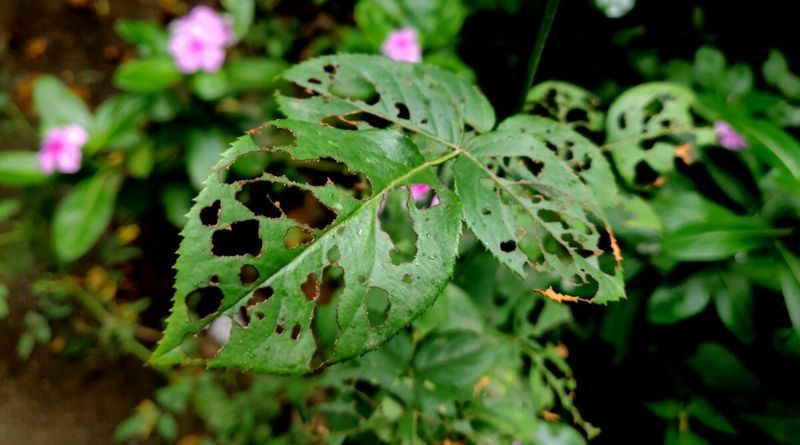
Walk up to a rose bush that has been hit by sawfly larvae and the damage is hard to miss. The leaves look like someone scraped away the green surface and left only the veins behind.
Gardeners call this “skeletonizing,” and it is one of the most recognizable signs of a sawfly infestation.
Younger larvae tend to feed on just one surface of the leaf, leaving a thin, papery layer behind that eventually turns brown and dries out. Older, larger larvae chew all the way through the leaf, creating holes and ragged edges.
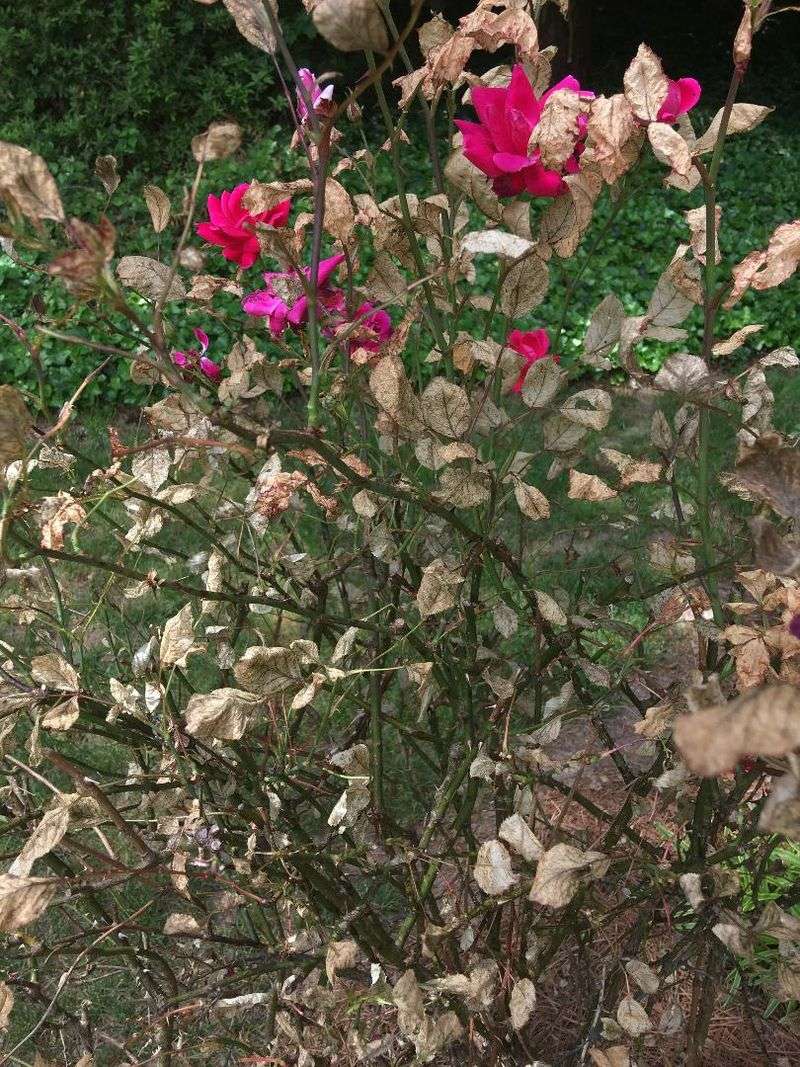
Either way, the plant ends up with leaves that can no longer do their job properly. When leaves cannot photosynthesize effectively, the whole plant suffers. Damaged leaves may turn yellow or brown and drop off early.
A rose bush that loses a significant amount of its foliage too soon in the season has a much harder time storing energy and staying healthy through the rest of the year.
Heavy infestations, especially those that go untreated for several weeks, can seriously weaken a rose bush over time.
The plant may produce fewer blooms, show slower growth, or become more vulnerable to other stresses like heat and drought, which are already major challenges for roses growing in Texas.
The damage also tends to look worse than people expect because larvae feed in groups. When several larvae work together on the same branch or cluster of leaves, large sections of the plant can be stripped down quickly.
Catching the problem early makes a big difference in how much damage the plant actually has to recover from.
4. How To Identify Them Correctly
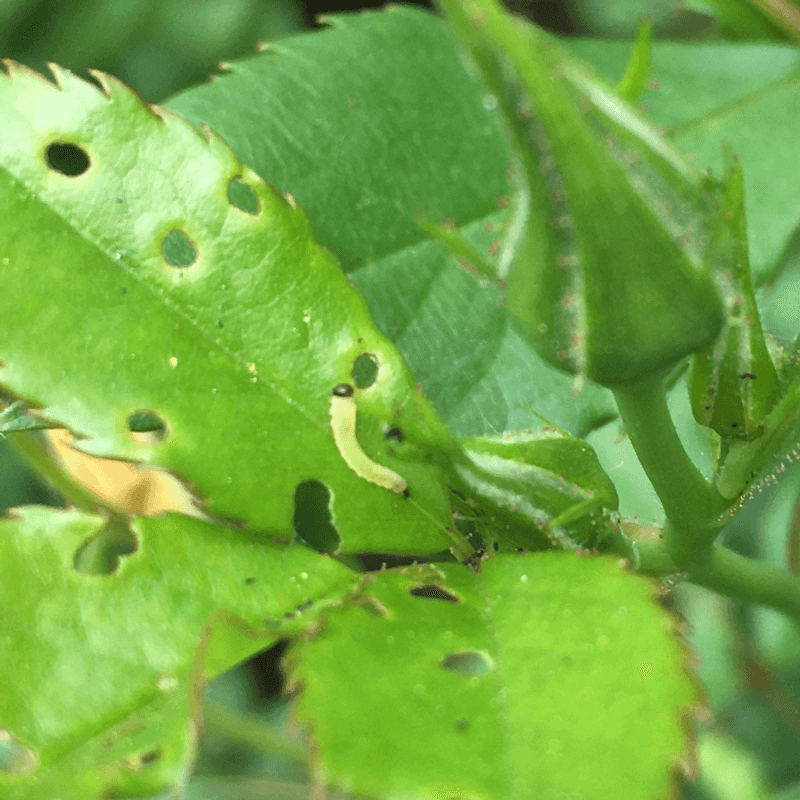
Getting the identification right is everything when it comes to treating rose sawfly larvae. Flip over a damaged leaf and look closely at the underside.
That is where you will almost always find them, small, pale green, slug-like creatures clinging to the leaf surface and feeding quietly.
They are usually between a quarter inch and half an inch long depending on how far along they are in development. Their bodies are soft and slightly shiny, and some species have tiny hairs or bumps along their sides.
They move slowly and do not jump or fly, which makes them easier to spot once you know what you are looking for.
The damage pattern is another big clue. Sawfly larva feeding creates a lacy, see-through look on the leaf.
This is very different from the curled, distorted leaves you would see with aphids, or the irregular holes left by chewing caterpillars. If the damage looks like someone held the leaf up to the light and you can see through it, sawfly larvae are very likely the cause.
You will also notice that they feed in groups, especially early on. Finding three or four larvae clustered on the same leaf is common.
As they grow larger, they spread out more across the plant, but early infestations tend to be concentrated in one area before spreading outward.
In Texas, checking your roses at least once a week during spring is a smart habit. The sooner you spot the larvae, the easier they are to manage.
Early-stage infestations respond much better to simple treatments than heavy, established ones that have had time to spread across multiple plants.
5. The Biggest Treatment Mistake
Here is where a lot of Texas gardeners go wrong. They see something eating their roses, assume it must be a caterpillar, and reach for Bt, which stands for Bacillus thuringiensis.
It sounds like a reasonable move, but it simply does not work on sawfly larvae, and here is why.
Bt is a naturally occurring bacteria that targets caterpillars and certain other larvae from the moth and butterfly family. It works by disrupting their digestive system in a very specific way.
Sawfly larvae, however, are not related to moths or butterflies at all. Their biology is completely different, and Bt has no effect on them whatsoever.
So gardeners spray, wait, and then watch the damage continue. They spray again, still nothing changes.
Meanwhile, the larvae keep feeding and the rose bush keeps losing more foliage. Days or even weeks go by before the gardener realizes the treatment is not working and starts looking for answers.
Misidentification is the root cause of this cycle. When you treat a pest without knowing exactly what it is, you are guessing.
And guessing with plant care often leads to ongoing damage that could have been stopped much sooner with the right information and the right product.
Another common mistake is treating only the tops of leaves. Since sawfly larvae hide on the undersides, surface sprays often miss them entirely.
Even products that do work against sawflies will fail if they are not applied where the larvae actually are. Turning leaves over and treating the undersides thoroughly is a critical part of any effective treatment plan for Texas rose gardens.
6. How To Get Rid Of Them Effectively
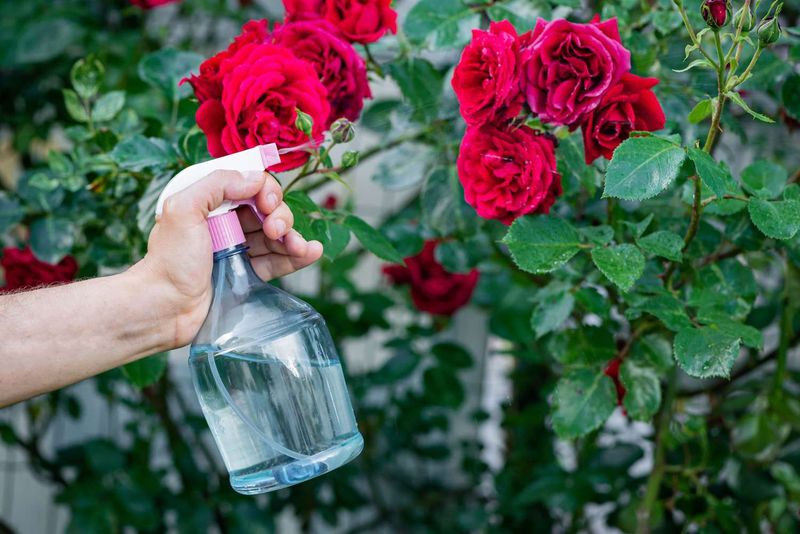
Good news: rose sawfly larvae are actually not that hard to manage once you know what you are dealing with. Several effective options are available, and many of them are simple enough for any home gardener in Texas to use without professional help.
Insecticidal soap is one of the most reliable choices. It works on contact, so you need to spray it directly onto the larvae, especially on the undersides of leaves where they hide.
Neem oil is another good option and has the added benefit of discouraging future pests from settling on your plants. Spinosad, a naturally derived insecticide, is also highly effective against sawfly larvae and is approved for organic gardening.
If you catch the infestation early and the numbers are still small, you can skip the sprays altogether. A strong stream of water from a garden hose can knock larvae off the leaves and onto the ground, where they struggle to climb back up.
Hand-picking is also surprisingly effective for small infestations. Just drop them into a bucket of soapy water.
Whatever method you choose, consistency matters. Check your roses every few days during spring, especially in Texas where warm temperatures can speed up larval development.
One treatment is rarely enough because eggs may still be hatching after your first application.
Keeping your garden clean and removing fallen leaves can also reduce the chance of future outbreaks. Healthy, well-watered rose bushes are better at bouncing back from minor feeding damage.
Staying on top of regular plant checks is the single best habit any Texas rose gardener can build to protect their plants all season long.