This Watering Mistake Is Why Your Peace Lily Has Brown Tips
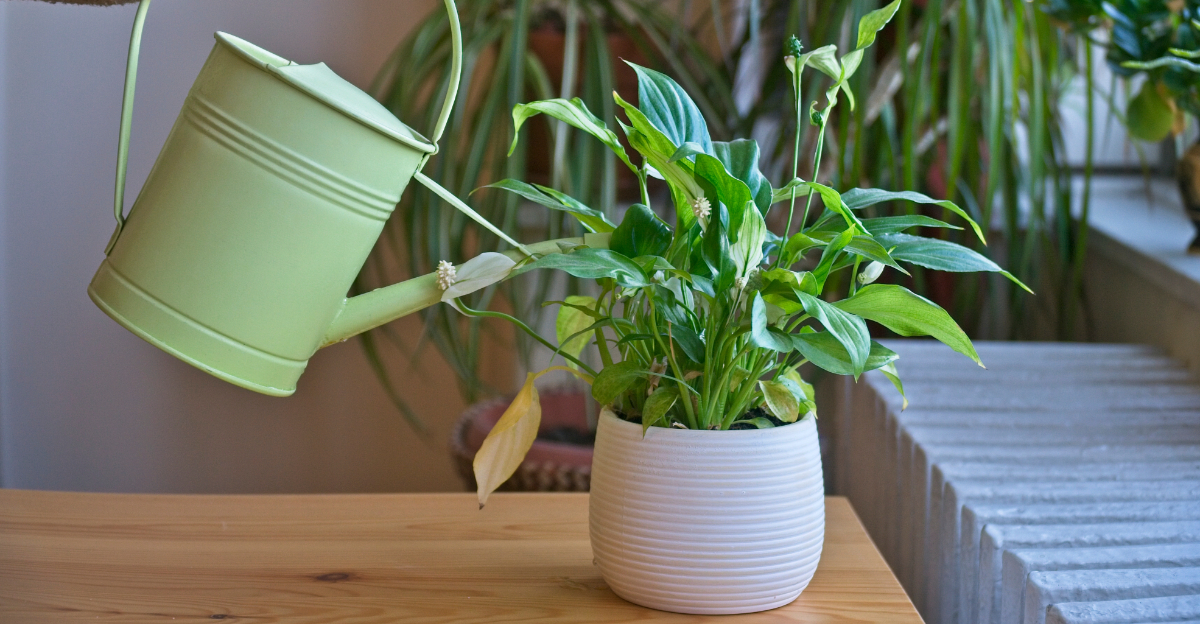
Crispy brown tips appear no matter how carefully you water your peace lily. Something feels deeply unfair when your plant still struggles despite constant love.
Watering more often seems logical, yet your habit backfires quietly. Roots need fresh oxygen just as much as they need consistent moisture. Excess water surrounds those fragile roots long before any visible wilting begins.
Brown tips simply reveal deeper damage happening beneath your soil’s surface. Soil that stays constantly wet weakens the very roots your plant depends on. Every state of stress starts quietly, unseen and ignored by you.
Nobody honestly tells you overwatering can feel exactly like genuine devotion. Fixing this problem starts with understanding your plant’s true internal state.
Small changes to your watering schedule can create dramatic, fast results. Understanding the cause makes the fix straightforward once you know what your plant truly needs. You have every reason to fix this today, starting right now.
Why Peace Lilies Are Prone To Brown Leaf Tips
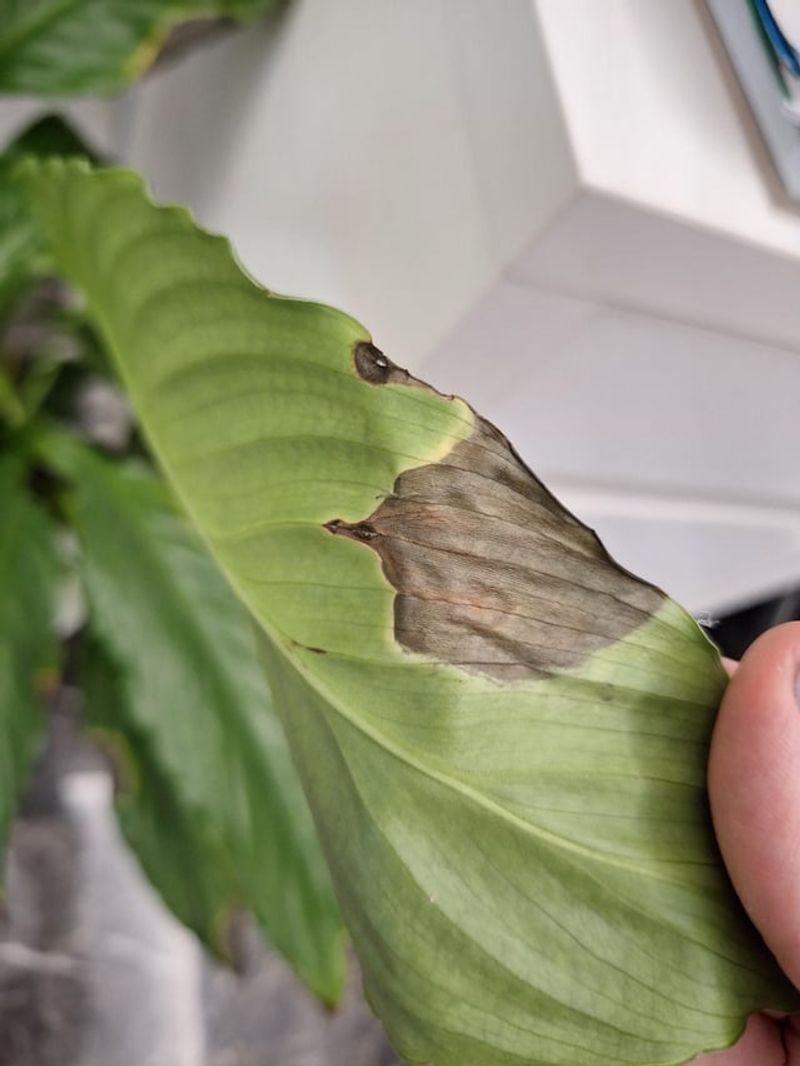
Peace lilies look tough, but they are actually pretty sensitive plants. Their leaves react quickly to stress, and brown tips are one of the first signs something is off.
These plants are native to tropical rainforests, where water drains fast through loose, rich soil. Their roots expect moisture to come and go, not sit.
When conditions do not match that natural rhythm, the leaves start showing damage at the tips first. That is because the tips are the farthest point from the root system.
Nutrients and water travel from the roots outward through the leaf. If that flow gets disrupted, the tips show damage before anything else does.
Peace lilies also have relatively thin leaves that can lose moisture quickly in dry indoor air, which may make them more sensitive to stress than thicker-leaved plants like pothos or snake plants.
Brown tips on a peace lily can come from several sources, including low humidity, fluoride in tap water, and soil that stays soggy too long. Overwatering is the most overlooked cause of all.
Most people assume brown tips mean the plant is thirsty. So they water more, which actually makes the problem worse.
Recognizing that brown tips on peace lily plants often signal too much water is the first step toward fixing it.
Once you know what your plant is reacting to, the solution becomes much clearer and less stressful for both of you.
The Overwatering Habit Behind Brown Tips
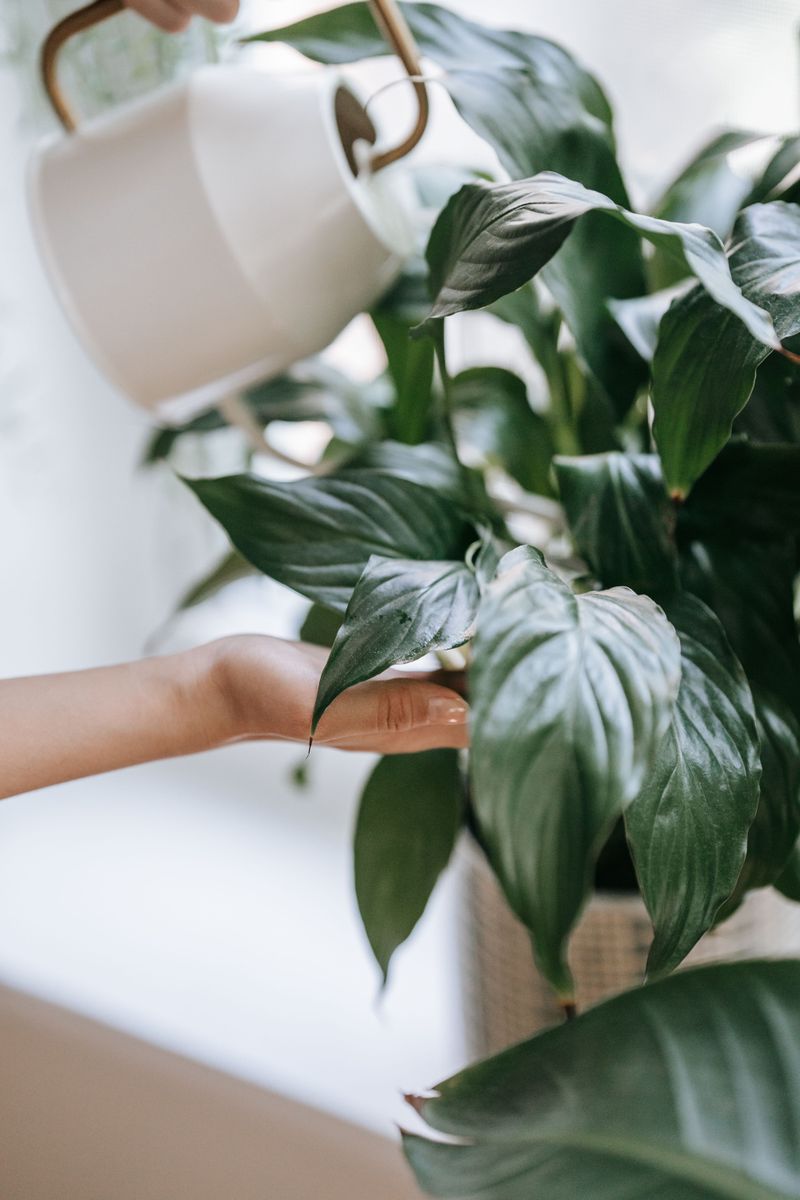
Soggy roots are a common but easily missed problem. Most plant owners don’t notice the damage until the leaves begin showing visible stress.
Overwatering a peace lily deprives the roots of oxygen by pushing air out of the soil. Roots need air just as much as they need water to function.
When roots sit in wet soil too long, they begin to break down. A damaged root system cannot move water or nutrients up to the leaves efficiently.
That breakdown causes leaf tips to turn brown and dry, even though the soil is soaking wet. It seems backward, but the plant is actually dehydrated at the leaf level.
Many people water their peace lily on a fixed schedule, like every Monday and Thursday. That routine ignores what the soil actually needs on any given day.
Seasons change, indoor temperatures shift, and the plant slows its growth in winter. All of those factors affect how fast soil dries out.
Watering on a schedule instead of checking the soil first is the core habit that causes overwatering. Brown tips on peace lily leaves are often the direct result of this well-meaning but harmful routine.
The fix starts with breaking the calendar habit entirely. Check the top inch of soil with your finger before you ever reach for the watering can.
If it still feels damp, walk away and check again in two days. Consistent care results in cleaner, greener leaf tips over time.
How Mineral And Salt Buildup Damages Leaves
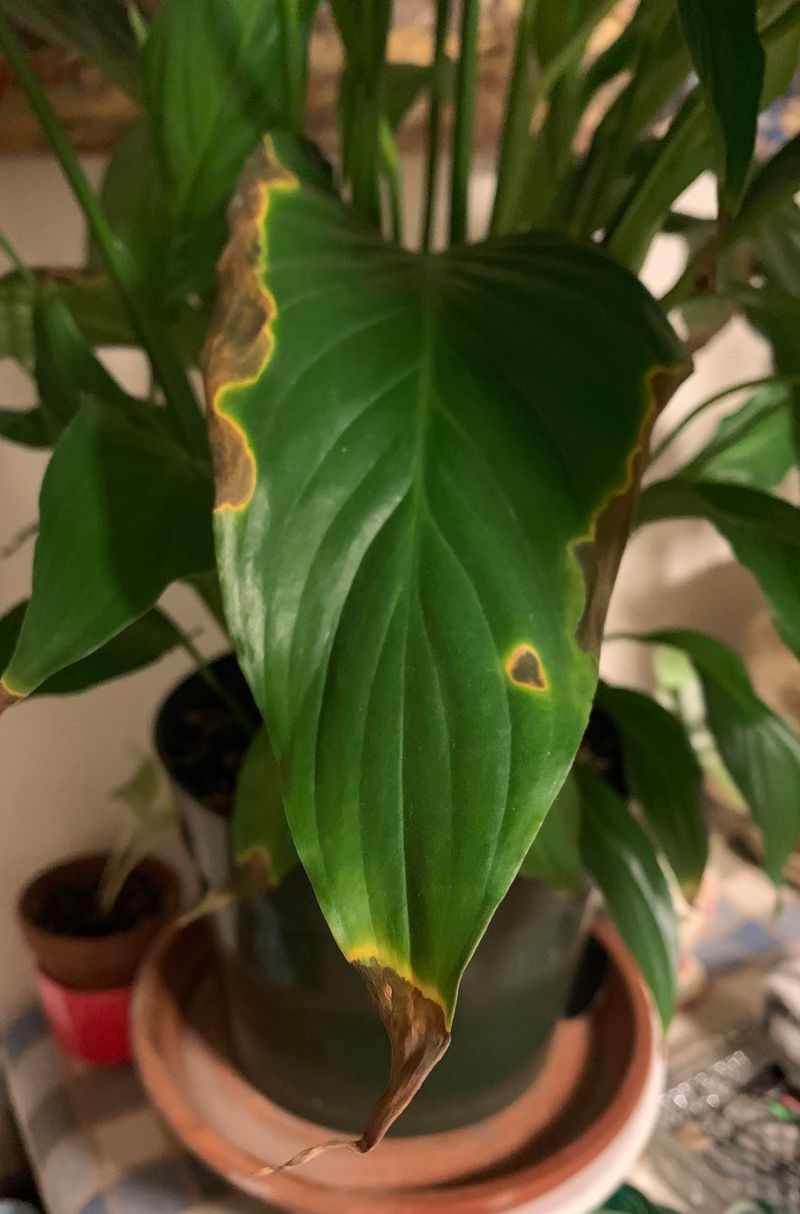
That white crust on your soil is not just cosmetic. It indicates that mineral buildup may be affecting your plant’s roots.
Tap water contains chlorine, fluoride, and dissolved minerals. Every time you water, those substances get left behind in the soil as the water evaporates.
Over time, those minerals accumulate around the roots and change the chemistry of the soil. The roots struggle to absorb nutrients properly when surrounded by excess salts.
This buildup creates a condition called fertilizer or salt burn, even if you have never added fertilizer. The tips of peace lily leaves are especially vulnerable to this kind of chemical stress.
Overwatering makes the problem worse because you are adding more mineral-laden water more often. Each extra watering deposits another layer of buildup the roots have to deal with.
Switching to filtered water or leaving tap water out overnight helps reduce the fluoride and chlorine levels. Some plant owners collect rainwater specifically for sensitive houseplants like peace lilies.
Flushing the soil every few months also helps clear out accumulated salts. Run water slowly through the pot until it drains freely from the bottom, then let the soil dry out before watering again.
Brown tips on peace lily plants caused by mineral buildup look similar to overwatering damage. Knowing both causes helps you treat the right problem instead of guessing.
Clean water and clean soil give your plant the reset it needs to grow healthy, unmarked leaves again.
The Key Differences Between Overwatering And Underwatering
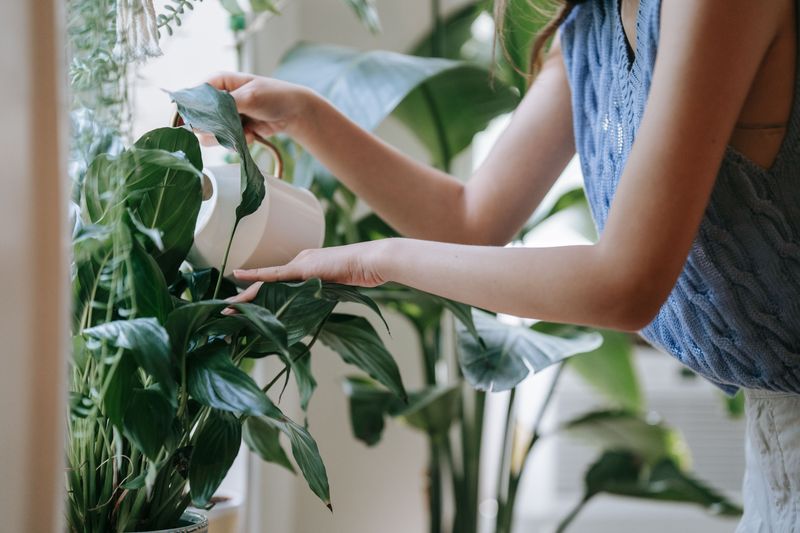
Not all brown tips tell the same story. Learning to read the difference saves your plant from the wrong treatment.
An overwatered peace lily usually has yellow leaves alongside the brown tips. The soil feels wet or smells musty, and the plant may look droopy despite being in moist soil.
That drooping happens because damaged roots cannot move water upward efficiently. The plant wilts even though it is technically sitting in plenty of moisture.
An underwatered peace lily droops too, but the soil will feel bone dry and pull away from the edges of the pot. The leaves look limp and papery rather than soft and yellowed.
Brown tips from underwatering tend to be dry and uniform across many leaves at once. Overwatering damage often appears patchier, with some leaves yellowing completely while others stay green.
Check the soil before drawing any conclusions. Stick your finger about an inch deep and feel whether it is damp, moist, or completely dry.
A moisture meter is a handy tool if you prefer a more precise reading. They are generally affordable and can help take the guesswork out of watering.
Overwatering tends to be more common than underwatering in indoor peace lily care, according to most gardening experts.
Once you correctly identify the cause of your brown tips on peace lily leaves, you can stop the cycle. Accurate diagnosis is the most empowering thing you can do for your plant.
The Right Watering Routine For Healthy Peace Lilies
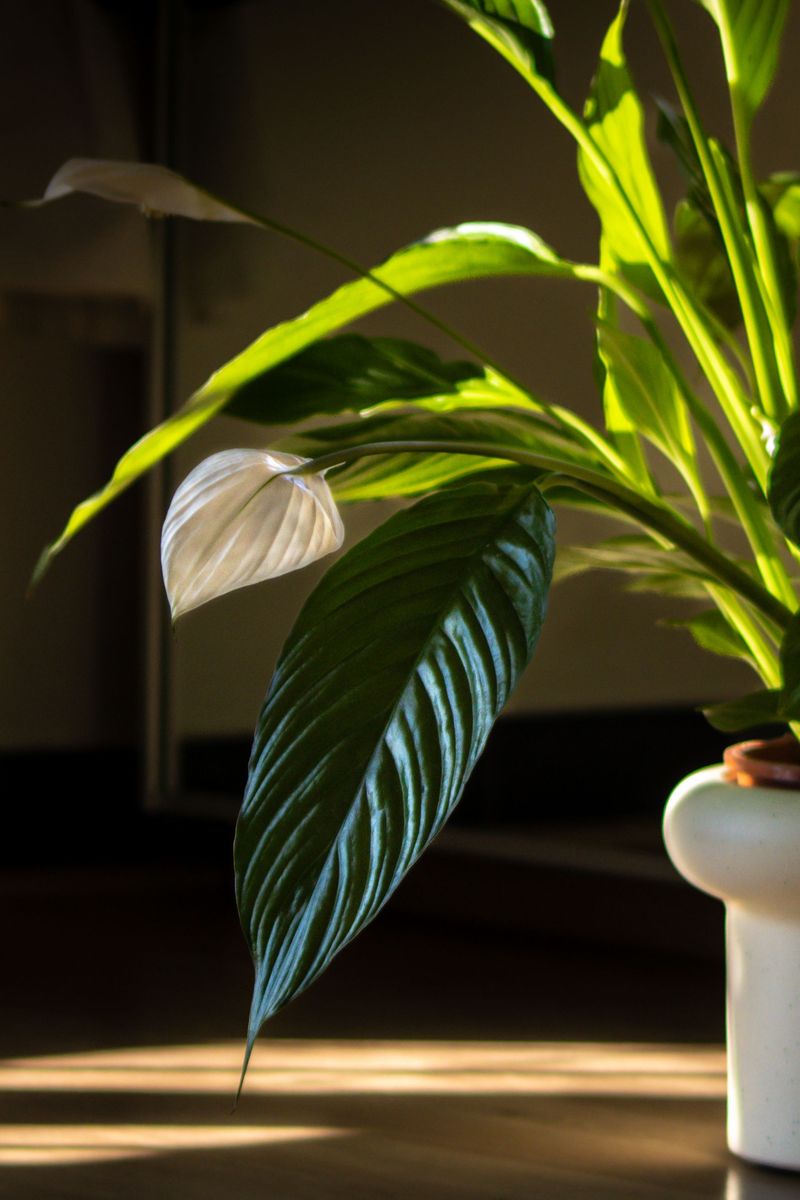
Good watering is not about how often you do it. It is about paying attention to what the soil is actually telling you.
Peace lilies prefer to dry out slightly between waterings. The top inch of soil should feel dry before you add any water at all.
When you do water, do it thoroughly. Let water flow slowly through the pot until it drains from the bottom holes, then empty the saucer so roots do not sit in standing water.
That deep-then-dry method loosely resembles the natural rain patterns of a tropical forest floor. Roots get a good drink, then get time to breathe before the next one.
Pot size matters more than most people realize. A pot that is too large holds extra soil that stays wet long after the plant has used what it needs.
Choose a pot that fits the root ball snugly, with only an inch or two of extra space around the sides. Terracotta pots help because they allow moisture to evaporate through the walls.
Seasonal adjustments are also important. Peace lilies grow more slowly in winter and need far less water than in the active growing months of spring and summer.
Cutting back your watering frequency during the plant’s dormant winter months can prevent a lot of brown-tip damage, though exact timing depends on your climate. Your plant is resting, not requesting more hydration.
A consistent but responsive routine keeps brown tips on peace lily leaves from coming back. Small adjustments now lead to noticeably cleaner, greener foliage within a few weeks.
Fixing Existing Brown Tips And Preventing New Ones
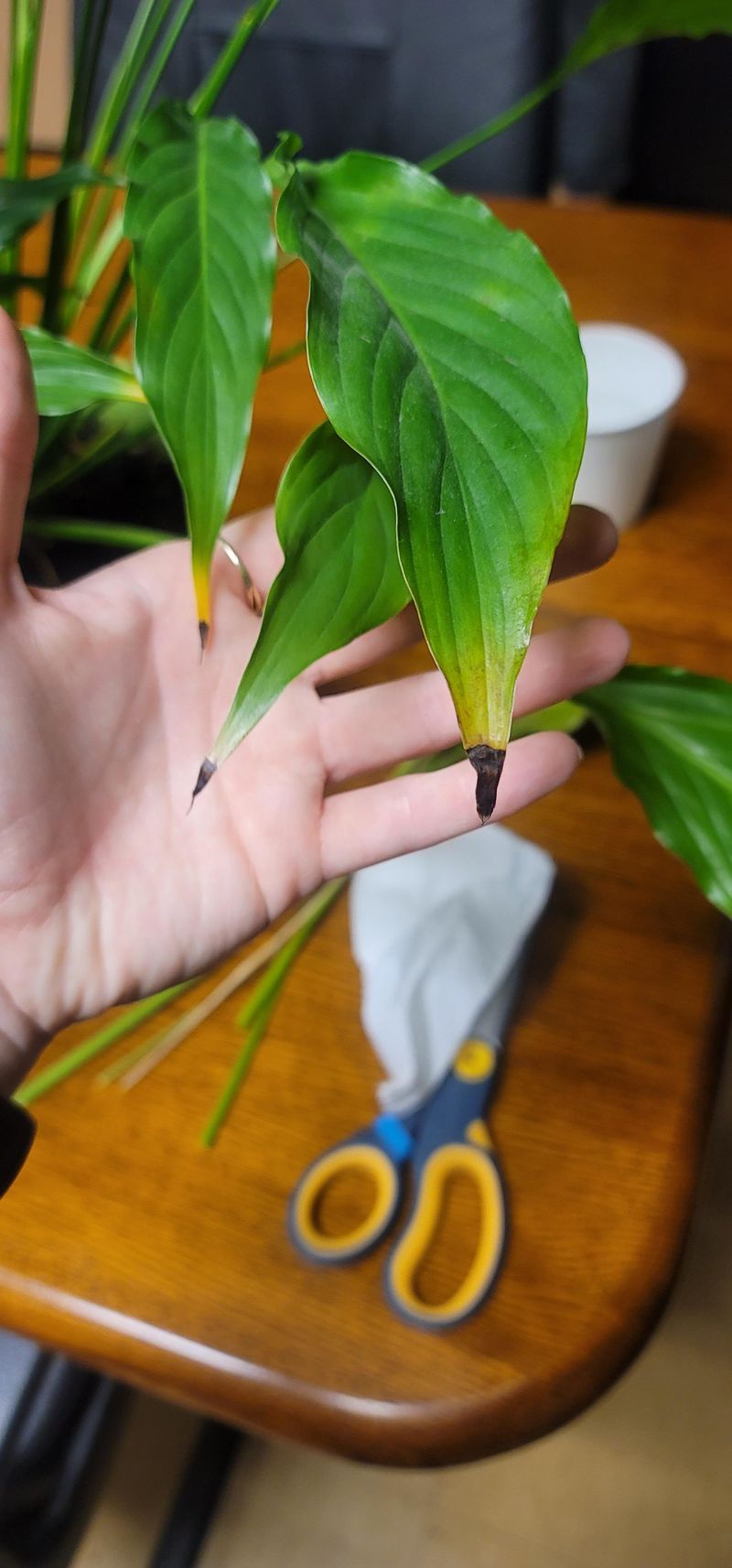
Brown tips already on the leaves will not turn green again. But trimming them off and fixing the root cause stops new ones from forming.
Use clean, sharp scissors to cut just inside the brown area at a slight angle. Cutting at an angle makes the trim look natural and less noticeable.
Sterilize your scissors with rubbing alcohol before and after trimming. This prevents any bacteria or fungal spores from spreading to healthy tissue.
After trimming, address the soil situation. If the soil has been consistently wet, let it dry out completely before watering again, and consider repotting if roots look brown and mushy.
Fresh, well-draining potting mix gives damaged roots a clean environment to recover in. A mix designed for tropical houseplants or one with added perlite works well for peace lilies.
Boost humidity around your plant to reduce leaf-tip stress from dry indoor air. A small humidifier nearby or a pebble tray filled with water under the pot both help significantly.
Keep your peace lily away from heating vents and air conditioning units. Both dry the air rapidly and create conditions that can trigger tip browning.
Switch to filtered or distilled water if you have been using straight tap water. This one change alone can meaningfully reduce mineral-related brown tips on peace lily leaves over time.
Healthy new growth is the best sign your plant is recovering. Stay consistent, keep the soil balanced, and those fresh leaves will come in crisp and clean.