Those Bright Berries On Your Holiday Wreath Look Harmless, But They Are Quietly Taking Over New Jersey’s Woods
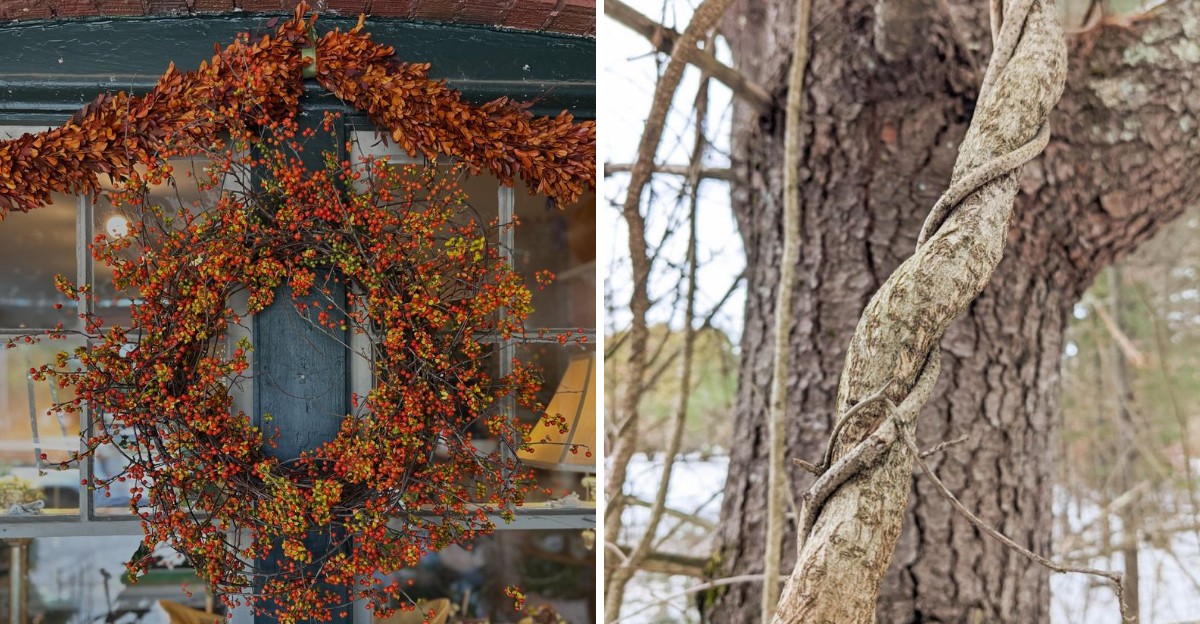
A vine sold for its pretty berries can wrap around a tree so tightly that the trunk grows twisted like a candy cane. I saw one last winter near a trail in New Jersey, and I stopped cold.
The culprit hides in plain sight on doors, mantels, and craft store shelves. Its orange and yellow fruit looks cheerful and stays bright for months. Birds love it too, and that detail matters more than most people realize.
Here in New Jersey, this climber now blankets roadsides, field edges, and forest openings. It came here on purpose, as a garden ornament, more than a century ago. Nobody guessed how far it would roam.
You might own a piece of it right now without knowing. I did, and finding out changed how I shop for holiday greens. What exactly is hanging on your front door?
That Orange And Yellow Berry Vine Has A Hidden Backstory
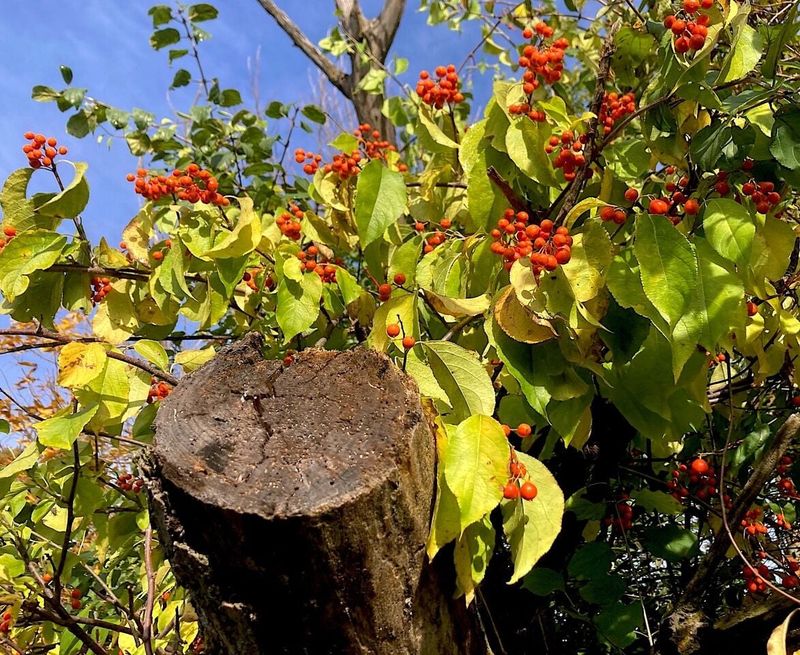
Those little berries have a secret identity, and it is called Oriental bittersweet. Scientists know it as Celastrus orbiculatus, a woody climbing vine from East Asia.
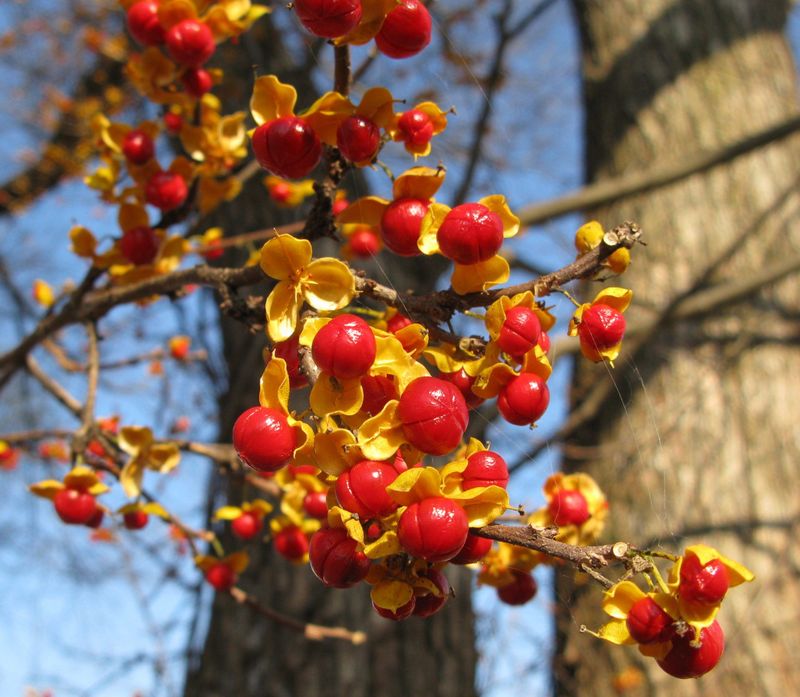
The fruit is the giveaway. Each berry sits inside a yellow capsule that splits open in fall, showing a glossy red-orange center.
The berries cling to the vine well into winter, which is exactly why crafters love them for wreaths and swags.
Here is a detail many people miss. On Oriental bittersweet, the berries grow in small bunches along the stem where each leaf meets the vine.
Our native American bittersweet, Celastrus scandens, holds its fruit mostly in clusters at the branch tips.
That difference sounds tiny, but it matters a lot. The native plant has become uncommon in many areas, partly because the Asian species crowds it out and can even cross-breed with it.
So the vine on your door may be pushing aside its own American cousin. I find that a little sad and a little fascinating. A plant chosen for beauty turned into one of the most troublesome vines in the Northeast.
Rutgers and other experts now list it among the region’s top invasive plants, and once you learn the signs, you start spotting it everywhere.
Your Bittersweet Wreath Can Quietly Plant New Vines
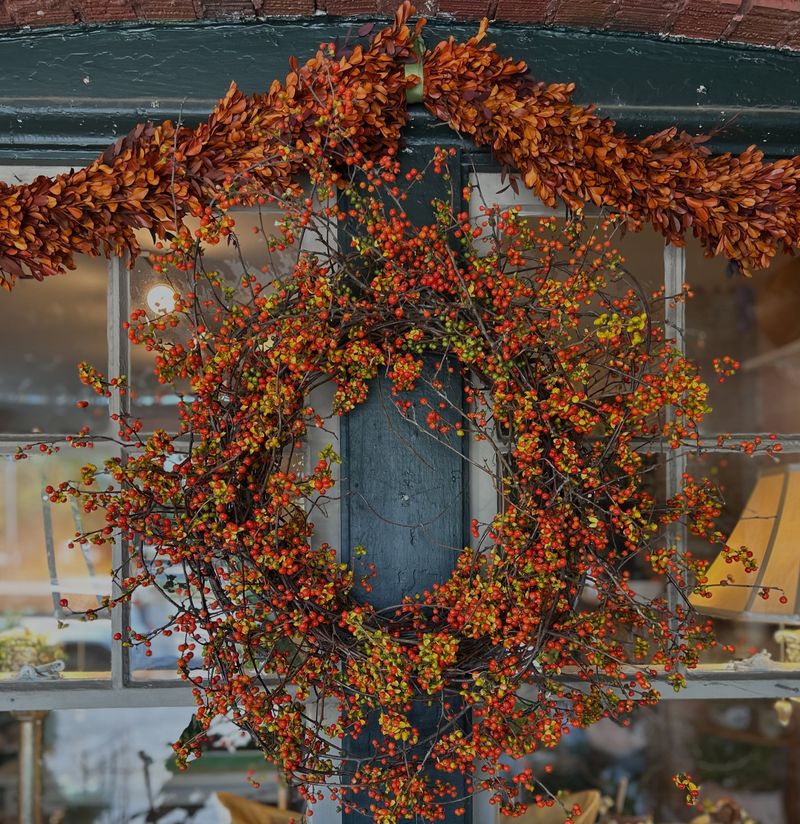
Every single berry on that wreath holds seeds that can still sprout. That is the part that surprised me most when I started reading New Jersey extension fact sheets.
Birds are the main delivery service. Robins, starlings, and other fruit eaters snack on the berries, then drop the seeds miles away.
A wreath hanging outside is basically a free buffet with a side of seed spreading across New Jersey.
Disposal causes trouble too. Many New Jersey folks toss old wreaths into the woods behind the house or onto a compost pile after the holidays.
Home compost rarely gets hot enough to stop the seeds, so new vines can pop up the next spring.
So what should you do with one you already own? Keep it indoors, away from hungry birds. When the season ends, bag it in plastic and put it out with the household trash.
Burning is another option some people use, but check your town’s rules first. Most municipalities limit open burning, so the trash bag route is usually simplest.
Gathering wild bittersweet for crafts is also risky. Clipping it drops berries along trails and in your car.
A quick rule I follow now is easy to remember: admire it, but leave it out of your decorations.
Twisted Tree Trunks Show How Tightly Bittersweet Squeezes
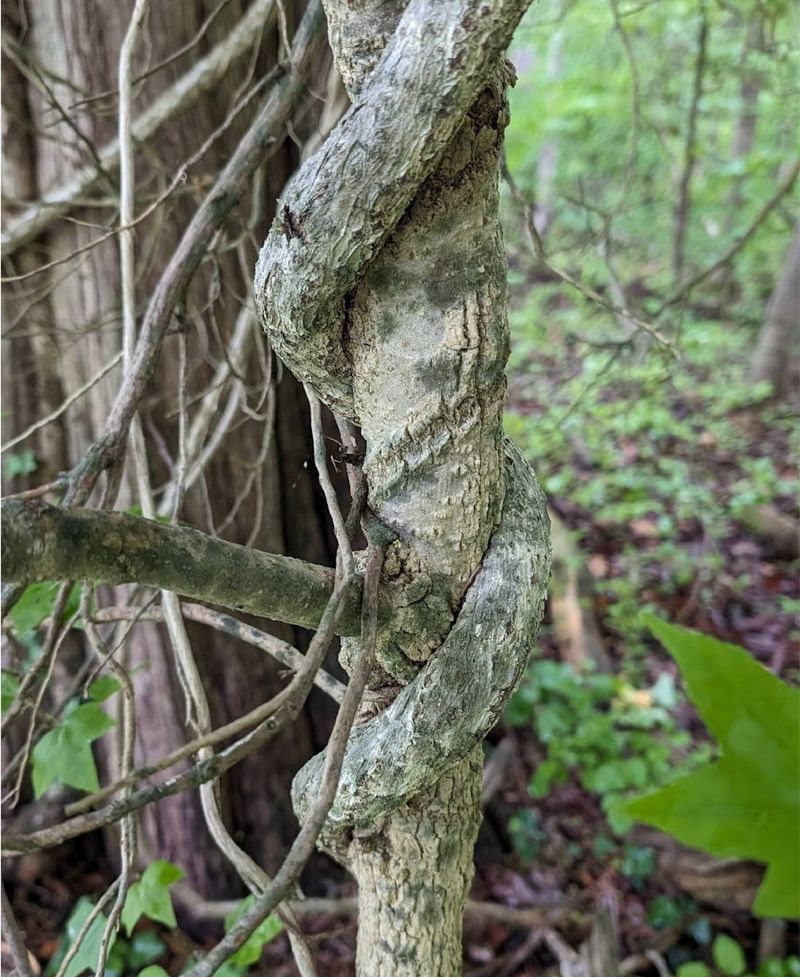
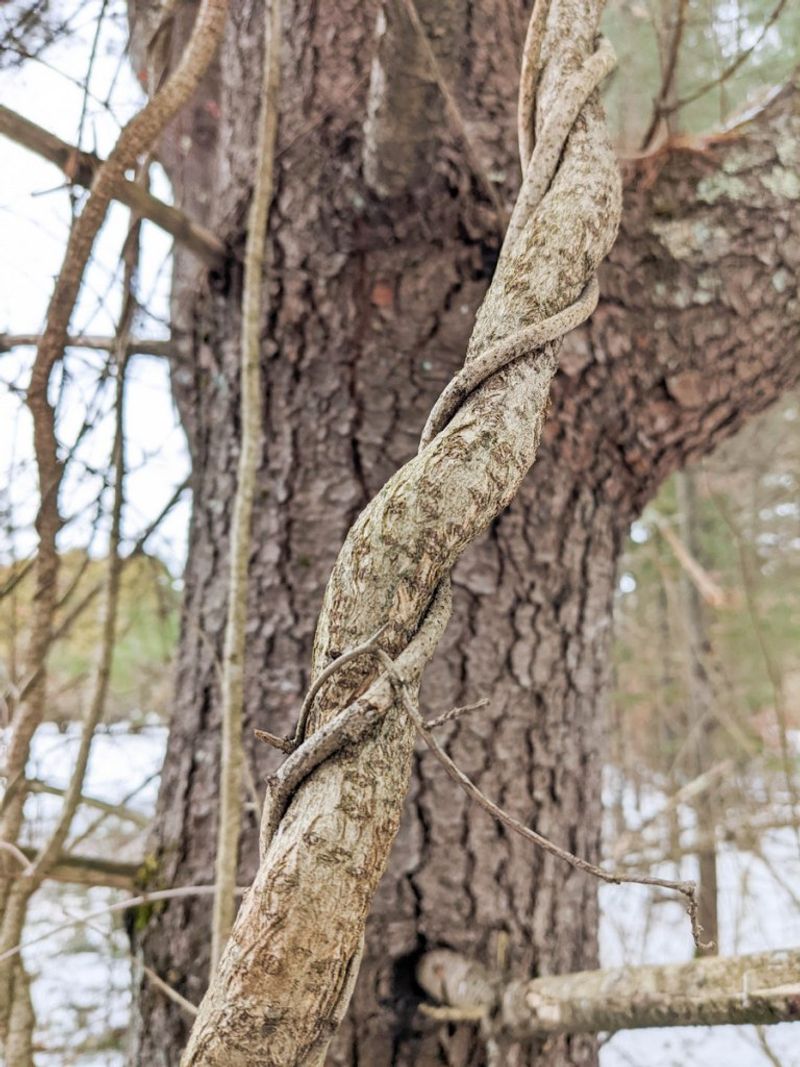
Walk any wooded trail in the state during winter and look closely at the young trees. You may notice thick, ropy vines spiraling up the trunks like a barber pole.
That spiral is not just decoration. As the tree grows wider, the vine holds firm and squeezes, a process called girdling.
It cuts into the bark and slows the flow of water and nutrients, which leaves the tree weak and stressed.
The damage keeps going overhead. Bittersweet climbs to the treetops and spreads a heavy blanket of leaves that hogs sunlight. Trees below the tangle struggle to grow, and seedlings on the forest floor get shaded out.
Weight is another problem. A mass of vines can turn a tree into a sail, so wind, ice, and wet snow snap limbs or topple whole trunks. After winter storms, crews often find bittersweet tangled in the fallen trees.
Think about how many forest edges you pass on a highway drive. Many of those green walls in summer are partly bittersweet.
Once you know the twisted trunk clue, it becomes a lot easier to see how far this vine has spread.
Why Deer And Bugs Mostly Leave This Vine Alone
Back in its home range across China, Korea, and Japan, the vine has insects and diseases that keep it in check. When it arrived in the United States in the late 1800s, those natural controls stayed behind.
Nurseries sold it as an attractive ornamental. It grew fast, handled poor soil, and offered colorful fall fruit. Over time, it slipped out of gardens and into fields, roadsides, and woods.
Deer give it an extra boost. White-tailed deer are plentiful across New Jersey, and they often browse native shrubs and tree seedlings first.
Bittersweet tends to get less attention from them, so it keeps growing while its neighbors get nibbled.
Add sunny edges to the mix and you have a perfect setup. Bittersweet loves the bright spots along roads, power line cuts, and new housing developments. It can also tolerate some shade, waiting quietly until a gap opens.
Fun fact for your next walk. A single vine can produce huge numbers of berries, and seeds can sit in the soil and sprout later.
That mix of fast growth, few enemies, and patient seeds explains its success better than any one cause.
Round Bittersweet Leaves And Fishnet Bark Make It Easy To Spot
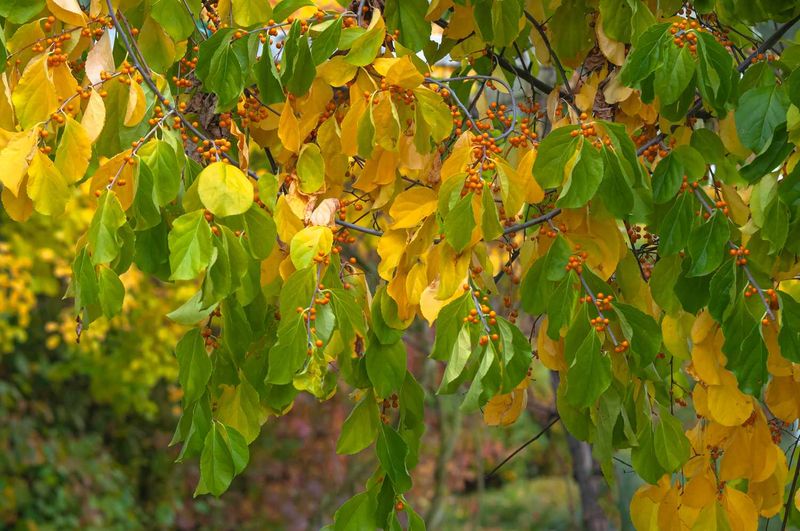
Learning this vine is easier than it sounds. Once I studied a few photos, I started catching it on almost every walk.
Start with the leaves. They are glossy, roundish, and finely toothed, and they grow one at a time, alternating along the stem. In fall they turn a bright yellow, often before many native plants change color.
Next, look at the stems. Young growth is green and smooth, while older vines turn reddish brown with a cracked, net-like pattern on the bark.
Big vines can get thick as a wrist, and some grow much larger. Roots offer another clue. Pull up a seedling and you will often see a bright orange root. That color is a handy field check.
Then come the berries. Remember the stem placement trick, with fruit tucked along the vine at leaf joints rather than only at the tips.
Winter is a great time to scout. Leaves are gone, so the spiraling vines and leftover berries stand out clearly against bare trees.
Grab your phone, snap a picture, and compare it with the Rutgers invasive plant guides before you start pulling anything.
Cutting Bittersweet Vines At The Base Works Better Than Yanking
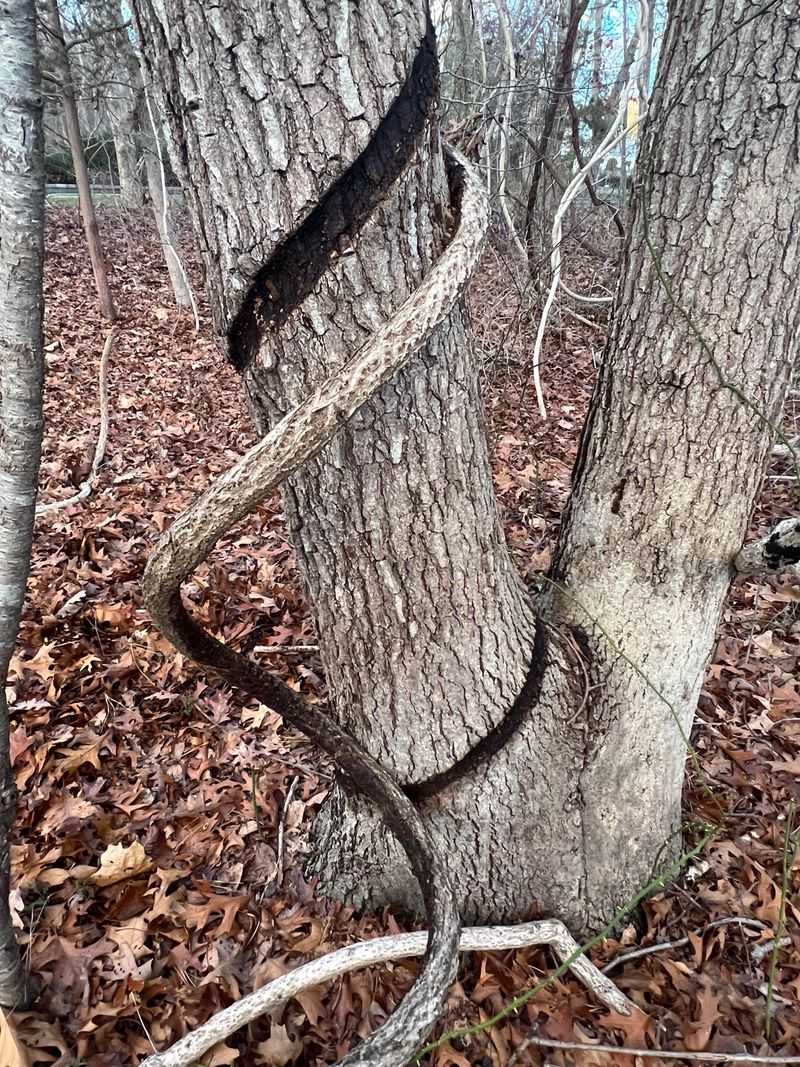
My first instinct was to grab the vine and pull hard. That turned out to be a mistake, because ripping down big vines can tear bark and break branches on the host tree.
A smarter approach starts at ground level. Use loppers or a pruning saw to cut each vine near the base, then cut it again a few feet higher.
The upper part loses its water supply and slowly withers in the canopy, where you can leave it.
Small plants are a different story. Seedlings and young sprouts can be hand-pulled, especially when the soil is moist. Try to get the whole orange root, since leftover pieces can sprout again.
Cutting alone rarely finishes the job. Bittersweet answers by sending up new shoots from roots, sometimes more than before.
Many extension programs suggest treating fresh-cut stumps with an herbicide such as glyphosate or triclopyr, applied carefully by the label directions.
Late summer into fall is often the best timing for stump treatment, since the plant is moving energy down to its roots. Winter is still great for cutting and scouting. If you prefer no chemicals, plan on cutting new sprouts repeatedly for several seasons.
Winterberry And American Holly Make Gorgeous Native Swaps
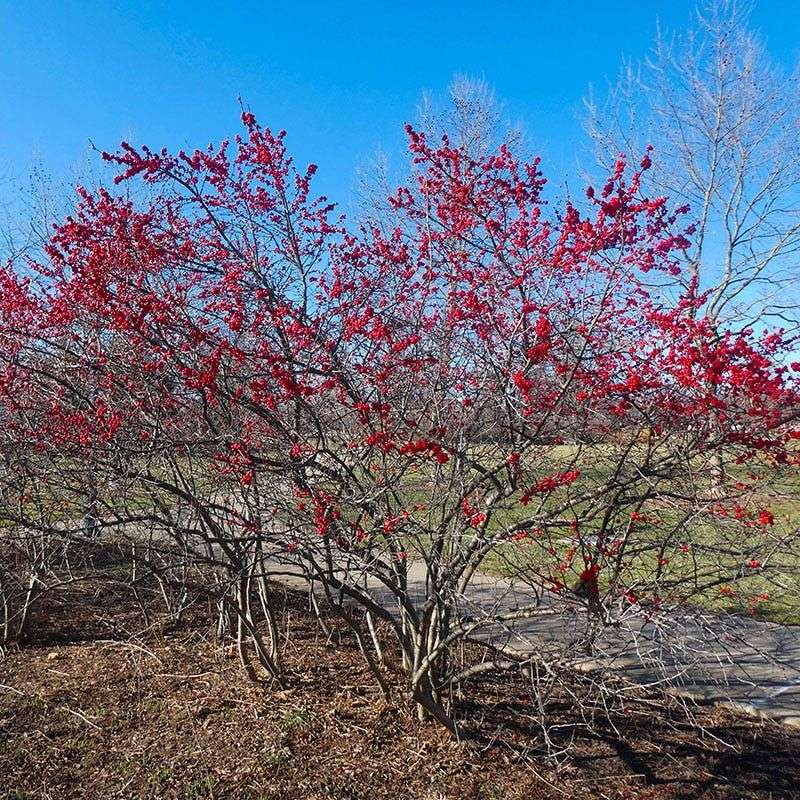
Swapping out bittersweet does not mean giving up color. Some of the prettiest holiday branches grow wild right here in the region.
Winterberry holly, Ilex verticillata, is my favorite. It drops its leaves in fall and leaves bare stems loaded with bright red berries. Cut stems look stunning in a tall vase or tucked into a wreath.
American holly, Ilex opaca, brings the classic look with spiny evergreen leaves and red fruit. It is native to the state and grows well in many yards, including near the shore.
Eastern red cedar, Juniperus virginiana, adds a cool twist. Its dusty blue berry-like cones give wreaths a frosty feel, and the foliage smells wonderful.
Planting these at home pays off twice. You get your own decorating supply, and birds get winter food that supports them instead of spreading invasive seeds.
Remember that winterberry and holly need a male plant nearby for female shrubs to set berries.
Shopping tip worth repeating. Ask local nurseries and florists which berries they use, and choose native or clearly non-invasive options. Dried flowers, pinecones, and seed pods from your garden make lovely fillers too.
A Few Bittersweet-Free Habits Help Protect Local Woods
One person pulling vines might feel small. Yet backyards connect to parks, stream corridors, and preserves, so every cleared patch helps slow the spread.
Start close to home. Check fence lines, shrub borders, and the edges of your property each fall and winter. Catching seedlings early saves hours of work later.
Talk with neighbors, too. Bittersweet berries travel by bird, so a vine next door can reseed your yard every year. Sharing a photo and a simple tip often sparks helpful action.
Volunteer workdays are another fun option. Many New Jersey parks, county agencies, and groups like local land trusts host invasive removal events. You learn hands-on skills, meet friendly folks, and see real progress in a single morning.
Reporting sightings helps as well. Tools such as EDDMapS let you log invasive plants, which gives researchers better data about where problems are growing.
Most of all, skip bittersweet in your decorations and gently spread the word. It might feel awkward to mention a friend’s pretty wreath, but most people simply never heard the story. A quick, kind conversation could keep a whole new tangle from sprouting next spring.