Those Little Brown Cones Hanging On Indiana Evergreens Aren’t Cones
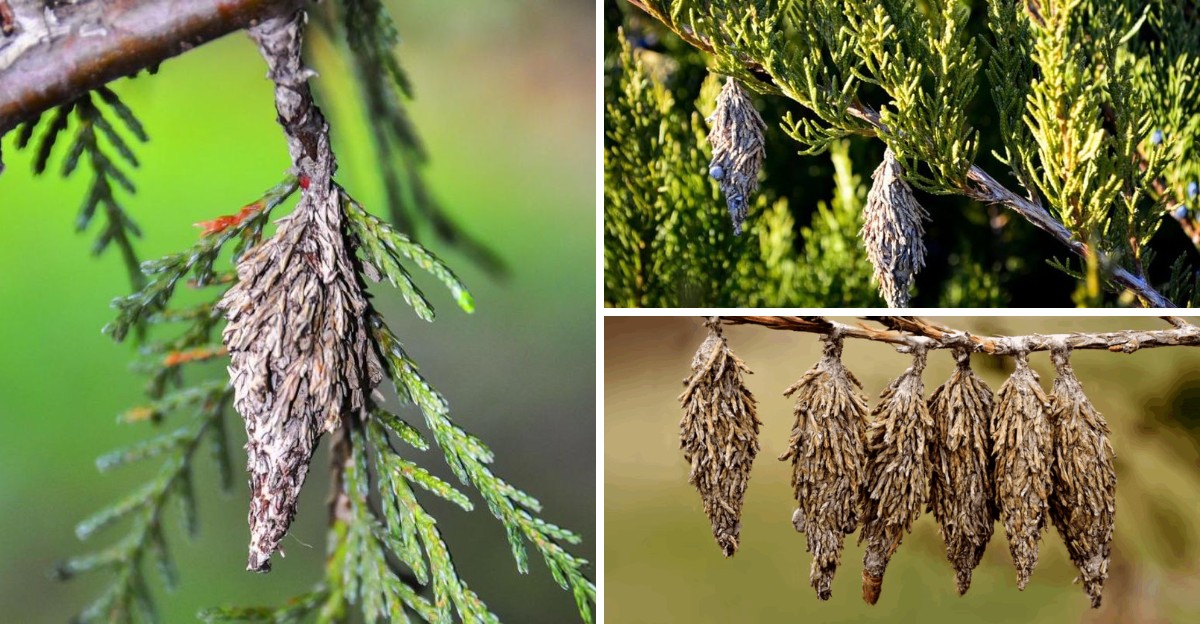
Each of those tiny brown “cones” swinging from your arborvitae could be hiding hundreds of eggs. Some hold up to a thousand.
I’ll be honest, I walked past them for two whole winters in my Indiana yard. I figured my juniper was just a generous tree.
The truth showed up the day I tried to pull one off. A real cone snaps free from a branch. This one was tied on with silk tougher than fishing line, and it was decorated with chewed bits of needles.
Here’s what gets me. Something built that little case by hand, so to speak, and then sealed itself inside. Do you know what is waiting in there right now, and what happens when the weather warms up in late spring?
Those Silk-Wrapped Brown Ornaments On Your Arborvitae Were Built On Purpose
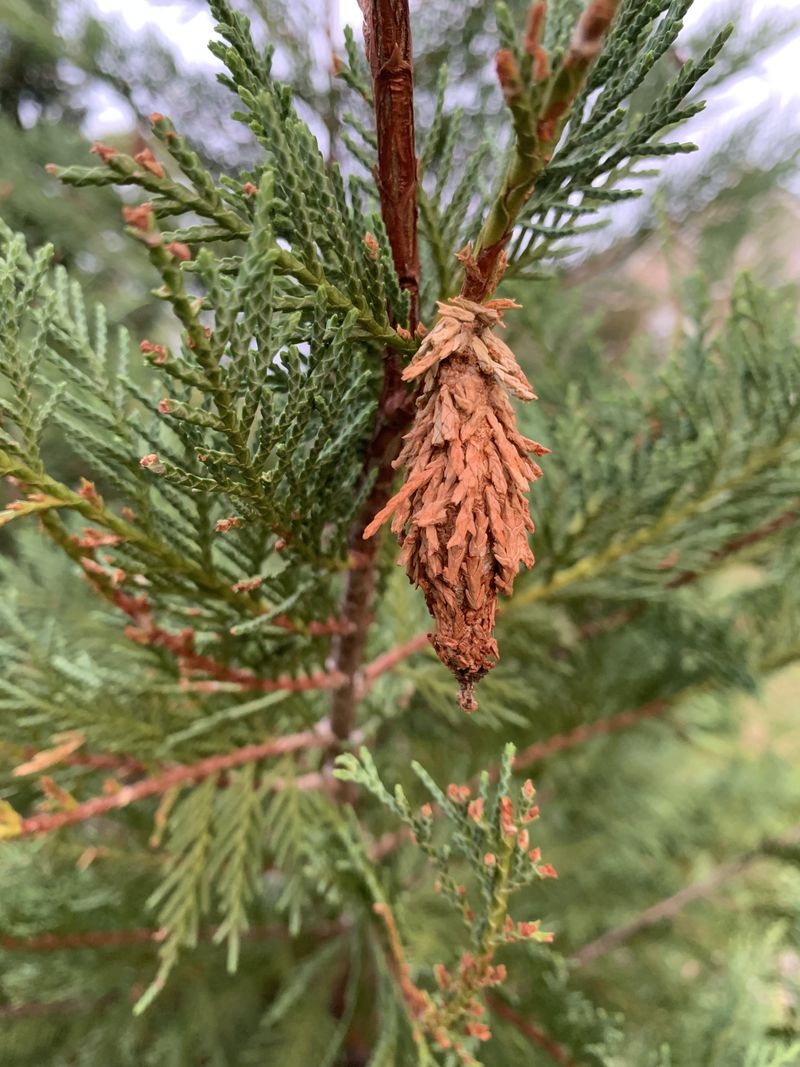
Grab one of those brown dangles and give it a gentle tug. You will feel it resist, because it is fastened to the twig with a tough band of silk.
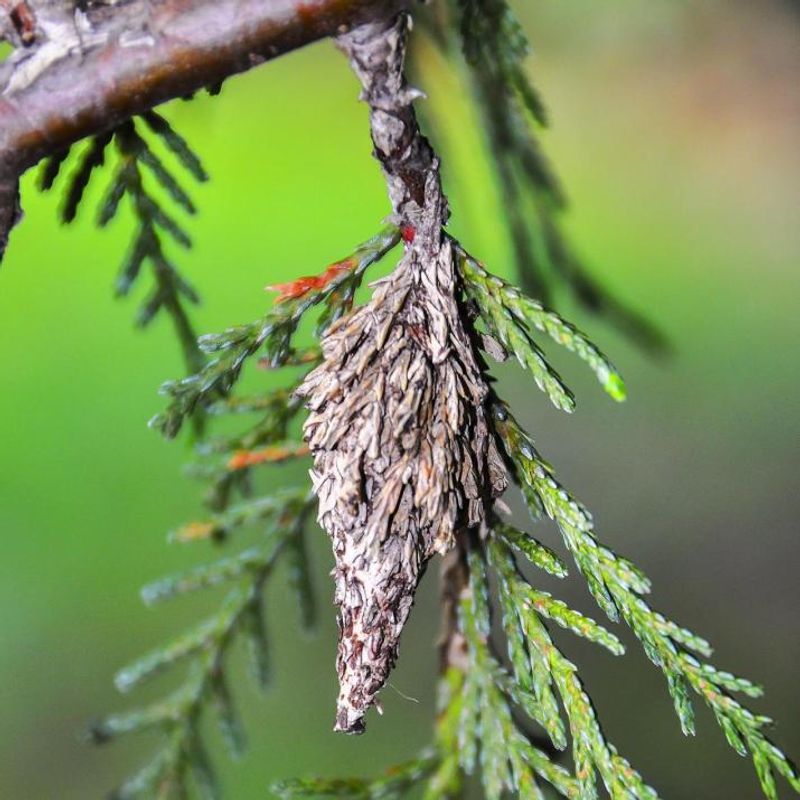
What you are holding is a bagworm bag. A caterpillar spun it from silk and then glued on scraps of needles, leaves, and bark from the very plant it was eating. That trick makes the case blend right into the branch, which is why so many people mistake it for a cone.
A quick way to tell the difference is to look at the shape and texture. Real pine and spruce cones have neat, overlapping woody scales arranged in a spiral. Bagworm bags look shaggy and messy, like a tiny sleeping bag stuffed with yard clippings.
Size is another clue. Finished bags usually measure about one and a half to two inches long. They taper at both ends and dangle from twigs on a band of silk instead of growing out of the branch the way real cones do.
Fun fact for your next garden chat: the caterpillar carries this bag everywhere while it feeds, adding to it as it grows. It is basically a mobile home with a built-in disguise.
Bagworm Eggs Are Spending The Winter Inside The Female Bags
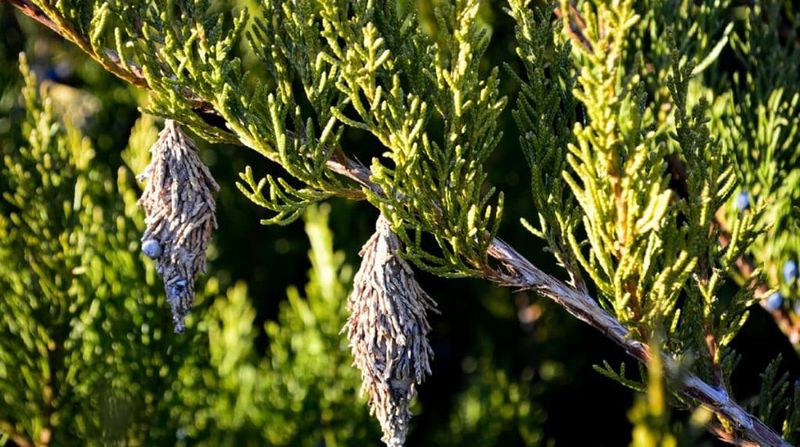
Winter looks quiet on your evergreens, but each female bag may be packed with the next generation. According to Purdue Extension, the eggs ride out the cold months tucked safely inside.
The life story is a little strange. Female bagworm moths have no wings and no functional legs, so they never leave their bags. Winged males fly in during late summer to mate, and the female lays her eggs right inside the case where she spent her life.
A single female can leave behind several hundred eggs, and sometimes up to about a thousand. That explains how one shrub can go from a handful of bags to dozens in just a season or two.
In Indiana, those eggs usually hatch from late May into early June. Tiny larvae crawl out, start spinning their own mini bags, and begin munching right away.
Some young caterpillars also let out a strand of silk and catch a breeze to nearby plants. Scientists call this ballooning, and it lets the pest spread from yard to yard.
So that little brown pouch is more than an old shell. It is a full nursery waiting for warmer weather.
Pull Those Bagworm Cases Off By Hand This Winter
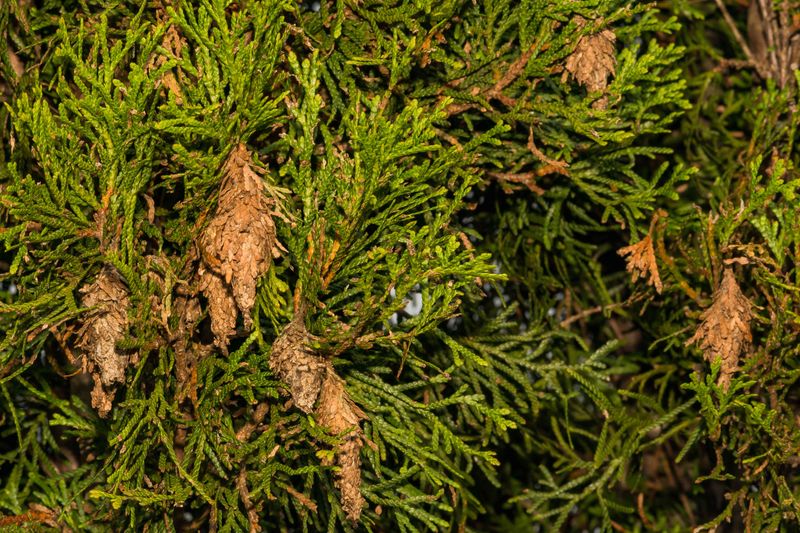
Call me old-fashioned, but my favorite bagworm tool is a pair of gloves and a bucket. From late fall through early spring, hand removal is the simplest and most effective step you can take.
Work your way around each evergreen and pluck every bag you can reach. Snip the silk band with small scissors or pruners, because pulling hard can tear the twig or leave silk wrapped tightly around it.
That silk band matters more than people expect. Left in place, it can tighten as the branch grows and slowly cut off the stem, causing the tip to brown out years later.
Purdue Extension suggests dropping collected bags into a bucket of soapy water. You can also seal them in a bag for the trash. Please do not just toss them on the ground under the tree, since eggs inside can still hatch.
Aim to finish before mid-May. Once the eggs hatch, picking off old bags will not catch the new crowd.
Tall trees are harder, so focus on what you can reach safely. Skip shaky ladders and let a certified arborist handle anything high.
Spraying Those Winter Bagworm Bags Is A Waste Of Money
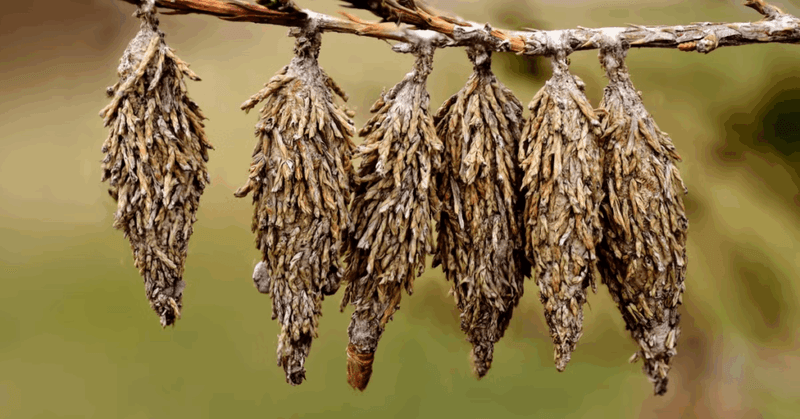
I’m not proud of this, but I once sprayed a whole row of junipers in November. Those bags did not care one bit.
Timing explains why. By late summer, the caterpillars have finished feeding and sealed their bags shut. The eggs inside are protected by layers of silk, so sprays in fall or winter simply cannot reach them.
The window for treatment opens after the eggs hatch, usually in June across most of Indiana. Young larvae are small, hungry, and much easier to control at this stage.
Purdue experts often point to Bt, short for Bacillus thuringiensis, as a lower-impact choice. It works best on young caterpillars that are still small and actively eating, so June into early July is the sweet spot. Spinosad is another option listed by extension services.
Watch the plants closely in June. When you spot tiny bags, maybe a quarter inch long, standing up on the foliage like little cones of their own, that is your signal.
Always read and follow the product label. It tells you the legal rate, the right plants, and safety steps that protect you, your pets, and helpful insects.
Junipers, Arborvitae, And Spruce Are Bagworm Favorites
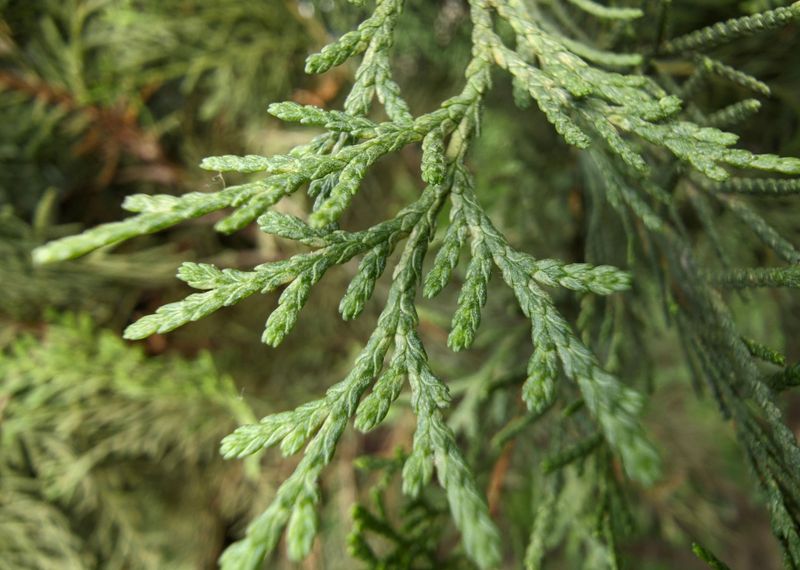
Bagworms are not especially picky eaters. Still, a few evergreens seem to wear a welcome sign for them.
Arborvitae, red cedar, and junipers top the list in many Midwest yards. Spruce and pine are also common hosts, and the caterpillars will nibble on many deciduous trees like maple, honeylocust, and sycamore too.
Here is the tricky part. Deciduous trees can usually grow fresh leaves the next spring, so damage tends to be cosmetic. Most evergreens cannot easily replace needles stripped from older wood.
Heavy feeding on arborvitae or juniper can leave branches brown and bare for good. Small or young shrubs are at the most risk, and severe repeat infestations can cause a whole plant to decline.
Watch for these warning signs during summer:
Branch tips look thin, chewed, or browned. Bags appear and grow larger week by week. Several plants in a row show damage moving outward from one starting point.
Hedges and screens deserve extra attention. Plants growing close together make it easy for caterpillars to move from shrub to shrub, so one neglected arborvitae can affect the whole row.
Pineapple-Shaped Spruce Galls Are A Different Cone Look-Alike
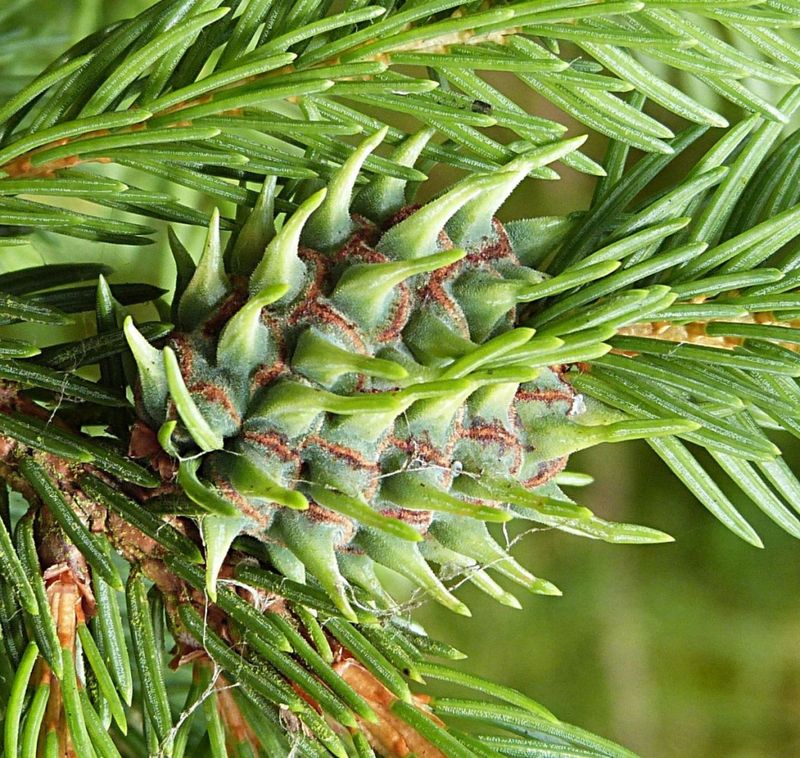
Not every fake cone is a bag. Some are actually part of the tree, swollen into a strange shape by a tiny insect.
Spruces in Indiana often host adelgids, which are small aphid relatives. Their feeding causes the base of new shoots to swell into a gall that looks a lot like a miniature pineapple or cone.
The Eastern spruce gall adelgid forms galls about half an inch to an inch long near the base of new shoots, mostly on Norway and white spruce. The Cooley spruce gall adelgid makes longer galls, often one to three inches, at the shoot tips of Colorado blue spruce.
These galls start out green or purplish. After the insects leave in late summer, they dry out and turn brown, which is when people tend to notice them.
The key difference is easy to spot. A gall grows right out of the twig as part of the shoot itself. Bagworm cases dangle from the twig on a tough silk band that can be snipped free.
Good news for spruce lovers: these galls are mostly a cosmetic issue on healthy, mature trees. Snipping off green galls before they open can reduce numbers on small trees.
Birds And Tiny Wasps Help Keep Bagworm Numbers In Check
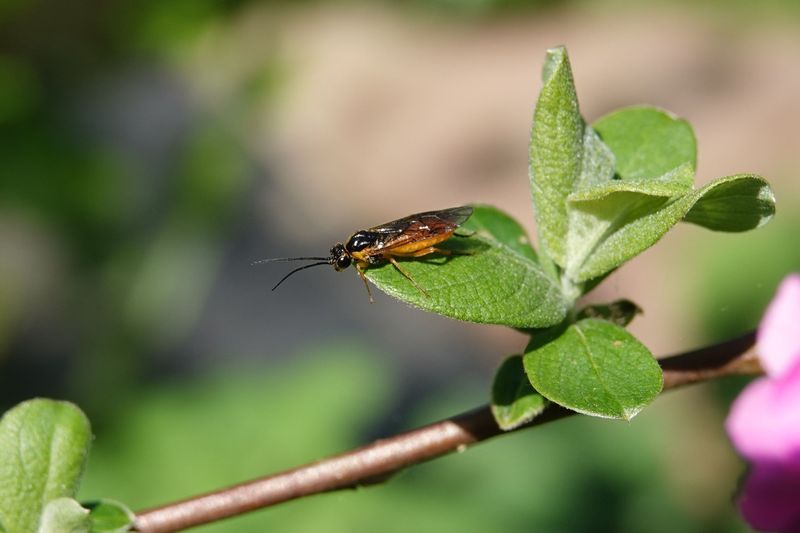
You are not fighting bagworms alone. Nature has its own cleanup crew, and it works for free.
Several kinds of small parasitic wasps lay their eggs in bagworm caterpillars. Some birds also pick at bags, and predators like spiders and certain beetles go after the young larvae in summer.
Cold snaps can help too. Very harsh winters sometimes reduce egg survival, though that varies from year to year and from one part of the state to another.
Your choices can support these helpers. Broad-spectrum insecticides sprayed carelessly may harm the beneficial insects that quietly keep bagworms down. Targeted options like Bt, used at the right time, are kinder to the good guys.
Planting a mix of native flowers gives parasitic wasps nectar to feed on. Asters, goldenrod, and coneflowers are solid picks that grow well across the state.
A little brush pile or native shrub border also invites birds to hang around your yard. Think of it as hiring a small, feathered maintenance team.
Natural control rarely clears every bag. Still, it can keep a light problem from turning into a heavy one when paired with hand removal.
A Yearly Bagworm Check Keeps Your Evergreens Looking Full
Trust me on this one: a five-minute walk around your evergreens each season saves a lot of heartache later. Bagworm problems are much easier to manage when you catch them early.
Here is a simple calendar that fits most Indiana yards:
Late fall through early spring, look for brown bags and remove them by hand. Late May through June, check for tiny new bags on branch tips. Midsummer, watch for thinning or browning foliage that hints at feeding you missed.
Healthy plants bounce back better from light damage. Water evergreens during summer dry spells, add a few inches of mulch over the root zone, and keep mulch from piling against the trunk.
Check new nursery plants before they go in the ground. A single hidden bag can bring the problem home with you.
If damage seems severe or trees are too tall to inspect, Purdue Extension and the Purdue Plant and Pest Diagnostic Lab can help with identification. A certified arborist is another smart call.
Those brown cones fooled me for years. Now they feel more like a friendly reminder to slow down and really look at the plants I love.