9 Native Plants Arizona Gardeners Put In Now For Shade, Lower Water Bills, And Fewer Pests By Summer
A few desert trees around here can make food through their green bark, long after their tiny leaves fall away. I still remember touching one and wondering why the trunk looked freshly painted like a lime.
Tricks like that explain why native plants handle Arizona heat on a fraction of the water thirsty lawns demand. Their roots and leaves evolved right here, so local birds and insects already know how to use them.
Personally, I love a yard that works for me, with lizards and songbirds hunting bugs while I sip iced tea. You might notice fewer pests once hungry wildlife moves in and sets up a regular hunting routine.
October is the sweet spot, because cooler soil lets young roots spread before brutal summer heat returns. So which nine tough natives deserve a sunny spot in your yard before next June arrives?
1. Blue Palo Verde
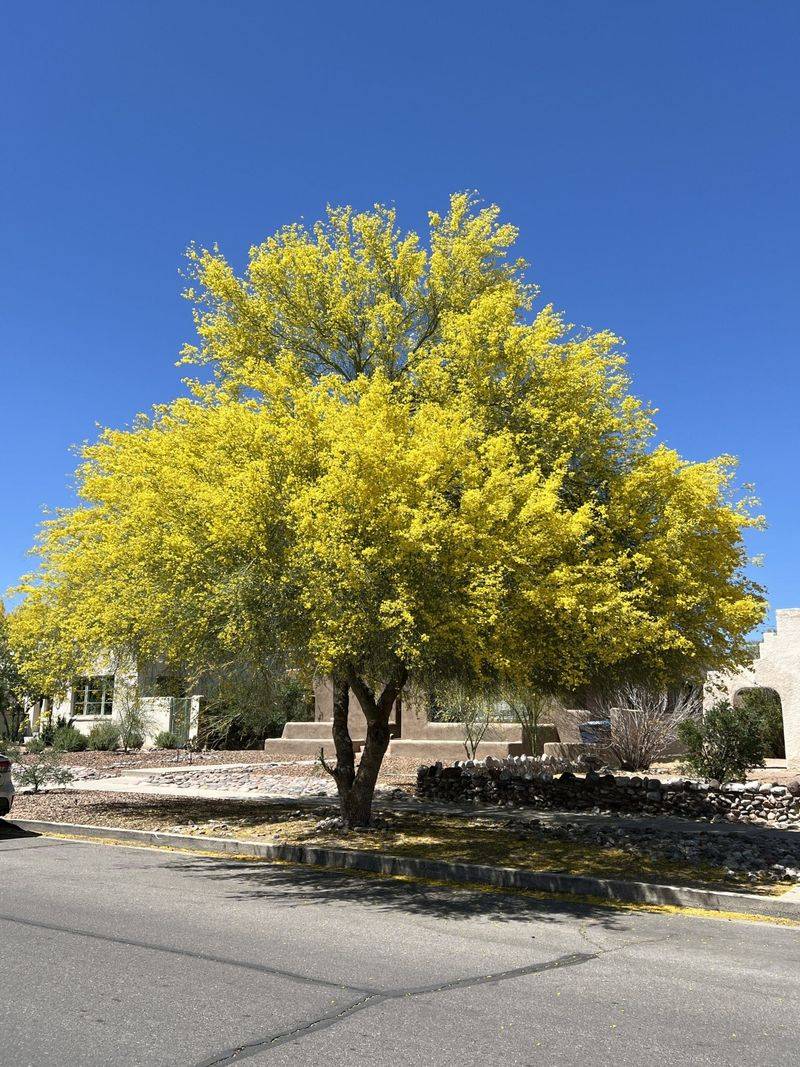
Run your hand along a young trunk and you will feel smooth, blue-green bark that quietly makes food like a leaf. Palo verde is the official state tree here, and the blue species earns that honor with style.
Botanists call it Parkinsonia florida, and it grows fast enough to reach 20 to 35 feet in many desert yards. I like how its airy branches cast filtered shade that cools a patio without blocking every winter sunbeam.
Spring turns the whole canopy into a cloud of bright yellow blossoms that native bees visit by the hundreds. Those busy pollinators bring along wasps and other helpful hunters that often snack on caterpillars and soft garden pests.
Plant it in full sun with plenty of room, ideally twenty feet or more from walls and pool decks. October planting gives roots a cool season to stretch out before next summer pushes temperatures well past one hundred.
Water deeply every week or two through winter, then slowly stretch the schedule as roots grow wider and deeper. Once settled, it needs far less water than most shade trees, and your monthly utility bill will notice the difference.
2. Foothill Palo Verde
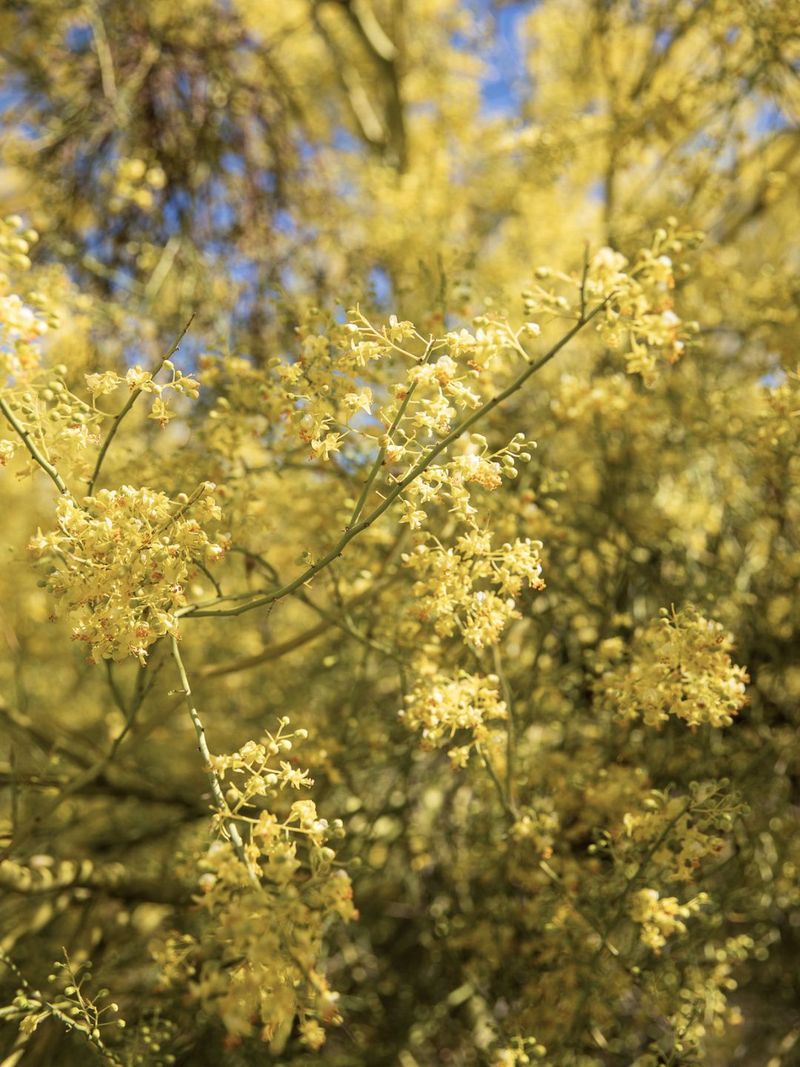
Smaller yards deserve a desert tree too, and this lime-barked cousin fits beautifully where a big canopy would feel cramped. Parkinsonia microphylla tops out around 15 to 25 feet, so it rarely crowds roofs or block walls.
Hike the Sonoran foothills and you will spot it clinging to rocky slopes with impressive patience and very little rain. I have to admit, I admire how it drops its tiny leaves during drought and keeps working through green branches.
Growth is slower than its blue relative, but the payoff is a tougher tree that asks almost nothing once established. Pale yellow flowers arrive in spring, drawing bees and moths, while hummingbirds sometimes stop by for a quick sip.
Those pollinators help balance your yard, because a busy insect community rarely lets one pest take over for long. Birds nesting in the twiggy branches also pick off beetles and caterpillars while raising their noisy little families each season.
Choose a sunny spot with fast-draining soil, and skip rich compost that encourages weak, floppy growth. Water deeply during its first year, then mostly let natural rainfall handle the job while you enjoy the lighter water bill.
3. Velvet Mesquite
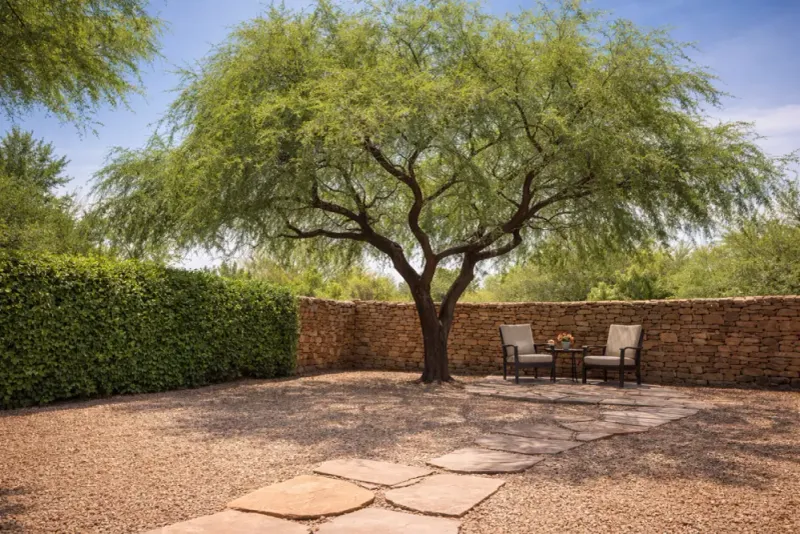
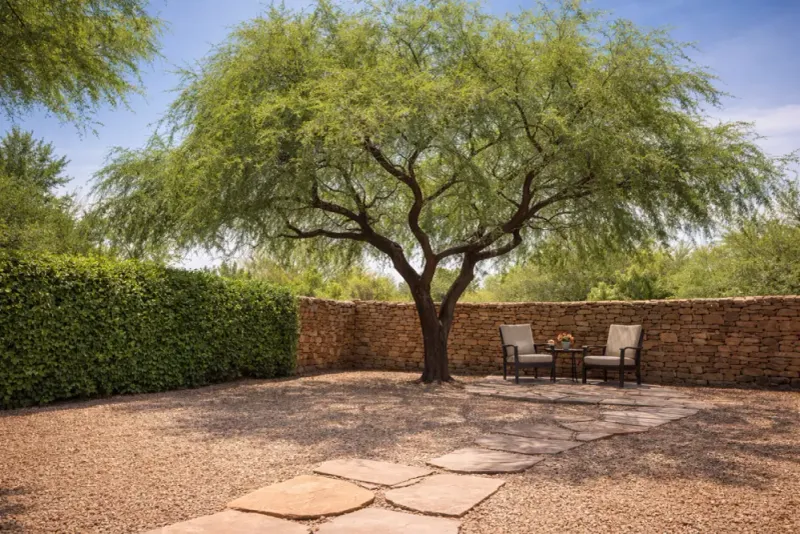
Few things beat sitting under a wide mesquite canopy on a scorching afternoon, feeling the temperature drop around your chair. Velvet mesquite, or Prosopis velutina, can spread 20 to 40 feet wide with twisting trunks full of character.
Its roots dig impressively deep, which helps the tree reach moisture long after surface soil turns dry and crusty. That deep reach means you can water less often, with a long monthly soak during summer once the tree is established.
Wildlife adores this tree, because birds nest in the branches while bees work the fuzzy spring flower spikes. I believe a mature mesquite feels like a tiny neighborhood, with lizards and songbirds hunting insects across the bark.
Roadrunners often patrol yards with good cover, and they happily eat scorpions, crickets, and other unwelcome crawlers. Mesquite also adds nitrogen to soil through its roots, quietly feeding nearby plants without any bag of fertilizer.
Late September through November is a great planting window, so October timing lines up nicely with expert advice. Give it full sun and room to spread, and prune lightly to keep the canopy open against strong monsoon winds.
4. Desert Willow
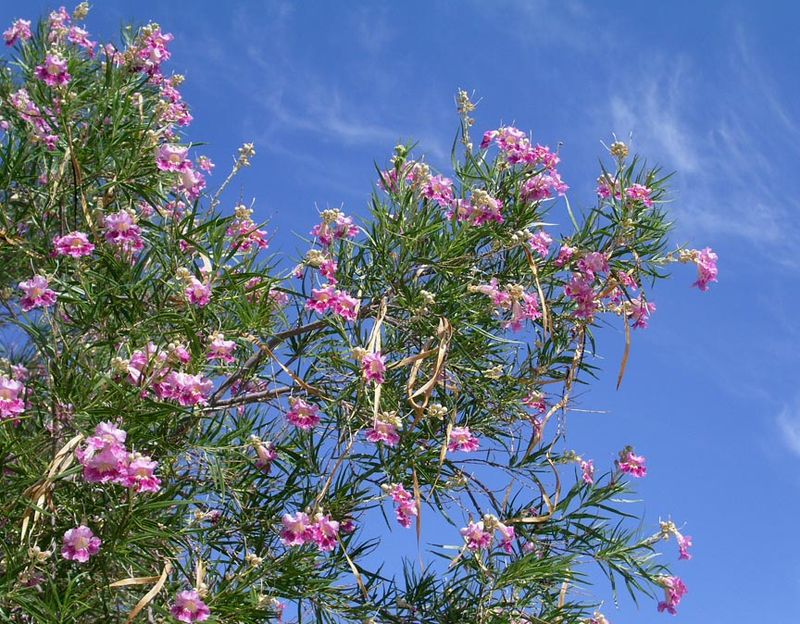
Despite the name, this graceful tree is not a willow at all, and it is actually related to catalpas. Chilopsis linearis earned the nickname thanks to long, narrow leaves that flutter in hot breezes like willow foliage.
What surprises me most is the flower show, which runs from late spring into fall in pink, lavender, or white. Each trumpet-shaped bloom smells faintly sweet, and hummingbirds zip between them like tiny jets on a busy morning.
Carpenter bees and bumblebees crowd the blossoms too, adding life and pollination power to nearby vegetable beds. A yard buzzing with pollinators also tends to host more predatory insects that help manage aphids and other nibblers.
Expect a small tree around 15 to 25 feet tall, with dappled shade that suits a seating area nicely. It handles alkaline soil and fierce heat with ease, and it shrugs off winter cold down to about zero degrees.
Plant it this month in full sun, then water deeply until roots settle in over the cooler months ahead. Leaves drop in winter, letting warm sunlight reach your windows, so you get shade in summer and warmth later.
5. Desert Hackberry
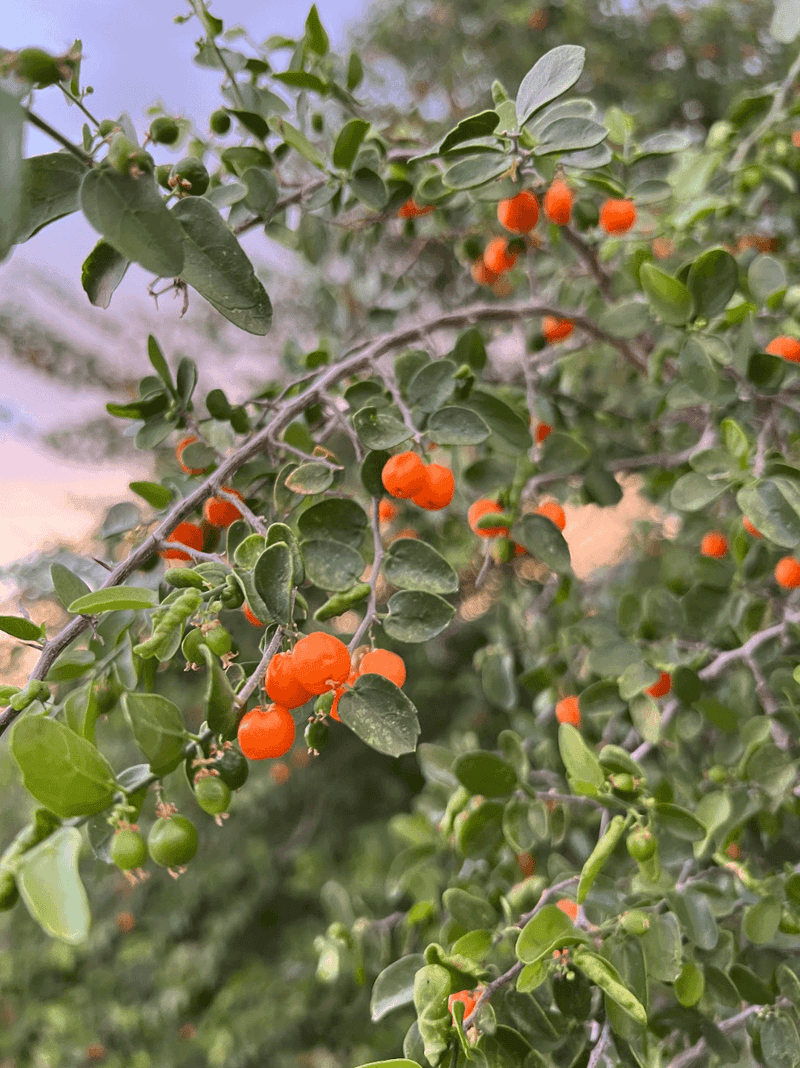
Ask any desert birder about their favorite shrub, and this thorny tangle often comes up within the first minute. Desert hackberry produces small orange berries in fall and winter, and dozens of bird species gobble them up eagerly.
Cactus wrens, thrashers, and quail tuck themselves inside the prickly branches, safe from hawks and prowling neighborhood cats. You need that kind of safe cover if you want birds hunting insects around your yard every single morning.
Known scientifically as Celtis pallida, it grows anywhere from 4 to 20 feet tall, depending on water and pruning. Small evergreen leaves stay rough and light green, giving you year-round screening along fences or noisy roadsides.
It also feeds butterfly caterpillars, including the empress leilia, so your yard supports pollinators from egg to adult. I love how one humble shrub can feed birds and butterflies while asking for almost no supplemental water.
October and November are ideal planting months, letting roots settle before next summer stresses young growth. Give it full sun or light shade and well-drained soil, and keep it away from walkways because those thorns grab sleeves.
6. Brittlebush
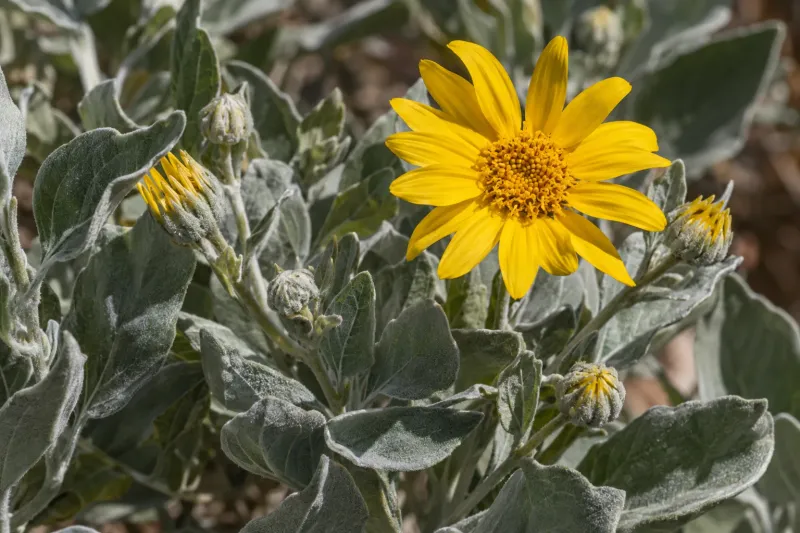
Snap a stem on a warm afternoon and you might catch a faint resin smell that settlers once burned like incense. Brittlebush, or Encelia farinosa, wears fuzzy silver leaves that reflect harsh sunlight and help the plant save moisture.
Spring is when it truly shows off, smothering desert hillsides in bright yellow daisies that glow from a distance. Many plants bloom again in fall after cooler nights arrive, giving you a second round of color with little effort.
Bees and butterflies visit those flowers constantly, and their busy traffic brings balance to the whole garden. I can’t imagine a lower-effort way to invite pollinators, since this shrub mostly takes care of itself once rooted.
Plants stay compact, usually 1 to 3 feet tall and wide, so they fit nicely along driveways and rocky slopes. Keep them a few feet from your house walls, because dense groundcover hugging foundations can give scorpions extra hiding spots.
October through February is the best planting window, and October gets you a head start on spring bloom. Full sun and lean soil keep it happiest, while too much water makes stems leggy and shortens the plant’s lifespan.
7. Desert Marigold
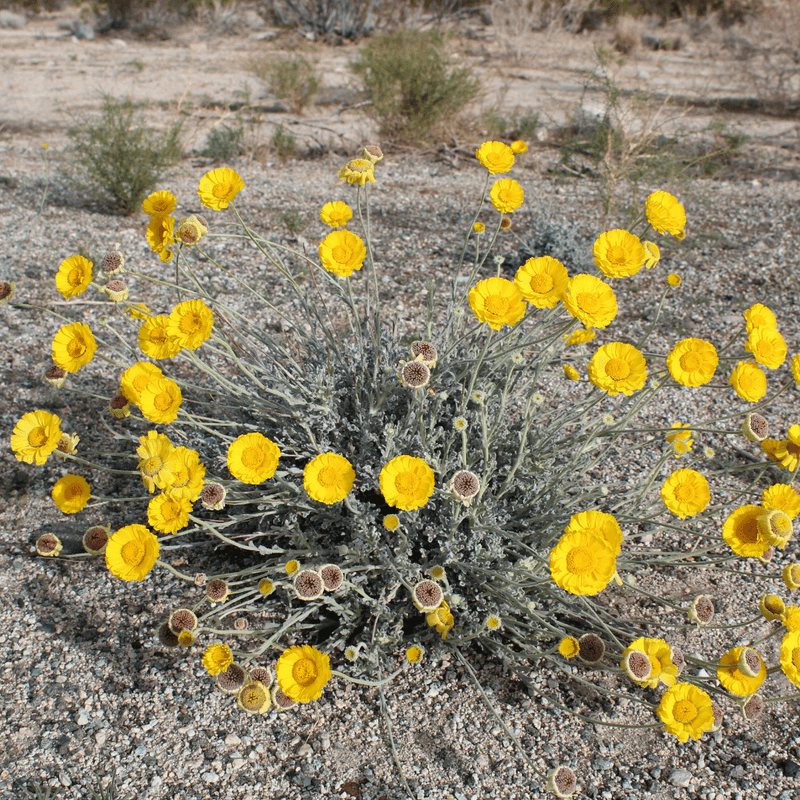
Golden blooms that keep coming for months make desert marigold one of the most cheerful plants a sunny yard can hold. Baileya multiradiata flowers from spring into fall, often popping fresh buds just when you expect it to rest.
Woolly silver leaves give it a soft look that contrasts beautifully against reddish gravel or chunky landscape boulders. You might notice it staying tidy at 1 to 2 feet tall, which suits borders and small courtyard plantings.
Individual plants live only a few years, but they reseed generously and pop up in fresh spots each spring. Personally, I treat those surprise seedlings like free gifts and move extras to bare patches while they are still small.
Native bees and butterflies rely on the long bloom season, and hummingbirds may investigate flowers during their travels. A steady supply of pollinators keeps your garden lively and gives beneficial insects reasons to stick around nearby.
Plant between October and February, choosing full sun and soil that drains quickly after heavy storms. Soggy ground leads to rot, so water deeply every couple of weeks in summer and mostly leave it alone afterward.
8. Fairy Duster
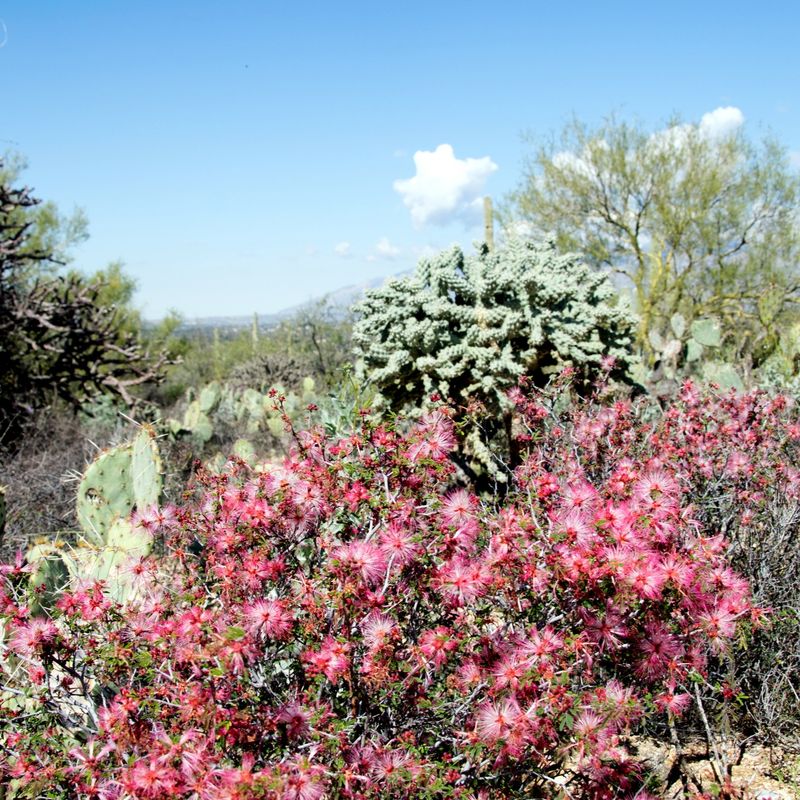
Those fluffy flowers look like tiny pom-poms someone tossed across the branches during a festive desert celebration. Each puff is really a cluster of long stamens, glowing pink or red when sunlight hits them just right.
Calliandra eriophylla stays small and mounding, usually around 1 to 3 feet tall, so it tucks neatly beside walkways. I like how its feathery leaves soften spiky cactus plantings without adding any thirsty fuss to your watering schedule.
Hummingbirds find the blooms quickly, especially in late winter and spring when few other flowers are open yet. Butterflies join the party too, and their caterpillars feed birds that help keep pesky insect numbers in check.
Full sun keeps flowering strong, though an occasional deep drink during dry spells encourages even heavier bloom. Well-drained soil matters most, since roots sitting in standing water after monsoon storms can quickly start to decline.
Fall planting gives this tough little shrub time to build roots while temperatures stay pleasant and forgiving. You’re in for a big surprise next spring, when a plant barely knee-high starts drawing hummingbirds to your front steps.
9. Autumn Sage
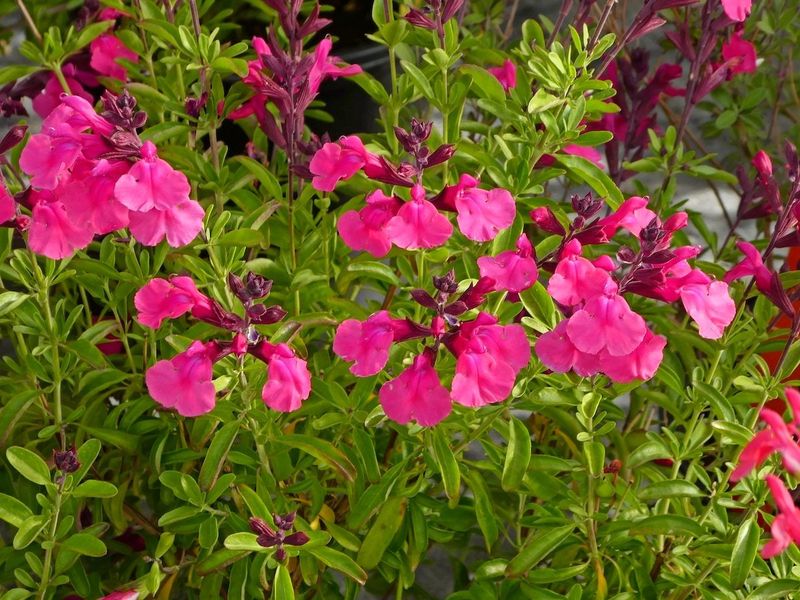
Hummingbirds treat this shrub like a favorite diner, returning again and again for nectar from its bright tubular flowers. Autumn sage, or Salvia greggii, blooms off and on from spring through fall, with a strong burst as weather cools.
Brush past the leaves and you will catch a fresh, minty scent that lingers pleasantly on your fingers. Many plant-munching critters seem to skip those fragrant leaves, which helps the shrub look tidy through most of the year.
Expect a compact plant around 2 to 3 feet tall and wide, perfect for filling gaps under your new trees. I find it shines beneath palo verde or mesquite, where filtered light protects it from the harshest afternoon sun.
Low desert gardeners should give it some afternoon shade, while higher elevations can handle more direct sunlight. Water moderately once established, and choose loose soil that drains well so roots stay healthy through the monsoon.
Fall is a great season to plant perennials in Arizona, and this sage settles in quickly during October. Trim it back lightly in late winter, and by summer you should see fresh flowers and a steady parade of hummingbirds.