Those Little Red Cups Look Like Candy, But Something Poisonous Is Hiding Inside Each One In New Jersey
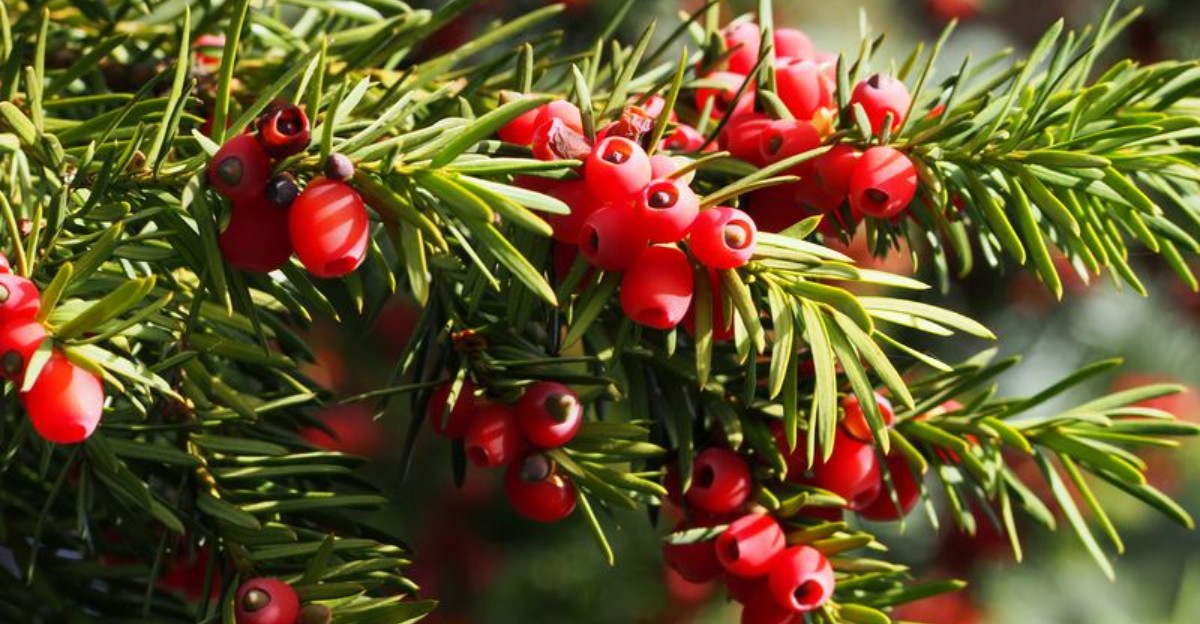
A sticky red berry on a common hedge is actually a fleshy cup, and the hard seed tucked inside carries one of the strongest plant poisons in the yard.
I had walked past these shrubs for years without noticing that tiny open window at the top of each one.
Robins and cedar waxwings gobble the red cups in fall, and New Jersey yards are no exception.
The birds swallow the seeds whole, and those seeds usually pass through without releasing their toxins. A dog or a toddler chewing the same seed faces a very different outcome.
You probably have one of these evergreens near a front porch, school, or bank parking lot in New Jersey.
Landscapers love them because they handle shade and shearing like champs. The needles themselves are just as toxic as the seeds, which surprised me most. So how do you enjoy a handsome hedge while keeping little hands and curious noses safe?
That Red Cup on Your Yew Shrub Has a Tiny Opening for a Reason
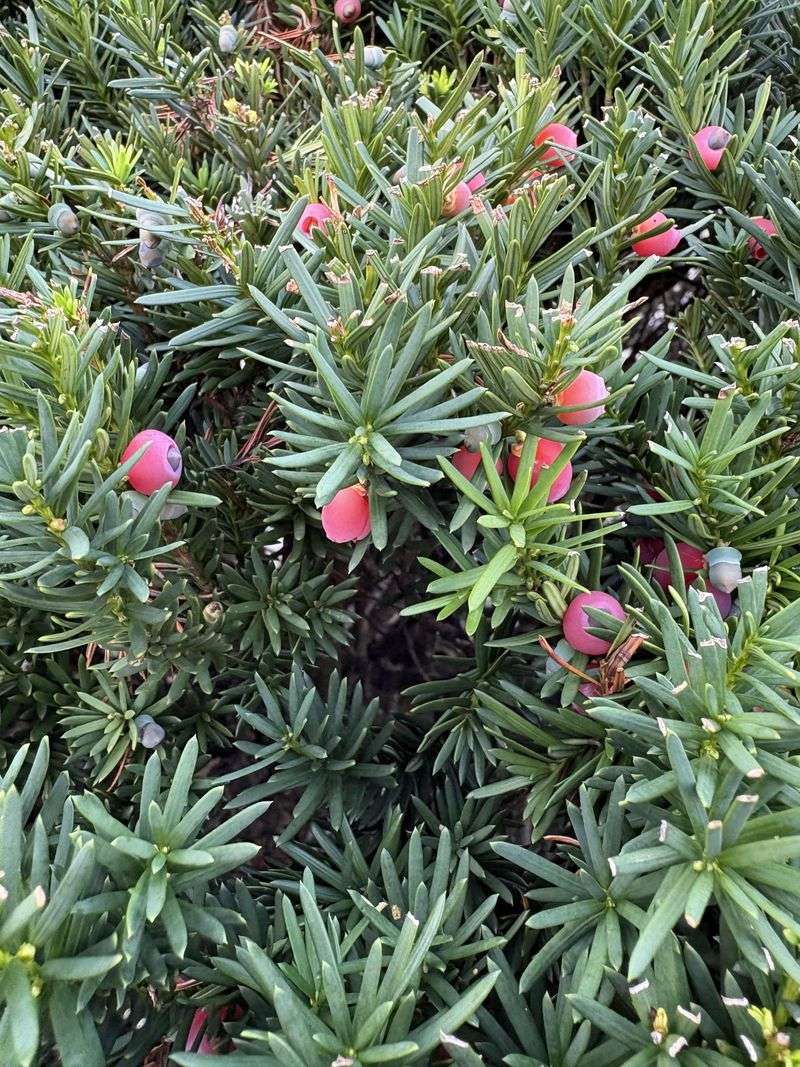
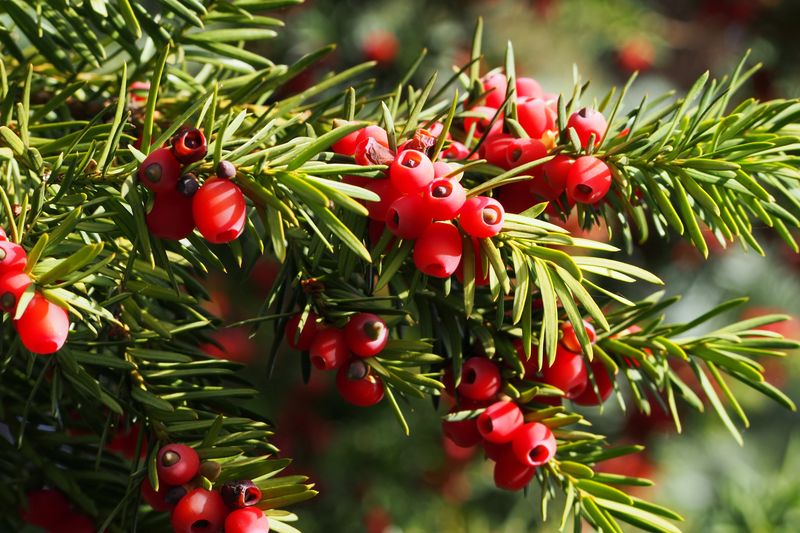
Peek closely at one of those glossy red beads on a New Jersey hedge and you will spot a little hole at the top. Through that opening sits a dark brown or greenish seed, snug inside a cup of soft flesh.
Botanists call that red cup an aril, and it is not a true berry at all. Yews are conifers, cousins of pines and junipers. Instead of building a woody cone, a female yew wraps each seed in a sweet, slimy jacket.
The bright color tells birds a snack is ready, usually from late summer into fall across New Jersey.
The twist arrives right in the middle. The red flesh is generally considered the one part of the plant with little to no toxin.
The seed inside, however, contains taxine alkaloids, compounds that can upset the rhythm of the heart.
That pairing explains the candy comparison. A child in a New Jersey backyard sees a jelly-bean shine, pops one in, and bites down. Crushing or chewing the seed is what releases the trouble.
The plant wants its seed carried away, not crunched. So it offers a sugary reward on the outside and keeps the hard, bitter core guarded by chemistry.
Yew Needles, Bark, and Seeds All Carry the Same Hidden Poison
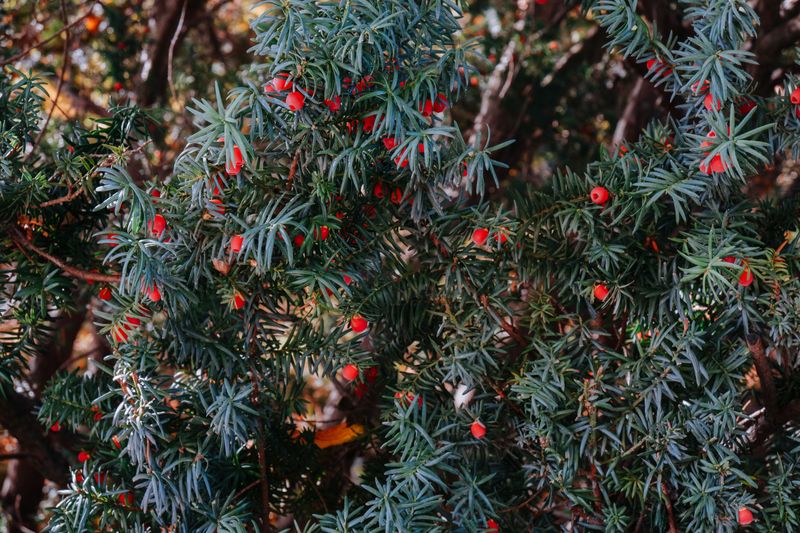
Ask any poison control nurse about yews and you will hear a consistent message. The needles, twigs, bark, and seeds all contain taxine, and the needles carry plenty of it. The red flesh is the lone exception.
That matters because kids rarely grab just one thing. A toddler reaching for a fistful of shiny berries often scoops up needles and seeds in the same handful. Older kids building hedge forts sometimes chew on twigs too.
Taxine works on the electrical system of the heart. In serious cases it can slow the heartbeat, drop blood pressure, and trigger an irregular rhythm.
Early signs listed by poison centers include dizziness, nausea, vomiting, belly pain, and trembling.
Most accidental tastes by children involve swallowing a few arils whole, and many of those cases end with no symptoms at all. Still, nobody should try to guess at home how much was chewed.
Dried material stays toxic as well. Brown needles under a hedge or in a brush pile keep their punch, so a raked heap is not safer than a living plant.
My family rule is simple. If a berry, cone, or needle comes off a shrub, it stays out of mouths unless an adult knows exactly what it is.
Dogs, Horses, and Cattle Can Get Sick From Yew Hedge Clippings
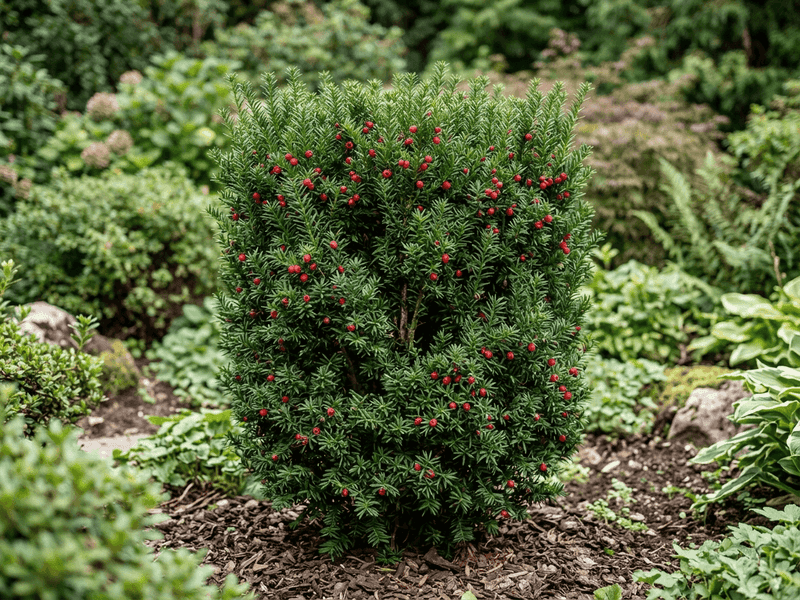
Veterinarians in farm country share a story that repeats far too often. Someone trims the front yew hedge, tosses the clippings over the fence, and hungry livestock eat them. A small amount can bring serious trouble for horses and cattle, sometimes within hours.
Grazing animals face the biggest risk because they eat greens by the mouthful. Some hobby farms have suburban landscaping right next to pasture, which raises the odds. Goats, sheep, and llamas are vulnerable as well.
The ASPCA Animal Poison Control Center lists yew as toxic to dogs, cats, and horses. A dog chewing a yew stick or snacking on fallen arils may show drooling, vomiting, wobbliness, or tremors. Heart rhythm problems can follow in severe cases.
A few habits go a long way. Bag clippings for yard waste pickup instead of dumping them near animals.
Keep yews away from fence lines that border pasture, and rake fallen arils out of dog runs each autumn.
If you suspect a pet ate yew, call your vet or the ASPCA line at 888-426-4435 right away. Deer browse yews heavily in winter, yet even they occasionally get poisoned, so pets deserve extra caution.
Spotting a Yew Shrub by Your New Jersey Porch Takes About Ten Seconds
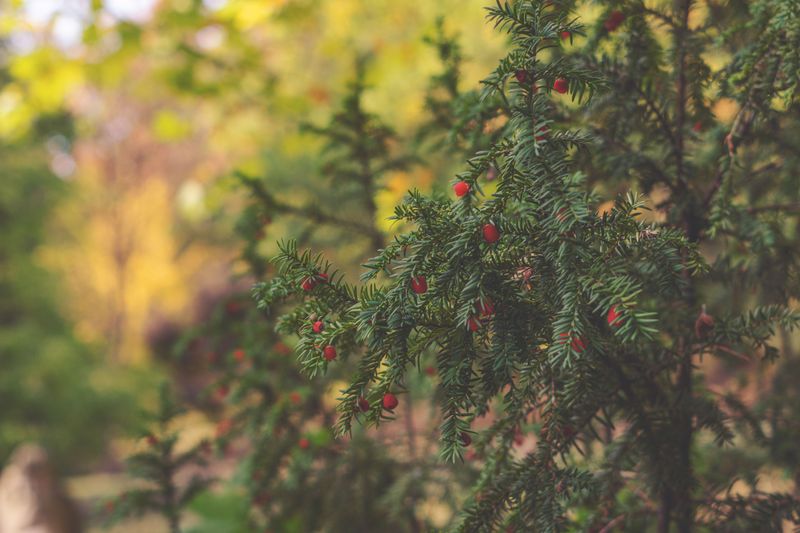
Grab a sprig and flip it over. Yew needles are flat, soft, and about an inch long, glossy dark green on top with two paler stripes underneath.
They feel friendly in your hand, not prickly like a spruce. Look at the bark next. Older stems show reddish-brown bark that peels in thin, flaky strips.
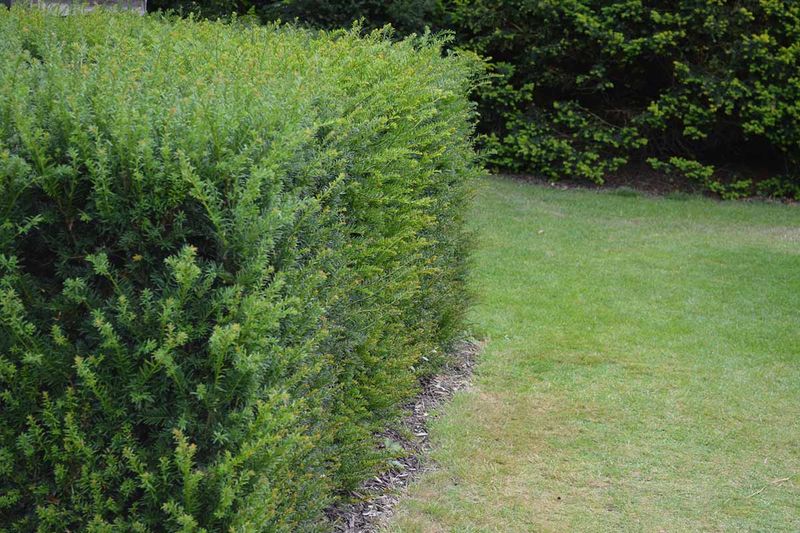
In New Jersey yards, yews often appear as sheared boxes or globes hugging foundations, since they tolerate shade on the north side of a house.
Most landscape yews are Japanese yew, English yew, or a hybrid of the two sold under names like Hicks and Densiformis. They grow well across much of New Jersey, though hot, poorly drained clay can stress them.
Only female plants produce the red cups. A male yew makes small, pale pollen cones in spring instead, so a hedge may show fruit on some shrubs and none on others.
A few lookalikes trip people up. Hemlock has shorter needles and tiny brown cones. Arborvitae has flat, scaly sprays rather than needles.
Plum yew bears olive-like fruit without an open top. Snap a photo and ask your local Rutgers Cooperative Extension office if you remain unsure.
Cedar Waxwings and Robins Eat Yew Berries Without a Second Thought
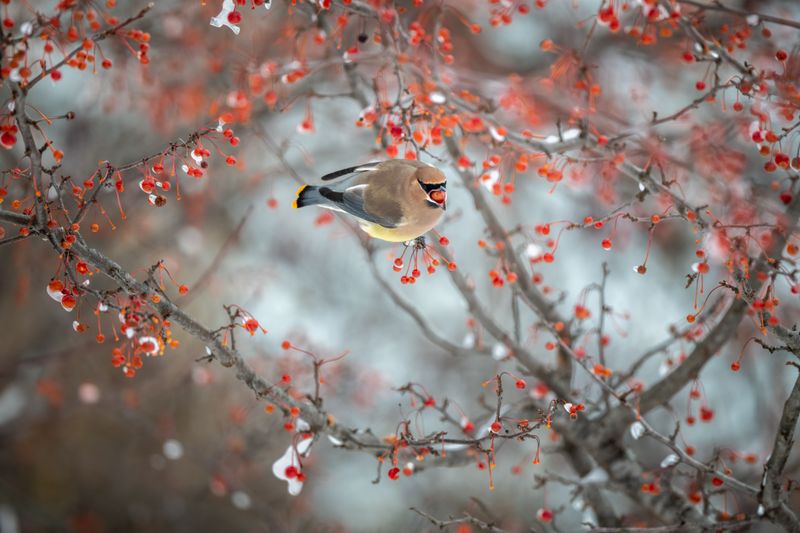
Few fall moments beat watching a flock of cedar waxwings strip a yew hedge in a New Jersey afternoon. Their sleek crests and yellow-tipped tails look painted on.
Robins, mockingbirds, and thrushes join the feast too. So how do birds get away with it? They swallow each red cup whole.
Their digestive systems strip off the sweet flesh, and the hard seed coat usually passes through unbroken, so little taxine gets released.
That arrangement benefits the yew. Birds carry seeds away and drop them somewhere new, which explains why a stray yew seedling sometimes pops up under a backyard tree or along a fence in New Jersey where birds perch.
Bird behavior is not proof of safety for anyone else. Animals vary widely in how they handle plant toxins, and a creature that swallows a seed intact differs from one that chews it into bits.
Enjoy the show from a window and keep binoculars handy. If you spot seedlings sprouting where New Jersey kids or pets play, pull them while they are small and the roots let go easily.
Wearing gloves for this chore is a smart habit, since yew sap can irritate sensitive skin for some gardeners.
A Child Who Chews Yew Seeds Needs a Quick Call to Poison Control
Panic helps nobody, and a calm plan helps a lot. Keep the national Poison Help number, 1-800-222-1222, saved in your phone. It connects you with experts for free, any hour of the day.
Start by removing anything still in the mouth and wiping the gums gently. Do not try to make your child vomit unless a poison specialist tells you to.
Old home remedies can create new problems. Gather a few facts before or during the call. How many red cups might be missing? Did your child chew or swallow them whole, and were any needles involved?
Snip a small sprig with fruit and drop it in a plastic bag. Bringing a sample helps doctors confirm the plant if you end up heading to a clinic or hospital.
Watch closely for the next several hours. Vomiting, belly pain, dizziness, unusual sleepiness, a slow or racing pulse, or trouble breathing all warrant immediate medical attention. Call 911 for fainting, seizures, or breathing problems.
Many calls end with simple reassurance and home monitoring. Specialists would much rather hear from you over a harmless swallow than miss a serious one, so pick up the phone.
Male Yews or Native New Jersey Shrubs Can Lower Risk in Play Areas
Ripping out every yew is not the only answer. A few smart tweaks can shrink the risk while keeping that classic evergreen look.
Male yews produce no red cups, so a hedge made entirely of male plants removes the candy temptation. Nurseries sometimes label cultivars by sex, so ask before buying. The needles still contain taxine, so this swap lowers risk rather than erasing it.
Timing your trimming helps too. Yews flower in early spring, so early-summer shearing will not remove the flowers; late winter remains a good window for heavier shaping, which may remove some flower buds that would become arils.
For spots right next to swing sets or sandboxes, consider replacing yews with native shrubs. Ninebark, spicebush, and fragrant sumac are native to New Jersey and feed pollinators and songbirds.
Your local Rutgers Cooperative Extension office can suggest native plants for shady and sunny sites. Whatever you choose, teach kids to recognize the red cups and leave them alone.
Knowledge travels with them to school yards, parks, and friends’ houses, where you cannot inspect every hedge. A handsome shrub and a safe yard can share the same address with a little planning.