Green Bumpy Brains Dropping Across New Jersey Lawns Come With A Famous Spider Myth
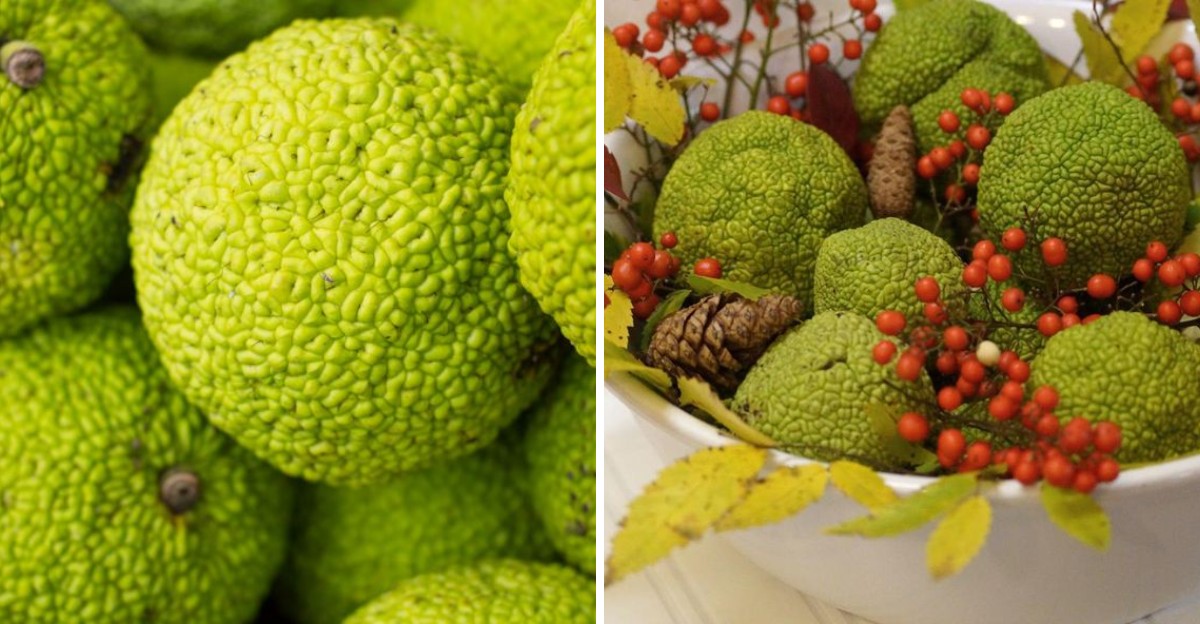
Would you hold a sticky green brain that smells like citrus and cucumber? You just met the Osage orange, a lumpy fruit thudding across New Jersey this autumn.
Gutters clog with them, and car roofs ring under their heavy bounce. Dogs sniff them suspiciously while you wonder what just landed.
Kids poke them with sticks, and you hear a neighbor swear they repel spiders. Maybe you line a few along a windowsill as tiny green guards.
Spiders ignore the memo and spin webs right beside them. Research does not support that claim, and you can test it yourself.
Hedgerow trees in New Jersey can trace to farmers who planted them before barbed wire. Each fruit can grow as big as a softball and weigh about a pound. Grab a fruit now and feel the milky sap cling to your fingers.
The Osage Orange Tree Behind The Green Brains
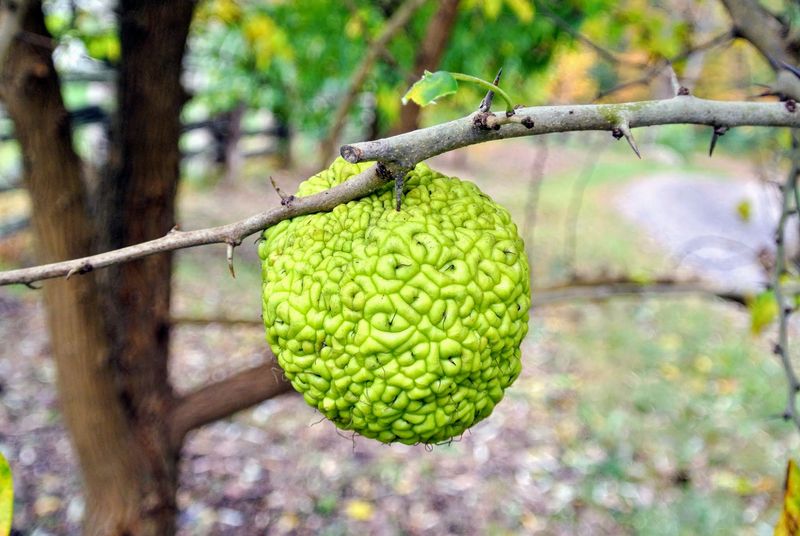
Those lumpy green balls come from the osage orange tree, often called hedge apple. It is not related to real oranges at all.
The tree belongs to the mulberry family and has spread across much of the country. Its native home is a small patch of Texas, Oklahoma, and Arkansas. Its fruit grows about the size of a softball.
Farmers once planted rows of these trees as living fences across the plains. The thorny branches kept cattle from wandering off before barbed wire existed.
Some New Jersey yards still hold old trees from those early planting days. Some trees in older towns may be more than a century old.
Only female trees grow the bumpy fruit, so not every tree drops them. Male trees make pollen instead and stay fruit-free each fall.
The wood is bright yellow inside when cut, and very hard and dense. Native Americans prized it for making bows, and so do modern archers.
Squirrels sometimes tear the fruit apart to reach the small seeds hidden inside. You might find shredded green bits scattered across your patio in late fall.
Spotting the tree is easy once you know what to look for. Look for shiny oval leaves, sharp thorns, and orange-brown, deeply furrowed bark.
If you have one nearby, take a quick walk around it this weekend. You may count dozens of green brains resting in the grass.
October Drop Season Across Garden State Yards
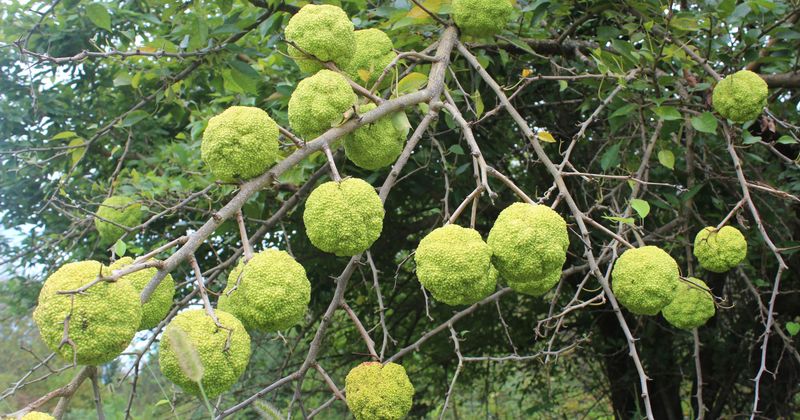
Thud, thud, thud, and suddenly your lawn looks like a green bowling alley. October is peak season for falling hedge apples in New Jersey.
The fruit ripens slowly through late summer and early fall on the branches. By mid-October, many of them grow heavy enough to drop.
A single big tree can release a few hundred fruits in one season. Each one weighs around a pound, sometimes a bit more.
That weight matters if you park cars or play under the tree. A falling hedge apple can leave a dent or a bruise.
Windy autumn storms speed up the drop, sending dozens down overnight. Morning walkers often find sidewalks dotted with fresh green balls after rain.
Your New Jersey Garden Changes Every Week. Your Plan Should Too.
Gardening in New Jersey changes quickly throughout the season. Every Friday you’ll receive a simple weekly plan showing exactly what to plant, prune, fertilize, harvest, and protect so you never miss the right timing.
The fruit starts bright lime green and slowly turns yellow, then brown. It softens as it ages and begins to smell sour.
Cold nights in late October help break the fruit down even faster. Frost makes the flesh mushy, so they are easier to rake away.
Kids love tossing them, but remind them about the weight first. A soft underhand roll is much safer than a hard overhand throw.
Keep a sturdy bucket near the tree during these weeks. Quick daily pickups keep the yard from turning slippery.
The Spider Repellent Story Passed Down For Generations
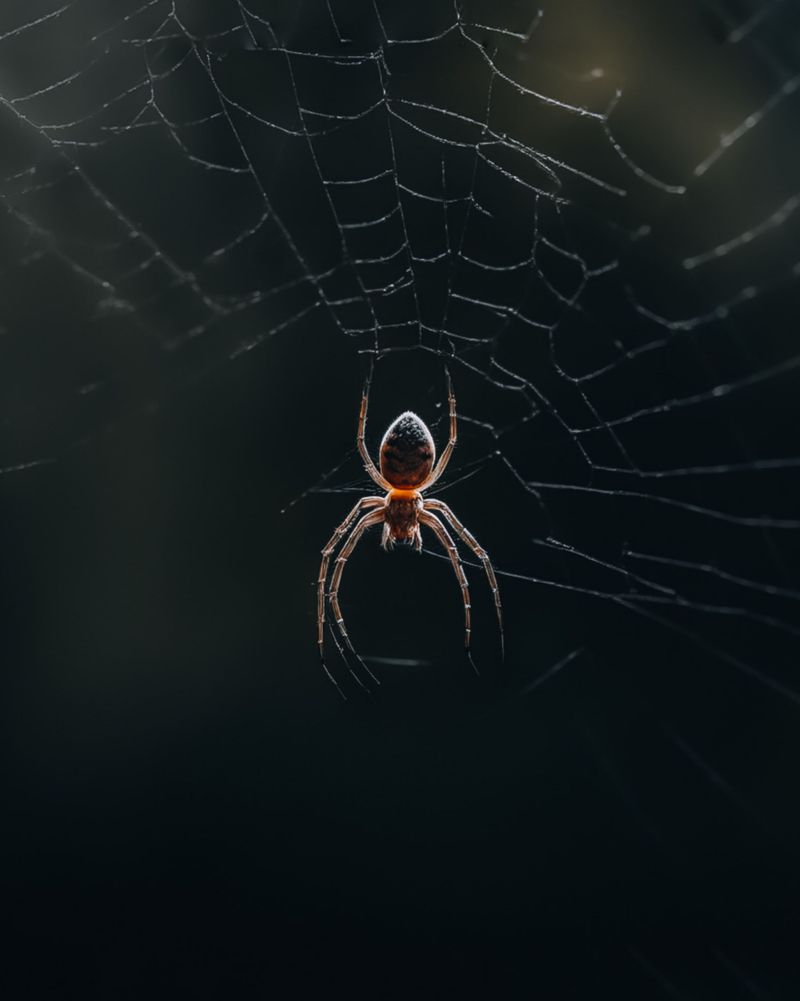
Many older neighbors will tell you the same thing. Put a hedge apple in your basement and spiders will stay away.
This belief has been passed down for generations across rural and suburban America. Some families place one in every corner of the house each fall.
The idea likely grew because the fruit has a strong, unusual smell. People assumed bugs would dislike that odor as much as some humans do.
Spiders also become more noticeable indoors during autumn months. Many males wander around searching for mates, so people see more of them.
When folks set out hedge apples and spiders later fade, they credit the fruit. In reality, spider activity follows seasonal mating and life cycles, so the decline likely happens anyway.
Farm families also used the fruits in barns and chicken coops. They hoped to keep crickets, cockroaches, and other critters from moving in.
The story stuck because it feels natural, cheap, and easy to try. You don’t have to buy anything, since the trees give the fruit away freely.
In some regions, farm stands sell hedge apples each October. Little signs promise fewer pests, which keeps the legend going strong.
So the myth has deep roots, much like the trees themselves. Knowing where it came from makes the next part even more interesting.
Science Results On Hedge Apples And Bugs
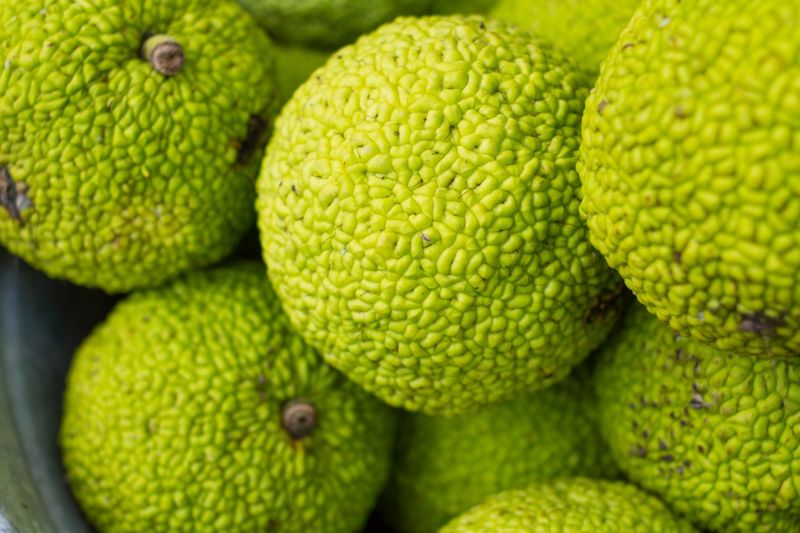
Researchers at Iowa State University studied the natural chemicals in the fruit. Extension experts say the spider claim has no support.
Scientists pulled natural chemicals out of the hedge apple fruit. When concentrated, some of those chemicals did push insects away in lab tests.
The catch is the amount needed to make any difference. A whole fruit sitting in a room releases too little to have a measurable effect.
Extension specialists say there is no evidence that whole hedge apples repel spiders. Some extracts repelled cockroaches in lab tests. Yet a room-sized effect from one fruit was not proven.
Those tests involved insects, and spiders are arachnids, so the results do not transfer directly.
Experts from several university extension programs now share the same message. Hedge apples make interesting decorations, but they are not real pest control.
The fruit also rots after a few weeks indoors, which creates new problems. Soft, moldy fruit can attract fruit flies and other unwanted visitors.
If spiders worry you, simple steps work much better. Seal cracks, fix window screens, and reduce clutter in damp basement corners.
A dehumidifier helps too, since many bugs love moist, cool spaces. Fewer bugs means less food for spiders, so they move along.
Science does not support the legend, but the fruit still earns curious respect. It just needs a different job description.
Safe Handling And Cleanup Tips
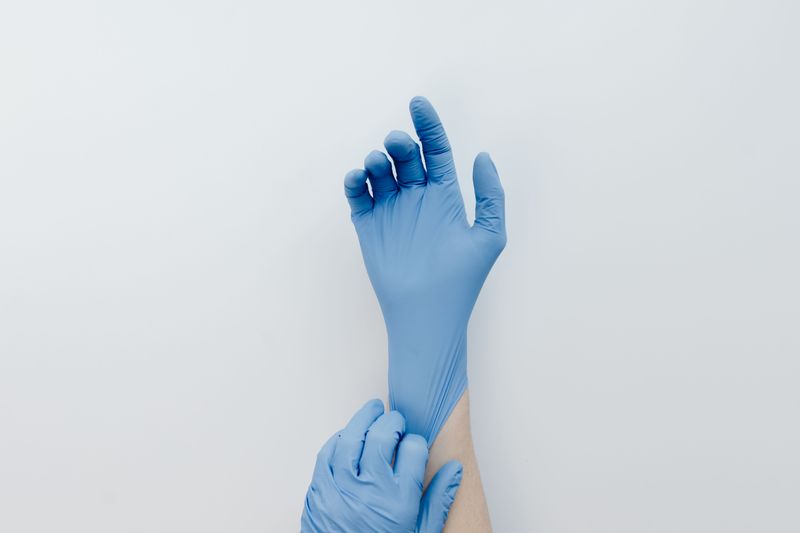
Grab gloves before you grab a hedge apple, and your hands will thank you. The fruit leaks a sticky, milky sap when bruised or cut.
That sap can irritate skin, especially for people with sensitive hands. Some folks get itchy red patches after touching it for long.
Wash your hands with soap and warm water after any cleanup session. Rubbing alcohol can help remove stubborn sticky spots from tools.
Pets usually ignore the fruit, but curious dogs may chew on one. It is not considered highly toxic, yet large pieces can cause choking, stomach upset, or an intestinal blockage. Call a vet if your pet eats a significant amount.
Horses and cattle sometimes try to swallow whole fruits, which can block their throats. Farmers often clear them from pastures for that reason.
Mowing over hedge apples makes a mess. The blades crush them into pulp, can fling chunks, and can damage mower parts.
Pick them up first, then mow the lawn afterward for a cleaner finish. A long-handled fruit picker tool saves your back from constant bending.
Compost piles can handle hedge apples, though they break down slowly. Chopping them into chunks helps them decompose faster over winter.
Yard waste bags or town leaf pickup also work fine in most places. Check your local rules, since some towns limit heavy organic items. With a little care, cleanup becomes a simple fall chore instead of a sticky mess.
Fall Decor And Smarter Spider Prevention
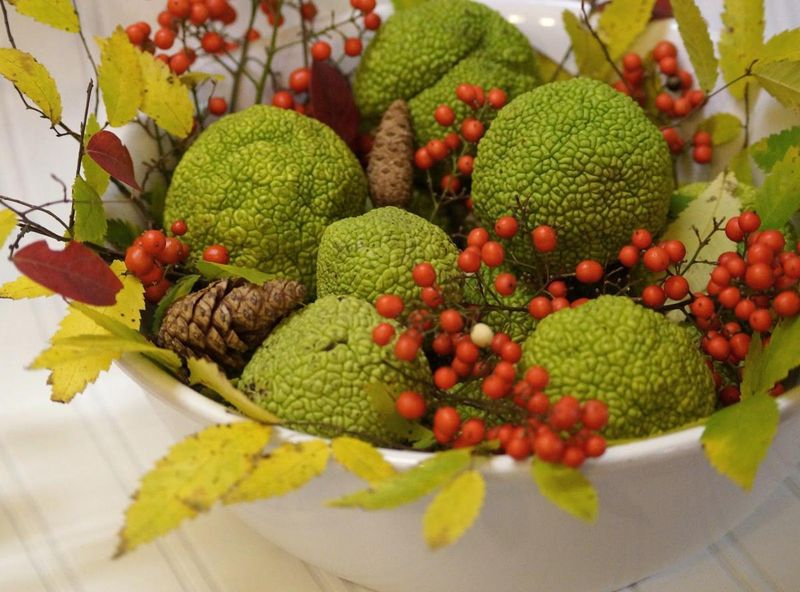
A bowl of bright green hedge apples looks surprisingly stylish next to pumpkins. Many crafters treat them as free autumn decorations each October.
Their bumpy texture and lime color pop against orange gourds and dried corn stalks. Try a wooden bowl or wire basket for a rustic porch display.
Keep displays outside or in cool rooms so the fruit lasts longer. Indoors, they usually stay fresh for two or three weeks.
Place a plate or tray underneath to catch any sap or soft spots. Toss any fruit that turns brown or smells sour right away.
Teachers sometimes bring hedge apples into class for science lessons. Students can sketch them, weigh them, and discuss the famous spider legend.
For real spider control, focus on your home instead of the fruit. Caulk gaps around windows, doors, and pipes before cold weather arrives.
Outdoor lights attract insects, which then attract hungry spiders. Swapping to yellow bug bulbs can reduce that buffet near your doors.
Sweep away webs and egg sacs regularly with a broom or vacuum. Move firewood piles away from the house walls, too.
Remember that most house spiders are harmless and even helpful. They catch flies, mosquitoes, and other pests you probably like even less. Enjoy the green brains for their charm, and let good habits handle the spiders.