Those “Pinecones” on Your New York Arborvitae Aren’t Pinecones at All
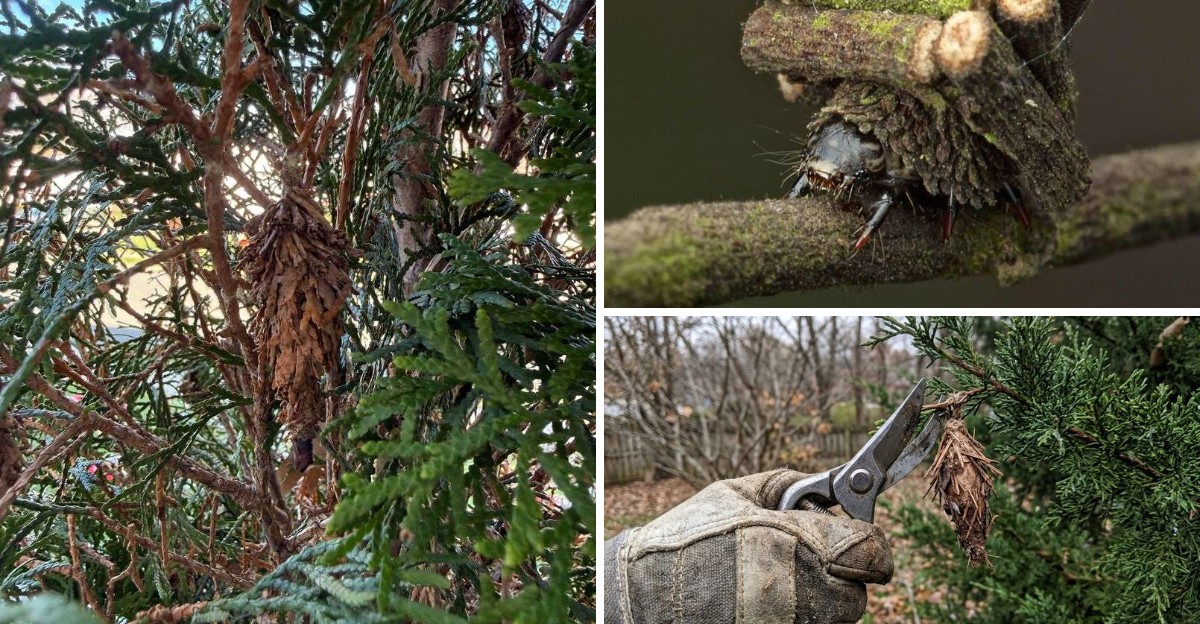
Some of the brown cones dangling from evergreen hedges in New York have a caterpillar living inside. Each one is a homemade sleeping bag, stitched from silk and chewed-up needles.
I walked past them for two whole winters. They looked like tidy little ornaments, so I figured my hedge was simply doing hedge things.
Then a friend cut one open for me. Inside sat a papery shell packed with hundreds of tiny eggs, waiting for warm weather.
Here’s what caught my attention most. The creature that built it eats the same shrub it hangs from, and the damage can linger for years. So how many of those cones on your own screen are really cones?
Those Brown Arborvitae Cones Might Have a Tenant Inside
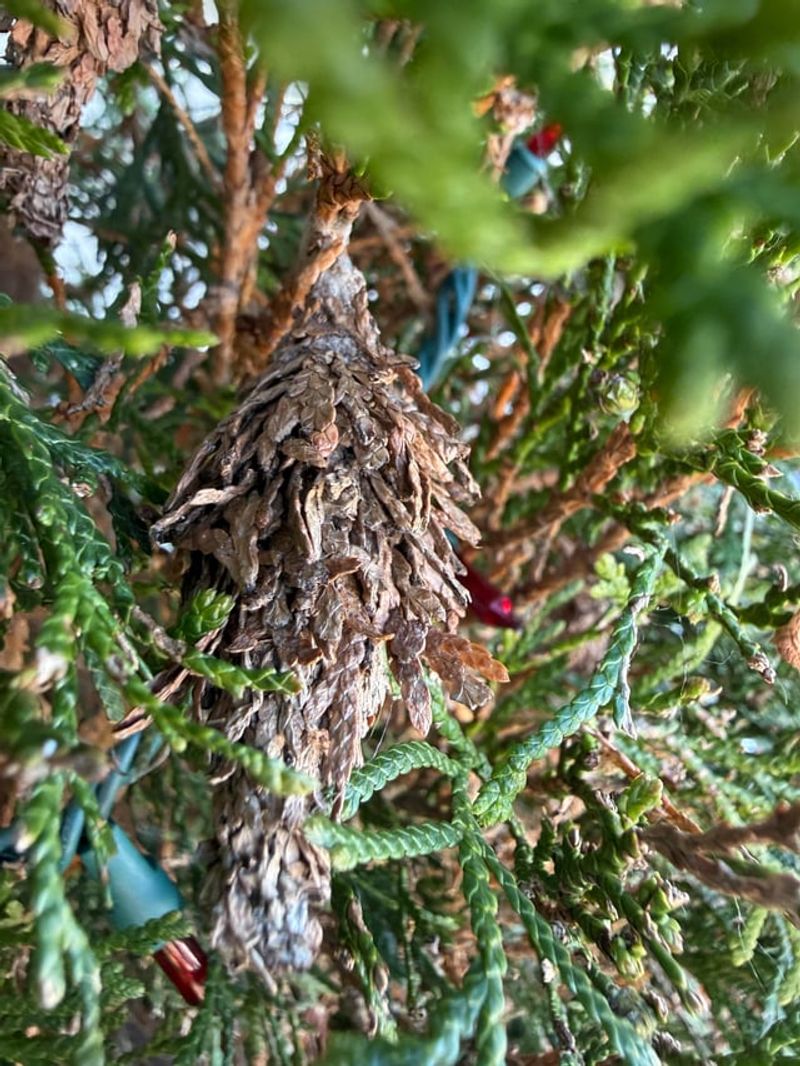
Grab one of those brown cones and give it a gentle squeeze. A real arborvitae cone feels woody and stiff, while the impostor feels papery, a little soft, and oddly lumpy.
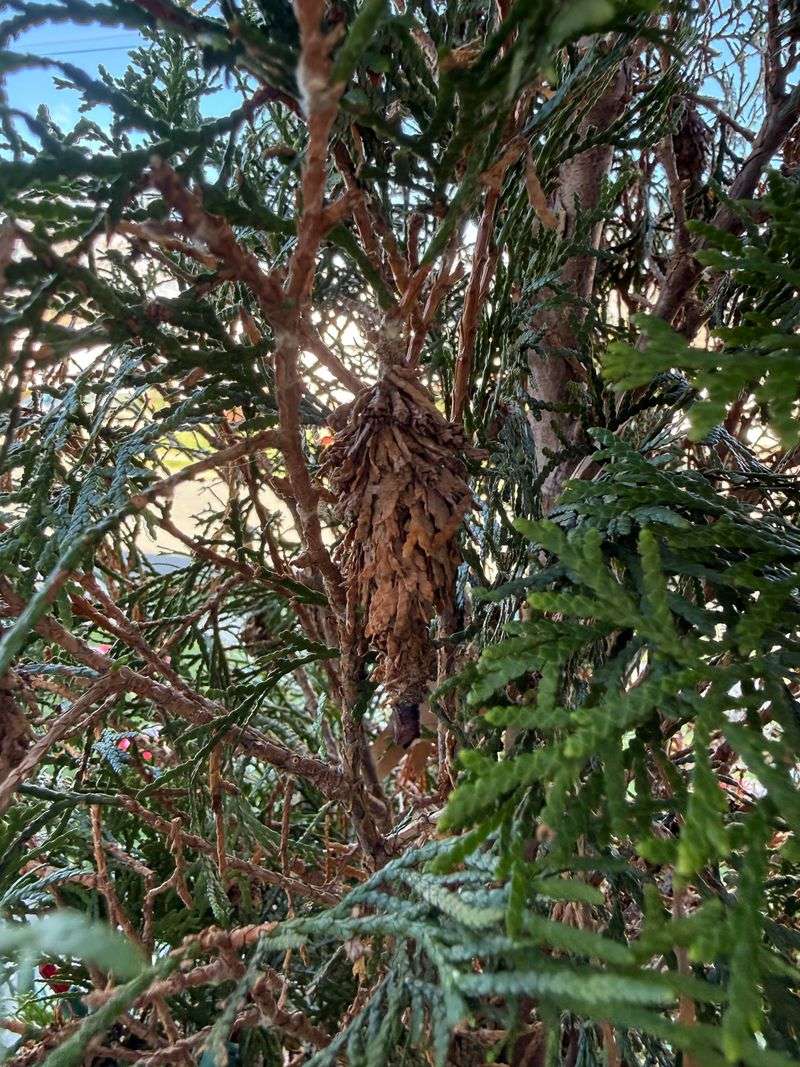
Most of the time, that soft one is a bagworm case. The eastern bagworm, Thyridopteryx ephemeraeformis, is a native moth whose caterpillars build portable homes out of silk and bits of whatever plant they are eating.
On arborvitae, that means the bag gets covered in scaly green and brown foliage, so it blends right in.
Shape is a big clue. Bagworm bags are long and spindle-shaped, often 1 to 2 inches when full grown, and they hang straight down from a tight silk loop wrapped around a twig.
They also show up on the outside of the plant, dangling like little Christmas ornaments.
Look closely at the top of a bag, too. You will often see a thick band of silk anchoring it to the branch, sometimes so tight it pinches the twig.
Penn State and Cornell extension experts both list arborvitae as a favorite host, along with juniper, spruce, and red cedar. In other words, your hedge is basically a buffet with built-in hiding spots.
Once you know what to feel and look for, telling bags apart from cones takes about two seconds. Honestly, it becomes a fun little backyard detective game.
Real Arborvitae Cones Are Tiny and Look Nothing Like Bagworm Sacks
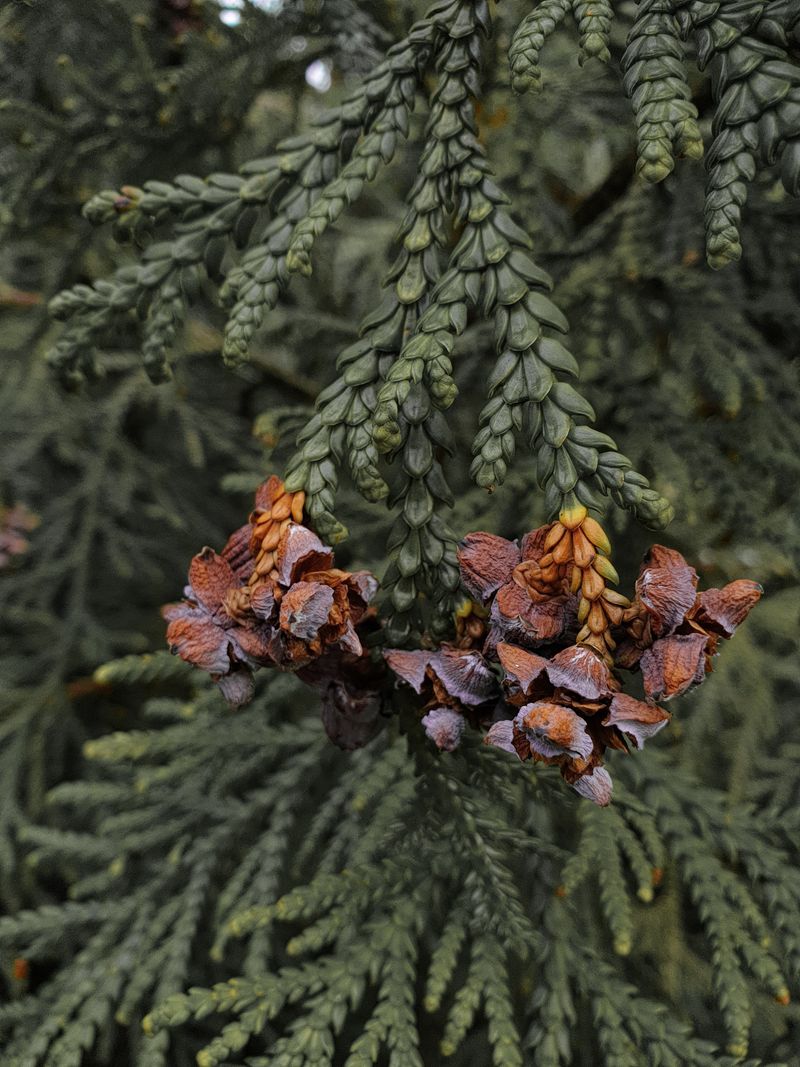
Funny thing is, the genuine cones are so small that many folks overlook them entirely. American arborvitae, Thuja occidentalis, makes upright, oblong cones only about a third to half an inch long.
They start out yellowish green in summer and turn tan or cinnamon brown by early fall. As they ripen, the thin scales open up to release small winged seeds, giving them a little tulip shape.
Real cones usually grow in clusters near the branch tips. They sit upright or angle outward instead of swinging freely on a silk thread.
Some years you will see loads of them, and other years hardly any. Heavy cone years are normal and often follow good growing seasons, so a bumper crop is not a sign of trouble.
Here is a quick side-by-side checklist I keep in my head:
Cones are small, firm, and woody with neat overlapping scales. Bagworm bags are bigger, softer, shaggy with leftover foliage, and hang from one silk tether.
Cones also tend to fall off or stay put without changing much. A bagworm bag in summer may actually grow bigger over a few weeks, which no cone ever does.
If you are still unsure, pull one apart. A cone holds seeds, while a bag holds a caterpillar, a pupa shell, or a cluster of eggs.
Bagworm Caterpillars Carry Their Homes Everywhere They Munch
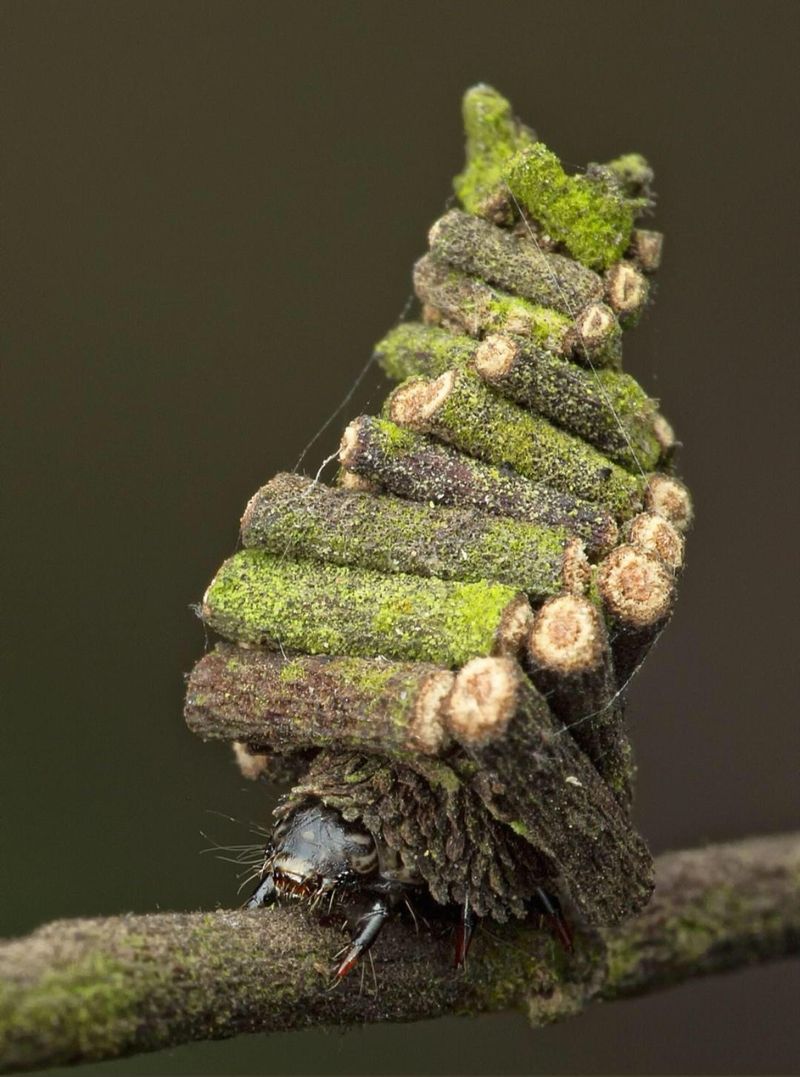
Watch a bag in July and you might catch the caterpillar peeking out. Its dark head and legs pop from the top opening, grab a bite of foliage, and then drag the whole house along to the next meal.
Young caterpillars hatch from eggs in late May or June in much of New York. Many of them spin a silk thread and drift on the wind to nearby plants, a trick called ballooning, which explains how they reach new yards.
Right away, each tiny larva starts building a bag. As it grows through summer, it keeps adding material, so the bag starts out under a quarter inch and ends up close to two inches long.
The bag works like armor. Birds and many insects have a tough time getting at the soft caterpillar, and sprays struggle to reach it once the bag grows large.
Here is a quirky fact I love. Adult females never grow wings or leave the bag at all.
They stay inside, mate there, lay up to 1,000 eggs, and then the bag becomes a nursery for next year.
Males turn into small, sooty black moths with clear wings in late summer or early fall. You will rarely notice them, since their only job is finding a female bag.
Browning Arborvitae Branches Often Point Right Back to Bagworms
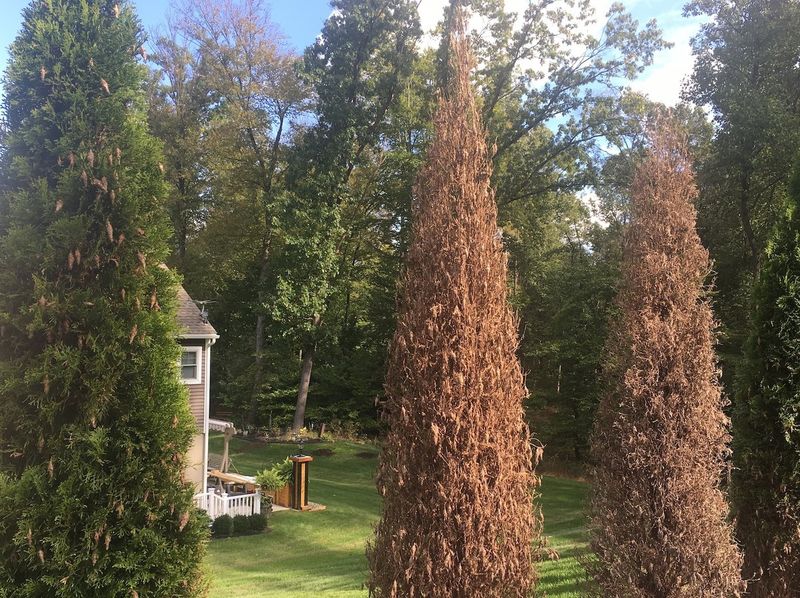
Don’t make my mistake of blaming dry weather first. When my hedge got thin and brown in late summer, I watered like crazy before I noticed the bags hiding in the damage.
Bagworm feeding often starts near the top of the plant and works downward. Small caterpillars scrape the surface of the foliage, while bigger ones chew whole sprays down to bare stems.
Here is why it matters so much on arborvitae. Like most conifers, arborvitae rarely pushes new growth from old, bare wood, so stripped sections may stay bare for good.
A plant that loses most of its foliage can decline badly or fail to recover, according to extension specialists. Small evergreens and young hedges are especially at risk because they have less foliage to spare.
Light feeding is mostly cosmetic. A handful of bags on a big, healthy shrub usually causes little lasting harm.
The trouble is how fast numbers climb. Each female bag can hold hundreds of eggs, so a few overlooked bags this year can turn into a serious crowd next summer.
Look for browning plus bags as your main signal. If you see browning with no bags, consider other causes like winter burn, drought, deer browsing, or normal fall needle drop on the inner branches.
Snipping Off Bagworm Bags in Winter Works Better Than You’d Expect
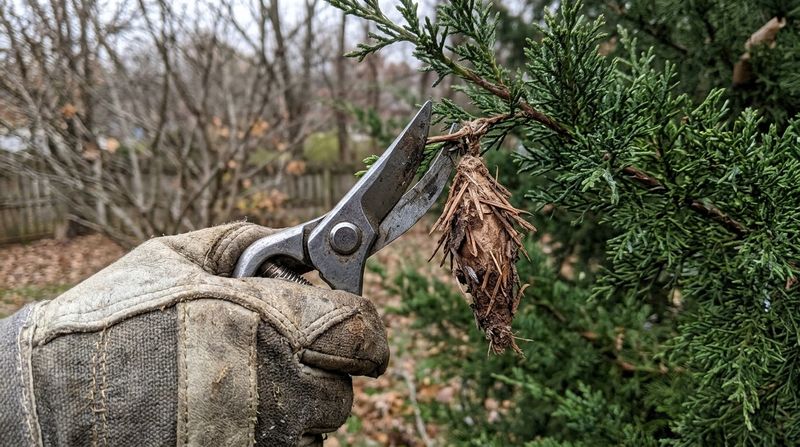
Late fall through early spring is my favorite time for bag patrol. The caterpillars are long gone, but the female bags still hold eggs, so every bag you remove now means hundreds fewer hungry mouths in June.
A pair of small scissors or pruners works best. Snip the silk band rather than yanking, since that tough loop can girdle and weaken the twig if you leave it wrapped around.
Drop the bags into a bucket of soapy water and let them soak for a few days. Another option is sealing them in a bag for the trash.
Skip tossing bags on the ground or in the compost. The eggs can still hatch there, and the young caterpillars will happily climb right back up.
Hand removal is the top choice for smaller shrubs and hedges you can reach. Cornell and Penn State extension both recommend it as a simple, low-cost first step.
For tall trees, a pole pruner helps, or you can focus on the lower branches and plan a spray for the rest.
Bring a coffee and make it a slow walk. Bags hide well among arborvitae foliage, so I check each plant from a few angles before calling it done.
Spraying Bt on Arborvitae Only Works When the Caterpillars Are Tiny
Timing is the whole game with bagworm sprays. Hit them early in the season, and even gentle products work well, but wait until August, and you may just be wetting the leaves.
Bacillus thuringiensis, often called Bt, is a natural bacterium that targets caterpillars. It is safe for most beneficial insects, birds, and pets when used as directed, which is why many gardeners like it.
The catch is that caterpillars must eat treated foliage. Young larvae feed actively and absorb plenty, while older ones eat less relative to their size and may seal their bags shut.
In most of New York, aim for mid-June to early July, after the eggs hatch. Upstate and higher areas may run a bit later than Long Island and the New York City region.
Look for tiny bags, about a quarter inch long, before spraying. A couple of applications spaced 7 to 10 days apart helps catch late hatchers.
Spinosad is another option listed by extension services for young larvae. Always read and follow the label, since it is the law for any pesticide.
For big trees or heavy infestations, a licensed arborist can treat safely. New York requires commercial applicators to hold a state certification, so ask to see it.
Tiny Bumps on Arborvitae Twigs Could Be Scale Insects Instead
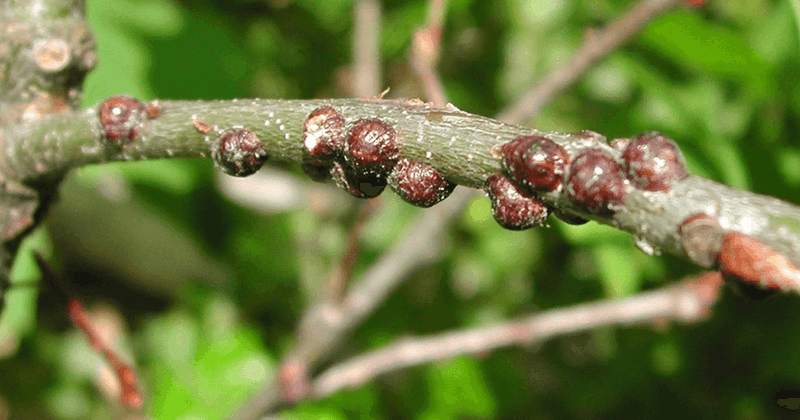
Not every strange growth on arborvitae is a bagworm. Some gardeners spot small, shiny brown bumps glued along the twigs and wonder if those are baby cones.
Often, those bumps are Fletcher scale, Parthenolecanium fletcheri, a sap-sucking insect common on arborvitae and yew in the Northeast. They are round, helmet-like, and only about an eighth of an inch across.
Scale insects do not hang or swing. They stay stuck to the bark, and a fingernail can pop them off fairly easily.
Another clue is honeydew, a sticky, shiny goo the insects produce as they feed. Black sooty mold may grow on that sugary film, giving foliage a dusty, dirty look.
Light scale problems often cause little harm. Heavy ones can yellow and weaken branches over a couple of seasons.
Horticultural oil applied in late spring or early summer, when the young crawlers move around, is a common extension recommendation. Dormant oil in early spring can also help, but check the label for arborvitae sensitivity first.
Spider mites are another possible culprit, especially in hot, dry summers. Tap a branch over white paper and watch for tiny moving specks.
Knowing which pest you have saves money and effort. Bagworms need snipping or early sprays, while scale and mites call for different timing.
A Quick Yearly Check Keeps Your Arborvitae Hedge Thick and Green
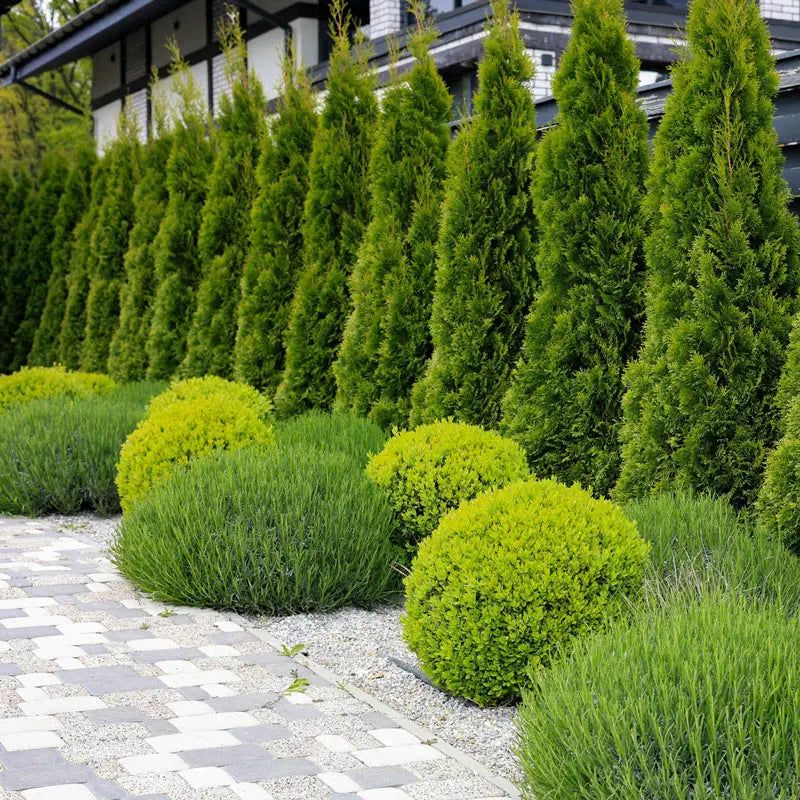
My garden taught me that ten minutes of looking beats a whole summer of fixing. A simple routine now keeps those sneaky bags from piling up again.
Here is the calendar I follow in New York:
November through April, walk your hedge and snip any bags you see. Late May through June, check for tiny new bags at the branch tips and treat early if needed.
August is a good time to look again. Any bags still growing then are big, well protected, and best handled by hand.
Healthy plants bounce back faster from any pest. Water deeply during dry stretches, especially for young hedges in their first few years, and spread 2 to 3 inches of mulch while keeping it off the trunk.
Give each plant some breathing room when you plant. Crowded, shaded arborvitae tend to thin out and struggle more with pests and diseases.
Birds are helpers too. Chickadees and other songbirds sometimes pick at bags, so keeping some shrubs and trees nearby invites them in.
Finally, glance at neighboring junipers, spruces, and red cedars. Bagworms can drift over from those plants, so a friendly chat with neighbors helps the whole street.
Once you start noticing those fake pinecones, you will spot them everywhere. Catching them early keeps your green screen looking full.