How To Spot Easy-To-Miss Baby Copperheads In New York Yards This October
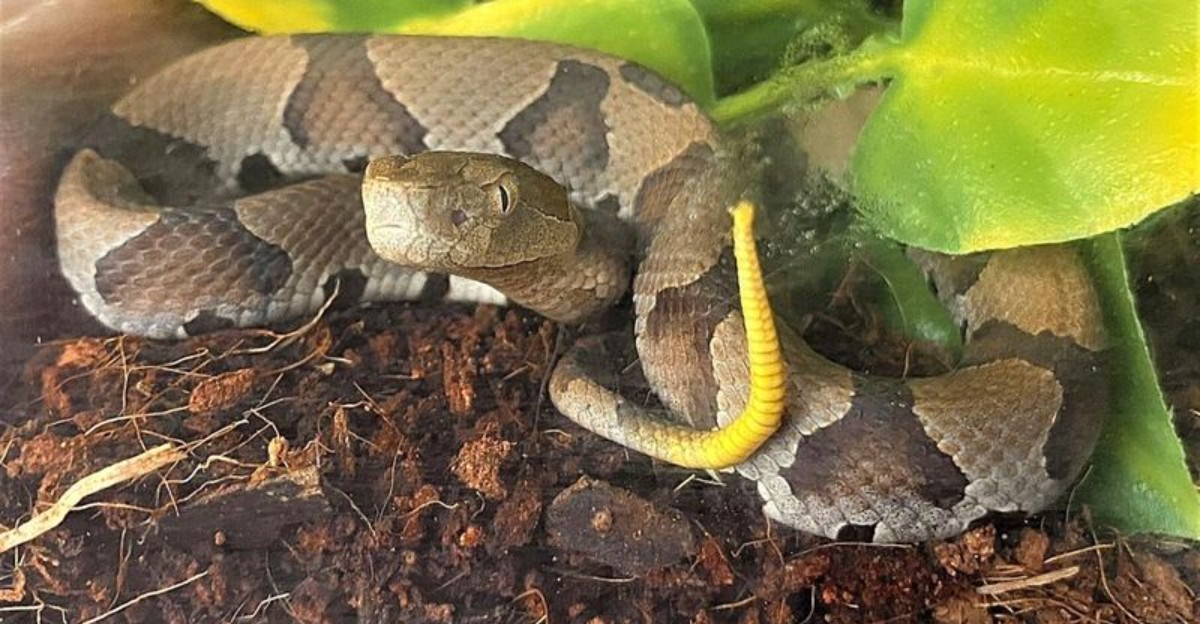
Crunch, crunch, crunch goes the October leaf pile, and something small might be hiding underneath. Fall brings cider, bright maples, and yards covered in a crackly carpet of brown and gold.
In parts of New York, it also brings the newest generation of copperheads. Born just weeks ago, these babies are now exploring the world for the first time.
Most are barely longer than a pencil, and their coloring melts into dry leaves like a disguise. Plenty of people walk right past them without a clue.
Luckily, baby copperheads leave a trail of hints if you know where to look. A flashy tail trick and a habit of playing statue are just the start.
The signs below help you stay one step ahead before your next weekend of yard work. Each one takes only a second to check once you know it.
1. Look For A Bright Yellow Tail Tip
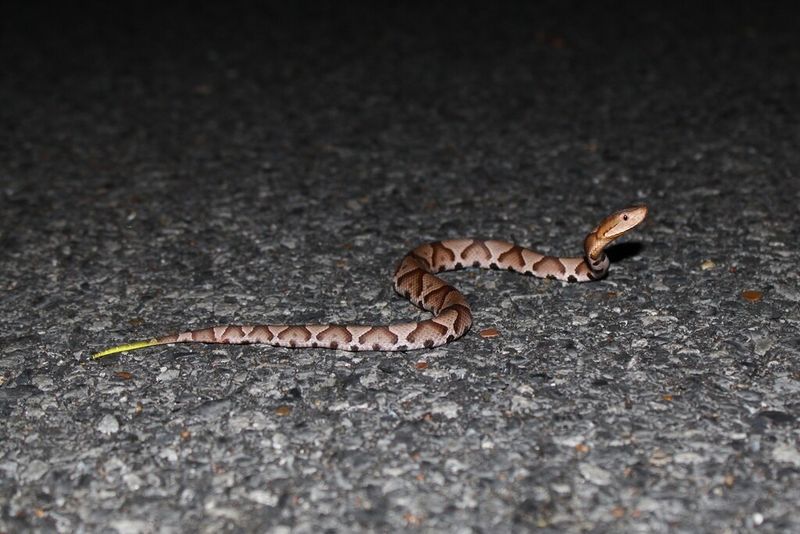
Picture a tiny snake wiggling its tail like a juicy worm in the fallen leaves. That clever little trick is how a newborn copperhead catches its dinner.
Young copperheads are born with a tail tip that glows bright yellow or greenish yellow. Scientists call the wiggling move caudal luring, and it works on frogs, lizards, and insects.
For a New York homeowner, that bright tail is often the first clue you will notice. The rest of the body blends so well with oak leaves that it nearly vanishes.
October is prime time to watch for it, since this year’s babies are still exploring. Most arrived in late August or early September, so your yard is brand new to them.
Look closely at the last inch or so of any small brown snake you spot. A sulfur-yellow tip that stands out against the brown body deserves your full respect.
Keep a safe distance of at least six feet while you take a look. Baby copperheads carry working venom from day one, so size offers no real protection.
Fun fact: the yellow color fades as the snake grows up. By around age three or four, the tail usually matches the rest of the body.
Snapping a quick phone photo from a distance can help you confirm what you saw. Zoom in later on the tail, where that telltale yellow will pop right off the screen.
Not every snake with a pale tail is dangerous, of course. Still, pairing a yellow tip with other clues in this guide gives you a much clearer answer.
2. Check For Hourglass Bands That Narrow Along The Spine
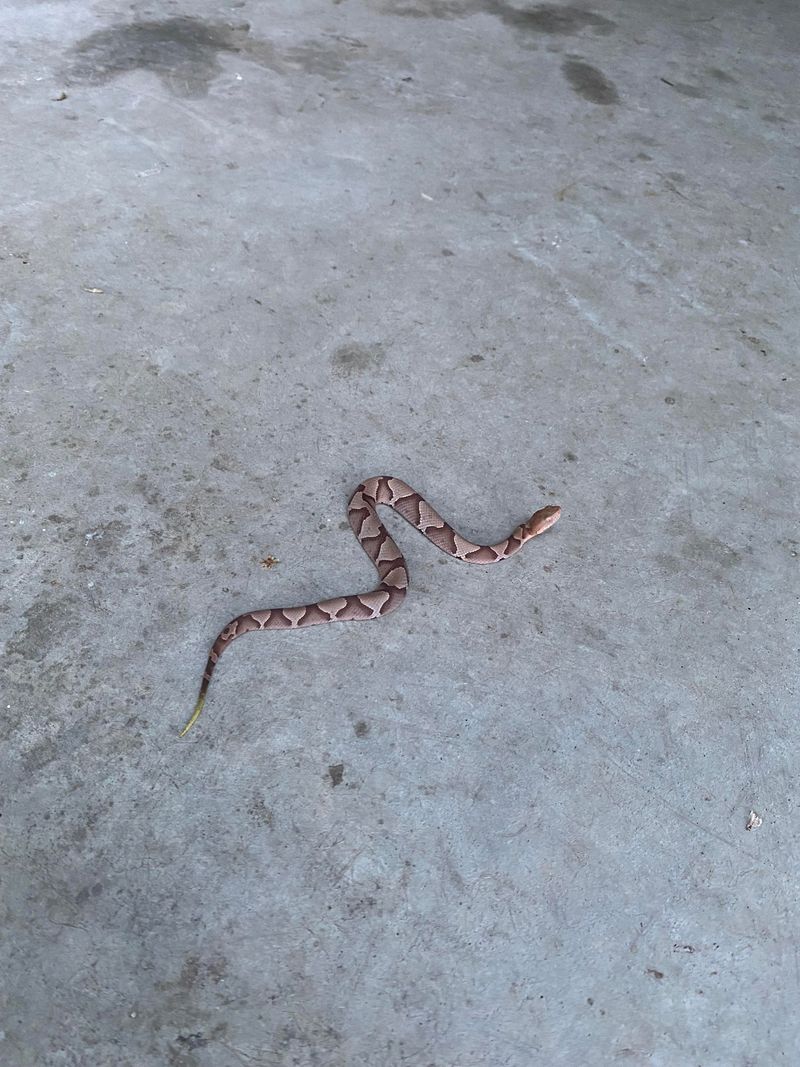
Ever unwrapped a Hershey’s Kiss and set it on its side? Many snake experts say copperhead markings look just like a row of those chocolate treats.
Viewed from the side, each dark band is wide near the belly. Looking down from above, the same band pinches thin where it crosses the backbone.
Put those two views together and you get an hourglass or bowtie shape. Some people also compare the pattern to a string of saddlebags draped over the snake.
Your New York Garden Changes Every Week. Your Plan Should Too.
Gardening in New York changes quickly throughout the season. Every Friday you’ll receive a simple weekly plan showing exactly what to plant, prune, fertilize, harvest, and protect so you never miss the right timing.
The bands are usually chestnut, dark brown, or reddish brown on babies. Underneath sits a lighter background of tan, beige, or pinkish brown that looks almost dusty.
Here in New York, that color combo matches fallen oak and maple leaves almost perfectly. A baby lying on a leafy path can look like just another scrap of autumn.
Train your eyes to hunt for repeating shapes rather than colors. Leaves scatter randomly, but copperhead bands line up in a neat, steady rhythm down the body.
A handy test is to picture the snake from the top. If dark shapes grow skinny at the spine and fat on the sides, you have a match.
Harmless look-alikes tend to have round or square blotches instead. Their shapes stay about the same width all the way across the back.
Bands on some snakes break up or look uneven. Checking several bands, not just one, helps you avoid a false alarm or a risky mistake.
Stay back while you study the pattern, and use binoculars if you have them. A quick look from a safe spot can tell you plenty.
3. Notice A Plain Copper-Colored Head With No Markings
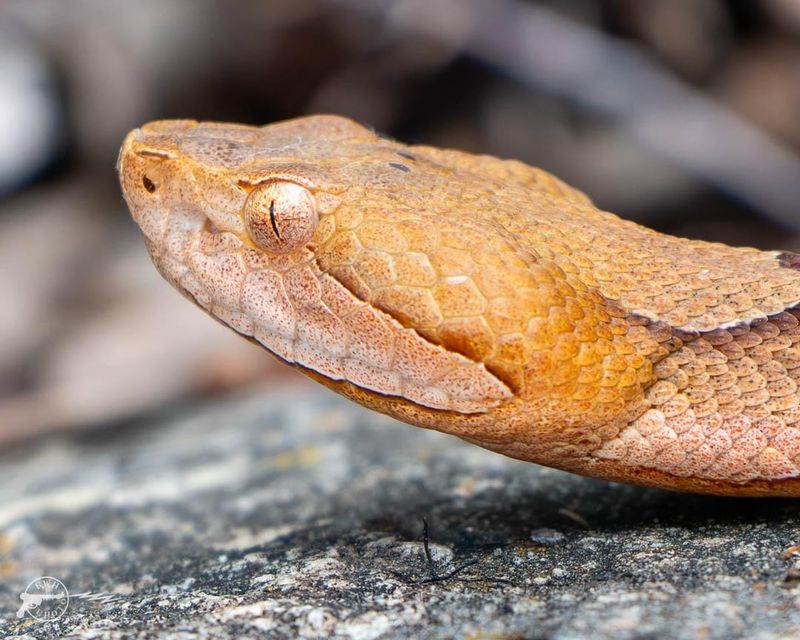
Names can be misleading, but this snake earned its title honestly. Its head wears a smooth coat of copper, like a shiny new penny left in the sun.
Colors range from coppery tan to a warm reddish brown. On a baby, the shade can look a little brighter against the darker bands behind it.
What stands out most is what you do not see. Copperhead heads are mostly plain, without the spots, stripes, or blotches found on many other snakes.
Some do show a faint thin line near the eye, sort of like smudged eyeliner. Beyond that, the top of the head looks clean and solid.
Milk snakes around here often have a V or Y shape on the head. Young rat snakes usually show dark marks there too, which makes the plain copperhead head a helpful clue.
Pupils offer another hint if you can see them safely from afar. Copperheads have vertical, cat-like pupils, while most harmless local snakes have round ones.
Please do not lean in close to check the eyes. A zoom lens or binoculars will do the job without putting your face within striking range.
Tiny heat-sensing pits also sit between each eye and nostril. Those pits help the snake sense warm bodies nearby, even on dark October nights.
Quick memory trick: copper head, copper penny, keep your distance. A clean, penny-toned head on a small banded snake is a good reason to back away slowly.
Pair this clue with the tail and bands for a confident ID. One feature alone can fool you, but three together rarely do.
4. Watch For A Snake About The Length Of A Pencil
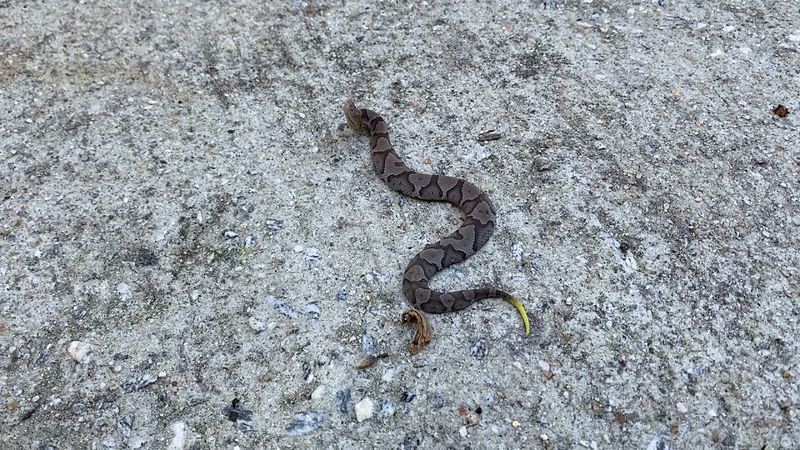
Grab a fresh pencil from the kitchen drawer and hold it up. A newborn copperhead is about that long, which is exactly why so many people miss them.
Most babies measure around 7 to 9 inches at birth. Some are barely thicker than a pencil too, so they slip easily between leaves and grass blades.
By October, they have grown only a little since summer. Many are still small enough to curl up under a single maple leaf.
Kids playing in a New York backyard might mistake one for a worm or a stick. Teaching them the pencil rule can make a real difference in keeping everyone safe.
Here is the simple version to share: any pencil-sized snake with brown bands gets left alone. Tell an adult, step back, and watch where it goes.
Small does not mean safe, sadly. Baby copperheads have working venom glands from the moment they are born, and a bite needs medical care.
A common myth says babies are more dangerous than adults because they cannot control their venom. Experts say adults usually deliver more venom, though any bite still deserves a trip to the ER.
Size also helps you judge where to look. Pencil-length snakes favor tight spaces like gaps under stepping stones, garden edging, and door thresholds.
Closed shoes are a smart choice outside this month. Flip-flops leave toes exposed to a tiny snake you might not notice until the last second.
A flashlight helps on evening walks, too. Young copperheads often move around after sunset, especially on mild fall nights.
5. Pay Attention To A Thick Body And Wide, Flat Head
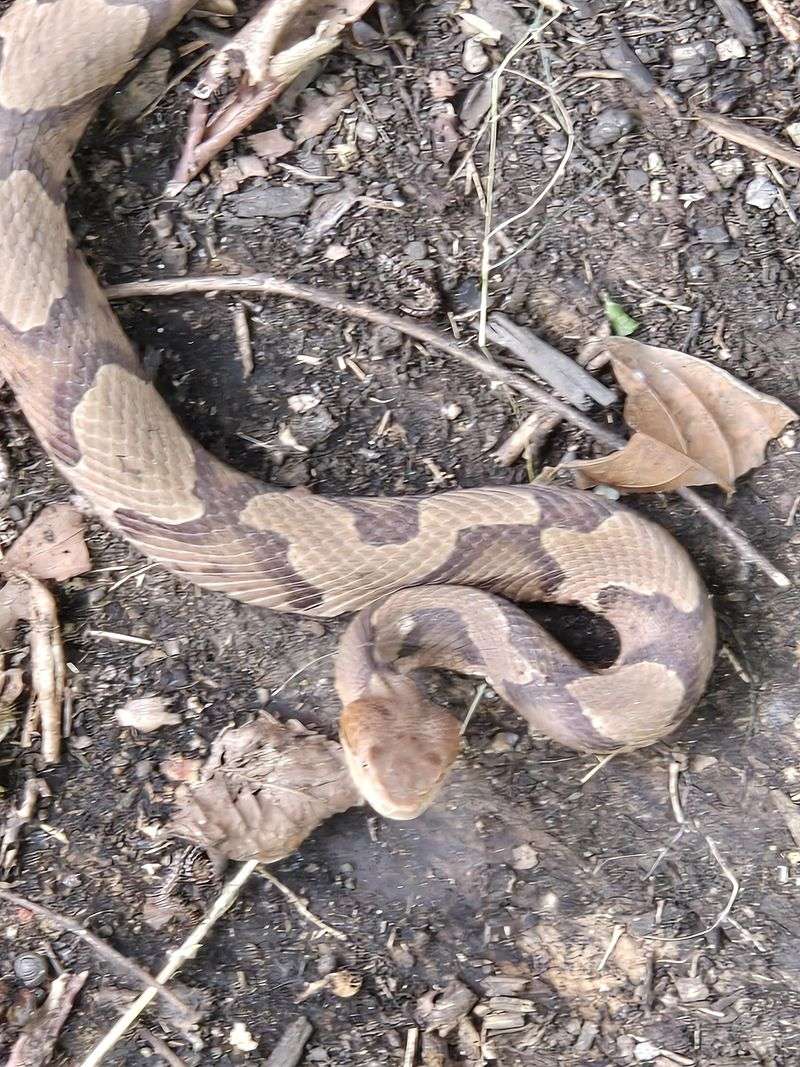
Some snakes look like shoelaces, but copperheads look more like a short, sturdy rope. Even the babies carry a chunky build for their size.
Copperheads belong to a group called pit vipers, along with rattlesnakes. Pit vipers tend to be stocky, heavy-bodied snakes rather than long and whip-thin.
The head is the real giveaway, though. Shaped like an arrowhead or a triangle, it looks much wider than the skinny neck behind it.
All that extra width has a purpose. The broad cheeks hold venom glands, while the fangs fold neatly against the roof of the mouth.
Harmless backyard snakes, like garter snakes, usually have heads that blend smoothly into the neck. Their bodies also look longer and leaner, almost like a stretched-out noodle.
Here comes the tricky part. Frightened harmless snakes sometimes flatten their heads, so head shape alone is not a perfect test.
Water snakes and hognose snakes are famous for this bluff. A hognose will even hiss loudly and puff up, then roll over and play possum.
Your best bet is to combine body shape with pattern and color. A stocky, banded snake with a broad, plain copper head checks almost every box.
On a baby, the difference can look subtle at first glance. A narrow neck behind a wide head jumps out once you know to look for it.
A photo taken from a safe distance lets you study the shape without risk. Local nature centers and online snake ID groups are often happy to help you confirm it.
6. Expect It To Freeze In Place Instead Of Slithering Away
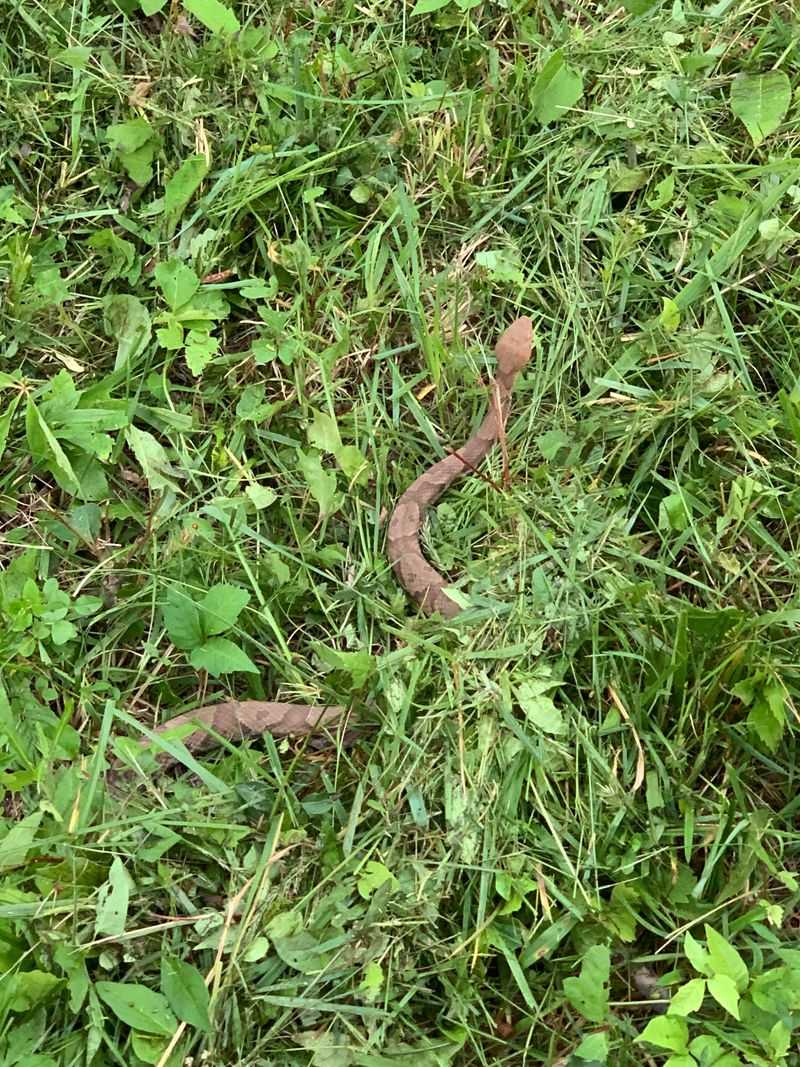
Most snakes bolt the second they feel your footsteps. Copperheads often do the opposite, staying perfectly still and trusting their camouflage to hide them.
Honestly, it is a smart plan for a small snake. Hawks, raccoons, and larger snakes have a tough time spotting something that refuses to move.
For people, though, the freeze can cause trouble. Many bites happen when someone steps on or grabs a copperhead they had no idea was there.
Imagine raking a flower bed in the Hudson Valley and seeing what looks like a twig. If that twig has bands and does not budge, treat it as a snake.
Rapid tail shaking is another warning sign to know. An upset copperhead may buzz its tail against dry leaves, making a sound surprisingly like a rattlesnake.
When you spot a motionless snake, the best move is to back away slowly. Give it a wide berth, and it will usually wander off on its own.
Poking it with a stick is a bad idea, even if you mean well. Plenty of bites occur when people try to move or handle a snake themselves.
Keep kids and pets away from the spot until the snake is gone. A leashed dog is much easier to steer clear than one sniffing through the yard.
Cool October air makes the freeze even more common. A chilly snake moves slowly, so it often stays put rather than spending energy on an escape.
Walking with a little extra noise can help, too. Heavy steps send vibrations through the ground and may nudge a snake to shift before you arrive.
7. Scan Sunny Rocks And Stone Walls On Cool Afternoons
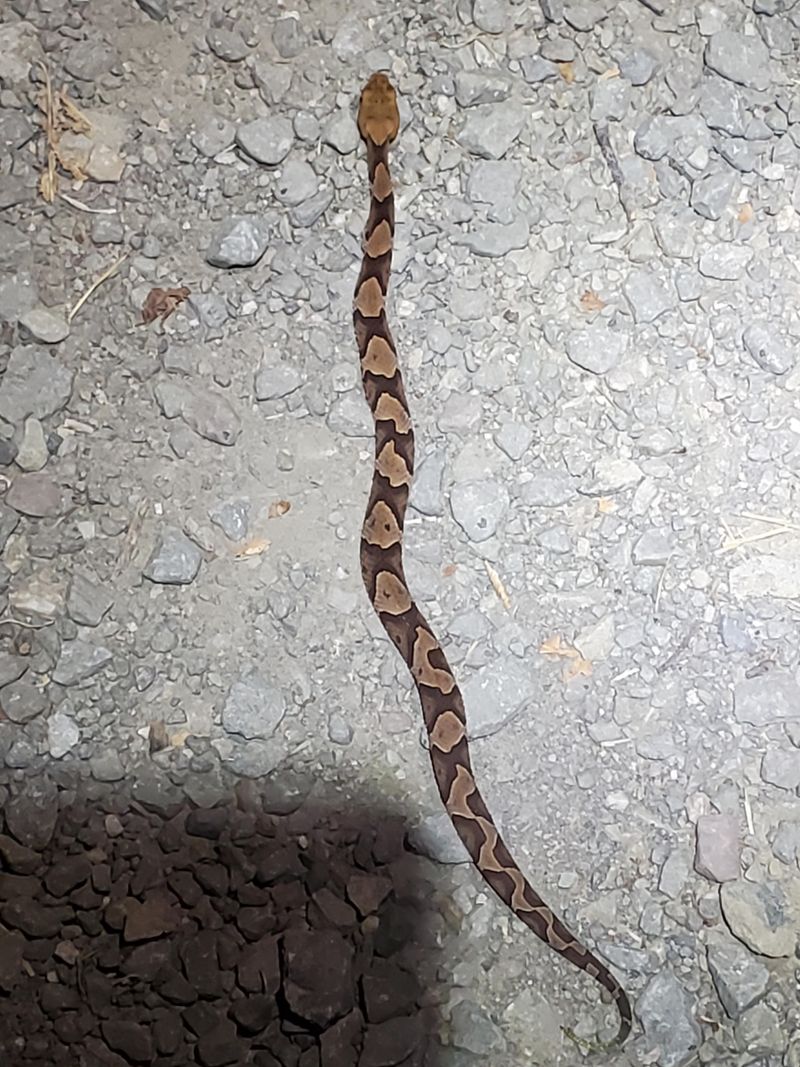
Like a cat curled in a sunny window, a copperhead loves a warm spot on a chilly day. Snakes cannot make their own body heat, so they borrow it from the sun.
October afternoons are peak basking hours across southern New York. Mornings start cold, but by early afternoon, rocks soak up enough warmth to feel like a heating pad.
Copperheads here live mainly in the lower Hudson Valley, the Shawangunk Ridge, and the eastern Catskills. Rocky hillsides, ledges, and wooded slopes in those areas make ideal homes.
Old stone walls are a classic hangout in those regions. Farmers stacked miles of them long ago, and the gaps between stones make cozy snake hideouts.
Scan the sunny side of walls, boulders, and rock gardens before you get close. Babies often rest right at the edge, half tucked into a crack for a quick escape.
Patio pavers, concrete steps, and gravel driveways can draw them in as well. Any hard surface that holds heat can tempt a cold baby out into the open.
Late October also brings another reason to watch rocky spots. Copperheads start heading toward winter dens, often shared rock crevices, and may pause to bask along the way.
Sitting on a stone wall to tie your shoes sounds harmless enough. Take a quick peek at the top and sides first, especially between noon and 4 p.m.
Avoid reaching blindly into gaps or crevices while gardening near rocks. Wearing thick leather gloves adds a layer of protection when you work around stone borders.
8. Move Leaf Piles Slowly With A Rake, Never Your Hands
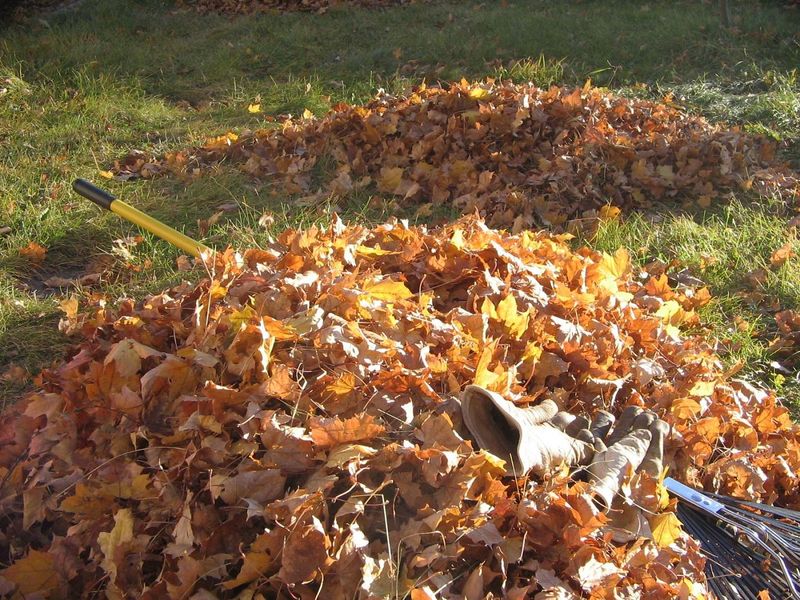
Jumping into a crunchy leaf pile feels like pure fall joy. Sadly, a baby copperhead might think that same pile is the perfect bedroom.
Leaf litter offers warmth, cover, and plenty of insects and small frogs to eat. Woodpiles and sawdust heaps attract them for the very same reasons.
A banded brown body tucked among orange and tan leaves is nearly invisible. Scooping leaves by hand puts your fingers right where a hidden snake might be resting.
Reach for a long-handled rake instead and work from the outside of the pile inward. Short, gentle pulls give any snake inside a chance to move off before you reach it.
Pause for a few seconds after each stroke and look at the ground you just uncovered. Watch for bands, a yellow tail tip, or a coiled shape that looks out of place.
Sturdy boots and long pants add extra peace of mind while you work. Gloves help too, but even thick ones are no substitute for keeping hands out of piles.
Many New York towns offer curbside leaf pickup in October and November. Bagging leaves quickly and setting them at the curb keeps piles from sitting around as snake shelters.
Stack firewood on a raised rack at least a foot off the ground. Keeping it away from the house also cuts down on hiding spots near your doors.
Kids love helping with yard work, and that is great. Hand them their own small rake and a quick safety talk before the leaf fun begins.