Those Strange White Balls On Pennsylvania Oaks Aren’t Eggs
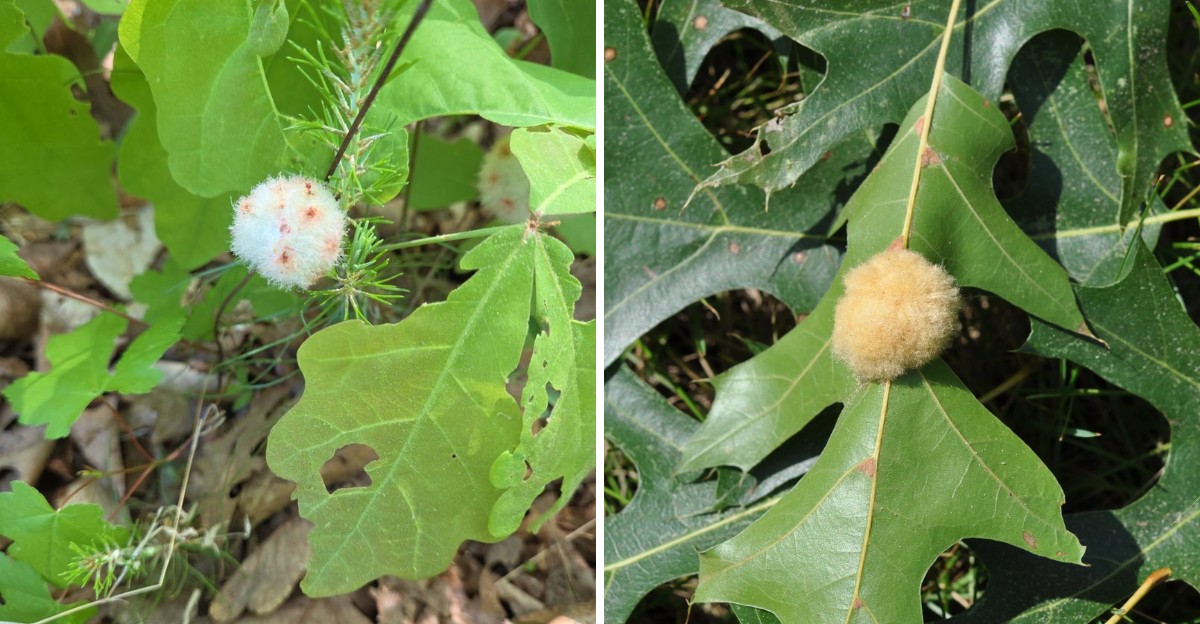
A speck smaller than a sesame seed can convince an oak tree to build it a fuzzy little house. Some of those houses look like cotton candy, and some even blush pink.
I used to walk right past them on fall hikes, assuming a spider or moth had parked its eggs there. Nobody warned me that the tree itself grows these puffs, cell by cell, on purpose.
Pull one apart, and you’ll find fibers that feel like wool. The craftsmanship is honestly impressive. Hidden inside are tiny guests, tucked away and snacking on custom food the oak serves up for free.
Across Pennsylvania, these odd white balls show up on oak leaves and twigs every year, often after a curious kid points them out. The real story is way cooler than any egg theory. So what exactly is living in there, and should your tree be worried?
1. Those Fuzzy Oak Puffs Start With A Tiny Wasp’s Visit
Here’s a fun surprise for anyone who loves a backyard mystery. Those white puffs are not eggs, mold, or berries. They are galls, which are lumps of plant tissue the oak grows itself.
A gall starts when a tiny insect visits the tree. Most of the fuzzy ones on oaks come from gall wasps in a family called Cynipidae. These wasps are often smaller than a grain of rice, and they do not sting people.
The female wasp lays her eggs in fresh oak tissue, usually a bud, twig, or young leaf. Then the growing larvae release chemicals that act like a secret recipe.
The oak responds by building a custom shelter right around them.
Scientists still study exactly how these chemical signals work. What we do know is that each wasp species makes its own gall shape. So one wasp gets a fuzzy ball, while another gets a hard brown marble.
Penn State Extension and other university experts agree on the basics. Galls are a normal part of oak life in the eastern United States.
Once you learn to spot them, you will start noticing them on almost every walk through the woods.
2. Wool Sower Galls Are The Cotton Balls Most People Notice
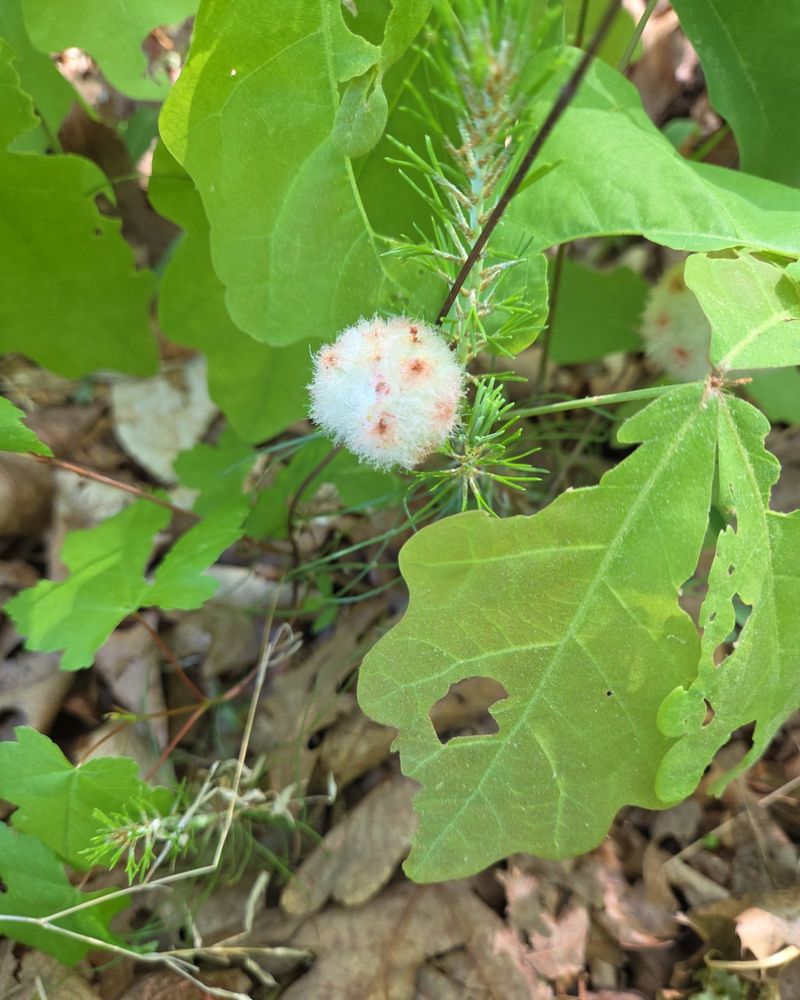
Picture-perfect cotton balls stuck to an oak twig usually have one name. Folks call them wool sower galls, and they are made by a wasp named Callirhytis seminator.
These galls grow mainly on oaks in the white oak group, including white oak and swamp white oak. They can reach about the size of a golf ball. Fresh ones are snowy white, and many show pretty pink or rosy spots.
Timing helps you identify them. Wool sower galls form on new twigs in late spring and early summer. By fall, many have turned tan or brown, yet they still catch your eye on branches and in leaf piles.
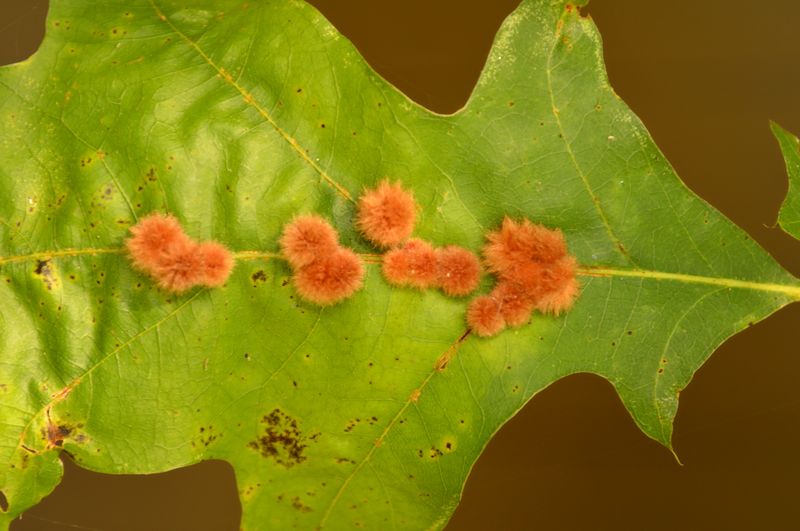
Leaves have their own fuzzy look-alikes too. Some related wasps create woolly tufts on the undersides of oak leaves, and those often stand out most in late summer and fall. So if your fuzzy ball is on a leaf instead of a twig, a different wasp likely made it.
Either way, the main idea stays the same. You are looking at a wasp nursery grown by the tree. Snap a photo and note whether it sits on a twig or leaf, since that detail helps experts name it.
3. Crack Open An Oak Gall And You’ll Find Tiny Seed-Like Cells
Curiosity got the best of me the first time I found one. I gently pulled a wool sower gall apart, and it felt like a soft craft pom-pom.
Tucked inside the fibers were small, hard capsules that looked a lot like seeds. That resemblance is where the name comes from. Someone long ago thought the wasp was sowing seeds in wool!
Each capsule is actually a tiny room for one wasp larva. The larva munches on nutritious tissue lining its chamber. Meanwhile, the fuzzy outer layer helps guard against weather and some hungry critters.
Not every resident is the original builder, though. Other tiny insects sometimes move in, and some parasitic wasps hunt the larvae inside. A single gall can become its own little neighborhood.
Want to try this yourself? Pick one fallen gall, use a butter knife, and do it over a white paper plate. Kids love this activity, and a magnifying glass makes it even better.
Afterward, toss the pieces in the trash rather than the yard. That way you enjoy the science lesson without returning the larvae to your oaks.
4. Your Oak Tree Can Shrug Off These Fuzzy Leaf Galls

Relax, your oak is fine. I know the fuzzy balls look alarming, but experts at Penn State and other universities say most oak galls cause little harm.
Leaf galls mostly affect how the leaves look. A heavy year can lead to curled, spotted, or early-dropping leaves. Still, a healthy mature oak has thousands of leaves and plenty of energy stored up.
Wool sower galls fall into the harmless camp too. They sit on small twigs and rarely bother the whole tree. Most homeowners notice them, wonder about them, and then watch them fade away by winter.
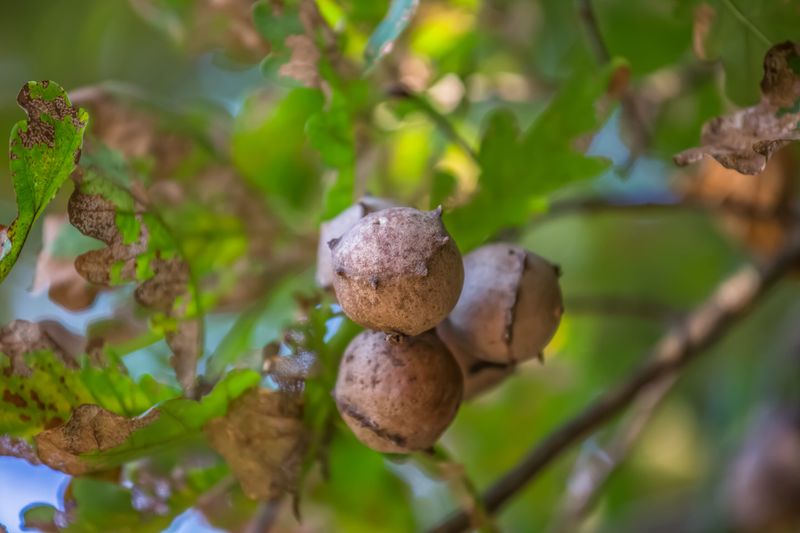
A few twig galls are a different story. Species like the horned oak gall and gouty oak gall can stress branches, especially on pin oaks and other red oaks. Those hard, woody lumps are quite different from soft fuzzy puffs.
So when should you call for help? Reach out to a certified arborist if many branches look bare, crowded with woody galls, or slow to leaf out in spring.
Otherwise, enjoy these strange little growths as part of the oak show each year in Pennsylvania.
5. Spraying Oak Galls Is A Waste Of Your Weekend
Save your money and your Saturday. Insecticide sprays are not recommended for oak galls, and the reasons make a lot of sense.
First, the larvae are sealed inside their galls. Sprays sit on the outside surface, so the young wasps stay snug and safe. By the time you see a gall, the insect has already finished its main work.
Second, timing is tricky. The adult wasps are tiny, fly for a short window, and are hard to spot. Hitting that moment with a spray is nearly impossible for a homeowner.
Third, broad sprays can harm helpful insects. Bees, lady beetles, and the parasitic wasps that naturally attack gall larvae could all take a hit. Those natural enemies are your best free pest control.
Spraying a big oak also needs special equipment. Drift onto your garden, pond, or a neighbor’s yard is a real concern. Most extension services simply suggest letting nature handle it.
Instead, focus on overall tree health. Water during long dry spells, add a ring of mulch, and avoid damaging roots. A well-cared-for oak handles galls with ease.
6. Oak Leaves Host A Whole Gallery Of Bizarre Galls
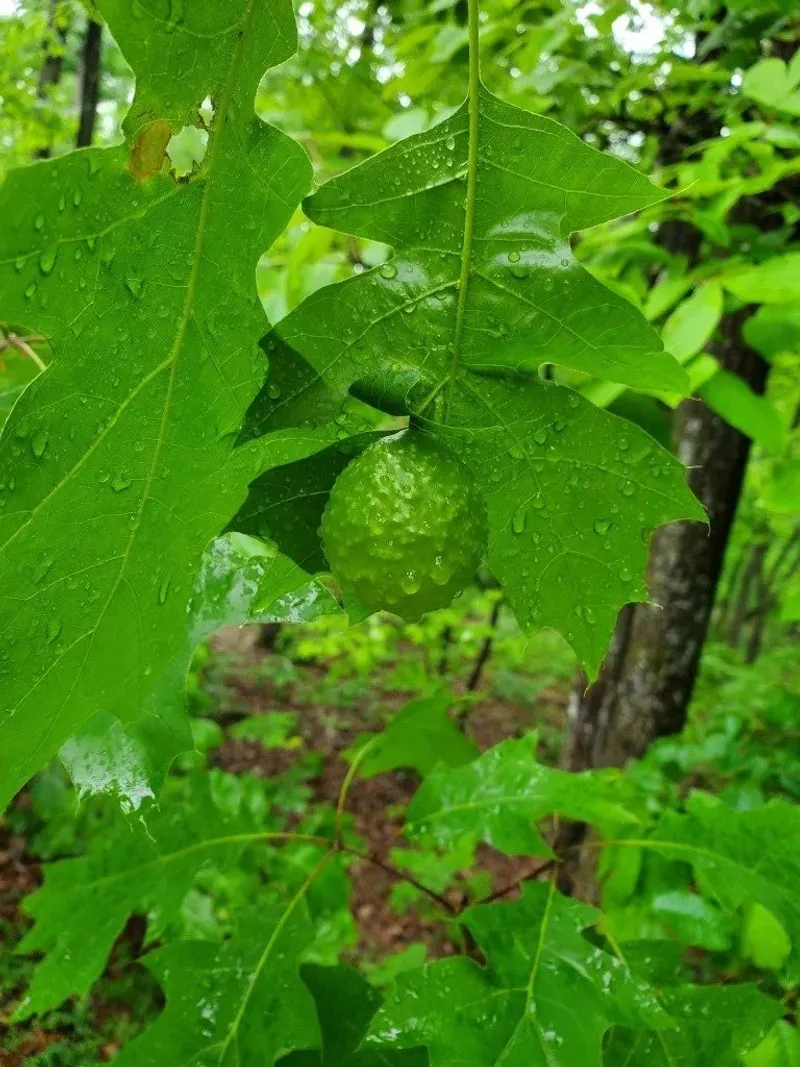
Oaks are the gall capital of the tree world. North America has hundreds of gall wasp species, and most of them use oaks.
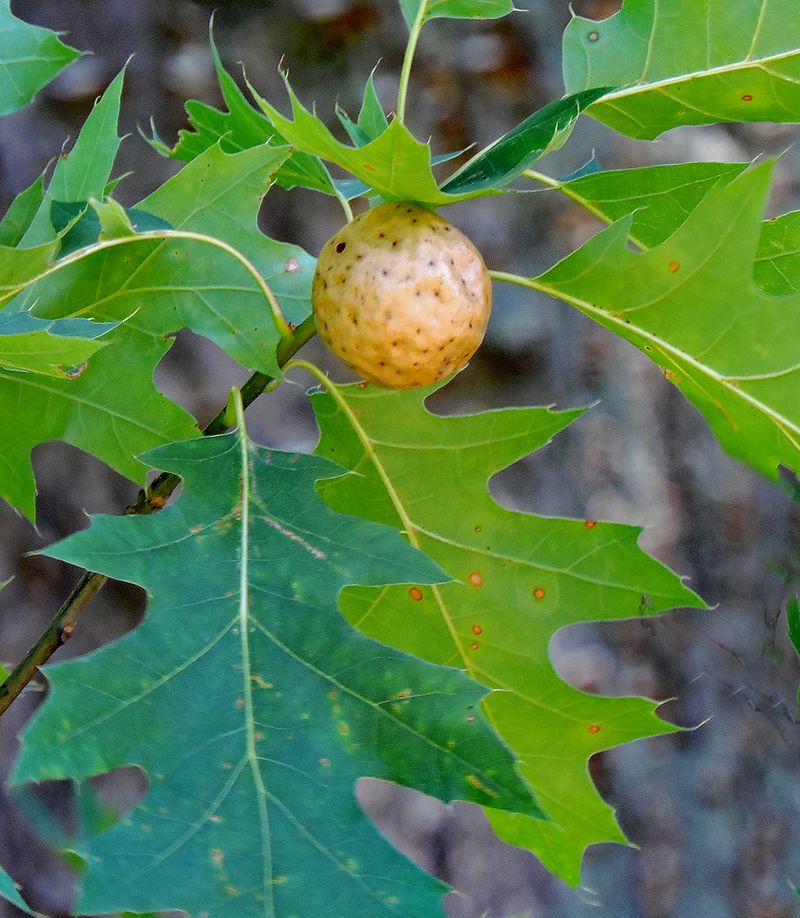
Once you start looking, you’ll find a wild variety. Oak apple galls look like papery tan balls on leaves. Hedgehog galls are spiky and often reddish, showing up on white oak leaves in late summer.
Jumping oak galls are a personal favorite. These tiny seed-sized galls drop from white oak leaves, and the larvae inside make them hop on the ground. Walk under a busy oak in early summer, and you might hear faint ticking sounds.
Many galls change color with the season too. Some start green, then turn red, brown, or cream. The fuzzy white types are just one style in a big gallery.
Galls also feed wildlife. Birds and small mammals sometimes pick them open for a snack. Oaks support more caterpillars and insects than almost any other tree, which helps songbirds thrive.
Keep a small notebook or phone album of your finds. Apps like iNaturalist can connect your photos with experts who love identifying these oddities.
7. Raking Fallen Oak Leaves And Galls Is Your Best Fall Move
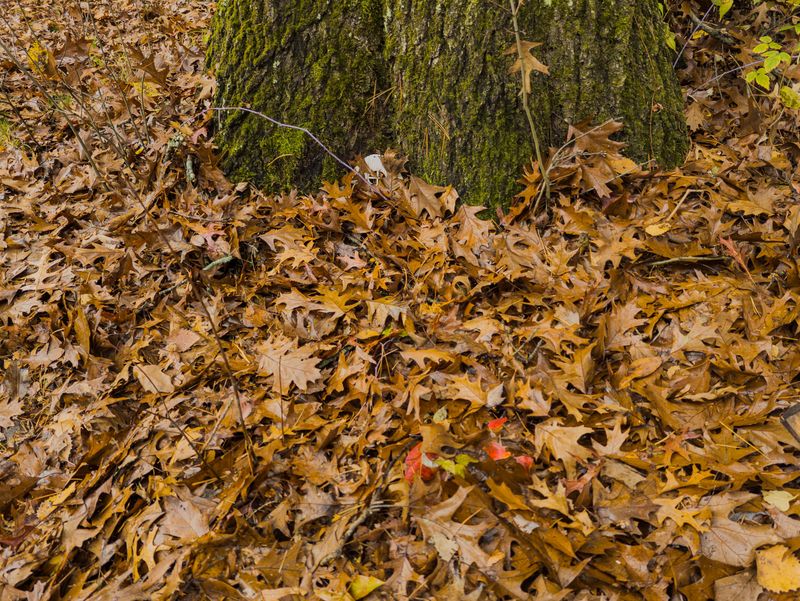
Grab a rake and enjoy the crisp air. Cleaning up fallen galls is the one simple step that can make a small difference next year.
Some gall wasp larvae spend winter inside fallen leaves and galls. When spring arrives, adults emerge and look for fresh oak buds. Picking up a heavy load of galled leaves can lower the local population a bit.
Bag the galled leaves for yard waste pickup, or check if your town accepts them. Keep expectations realistic, though. Wasps from nearby woods will still visit, so think of raking as tidying, not total control.
Wildlife lovers can find a middle path. Rake galled leaves away from lawns and patios, but leave some natural leaf cover in garden beds. Fireflies, moths, and other helpful insects depend on that layer through winter.
Here in Pennsylvania, many neighborhoods also have oak wilt and spongy moth concerns. Galls are not linked to those problems, so don’t panic if you see both. Ask your county Penn State Extension office if something looks unusual.
Most of all, slow down and look closely. Those odd white balls are a tiny wonder hiding in plain sight.