Those Tent-Like Webs Appearing On Pennsylvania Tree Branch Tips Right Now Are Fall Webworms
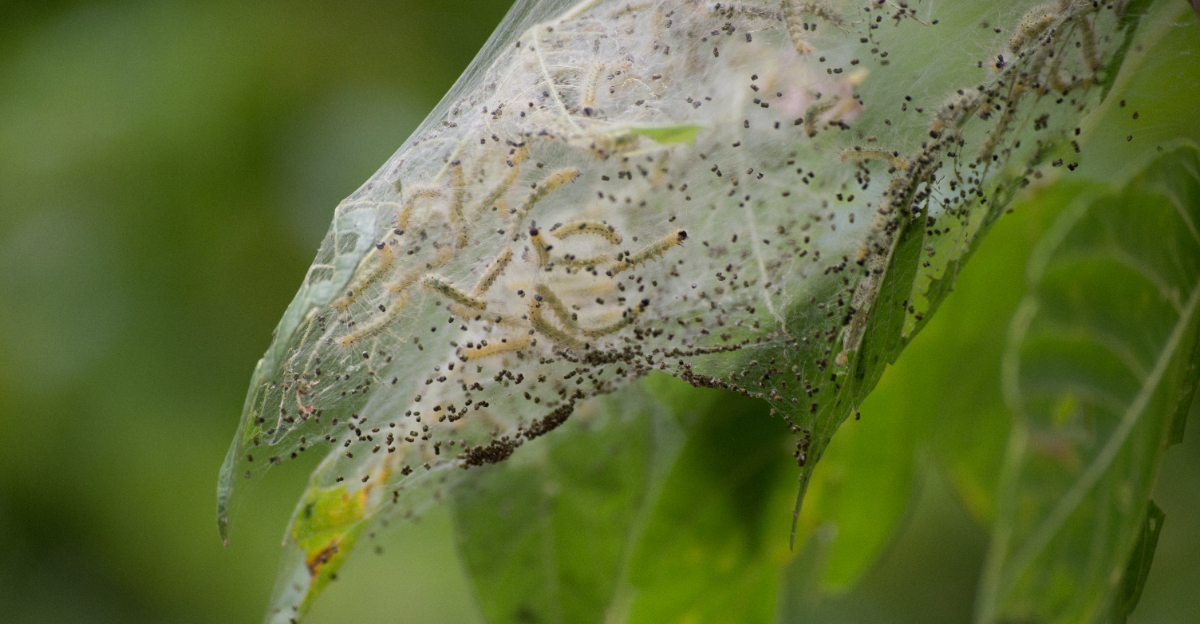
That fuzzy gray blob dangling from your oak wasn’t there last week. Now it’s the size of a beach ball, swallowing entire branches whole, and something inside it is moving.
The culprit builds its home in broad daylight, spinning silk faster than you’d think possible for something so small. By the time you notice, the structure has already tripled in size, stretching over leaves that were perfectly green just days ago.
Pennsylvania yards see this exact scene play out every year around the same stretch of summer, yet somehow it always catches homeowners off guard. Neighbors start comparing notes, wondering if their trees are next.
What’s living inside it isn’t nearly as threatening as it looks from your back porch.
Fall Webworms Build Nests At Branch Tips, Not Crotches
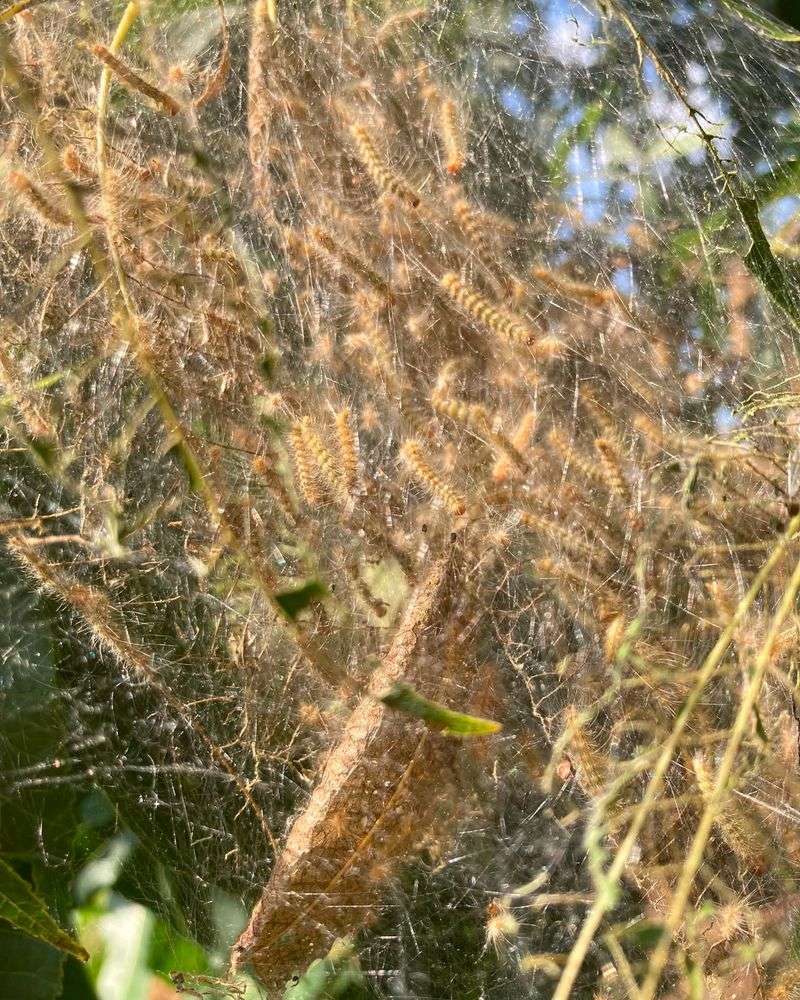
Spot a silky web at the very end of a branch, and you have found fall webworms. That location is your first clue for identifying this insect correctly.
Fall webworms always build their nests at branch tips. They expand the web outward as they eat, pulling more leaves inside the enclosure.
Eastern tent caterpillars do the opposite. Those insects build their silk shelters in the fork of branches, called the crotch, in early spring.
Pennsylvania homeowners often mix up the two pests simply because both spin silk on trees. But timing tells the real story: eastern tent caterpillars vanish by early summer, while fall webworms are just getting started as the season winds down.
Knowing that difference saves you from misidentifying the pest. A nest at the branch tip in August or September points directly to fall webworms.
The silk itself looks messy and irregular. It lacks the tight, organized structure you might see from a spider web or other insects.
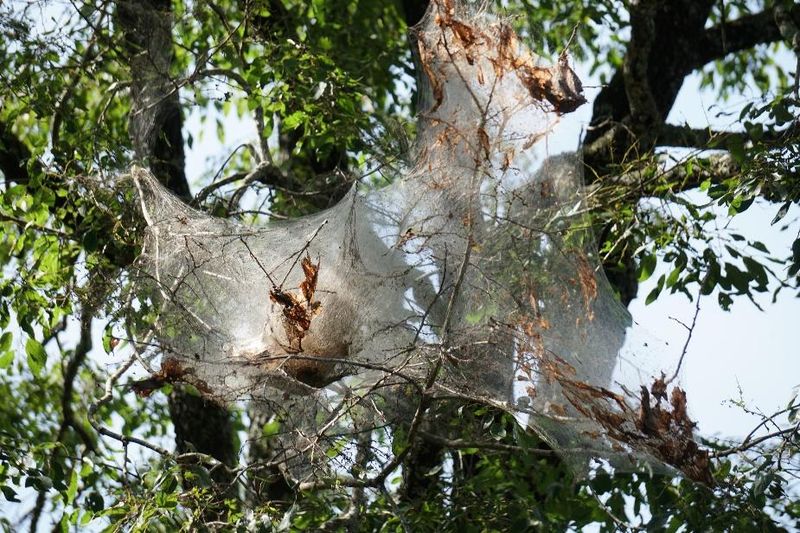
Leaves get trapped inside the nest as the caterpillars expand their territory. The whole bundle can grow to several feet long on heavily infested branches.
From a distance, the nests look like someone draped white laundry over your tree. Up close, you can see dozens of small caterpillars moving around inside.
Recognizing fall webworms by nest placement helps you stay calm. Most homeowners panic when they see the webs, but proper identification is the first step toward making a smart decision.
These Webs Appear In Late Summer, Unlike Spring Tent Caterpillars
Timing tells the whole story with these insects. If you are seeing webs on branch tips in August or September, fall webworms are the culprit.
Spring tent caterpillars emerge when temperatures first warm up, usually in March or April. Their nests show up before trees have fully leafed out.
Fall webworms operate on a completely different schedule. They hatch from eggs laid by adult moths during the summer months.
By late July, young caterpillars begin spinning their first small silk patches. The nests grow larger through August and into September.
Fall webworms can produce more than one generation per year depending on the region and climate. In areas with longer, warmer growing seasons, a second wave often produces the most visible nests in late summer.
Your Pennsylvania Garden Changes Every Week. Your Plan Should Too.
Gardening in Pennsylvania changes quickly throughout the season. Every Friday you’ll receive a simple weekly plan showing exactly what to plant, prune, fertilize, harvest, and protect so you never miss the right timing.
Pennsylvania’s warm, humid August stretches speed up caterpillar development, so that second wave often catches homeowners off guard. Nests that looked minor early in the month can double within weeks.
That timing overlap with back-to-school season makes the webs hard to miss. Trees that looked clean in June suddenly look draped in white gauze.
The adult moth lays eggs on the undersides of leaves in clusters. Each egg mass can contain hundreds of eggs ready to hatch quickly.
Knowing the seasonal pattern helps you prepare mentally each year. When late summer arrives, a quick scan of your trees tells you whether webworms have moved in this season.
The Caterpillars Feed Inside The Protective Silk Enclosure
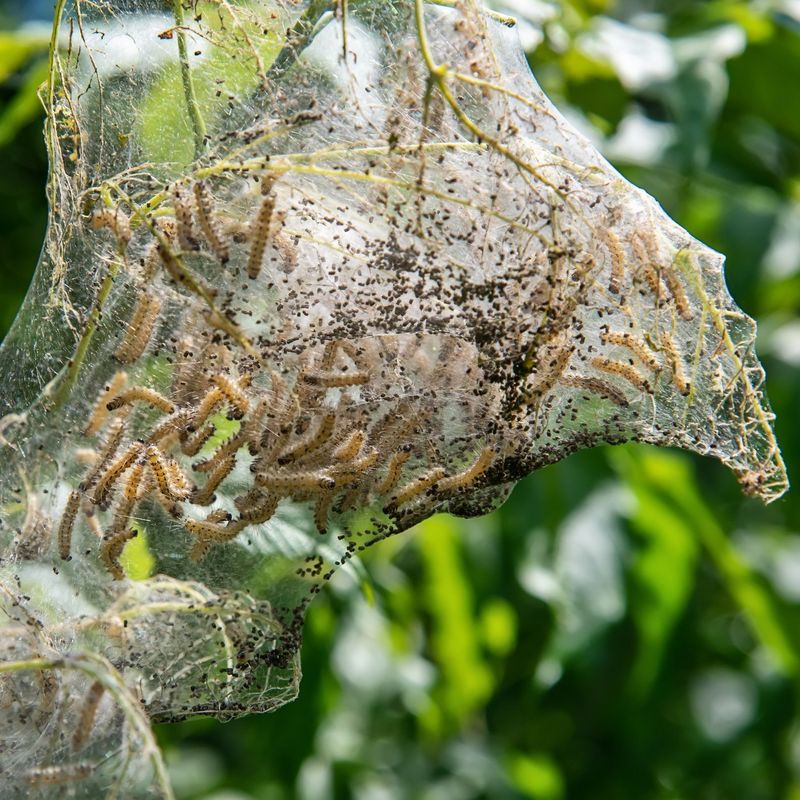
Inside that messy web is a whole feeding operation. The caterpillars stay protected inside the silk while they eat the leaves surrounding them.
Fall webworm caterpillars are pale yellowish-green or whitish in color. They have long, fine hairs covering their bodies and small dark spots along their sides.
The silk enclosure acts like a greenhouse for their feeding activity. It keeps predators out while keeping the caterpillars safe and comfortable inside.
As the colony eats through the leaves inside the nest, they push the silk forward. The web grows to cover fresh leaves at the branch tip.
A large colony can skeletonize the leaves inside the nest completely. The brown foliage stays trapped in the web, making the nest look even more alarming.
Birds sometimes tear open the webs to get at the caterpillars inside. Species like cuckoos are known for readily feeding on hairy caterpillars that many other birds avoid.
Parasitic wasps also attack webworm colonies from outside the nest. Nature has built in several natural controls that keep populations from spiraling out of control.
Watching the caterpillars feed inside their silk tent is genuinely fascinating. The whole colony works like a single unit, expanding outward in search of the next fresh meal on the branch.
Healthy Trees Rarely Suffer Lasting Damage From This Pest
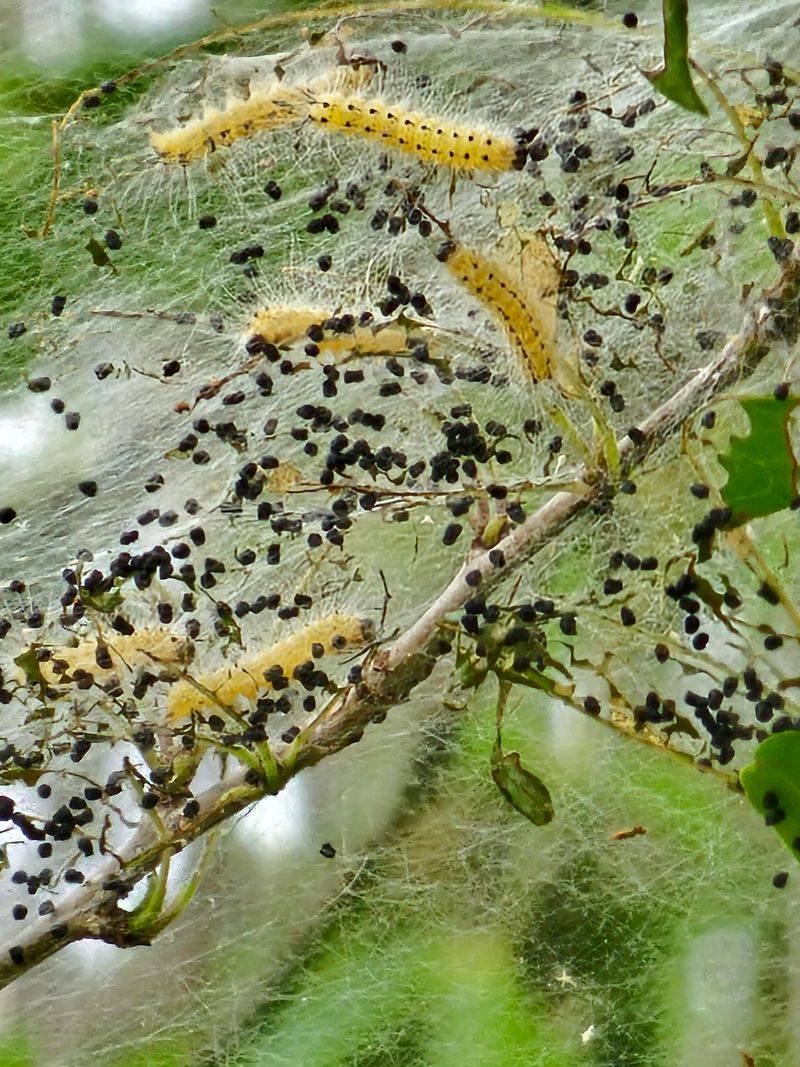
Here is the part that surprises most homeowners: fall webworms rarely cause serious harm. A healthy, established tree can handle the leaf loss with no lasting consequences.
By the time the nests appear in late summer, trees have already done most of their photosynthesis work for the year. Losing some leaves in August or September is not a major setback.
Young trees and newly planted saplings deserve more attention. Their energy reserves are smaller, so heavy webworm pressure can stress them more than it would a mature oak or cherry.
Trees that are already struggling matter more here. If your tree is dealing with drought, disease, or root damage, additional leaf loss can compound those existing problems.
Even severe infestations rarely cause lasting harm to an otherwise healthy tree. The tree simply pushes new growth the following spring. The tree simply pushes new growth the following spring.
Defoliation from webworms looks dramatic but functions differently than disease damage. The tree is not under attack at its root system or vascular tissue.
Think of the web nests like a temporary setback, not a permanent loss. The tree bounces back with remarkable resilience once the caterpillars pupate and drop to the soil.
Keeping your tree watered during dry spells in late summer helps it recover faster. A little extra care goes a long way when any insect is feeding on the canopy.
When Pruning The Nest Out Makes Sense
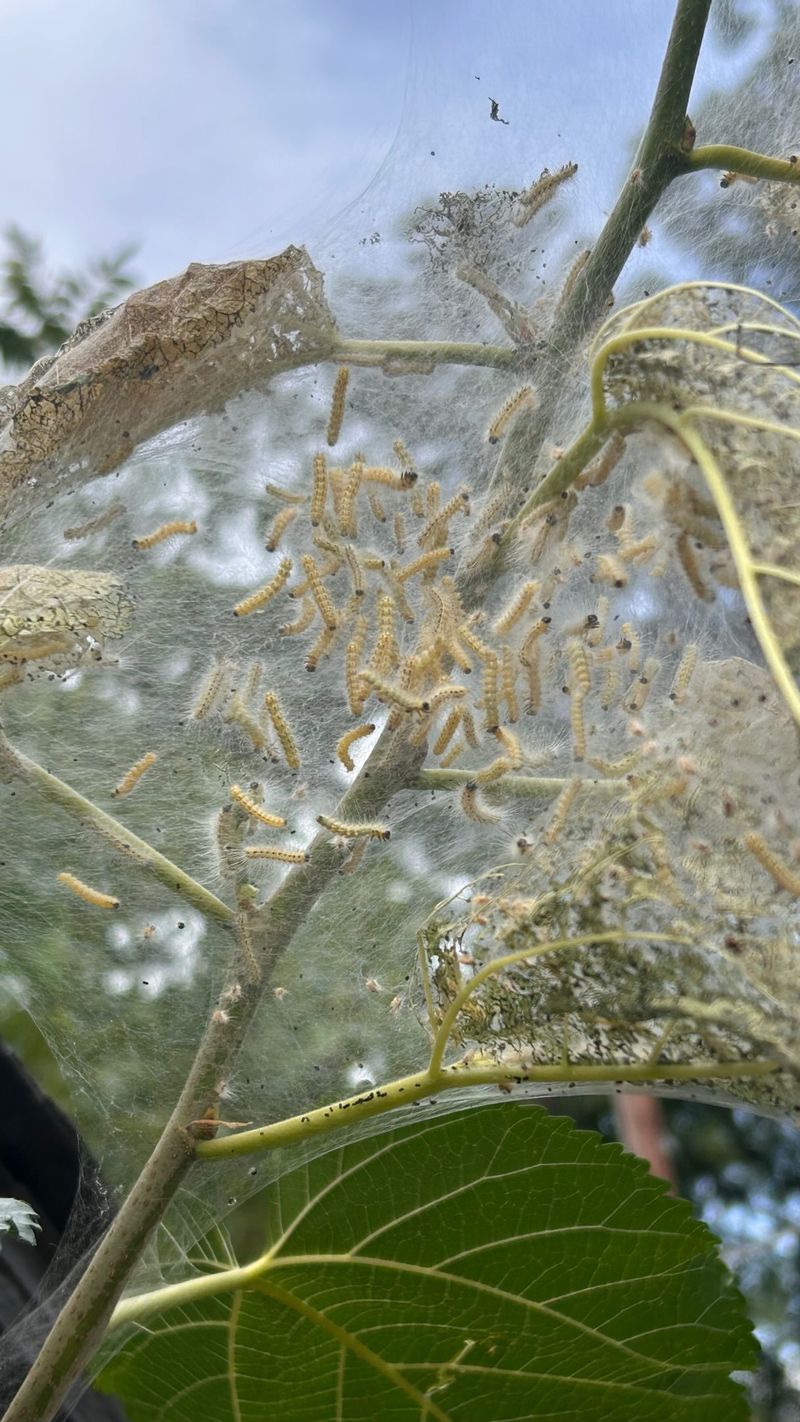
Sometimes removing the nest is the right call. Pruning makes the most sense when the infestation is small and the nest is within easy reach.
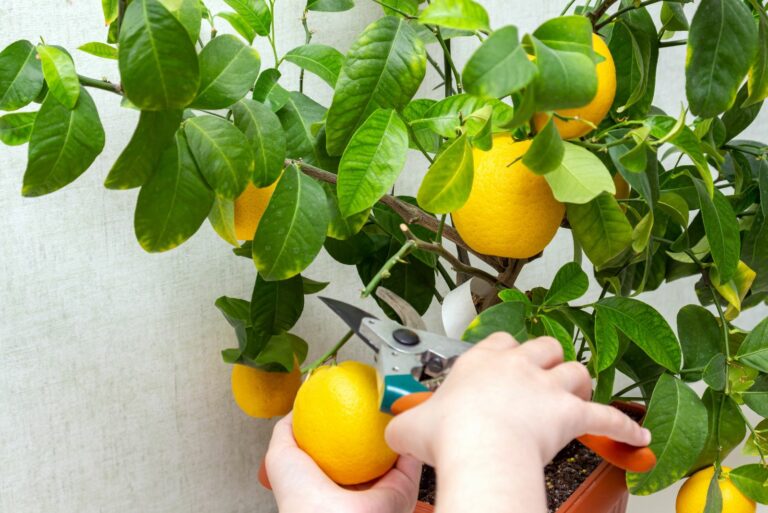
Use a pair of sharp pruning shears and cut the branch a few inches below the base of the web. Drop the whole nest into a bucket of soapy water to finish the job.
Never try to burn the nest out while it is still on the tree. That old-fashioned method damages bark and creates a fire hazard far worse than the caterpillars themselves.
A long-handled pruning pole lets you reach nests that sit slightly higher up. Most homeowners can safely handle nests up to about ten feet without climbing equipment.
Pruning works best early in the infestation, when the nest is still compact. Waiting until the web covers several feet of branch makes clean removal much harder.
Timing your removal in the morning works in your favor. Caterpillars tend to cluster inside the nest at night and in cooler morning temperatures.
Avoid tearing the nest open and leaving it in place. Ripping the silk releases the caterpillars, who simply rebuild and continue feeding on nearby foliage.
After removing the nest, monitor that branch over the next week. Sometimes a second group hatches nearby, and catching it early prevents the cycle from repeating on the same tree.
Why Many Pennsylvania Gardeners Choose To Leave Them Alone
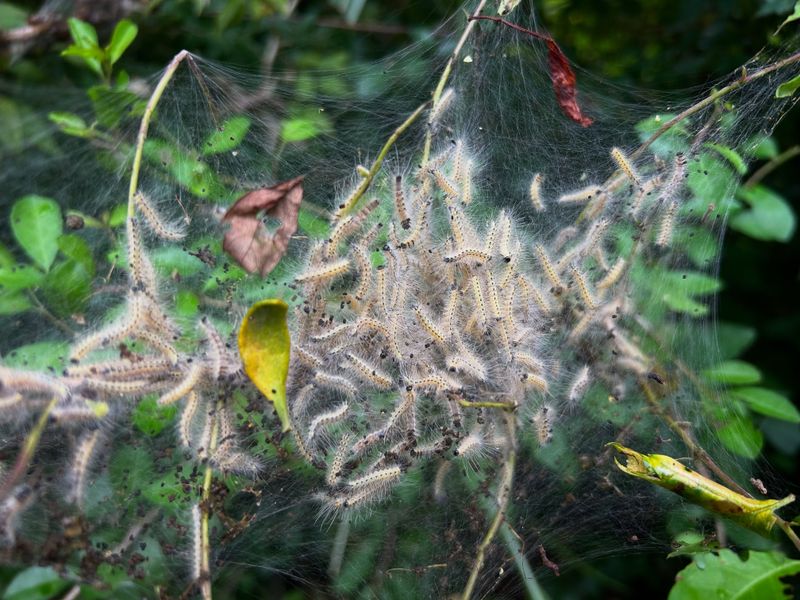
Leaving the nests alone is a completely valid choice. Many experienced gardeners in the region make that decision every single season without regret.
Fall webworms are a native species in North America. They evolved alongside local trees and predators, making them part of a balanced ecosystem rather than an invasive threat.
Wildlife depends on them more than most people realize. Birds, parasitic wasps, and ground beetles all feed on webworm caterpillars at different stages of their life cycle.
Spraying insecticides into a closed silk web is largely ineffective anyway. The nest protects the caterpillars from contact sprays, meaning you waste product and disrupt other beneficial insects nearby.
Bacillus thuringiensis, called Bt, is the one treatment that works if you choose to act. You apply it to foliage outside the nest before caterpillars emerge to feed.
Bt is a naturally occurring soil bacterium and is approved for organic gardening. It targets caterpillars specifically and leaves bees and other pollinators unharmed.
Most Pennsylvania gardeners who leave the nests alone simply note them, check on their tree’s overall health, and move on. The nests drop off naturally as caterpillars pupate in September and October.
Fall webworms remind us that not every bug requires intervention. Sometimes the smartest move is trusting your tree and letting the season run its course with fall webworms doing their thing.