The Invasive Beetle Destroying Pennsylvania Ash Trees That Homeowners Should Know About
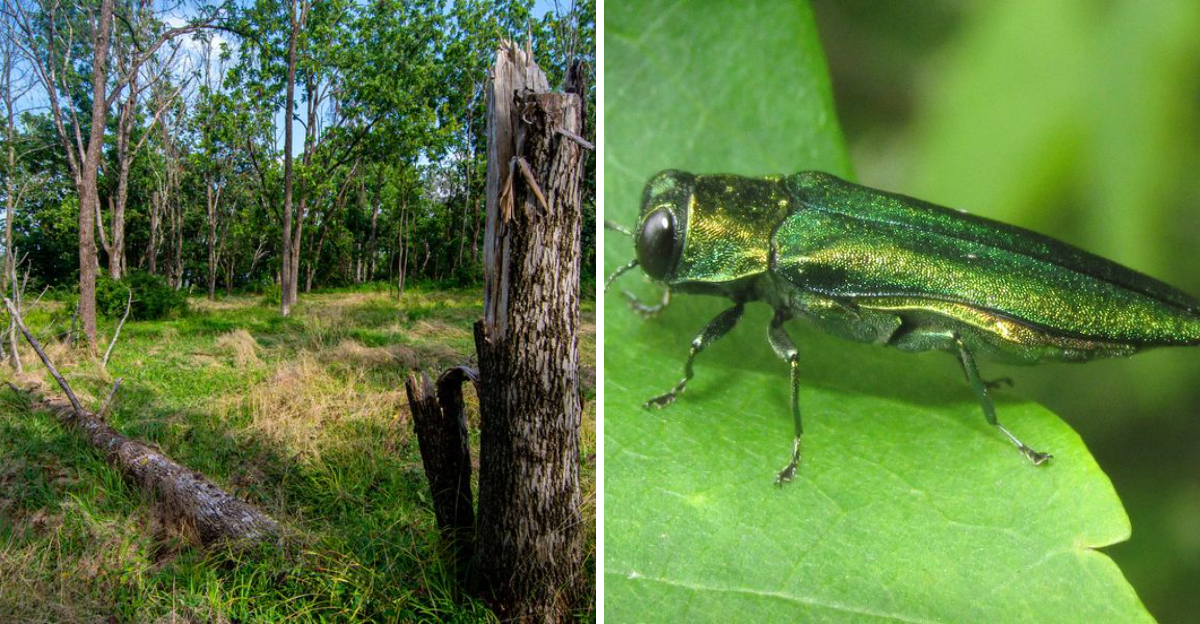
The emerald ash borer is one of those insects that does its most serious work completely out of sight, which is a big part of what makes it so challenging to catch in time.
This small metallic-green beetle has been reshaping Pennsylvania’s tree canopy since it was first detected in the state in 2007, and the damage it causes happens beneath the bark long before anything looks wrong from the outside.
By the time an ash tree starts showing visible symptoms, the infestation has often already been progressing quietly for more than one season. That timeline matters a lot.
Knowing how to recognize an ash tree, what early warning signs actually look like, and when to bring in a qualified professional gives Pennsylvania homeowners a genuinely better chance of making informed decisions before things get much harder to address.
1. Emerald Ash Borer Is The Beetle Behind The Damage
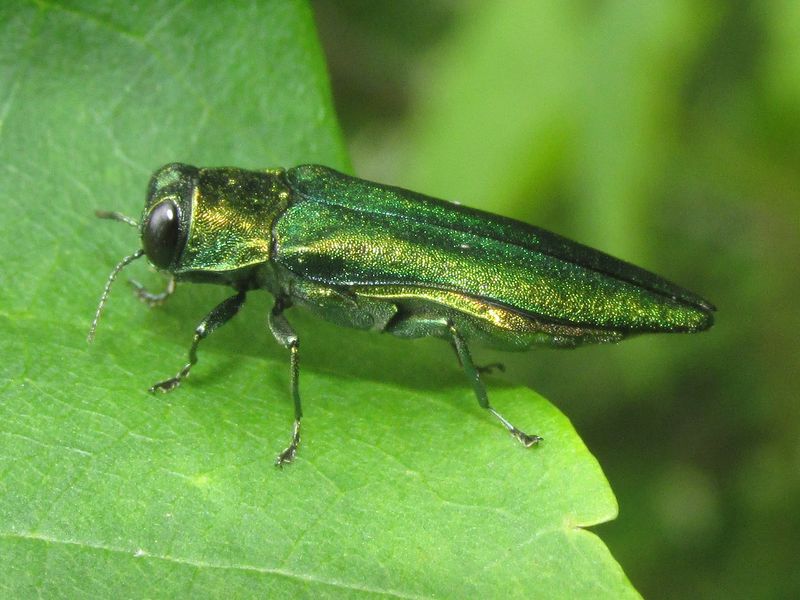
Metallic green and surprisingly small, the emerald ash borer might not look like much of a threat at first glance.
Formally known as Agrilus planipennis, this introduced wood-boring beetle is native to parts of Asia and has established itself as one of the most destructive tree pests in North America.
Pennsylvania confirmed its presence in 2007, and it has since caused widespread ash decline across much of the state.
Adult beetles are narrow and elongated, with a bright iridescent green color that can actually make them blend in against foliage during warm months.
Homeowners may never spot an adult even when a tree is heavily affected, because the real damage happens out of sight.
The larvae feed within the inner bark and phloem, which are the tissues responsible for moving water and nutrients through the tree. That feeding disrupts the tree’s ability to function properly.
Unlike the larvae, adult beetles feed on ash leaves, but that surface feeding causes far less harm than what the larvae do beneath the bark. Adults are most active during warmer parts of the growing season and emerge through distinctive openings in the bark.
Timing can vary depending on weather and location across Pennsylvania, so there is no single statewide emergence window that applies every year.
Emerald ash borer primarily threatens trees in the ash genus, Fraxinus, which includes several native species found throughout Pennsylvania landscapes and forests.
2. D-Shaped Exit Holes Reveal Adult Activity
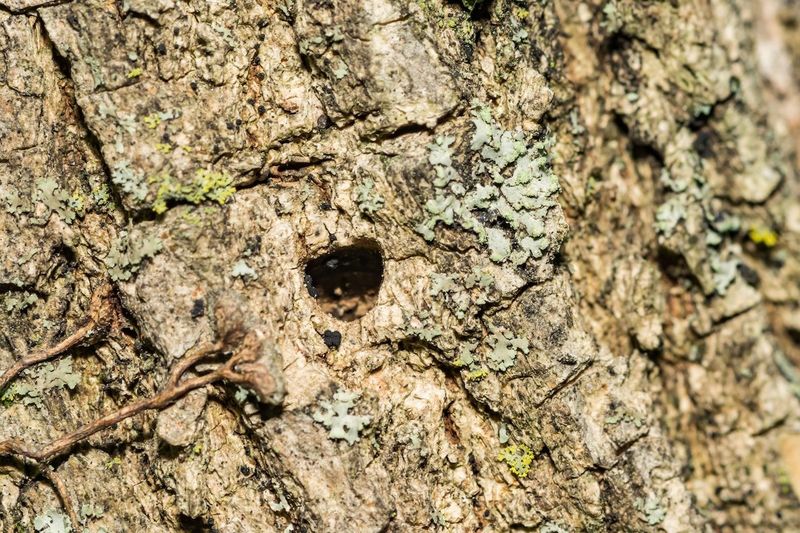
Small openings in ash bark can tell a revealing story once you know what to look for.
When adult emerald ash borers are ready to emerge, they push through the outer bark and leave behind a distinctly shaped hole with one flat side and one curved side, forming what looks like the letter D.
These openings are a well-documented diagnostic clue that sets emerald ash borer apart from many other wood-boring insects that leave round or oval holes.
Spotting these holes from the ground can be genuinely difficult. The openings are small, and they may be scattered high in the canopy or hidden on rough-textured bark.
A pair of binoculars can help when scanning the upper trunk and larger branches from a safe distance.
Your Pennsylvania Garden Changes Every Week. Your Plan Should Too.
Gardening in Pennsylvania changes quickly throughout the season. Every Friday you’ll receive a simple weekly plan showing exactly what to plant, prune, fertilize, harvest, and protect so you never miss the right timing.
One or two vaguely shaped marks are not enough to confirm an infestation on their own, and other insects can also create openings in bark that might be mistaken for emerald ash borer exit holes.
By the time numerous D-shaped holes are clearly visible across a tree, the beetle may have been present for more than one season. USDA guidance confirms that emerging adults create these characteristic openings, while larval feeding happens in the galleries beneath.
Combining the presence of exit holes with other symptoms creates a much stronger case for professional evaluation. Relying on a single distant photograph or one ambiguous mark is not a reliable path to accurate identification in Pennsylvania or anywhere else.
3. S-Shaped Galleries Form Beneath The Bark
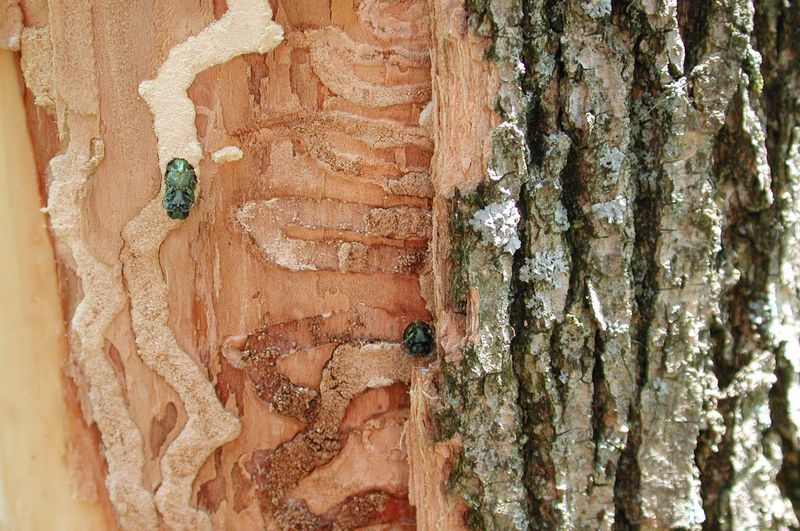
Beneath the bark of an affected ash tree lies some of the most telling evidence of an emerald ash borer infestation. Larvae feed within the inner bark and create winding, serpentine pathways that curve back and forth in a pattern often described as S-shaped.
These galleries may be packed with fine frass, which is the sawdust-like material produced during feeding activity.
Galleries typically become visible only when bark has split, loosened, or fallen away on its own, or when a qualified professional carefully examines the tree. Homeowners should not attempt to strip bark from a standing ash tree simply to search for larvae.
Removing healthy bark can injure the tree and may not produce a clear diagnosis, particularly if the galleries are located in areas that are not easily reached from the ground.
As larvae continue feeding and galleries expand, they interfere with the conductive tissues that move water and nutrients between the roots and the canopy.
This disruption is what leads to the progressive decline visible in the upper branches and foliage over time.
Seeing one gallery does not reveal the full extent or age of an infestation, since feeding may be occurring across multiple areas of the trunk and larger branches simultaneously.
A professional evaluation is the most reliable way to assess what the galleries mean for the overall condition and future of a Pennsylvania ash tree.
4. Thinning Canopies Can Signal A Growing Infestation
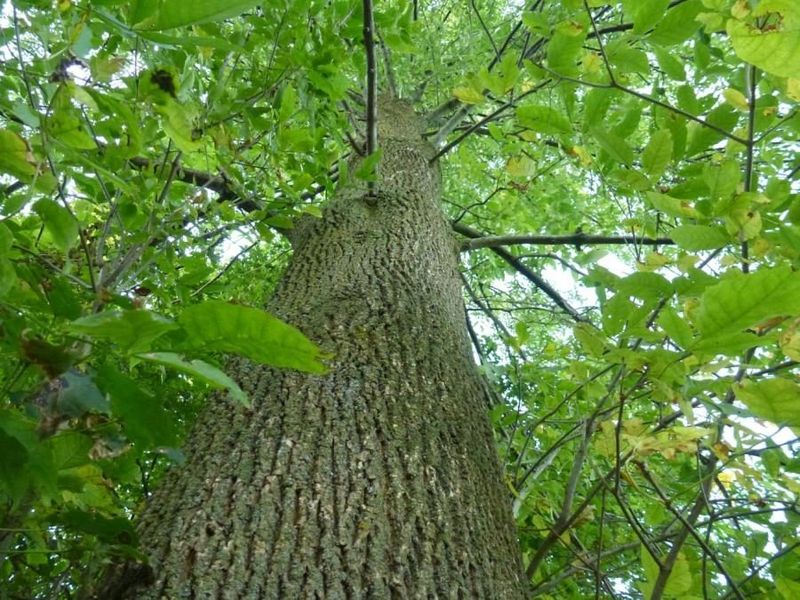
Looking up at an ash tree and noticing that the upper branches seem sparser than they used to be is worth paying attention to.
As an emerald ash borer infestation progresses, the disruption to the tree’s conductive tissues often shows up first in the upper canopy, where foliage may thin out, branches may stop producing leaves, or overall density may appear reduced compared to previous seasons.
Canopy thinning is not unique to emerald ash borer, and that distinction matters. Drought stress, compacted soil, root damage from nearby construction, other insects, fungal diseases, and general aging can all create similar symptoms.
Looking at the canopy alone is not enough to reach a confident conclusion.
Comparing foliage density with nearby healthy trees of a similar type and tracking changes from one season to the next can offer useful context without requiring any climbing or close contact with the tree.
Stressed ash trees sometimes produce shoots sprouting from the trunk, larger branches, or near the base. These are called epicormic shoots, meaning growth that emerges from dormant buds as the tree responds to internal stress.
Their presence can be a sign that something is affecting the tree’s normal function, but epicormic shoots alone do not confirm emerald ash borer without supporting symptoms.
Staying a safe distance from branches that appear weakened or hanging is always a sensible precaution when observing a tree that may be in decline across a Pennsylvania property.
5. Bark Splits And Woodpecker Activity Offer More Clues
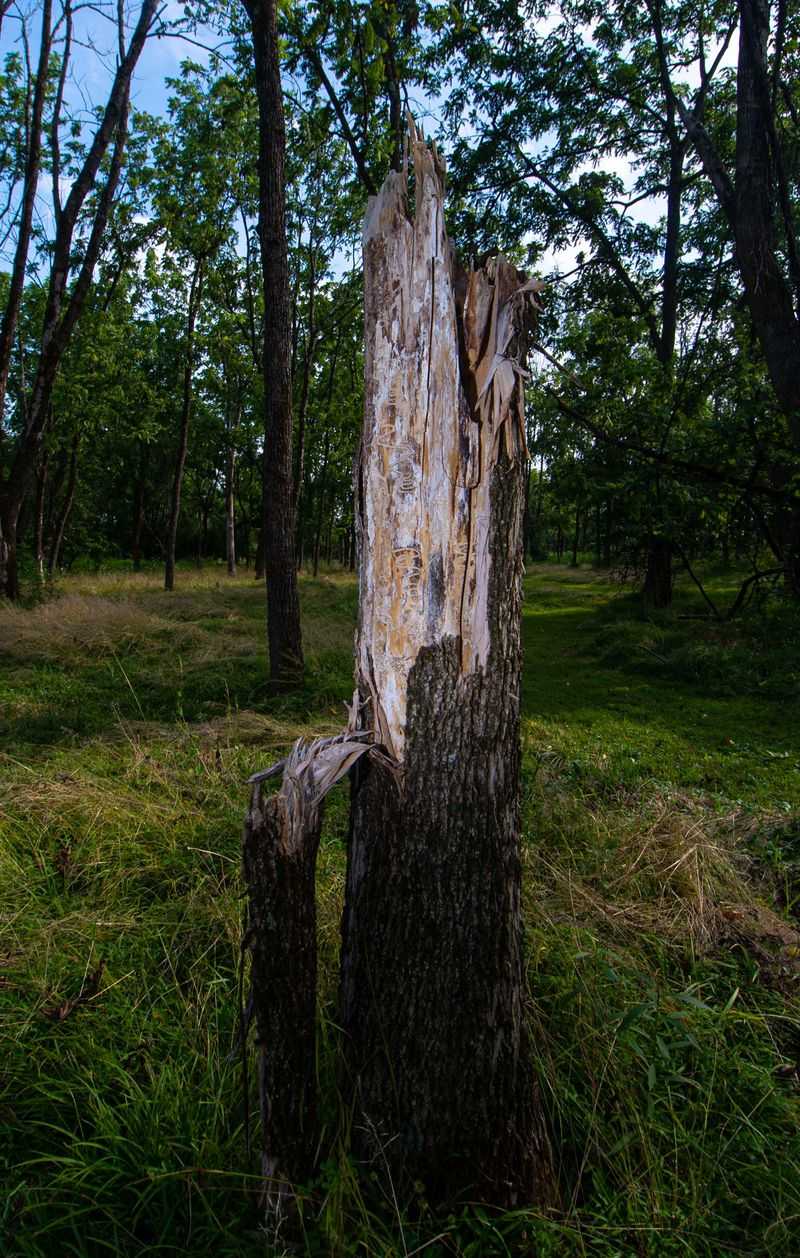
Increased woodpecker activity around a particular ash tree is one of those observations that can easily be dismissed as ordinary bird behavior, but it may be worth a second look.
Woodpeckers forage beneath bark to reach the larvae living inside, and their work can leave behind pale, flecked, or scraped patches on the trunk and larger branches.
During colder months, when leaves are no longer hiding the bark, these patches can become more noticeable and easier to observe from the ground.
Vertical cracks or splits in the bark may also develop as a tree responds to larval feeding happening beneath the surface. These splits can expose the gallery areas underneath and sometimes allow loosened sections of bark to pull away naturally.
Combining these bark changes with other symptoms, such as a thinning canopy and D-shaped exit holes, builds a more convincing picture than any single sign could provide on its own.
Woodpecker activity alone does not confirm emerald ash borer, since these birds feed on a wide variety of insects found in bark. Pale or damaged-looking patches on the trunk could have other explanations as well.
The value of watching for bark splits and bird activity is that they add to a growing pattern of symptoms that together suggest a tree deserves professional attention.
Peeling bark away to investigate further is not recommended, as it can injure the tree and still may not provide a reliable diagnosis for a Pennsylvania homeowner working without professional training or tools.
6. Healthy Ash Trees May Still Have Treatment Options
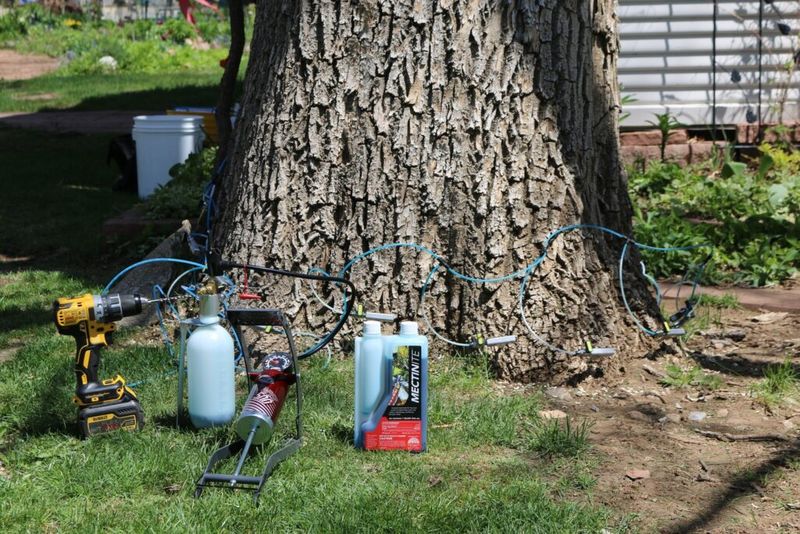
For ash trees that are still in reasonably good condition, protective insecticide treatment may be a worthwhile option to explore.
Treatment decisions are not one-size-fits-all, and factors like the tree’s current health, size, location on the property, and structural or aesthetic value all play a role in determining whether treatment makes sense.
The cost of ongoing care and the homeowner’s long-term goals for that part of the landscape are equally important parts of that conversation, and a certified arborist can help weigh all of them together.
Starting treatment while a tree is still relatively healthy tends to produce better results than waiting until canopy decline has become advanced.
Several treatment methods and active ingredients may be available, but suitability varies depending on tree size, the specific product label, application method, timing, and whether the applicator holds the appropriate qualifications.
Some products or application techniques require a licensed pesticide professional, and pesticide labels carry the force of law, meaning they must be followed as written.
Treatment should be understood as an ongoing management commitment rather than a single action that resolves the issue permanently. Retreatment intervals differ between products, so there is no universal schedule that applies across the board.
Penn State Extension and Pennsylvania DCNR recognize insecticide treatment as a reasonable option for selected landscape ash trees when appropriate products and methods are used correctly.
Avoiding folk remedies, unverified home treatments, or fertilization as substitutes for evidence-based management is important, since proper tree care supports overall vigor but cannot remove an established infestation on its own.
7. Advanced Damage Can Make Ash Trees Less Stable
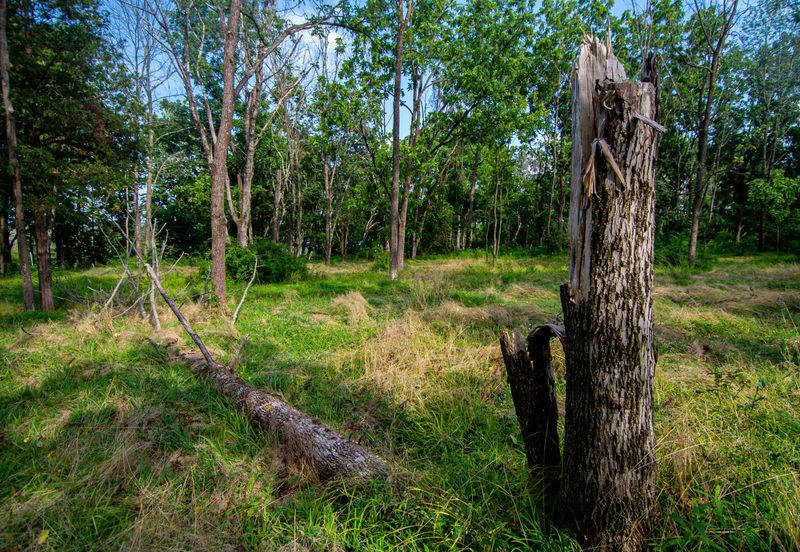
Brittle branches and weakened wood are among the most serious concerns that come with a heavily affected ash tree. As feeding disrupts the tree’s internal systems over time, branches in the upper canopy may become increasingly dry and fragile.
A large ash tree positioned near a house, driveway, sidewalk, outdoor play area, road, or utility line deserves prompt professional attention when decline has progressed to this stage.
Attempting to climb, prune, or remove a compromised ash tree without proper training and equipment carries real risks.
Damaged ash trees can respond unpredictably during cutting or removal work, which is one reason why specialized skills, appropriate gear, and careful work planning matter so much.
Waiting until structural problems become severe can also make the removal process more complicated and more costly than addressing the situation earlier.
Not every ash tree with emerald ash borer symptoms becomes structurally unstable at the same rate.
Tree size, the severity of the infestation, pre-existing defects, exposure to wind and weather, root condition, and the tree’s surroundings all influence how quickly risk may develop.
Separating an insect diagnosis from a structural risk assessment is useful, since a tree can show signs of infestation without presenting an immediate emergency, while another tree in a different condition or location might require faster action.
A qualified professional can help clarify which situation applies to a specific Pennsylvania property and what the most appropriate next steps would be.
8. A Certified Arborist Can Guide The Next Step
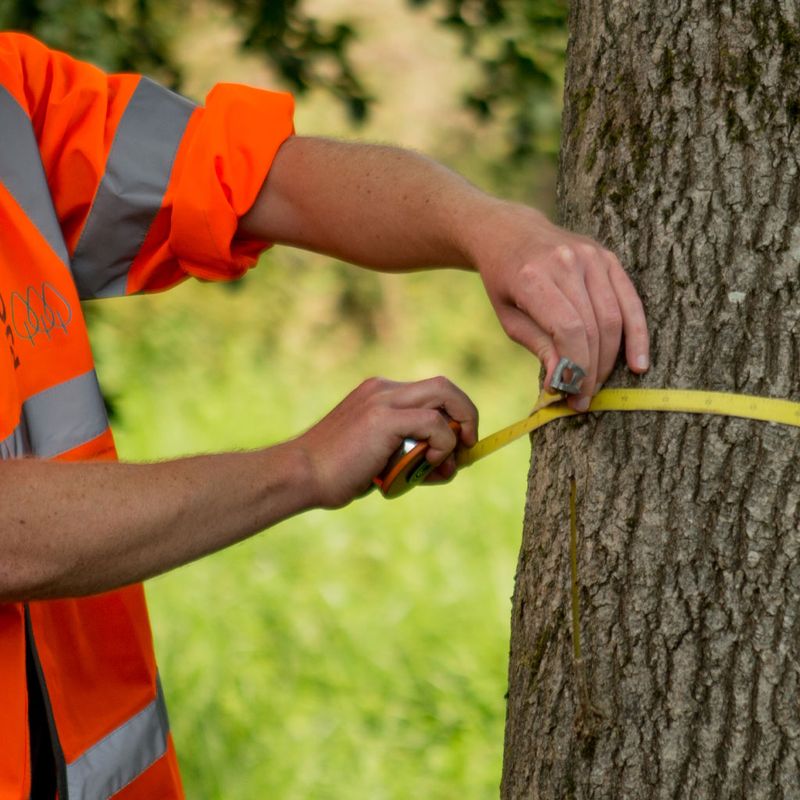
Uncertainty about a declining tree is something many Pennsylvania homeowners experience, and connecting with an ISA Certified Arborist or another appropriately qualified tree-care professional can bring real clarity to the situation.
An arborist can help confirm whether the tree is a true ash in the genus Fraxinus, evaluate the symptoms present, assess the tree’s structural condition, and compare the practical and financial considerations of treatment versus removal.
When meeting with a tree-care professional, asking for written recommendations, proof of insurance, clear treatment details, expected follow-up needs, and a transparent cost estimate is entirely reasonable.
Certification demonstrates a level of professional knowledge, but it works best alongside a check of the company’s insurance coverage, references, and the specific scope of work being proposed.
For a large, valuable, or particularly costly tree decision, seeking more than one assessment is a sensible approach.
If removal turns out to be the right choice, thinking about replacement planting is worth doing sooner rather than later.
Choosing a tree species suited to the site’s available space at maturity, light conditions, soil type, drainage, and nearby structures helps set the new planting up for long-term success.
Planting a variety of species rather than replacing several ash trees with one identical type makes a landscape more resilient to future pests and diseases.
Moving ash logs, branches, or firewood unnecessarily can spread emerald ash borer to new areas, so sourcing and using firewood locally is a practice supported by current Pennsylvania guidance.