Those Yellow Patches On Your Texas St. Augustine Lawn May Not Be Drought After All
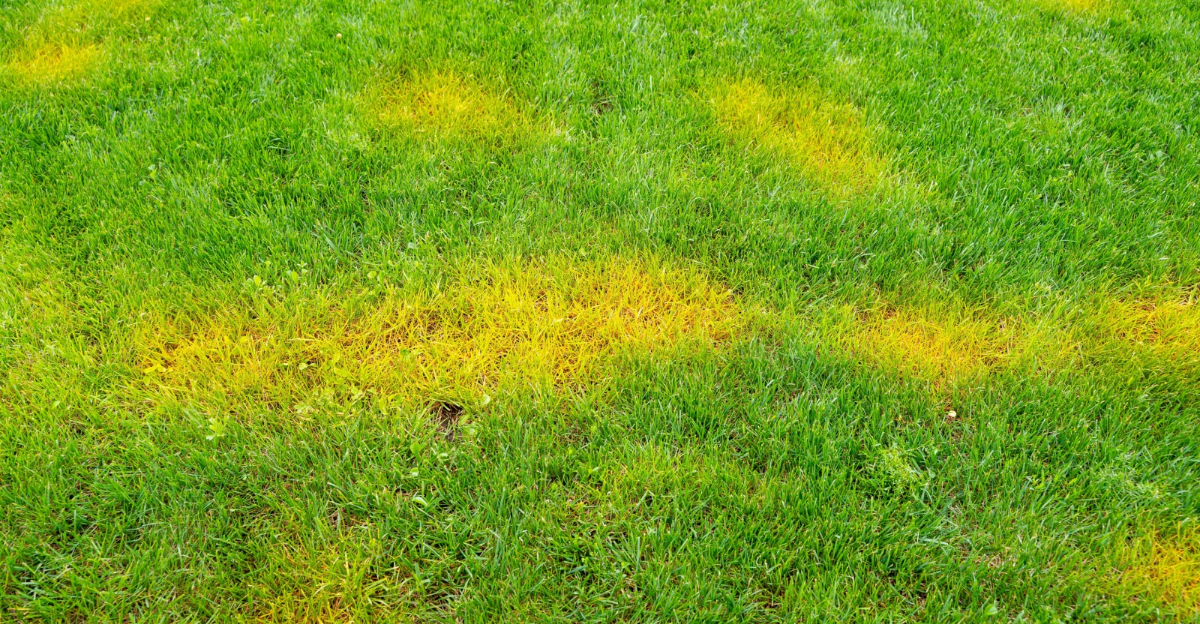
Yellow patches showing up across your Texas lawn in the middle of summer? The instinct is to grab the hose and start watering, and honestly, that makes complete sense given how relentlessly hot and dry things get out here.
But here’s the problem: drought stress is just one item on a pretty long list of reasons St. Augustinegrass turns yellow, thins out, or starts looking like it has given up entirely.
And if the real culprit turns out to be chinch bugs, fungal disease, root rot, grub damage, compacted soil, or an irrigation issue that’s been quietly making things worse, extra water is not going to fix it.
In some cases it will actually make the situation harder to turn around. Before you run those sprinklers overtime, it is genuinely worth taking a closer look at what is actually going on out there.
1. Chinch Bugs Feeding In Sunny Hot Areas
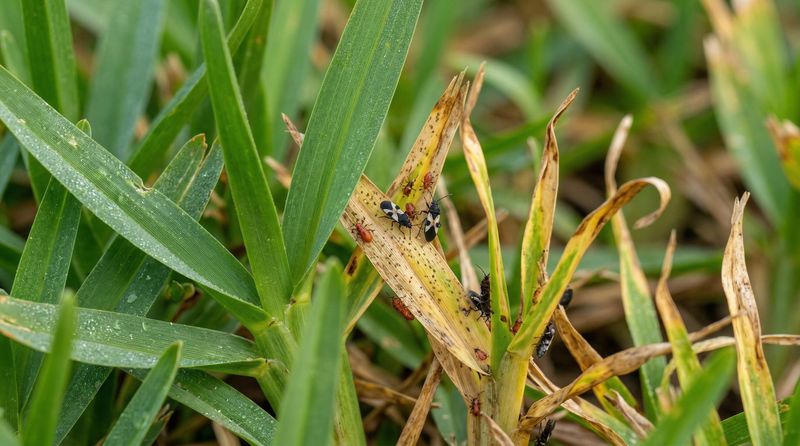
That crispy, straw-colored patch spreading out from your curb or driveway edge may not be thirsty grass at all.
Chinch bugs are one of the most common and most misidentified lawn problems in Texas, and they tend to show up right when summer heat peaks, making them easy to confuse with drought stress.
These tiny insects are only about one-fifth of an inch long, but they cause serious damage by piercing grass blades and sucking out plant fluids while injecting a substance that disrupts water movement inside the plant.
The result looks almost exactly like drought, with grass turning yellow, then orange-brown, then completely dried out.
Chinch bugs prefer the hottest, sunniest parts of the lawn, so front lawn edges, areas near sidewalks, and south-facing slopes are common targets. Damage tends to spread outward in irregular patches.
To check, part the grass at the edge of a yellowing area and look closely at the soil surface and lower stems. You may spot the small bugs moving around in the thatch layer.
Treating the wrong problem wastes time and money, so confirming chinch bug activity before applying anything is a smart first step.
2. Take-All Root Rot Weakening The Roots
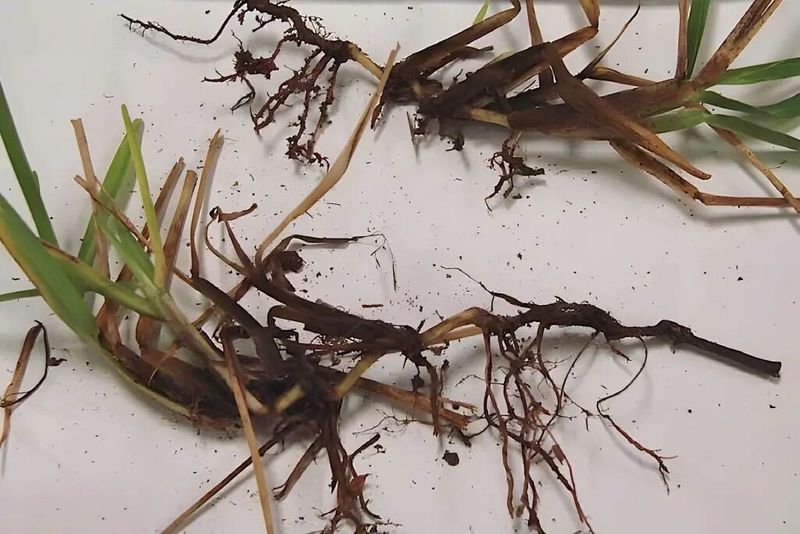
Pulling up a handful of yellowing St. Augustine stolons and finding short, stubby, brown-tipped roots is a sign that something much more serious than dry weather is at work.
Take-all root rot is a soilborne fungal disease that attacks the root system of St. Augustinegrass, and it can be surprisingly hard to spot until the lawn already looks rough.
Unlike many fungal diseases that leave visible marks on grass blades, this one works underground first. Roots become discolored, shortened, and unable to absorb water or nutrients properly.
Grass yellows, thins, and may pull up from the soil with very little resistance because the root system has been compromised. Wet conditions and fluctuating soil pH can encourage the disease to spread.
In Texas, take-all root rot tends to flare up in spring and again in fall when soil moisture is higher and temperatures are moderate. Lawns that stay consistently wet, have poor drainage, or sit in low spots are at higher risk.
Your Texas Garden Changes Every Week. Your Plan Should Too.
Gardening in Texas changes quickly throughout the season. Every Friday you’ll receive a simple weekly plan showing exactly what to plant, prune, fertilize, harvest, and protect so you never miss the right timing.
Adding extra irrigation will not help and may speed up the spread. Aerating, adjusting soil pH with sulfur, and reducing excess moisture are often recommended as part of managing this disease in Texas residential lawns.
3. Gray Leaf Spot Spreading In Warm Damp Shade
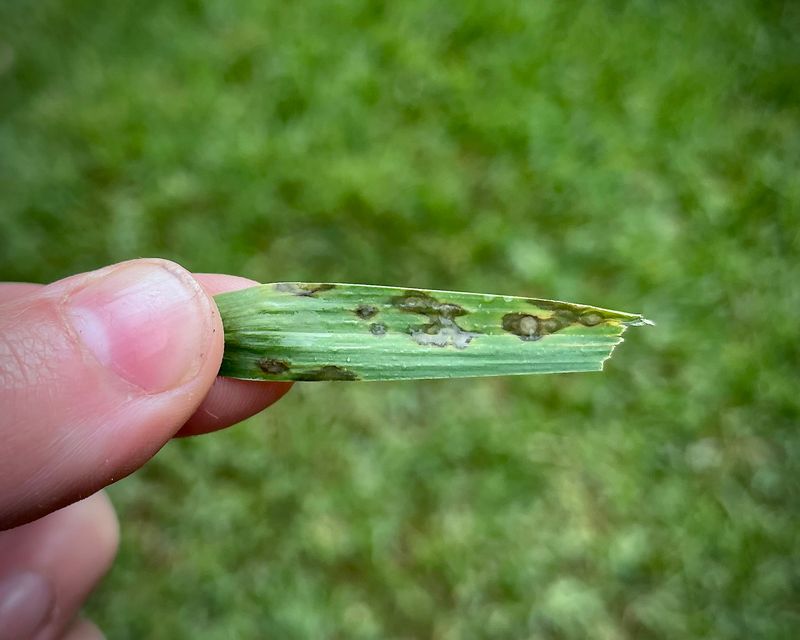
Shaded side yards and backyard areas under large trees can develop a particular kind of thin, yellowing turf that stumps a lot of Texas homeowners.
Gray leaf spot is a fungal disease that thrives in warm, humid conditions with limited air movement, which describes a shaded Texas lawn during summer pretty well.
The disease shows up as small, oval or round lesions on grass blades, usually with a gray or tan center and a darker border. As lesions multiply, blades yellow and the overall turf can look thin and stressed.
It spreads quickly when nighttime temperatures stay warm and the lawn stays damp from rain, dew, or late-evening irrigation.
One of the biggest contributors to gray leaf spot problems in Texas is the timing of nitrogen fertilizer applications.
Applying nitrogen to St. Augustinegrass during peak summer heat and humidity encourages soft, lush growth that the fungus can attack more easily.
Shaded areas that already receive less sunlight and airflow are especially vulnerable.
Adjusting irrigation schedules so grass dries out before evening, avoiding high-nitrogen feeding during summer, and improving airflow through selective pruning can all help reduce the conditions that allow gray leaf spot to spread through a Texas lawn.
4. Large Patch Showing Up In Mild Wet Weather
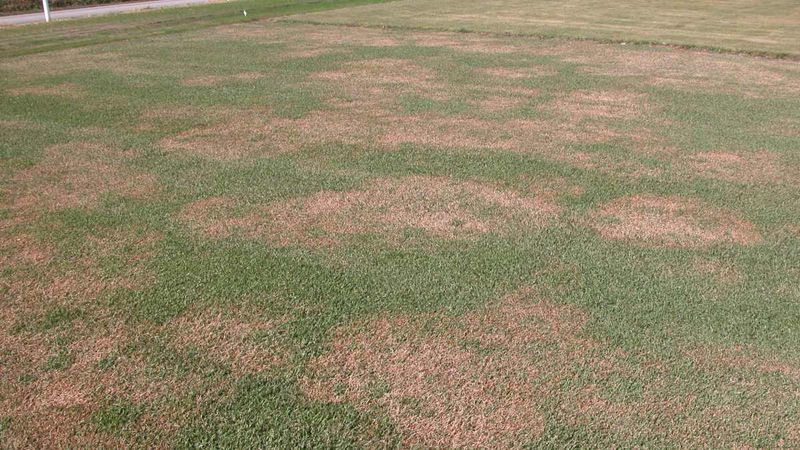
Circular or roughly round patches of yellowing St. Augustine turf showing up in spring or fall are often a sign of large patch, a fungal disease caused by Rhizoctonia solani.
Many Texas homeowners see these patches appear and immediately assume the irrigation system missed a spot or the soil dried out unevenly.
Large patch tends to be most active when soil temperatures are between about 70 and 85 degrees Fahrenheit and conditions are wet. That typically means fall in Texas, when rain returns and temperatures drop from summer highs, and sometimes again in early spring.
The patches often appear as rings or circles, sometimes with an orange or yellow outer edge and a recovering center as the disease moves outward.
Grass blades in affected areas may have brown lesions near the base of the sheath, which is a helpful detail to check when trying to identify the problem. Excess nitrogen fertilization, overwatering, and poor drainage can all make large patch worse.
Applying nitrogen in fall or late summer while conditions favor the disease is a common mistake in Texas lawns.
Reducing irrigation frequency, improving drainage, and avoiding late-season nitrogen applications are practical steps that can help limit large patch activity before it spreads further across the lawn.
5. White Grubs Damaging The Root Zone
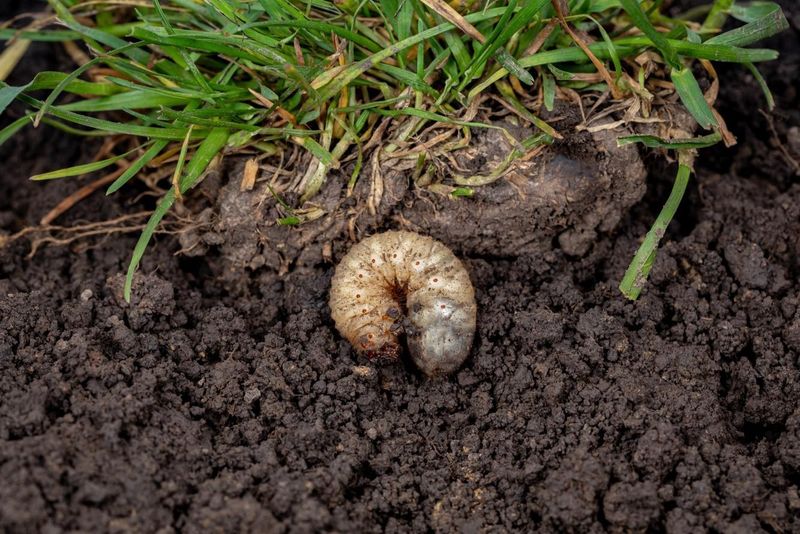
Spongy turf that peels back from the soil like a loose carpet is one of those unsettling lawn discoveries that changes the whole conversation about why the grass looks yellow.
White grubs, the larvae of various beetle species, feed on grass roots beneath the soil surface and can cause significant damage to St. Augustinegrass in Texas without any visible above-ground clues until the root zone is already compromised.
Grub damage tends to show up as irregular yellow or brown patches that do not respond to watering. Because the roots have been eaten away, the turf loses its anchor and may feel soft or spongy underfoot.
Rolling back a section of affected turf near the edge of a damaged area is a common way to check for grub presence in the soil just below the surface.
In Texas, grub activity often increases in late summer and early fall as larvae grow larger and feed more actively before cooler weather slows them down.
Birds pecking repeatedly at the same lawn area can also be a hint that something is happening underground.
Correct identification of the grub species and population size matters before deciding on any treatment, since not every lawn with a few grubs needs intervention right away.
6. Too Much Water Creating Stress
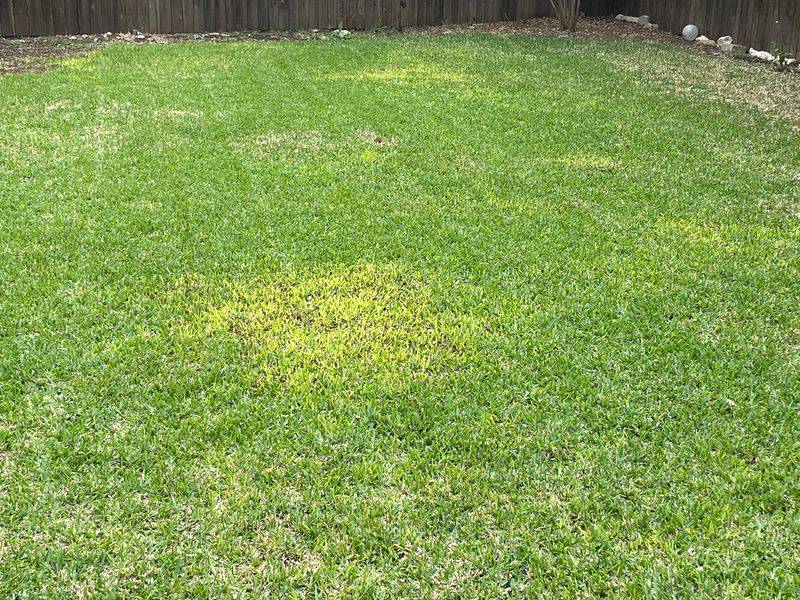
More water is not always the answer, and in Texas lawns, overwatering is a surprisingly common cause of the same yellow, stressed appearance that drought produces.
St. Augustinegrass needs consistent moisture, but it also needs oxygen in the root zone, and soil that stays saturated for too long deprives roots of the air they need to function properly.
Waterlogged soil creates conditions where roots struggle to absorb nutrients, even when those nutrients are present. Grass can yellow and thin out even though the sprinklers run regularly, which makes the problem especially confusing.
Low spots in the yard, areas near downspouts, and zones with heavy clay soil are common places where excess moisture accumulates and causes turf stress in Texas residential landscapes.
Checking soil moisture before each irrigation cycle rather than running on a fixed schedule helps avoid overwatering. Pushing a screwdriver or soil probe into the ground is a quick way to feel whether the soil is already moist several inches down.
If the tool slides in easily and the soil feels wet, the lawn likely does not need water yet.
Adjusting sprinkler run times, fixing drainage issues, and letting the lawn dry out between waterings can often bring overwatered St. Augustinegrass back to a healthier color without any additional inputs.
7. Poor Soil Or Compaction Limiting Root Growth
Heavy clay soils are common across much of Texas, and they create a particular kind of challenge for St. Augustinegrass that does not always get the attention it deserves.
When soil becomes compacted, whether from foot traffic, heavy equipment, or simply years of settling in dense clay, roots cannot grow deeply or spread freely enough to support healthy turf.
Shallow roots mean less access to water and nutrients stored deeper in the soil profile. During hot Texas summers, grass with a weak or restricted root system shows stress much faster than grass growing in loose, well-aerated soil.
The result is yellowing, thinning turf that looks drought-stressed even when the sprinklers run on schedule.
Compaction tends to be worst in high-traffic areas, along paths people walk regularly, near gates, or in spots where vehicles have driven or parked on the lawn.
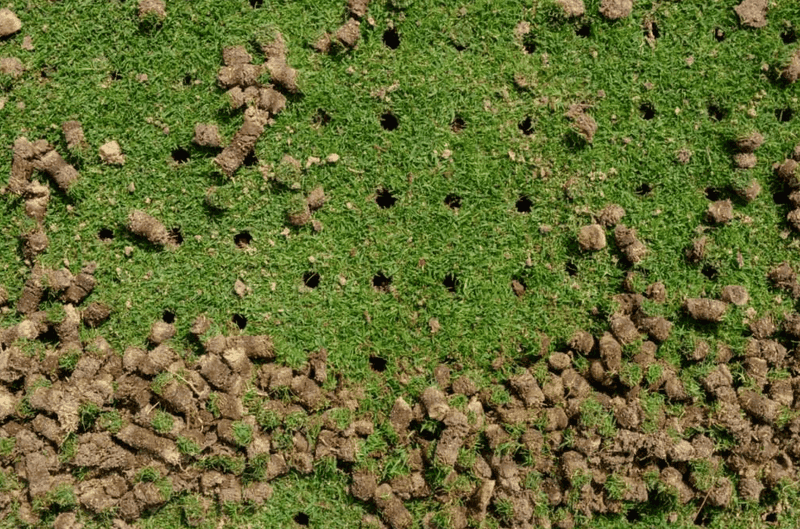
Core aeration, which involves removing small plugs of soil to open up the profile, is one of the most practical tools for addressing compaction in Texas lawns.
Topdressing with compost after aeration can gradually improve soil structure over time.
Addressing soil quality is a longer-term investment, but it often explains why some sections of a Texas lawn consistently underperform compared to areas with better soil conditions.
8. Excess Fertilizer Making Problems Worse
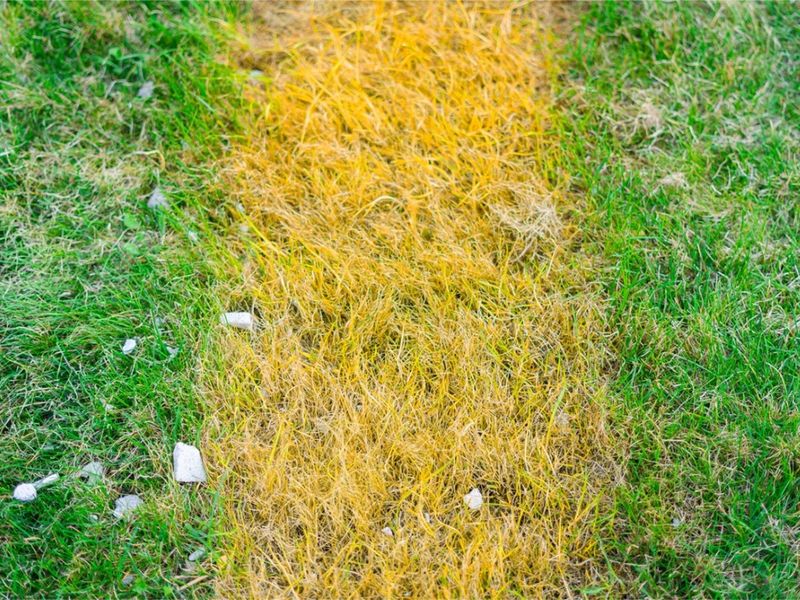
Reaching for a bag of fertilizer when the lawn looks yellow feels like a logical response, but applying too much or using the wrong product at the wrong time can turn a mild problem into a much more visible one.
Fertilizer burn happens when nitrogen concentration in the soil becomes high enough to pull moisture out of grass roots through osmosis, leaving behind yellowed or scorched-looking streaks and patches.
In Texas, the risk of fertilizer burn is higher during hot, dry stretches when soil moisture is already low and grass is under heat stress.
Granular fertilizer applied without adequate watering afterward, or spread unevenly by a clogged spreader, can leave concentrated pockets of nitrogen that scorch the turf.
Fast-release nitrogen products carry more burn risk than slow-release formulas, especially in summer conditions.
Timing matters too. Fertilizing St. Augustinegrass during late summer or early fall in Texas can push new growth that is vulnerable to large patch and other fungal diseases, or that gets caught by an early cold snap.
Reading soil test results before fertilizing helps avoid applying nutrients the lawn does not actually need.
When in doubt, a lighter application of a slow-release product, followed by thorough irrigation, is a more cautious and often more effective approach for Texas lawns.
9. Shade Stress Thinning The Lawn
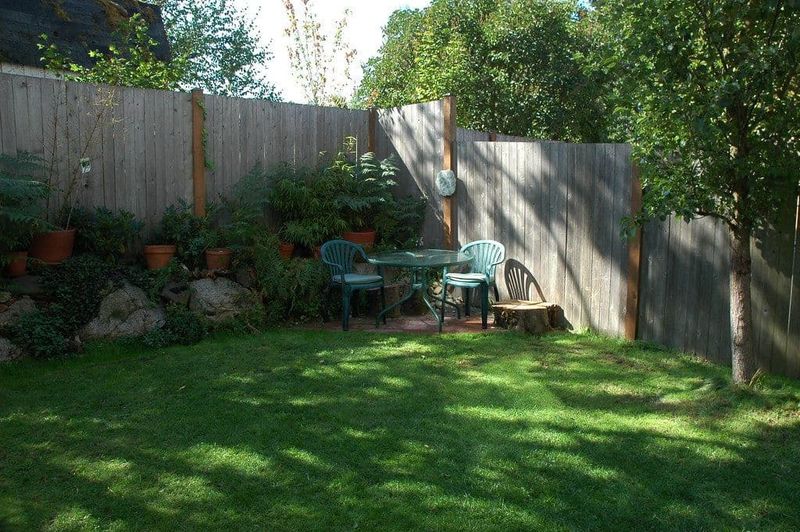
St. Augustinegrass is considered one of the more shade-tolerant warm-season grasses available to Texas homeowners, but even this tough turf has its limits when light becomes too scarce.
Under dense tree canopies, along shaded fence lines, or in north-facing side yards, the grass may gradually thin, pale, and develop a yellowish look that mimics drought or disease.
Shade stress reduces the plant’s ability to photosynthesize efficiently, which slows growth and weakens the overall turf density over time.
Grass in shaded areas also tends to stay damp longer after rain or irrigation, which raises the risk of fungal problems like gray leaf spot layering on top of the shade stress.
The combination can make a shaded Texas lawn look rough in a hurry.
Selective tree trimming to raise the canopy and let in more filtered light can make a meaningful difference for shaded turf. Reducing foot traffic in thin, shaded areas gives struggling grass a better chance to recover.
Adjusting irrigation so shaded zones receive less water than sunny areas helps prevent excess moisture buildup.
In spots where shade is simply too dense for any turfgrass to thrive, considering a shade-tolerant groundcover or mulched bed may be a more practical long-term solution for that section of a Texas yard.
10. Uneven Irrigation Leaving Dry And Wet Spots
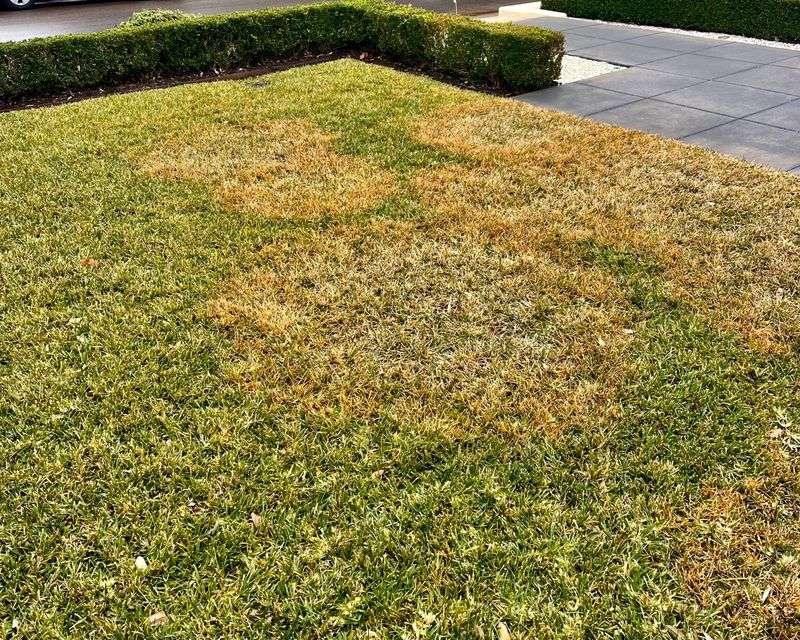
A sprinkler system running on schedule does not automatically mean every part of the lawn is getting the same amount of water.
Clogged nozzles, misaligned heads, broken risers, and overlapping zones that leave gaps in coverage are all common issues in Texas residential irrigation systems, and they can create a patchwork of dry and wet areas that looks confusing from the curb.
Dry spots from poor coverage will yellow and go dormant faster during Texas heat, while areas receiving too much water from overlapping heads may develop disease or root stress.
Both problems can look like drought at first glance, but the pattern of damage often reveals the real cause.
Dry spots tend to follow the shape of the irrigation gap rather than spreading organically the way pest or disease damage does.
Running each irrigation zone manually while watching the coverage pattern is one of the simplest ways to find problems in a Texas sprinkler system.
Catch cups or tuna cans placed around the lawn can measure how much water each area actually receives during a cycle.
Adjusting head angles, clearing clogged nozzles, and fixing broken components can correct uneven distribution quickly.
Catching irrigation inefficiencies early helps protect St. Augustinegrass from unnecessary stress during the hottest and driest parts of the Texas growing season.