7 Venomous Insects Every Pennsylvania Resident Should Know About
Late summer and early fall are prime time for unpleasant surprises in Pennsylvania yards. A lawn mower rolls over a hidden hole in the ground, and suddenly a cloud of angry stingers pours out. A child reaches for a colorful caterpillar on a leaf and ends up in tears.
Pennsylvania is home to a surprising number of venomous insects. Some build nests underground, in walls, or high in the trees.
Others hide in plain sight on garden plants and shrubs, protected by spines that deliver a painful sting. Many are more defensive this time of year, guarding nests that have grown large over the summer.
Most of these insects only strike when they feel threatened. Still, knowing what they look like and where they hang out can save you a lot of pain. A little awareness can make your time outdoors much safer.
1. Yellowjackets
Ever had a can of soda turn into a wasp trap at a picnic? Yellowjackets are often the culprits. They are the most common cause of stings in Pennsylvania, and they love sweet drinks and meaty snacks.
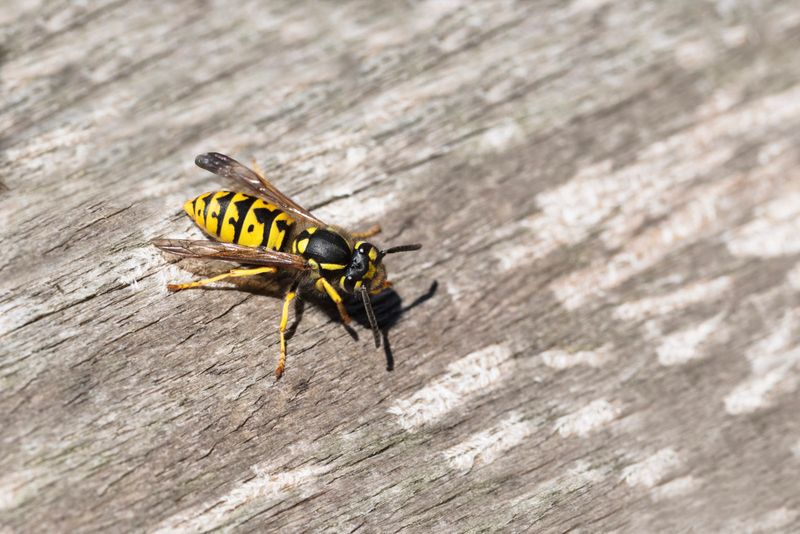
These wasps are smaller than most people expect. They have bright yellow and black bands and smooth, shiny bodies. Many folks mistake them for honey bees, but yellowjackets are not fuzzy at all.
Late summer and fall are their busiest times. By August, a single colony can hold thousands of workers. Food gets harder to find, so the wasps get bolder and crankier around people.
Nests are often hidden underground in old rodent holes. Some colonies also build inside wall voids of houses and sheds. You might not know a nest is there until you step near it.
Mowing and digging are risky jobs in yellowjacket season. The vibrations from a mower can send a swarm out of the ground in seconds. Walk your yard first and look for wasps flying in and out of one spot.
Unlike honey bees, yellowjackets can sting again and again. Their stingers are smooth, so they do not get stuck in your skin. A disturbed nest can lead to many stings very quickly.
If you get stung, wash the spot with soap and water. Then place a cold pack on it to ease the swelling. Watch for signs of an allergic reaction, like trouble breathing or swelling in the face.
Outdoors, keep drinks covered and use cups with lids. Throw away food scraps right away. Small habits like these help keep these pests from joining your party.
2. Bald-Faced Hornets
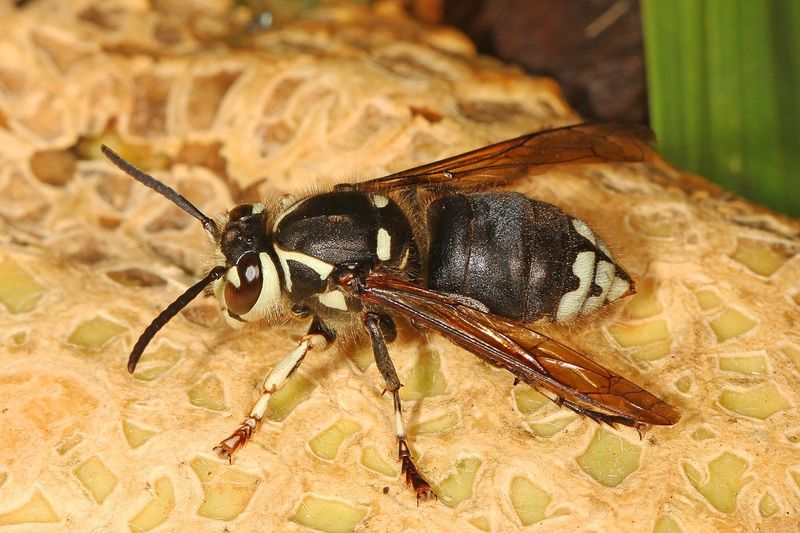
Hanging from a branch like a giant gray lantern, a bald-faced hornet nest is hard to forget. Some of these papery homes grow bigger than a basketball. Many people spot them only after the leaves fall in autumn.
Here is a fun surprise. Bald-faced hornets are not true hornets at all. They are actually a kind of yellowjacket with a different color scheme.
Their bodies are mostly black with white or ivory markings. The white patch on their face gives them their name. They are a bit larger than common yellowjackets and look sleek and serious.
Your Pennsylvania Garden Changes Every Week. Your Plan Should Too.
Gardening in Pennsylvania changes quickly throughout the season. Every Friday you’ll receive a simple weekly plan showing exactly what to plant, prune, fertilize, harvest, and protect so you never miss the right timing.
The workers make their nests by chewing wood into a pulp. They mix it with saliva and spread it out in thin layers. The result is a sturdy paper shell that keeps the colony safe and dry.
You can find these nests in trees, shrubs, and under the eaves of houses. Some are high up, while others sit low in bushes near walkways. Trimming hedges without checking first is a common way people get stung.
Defense is their top priority. Guards watch the nest closely and will charge at anything that seems like a threat. Each hornet can sting several times, and the stings are quite painful.
Spotted a nest? Stay at least a few yards away and keep kids and pets back. Do not throw rocks at it or spray it with a hose.
For nests close to your home, call a pest control expert. If the nest is far from where people walk, you can simply leave it alone. Cold weather ends the colony, and the old nest will not be used again.
3. European Hornets
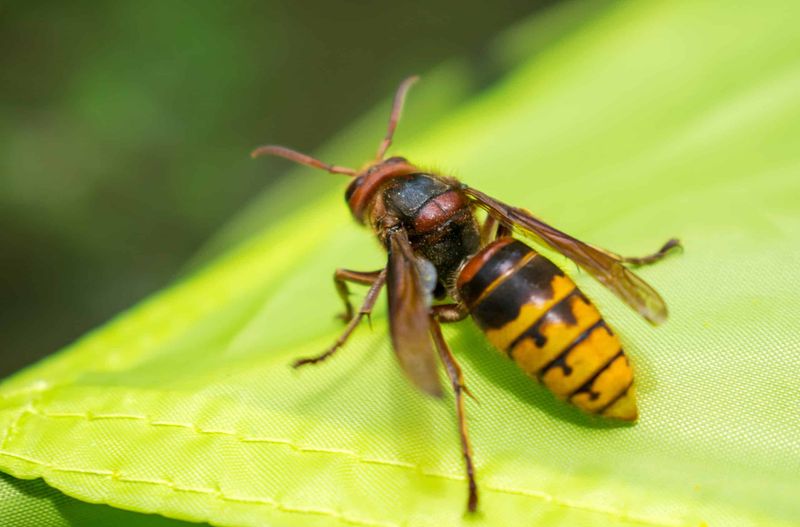
Most wasps head home when the sun goes down. The European hornet has other plans. It is one of the few stinging insects that may buzz around after dark.
Its story starts across the ocean. People brought it to North America by accident in the 1800s. Over time, it spread and became common in Pennsylvania.
Size is the first thing you will notice. These hornets can grow over an inch long. They have brown and yellow bodies with reddish-brown heads, which makes them look a little scary.
Hollow trees are a favorite place to nest. They also move into wall cavities, attics, and old barns. A nest inside a wall might make a soft humming or crunching sound.
On warm nights, they are drawn to bright lights. You might hear them bumping against a lit window or porch lamp. Switching to yellow bug lights can make your home less attractive to them.
Believe it or not, these hornets are usually calmer than yellowjackets. They spend much of their time hunting other insects, like flies and grasshoppers. They also strip bark from shrubs, especially lilacs, to build their nests.
That does not mean they are harmless. A European hornet will sting if it feels threatened or if its nest is disturbed. Because of its size, the sting can hurt more than a smaller wasp’s.
Keep screens on windows and doors in good shape. Turn off outdoor lights you do not need at night. If you find a nest in your walls, do not seal the hole, since the hornets may chew their way inside your house instead.
4. Paper Wasps
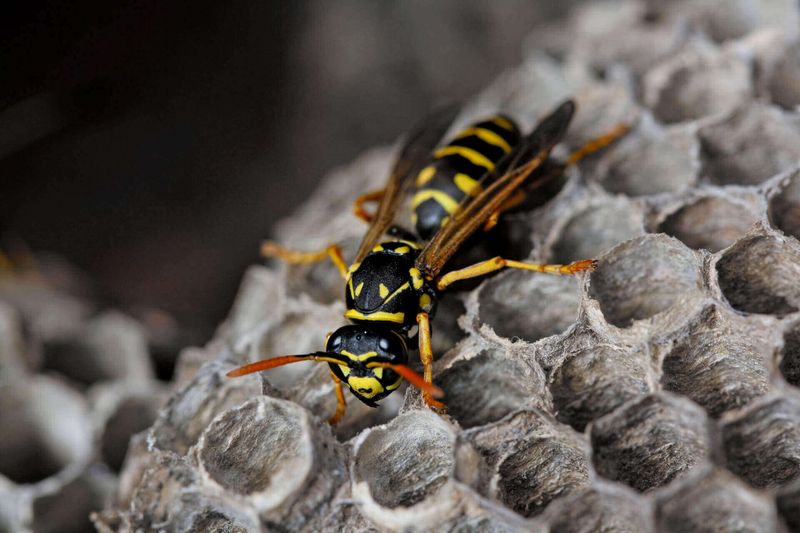
Look up the next time you sit on your porch. There is a good chance a paper wasp nest is hanging nearby. These insects are master builders, and they love a sheltered spot.
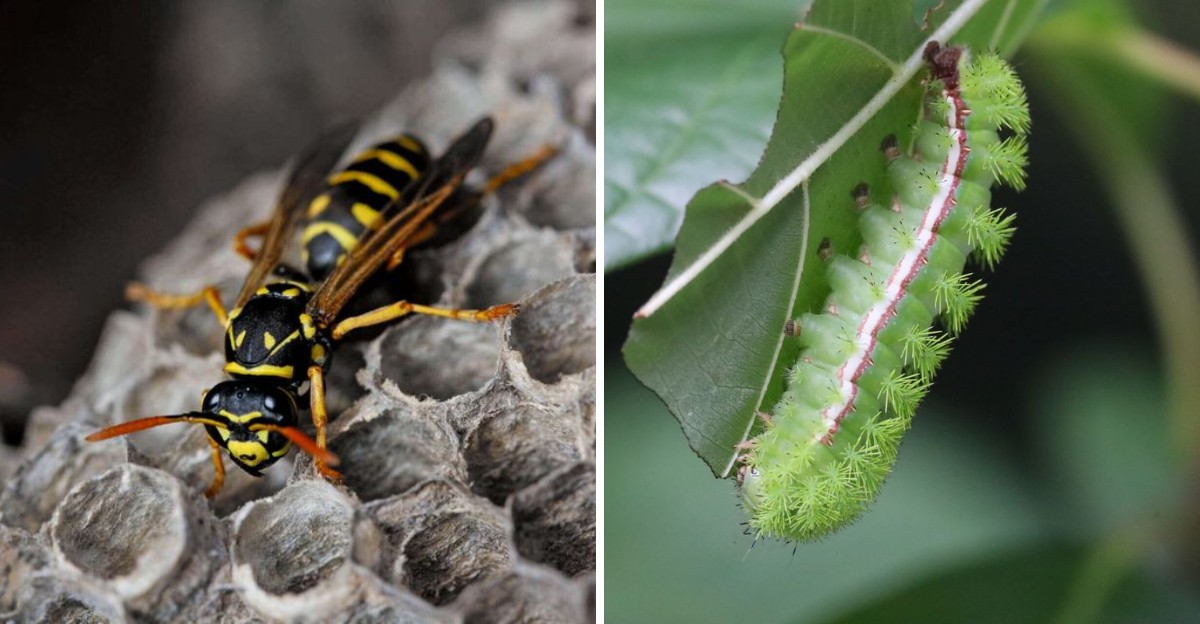
Their nests look like little upside-down umbrellas. Each one has open cells that look like a honeycomb. Unlike hornet nests, there is no outer covering, so you can see the wasps at work.
Paper wasps have long, thin bodies and legs that dangle when they fly. Most are brown or reddish with yellow markings. They move slowly and gracefully compared to darting yellowjackets.
Favorite building spots include eaves, porch ceilings, and window frames. They also tuck nests under outdoor furniture, grills, and playground equipment. That makes surprise stings more likely when you move things around.
Good news first. Paper wasps are less aggressive than yellowjackets and usually leave people alone. They even help your garden by eating caterpillars that munch on plants.
Still, they will defend their home. Bump a nest, and the wasps will fly out ready to sting. Their stings are sharp and can swell up for a day or two.
Early spring is the best time to check for new nests. At that point, a single queen is starting out, and the nest is tiny. Knocking it down with a long broom is much easier than dealing with a full colony later.
Before you sit in a patio chair or open a grill, take a quick peek underneath. Shake out cushions and covers too. That small step can spare you a painful surprise on a sunny afternoon.
5. Honey Bees
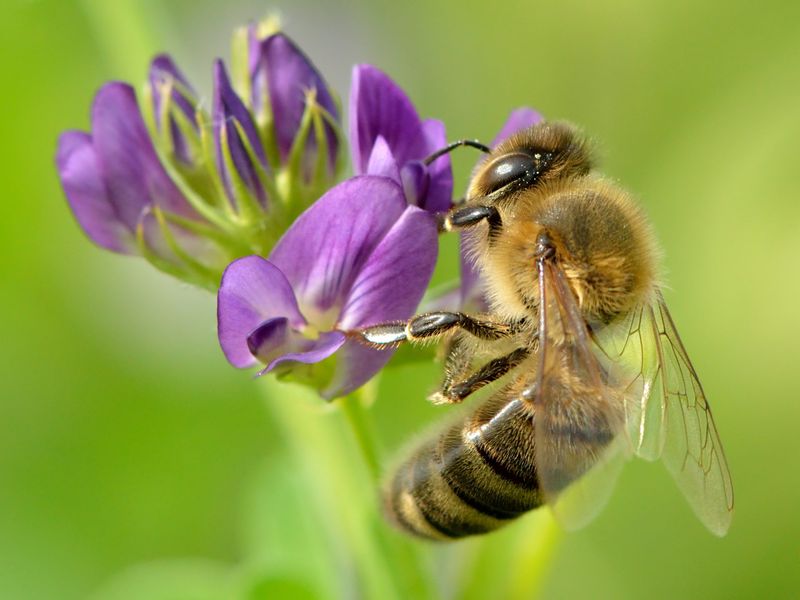
Pennsylvania actually chose the honey bee as its official state insect back in 1974. That shows how much these busy workers matter. They pollinate apples, pumpkins, and many other crops grown across the state.
Honey bees are fuzzy and golden brown with dark stripes. They are smaller and rounder than most wasps. You will often see them hopping from flower to flower in gardens and fields.
For the most part, they are peaceful. A honey bee usually stings only when it feels threatened. Stepping on one barefoot in the clover is a classic way to get stung.
Their sting is special for one big reason. The stinger has tiny barbs, so it gets stuck in your skin. A honey bee can sting only once, and the bee does not survive afterward.
When the stinger stays behind, it keeps pumping venom for a short time. Speed matters more than method. Scrape it out with a fingernail or a credit card, or simply pull it out as fast as you can.
After that, wash the area and apply ice. A paste of baking soda and water may help calm the itch. Some swelling and redness are normal for a day or so.
Watch closely for signs of an allergy. Hives, a swollen throat, or dizziness mean you need medical help right away. People with known allergies should carry their prescribed epinephrine pen.
Want fewer stings? Wear shoes when walking in grassy areas. If a swarm settles on a tree in your yard, call a local beekeeper, who may gladly move it to a safe new home.
6. Saddleback Caterpillars
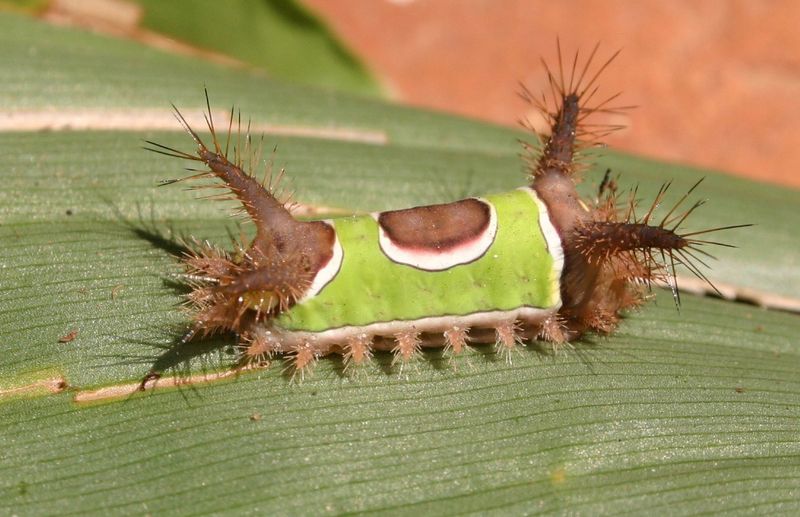
Not every stinging creature has wings. The saddleback caterpillar looks like a tiny cartoon character, but brushing against one is no joke. Gardeners often learn about it the hard way.
Its look is easy to recognize once you know it. The caterpillar has a bright green patch on its back, like a little saddle blanket. In the middle sits a brown spot that looks like a seat.
Both ends of its body are brown and covered with fleshy horns. Those horns bristle with sharp, hollow spines. Each spine holds venom that releases when it touches your skin.
In Pennsylvania, these caterpillars show up mostly in the southern part of the state. They are usually less than an inch long. You might find them on the undersides of leaves on trees, shrubs, corn, and garden plants.
Touching one causes a burning, stinging pain. Some people get swelling, redness, or a rash that lasts for hours. A few may feel sick to their stomach or get a headache.
Here is a handy trick if you get stung. Press a piece of tape over the spot and pull it off to remove broken spines. Repeat a few times, then wash with soap and water and use a cold pack.
Kids are curious, and these bugs look neat. Teach them to look but never touch any spiny caterpillar. A good rule is that if it looks fuzzy or spiky, it is best left alone.
When pulling weeds or picking vegetables in late summer, wear gloves and long sleeves. Check leaves before you grab them. Your hands will thank you.
7. Io Moth Caterpillars
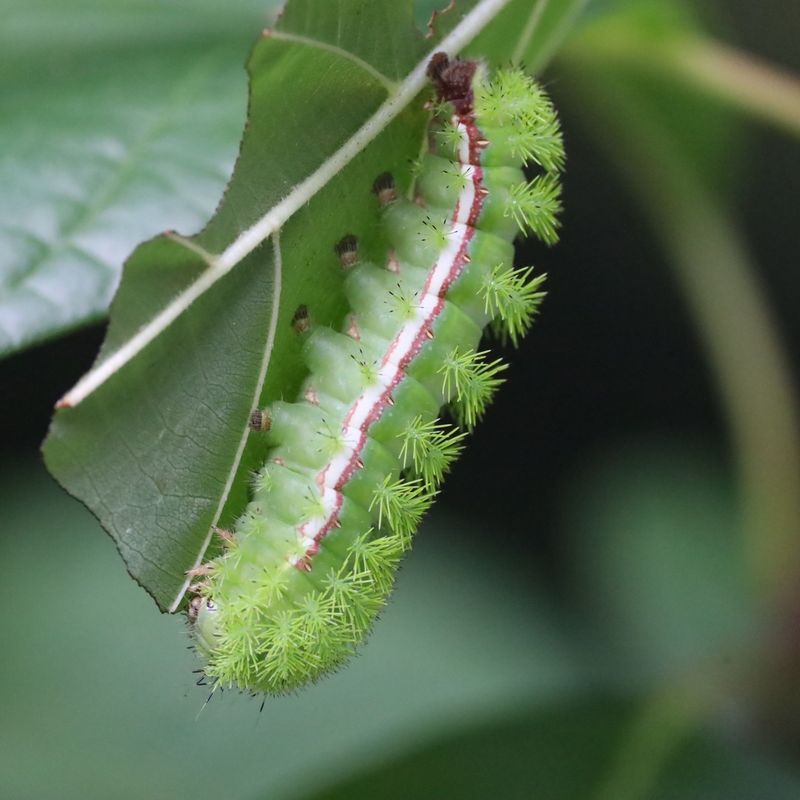
Picture-perfect from a distance, the Io moth caterpillar is a lesson in looking before you touch. Its bright green body seems almost friendly. Up close, though, it is armed and ready.
A red and white stripe runs along each side of its body. Clusters of branched spines cover its back like tiny green bushes. Those spines are connected to venom glands just under the skin.
The moment you brush against one, you will feel it. The pain is quick and sharp, often compared to a bee sting. Itching, redness, and small welts can follow for a while.
Io caterpillars are not picky eaters. They munch on the leaves of maples, willows, cherry trees, roses, and many other plants. That means they can turn up almost anywhere in a Pennsylvania yard.
Young caterpillars often feed in groups. If you find one, look around for others nearby. Older ones tend to wander off on their own as they grow larger.
Here is a cool fact. The adult Io moth has big spots on its back wings that look like eyes. When a bird gets too close, the moth flashes those spots to scare it away.
Late summer is prime time for these caterpillars. Wear gloves when trimming shrubs, raking, or working around trees. Long sleeves add an extra layer of protection for your arms.
If you do get stung, use tape to lift out any spines. Wash the area gently and apply ice to ease the burn. An over-the-counter anti-itch cream can help you feel better while it heals.