Want Amaryllis Blooms by Christmas in Michigan? This Is When to Pot Up the Bulb
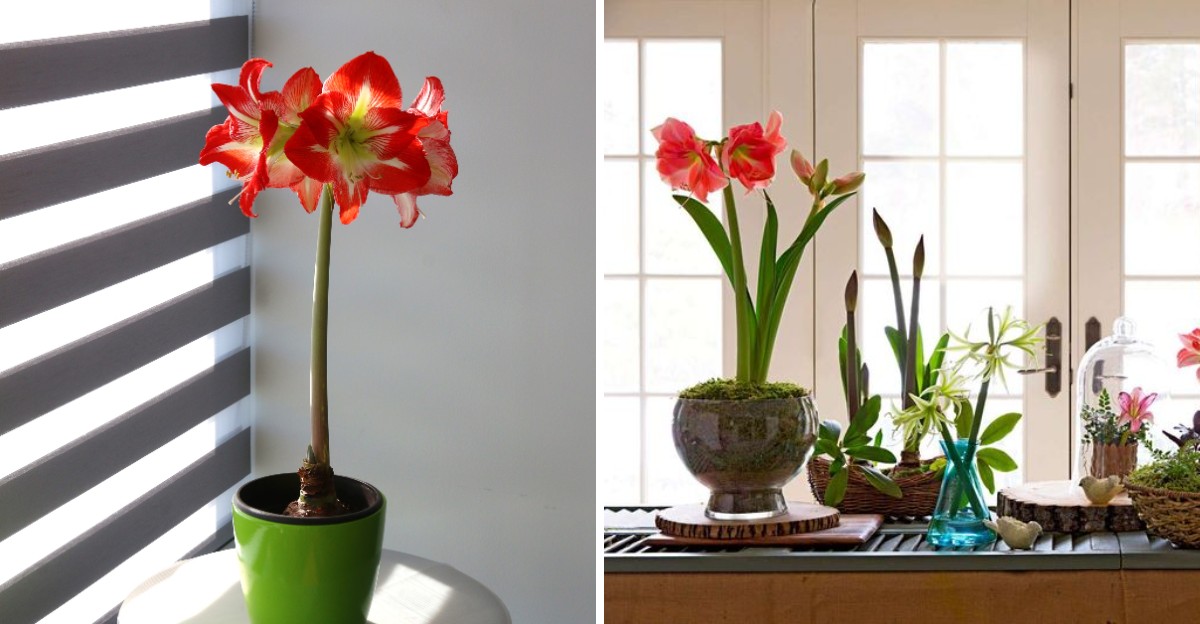
A single bulb the size of a softball can push up a flower stalk nearly two feet tall, with no garden and no sunshine outside. All it asks for is a pot, a little water, and a warm room. I still think that is one of the best tricks in the plant world.
The bloom itself looks like a giant trumpet in red, white, pink, or striped candy colors. Each stalk often carries four or more of these flowers at once. Some bulbs send up a second stalk a few weeks later, which feels like a bonus gift.
I know how frustrating it can be when a holiday plant opens a week after the party. In Michigan, short gray days and chilly windowsills can slow things down even more. Timing really is the whole game here.
1. That Big Amaryllis Bulb Runs on Its Own Countdown Clock
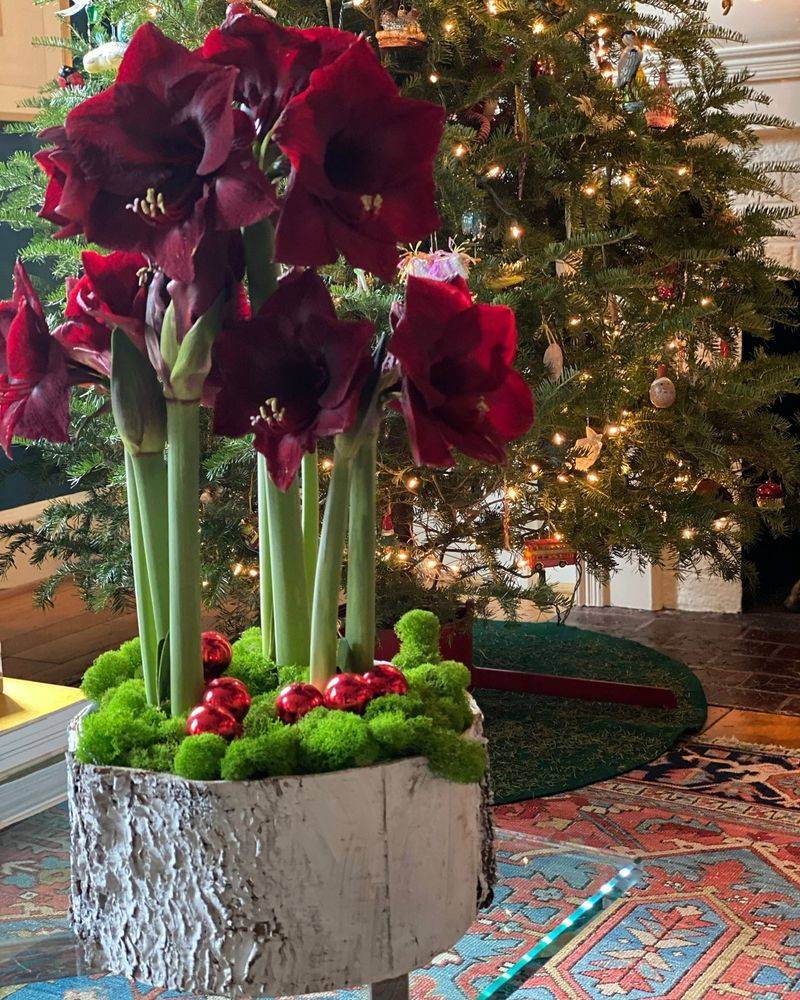
A healthy amaryllis bulb comes packed with a flower bud already tucked inside. The grower did the hard work months ago, so your job is mostly to wake it up at the right moment.
Once the bulb gets warmth and moisture, it starts a steady march toward blooming. Roots grow first, then a fat flower stalk pokes up from the top. That process follows a fairly predictable schedule, which is great news for planners like me.
The catch is that the schedule depends a lot on temperature and light. A bulb in a warm, bright room moves along quickly. A bulb in a cool, dim corner can drag its feet for weeks.
Most amaryllis sold for the holidays are hybrids of Hippeastrum, a plant native to Central and South America.
They are tropical at heart, so they respond to cozy indoor warmth rather than winter cold. That is why they make such easy houseplants for northern homes.
I like to treat the bulb like a slow-baking recipe. You cannot rush it much, but you can give it the right oven temperature. When you know roughly how long the countdown runs, picking a potting date becomes simple math.
Different varieties also run on slightly different clocks. Some fast types bloom in about four weeks, while others take ten. Reading the label before you plant helps you avoid a late surprise.
2. Pot Up Your Amaryllis in Late October or Early November
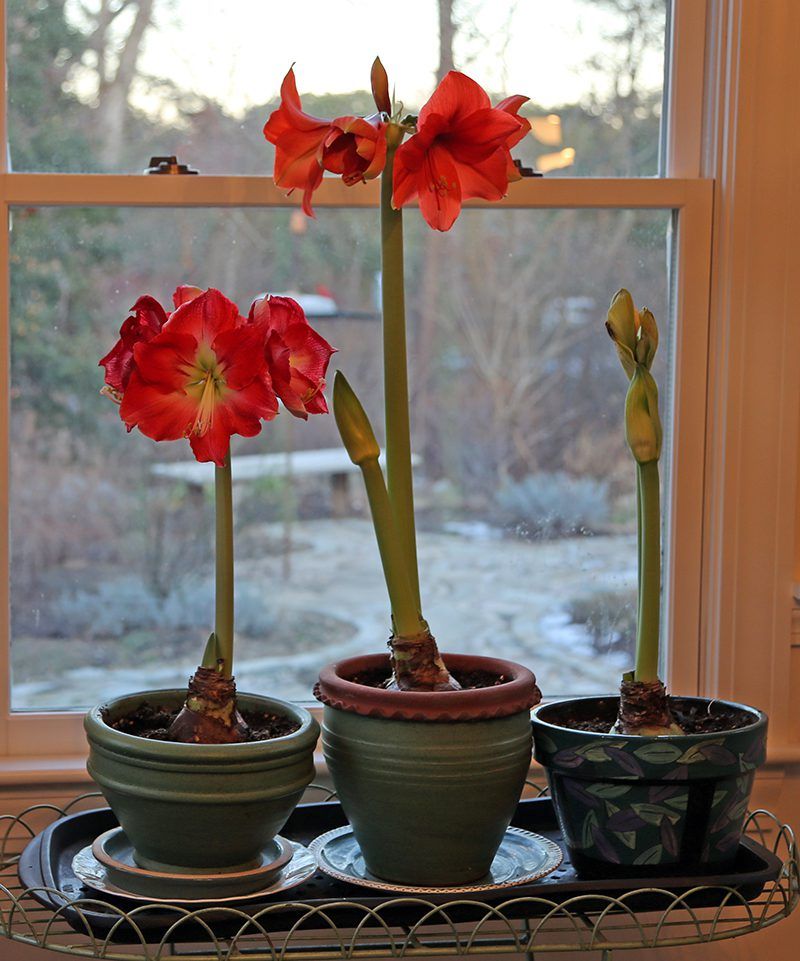
Mark your calendar for the window between late October and early November. University extension guides note that most amaryllis bloom about six to eight weeks after potting, and some take up to ten.
Counting backward from December 25, eight weeks lands right around October 30. Six weeks puts you near mid-November. If you want a little cushion, aim for the earlier end of that range. In Michigan homes, I lean toward late October.
Short November days and drafty rooms often slow growth a bit, so giving the bulb extra time makes sense. A bulb that blooms a few days before Christmas is far better than one that opens on New Year’s Day.
Want flowers across the whole season? Try staggering your planting. Pot one bulb in mid-October, another in early November, and a third two weeks later. You get a rolling show from Thanksgiving well into January.
Bulbs bought in early December can still bloom, just likely after the holiday. That is not a loss at all, since a January bloom brightens the gloomiest weeks of winter.
Keep a little note with your planting dates. Next year, you can compare how long each variety took in your house and fine-tune the timing even better.
3. Pick a Plump, Firm Amaryllis Bulb at the Garden Center
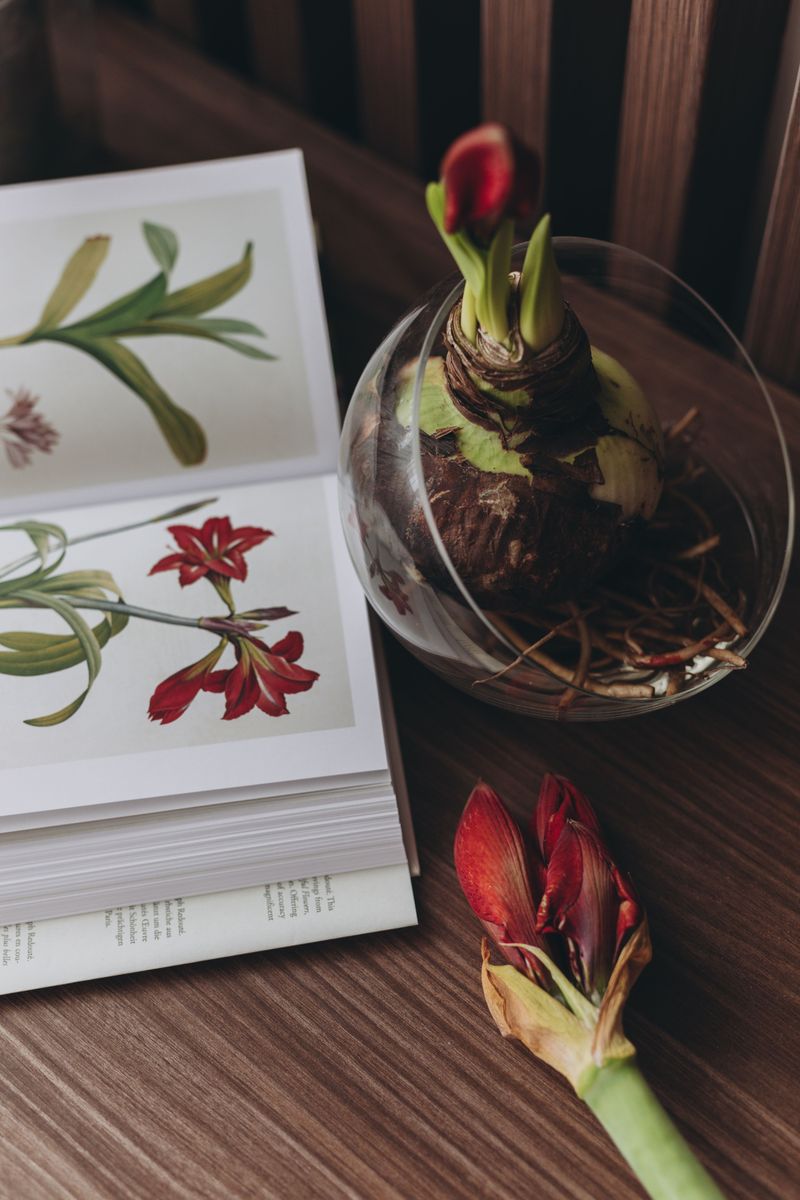
Squeeze it. Seriously, a gentle squeeze tells you more about an amaryllis bulb than the pretty photo on the box.
Look for bulbs that feel firm and heavy, a lot like a good onion. Skip any with soft spots, mold, or deep cuts. A little loose papery skin is normal, so do not worry about that.
Size matters too. Bigger bulbs usually hold more stored energy and often produce two or more flower stalks. Smaller, cheaper bulbs may give you just one stalk with fewer blooms.
Check the base for roots. Healthy roots look pale and plump rather than dried into brittle threads. If the roots are shriveled, the bulb can still grow, but it may start a bit slower.
Bulbs show up in stores from about October through January. Shopping early gives you the best selection and helps you hit that Christmas deadline.
Local nurseries in places like Grand Rapids or Ann Arbor often carry interesting varieties you will not find in big-box kits. Fun fact for your next holiday chat.
The name amaryllis is borrowed from a shepherdess in ancient Greek poetry, though the holiday bulbs belong to the Hippeastrum group. Botanists sorted that mix-up out long ago, but the old name stuck in stores.
4. A Snug Pot Keeps Amaryllis Roots Happy
Amaryllis is a little like a cat that loves a cardboard box that is barely big enough. It actually prefers tight quarters.
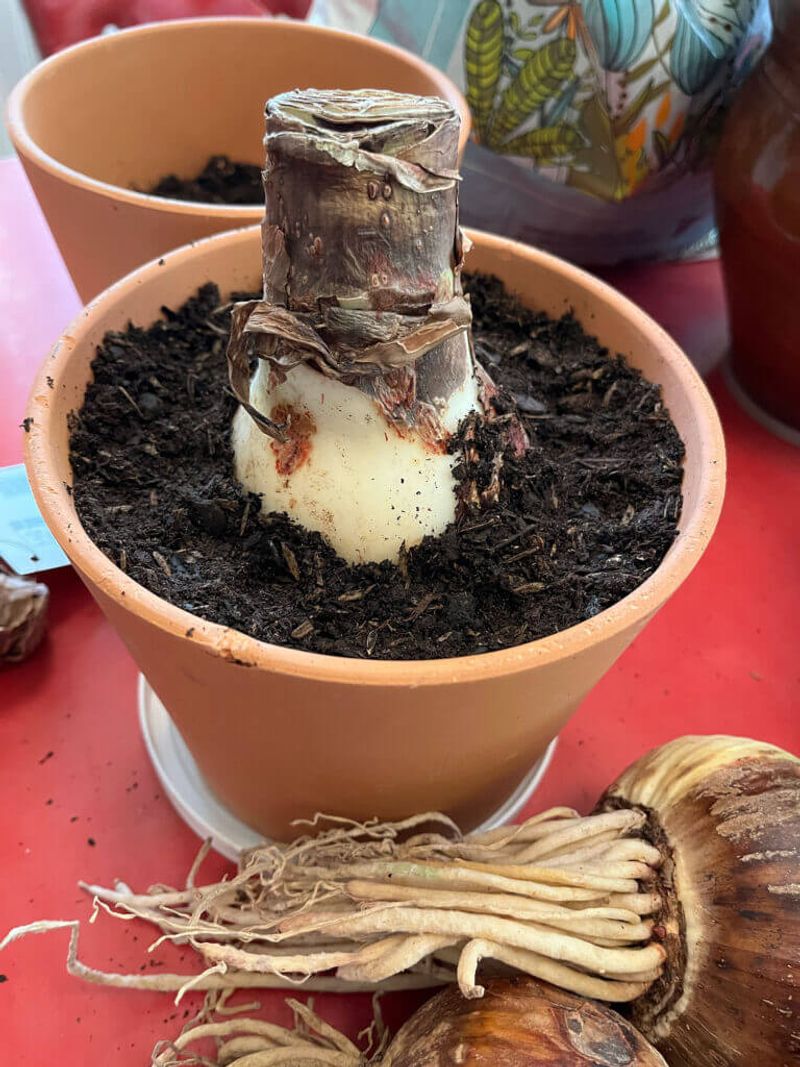
Choose a pot only about one to two inches wider than the bulb. A huge pot holds too much wet soil around the roots, and that raises the risk of rot. Make sure there is a drainage hole in the bottom.
Heavy pots, like clay or ceramic, help too. Once the tall stalk and big flowers arrive, the plant can get top-heavy and tip over. A sturdy pot keeps the whole show upright.
Fill the pot with a fresh, well-draining potting mix. Leave garden soil outside, since it packs down and stays soggy indoors. A bagged indoor mix works just fine.
Set the bulb so the top third to half sits above the soil line. That exposed shoulder helps keep the neck of the bulb dry. Gently spread the roots out, then firm the mix around them.
Before planting, some gardeners soak the roots in lukewarm water for a few hours. It can help dry roots perk up. I do it when the roots look tired, and skip it when they look healthy.
5. Easy Does It With the Watering Can After Planting Amaryllis
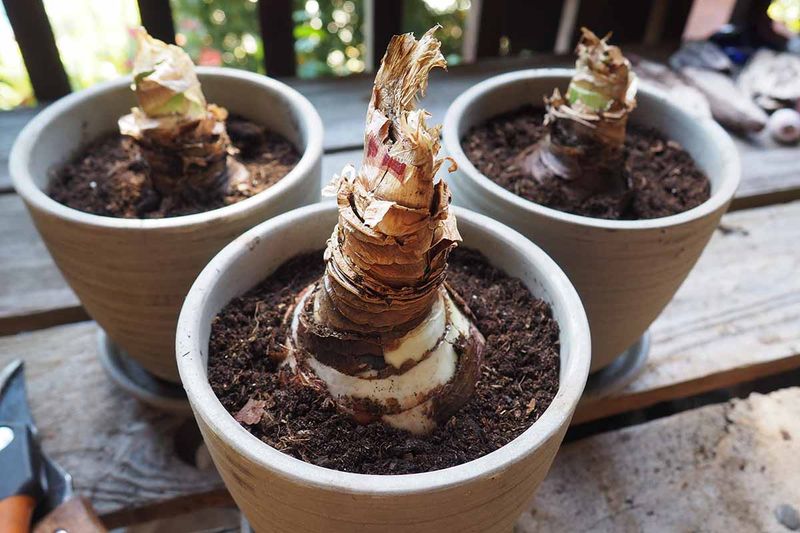
Here comes the part where most beginners slip up. After potting, give the bulb one thorough drink so the soil settles around the roots.
Then hold back. Water only lightly, and only when the top inch of soil feels dry. Without leaves, the bulb uses very little water, and soggy soil is the quickest way to rot it.
I know it feels strange to ignore a new plant. Trust the bulb, though. It is living off the food stored inside, so it does not need much from you yet.
Once you spot green growth, usually a flower stalk or leaf tips, you can water a bit more often. Aim for evenly moist soil, never a puddle. Dump any water that collects in the saucer.
Tap water is fine for most homes. If your house uses softened water, which can carry extra salt, filtered or rain water is a gentler choice.
A simple finger test beats any fixed schedule. Michigan furnaces dry indoor air fast in December, so you may notice the pot drying quicker as the season goes on. Check every few days and adjust as the plant grows.
6. Warmth and Bright Light Push That Amaryllis Stalk Upward
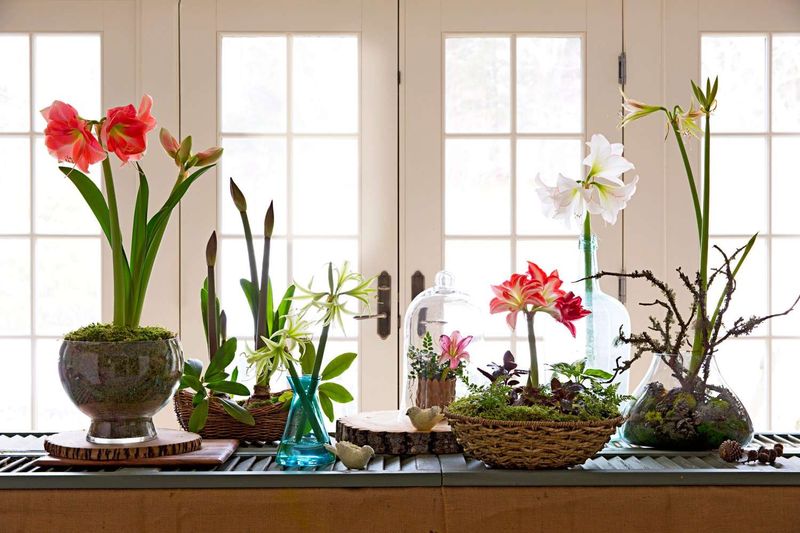
Cold windowsills are sneaky. Glass can feel chilly even when the room thermostat reads a comfy number.
Amaryllis grows fastest with soil temperatures around 70 to 75 degrees. A warm spot near, but not on top of, a heat vent can help. Some gardeners set the pot on a seedling heat mat to speed things up.
Once growth starts, give the plant the brightest light you have. A south- or west-facing window is ideal during Michigan’s short winter days. Dim light can lead to a pale, stretched stalk that flops over.
Turn the pot a quarter turn every few days. The stalk leans hard toward the window, and rotating it keeps the stem straighter. It is a tiny habit that makes a big difference.
If the stalk still gets wobbly, slide a thin bamboo stake beside it. Tie it loosely with soft twine, and it will hold those heavy blooms steady.
Running behind schedule in early December? Moving the pot to a warmer, brighter spot can nudge it along. Running ahead? A cooler room slows it down. You have more control over the timing than you might expect.
7. Cooler Rooms Help Open Amaryllis Trumpets Last Longer
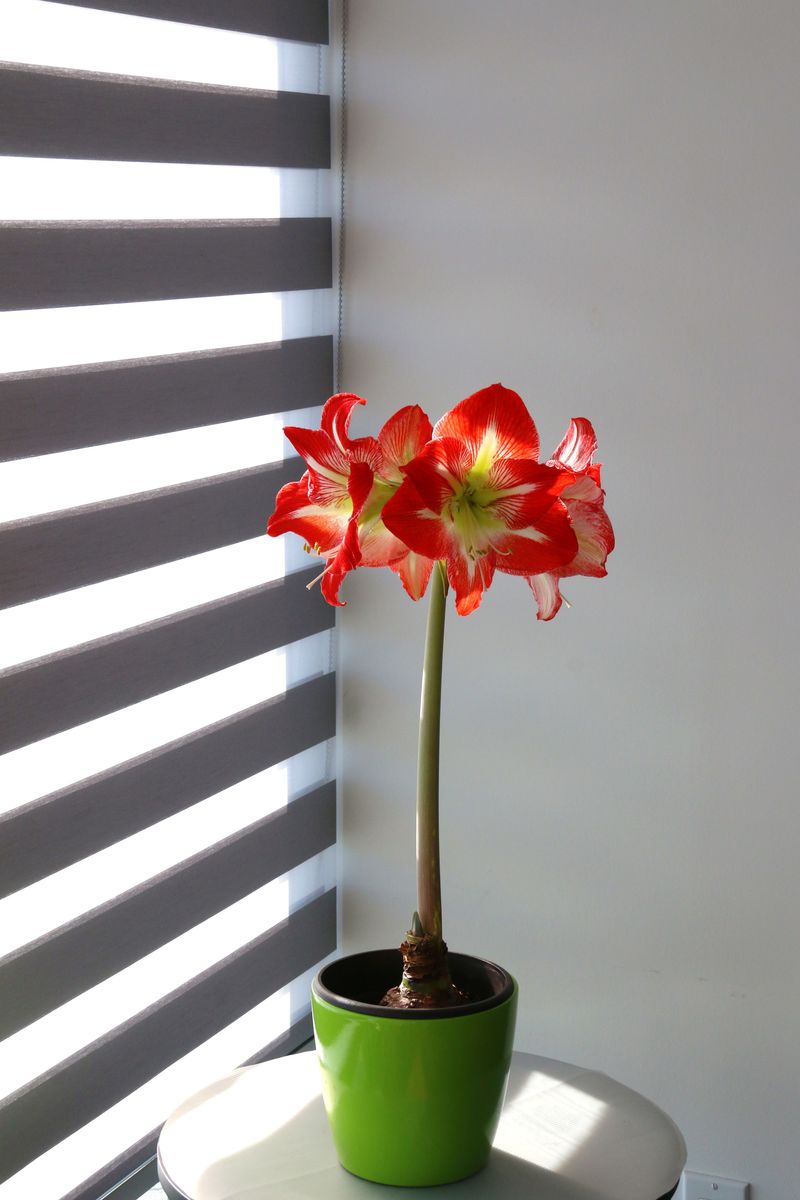
The moment those giant trumpets open, the whole room changes. I cannot help but grin every single time.
Now is the time to shift strategy. Move the plant to a slightly cooler spot, around 65 degrees or so, and out of hot direct sun. Cooler air slows the flowers down, so each one lasts longer.
Each bloom usually holds for about one to two weeks. A bulb with two stalks of four flowers each can stay colorful for several weeks. That is a lot of holiday cheer from one pot.
Keep the soil lightly moist while it blooms. Dry soil can make flowers fade faster. Got pets? Amaryllis bulbs and leaves are toxic to cats and dogs if chewed, according to the ASPCA. Set the pot on a high shelf or a table pets cannot reach.
Want a clean look for photos? Snip off the yellow pollen-covered anthers as each flower opens. It keeps pollen off your tablecloth and may stretch bloom time a little.
As individual flowers wither, pinch them off so the stalk keeps looking fresh for Christmas dinner.
8. Save Those Amaryllis Leaves for an Encore Next December
Most folks toss the bulb once the flowers fade. Please do not, because that bulb can bloom again for years.
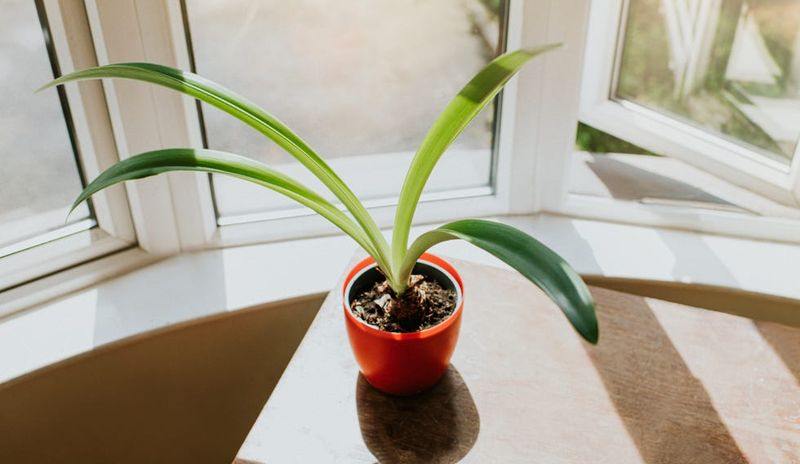
After the last flower withers, cut the stalk off an inch or two above the bulb. Leave the long green leaves in place. They act like solar panels, refilling the bulb for next season.
Keep the plant in your sunniest window and water it when the soil dries. Feed it with a balanced houseplant fertilizer about once a month.
After your last spring frost, which arrives mid to late May across much of the state, you can move the pot outdoors. Ease it into sun over a week or so. Summer light and warmth help the bulb bulk up.
Bring it back inside before the first fall frost. Then let it rest in a cool, dark spot around 50 to 55 degrees for about eight to ten weeks with little or no water. The leaves will yellow, which is normal.
To aim for Christmas again, start that rest by about late August. Wake it up with fresh soil and water in late October, and the countdown begins all over.