Warning Signs Of A Skunk Den Under Your Pennsylvania Deck
One Pennsylvania family reportedly stripped their house down to bare wood framing after a single spray indoors. Insurance usually refuses to cover that kind of cleanup, which honestly makes me wince every single time.
That smell comes from sulfur compounds called thiols, and noses can catch it up to a mile away. The oily mist can stubbornly cling to walls and floors for weeks, sometimes months, without professional help.
I used to stroll past my deck every evening without a second thought about what lived beneath it. Your own boards could be sheltering a striped houseguest right now, and the clues hide in plain sight.
Across Pennsylvania, decks offer dry, quiet cover that these pesky nighttime visitors find very hard to resist. So which signs should send you grabbing a flashlight, and which ones can you safely shrug off for now?
1. A Musky Skunk Odor Lingers Around Your Deck
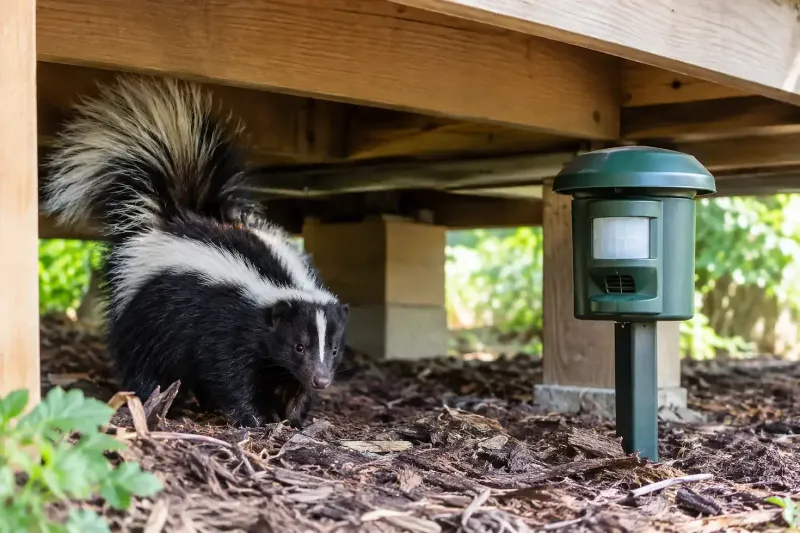
Your nose often notices a skunk den long before your eyes spot anything unusual around the yard. That sharp smell gets compared to rotten eggs mixed with burning rubber, and I think the comparison fits.
Skunk musk is an oily yellow liquid made from sulfur compounds called thiols, which humans detect in tiny amounts. Even small traces drifting from beneath your boards can stand out on a calm, still night.
Pay attention to timing, because the odor usually feels strongest around dusk and early morning when skunks stir. Those are the hours when residents leave the den to forage or return after a busy night.
A full spray is not required for the smell to build up over time near an active den. Simple daily traffic in and out of the opening can leave a musky signature on soil and wood.
Personally, I like doing a slow walk around the deck perimeter and sniffing near each gap or lattice panel. The spot where the scent feels heaviest often points toward the entrance you need to inspect later.
Be careful about confusing skunk odor with a gas leak, since both can smell strongly of sulfur. If you have any doubt, leave the area and call your gas utility right away for safety.
Once you confirm the source, resist the urge to poke around the opening with a stick or flashlight. Startled skunks may stomp and hiss before they spray, so giving them space is the smartest first move.
2. Cone Shaped Holes Dotting Your Lawn And Garden Beds
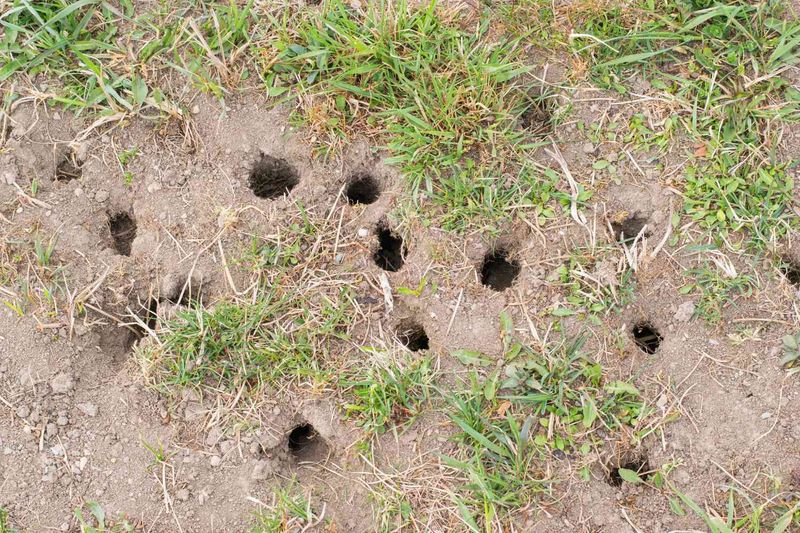
Waking up to a lawn that looks like someone attacked it with an ice cream scoop is pretty alarming. Those neat little divots usually appear overnight, and they often mean a hungry skunk went grub hunting.
Skunks dig small, cone-shaped holes roughly three to four inches wide while searching for beetle larvae and other insects. The holes tend to be shallow, which helps separate them from deeper digging by dogs or squirrels.
I have to admit, I feel a little grateful when I see them, because skunks eat plenty of lawn grubs. Those same grubs can chew grass roots, so the digging hints at a pest problem hiding underground.
Holes clustered close to your deck are worth extra attention, since skunks rarely wander far from home to eat. A tidy trail of fresh divots leading toward the boards makes a strong case for a nearby den.
You can confirm grubs by cutting a small square of sod and peeling it back to count the white larvae. Penn State Extension offers helpful guidance on when grub numbers actually justify treatment in home lawns.
Reducing grubs often reduces the digging, because the skunks simply move on to easier food somewhere else. Rake the soil back into the holes and gently press it down so the grass can recover quickly.
Try not to panic over a few holes, especially in spring and late summer when grubs feed near the surface. Steady nightly damage near the deck, however, deserves a closer look at what lives under there.
3. Fresh Burrow Openings Beneath The Deck Boards
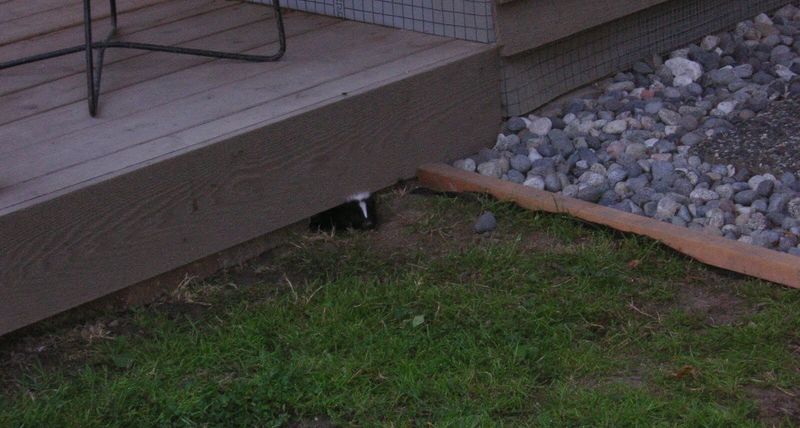
Skunks are surprisingly handy with their long front claws, and a gap under your deck looks like prime real estate. They gladly enlarge an existing opening or dig a fresh one where the ground feels soft.
Look for rounded holes roughly four to eight inches across, often with loose dirt pushed outward from the entrance. That fan of fresh soil is a giveaway, because it shows something has been actively digging from inside.
Sloped spots near the deck footings are favorites, since they drain well and stay drier during heavy spring rain. Skunks also move into abandoned burrows dug by groundhogs, so an old hole can suddenly get new tenants.
One easy trick I love involves stuffing loose newspaper or crumpled leaves into the opening late in the evening. If the plug gets pushed aside by morning, something is coming and going through that hole regularly.
Timing matters a lot before you seal anything, because mother skunks often give birth under decks in May or June. Closing an entrance during that season can trap helpless babies inside, which creates a far bigger problem.
Wait until late summer, when the young skunks are old enough to leave with their mother each night. Then you can install a one-way door or call a licensed wildlife control operator for help.
Afterward, bury galvanized hardware cloth about a foot deep around the deck edge with an outward bend at the bottom. Diggers hit the buried mesh and usually give up, which keeps future families from moving in.
4. Dark Skunk Droppings Scattered Near Your Patio

Nobody enjoys inspecting poop, but a quick glance at droppings near your deck can tell a surprisingly detailed story. Skunk scat often looks like small cat droppings, yet a closer look reveals some odd ingredients.
Expect dark brown or black tubes with blunt ends, about one to two inches long and fairly narrow. The width usually runs between a quarter inch and half an inch, similar to a pencil or slightly thicker.
The most interesting part is what you find inside, because skunks eat a wildly varied diet across the year. Shiny beetle shells and berry seeds frequently show up in the droppings, revealing exactly what was on the menu.
Placement offers another useful clue, since skunks tend to scatter droppings around open areas instead of one fixed spot. Raccoons, by contrast, usually return to the same latrine, so large piles point toward a different visitor.
Please skip the bare hands here, because wildlife droppings can carry parasites and bacteria you do not want. Wear disposable gloves to bag the waste, then scrub your hands thoroughly with soap and warm water afterward.
Keep kids and pets away from the area until cleanup is finished, especially curious dogs who love sniffing everything. A simple garden trowel dedicated to outdoor messes makes the job quicker and much less unpleasant.
Fresh droppings showing up near the same deck corner week after week strongly suggests someone lives close by. I like to snap a quick phone photo, which helps me track how often new droppings appear.
5. Tiny Handprint Tracks Pressed Into Soft Soil
Believe it or not, skunk tracks can look like miniature human handprints stamped into the mud beside your deck. Five toes show on both front and hind feet, and the effect feels oddly charming once you notice.
Long front claws often leave clear marks just ahead of each toe, because skunks use those claws for digging. Cats keep their claws tucked away while walking, so claw marks help rule out the neighborhood tabby.
Hind prints look longer and flatter than front prints, almost like a tiny foot with a heel pad. Skunks usually waddle along slowly, so their tracks appear close together rather than in long bounding strides.
Check soft ground along the house foundation and the damp soil right beside your deck footings. Light snow and dusty patches also hold prints beautifully, especially after a calm night without much wind.
Kids love this detective project, which involves smoothing a patch of sand or flour near the suspected entrance. Check the patch early the next morning, and fresh prints will reveal who quietly visited overnight.
Tracks leading under the boards and back out again make a strong case for an active den. Prints moving in only one direction might simply mean a skunk passed through while foraging for grubs.
Snap a photo with a coin beside the print for scale, then compare it with a trusted tracking guide. Your local extension office or the Pennsylvania Game Commission can also help confirm tricky tracks you cannot identify.
6. Skunks Waddling Across Your Yard At Dusk

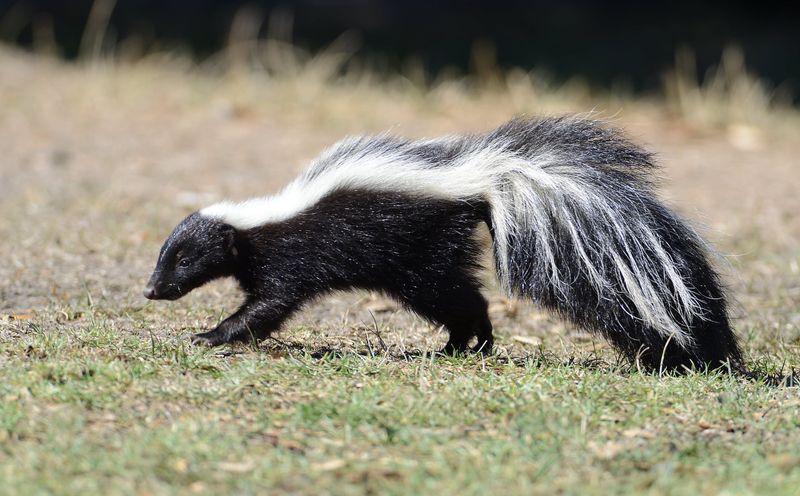
Spotting a black and white tail bobbing across the grass at twilight is a memorable moment for any gardener. One sighting may mean nothing, but repeated visits around the same time hint at a nearby home.
Striped skunks are mostly nocturnal, so they leave their dens around dusk and return before or near sunrise. Adults are roughly the size of a house cat, with bold white stripes running down their backs.
Late winter brings a noticeable bump in activity, because breeding season runs from late February into March in Pennsylvania. Males travel widely during those weeks, so you may see more wandering skunks even on chilly nights.
Motion-activated trail cameras are a gardener’s best friend for this sign, and many affordable models work well outdoors. Aim one at the deck edge for a week, then enjoy reviewing the late-night footage over breakfast.
A skunk wandering around in bright daylight deserves extra caution, since that behavior can sometimes signal illness like rabies. Watch for stumbling or unusual boldness, and keep your distance if the animal seems confused or unafraid.
Healthy skunks occasionally forage by day too, especially mothers feeding young, so daytime sightings alone are not proof of disease. Contact the Pennsylvania Game Commission or local animal control if a skunk behaves strangely near your home.
Keeping outdoor lights on near the deck may make the area feel less cozy for a shy nighttime resident. Bring pet food indoors at night and secure trash lids, since easy meals encourage skunks to stay longer.
7. Curious Dogs Sniffing And Digging At One Deck Corner
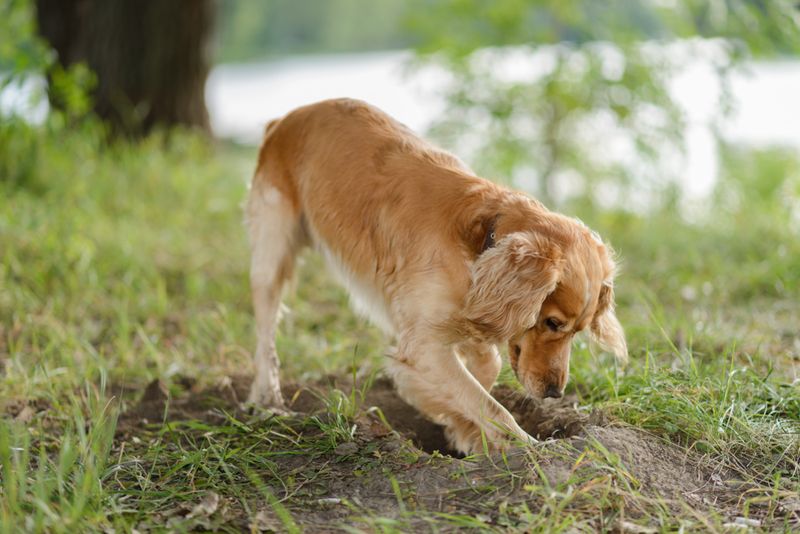
Your dog might be the best skunk detector on the property, with a nose far sharper than yours. When a pup keeps returning to one corner of the deck, something underneath is probably worth investigating.
Watch for repeated sniffing and frantic scratching at the same gap, especially during evening potty breaks outside. Cats may also crouch and stare at one spot for long stretches, which offers a quieter version of the clue.
Sadly, that curiosity often ends with a face full of musk, because startled skunks defend themselves quickly. They usually stomp their front feet and hiss first, then can aim their spray accurately over ten feet.
Rabies is another serious concern, since skunks are known carriers in Pennsylvania and can pass the virus through bites. Keep your pets current on rabies vaccines, and ask your veterinarian about boosters if needed.
During evening outings, I like using a leash and a flashlight, plus a quick clap to announce our arrival. Making some noise gives any nearby skunk time to waddle away before your dog charges in.
If your pet gets sprayed, ask your veterinarian about a trusted peroxide-based deodorizing recipe before trying anything. Keep any mixture away from the eyes, and discard leftovers, since the fizzing liquid can burst a sealed container.
Your pet’s stubborn interest is a nudge to inspect the area carefully, preferably in daylight while the skunk sleeps. Once you confirm a den, a licensed wildlife professional can help evict the family humanely and safely.