Warning Signs Of Oak Wilt Every Texas Homeowner Should Know
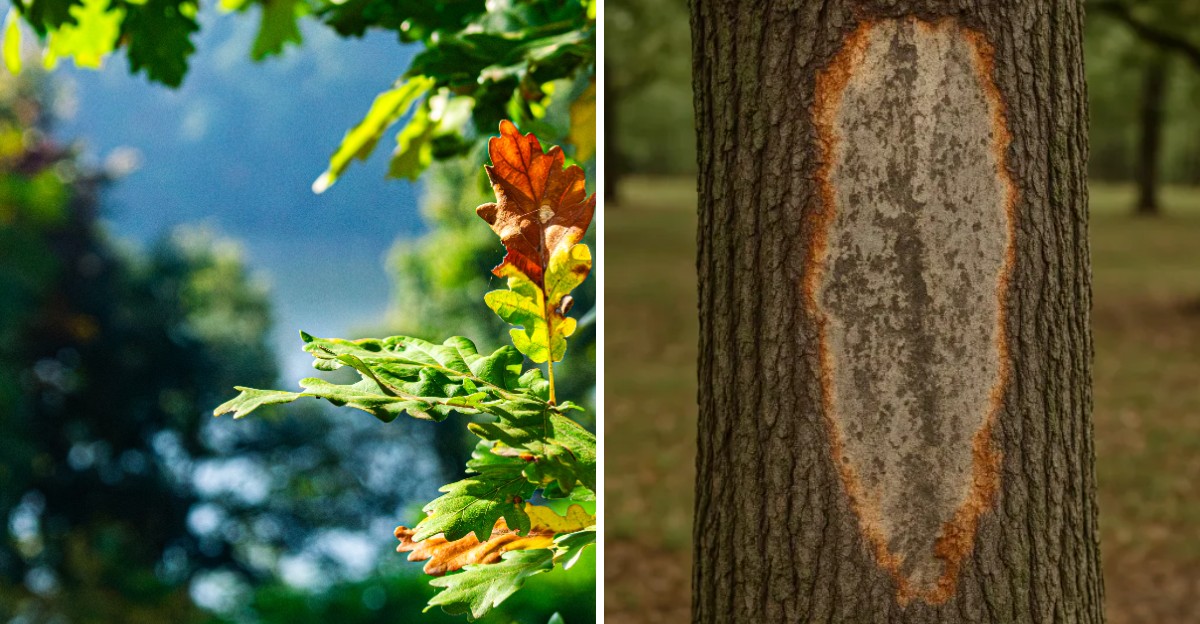
One microscopic fungus can travel underground from tree to tree, moving through roots that neighbors quietly share for decades. In central Texas, scientists have watched it spread through clusters of live oaks about seventy-five feet each year.
Texas A&M Forest Service has confirmed the problem in dozens of counties, mostly across the Hill Country region. Red oaks fall hardest, sometimes losing their full canopy within a few weeks of the first clue.
I used to walk right past brown leaves on the lawn, assuming our summer heat was the only culprit. Nobody warned me that a single leaf can carry a pattern that tells a far bigger story.
You need sharp eyes, because early clues hide in plain sight between the veins and under the bark. How many of these sneaky signals could be hiding in your own backyard right now?
1. Live Oak Leaves With Brown Veins And Green Edges
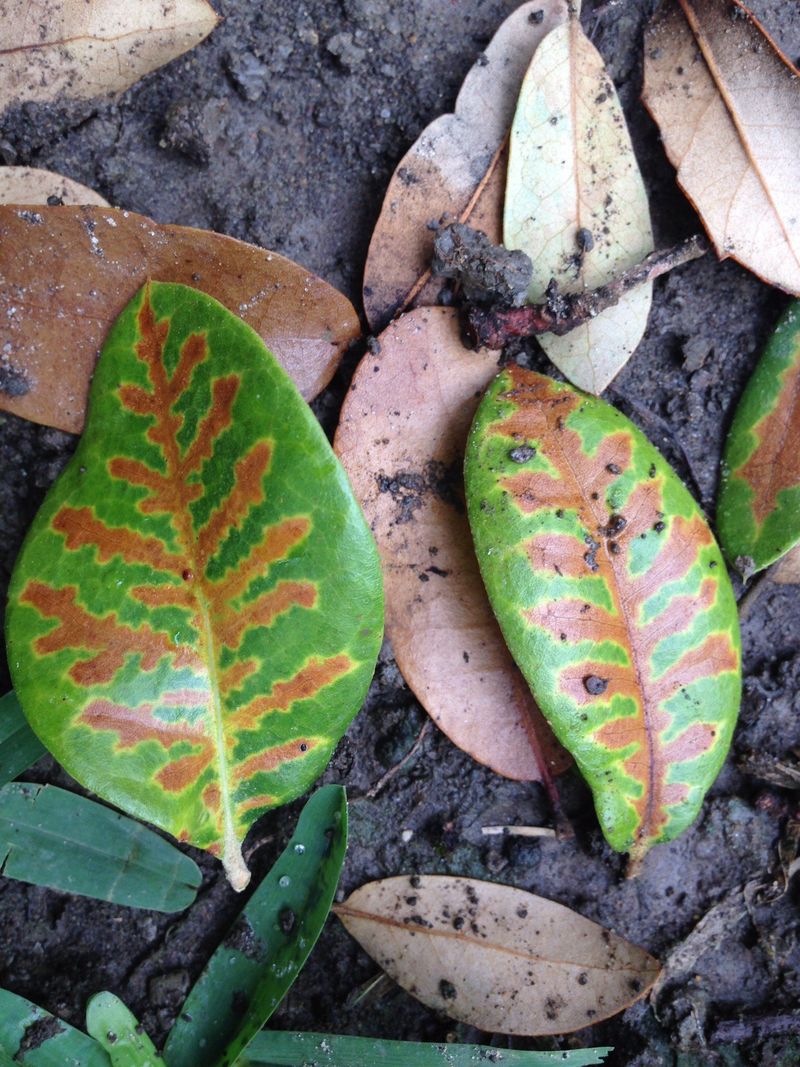
Hold a sick live oak leaf up to the light and you might spot something that looks like fishbones. Experts call this veinal necrosis, and it ranks among the most reliable clues for oak wilt in live oaks.
The veins turn yellow first, then shift to a rusty brown while the tissue between them stays green. I like how clear the contrast looks once you know it, almost like a tiny map drawn on each leaf.
Caused by the fungus Bretziella fagacearum, the disease blocks water-moving tissue inside the tree, starving leaves of moisture.
The veins show damage first because they carry the water supply that the fungus is quietly cutting off.
Grab a rake and check the ground under your trees, because fallen leaves keep this pattern for months. That makes leaf litter a handy detective tool, even long after the canopy itself looks a little thinner.
Not every brown leaf means trouble, since drought stress and sunscald can also cause browning on oak leaves. Those problems usually brown the edges or whole leaf, while oak wilt targets the veins in a distinct way.
Personally, I keep a few suspicious leaves in a zip-top bag so an arborist can examine them later. Snapping a clear photo of both sides also helps experts confirm what they are seeing much faster.
Lab testing remains the surest confirmation, and Texas A&M offers diagnostic services for homeowners who want answers.
Catching this pattern early gives you more time to protect neighboring oaks before the fungus moves along.
2. Live Oaks Dropping Leaves Out Of Season
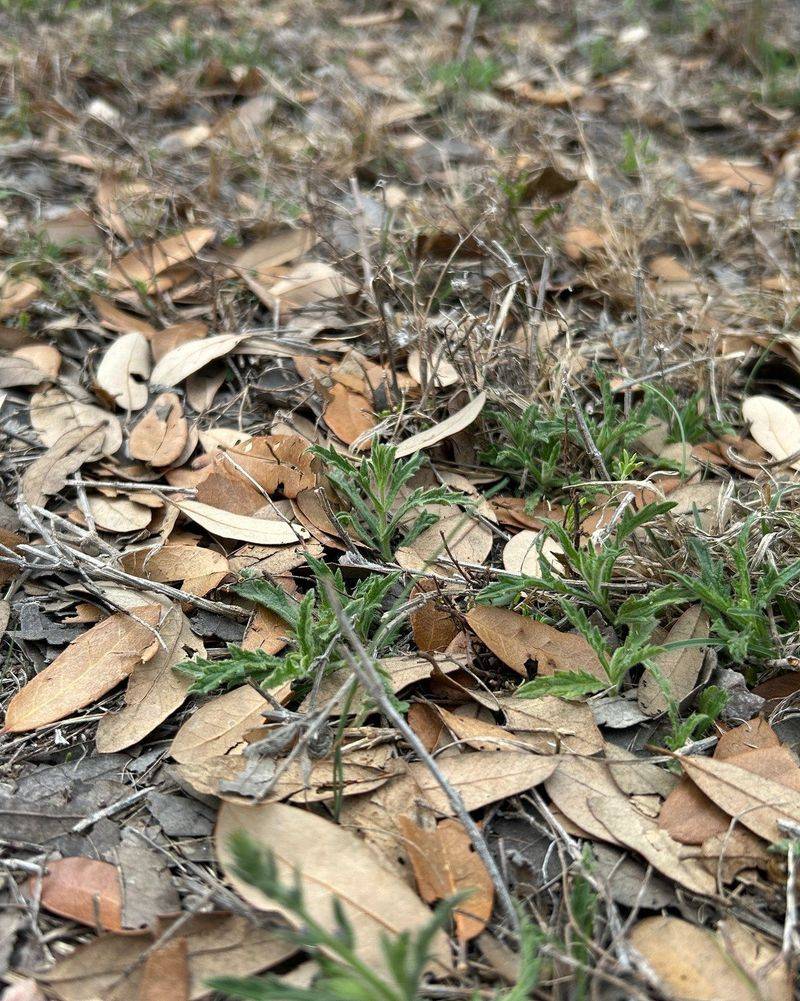
Live oaks usually swap old leaves for new ones in spring, so heavy summer leaf drop should raise eyebrows. Your lawn might look like autumn arrived early, with crunchy brown leaves piling up under a once-thick canopy.
Infected live oaks often shed leaves rapidly, and this heavy drop can continue over one to six months. Some trees decline more slowly, holding on for a year or longer while their crowns gradually thin out.
I have to admit, my first reaction to leaf drop was blaming the heat and grabbing the hose. Extra water rarely solves oak wilt, though, because the fungus plugs the tree’s plumbing from the inside.
Timing matters a lot when you are judging leaf loss, so jot down dates in a garden notebook. A quick note each week helps you notice whether the drop is slowing down or picking up speed.
Look closely at the fallen leaves too, since veinal browning on them strengthens the case for oak wilt. Leaves that dropped from drought alone usually show more even browning without that striking vein pattern.
Compare your tree with nearby oaks of the same type, because a lone tree shedding heavily stands out. If every oak on the block looks thirsty after a dry spell, weather may be the bigger factor.
Call a certified arborist when heavy leaf drop shows up outside spring, especially near other struggling oaks. Early action gives treatment options like fungicide injections a much better chance of helping valuable trees.
3. Red Oak Leaves Turning Bronze In Summer
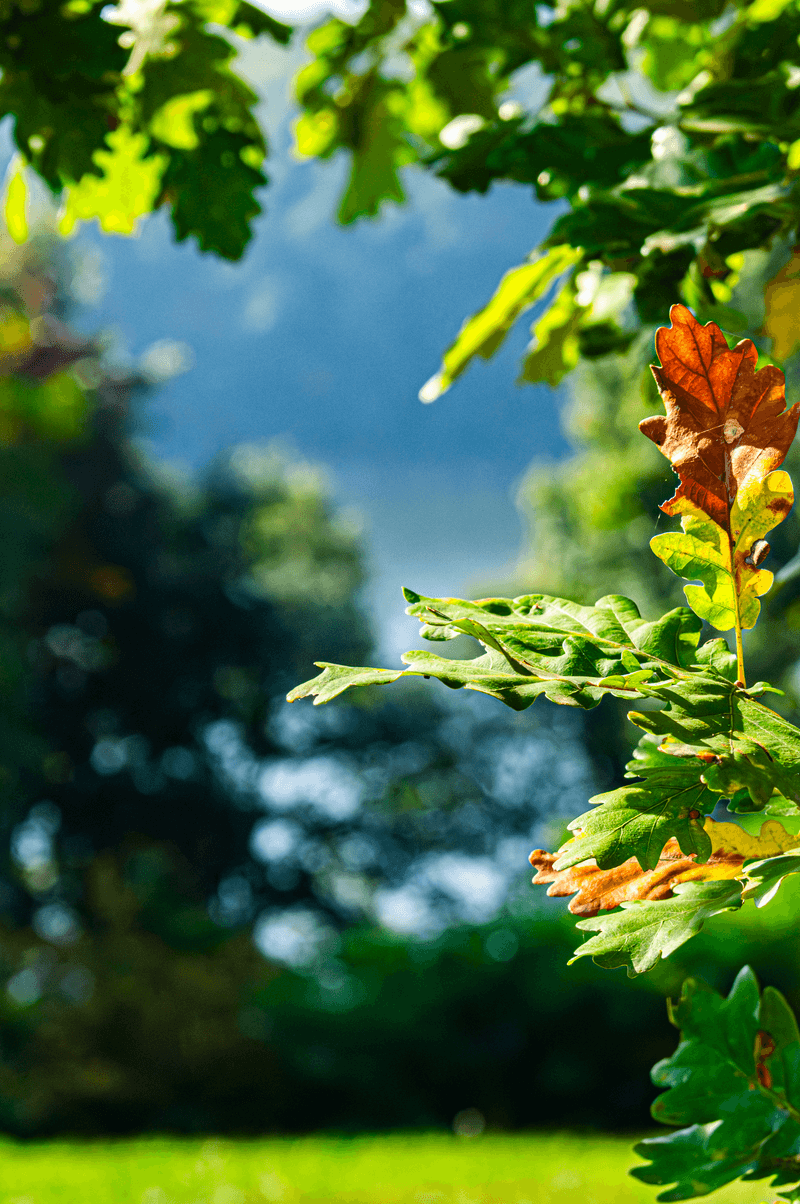
Fall colors in July might sound charming, yet bronze leaves on a red oak in summer signal real trouble. Texas red oak and Shumard oak belong to the red oak group, which reacts quickly to this fungus.
Leaves often turn pale green or dull bronze, starting at the tips and edges before creeping toward the center. The color change usually shows up in early summer, right when neighboring trees look lush and deep green.
What surprises me most is how fast the browning moves, sometimes spreading across the crown within a few weeks. It can begin on a single branch, so one off-color limb deserves a closer look right away.
Red oak symptoms differ from the vein pattern on live oaks, which can confuse even careful gardeners. Instead of brown veins, you usually see a scorched look that creeps inward from the outer leaf margins.
Some leaves drop while still partly green, which feels odd when you are raking in the middle of summer. Save a handful of those leaves and photograph the whole tree from a distance for your arborist.
Red oaks rarely recover once infected, so the main goal shifts toward protecting the healthy oaks nearby.
Removing a confirmed infected red oak properly helps reduce the chance of spores reaching other trees next spring.
Believe it or not, these trees can also pass the disease underground when their roots grow together. Spotting bronze leaves early gives you a head start on stopping that hidden spread before it reaches more yards.
4. Red Oaks Losing Their Whole Canopy In Weeks
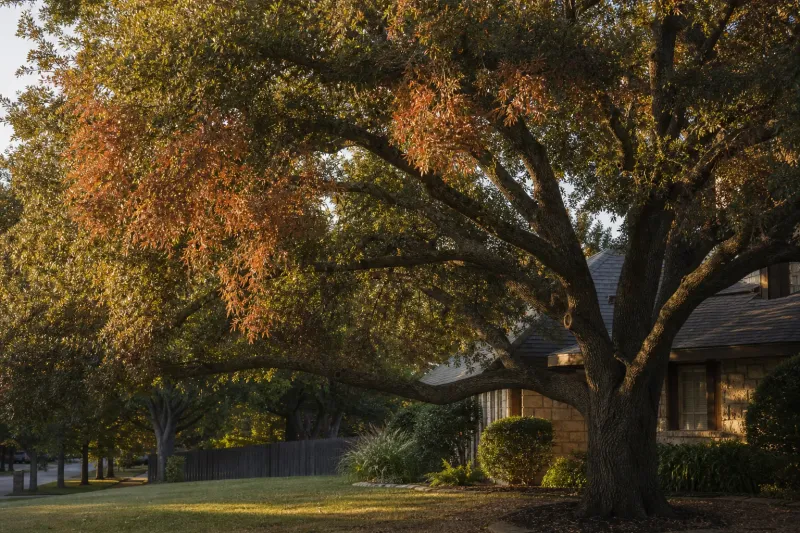
Few things in the yard move as fast as a red oak fighting this disease during warm weather. A tree that looked fine in May can be bare by midsummer, which still catches me off guard.
Texas A&M Forest Service notes that red oaks often lose their foliage within about four to six weeks. Live oaks may hang on for months or even years, so the contrast between the two groups is striking.
Red oaks seem to have weaker defenses against the fungus, so it spreads through their water-carrying tissue very quickly. That quick collapse is why experts consider them by far the most susceptible oaks in the region.
Keep an eye on red oaks during late spring and early summer, when symptoms most often appear. A weekly stroll around your property with a cup of coffee makes this habit easy to keep.
Once a red oak declines this quickly, an arborist should inspect it and confirm the cause through testing. Prompt removal and proper disposal matter, because these trees can later grow spore mats under the bark.
Avoid stacking infected red oak firewood near healthy oaks, since beetles can carry spores from the logs. Experts suggest chipping or burning that wood, or covering stacks tightly with plastic buried along the edges.
I truly believe a fast-fading red oak is a neighborhood alarm bell, not just a single yard problem. Share what you see with nearby neighbors so everyone can watch their own oaks more closely this season.
5. Fungal Mats Hiding Under Red Oak Bark
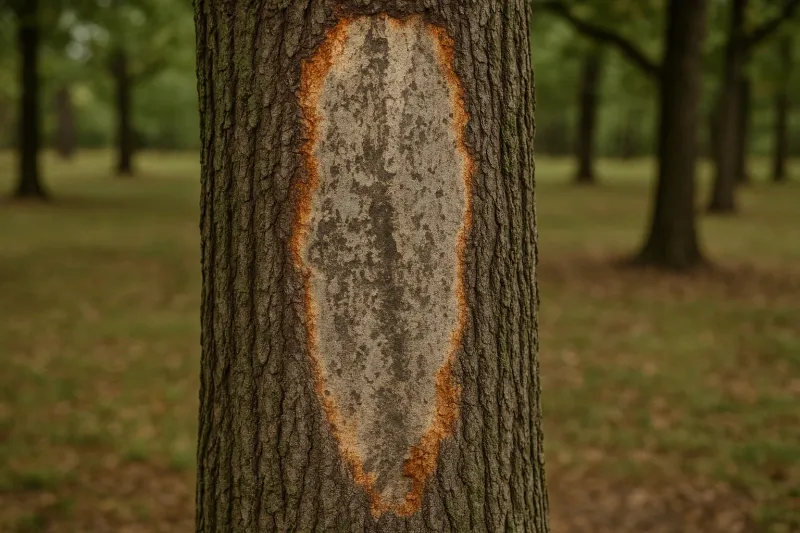
Some infected red oaks give off a sweet, fruity smell that seems wildly out of place in a shady yard. That scent comes from fungal mats, which form under the bark of red oaks lost to the disease.
The mats usually appear in spring on trees that declined the previous late summer or fall. They press outward as they grow, creating narrow cracks in the bark that are easy to overlook.
Sap-feeding beetles, often called picnic beetles, love that fruity aroma and crawl right into the cracks to feed. They pick up spores there and can carry them to fresh pruning wounds on healthy oaks nearby.
Live oaks and white oaks do not typically produce these mats, so this clue mostly belongs to red oaks. That makes red oaks the main launching pad for spreading the disease across longer distances in many neighborhoods.
I can’t imagine a sneakier setup, since the mats sit hidden until you peel back loose bark. Many mats look grayish and oval, with raised pads in the center that help push the bark apart.
Experts warn against pruning oaks from February through June, when beetles are busy and mats are most common. Paint every fresh cut or wound with wound dressing or latex paint right away, no matter the season.
Have an arborist confirm any suspected mats, then remove and handle that wood carefully following local guidance.
Quick cleanup protects the oaks on your street and keeps those fruity-smelling spore factories out of circulation.
6. Bare Branch Tips Showing Up In The Oak Canopy
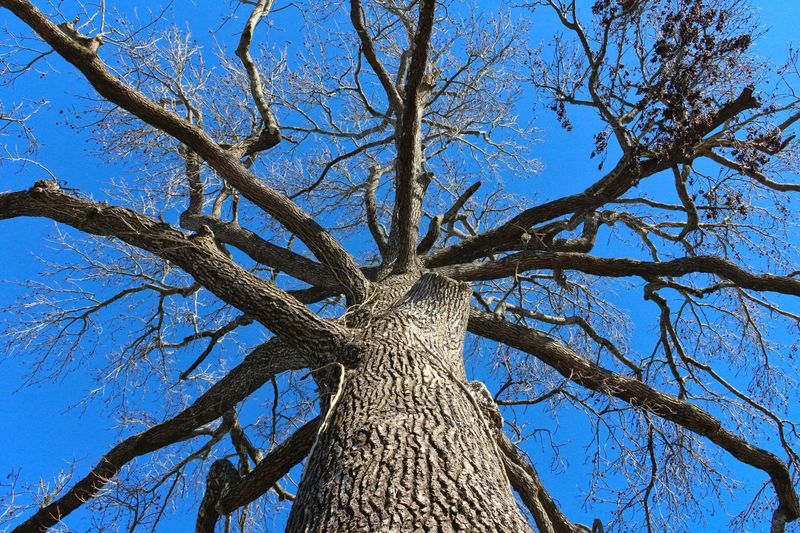
Stand under a healthy oak at noon and you get dappled shade, but a thinning crown lets sunshine pour through. You might notice patchy gaps first, especially when you compare the tree to photos from last year.
Oak wilt clogs the vessels that move water upward, so individual branches start losing leaves and drying out. Dieback often begins near the top of the crown and works its way downward over time.
Arborists sometimes describe a branch with brown, clinging leaves as flagging, since it stands out like a little banner.
Personally, I find that a pair of binoculars makes spotting those high branches much easier from the ground.
Canopy thinning has plenty of possible causes, including long droughts and root damage from nearby construction. That is why thinning alone does not prove oak wilt, even though it deserves a careful second look.
Pair your canopy check with a leaf check, since vein browning on live oaks adds much stronger evidence. Snap photos from the same spot every month, and the changes will become far easier to track.
Resist the urge to prune off struggling limbs during spring, because fresh cuts can invite spore-carrying beetles. The safest pruning windows fall in the coldest part of winter or the hottest stretch of midsummer.
Live oaks that receive propiconazole injections early often hold onto more of their crowns than untreated trees. A certified arborist can tell you whether your tree is a good candidate for that treatment before it worsens.
7. Neighboring Live Oaks Declining In A Widening Circle
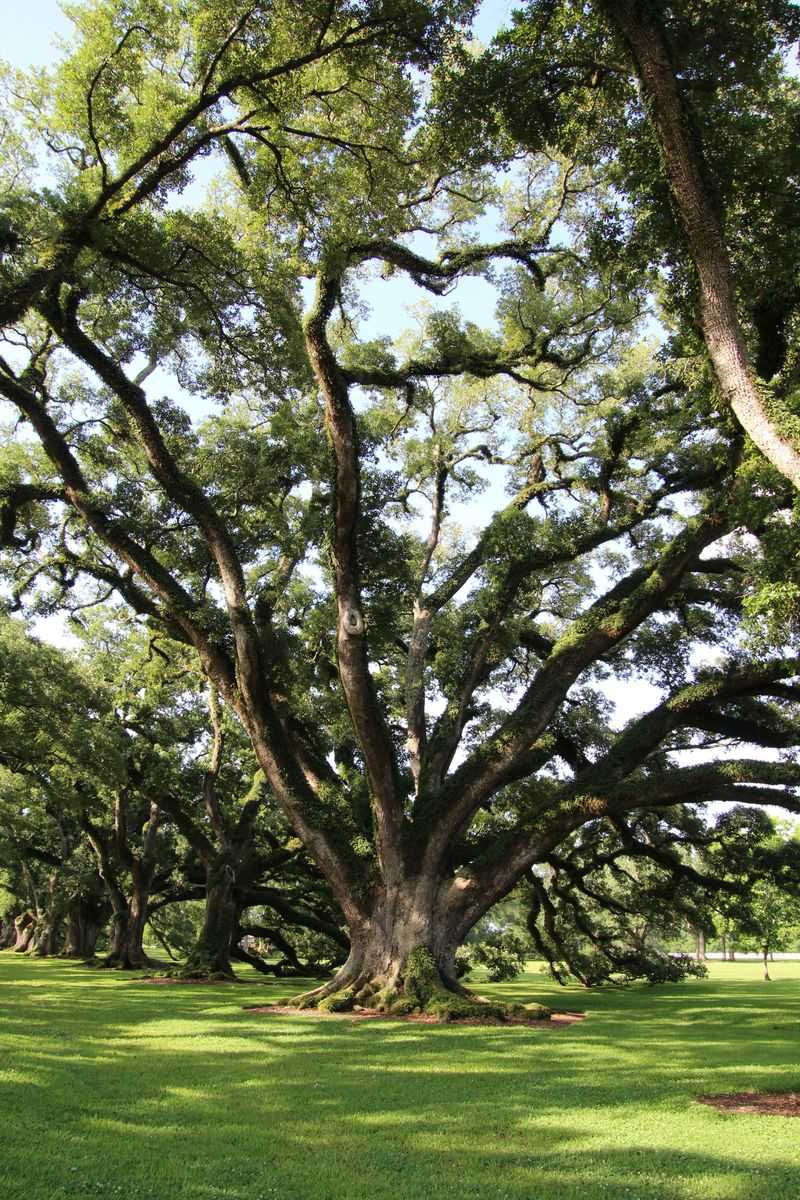
Live oaks are social trees underground, often sharing connected roots across a whole grove called a mott. If my garden had a group chat, those root grafts would be the gossip line passing everything along.
Sadly, those same connections let the oak wilt fungus travel from one tree to its neighbors below ground. Root spread is the main way the disease moves through live oak stands in central Texas.
The result is an expanding pocket of declining trees, often called an infection center, that grows outward over time. Some centers expand as much as one hundred fifty feet in a single year, according to forestry experts.
Look for a ring pattern where the oldest losses sit in the middle and fresh symptoms appear at the edges. Healthy-looking trees right outside that edge are often next in line, even before they show symptoms.
Trenching at least four feet deep around an infection center can break those root connections and slow the spread.
Experts usually place the trench about one hundred feet beyond the outermost trees showing symptoms in most situations.
You’ll want a professional for this job, since utility lines and rocky soil make trenching tricky. The Texas Oak Wilt Suppression Project has helped homeowners plan trenches and treatments for decades across many counties.
Talk with your neighbors too, because roots ignore property lines and teamwork makes control efforts much stronger. When several oaks start fading one after another, that pattern is your cue to call for help quickly.