7 Warning Signs Your Virginia Tree Won’t Survive Winter Storms
Woodpeckers often drum hardest on wood that has already started to soften and rot from the inside out. That noisy visitor tapping your backyard maple might be pointing at a problem you cannot see yet.
Winter storms in Virginia rarely create brand new weaknesses in a healthy, well-kept shade tree on your property. Instead, heavy ice and wet snow tend to expose the hidden flaws that were quietly there all along.
Take it from someone who once ignored a cracked limb until it landed beside my car one icy morning. Between you and me, I still wince when the wind picks up after a freezing rain.
Bare winter branches give you the clearest view of a tree’s bones before the worst weather arrives. So which clues should send you outside this week with a notebook and a sharp, curious eye?
1. Bare Brittle Branches Hang On Without Any Buds
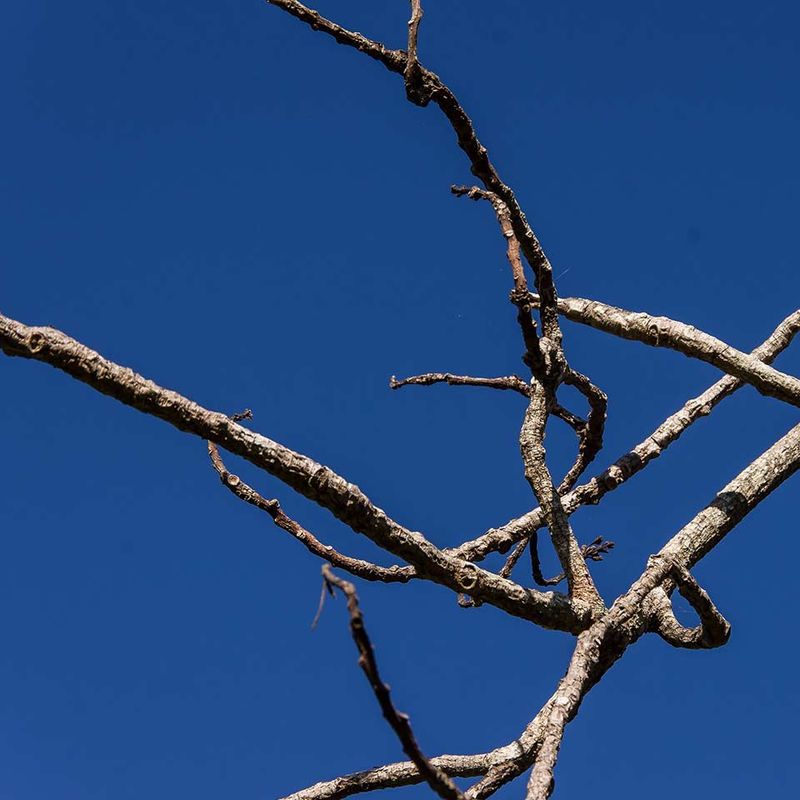
Woodpeckers taught me more about my old oak than any book, because they kept hammering the same bare limb. Insects love softening wood, so a busy woodpecker often signals decay hiding in branches that look fine from below.
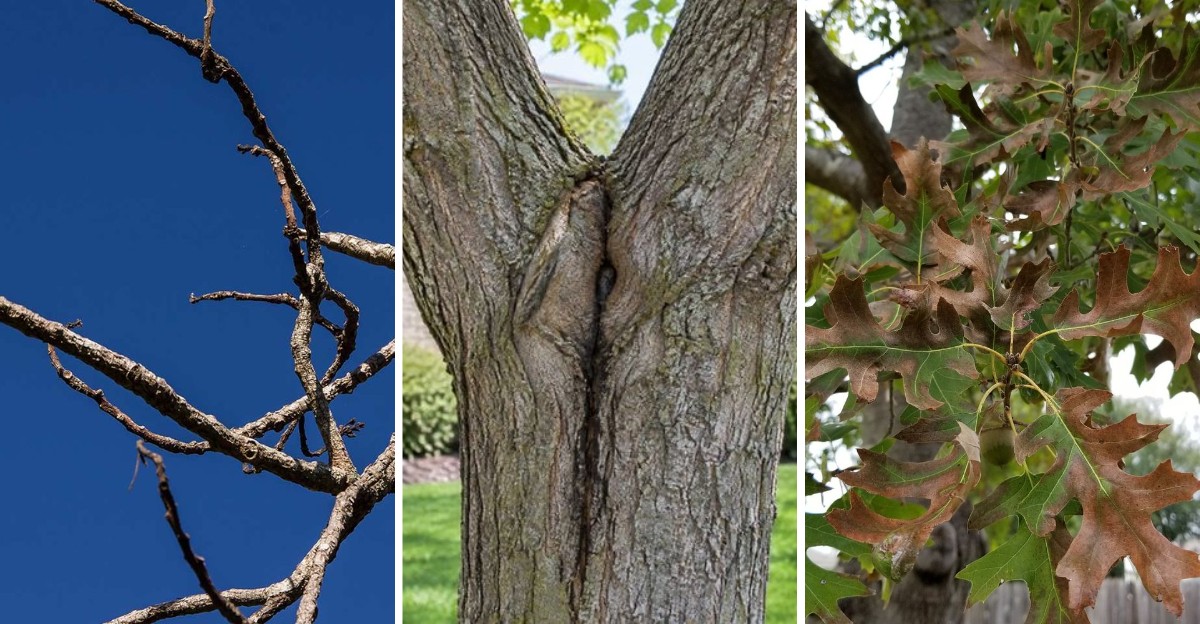
Lifeless limbs stand out best right now, since bare winter branches make missing buds much easier to spot. Gently bend a twig, and healthy wood flexes while lifeless wood snaps with a dry little crack.
Peeling bark is another clue, especially when the wood underneath looks gray and weathered instead of pale and moist. A quick scratch with your thumbnail should reveal a thin green layer on any branch that is still alive.
Brittle wood behaves unpredictably once ice coats it, and even a small limb can dent a roof from high up. Ice can add surprising weight to every twig, so weak branches often give way first during a storm.
Scattered bare limbs are usually a pruning job, but lifeless wood spread across the whole crown points to deeper trouble. That pattern can mean the roots or trunk are struggling, so the tree needs a careful checkup soon.
Oaks in northern Virginia deserve extra attention, because oak decline can weaken their structure quickly once symptoms appear. Many local arborists recommend a professional evaluation as soon as large oak limbs start losing vigor.
If you ask me, late winter is the sweet spot for removing those lifeless limbs before spring growth begins. Leave anything high or heavy to a certified arborist, since ladders and chainsaws make a risky pair.
2. Cracked Trunks And Narrow V Shaped Forks Split Under Ice
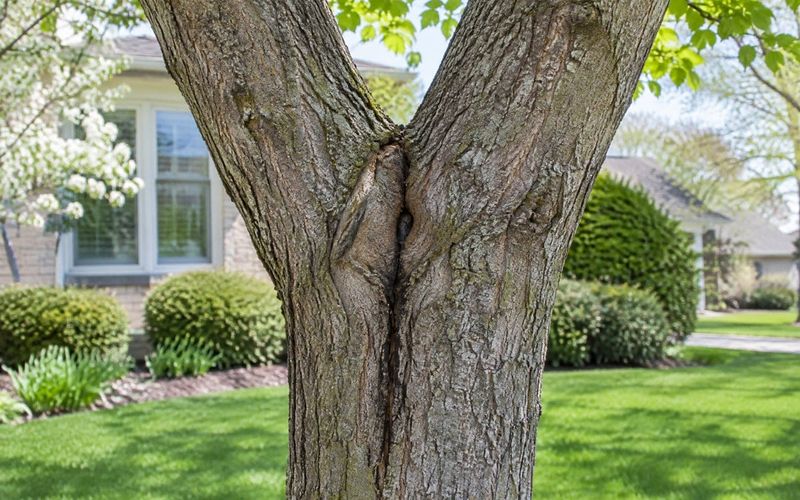
Freeze and thaw cycles work like a slow wedge, prying open trunk cracks a little wider with every cold snap. In my yard, a hairline split on a cherry grew noticeably longer over a single snowy season.
Cracks can run straight up the trunk or curl around it in a slow spiral, and both deserve attention. Horizontal cracks worry arborists even more, because they can suggest wood fibers are pulling apart under stress.
Thin-barked trees like maples and cherries often split on the south or southwest side of the trunk. Winter sun warms that bark during the day, then a sharp nighttime freeze makes it contract suddenly.
Now tilt your head back and look where big branches meet the trunk or split from each other. A tight V-shaped fork is much weaker than a wide, open U-shaped connection between two stems.
Inside many V-shaped forks you will find included bark, which gets pinched between the stems as they grow. That trapped bark blocks solid wood from forming, so the joint acts more like a seam than a weld.
Bradford pears are famous for this flaw, and many split apart after a single heavy snow or ice storm. Callery pear is also invasive in many states, so replacing one with a native tree is a smart move.
Cabling and bracing can sometimes support a weak fork, but that job belongs to a trained arborist. Don’t make my mistake of waiting until a crack starts weeping sap or widening after a storm.
3. Mushrooms And Shelf Fungi Sprouting Near The Base
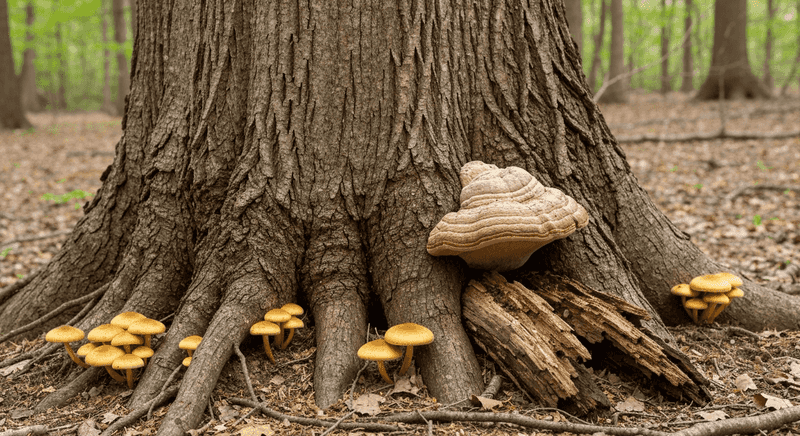
Mushrooms popping up around a trunk look charming, but they rarely bring cheerful news for the tree underneath. Those caps are only the fruiting bodies of a fungus that is quietly feeding on wood below.
Most of the fungus lives hidden inside roots or heartwood, spreading out of sight for years. By the time you finally notice a cluster of mushrooms at the base, decay is usually well underway.
Mushrooms at the soil line often point to root or butt rot, which weakens the tree’s anchor. Hard shelf-like conks higher on the trunk usually signal decay in the wood inside that section.
Funny thing is, the canopy above can stay green and full while the base slowly loses its strength. That mismatch fools plenty of homeowners until a gusty winter storm topples the tree at ground level.
Soggy ground makes matters worse, since Phytophthora root rot thrives in saturated soil found in many Virginia yards. This water mold attacks fine roots, leaving the tree with less grip when wet snow piles on.
Snap a few clear photos of any fungus you find, including the underside and where it attaches. Your local Extension office or an arborist can often identify the species and explain what it means.
Knocking off the mushrooms will not fix anything, because the fungus inside keeps working after the caps disappear. A professional may use a resistance drill or sounding mallet to measure how much solid wood remains.
4. A Tree Leaning Harder With Heaving Soil Behind It
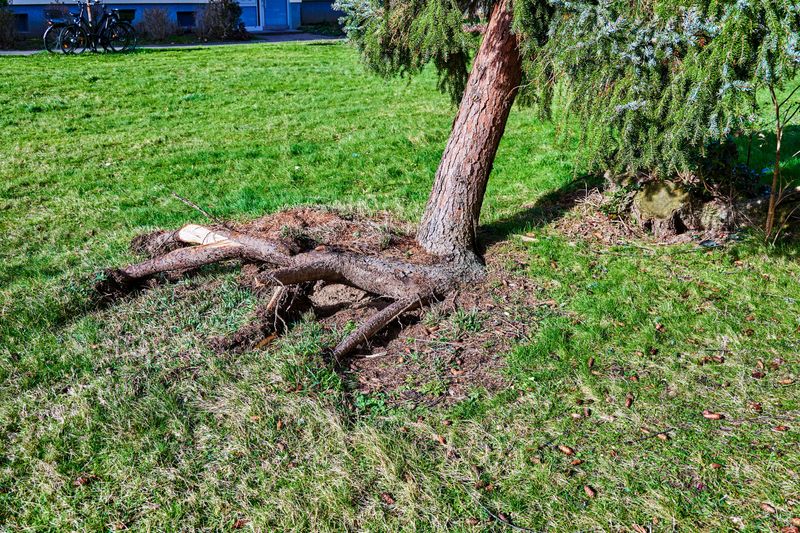
Trees that grew with a gentle lean for decades usually adjust their wood to handle it just fine. A brand new lean, or one that keeps getting worse, tells a very different story underground.
Walk around to the side opposite the lean and study the soil there closely with fresh eyes. Mounded or heaved earth on that side often means the root plate is slowly lifting like a trapdoor.
Fresh cracks in the soil radiating out from the base are another alarm bell worth heeding right away. Newly exposed roots that were buried last summer also suggest the whole root system is shifting.
Many arborists treat a lean beyond about 15 degrees as a serious concern, especially when it appears suddenly. Hold a pencil upright at arm’s length to compare it against the trunk for a rough check.
Clay soil is common across much of Virginia, and it turns slick and soft when winter rain soaks in. Saturated ground loosens its hold on roots, so a leaning tree becomes far easier to push over.
Lately I check the big tulip poplar near my driveway after every soaking rain, just to be safe. Small changes are easy to miss, so a dated photo from the same spot helps a lot.
A tree tipping toward your house or driveway needs a professional assessment before the next storm, not after. Keep cars and kids out of its path until someone qualified decides whether it can stay.
5. Cut Or Girdling Roots From Old Construction Work
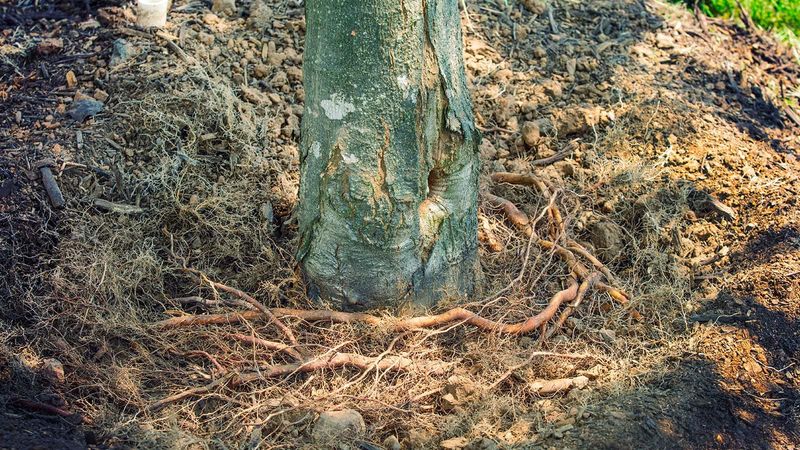
Roots can hold a grudge for years, and a trench dug long ago may finally catch up with your tree. Damage below ground often takes several years to show up as thinning leaves in the canopy overhead.
Most tree roots live in the top foot or so of soil and spread well past the branch tips. That shallow web is easy to slice through with a backhoe or even a busy garden tiller.
Recall any patio or utility line installed near the trunk within the last decade or so. Heavy equipment parked over the root zone also compacts soil, which squeezes out the air roots need.
Girdling roots are sneakier, wrapping around the base of the trunk like a too-tight belt as years pass. They slowly choke the flow of water and nutrients, and they often start from pot-bound nursery roots.
A trunk that enters the ground straight like a telephone pole, without a flared base, often hides a girdling root. Pull back mulch gently with your hands to look, because a healthy trunk should widen where it meets soil.
Exposed or severed roots and fresh soil cracks near the base are warning signs worth photographing right away. Those clues mean the anchor holding your tree upright may be weaker than the branches suggest.
For what it’s worth, a few inches of wood chip mulch over the root zone helps loosen compacted soil. Keep that mulch a hand’s width away from the bark, and ask an arborist about removing girdling roots safely.
6. Hollow Cavities And Big Patches Of Missing Bark
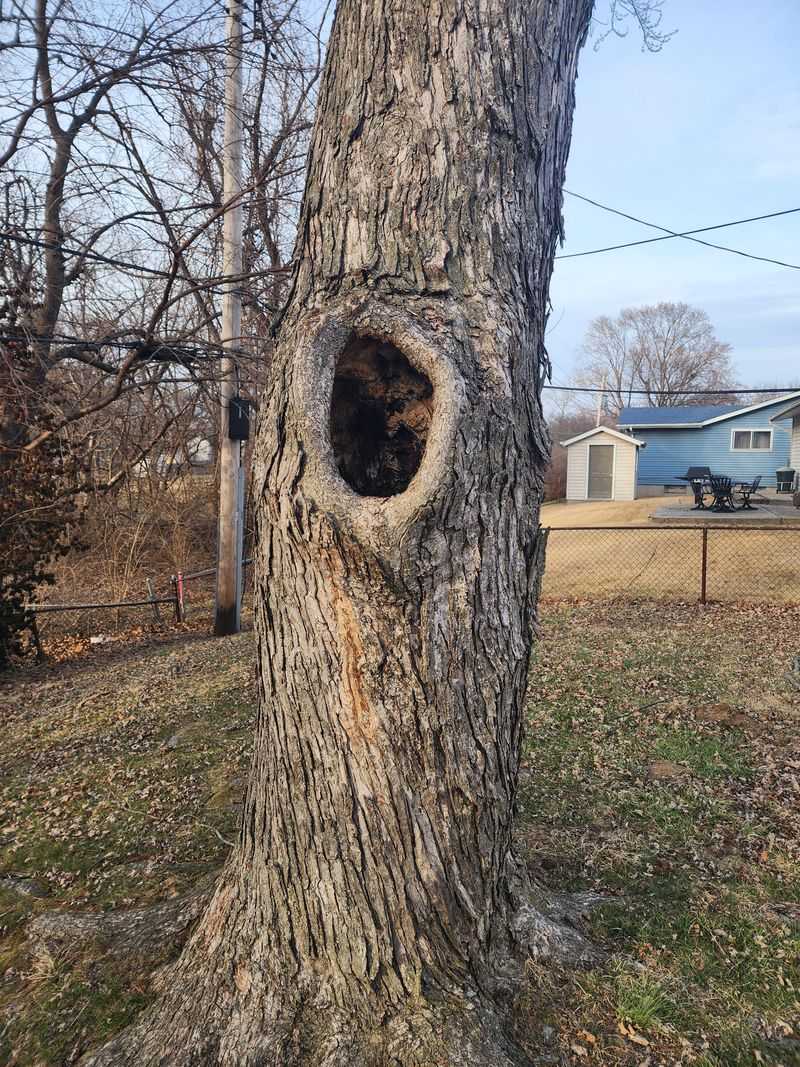
Owls and raccoons may love a hollow tree, but a big cavity in your front yard deserves a careful look. Many of those openings began as a small wound, like a snapped limb that healed poorly.
Open wounds give decay fungi an easy doorway, and those fungi slowly digest the wood inside the trunk. Lightning strikes and bumps from cars or mowers create the same kind of entry point over time.
Trees are clever, though, because they wall off decay instead of healing wounds the way skin does. That process can keep a hollow tree standing for years, yet its strength depends on how thick the shell is.
Large cavities low on the trunk worry arborists most, since that section carries the heaviest load in high winds. Tap the bark gently with a rubber mallet, and a dull hollow sound may hint at missing wood.
Big patches of missing bark or sunken areas usually mean the tissue underneath has stopped working. Watch for crack edges that roll inward, because that curled pattern often goes along with serious internal decay.
Please skip the old habit of filling cavities with concrete or foam, which arborists no longer recommend. Those fillings can trap moisture and hide changes, so a trained eye has a harder time judging the tree.
Looking back, I should have called a pro sooner about the hollow cherry by my old shed. Some cavity trees can stay with careful pruning, while others are safer removed before ice weighs them down.
7. Thin Or Browning Canopies On Stressed Trees
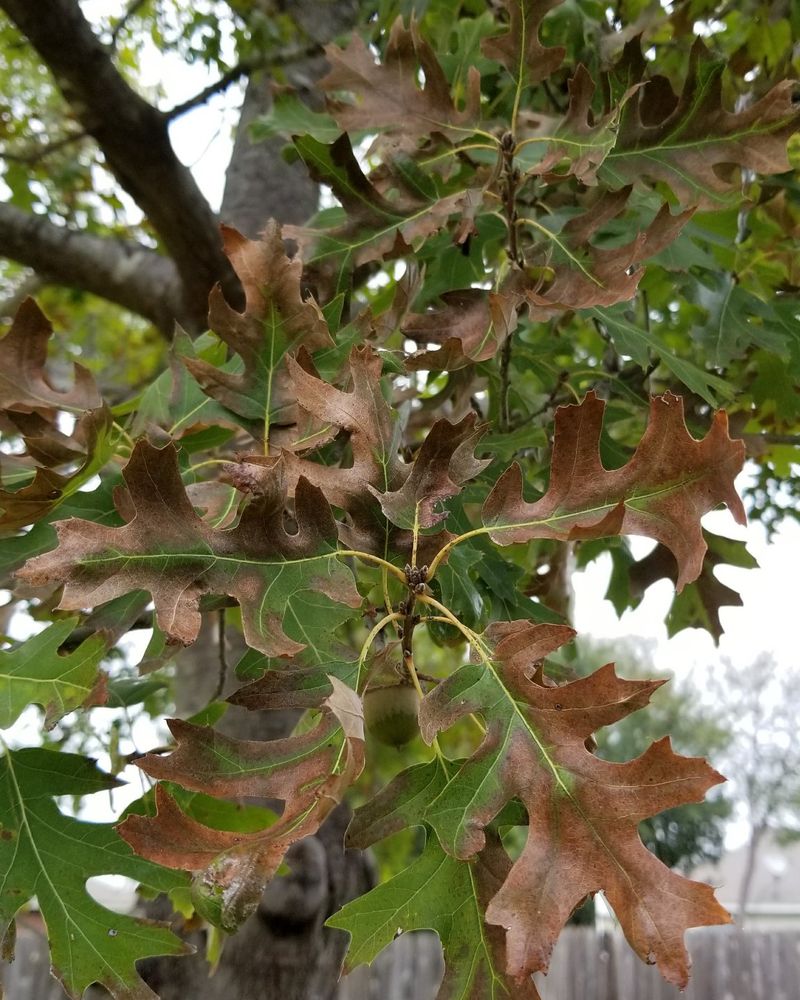
A tree’s crown works like a mood ring, and a thin or oddly colored canopy often reveals stress below. You may notice it best in late summer, when healthy neighbors stay lush and one tree looks tired.
Early leaf drop and premature browning can trace back to insect pests or to root trouble hiding underground. A stressed tree has fewer energy reserves, so it struggles to recover from broken limbs after a storm.
Sawdust piled at the base or along branches is a big red flag for wood-boring insects at work. Look for tiny exit holes in the bark too, especially on ash trees hit by emerald ash borer.
Wilting on just one side of a tree can signal Verticillium wilt, a soil fungus that affects maples and others. It plugs the water-conducting tissue, so one section suddenly sags while the rest looks perfectly normal.
Evergreens play by different rules, and winter burn can turn magnolia leaves or pine needles reddish brown by early spring. Drying winds pull moisture from the foliage while cold, frozen soil keeps the roots from replacing it quickly.
Winter burn alone is usually cosmetic, so wait for new spring growth before you start pruning anything. A deep watering in late fall, before the ground freezes, helps evergreens head into winter well hydrated.
My garden taught me that a sparse canopy is only a symptom, not the whole story behind it. The Virginia Department of Forestry and local Extension agents can point you toward a certified arborist for answers.