Watering Mistakes That Ruin Oregon Fuchsias And How To Do It Right
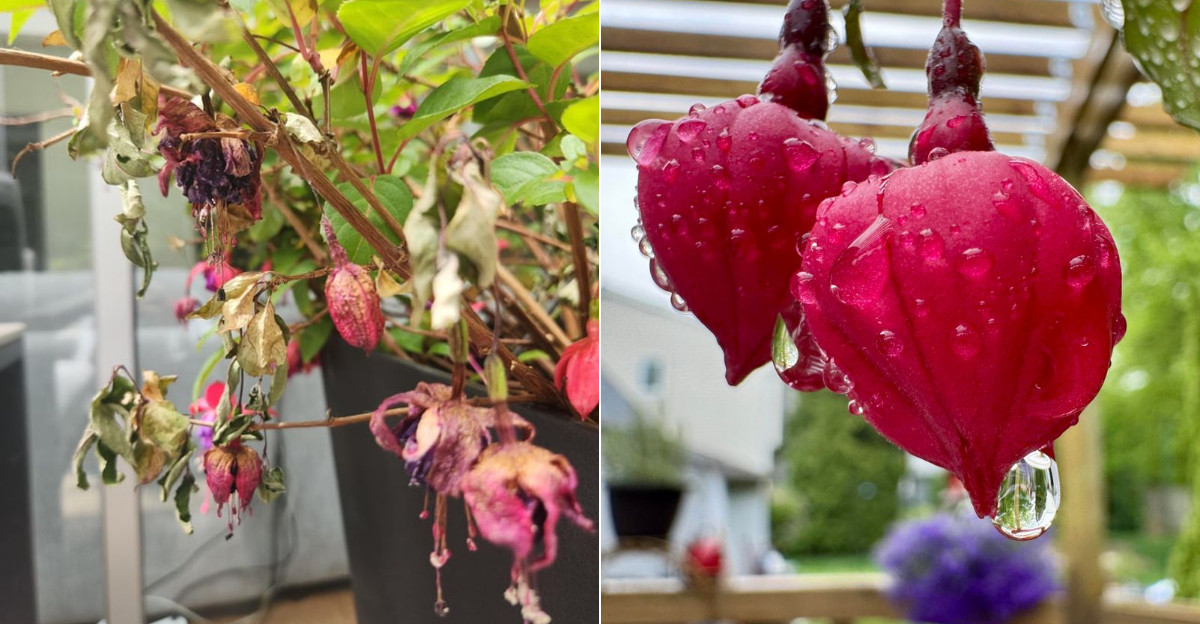
Fuchsias can look spectacular in an Oregon garden, then collapse into a droopy mess after one bad watering decision.
These plants love moisture, but they have very little patience for soggy roots or long dry spells. Picky? Absolutely.
The trouble often starts with a routine that seems sensible. A quick splash may leave the deeper soil dry.
Too much water can create a different problem below the surface. Both mistakes can weaken the plant before the flowers show any obvious signs.
Oregon weather adds another twist. Cool mornings may hide how fast containers dry once afternoon heat arrives.
A schedule that worked last week may fail during the next warm stretch.
Healthy fuchsias need steady moisture without constant saturation. The right approach depends on the soil and the plant’s location.
Once that balance clicks, the leaves stay perkier and the flowers have a much better chance to keep the show alive.
1. Letting Hanging Baskets Dry Out Completely
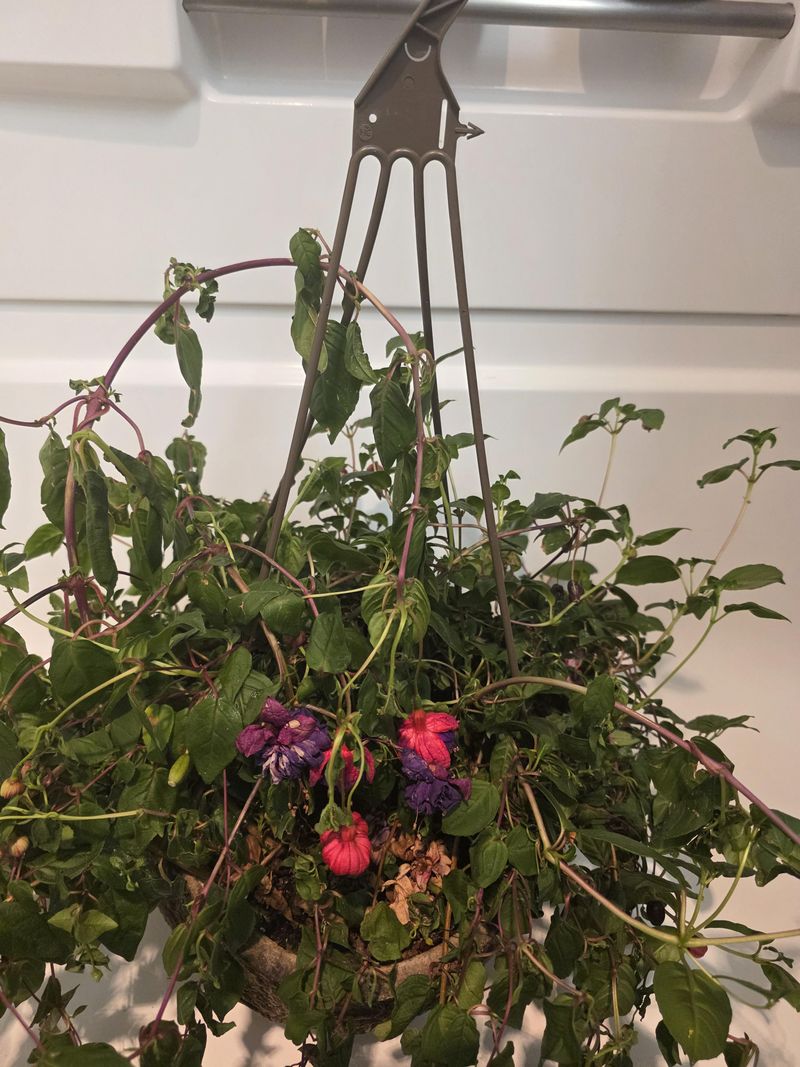
Few things stress a fuchsia faster than a bone-dry root ball. Hanging baskets lose moisture incredibly quickly, especially during warm Pacific Northwest summers.
When the soil dries out completely, the roots begin to shrink away from the sides of the basket, making it even harder for water to soak back in properly.
Once that happens, water tends to run straight down the sides and out the drainage holes without ever reaching the roots. The plant looks like it got watered, but the core of the root ball stays dry.
This is one of the most common and frustrating problems fuchsia growers face in Oregon.
To fix this, water your hanging baskets slowly and thoroughly every single day during warm weather. If the basket has already dried out completely, set it in a bucket of water for 20 to 30 minutes.
This lets the soil fully rehydrate from the bottom up. After soaking, let it drain completely before hanging it back up.
Going forward, check the basket every morning by lifting it slightly. A light basket means it needs water right away.
A heavy basket still has plenty of moisture. Making this quick daily check a habit will keep your fuchsias hydrated, happy, and covered in blooms all season long.
2. Giving Quick Sprinkles Instead Of Deep Soaks
A quick sprinkle on top of the soil might make it look like you watered, but it rarely gets moisture down to where the roots actually live. Fuchsia roots grow deep into the container, and a light surface wetting does almost nothing for them.
The top inch of soil gets damp while everything below stays completely dry.
Plants watered this way slowly weaken over time. You might notice fewer blooms, yellowing leaves, or stems that look limp even in the morning when temperatures are cooler.
These are signs the roots are not getting what they need to support healthy growth and flowering.
The right approach is to water slowly and deeply every time. Hold the watering wand or hose at the base of the plant and let water flow steadily until it runs freely out of the drainage holes.
Your Oregon Garden Changes Every Week. Your Plan Should Too.
Gardening in Oregon changes quickly throughout the season. Every Friday you’ll receive a simple weekly plan showing exactly what to plant, prune, fertilize, harvest, and protect so you never miss the right timing.
Then wait a few seconds and water again. This double-watering method ensures the entire root zone gets saturated.
In Oregon, fuchsias in full hanging baskets may need a full quart or more of water per watering session during peak summer. It feels like a lot, but deep soaking encourages roots to grow downward and become stronger.
Strong roots mean a more resilient plant that handles heat and wind far better than one that gets only light, shallow watering.
3. Watering Only One Side Of The Basket
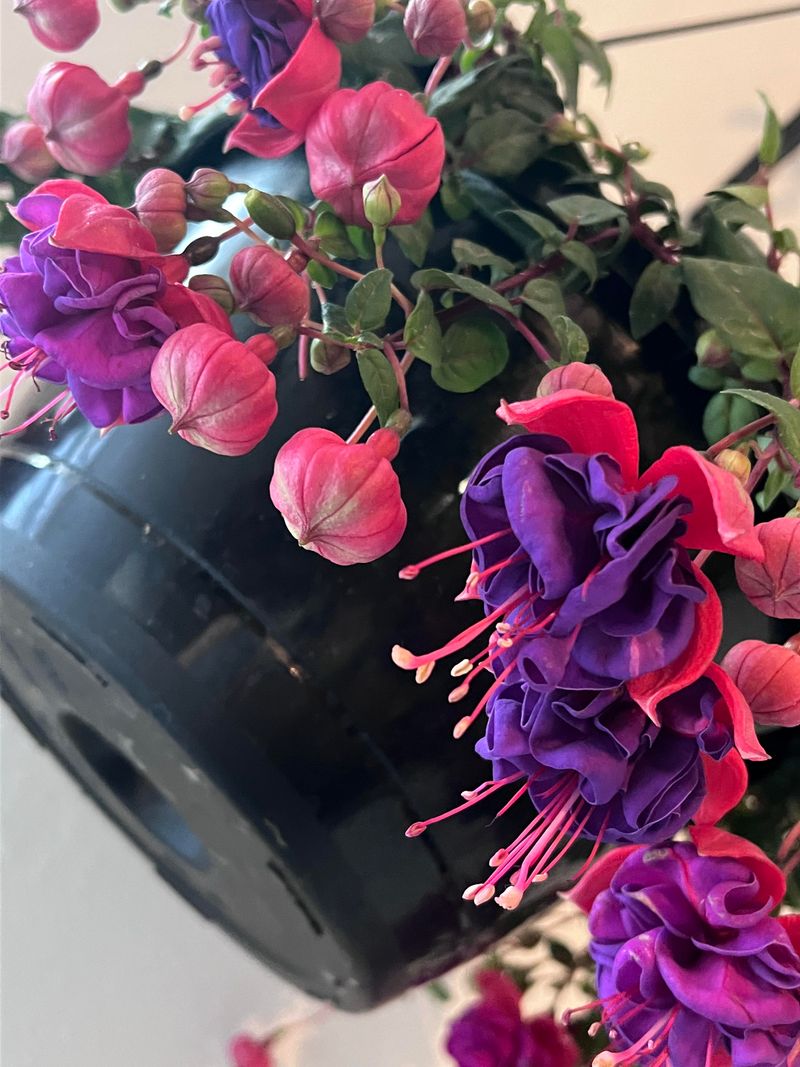
Most people water their hanging baskets from one spot at the top and call it done. The problem is that water follows the path of least resistance.
It soaks into the soil right where it lands and then drains straight down, leaving the opposite side of the basket almost completely dry.
Over time, roots on the dry side of the basket suffer while roots on the wet side grow too dense. The plant ends up lopsided, with fuller growth on one side and sparse, struggling stems on the other.
Blooms become uneven, and the overall shape of the basket looks off.
Fixing this is simple once you know it is happening. When you water, slowly move the watering wand all the way around the top of the basket in a full circle.
Take your time and let water soak in from every angle before moving on. For wire baskets lined with moss or coco fiber, pay extra attention to the outer edges where the liner can dry out fast.
Some gardeners even tip their baskets slightly to one side while watering to help moisture reach all corners of the root zone.
Spending an extra 60 seconds watering evenly around the whole basket makes a noticeable difference in how full, balanced, and healthy your fuchsia looks by midsummer.
4. Ignoring Afternoon Wind And Heat
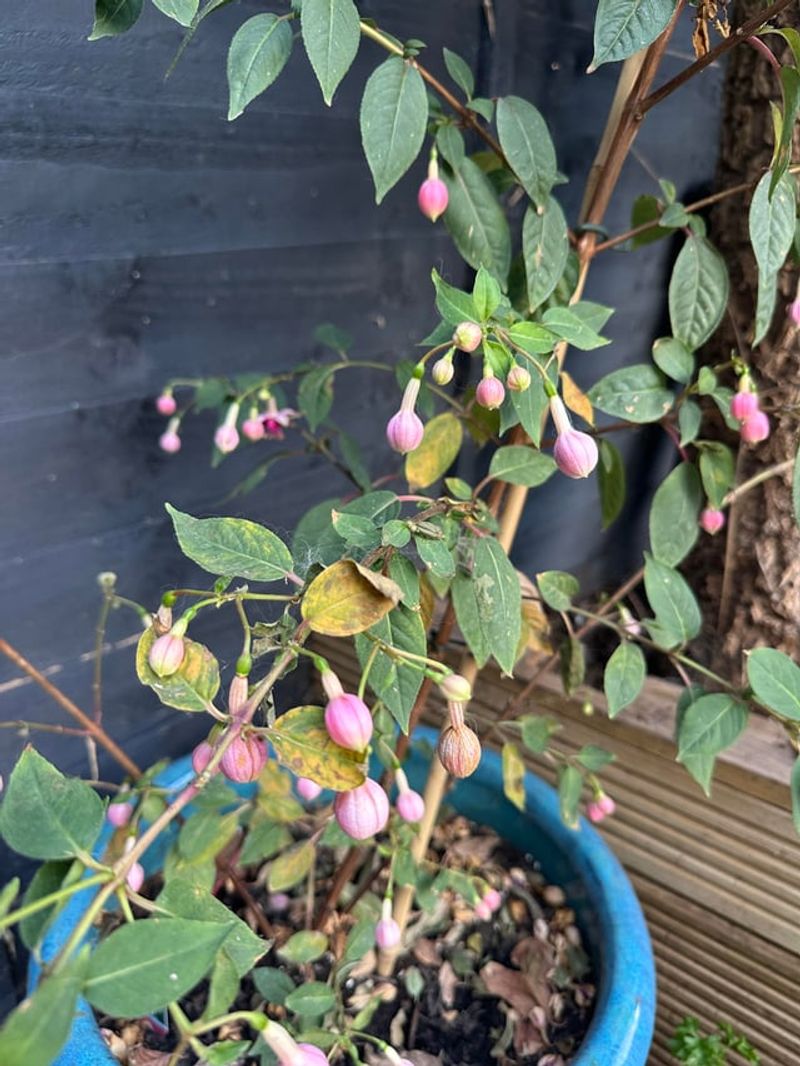
Our state is known for mild weather, but summer afternoons can surprise gardeners with stretches of heat and wind that pull moisture out of hanging baskets at a shocking rate.
On breezy days, a basket that felt perfectly moist in the morning can be dangerously dry by 2 or 3 in the afternoon.
Wind is especially sneaky because it does not feel as intense as direct sun, but it evaporates soil moisture just as fast.
Fuchsias exposed to afternoon wind without enough water respond quickly with drooping stems, curling leaves, and flowers that drop before fully opening.
That kind of stress repeated day after day weakens the plant significantly over a season.
The best strategy is to check your baskets again in the early afternoon on hot or windy days, even if you already watered in the morning.
A second watering midday is completely normal and necessary during heat waves or strong wind events.
Moving baskets to a more sheltered spot during extreme heat also helps a lot. Covered porches, north-facing eaves, or spots shaded by a large tree during afternoon hours are ideal.
You can also use a diluted liquid fertilizer in your midday water once a week to help the plant recover from heat stress faster.
Staying aware of afternoon conditions rather than sticking to a rigid once-a-day schedule makes a real difference in how your fuchsias perform.
5. Leaving Pots Sitting In Soggy Saucers
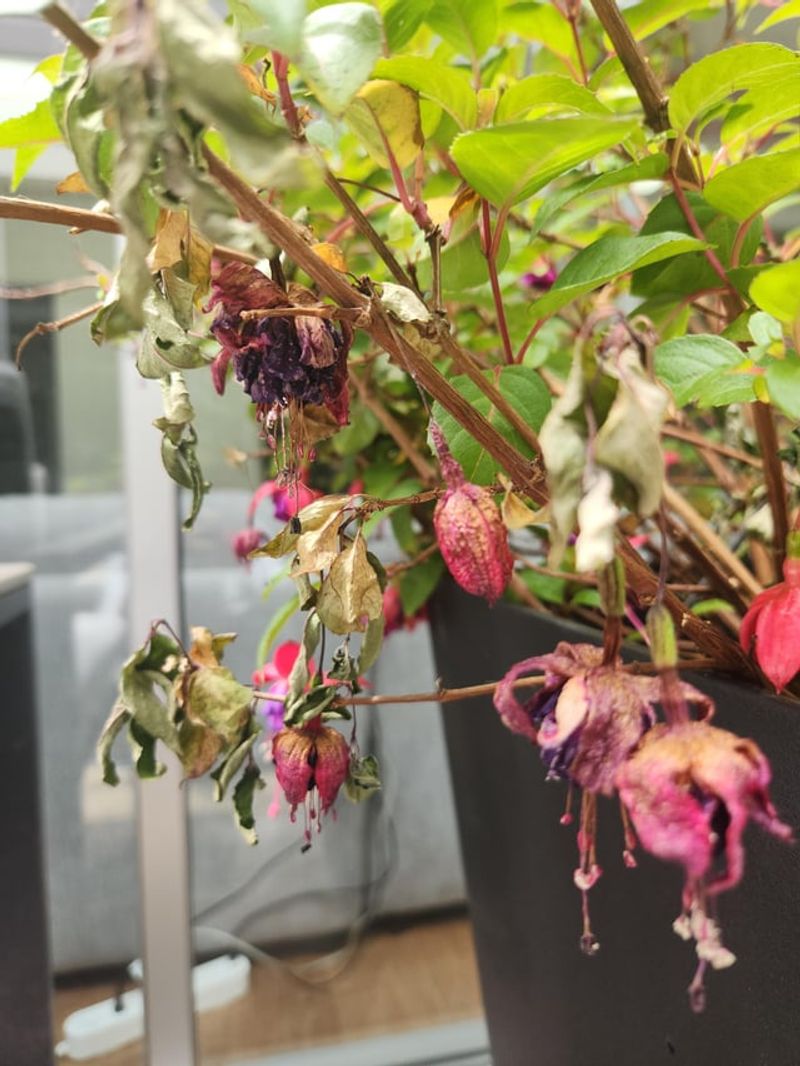
Saucers under pots seem like a smart idea because they catch drips and protect your patio surface. But leaving a fuchsia sitting in standing water for hours is one of the fastest ways to cause root rot.
Roots need both water and oxygen to stay healthy, and soggy saucers cut off that oxygen supply completely.
Root rot is a silent problem at first. You might notice the lower leaves turning yellow, or the plant looking slightly wilted even though the soil feels wet.
By the time the damage becomes obvious, the roots are already in bad shape. Recovering from root rot is possible but takes time and careful management.
The fix is straightforward. Always empty your saucers within 30 minutes after watering.
Do not let water sit in them overnight or during the day. If you forget and find standing water in a saucer, tip it out right away and check the soil moisture before watering again.
Elevating pots slightly on pot feet or small risers also helps by improving airflow under the container. This keeps the drainage holes from being blocked by a flat saucer surface.
In our region, where spring rains can be heavy, outdoor fuchsias in pots need especially good drainage to avoid sitting in water after a rainstorm.
A well-draining potting mix combined with clear saucers makes it easy to spot standing water before it becomes a problem.
6. Using Tiny Containers That Dry Too Fast
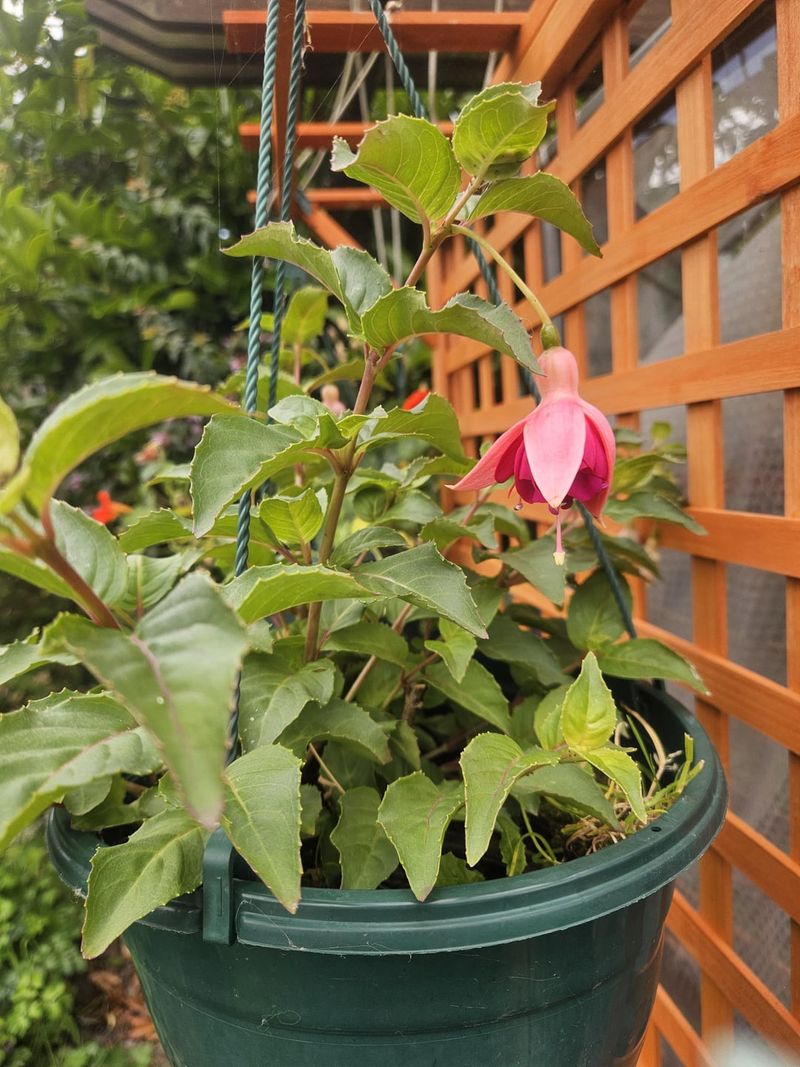
Small pots look cute and are easy to move around, but they are genuinely tough on fuchsias.
A tiny container holds so little soil that it heats up fast and dries out completely within just a few hours on a warm day.
No matter how often you water, the plant never gets a chance to settle into a stable moisture level.
Clay pots make this problem even worse because they are porous and pull moisture out through the sides as well as the bottom.
A fuchsia in a four-inch clay pot on a sunny porch in July might need watering two or three times a day just to stay alive.
That is exhausting for both the gardener and the plant.
Upgrading to a larger container is one of the best investments you can make for your fuchsias.
A 10-inch to 14-inch pot gives the roots plenty of room to spread out and holds enough soil to stay moist for a full day even in warm weather.
Plastic or glazed ceramic pots retain moisture much longer than unglazed clay. If you love the look of clay, try placing a plastic liner inside the clay pot to slow moisture loss.
For hanging baskets, look for ones with a built-in water reservoir in the base. These hold extra water that wicks upward as the soil dries, which is a game-changer for busy gardeners in our region.
7. Forgetting To Check Soil With Your Finger
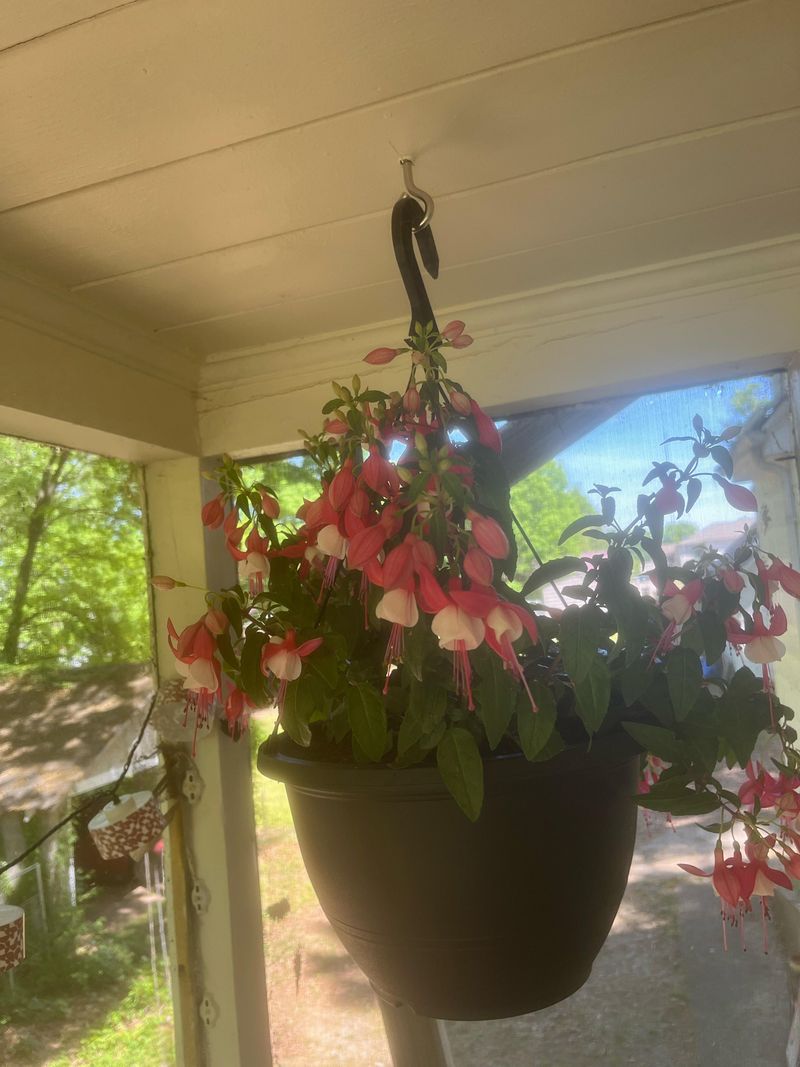
Watering on a fixed schedule sounds organized, but it often leads to either overwatering or underwatering because it ignores what the plant actually needs on any given day. Weather changes constantly in our region.
A cool, cloudy week means the soil stays moist much longer than a hot, sunny stretch. Sticking to the same schedule regardless of conditions is a recipe for problems.
The most reliable watering tool you own is your finger. Pushing it about an inch into the soil takes two seconds and tells you exactly what is happening below the surface.
If the soil feels moist and cool, the plant does not need water yet. If it feels dry or barely damp, it is time to water.
It sounds almost too simple, but this one habit prevents more fuchsia problems than any fancy gadget or app.
Get into the routine of checking soil moisture every morning before you decide whether to water. On cool or overcast days in our state, you might find the soil is still perfectly moist from the day before.
On hot or windy days, it may already feel dry by 8 in the morning. Adjusting your watering based on what you actually feel in the soil keeps your fuchsias in that sweet spot of moist but never waterlogged.
Over time, you will develop an instinct for what your specific baskets and pots need based on the weather, the container size, and the plant’s growth stage.
8. Watering Leaves Instead Of The Root Zone
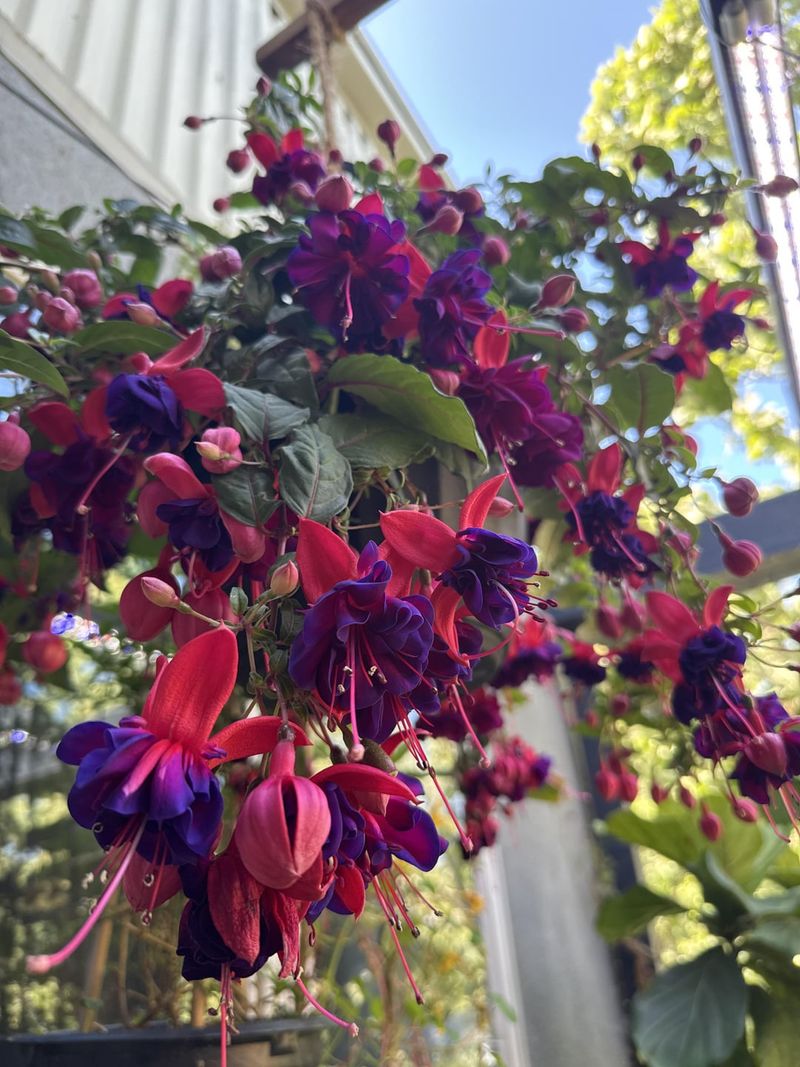
Overhead watering with a sprinkler or a hose set to a wide spray pattern might seem efficient, but it causes real problems for fuchsias.
Wet foliage invites fungal diseases like botrytis, which spreads fast in the cool, damp conditions common in our region.
Water sitting on leaves and blooms overnight creates the perfect environment for gray mold to take hold.
Flowers are especially vulnerable. When water hits the blooms directly, petals bruise and drop earlier than they should.
A basket that should be covered in flowers ends up looking thin and patchy because blooms keep falling off before they fully open. Wet leaves also block sunlight from reaching the lower parts of the plant, which slows growth and reduces overall vigor.
Always aim your watering wand or hose directly at the soil surface, not at the foliage. Get close to the base of the plant and let water flow gently into the root zone.
If you use a watering can, a long narrow spout gives you the most control and lets you direct water exactly where it needs to go. Morning watering is best because any accidental splash on leaves has time to dry off before evening.
Avoid watering late in the afternoon or at night in Oregon, where cool evenings combined with wet foliage create prime conditions for fungal issues.
Keeping leaves dry while keeping roots consistently moist is the ideal balance for healthy, disease-free fuchsias all season.
9. Skipping Mulch On Patio Containers
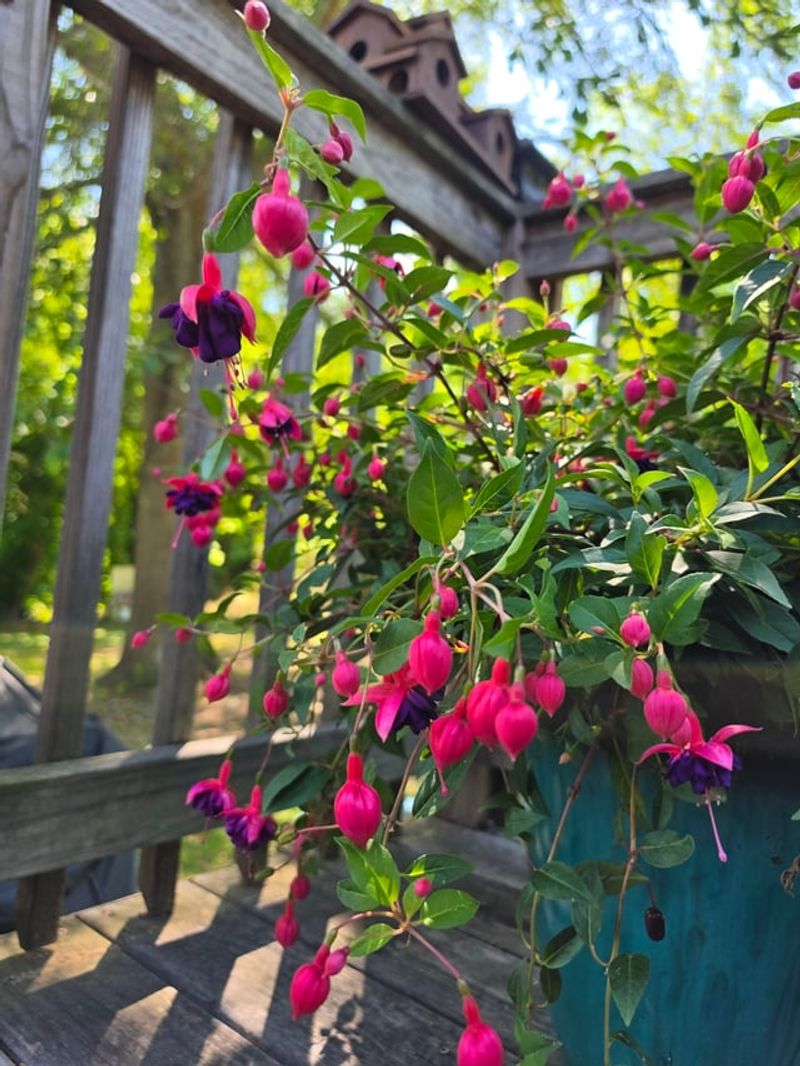
Most gardeners think of mulch as something for garden beds, not for container plants. But a thin layer of mulch on top of patio containers does something really useful for fuchsias.
It slows down evaporation from the soil surface, which means the roots stay moist longer between waterings. On a warm summer day, that can make a big difference.
Without mulch, the top layer of soil in a container dries out and hardens quickly. That hard crust actually repels water instead of absorbing it, causing water to bead up and run off the sides of the pot before soaking in.
You end up with a plant that looks watered but has dry roots just an inch below the surface.
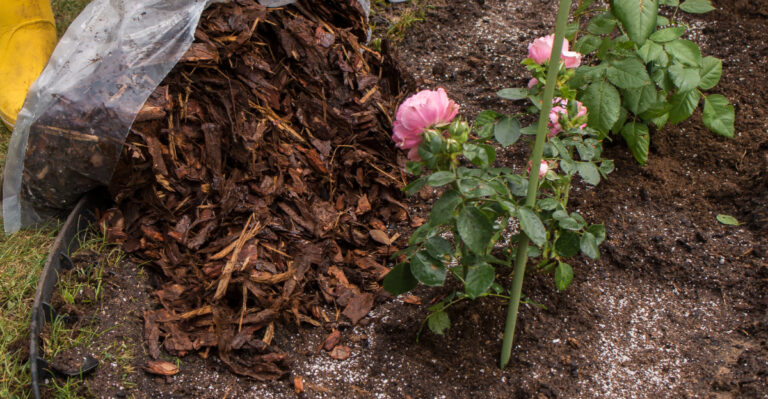
A one-inch layer of fine bark mulch, shredded leaves, or even decorative moss placed on top of the potting mix works beautifully in containers.
It keeps the soil surface soft, retains moisture, and even gives the pot a polished, finished look.
Just make sure to keep mulch pulled back slightly from the main stem to prevent moisture from sitting directly against it.
In our region, where early summer can flip between rainy and surprisingly dry within the same week, mulching containers gives your fuchsias a buffer against those sudden dry spells.
It is a small step that takes less than five minutes but pays off all season long by reducing how often you need to water and keeping roots in a stable, comfortable environment.