What It Means When Mourning Doves Nest In Your Florida Garden
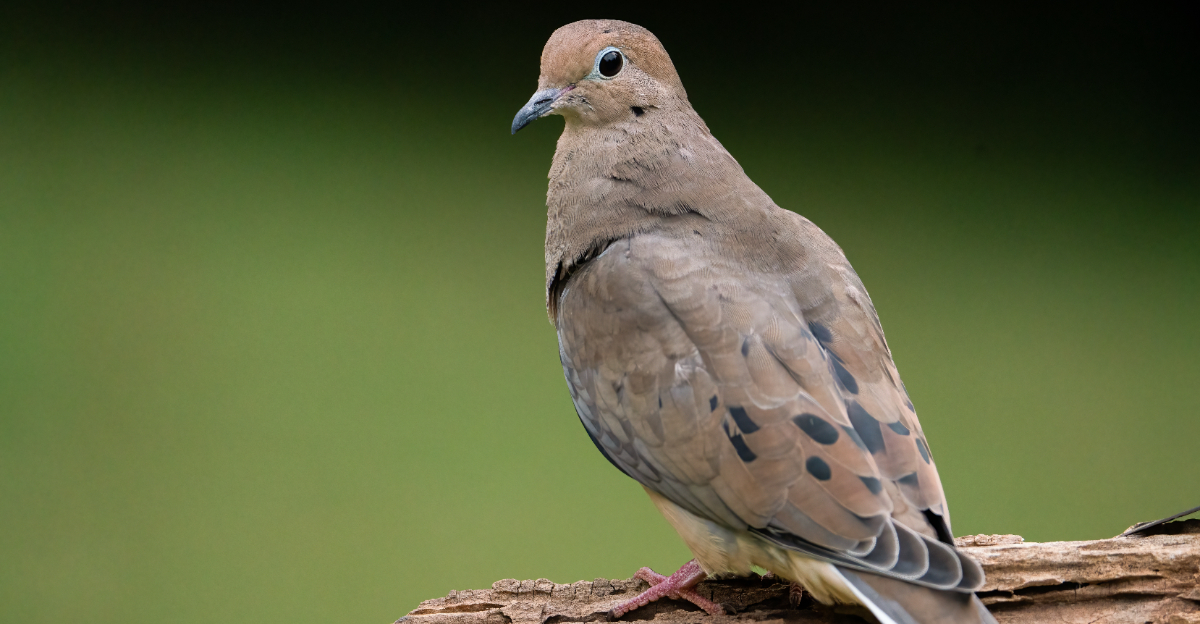
A mourning dove can make a whole garden feel quieter.
One morning, she is simply there, tucked into a hanging basket, shrub, palm, or ledge with the calm confidence of a bird that has already made up her mind.
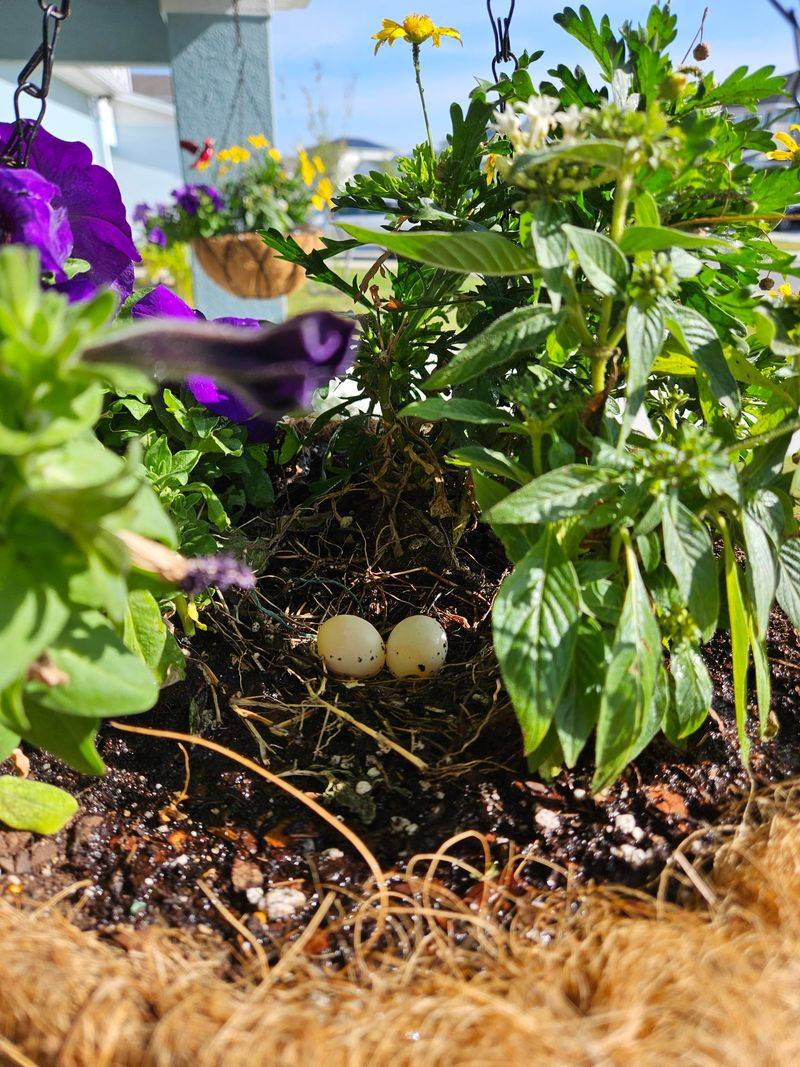
The nest may look almost too flimsy to count as construction, just a loose scatter of twigs, but she sits on it like it is exactly where she belongs.
That choice means something.
Mourning doves are common in Florida neighborhoods, but they do not nest just anywhere. They look for cover, nearby food, safe sightlines, and a yard where daily activity feels predictable enough to tolerate.
A nesting dove is not just a sweet surprise. It is a sign that your garden offers a workable mix of shelter, seeds, calm, and access to open ground.
So what is that soft gray bird quietly telling you from her twiggy little platform?
Start by looking at the space around her. Your plants, seed sources, shrubs, paths, and garden routines may be more bird-friendly than you realized.
1. Your Garden Feels Safe
A nest in a quiet shrub is a strong vote of confidence.
Mourning doves do not need fancy architecture, but they do need a spot that feels secure. A garden corner with light cover, lower foot traffic, and a clear view of approaching movement can look perfect to a nesting pair.
They like a balance of shelter and openness.
Dense shrubs, palms, trellises, porch ledges, hanging baskets, and small trees can all provide support for a nest. Open areas nearby let the birds feed while still watching for danger.
That combination matters in Florida gardens.
A dove may choose a gardenia, hibiscus, wax myrtle, palm frond, fern basket, or ledge because it offers enough cover without feeling boxed in. These birds want protection, but they also want to see what is coming.
Your routine may help too.
A calm yard with predictable movement feels less risky than one with constant disturbance. A gardener who waters the same area gently each morning may become part of the background rather than a threat.
This does not mean the bird wants company.
It means the spot passed the test. Keep your distance, avoid hovering, and let the dove keep trusting the decision she already made.
A nesting dove is a quiet compliment.
Your garden has cover, calm, and enough safety for a bird to take the next big step.
2. Seeds Are Easy Nearby
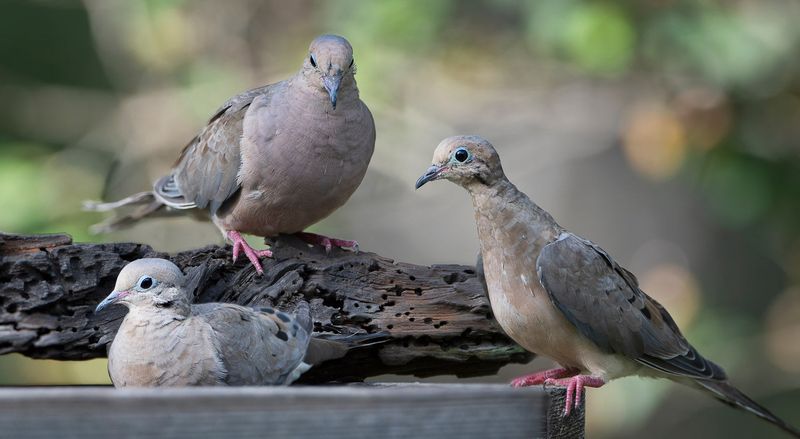
A dove nest often means the food map looks good.
Mourning doves are ground feeders, and seeds make up most of what they eat. They walk slowly through open patches of soil, lawn, paths, and feeder areas, picking up small seeds with quick, bobbing movements.
Florida yards can feed them without trying very hard.
Grass seed, native weed seeds, millet from feeders, cracked corn, sunflower fragments, and fallen seed from garden plants all attract doves. A yard with a little natural texture around the edges can offer more food than a perfectly swept one.
Your Florida Garden Changes Every Week. Your Plan Should Too.
Gardening in Florida changes quickly throughout the season. Every Friday you’ll receive a simple weekly plan showing exactly what to plant, prune, fertilize, harvest, and protect so you never miss the right timing.
Open ground is important.
Doves prefer feeding where they can watch for danger. A seed source tucked under dense plants may be less useful than seed scattered near a clear patch of ground with shrubs nearby for quick cover.
Feeders can help, but mess matters.
Seed that drops below a feeder often attracts doves more than the feeder itself. They usually prefer feeding from the ground rather than clinging to hanging feeders.
Keep feeding areas away from the nest.
Food placed directly beneath or beside the nest can draw too much traffic. A little distance helps the birds feed without making the nesting spot busy.
Natural seed sources are even better.
Letting some grasses, spent flowers, and native plants hold seed gives doves a steady reason to stay nearby.
A nesting dove may be telling you the pantry is close. She found shelter, but she also found groceries.
3. Sparse Nests Are Normal
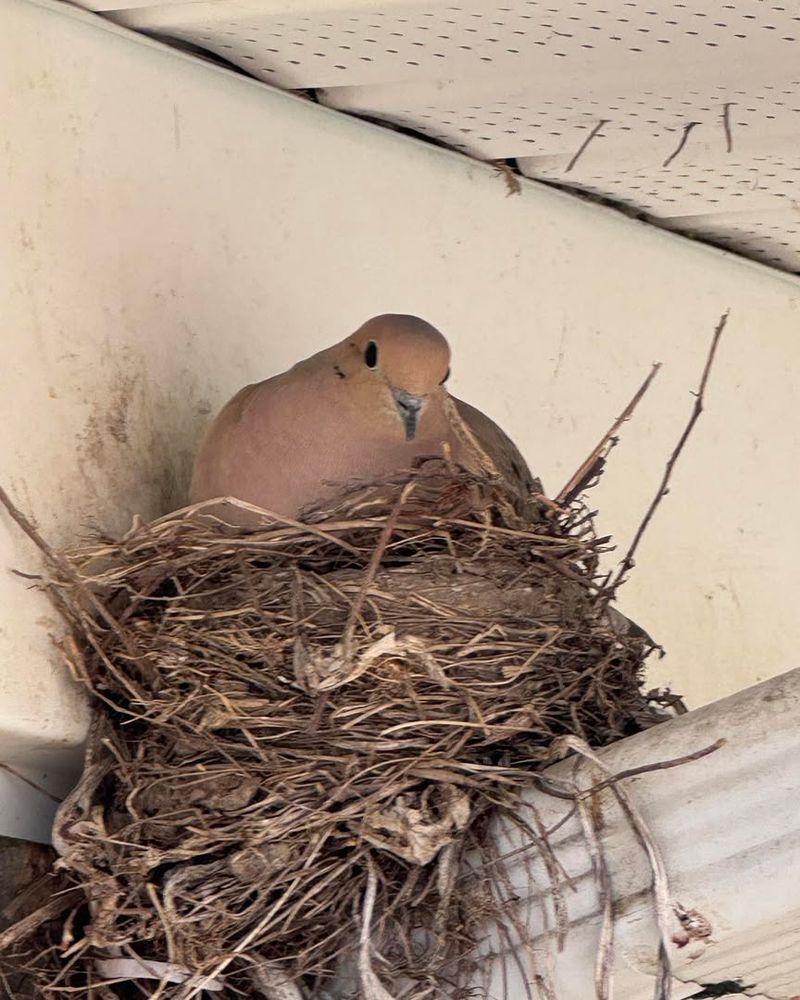
That flimsy pile of twigs is not a construction failure.
Mourning dove nests are famously simple. They often look like someone started building, got distracted, and decided that was enough.
A few twigs, pine needles, stems, or bits of plant material may be all that holds the whole thing together.
This is normal dove design.
The nest is usually a flat platform rather than a deep woven cup. The male often brings materials, and the female arranges them into the loose structure gardeners find so alarming.
Do not reinforce it.
Adding sticks, moving branches, or trying to make the nest sturdier can disturb the birds and may make the site less usable. The parents know this style better than any helpful human with a handful of twigs.
The open structure has benefits.
In Florida heat, a dense insulated nest could become too warm. A sparse platform allows more airflow around eggs and young birds.
The placement helps compensate.
A dove may build on a branch fork, palm frond, basket rim, ledge, trellis, or shrub interior that supports the nest from below. The nest may look weak, but the chosen site often provides the real stability.
Seeing eggs through the bottom can happen.
It looks risky to us, but mourning doves have raised generations this way.
The nest may not impress a human builder.
For a dove, it is practical, familiar, and good enough to start a family.
4. Shrubs Offer Quick Cover
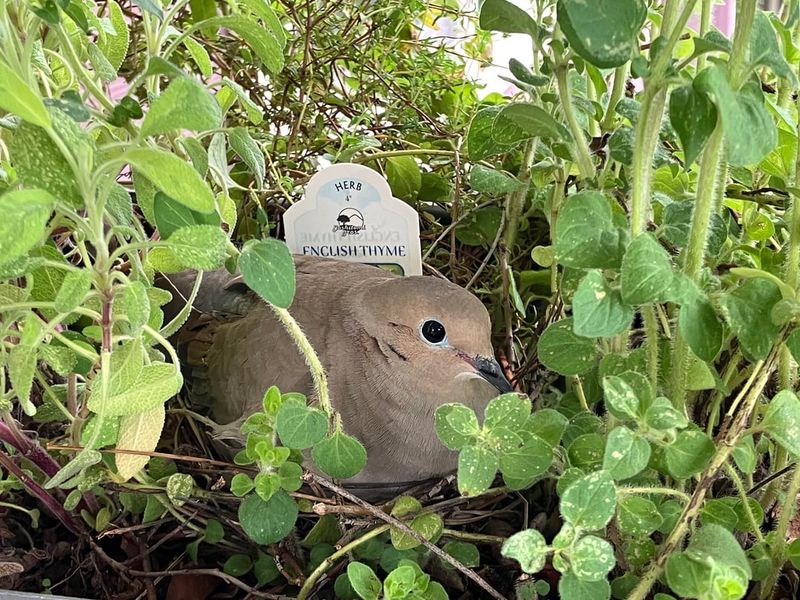
A garden with good cover feels much safer to a dove.
Mourning doves spend plenty of time on open ground, but they do not want to be far from escape routes. A shrub, palm, hedge, fence, or small tree nearby gives them somewhere to retreat when the yard suddenly feels busy.
Florida plants can create ideal shelter.
Wax myrtle, firebush, wild coffee, viburnum, cocoplum, beautyberry, and dense ornamentals all offer cover. Palms can provide ledges and protected pockets. Hanging baskets can mimic sheltered platforms under porches or pergolas.
Layered planting helps most.
A yard with low shrubs, mid-height perches, and open feeding areas gives doves options. They can feed, watch, fly up, and settle without crossing a huge exposed space.
Cover also protects young birds.
Once young doves leave the nest, they may spend time sitting quietly in shrubs or low branches while parents continue feeding them. Dense nearby growth gives them somewhere to stay hidden while they strengthen.
Avoid heavy trimming near active nests.
A shrub that seems overgrown to a homeowner may be exactly what makes the nest feel safe. Major pruning can wait until the nesting cycle has finished.
Quick cover makes a garden feel trustworthy.
A dove does not need a wilderness. She needs a few calm, leafy exits and a place where the whole yard does not feel exposed.
5. A Pair May Be Bonding
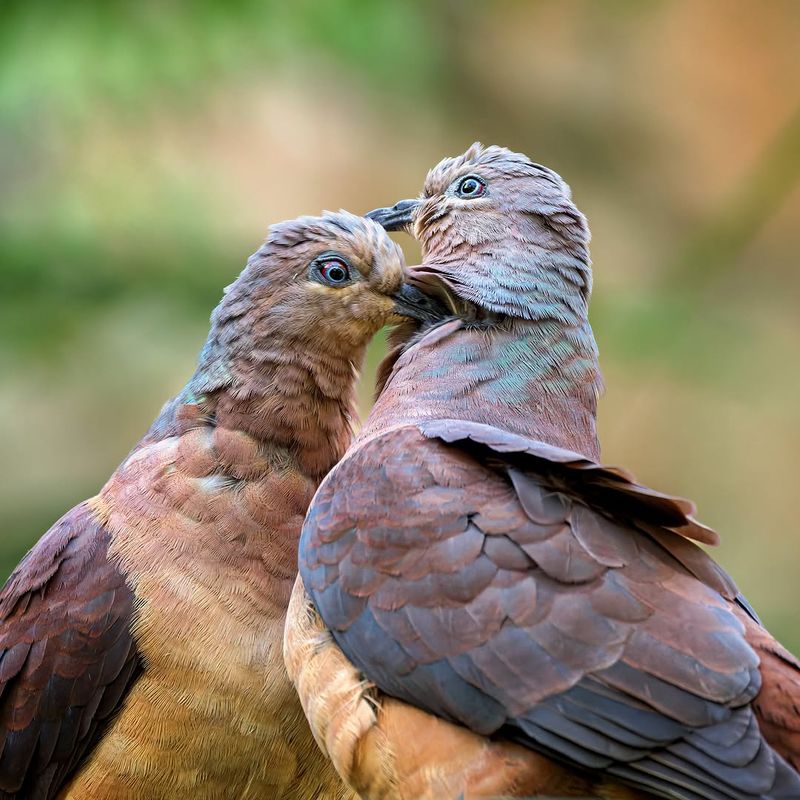
Two doves moving through the yard together are worth noticing.
Mourning doves often form strong seasonal pairs, and a pair visiting the same fence, shrub, or branch repeatedly may be choosing a nesting area. Their behavior can look gentle, quiet, and almost formal.
The male does much of the advertising.
His soft, rolling coo can carry across the yard and is often mistaken for an owl by people hearing it for the first time. He may puff up, bow, bob, or follow the female through likely nesting spots.
Repeated visits are a clue.
A pair landing in the same shrub or basket several days in a row may be scouting. One bird may bring small twigs while the other remains near the chosen site.
Courtship can look subtle.
They may sit close together, preen, or move in synchronized little flights. The whole process feels understated compared with louder backyard birds, but the bond is real.
A nest may appear quickly.
Once the pair chooses a spot, the loose twig platform can come together fast. The finished nest may not look like much, but the pair has already done the important work of choosing the location.
Give them room during this stage.
Too much attention can make a promising site feel less safe. Watch from a distance and let the pair decide without interference.
A bonded dove pair in the garden is a lovely sign.
Your yard made the short list, and then it got the final rose.
6. Eggs May Arrive Soon
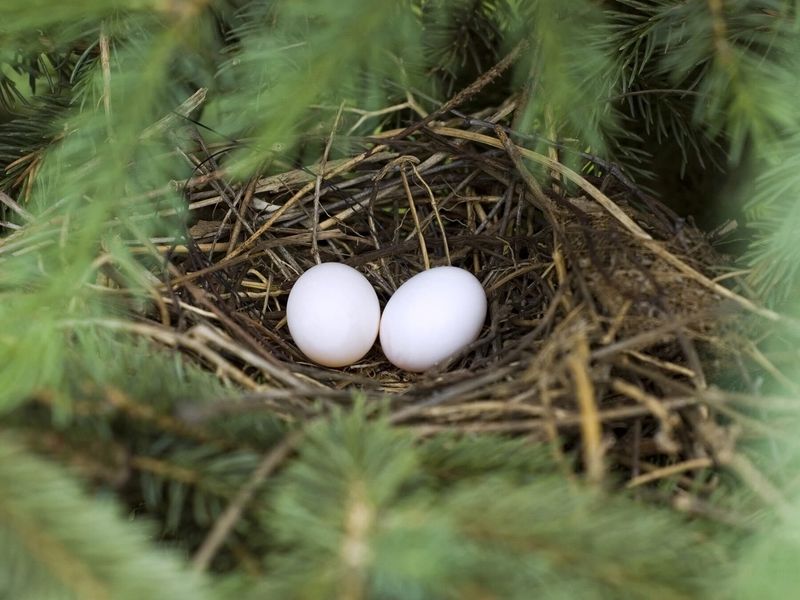
A dove sitting low and still usually means the nest is active.
Mourning doves commonly lay two white eggs. Once incubation begins, one parent may seem almost glued to the nest, watching quietly while the yard moves around them.
Both parents take shifts.
The male often sits during much of the day, while the female commonly takes the night shift. A homeowner may see one bird in the morning and another later without realizing the pair has traded places.
The timeline moves quickly.
Incubation is usually around two weeks. After hatching, the young birds grow fast and may leave the nest in roughly another couple of weeks, though parents continue caring for them after that.
The young are called squabs.
They are fed crop milk at first, a rich food produced by both parents. Later, seeds and other foods become part of the diet as the young birds grow.
Florida’s warm climate allows repeated nesting.
A successful pair may raise more than one brood in a season, sometimes returning to the same general area when conditions remain favorable.
Quiet matters during this stretch.
Frequent disturbance can cause stress and interrupt care. Avoid leaning in for close photos, moving the basket, or pruning the nest plant.
A still dove is not ignoring you.
She is doing one of the most important jobs in the garden, and she is asking for a little peace while she does it.
7. Human Traffic Seems Tolerable
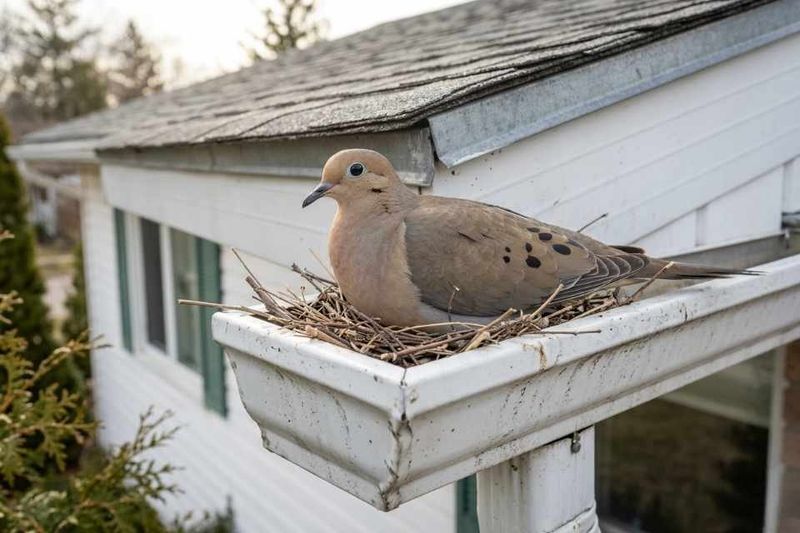
A nest near a path does not mean the bird made a mistake.
Mourning doves are surprisingly adaptable around people. They often nest near patios, porches, garden paths, hanging baskets, and entry areas where daily movement is predictable.
Predictable is the key word.
A person walking the same route each morning may become familiar background activity. A person stopping, staring, reaching, or changing the routine suddenly feels much more threatening.
Keep doing normal things calmly.
Walk past without pausing beside the nest. Water nearby plants gently, but avoid soaking the nest or moving branches around it. Leave loud tools for another area whenever possible.
The bird is watching everything.
A nesting dove may sit still, but she is not unaware. A slight head turn, tighter posture, or sudden flush from the nest means the activity is too close or too intense.
Children and visitors may need a reminder.
A nest in a hanging basket or low shrub is exciting, but repeated close looks can become stressful. Set a quiet boundary around the area.
Human-tolerant does not mean human-proof.
The dove may accept the normal rhythm of the household, but she still needs space to finish the nesting cycle.
Her choice says your garden routine felt manageable.
Keep it that way, and she is more likely to stay.
8. Give The Nest Quiet Space
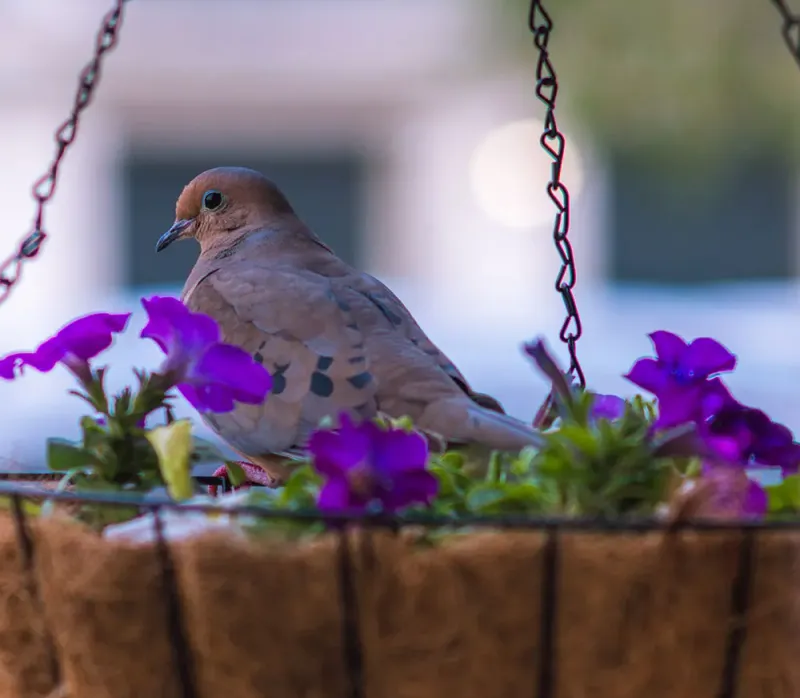
The best help is often doing less.
Once a mourning dove nests in your Florida garden, pause the trimming, blowing, repotting, and rearranging near that spot. The nest will only be active for a short period, and most garden chores can wait.
Put the shears down around nest plants.
A shrub, hanging basket, palm, or vine holding a nest should be left alone until the young birds have moved out. Even careful pruning can shake the nest or expose it to heat and predators.
Skip loud equipment nearby.
Leaf blowers, pressure washers, hedge trimmers, and mowers used too close can make parents flush repeatedly. That leaves eggs or young exposed to heat and stress.
Keep pets away.
Cats and dogs can frighten nesting birds, even when they are only curious. A temporary barrier, closed gate, or supervised potty break can protect the nest area until the birds finish.
Watch from a distance.
Binoculars, a window view, or a quiet chair across the yard can make the experience enjoyable without crowding the birds. You may see incubation shifts, feeding visits, or young doves peeking over the rim.
Let the process finish naturally.
After the nest is empty and the birds have moved on, regular maintenance can resume.
A nesting mourning dove is a small, peaceful gift from the garden.
Give her space, and she may give you one of the sweetest wildlife moments Florida yards can offer.