West Virginia Gardeners, This Hungry Pest Could Strip Your Boxwoods Bare
A neat, green boxwood hedge can turn brown and crispy faster than most gardeners would believe. The culprit is a small, hungry invader called the box tree moth.
It has already turned up in Berkeley and Morgan counties, putting West Virginia boxwoods squarely in its path. The green caterpillars are skilled at hiding deep inside shrubs, often out of sight until the damage shows.
Boxwoods line front walks, frame herb gardens, and fill old family yards across the Mountain State. Losing them would hurt both our landscapes and our wallets.
Sharp eyes can catch this pest before it does serious harm. Each clue, from see-through leaves to sneaky winter hideouts, tells part of the story.
A few minutes spent checking your shrubs this fall could save them. Your boxwoods are worth a closer look.
The Box Tree Moth Has Been Found In Berkeley County
News like this tends to travel fast in garden clubs. The box tree moth, known to scientists as Cydalima perspectalis, has been detected in West Virginia.
Federal and state agencies, including the USDA Animal and Plant Health Inspection Service, have confirmed it. Berkeley and Morgan counties, in the Eastern Panhandle, are where gardeners should pay especially close attention.
The pest originally comes from East Asia, including China, Japan, and Korea. It spread across Europe after arriving there around 2007, often hitching rides on nursery plants.
North America saw it first in Toronto, Canada, in 2018. Since then, it has popped up in several states, including New York, Ohio, Pennsylvania, and Delaware.
Berkeley County sits close to Maryland, Virginia, and Pennsylvania. Busy highways and plenty of garden shopping make it easy for hitchhiking pests to slip across state lines.
Experts worry because boxwoods are planted nearly everywhere in the region. Historic homes, churches, cemeteries, and suburban yards all rely on these tidy evergreen shrubs.
So what can a homeowner do right now? Start by learning what the moth and its caterpillars look like, then check your plants regularly.
Walk around your boxwoods once a week from spring through fall. Part the branches gently and peek inside, since the trouble usually starts deep within the shrub.
Keep a simple notebook or phone log of what you see. Dates and photos can help experts later if you spot something odd.
Staying informed is your first line of defense. A little curiosity now could save a hedge that took decades to grow.
It Goes After Boxwoods And Nothing Else
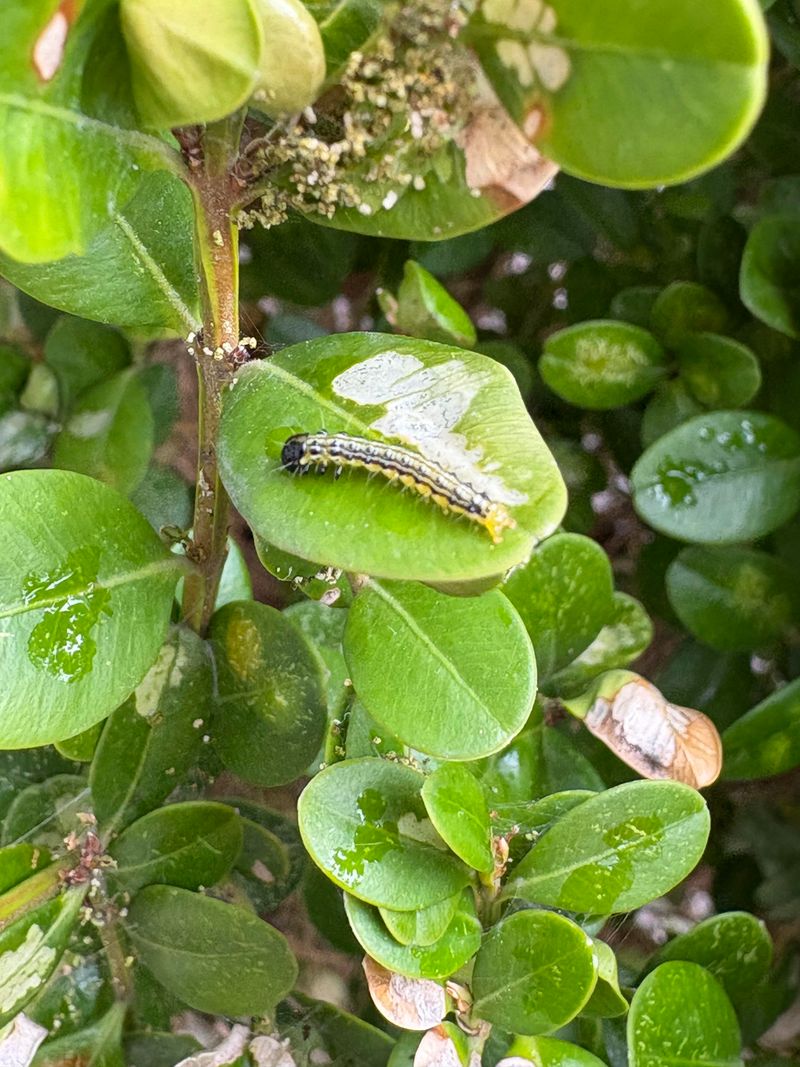
Some pests eat almost anything, but this one is a picky eater. Box tree moth caterpillars focus their appetite on boxwoods, the plants scientists call Buxus.
That narrow diet makes boxwood lovers the main target. If your yard has none, you probably will not see much of this insect at all.
Picky does not mean perfectly loyal, though. During heavy outbreaks, or when boxwoods run out, caterpillars may nibble on euonymus or holly.
Those backup meals seem rare and limited. Still, gardeners with mixed hedges should glance at nearby shrubs while checking their boxwoods.
Your West Virginia Garden Changes Every Week. Your Plan Should Too.
Gardening in West Virginia changes quickly throughout the season. Every Friday you’ll receive a simple weekly plan showing exactly what to plant, prune, fertilize, harvest, and protect so you never miss the right timing.
Why boxwoods? Their leaves contain chemical compounds that discourage most insects, yet these caterpillars handle them easily.
Here is a fun fact for your next garden chat. The caterpillars actually store some boxwood chemicals in their bodies, which may make them taste bad to birds.
That clever trick means fewer natural predators step in to help. Gardeners end up doing more of the watching and protecting themselves.
Knowing the menu helps you focus your time. Instead of searching every plant, you can spend your energy where the risk is highest.
Make a quick map of every boxwood on your property. Include small ones tucked near steps, in pots, or hiding behind larger plants.
Neighbors with long boxwood borders face extra risk. A friendly heads-up over the fence could help the whole street catch problems early.
Chewed, See-Through Leaves Are The First Clue
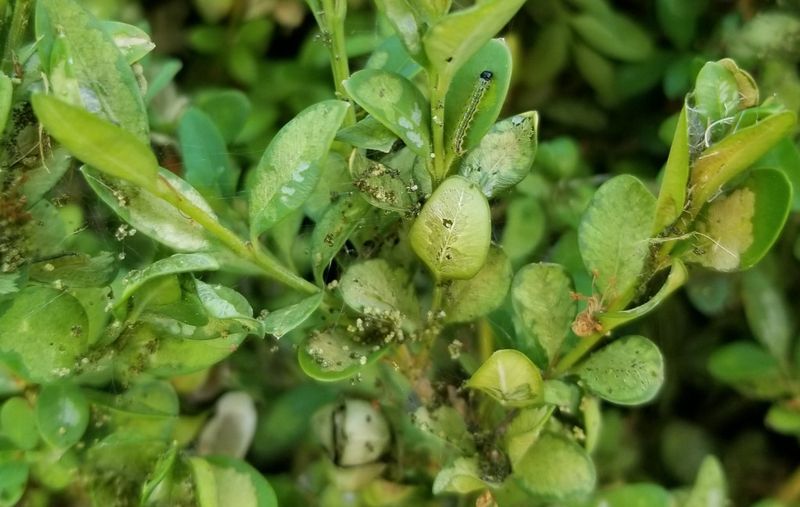
Hold a boxwood leaf up to the sunlight and you might notice something strange. Small, clear patches can look like tiny windows in a leaf.
Young caterpillars create that effect by feeding on the leaf undersides. They scrape away the soft green tissue but leave the thin top layer behind.
Experts call this damage skeletonizing or window-paning. Some describe the leaves as looking peeled, which is a handy way to remember it.
As caterpillars grow, their eating habits change. Older ones devour almost the entire leaf, leaving just the center vein, or midrib.
From a distance, heavy feeding makes a shrub look brown or scorched. Many people first mistake it for drought stress, winter burn, or a fungal disease.
Here is a quick test you can try. Boxwood blight usually leaves dark spots and dropped leaves, while moth damage shows chewing and missing pieces.
Check the inside of the plant, not just the outer shell. Damage often starts in the middle, where you cannot see it from the sidewalk.
Bring a small flashlight on cloudy days. A quick beam into the center of a shrub can reveal clues you might otherwise overlook.
Snap close-up photos of anything unusual. Clear pictures help extension agents tell moth feeding apart from other boxwood problems.
Catching window-paned leaves early gives you the best chance. At that stage, caterpillars are small and the plant still has plenty of strength.
Silk Webbing And Tiny Droppings Give It Away
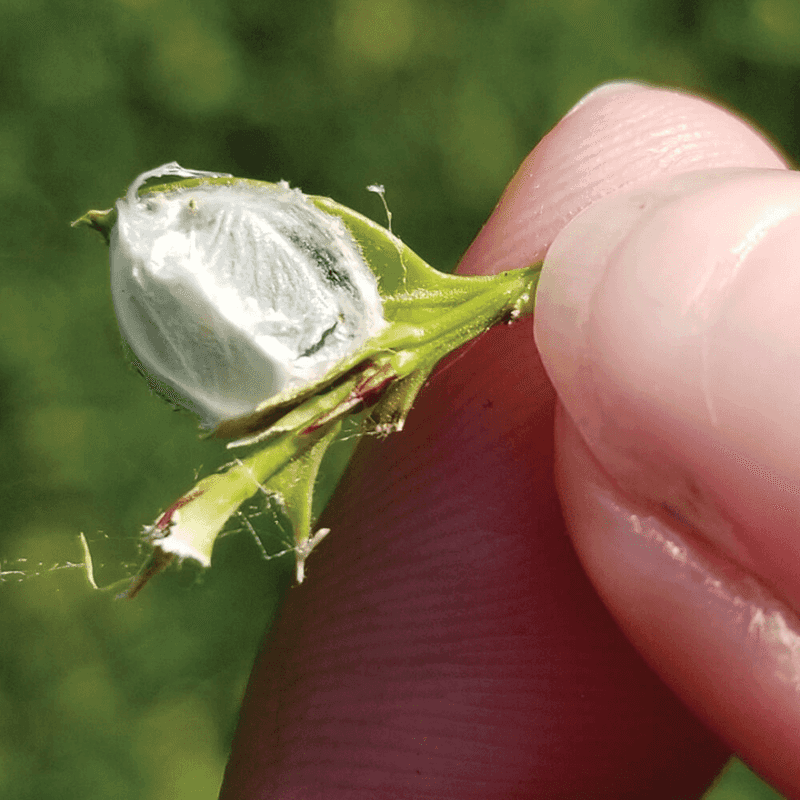
Spiderwebs on a shrub are usually no big deal. On boxwoods, though, messy silk can point to a much hungrier culprit.
Box tree moth caterpillars spin webbing among leaves and twigs as they feed. The silk shelters them and holds leaves together like a tiny tent.
Look closer and you may spot small pellets tangled in the threads. These droppings, called frass, are usually green to blackish in color.
Frass can pile up inside the shrub or sprinkle onto the ground below. A dark scattering under a boxwood deserves a second look.
Try this simple trick on a dry morning. Lay a white sheet of paper under the plant, then tap the branches gently.
Falling frass or tiny caterpillars will show up clearly against the white. It is quick, cheap, and kids often enjoy helping with it.
Spider silk usually looks neat and organized. Caterpillar webbing tends to be messy, dense, and loaded with chewed leaf bits.
Wear gloves when pulling webbing apart. Caterpillars may be tucked inside, and you will want a good look at them without squishing evidence.
If you find webs plus droppings plus damaged leaves, take it seriously. Those three clues together make a strong case for box tree moth.
Bag any webbed clippings you remove and seal them tight. Tossing them loose in a compost pile could let caterpillars crawl away.
Look For Bright Green Caterpillars With Black Markings
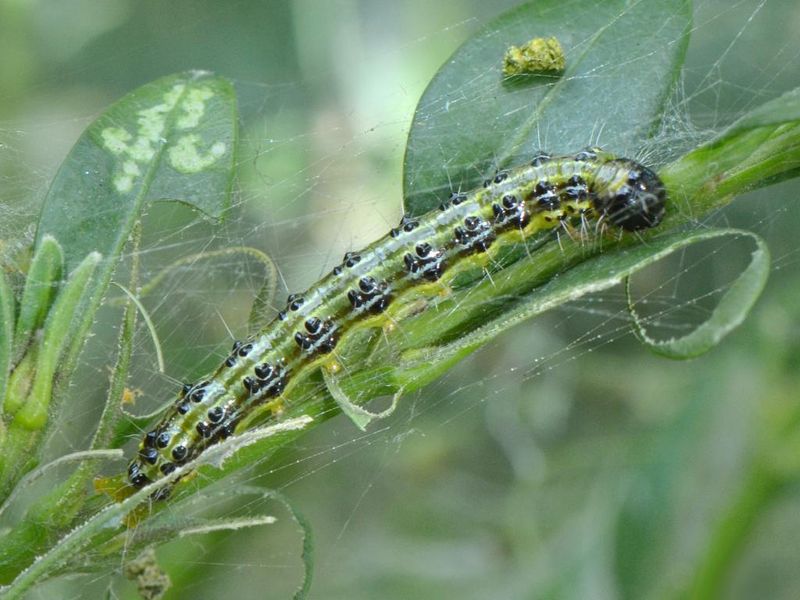
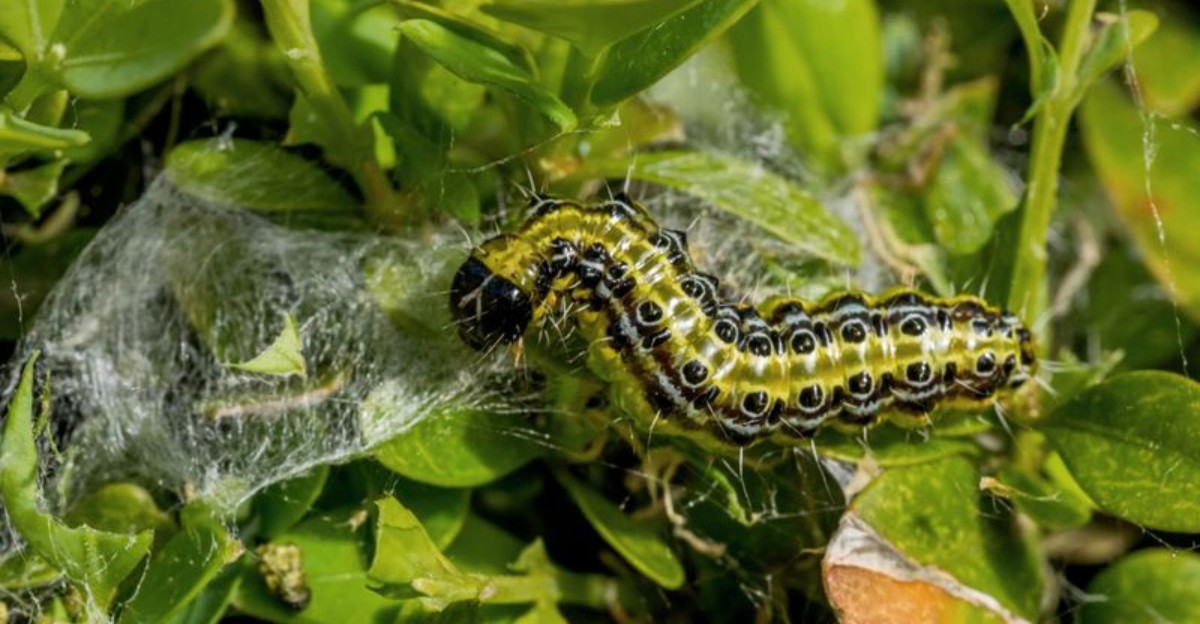
Once you see one, you will not forget it. The box tree moth caterpillar looks like it dressed up for a costume party.
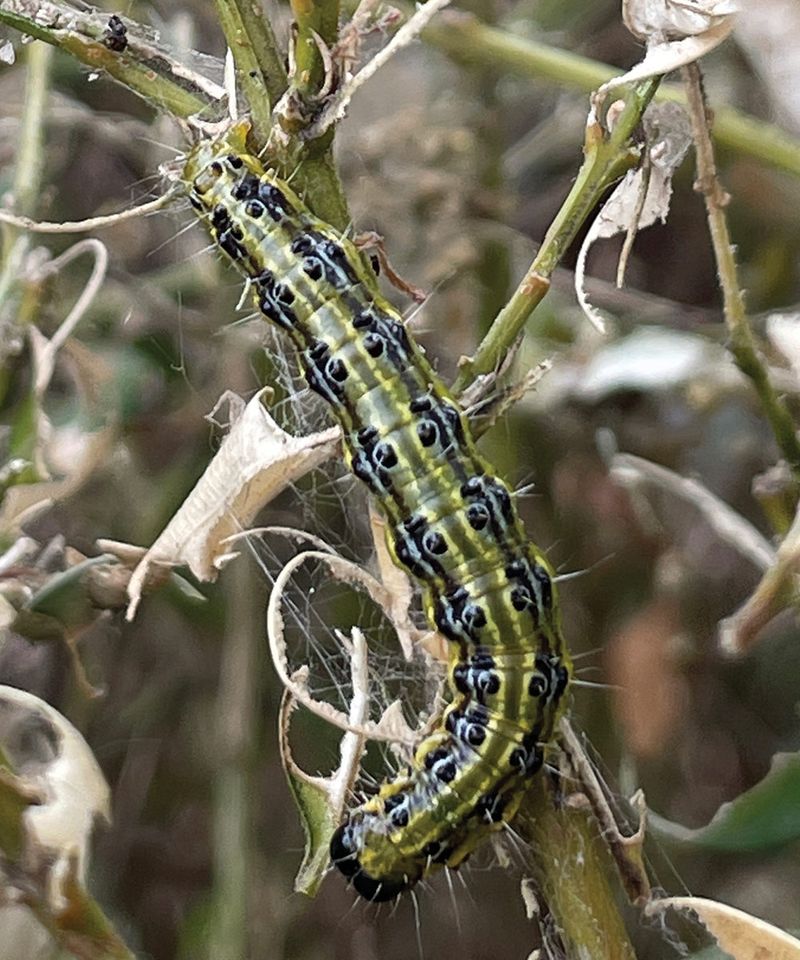
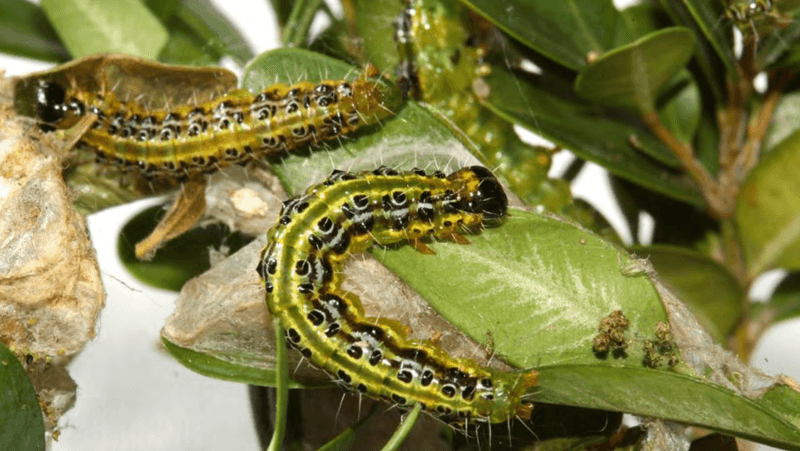
Its body is bright green or yellow-green with bold black stripes. Black spots run along its sides, often outlined with thin white lines.
The head is shiny and black, almost like a polished bead. Small hairs poke out from its body, though they are not stinging.
Full-grown caterpillars reach about 1.5 to 1.6 inches long. Young ones are much smaller, so a careful eye helps early in the season.
Caterpillars are the damaging stage of this insect. The adult moths sip nectar, but the larvae do all the leaf munching.
Spring through early fall is prime caterpillar season in West Virginia. Several generations can hatch in a single year, keeping the feeding going.
When you find one, do not just flick it away. Take a photo next to a coin or ruler to show its size clearly.
Then place the caterpillar in a sealed bag or small jar. Officials may want a sample to confirm what you found.
Hand-picking works for very small infestations. Drop caterpillars into soapy water and check again every few days.
Larger problems may call for a treatment like Bacillus thuringiensis, often called Bt. Ask your local extension office for guidance before spraying anything.
White Moths With Brown Wing Edges Mean Trouble
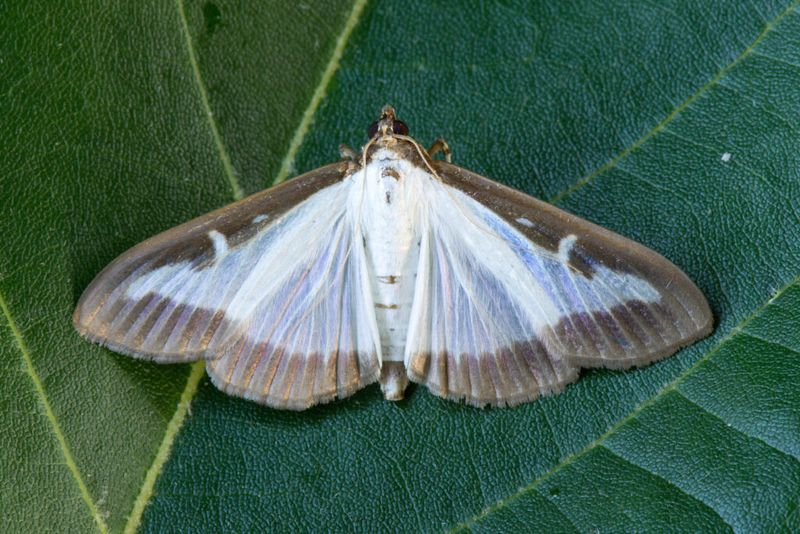
A pretty moth fluttering near your porch light might not be so innocent. Adult box tree moths are actually quite attractive at first glance.
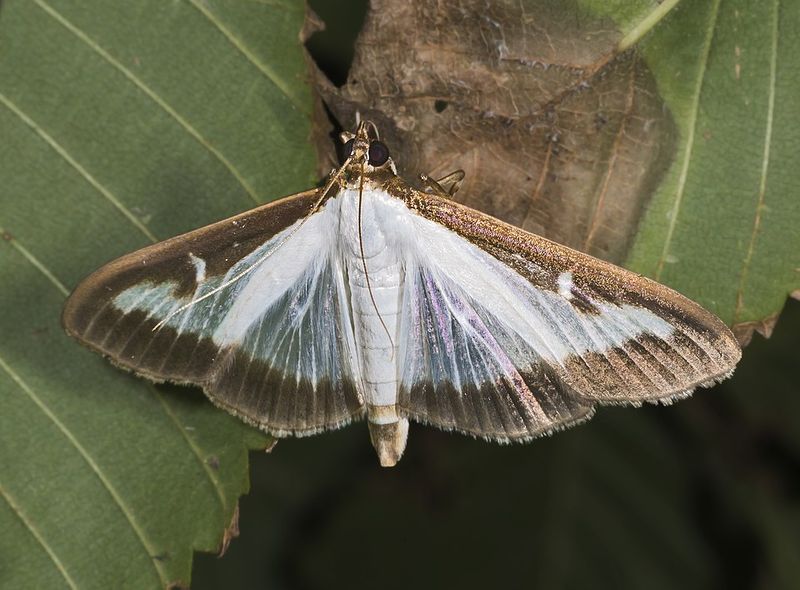
Most have white wings framed by a thick brown border. Each front wing usually carries a small white crescent or comma-shaped mark.
A less common form looks mostly brown all over. Even so, that little white comma still shows up and helps with identification.
Wingspans run about 1.5 inches across. They often rest with wings spread, showing off that brown frame against the white center.
Adults are strong fliers and can travel several miles. Natural spread often covers about 3 to 6 miles each year.
The moths come out mostly at night and love bright lights. Check porch lights, garage doors, and windows on warm summer evenings.
Females lay flat, pale yellow eggs on boxwood leaf undersides. Each egg cluster can launch a whole new round of hungry caterpillars.
Spotting adults means a population may already be nearby. It is a good signal to inspect every boxwood on your property closely.
Some gardeners use pheromone traps to monitor for moths. These traps help show when adults are active, though they will not solve an infestation alone.
Snap a photo if one lands near you. Quick pictures can help officials track how far the moth has traveled across West Virginia.
Winter Doesn’t Stop It, Because Caterpillars Hide Between Leaves
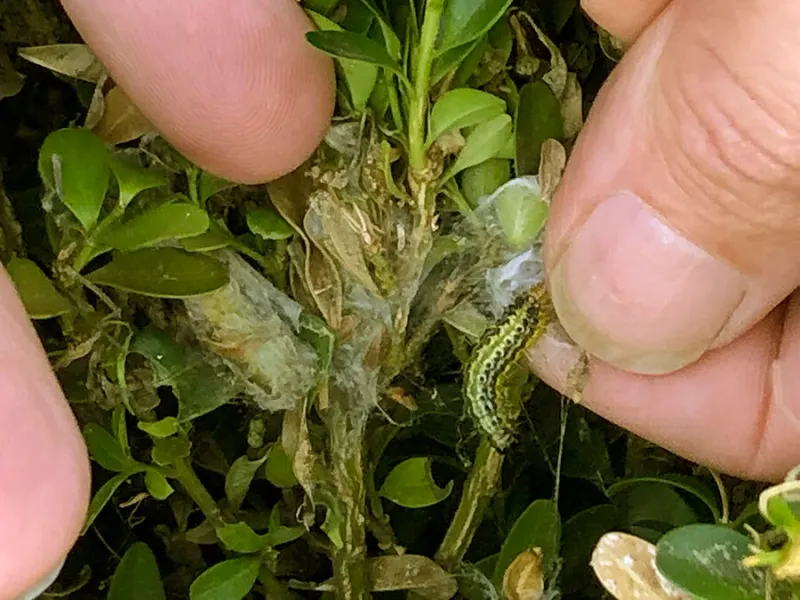
Many folks assume a hard freeze takes care of garden pests. Sadly, the box tree moth laughs off cold weather better than most.
Young caterpillars spend winter tucked inside tiny silk shelters. They weave these between two boxwood leaves, creating a snug pocket.
Scientists call these winter hideouts hibernacula. Each one is small and easy to miss, especially on a dense shrub.
Here is the impressive part. Research suggests these caterpillars can survive temperatures down to at least negative 22 degrees Fahrenheit.
Even the chilliest mountain nights in West Virginia rarely go that low. So winter offers almost no natural relief from this pest.
When early to mid-spring arrives, the caterpillars wake up hungry. They start feeding again as soon as temperatures warm.
Winter is actually a great time to scout. Without other garden chores, you can slowly inspect leaves for paired, webbed-together shelters.
Gently pull apart any leaves stuck together with silk. A small caterpillar curled inside confirms your suspicion right away.
Mark suspicious shrubs with a bright ribbon. That way, you can check them first when spring feeding begins.
Early spring checks matter most, since overwintered caterpillars launch the first damage of the year. Catching them then can slow the whole season.
Damage Can Spread Through A Hedge Fast
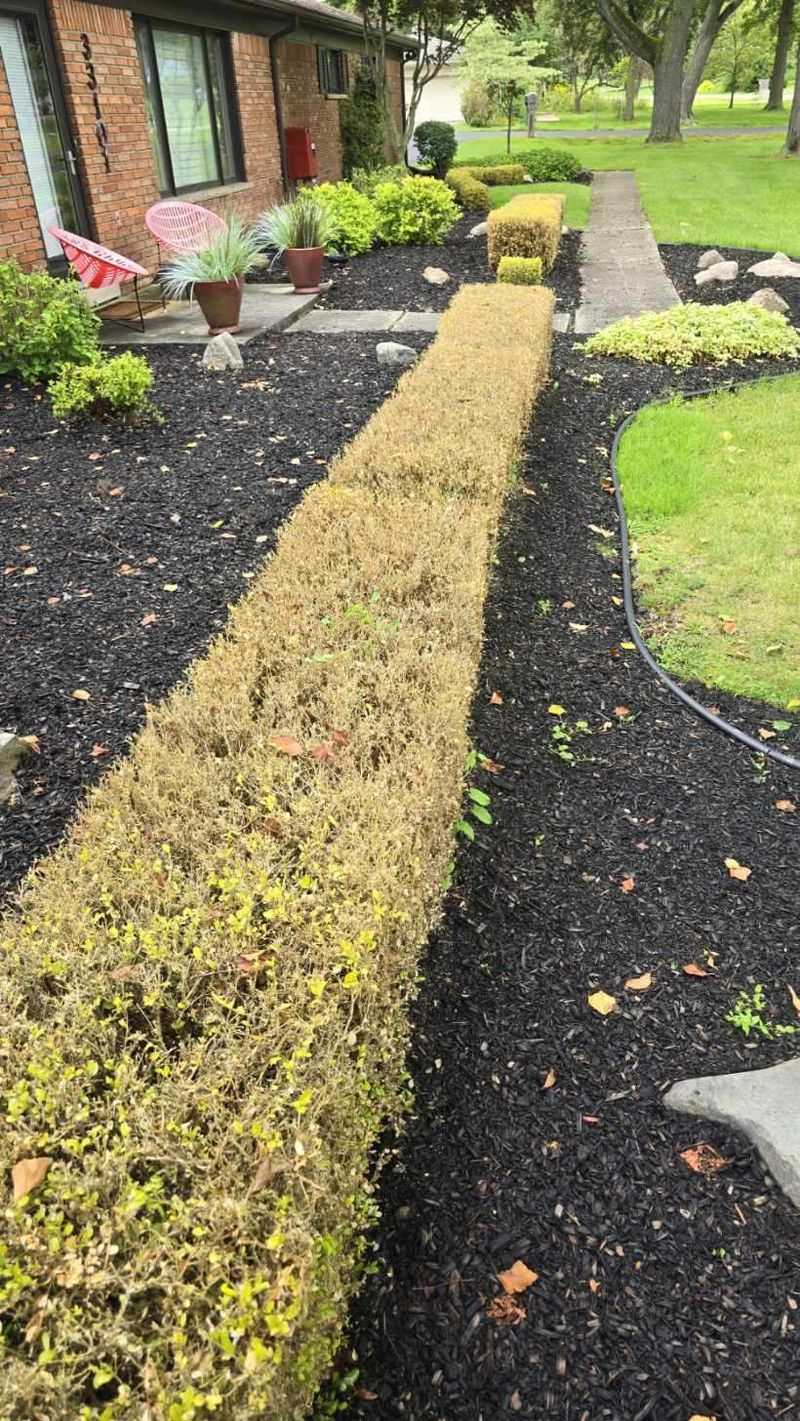
Imagine leaving for a two-week vacation and coming home to a brown hedge. That nightmare has happened to gardeners in Europe and Canada.
Box tree moth caterpillars are fierce eaters. A heavy infestation can strip a shrub of leaves in a surprisingly short time.
Trouble usually begins deep inside the plant. Outer leaves stay green while the interior gets eaten, hiding the problem from passersby.
By the time damage shows on the outside, the population may be large. That is why regular inside checks matter so much.
Once leaves run out, caterpillars may chew on bark. Bark feeding can girdle stems, cutting off water and nutrients to the branches.
Girdled stems often fail to recover. A shrub with repeated attacks may decline and eventually be lost for good.
Long, connected hedges let caterpillars move easily from plant to plant. One weak spot can turn into a whole row of trouble.
Spot-check different sections of a hedge each week. Rotate your focus so no single stretch goes ignored for long.
Healthy plants bounce back better from light feeding. Water during dry spells and avoid heavy pruning when stress is already high.
Many homes have boxwoods passed down through generations. Quick action helps protect those living pieces of family history.
Don’t Share Or Move Boxwood Cuttings
Sharing plants is one of the sweetest parts of gardening. With boxwoods right now, though, generosity could accidentally spread a serious problem.
The moth moves on its own by flying a few miles each year. People moving infested plants and cuttings can carry it much farther.
In Europe, infested nursery stock helped the pest spread up to 96 miles a year. That is a huge leap compared to natural flight.
Eggs, tiny caterpillars, and winter shelters hide easily on leaves. A single branch could carry a hidden hitchhiker to a brand new yard.
Holiday wreaths and greenery deserve extra caution. Boxwood is a favorite for decorations, so think twice before gathering or gifting it.
When buying new boxwoods, shop from reputable nurseries. Ask whether their stock is inspected and comes from areas free of the moth.
Inspect new plants before planting them. Look under leaves and deep inside branches for webbing, droppings, or caterpillars.
Keep new shrubs apart for a couple of weeks if possible. That short waiting period lets hidden problems appear before plants join your hedge.
Pruned boxwood clippings from your own yard should stay put. Bag them tightly and follow local guidance for disposal.
The whole state now sits under a federal box tree moth quarantine, which limits moving boxwoods out of West Virginia. Check with officials before shipping or carrying plant material across state lines.
Report Anything Suspicious Right Away
Your phone camera might be the most powerful pest tool you own. A clear photo sent quickly can help protect boxwoods across an entire region.
Early detection makes a real difference with invasive insects. Small populations are much easier to contain than widespread outbreaks.
Suspect you found box tree moth? Call the West Virginia Department of Agriculture at 304-558-2212 or email [email protected].
Your local WVU Extension office can help too.
Share photos of caterpillars, moths, webbing, and leaf damage. Include your location and the date you noticed the problem.
Keep a sample if you can do so safely. Place caterpillars or moths in a sealed bag or container and store it in the freezer.
Freezing preserves the specimen for experts to examine. Label the bag clearly so nobody mistakes it for a snack.
Do not panic or rip out every shrub. Officials can confirm the pest and suggest steps that fit your situation.
Reports also help scientists map where the moth is spreading. Each sighting adds a piece to the bigger picture.
Tell neighbors, garden clubs, and church groups what to watch for. A community of watchful gardeners spots problems faster than one person alone.
Protecting boxwoods takes teamwork. One quick report today could save countless hedges, gardens, and historic landscapes tomorrow.