Why Ruby-Throated Hummingbirds Disappear From Your West Virginia Yard So Fast
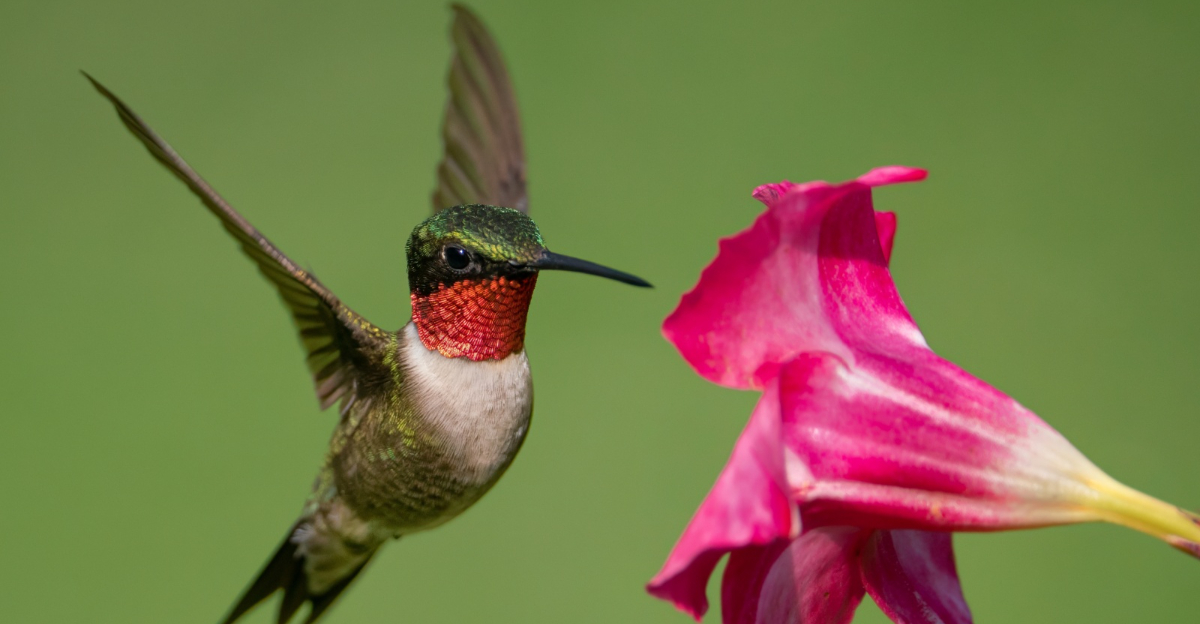
Your backyard feeder draws them in, but it does not hold them. Ruby-throated hummingbirds breed across West Virginia every summer, yet most backyard birders barely see them.
The birds arrive in April, fueled by ancient biological programming and weeks of stored fat. Wings beat up to fifty-three times per second during migration.
Fuel burns at extraordinary rates, demanding strategic stops. Then breeding instinct scatters them deep into forests and hollows far from suburban feeders.
West Virginia sits squarely within the Appalachian breeding corridor. You are watching one of nature’s most precisely timed journeys.
Each bird weighs less than a penny stack yet crosses the Gulf of Mexico in one haul. Instinct, shifting daylight, and hormonal surges dictate every move.
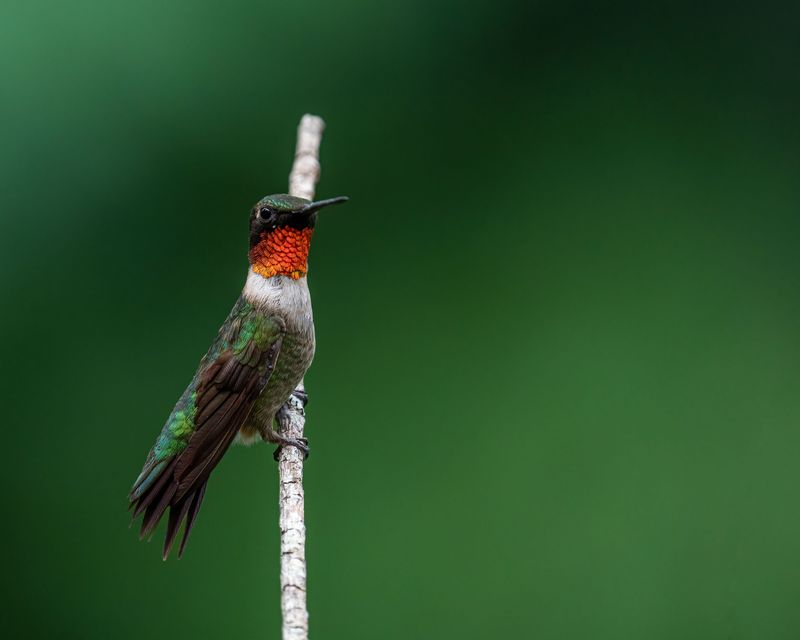
Your yard offers calories, nothing more. Study the throat patch. Notice the iridescent flash. Understand what that tiny body carries.
What happens next on this route will fundamentally change how you see every hummingbird you have ever watched.
West Virginia Is A Breeding Ground, But Not The Way You Think
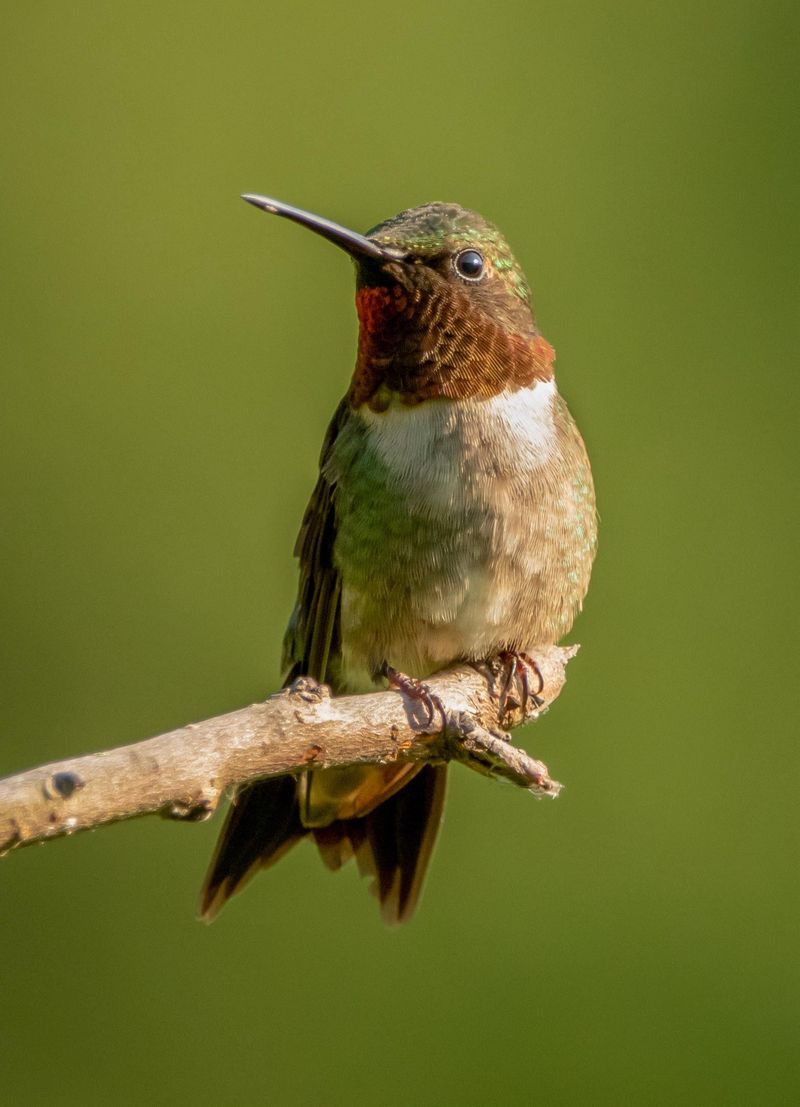
Pull up a range map and the story surprises most people fast. Ruby-throated hummingbirds breed across West Virginia every summer, nesting in forest edges, hollows, farmsteads, yards, and stream corridors statewide.
This is not a fringe event. West Virginia sits in the heart of the ruby-throated hummingbird’s eastern breeding range. So why do so many backyard birders feel like they barely see them?
Nesting instinct is one of the most powerful forces in a bird’s life. When the urge to breed kicks in, birds stop clustering around open suburban feeders.
They disperse into woodland habitat. Dense canopy, tubular wildflowers, and insect-rich understory pull them away from your yard.
Female ruby-throated hummingbirds build their walnut-sized nests entirely alone. They weave plant fibers and spider silk together with stunning precision.
The nest actually stretches as the chicks grow, a property that has drawn serious attention from materials scientists studying elastic biological structures.
Males arrive first to stake out territory in wooded areas. They need time to establish feeding zones before females show up.
A suburban feeder cannot replicate what mature forest habitat offers a breeding bird. The pull toward wooded territory is essentially a genetic instruction.
Birds that followed it successfully raised more young. That trait passed on across thousands of generations.
West Virginia does not lose these birds. It just stops seeing them up close once the breeding season begins.
Pre-Migration Fat Reserves Fuel The Entire Journey
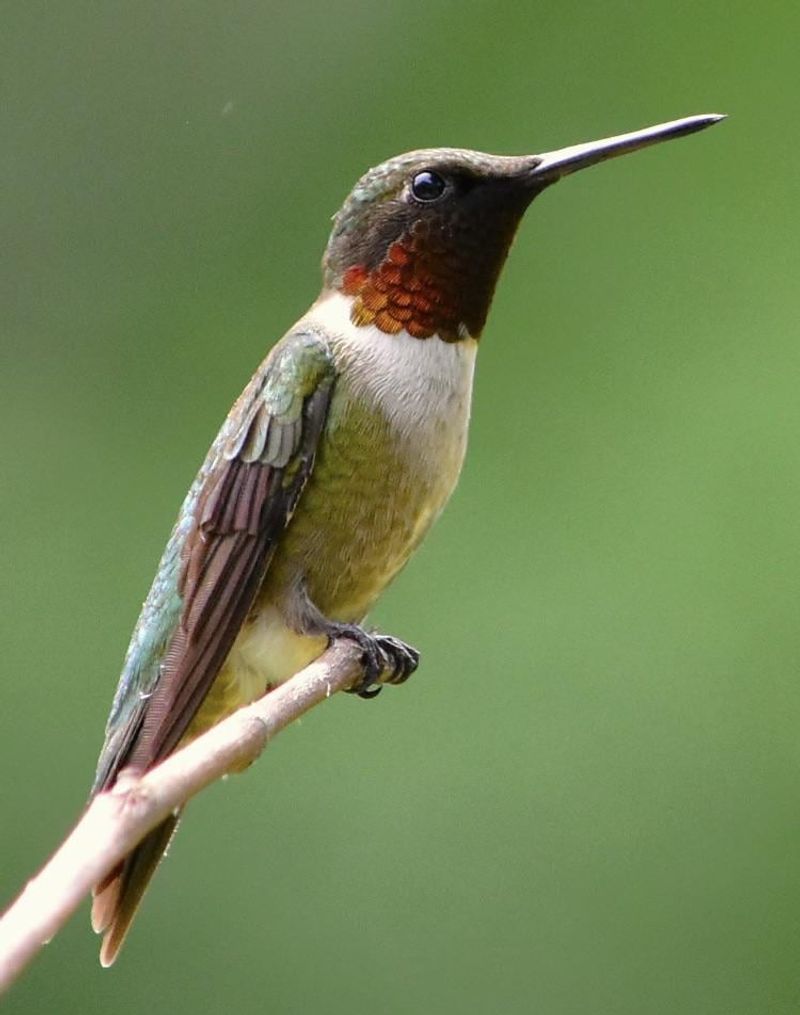
Before leaving their wintering grounds in Central America, ruby-throated hummingbirds do something remarkable. They nearly double their body weight by gorging on nectar and tiny insects for weeks.
That stored fat becomes jet fuel. A bird that weighed three grams can pack on another two to three grams of pure energy.
For a creature that small, that represents a dramatic shift in body composition, one that would take weeks of sustained effort to build.
Crossing the Gulf of Mexico requires about eighteen to twenty hours of nonstop flight over open water. No rest stops, no fuel stations, just wing beats and fat reserves burning steadily through the night.
Your West Virginia Garden Changes Every Week. Your Plan Should Too.
Gardening in West Virginia changes quickly throughout the season. Every Friday you’ll receive a simple weekly plan showing exactly what to plant, prune, fertilize, harvest, and protect so you never miss the right timing.
By the time a ruby-throated hummingbird reaches the Gulf Coast, it has burned through a significant chunk of those reserves. But enough remains to keep pushing northward without extended layovers.
West Virginia falls within the post-Gulf recovery zone. Birds passing through have already refueled briefly along the Gulf Coast and in the mid-South.
They carry enough energy to continue without treating the Mountain State as a dining room.
Think of it like a road trip where you filled up the tank two states back. You do not pull over for gas when the gauge still reads half full.
These hummingbirds are running on a biological schedule, and their tanks are not empty yet.
Tailwinds Help Them Cover Distance Faster
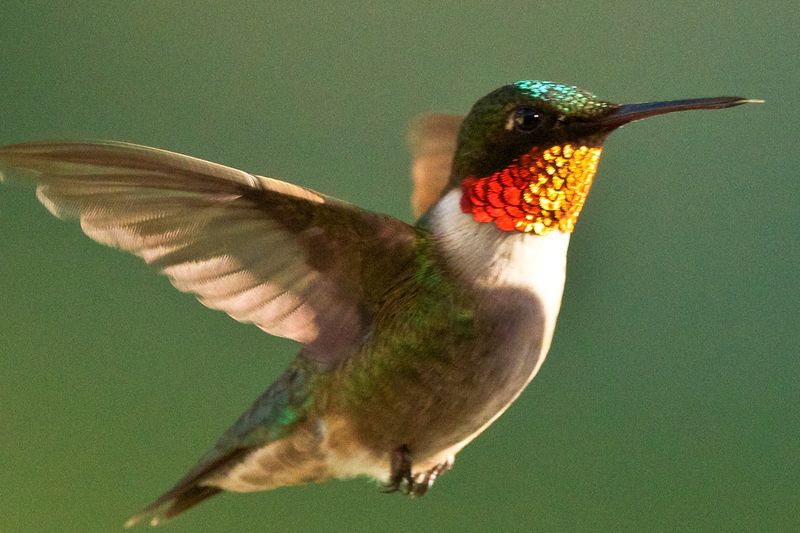
Spring migration timing is not random. Ruby-throated hummingbirds are surprisingly savvy about weather patterns.
They tend to move north in pulses that align with favorable southerly winds. A good tailwind can boost a small bird’s ground speed significantly.
What might take two days in still air can shrink to one day with the right atmospheric push behind tiny wings.
Bird researchers tracking migration have noticed that large numbers of hummingbirds move through West Virginia in tight April windows before the breeding population disperses into forest habitat for the summer.
A warm front sweeps through, the winds shift south, and suddenly thousands of birds are on the move.
When the wind cooperates, there is no logical reason to stop. Every hour of flight with a tailwind is progress that calm or headwind conditions would make far more costly in energy.
West Virginia’s geography plays a role too. The Appalachian ridges can funnel birds along predictable corridors.
But those same ridges do not offer the flat, nectar-rich lowlands that would tempt a bird to settle in and stay.
Watching weather apps actually helps backyard birders predict hummingbird activity. A southerly wind event in late April often means a brief surge of ruby-throated hummingbirds passing through.
Enjoy the show while it lasts, because the wind is doing the work and the birds are taking full advantage.
Changing Daylight Triggers An Instinct To Push Forward
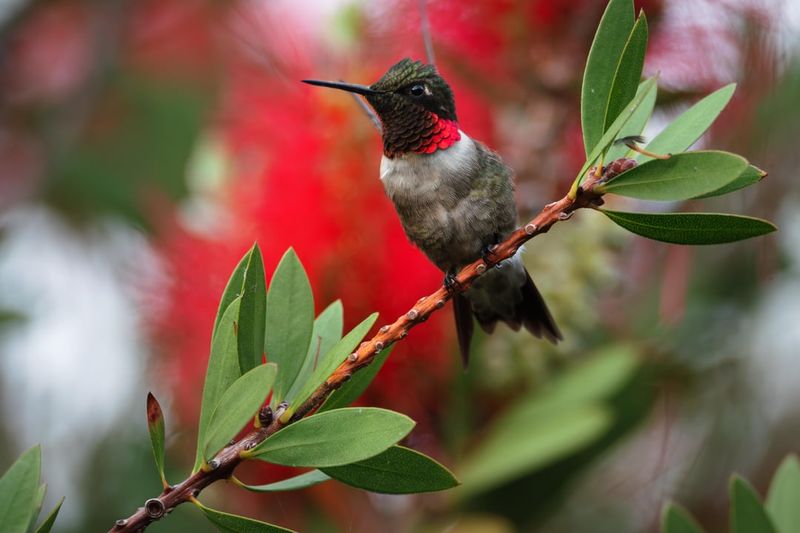
Inside every ruby-throated hummingbird is a biological clock tuned to the sun. As days grow longer in spring, a cascade of hormonal changes begins.
Restlessness sets in, appetite spikes, and the urge to fly north becomes impossible to ignore. Scientists call this response zugunruhe, a German word meaning migratory restlessness.
It is not a choice the bird makes consciously. The lengthening daylight literally rewires the bird’s behavior on a chemical level.
This photoperiod response is ancient and deeply reliable. It has guided hummingbirds north and south for thousands of generations.
Backyard feeders and blooming salvia can extend a brief stopover, but they cannot override the photoperiod signal pushing these birds north.
By the time ruby-throated hummingbirds reach West Virginia in mid-April, their hormones are already pushing hard toward breeding mode. The instinct says north, and the body obeys without negotiation.
Interestingly, the same daylight cues that drive them north in spring will eventually pull them south again in late summer. The system works in both directions with equal precision.
Nature’s timing mechanism has guided this migration reliably for thousands of generations, long before humans had any clock at all.
West Virginia gets caught in the middle of this hormonal surge. The birds are not pausing to evaluate the scenery.
They are locked into a biological mission, and the Appalachian Mountains are simply the scenery they happen to be flying over.
Scarce Nectar Sources Offer No Reason To Stop
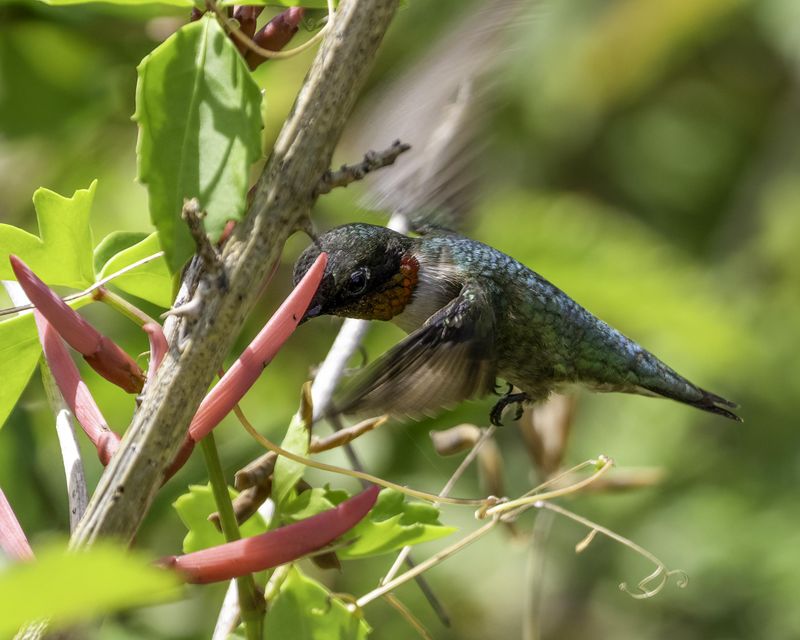
Mid-April in West Virginia is not exactly a nectar buffet. The trees are just starting to bud. Most wildflowers have not opened yet.
The landscape is green and promising, but the actual food supply for a hummingbird is pretty thin.
Ruby-throated hummingbirds depend on tubular flowers for nectar, and those flowers tend to peak in late spring and summer.
Trumpet vine, bee balm, and cardinal flower are weeks away from blooming when the first migrants arrive.
Without a reliable food source, there is no incentive to linger. A hummingbird that stops and cannot find enough nectar wastes precious energy and time.
The math simply does not favor an extended stay. Backyard feeders can make a difference for individual birds passing through.
Putting out a feeder in early April gives tired migrants a quick energy boost. But one feeder in a yard does not replicate the dense floral resources of a true breeding habitat.
Further north, the timing of spring blooms aligns more closely with peak migration arrival. Ruby-throated hummingbirds and their food sources co-evolved over millennia.
The relationship between bird and flower is finely tuned to specific latitudes and seasons. West Virginia sits in a seasonal gap. The birds arrive before the landscape is ready to host them.
That mismatch alone explains a lot about why this state functions as a passthrough rather than a destination worth stopping for.
By May and June that picture changes completely. The blooms arrive, the birds settle in, and West Virginia becomes an active breeding ground until early fall.
West Virginia Is Simply A Mid-April Corridor
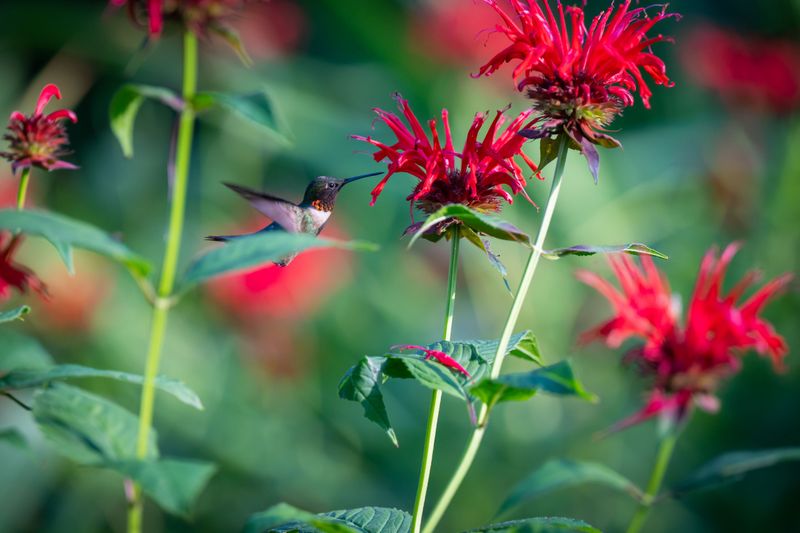
Geography has a quiet but powerful say in where birds go. West Virginia’s long, narrow shape and layered mountain ridges make it a natural flyway rather than a stopping point.
The terrain channels birds through rather than inviting them to settle. Migration corridor is not just a poetic phrase.
It describes a real physical pathway shaped by topography, wind patterns, and food availability.
West Virginia functions as a corridor in April and a breeding ground from May onward. Most backyard birders only witness the first half of that story.
The peak passage window for ruby-throated hummingbirds in West Virginia is remarkably tight.
Most sightings cluster between April 15 and April 30, based on eBird records, though exact timing shifts slightly year to year with weather patterns. After that, the bulk of the population has already moved through.
Birders who track eBird data can actually watch the migration front move northward in near real time.
The ruby-throated hummingbird sighting reports light up like a slow-moving wave rolling from the Gulf Coast toward Canada each spring.
West Virginia sits right in the middle of that wave’s path. It is a predictable stop on the map, but predictable does not mean permanent.
The wave keeps rolling, and the birds roll with it. For residents of the Mountain State, this mid-April corridor moment is actually a gift.
Knowing the timing lets you put out feeders at exactly the right moment to catch migrants in transit. You may not keep them long, but the brief visit is worth every drop of sugar water.
Built For Distance, So Stopping Isn’t Always Necessary
The Gulf of Mexico crossing alone covers roughly 500 miles of open water, nonstop, overnight, with no fuel stops.
Birds that complete it have already demonstrated what this species is built for. That single crossing is one of the most demanding feats in the animal kingdom. No land.
No rest. Just wings and stored fat burning through the dark. For context, the entire length of West Virginia from north to south is roughly 205 miles.
These birds can fly that distance and keep going without touching down. After the Gulf, the Appalachians are simply the next stretch of road.
West Virginia’s mountains are manageable terrain by comparison. The ridges that challenge human hikers barely register for a bird traveling at altitude with a tailwind.
Ruby-throated hummingbirds are built for distance. Their hearts beat over 1,200 times per minute during flight.
Their muscles are dense with mitochondria, the cellular engines that convert fat directly into motion. Every system in their body is optimized for sustained travel, not leisurely stops.
Stopping requires energy too. Landing, scanning for threats, finding food, and taking off again all cost calories.
A bird in good condition with favorable winds burns fewer resources by staying airborne than by repeatedly stopping and starting.
These birds are not abandoning your yard out of indifference. Many of them are nesting within a few miles of where you are standing.
They are extraordinary athletes on a timed mission, and West Virginia simply falls on the route, not at the finish line.