What Arizona Birds Actually Need To Survive Through Extreme Summer Heat
115 degrees. That is not a record. That is a Tuesday in July for parts of Arizona.
Many people retreat indoors. Crank the AC. Wait it out. The birds do not have that option. They are out there, in it, every day, trying to find water and shade and enough food to keep going while the desert does its worst.
A backyard in Arizona during summer is not just a nice place to put a feeder. It can be a genuine resource for birds that are working harder than most people realize just to get through the day.
The right setup makes a real difference. The wrong setup, or no setup at all, leaves birds with fewer options during the hours that matter most.
Some of what helps is obvious. Some of it will genuinely surprise you. All of it is practical and within reach for any Arizona homeowner with a yard and twenty minutes.
Here’s what actually moves the needle for birds in extreme heat.
1. Keep Shallow Water Available
Depth matters more than most people realize when it comes to bird water.
A tiny house finch landing on the edge of a deep birdbath, reaching down, and nearly tumbling in is not an unusual scene in Arizona yards during summer.
Most Arizona birds are small, and water that is too deep is not just uninviting, it can be genuinely unsafe for smaller species trying to drink.
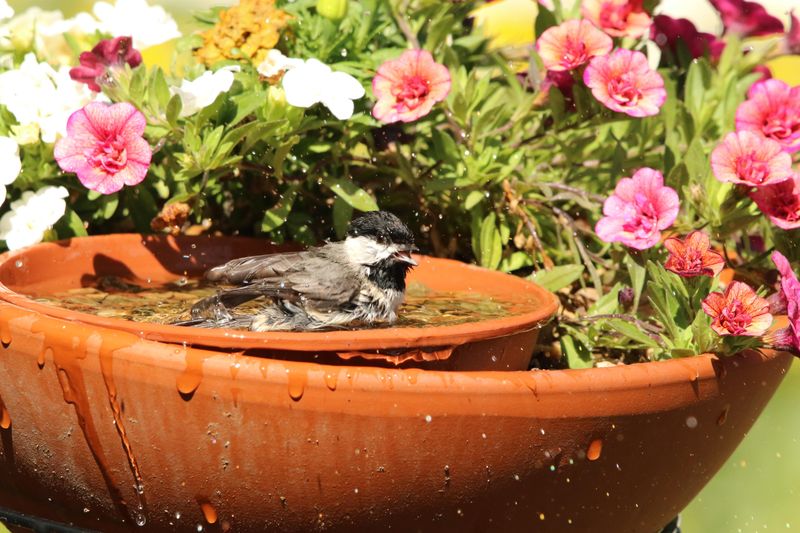
Hummingbirds, warblers, and sparrows need water no deeper than one to two inches. A standard deep birdbath often misses that mark entirely.
The fix is simple: add a few clean, flat stones to a deeper basin to create standing spots where small birds can drink without struggling.
A terracotta saucer from a garden center costs a few dollars and works perfectly as a dedicated shallow dish.
Ground-level dishes attract species like white-winged doves and Gambel’s quail, which strongly prefer drinking from low surfaces.
Providing water at multiple heights, both ground level and elevated, makes your yard accessible to a wider range of visitors at the same time.
Adding a small dripper or wiggler attachment creates moving water that birds can hear from a distance. Sound travels well in the desert morning air, and moving water draws in species that might otherwise pass right by a still dish without noticing it.
Two or three water spots spread around the yard also reduces competition between species. More access points, more birds, more activity.
Shallow water is not a small detail. It is the whole reason certain birds stop at your yard instead of the next one down the street.
2. Place Water In Safe Shade
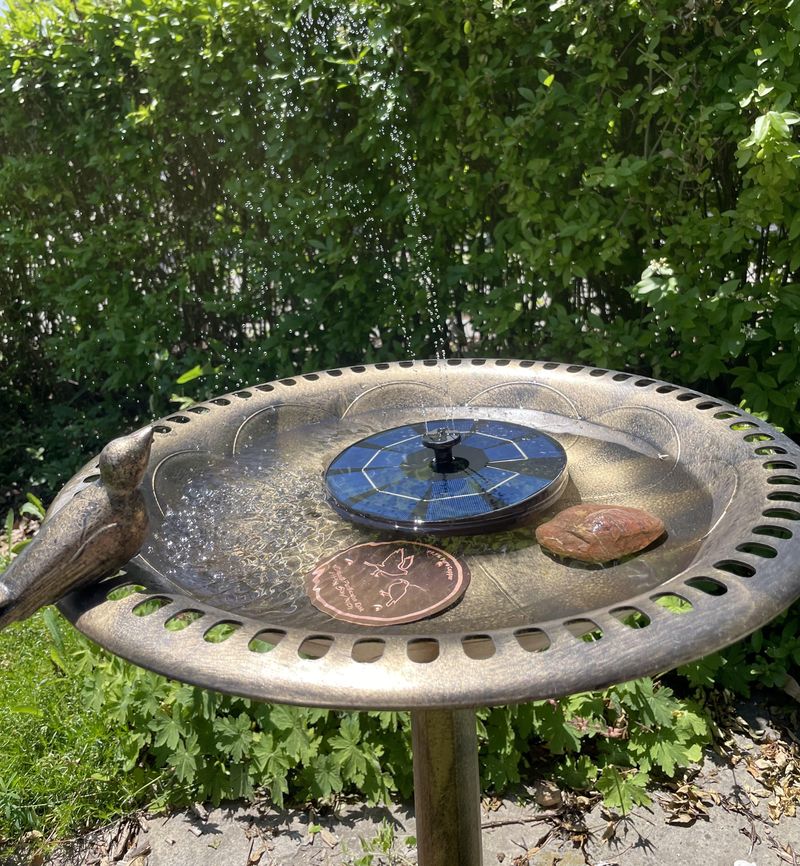
A birdbath sitting in full Arizona sun on a 110-degree afternoon is not a refreshing drink.
It is a warm, increasingly unpleasant puddle that most birds will bypass in favor of literally anything cooler. Water in direct sunlight heats up fast, and during peak summer heat that temperature rise happens within an hour or two of filling the dish.
Your Arizona Garden Changes Every Week. Your Plan Should Too.
Gardening in Arizona changes quickly throughout the season. Every Friday you’ll receive a simple weekly plan showing exactly what to plant, prune, fertilize, harvest, and protect so you never miss the right timing.
Placing a birdbath or water dish under a tree, pergola, or large shrub keeps the water noticeably cooler throughout the day.
Native trees like palo verde, mesquite, and desert willow provide excellent natural shade while also supporting the surrounding habitat.
Even a block wall casting a shadow on the north or east side of the yard can help maintain more reasonable water temperatures through the hottest hours.
Shaded water does something else too. Birds feel safer drinking in spots where they have cover overhead. Open, exposed areas make birds nervous because spotting an approaching predator is harder without overhead cover.
Shade naturally provides a sense of protection, which means birds linger longer and return more frequently to shaded sources than exposed ones.
The window to focus on is roughly 11 a.m. to 4 p.m., when temperatures peak and birds need cool water most urgently.
Moving your water source a few feet at a time until it stays shaded through that window is a small adjustment with a genuinely outsized impact.
Hot water, exposed location, nervous birds. Cool water, shaded spot, relaxed birds that come back. The math is straightforward. Shade is doing more work here than most people give it credit for.
3. Refresh Water Before It Heats
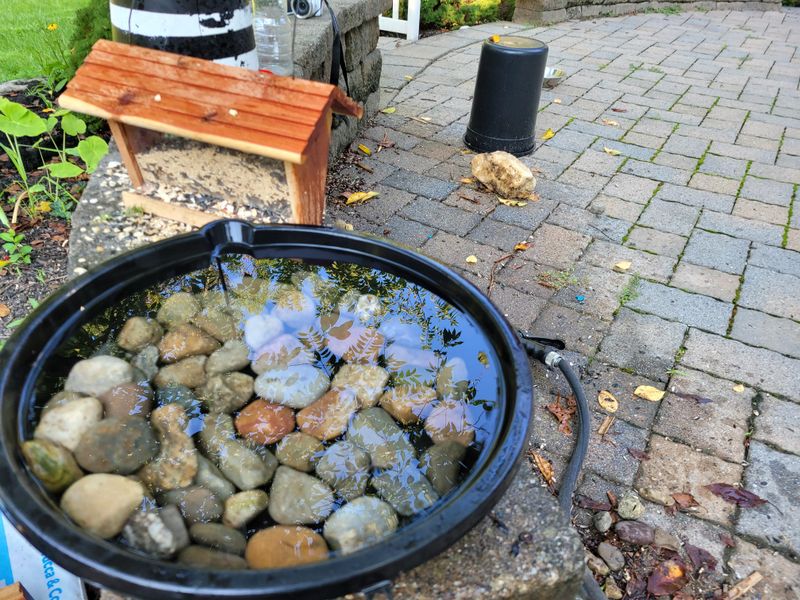
There is a small window between sunrise and around 8 a.m. in an Arizona summer when the air is still bearable and the birds are most active.
That window is the best time to refresh your water sources, and it takes less than five minutes to make a real difference for every bird that visits your yard that day.
Stale, warm water sitting in a dish from the day before is not just unappealing. It grows algae and bacteria quickly in Arizona heat.
Green, slimy water signals that the dish needs a rinse and a refill. A quick scrub with a small brush and a fresh pour of cool water keeps things clean and safe without any special products or effort.
A midday refresh is worth adding on days when temperatures spike above 105 degrees. Birds that are already heat-stressed need the coolest water available.
Pouring out warm water and replacing it with cooler tap water at midday can be a real relief for a bird panting in nearby shade.
Panting in birds works similarly to panting in dogs, releasing body heat through rapid breathing, and it costs the bird energy it can barely afford to spend.
Setting a simple phone reminder for an early morning water check turns this into a habit rather than an intention.
Consistency matters more than perfection. Even one fresh refill per day is significantly better than leaving water untouched through days of triple-digit heat.
Five minutes in the morning. That is genuinely all it takes. The curve-billed thrasher who visits your yard at 7 a.m. is not going to send a thank-you note, but the fact that it keeps coming back says everything.
4. Add Native Shrubs For Shelter
Walk through a desert wash in southern Arizona on a hot July morning and notice where the birds actually are.
They are inside the shrubs, tucked deep in the branches, not perched out in the open. That is not random behavior.
Dense native vegetation offers shade, predator protection, and a microclimate that can run several degrees cooler than the surrounding open air.
Planting native shrubs is one of the most impactful investments an Arizona homeowner can make for local bird populations.
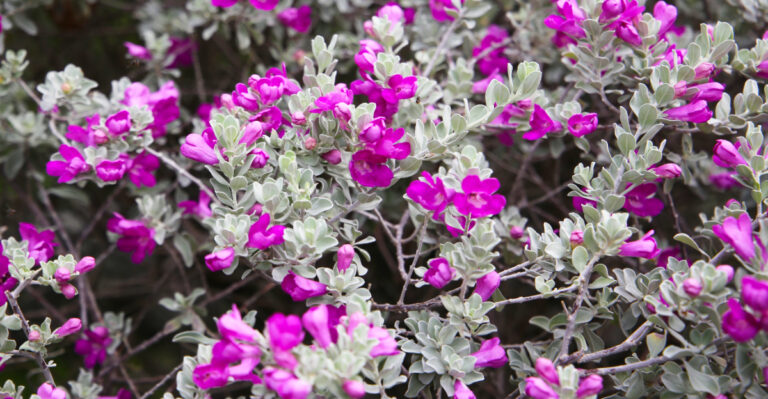
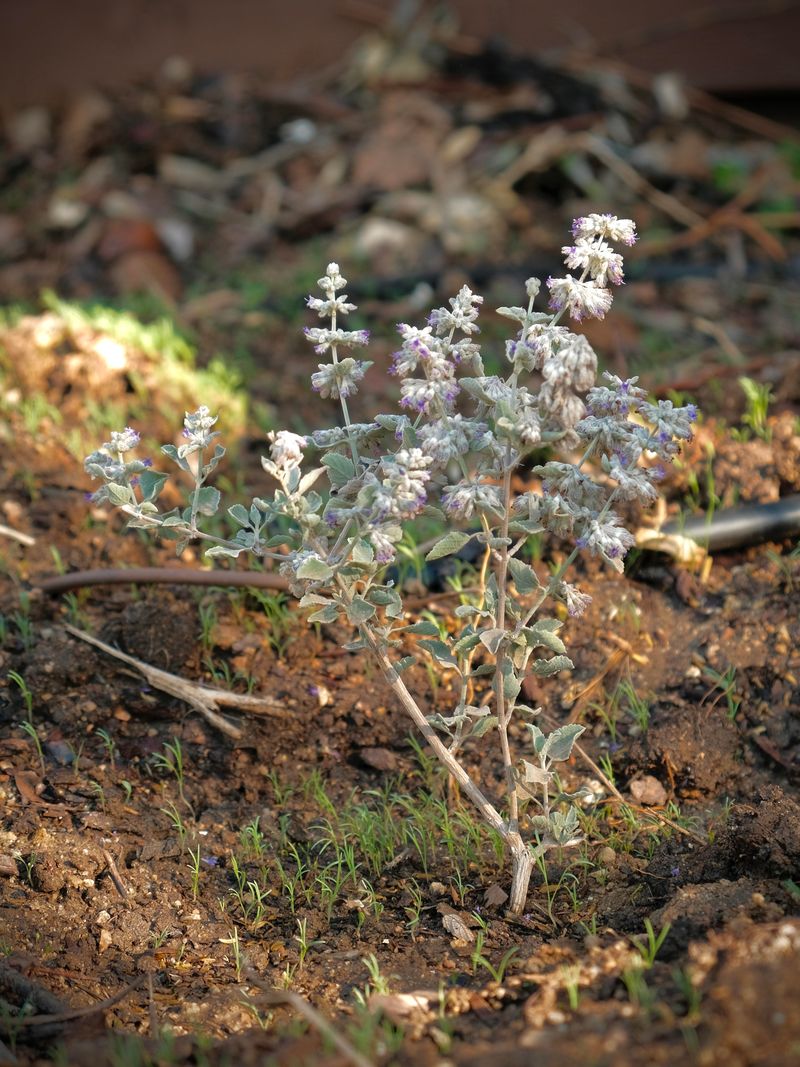
Desert lavender, fairy duster, chuparosa, and wolfberry are excellent choices that are adapted to the climate, require little water once established, and provide both shelter and food through seeds, berries, and the insects they support.
One shrub does multiple jobs simultaneously.
A yard with even three or four well-placed native shrubs becomes layered habitat where birds can rest, hide, and forage without exposure to the full force of midday sun.
The denser the shrub, the better it functions as a thermal buffer. Birds know this instinctively and seek it out.
Grouping shrubs together rather than spacing them far apart creates connected corridors of cover that birds can move through safely.
This is especially useful for ground-foraging species like towhees and thrashers. Placing shrubs near your water source clusters the resources birds need into one convenient, protected area.
Two shrubs near a water dish and you have created a habitat station. Three shrubs and the birds start treating it like home base. It is a small investment that compounds quickly once the first season of growth fills in.
5. Leave Dense Branches For Cover
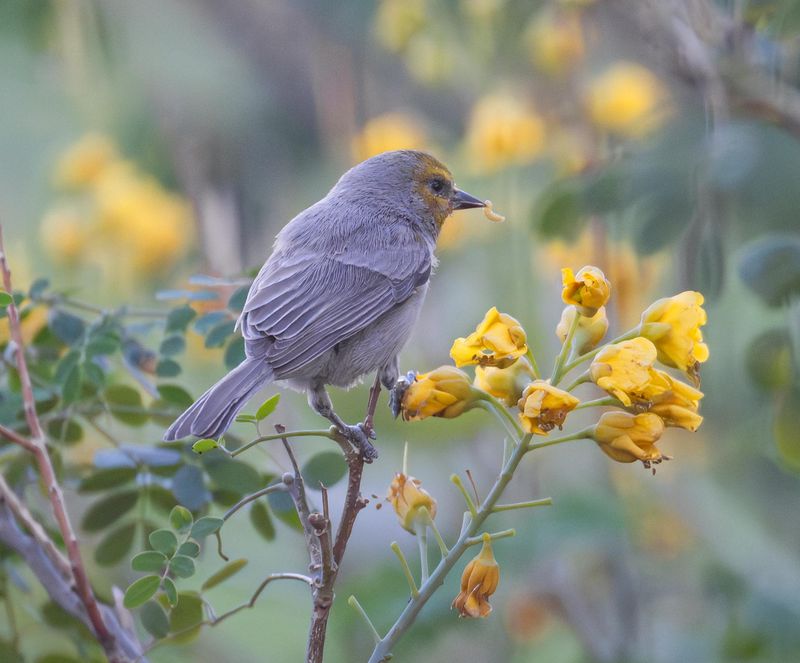
The impulse to tidy up trees and shrubs during summer is understandable. Overgrown branches can look messy.
But for birds trying to survive 110-degree afternoons, those inner branches are not clutter. They are shelter, and removing them during summer eliminates one of the most important thermal refuges in the yard.
Dense, overlapping branches create pockets of deep shade where temperatures drop noticeably compared to open air.
Verdins, Bell’s vireos, and Lucy’s warblers rely on exactly this kind of natural structure for resting spots during peak heat.
A heavily trimmed tree with few interior branches offers very little thermal protection. Leaving some of the inner growth intact gives birds places to perch shielded from direct sun on multiple sides at once.
Mature mesquite, ironwood, and blue palo verde trees are particularly valuable in Arizona yards.
Their canopies are wide, dense, and reliable through summer, and they hold their leaves even in drought conditions. A single large mesquite can shelter dozens of birds through the hottest part of a July afternoon.
If your yard lacks mature trees, a shade sail or simple wooden arbor covered with native vines like canyon grape or yellow morning glory mimics the effect of a dense canopy.
Positioned near a water source, it creates a shaded resting area that birds discover and return to consistently.
Save the heavy pruning for fall or early spring when the birds need those branches least. Summer is not the season to tidy up. Summer is the season to let the canopy do its job. The birds will use every inch of it.
6. Grow Native Plants For Insects
Seed feeders get a lot of attention in bird feeding conversations. During Arizona’s summer breeding season, insects are doing most of the actual work.
Many songbirds that eat seeds as adults feed their nestlings almost entirely on protein-rich insects.
Caterpillars, beetles, and aphids fuel rapid growth in baby birds and support the high energy demands of nesting adults working around the clock in extreme heat.
Native plants are the engine behind a healthy insect population. Research consistently shows that native plants support far more insect species than non-native ornamentals, often by an enormous margin.
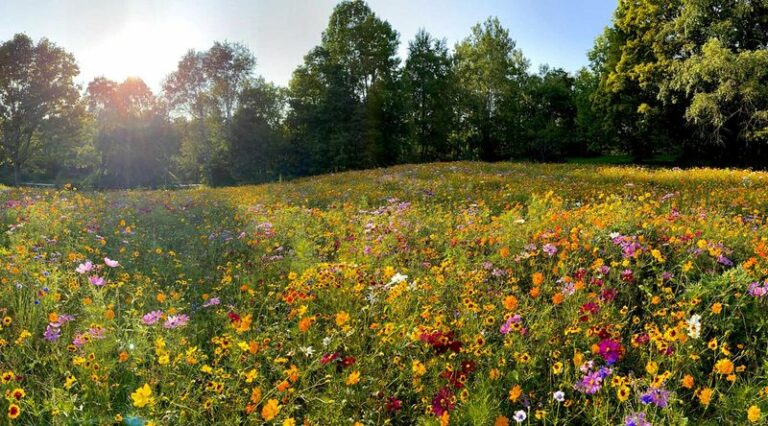
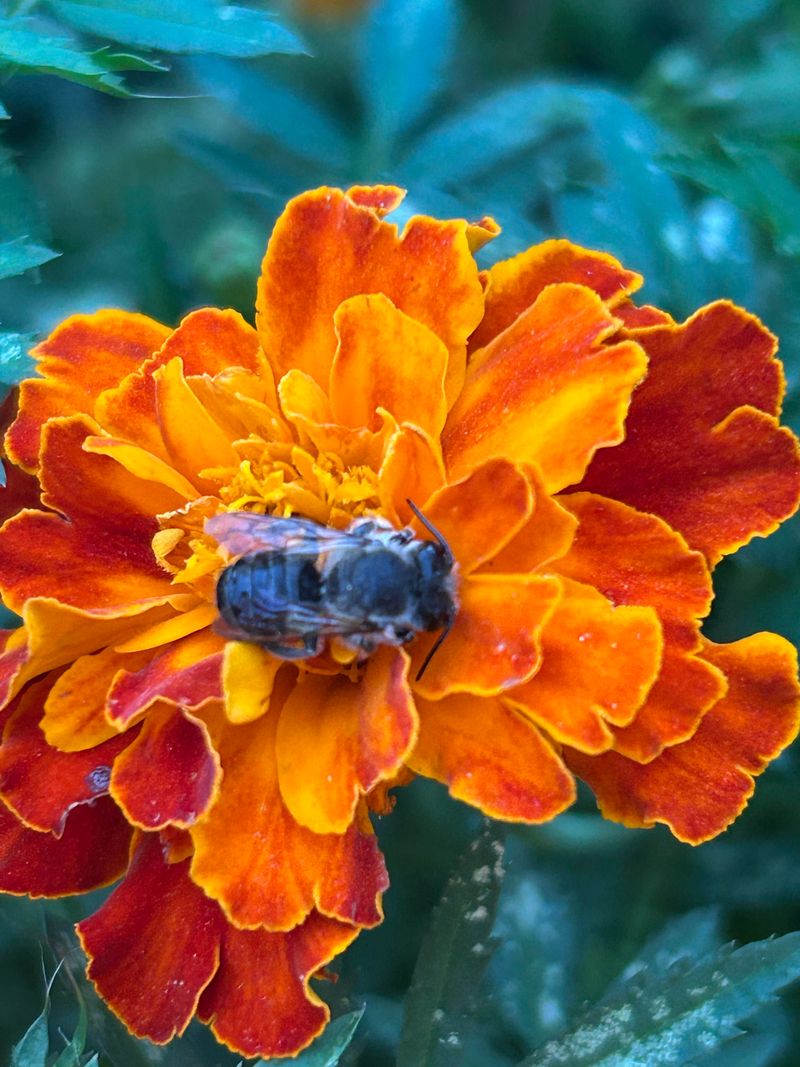
A patch of globe mallow, desert marigold, or sacred datura hosts native bees, moths, and caterpillars that birds hunt actively throughout the day. The insect activity follows the plants almost immediately once they establish.
Even a small native plant bed of four or five species can transform bird foraging behavior in your yard within a single growing season.
Gila woodpeckers probe bark for beetles. Black-throated sparrows hop through low growth searching for grasshoppers. The yard becomes a foraging zone rather than just a place with a feeder.
Leaf litter left on the ground beneath native plants creates important insect habitat. Beetles, earwigs, and ground-dwelling insects hide in decomposing leaves, and thrashers and towhees spend hours scratching through it.
A thin, natural layer of leaf litter in shaded beds adds a foraging zone that costs nothing and benefits birds significantly.
Four native plants, some leaf litter, and a little patience. That is the recipe for a yard that birds treat as a food source rather than just a pit stop. The feeder is optional. The insects are not.
7. Reduce Reflected Heat Around Water
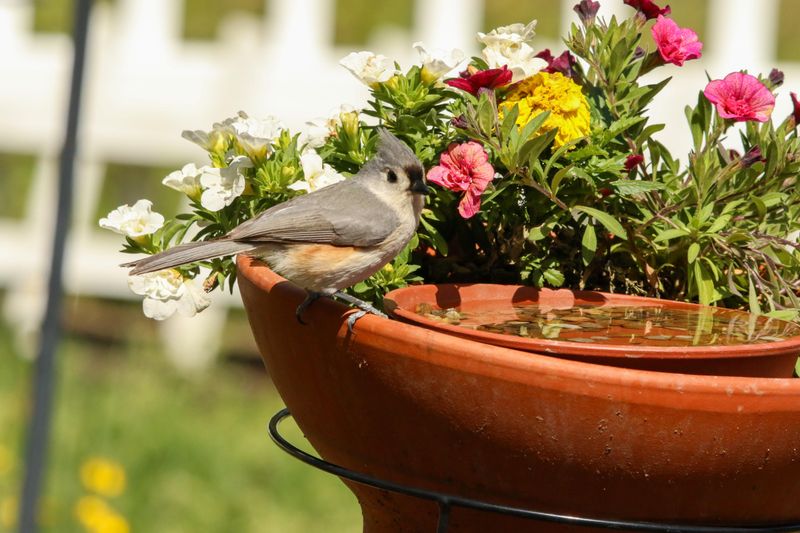
Many backyard birders never think about the surface surrounding their water source. But in an Arizona summer, it matters quite a bit.
Light-colored concrete, white stucco walls, and dark asphalt all radiate heat back into the surrounding air, raising the local temperature well above the official outdoor reading.
A birdbath sitting next to a sun-baked patio can be surrounded by air that is significantly hotter than the thermometer suggests.
Reflected heat is a real factor in Arizona backyards, and it makes otherwise well-positioned water sources uncomfortable for birds to linger near.
Replacing hard surfaces around water with natural gravel, decomposed granite, or native ground cover plants reduces the amount of heat bouncing back up from the ground. These materials absorb less heat and release it more slowly than concrete or dark pavement.
Moving water sources away from south and west-facing walls also helps. Those surfaces absorb maximum sun throughout the day and radiate stored heat well into the evening.
A shift of just a few feet away from a reflective wall can lower surrounding air temperature by several degrees, which is a meaningful change for a small bird trying to cool down.
Natural materials like flagstone, river rock, or sandy soil around a water dish create a more comfortable landing zone. These surfaces stay cooler underfoot and are easier on bird feet than hot concrete.
A small ring of natural gravel around the dish is an inexpensive upgrade that makes the whole water station noticeably more welcoming.
The water temperature gets most of the attention. The ground temperature around the dish deserves some too. Fix both and you have a water station birds actually want to stand at for more than three seconds in July.